Biodegradable polymers are increasingly promoted as a remedy for persistent plastic pollution, yet their impact on marine ecosystems depends less on marketing claims than on chemistry, disposal pathways, and environmental conditions. In materials science, a polymer is a long-chain molecule built from repeating units, and a biodegradable polymer is one whose chains can be broken down by microorganisms into smaller substances such as carbon dioxide, methane, water, mineral salts, and biomass under defined conditions. That definition matters because biodegradation is not the same as simply fragmenting, becoming bio-based, or disappearing from sight. In marine environments, where temperatures are lower, oxygen levels vary, ultraviolet exposure changes with depth, and microbial communities differ from industrial compost systems, degradation behavior can slow dramatically.
I have worked with procurement teams and sustainability managers evaluating these materials, and the most common mistake is assuming that a compostable shopping bag or food-service item will harmlessly dissolve if it escapes into the ocean. Some products do degrade faster than conventional polyethylene or polypropylene, but “faster” can still mean months or years, and by that point marine organisms may already have been exposed to entanglement hazards, ingestion risks, or chemical leachates. This is why the environmental impact of biodegradable polymers on marine ecosystems must be assessed across the full life cycle: raw material sourcing, manufacturing emissions, use-phase performance, litter pathways, degradation products, and end-of-life infrastructure.
This topic matters because marine ecosystems are under pressure from multiple interacting stressors, including plastic debris, warming waters, acidification, overfishing, nutrient runoff, and habitat destruction. Materials choices alone will not solve ocean pollution, but they can reduce or shift specific harms. For policymakers, manufacturers, fisheries, coastal municipalities, and consumers, the central question is practical: when do biodegradable polymers lower marine risk, and when do they create a false sense of security? A useful answer requires distinguishing between polymer families such as polylactic acid, polyhydroxyalkanoates, polybutylene adipate terephthalate blends, starch-based materials, and cellulose-derived films. Each has different mechanical properties, degradation triggers, and ecological tradeoffs, so broad claims about “bioplastics” are rarely accurate enough for environmental decision-making.
As a hub for environmental impact within materials and properties, this article explains how biodegradable polymers behave in seawater, what standards actually measure, which marine species and habitats are affected, where the benefits are strongest, and which limitations remain unresolved. It also connects product design and waste management to ecological outcomes, because the marine impact of a polymer is shaped as much by collection systems and labeling as by resin chemistry.
How biodegradable polymers behave in marine environments
The first principle is straightforward: most biodegradable polymers break down far more reliably in controlled composting than in the ocean. Industrial compost standards such as EN 13432 and ASTM D6400 focus on elevated temperatures, moisture, oxygen, and active microbial populations. Marine settings usually provide cooler water, lower nutrient availability, and less predictable microbial activity. As a result, materials certified for compostability on land are not automatically suitable for marine leakage scenarios. Polylactic acid, for example, can maintain structural integrity in cool seawater for extended periods because hydrolysis proceeds slowly at ambient ocean temperatures. By contrast, some polyhydroxyalkanoates, or PHAs, have shown more meaningful biodegradation in marine tests because marine microorganisms can metabolize them more readily.
Degradation itself occurs through several pathways. Abiotic processes such as hydrolysis, photo-oxidation, and mechanical abrasion can weaken polymer chains first. Microorganisms then assimilate the resulting oligomers or monomers if the chemistry is accessible to them. In the open ocean, this sequence can be limited by low temperature and reduced surface colonization. On beaches, estuaries, or shallow coastal waters, sunlight and higher microbial abundance may accelerate change, but those conditions are inconsistent. I have seen product teams rely on lab data generated at ideal temperatures and then overlook how dramatically rate constants shift in real seawater. The environmental consequence is simple: if an item persists long enough to be ingested, colonized by invasive species, or broken into microplastic-sized particles, marine harm can occur before complete biodegradation.
Another critical distinction is between disintegration and mineralization. Disintegration means the material breaks into smaller pieces; mineralization means microbes convert a significant fraction into final metabolic products. Marine ecosystems respond differently to each. Smaller fragments may be less visible but can become more available to filter feeders, zooplankton, bivalves, and deposit feeders. Therefore, a polymer that fragments quickly without efficient microbial assimilation may still contribute to ecological stress. Standards specifically targeting marine biodegradation exist, including ASTM D6691 for aerobic biodegradation in the marine environment, but results depend heavily on test design, inoculum source, and whether the product tested is a thin film, molded object, fiber, or multilayer blend.
Direct ecological effects on marine species and habitats
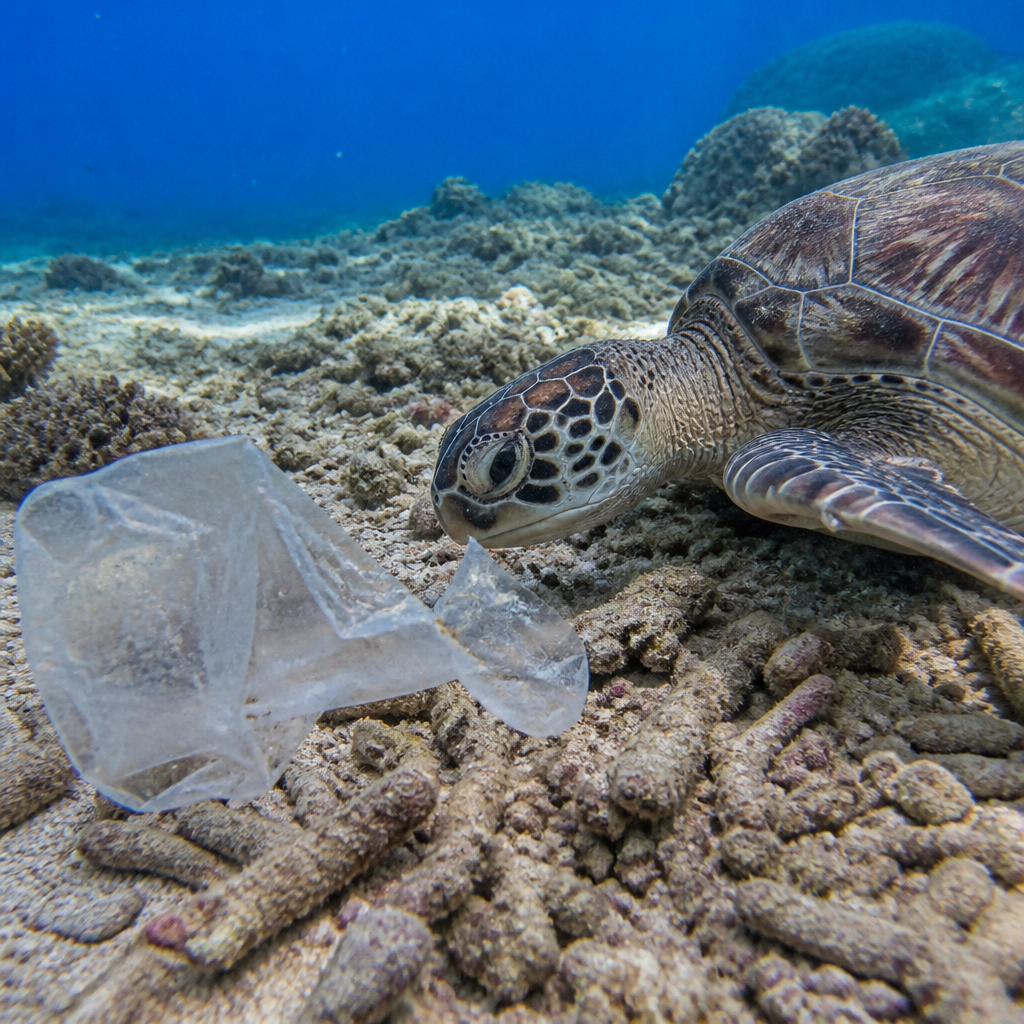
The direct ecological impact of biodegradable polymers begins the moment an item enters a marine habitat. Sea turtles, seabirds, fish, and marine mammals do not sort litter by resin type. A drifting biodegradable bag can still be mistaken for prey, and fishing gear made with degradable components can still entangle wildlife during its functional lifetime. The key environmental question is whether exposure duration and toxicity are reduced relative to conventional plastics. In some cases the answer is yes, especially when the material is designed for short-lived applications with high leakage risk, such as agricultural mulch films near waterways or certain aquaculture accessories. In other cases, the reduction is marginal because the object remains intact long enough to cause the same mechanical harm as standard plastic.
Marine habitats also react to the byproducts of degradation. When biodegradable polymers are metabolized, microbes consume oxygen. In well-mixed waters this is usually not a major issue for small quantities, but concentrated waste in sediments, enclosed harbors, or low-flow estuaries can increase biochemical oxygen demand. That matters for benthic organisms such as worms, crustaceans, and shellfish that already live near oxygen thresholds. Sediment burial changes the picture further because anaerobic conditions may slow degradation for some polymers and produce methane for others. A material that performs well in aerobic seawater may behave very differently once trapped in seagrass beds, mangrove muds, or landfill-like coastal deposits.
Chemical effects deserve equal attention. Additives used to improve flexibility, color, barrier performance, or processability can leach during weathering. Even when the base polymer is biodegradable, pigments, plasticizers, compatibilizers, and residual catalysts may not be benign. Manufacturers sometimes frame biodegradable polymers as inherently non-toxic, but toxicity depends on the complete formulation. Ecotoxicity tests with algae, crustaceans, and fish embryos are therefore essential. Studies on certain PHA and cellulose-based systems have generally shown lower ecotoxicity profiles than many conventional plastics, yet blends containing fossil-derived components or poorly characterized additives can complicate that picture. The safest environmental claim is narrow and evidence-based: specific formulations under specific marine conditions may reduce persistence, not eliminate impact.
| Polymer type | Typical marine behavior | Main environmental advantage | Key limitation |
|---|---|---|---|
| PLA | Often slow degradation in cool seawater | Useful in managed composting systems | Commonly overestimated marine biodegradability |
| PHA | Can biodegrade more effectively in marine tests | Lower persistence in leakage scenarios | Higher cost and variable performance |
| Starch blends | Performance depends on blend composition | Reduced fossil feedstock in some grades | May fragment if non-biodegradable fractions remain |
| Cellulose-based films | Often better biodegradation than polyolefins | Strong potential for select packaging uses | Coatings and additives can alter outcomes |
Standards, testing, and why labels often mislead
One of the most important facts for buyers and regulators is that a biodegradability claim is only as meaningful as the test method behind it. Labels such as “biodegradable,” “compostable,” “home compostable,” and “marine degradable” are not interchangeable. In practice, many claims on packaging are based on industrial compostability, which says little about behavior in seawater. EN 13432 and ASTM D6400 require disintegration and biodegradation under composting conditions, not in marine ecosystems. ASTM D6691 addresses marine aerobic biodegradation, while ASTM D7081 was withdrawn, highlighting how difficult it is to create robust pass-fail standards for real-world marine conditions. ISO methods also provide frameworks, but no single certificate guarantees harmless ocean disposal.
I advise teams to ask four questions before accepting any environmental claim. First, what exact polymer and additives are used? Second, under what temperature, salinity, oxygen, and microbial conditions was the material tested? Third, was the test run on the resin, the finished product, or only a thin film sample? Fourth, did the study measure mineralization, fragmentation, and ecotoxicity separately? These questions prevent category errors that are common in sustainability marketing. A thermoformed cup lid may use a resin with promising lab results, yet the final product’s thickness, crystallinity, surface area, and colorants can materially change its marine fate.
Misleading labels create a documented behavioral risk called moral hazard. When consumers believe an item is safe to litter because it is biodegradable, leakage can increase. Coastal cleanup groups have repeatedly reported confusion around so-called eco-plastics, especially at festivals, tourism sites, and marinas. Clear labeling should therefore emphasize proper disposal first and any environmental benefit second. The most responsible communication states that biodegradable polymers are designed to reduce persistence under defined end-of-life conditions, not to justify release into nature. That distinction protects both ecosystems and public trust.
Life-cycle tradeoffs and where benefits are real
Environmental impact cannot be judged by marine degradation alone. A polymer that biodegrades well in seawater may still carry a heavier climate, land-use, or eutrophication footprint depending on feedstock and manufacturing route. Bio-based feedstocks such as corn, sugarcane, or cassava can reduce reliance on fossil carbon, but cultivation may involve fertilizer runoff, irrigation pressure, and competition with land for food or habitat. Fermentation, polymerization, and downstream processing also consume energy. Life-cycle assessment is the correct tool for comparing these impacts because it accounts for greenhouse gas emissions, water use, acidification, and waste outcomes across the supply chain.
That said, there are applications where biodegradable polymers offer clear marine-related advantages. One is fisheries and aquaculture gear designed to minimize ghost fishing if lost. Researchers and manufacturers have explored PHA blends, biodegradable escape panels in traps, and natural fiber composites that weaken after prolonged seawater exposure. Another is agricultural mulch and controlled-release materials used near drainage channels, where fragments of conventional polyethylene frequently reach rivers and estuaries. Certain compostable liners for food waste collection can also improve organics diversion, indirectly reducing litter and landfill leakage when collection systems are strong. In each case, the benefit comes from matching material properties to a high-risk leakage pathway and a realistic end-of-life system.
The opposite is also true. Durable marine applications such as ropes, nets, and structural components cannot simply switch to biodegradable polymers without considering tensile strength retention, creep, UV stability, abrasion resistance, and safety margins. Premature degradation in service can endanger workers or undermine product function. I have seen successful substitutions only when engineering targets were explicit and field trials were long enough to capture seasonal seawater variation. Material choice is never just an environmental statement; it is a performance decision with ecological consequences if the item fails too early or persists too long.
Policy, design, and the future of marine-safe materials
Reducing harm to marine ecosystems requires policy and design measures that go beyond substituting one resin for another. The most effective strategy is a hierarchy: prevent unnecessary single-use items, design for reuse where practical, improve collection and sorting, and reserve biodegradable polymers for applications where they solve a specific environmental failure. Extended producer responsibility schemes can fund cleanup and infrastructure, while procurement standards can require verified test data rather than generic green claims. Deposit-return systems, fishing gear marking, port reception facilities, and stormwater litter capture often deliver larger marine benefits than material substitution alone.
Product design also matters at a granular level. Thickness, crystallinity, coatings, pigments, fillers, and multilayer construction all influence degradation. Monomaterial formats are easier to characterize than complex laminates. Design for identification is equally important; if composters, recyclers, and consumers cannot distinguish items quickly, contamination rises and the intended environmental benefit is lost. Digital watermarks, standardized labeling, and traceable formulations can improve handling across waste systems. On the innovation side, marine-relevant research is moving toward enzymes, tailored copolymers, and PHA production from waste streams, but every breakthrough still requires independent ecotoxicity and field validation before broad claims are justified.
The impact of biodegradable polymers on marine ecosystems is therefore neither a simple success story nor a reason for dismissal. These materials can reduce persistence and certain leakage harms when the polymer chemistry, product design, and waste system are aligned with the exposure scenario. They can also disappoint when industrial compostability is confused with marine degradation, when additives are ignored, or when labels encourage careless disposal. The most reliable takeaway is practical: choose verified materials for targeted uses, demand standard-specific evidence, and treat biodegradability as one tool within a broader ocean protection strategy. If you are building a materials roadmap, audit high-leakage applications first, compare test methods carefully, and make the next procurement decision based on real marine outcomes rather than assumptions.
Frequently Asked Questions
Are biodegradable polymers automatically safe for marine ecosystems?
No. A biodegradable label does not automatically mean a material is harmless in the ocean. The environmental outcome depends on the polymer’s chemical structure, additives, thickness, shape, and the conditions it encounters after disposal. Many biodegradable polymers are designed to break down efficiently in industrial composting systems, where heat, oxygen, moisture, and microbial activity are carefully controlled. Marine environments are very different: seawater is often cooler, oxygen levels vary, sunlight exposure is inconsistent, and the right microorganisms may be absent or less active. Under those conditions, a material marketed as biodegradable may persist far longer than consumers expect.
That persistence matters because even partially degraded materials can still affect marine life. They may fragment into smaller particles before being fully metabolized, creating debris that can be ingested by fish, seabirds, shellfish, and plankton. Some formulations also include plasticizers, colorants, stabilizers, or other additives that may influence toxicity or alter how the material behaves in water and sediment. In other words, the question is not simply whether a polymer can biodegrade in principle, but whether it will biodegrade completely, at a meaningful rate, in real marine conditions without causing harmful side effects along the way.
How do biodegradable polymers actually break down in ocean environments?
Biodegradable polymers break down when microorganisms secrete enzymes that cleave long molecular chains into smaller compounds that can be assimilated and ultimately converted into substances such as carbon dioxide, water, mineral salts, and biomass in aerobic conditions, or methane in some anaerobic environments. For that process to happen efficiently, the polymer must first be accessible to microbes. Factors such as molecular weight, crystallinity, hydrophobicity, and surface area strongly influence how quickly enzymes can attack the material. A rigid, highly crystalline polymer may degrade much more slowly than a more amorphous one, even if both are classified as biodegradable.
Marine settings complicate this process. In open water, low temperatures can slow microbial metabolism and reduce the rate of hydrolysis. In deep or turbid water, less sunlight may limit photo-oxidative changes that sometimes help initiate surface breakdown. In sediments, oxygen may be scarce, changing both the microbial community and the degradation pathway. Salinity, nutrient availability, and biofilm formation also affect how quickly microorganisms colonize the polymer surface. As a result, two identical items made from the same biodegradable polymer can behave very differently depending on whether they drift at the surface, wash ashore, become buried in sediment, or enter an estuary. This is why laboratory compostability results should never be assumed to predict marine biodegradation performance.
Can biodegradable polymers still contribute to microplastic or particle pollution in the sea?
Yes, they can. A common misconception is that biodegradable polymers disappear cleanly and immediately once they enter the environment. In reality, degradation often occurs in stages. Before microorganisms fully metabolize the material, physical abrasion from waves, ultraviolet exposure, salt, and mechanical stress can cause products to crack, embrittle, or fragment. Those fragments may be smaller than the original item but still persist long enough to interact with marine organisms and food webs. From an ecological perspective, temporary fragmentation is still important because particle size influences ingestion risk, transport, and the ability of debris to move between surface waters, shorelines, and sediments.
The distinction between fragmentation and true biodegradation is critical. Fragmentation breaks an object into smaller pieces, but biodegradation converts polymer carbon into simpler end products through biological activity. If a material breaks into fine particles faster than it is mineralized, it may still function as a form of particulate pollution for a meaningful period of time. Researchers therefore look not only at whether a biodegradable polymer loses mass, but also at how fast it does so, whether it leaves residues, and what ecological effects occur during the transition. For marine protection, the ideal material is one that does not just become less visible, but actually biodegrades completely under relevant environmental conditions.
What environmental factors most strongly affect the impact of biodegradable polymers in marine ecosystems?
Several environmental variables determine whether biodegradable polymers have a lower or higher impact in marine ecosystems. Temperature is one of the most important because it directly affects microbial activity and chemical reaction rates. Warmer conditions generally support faster biodegradation, while cold seawater can dramatically slow it. Oxygen availability also matters, since aerobic and anaerobic conditions lead to different pathways and byproducts. The location of the material is equally significant: an item floating at the surface experiences different light, turbulence, and oxygen exposure than one buried in sediment or trapped in a coastal marsh.
Sunlight, salinity, nutrient levels, and the composition of local microbial communities further shape outcomes. Sunlight can weaken polymer surfaces and sometimes make them more vulnerable to microbial attack, but it can also simply create brittle fragments. Salinity influences water uptake and microbial populations. Nutrient-poor marine waters may not support degradation as effectively as nutrient-rich coastal zones. In addition, the form of the product itself matters. Thin films and foams often degrade differently from thick molded objects because surface area controls microbial access. Together, these factors explain why broad claims about marine biodegradability are often unreliable unless they are backed by testing under realistic ocean or coastal conditions.
Do biodegradable polymers solve the problem of plastic pollution in the ocean?
They can help in specific applications, but they are not a standalone solution to marine plastic pollution. The strongest benefit of biodegradable polymers may emerge in situations where material recovery is difficult and where products are likely to escape into biological waste streams or unmanaged environments, provided the polymer is carefully matched to the disposal system and environmental context. However, if a product is likely to end up in the ocean, biodegradability alone does not eliminate risk. Poor waste management, littering, inadequate collection infrastructure, and misleading consumer assumptions can still result in environmental harm.
From a policy and materials science perspective, biodegradable polymers should be viewed as one tool within a broader strategy that includes reducing unnecessary plastic use, designing products for reuse, improving recycling systems, strengthening waste collection, and setting clear standards for environmental claims. The key question is not whether biodegradable polymers are good or bad in the abstract, but whether a specific material performs responsibly across its full life cycle. When claims are grounded in chemistry, verified testing, and realistic end-of-life pathways, biodegradable polymers may contribute to lower impacts. When they are used as a marketing shortcut, they can create false confidence and distract from the deeper systemic changes needed to protect marine ecosystems.