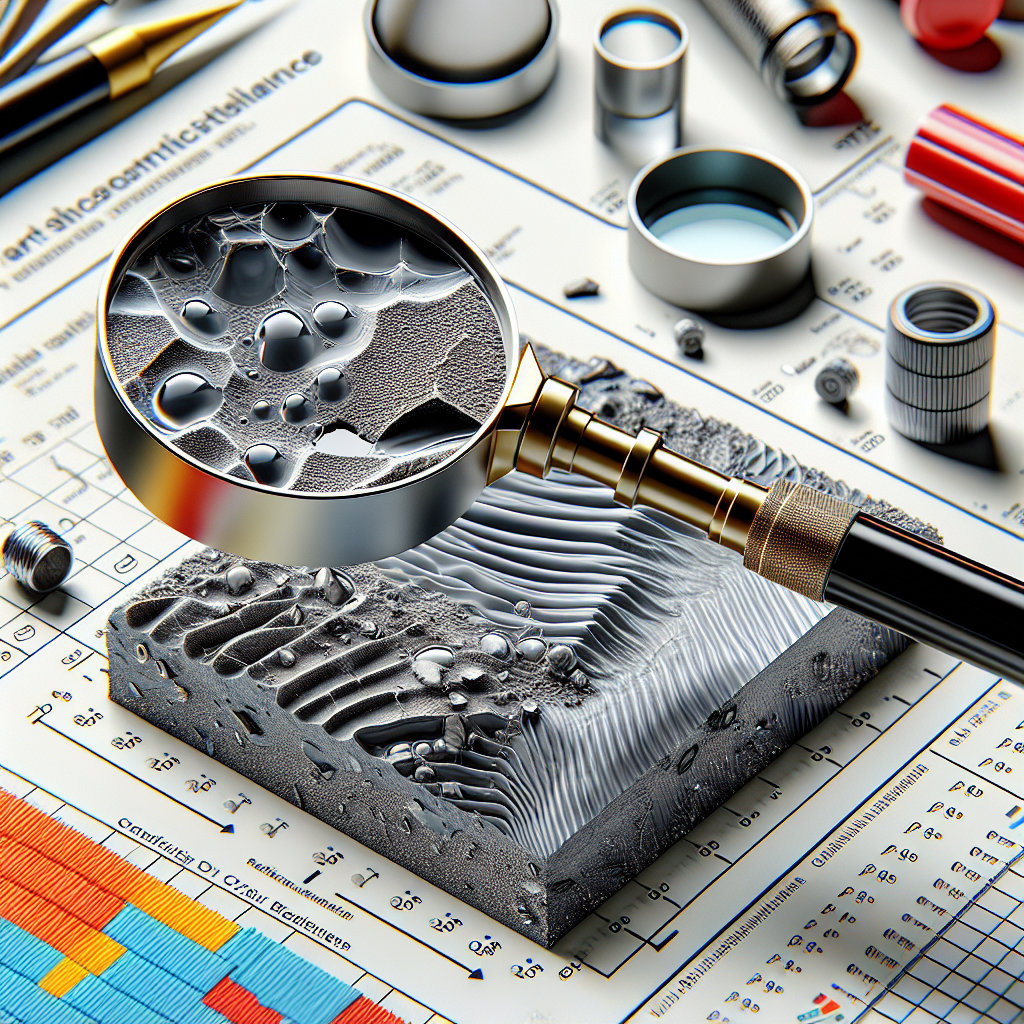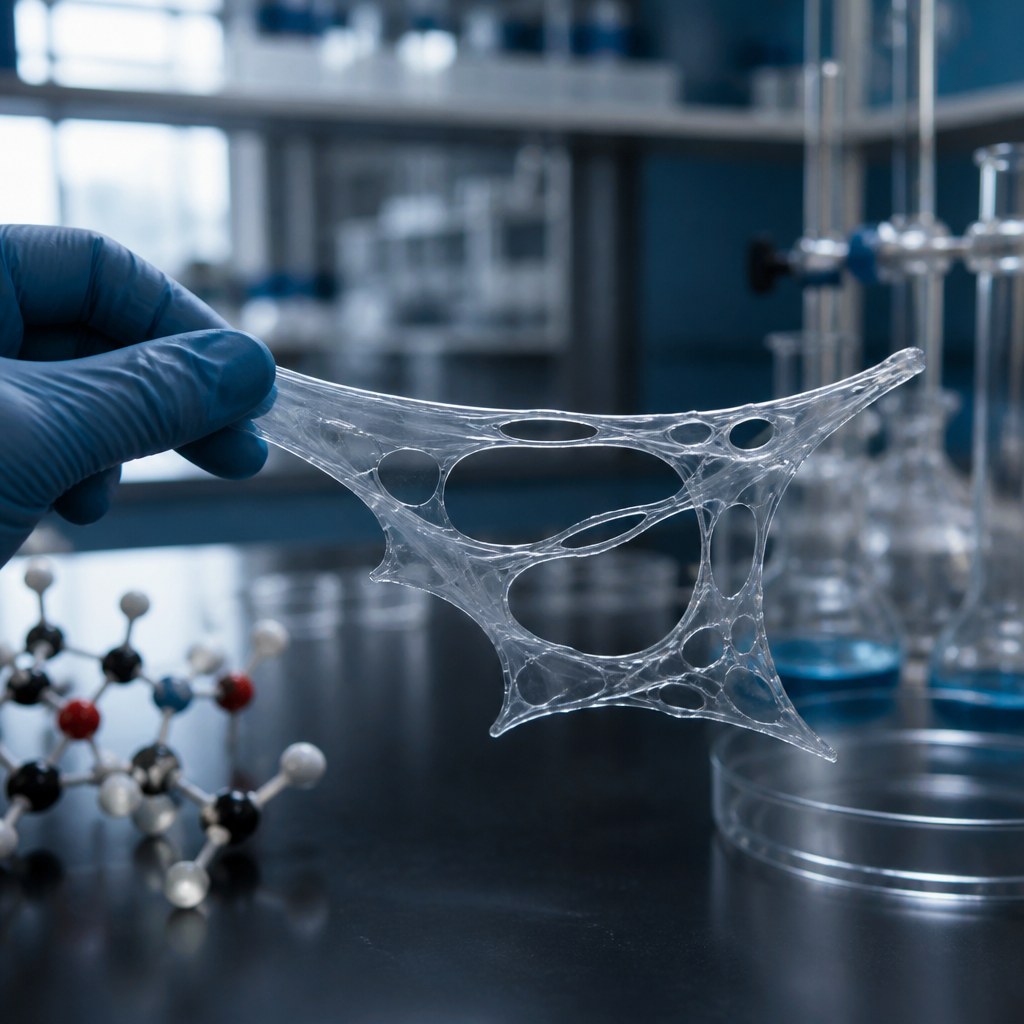
Cross-linking is one of the most important concepts in polymer chemistry because it changes how molecules move, react, and perform in real materials. In simple terms, cross-linking means creating chemical or physical bridges between polymer chains, turning separate macromolecules into a connected network. I have seen this shift transform a soft, soluble resin into a heat-resistant coating, and a sticky elastomer into a durable seal that survives years of compression, chemicals, and temperature cycling. For a hub article focused on chemical properties within materials and properties, cross-linking is central because it governs solvent resistance, thermal stability, swelling behavior, permeability, durability, and long-term aging.
Polymer chemistry starts with chain architecture. Linear polymers consist of long chains with limited interconnection, branched polymers contain side chains, and network polymers contain enough junction points to form a three-dimensional structure. Those junction points are the cross-links. They may be covalent bonds formed during curing, ionic associations, hydrogen-bonded clusters, crystallite tie points, or dynamic reversible links in vitrimer systems. The density, distribution, and type of cross-link determine whether a material behaves like a thermoplastic, an elastomer, a hydrogel, or a thermoset. That is why chemists treat cross-link density as a design variable, not a secondary detail.
The topic matters in nearly every industry that uses polymers. Tires depend on sulfur cross-links for elasticity and abrasion resistance. Epoxy adhesives rely on amine curing to build cohesive strength and chemical resistance. Polyethylene can be cross-linked to improve heat performance in wire insulation and plumbing. Biomedical hydrogels use carefully controlled networks to regulate water uptake and drug release. When engineers ask why one polymer survives a solvent, maintains shape under load, or cracks after aging, the answer often comes back to the network structure created by cross-linking. Understanding that structure gives a direct path to better material selection, better formulation, and better failure analysis across the broader chemical properties landscape.
What cross-linking does at the molecular level
At the molecular level, cross-linking reduces chain mobility by tying polymer segments together. In a linear polymer, chains can slide, disentangle, and sometimes dissolve if a solvent penetrates and separates them. Once cross-links connect those chains, movement becomes restricted. The immediate chemical result is lower solubility and greater resistance to flow. Instead of dissolving, a cross-linked polymer may only swell. This distinction is foundational in polymer chemistry: dissolution requires complete chain separation, but a network prevents that separation because the chains are permanently connected.
Cross-linking also affects the glass transition temperature, modulus, and free volume. As the network becomes tighter, segmental motion requires more energy, so glass transition often rises. Oxygen, water, fuels, and solvents encounter a more tortuous path, which can lower permeability. Reactive species also diffuse more slowly, changing oxidation behavior and environmental stress cracking resistance. In lab work, I have repeatedly observed that a modest increase in curing extent can sharply reduce solvent uptake while also making the material less forgiving under impact. This is the key tradeoff: stronger networks usually gain chemical resistance and dimensional stability but lose some flexibility and toughness unless the formulation includes soft segments or energy-dissipating phases.
Not all cross-links are equal. Covalent cross-links, such as sulfur bridges in rubber or methylene links in phenolic resins, are generally permanent under service conditions. Physical cross-links, such as ionic clusters in ionomers or hydrogen-bonded associations in supramolecular polymers, can break and reform. Dynamic covalent networks go further by allowing bond exchange while retaining overall connectivity. That chemistry enables reprocessing, self-healing, or stress relaxation in materials that would traditionally behave like fixed thermosets. For anyone studying chemical properties, the lesson is clear: network connectivity controls reactivity, transport, and stability as much as it controls mechanics.
Major cross-linking mechanisms and where they are used
Several industrially important mechanisms create cross-links, and each has distinct implications for chemical properties. Sulfur vulcanization remains the classic example in unsaturated rubbers such as natural rubber and styrene-butadiene rubber. Accelerators and activators control cure rate and cross-link structure, producing polysulfidic, disulfidic, or monosulfidic bridges. Polysulfidic links provide flexibility and dynamic performance, while shorter sulfur links often improve heat aging. Peroxide curing, used with polymers such as EPDM and cross-linked polyethylene, forms carbon-carbon links that usually offer better thermal stability and lower compression set in high-temperature service.
Step-growth thermosets use multifunctional monomers and curing agents to build networks. Epoxy resins cured with amines, anhydrides, or phenolics are widely used in coatings, electronics, and structural adhesives. Polyurethanes can cross-link through isocyanate reactions with polyols, water, or chain extenders. Unsaturated polyester and vinyl ester resins cross-link through free-radical polymerization, often using styrene as a reactive diluent. Radiation cross-linking with electron beam or gamma exposure is another route, particularly for medical products, heat-shrink tubing, wire coatings, and sterilized packaging where additives must be minimized.
The selection of mechanism depends on process temperature, cure speed, byproduct tolerance, regulatory constraints, and target properties. In medical devices, residual monomer and extractables matter as much as gel fraction. In electrical insulation, dielectric performance and thermal endurance are critical. In food-contact packaging, odor and migration can eliminate otherwise promising chemistries. Cross-linking is therefore not a single reaction choice but a formulation strategy that integrates kinetics, processing, and service environment. For readers exploring related materials and properties topics, this is the bridge between molecular design and observable chemical performance.
| Cross-linking method | Typical polymers | Main chemical property impact | Common applications |
|---|---|---|---|
| Sulfur vulcanization | Natural rubber, SBR, BR | Improves solvent resistance and fatigue behavior; heat aging depends on sulfur rank | Tires, seals, vibration mounts |
| Peroxide curing | EPDM, silicone, polyethylene | Creates thermally stable carbon-carbon links with strong aging resistance | Cable insulation, gaskets, hoses |
| Amine-cured epoxy | Epoxy resins | Raises chemical resistance, adhesion, and dimensional stability | Adhesives, coatings, composites |
| Radiation cross-linking | Polyolefins, fluoropolymers | Boosts solvent resistance and heat performance without conventional curing agents | Medical tubing, wire and cable, shrink products |
Cross-link density and chemical properties
Cross-link density is the most useful quantitative idea for predicting polymer behavior. It refers to the number of effective network junctions per unit volume or mass. As cross-link density increases, swelling in solvents usually decreases, creep resistance improves, and softening under heat is reduced. The Flory-Rehner approach connects equilibrium swelling data to network structure, while rubber elasticity theory relates modulus to the density of elastically active chains. These models are not perfect for filled, heterogeneous, or highly glassy systems, but they remain essential starting points in industrial and academic analysis.
In practice, cross-link density must be balanced. Too little cross-linking leaves a material vulnerable to extraction, deformation, and chemical attack. Too much can make it brittle, reduce elongation, and create internal stress during cure shrinkage. I have seen heavily cross-linked epoxies pass solvent immersion testing yet fail in thermal cycling because their high modulus concentrated stress at the bond line. By contrast, a slightly lower density network with a toughening agent lasted longer even though its hardness was lower. This is why formulation work rarely aims for maximum cross-linking. It aims for the right network for the exposure profile.
Chemical resistance follows the same logic. Acids, bases, hydrocarbons, alcohols, and oxidizers interact differently with a polymer network depending on polarity, free volume, and bond stability. A densely cross-linked fluorinated system may resist fuels exceptionally well, while a hydrolytically sensitive polyester network can degrade in hot, wet service despite being strongly cross-linked. Cross-link density improves resistance to solvent-induced dissolution, but it cannot compensate for inherently vulnerable backbone chemistry. Backbone selection, cross-link chemistry, additives, fillers, and residual catalyst content all contribute to the final chemical property package.
Effects on solubility, swelling, permeability, and degradation
One of the clearest impacts of cross-linking is the transition from soluble polymer to insoluble network. Laboratories often measure this through gel content and solvent swelling. If a material retains a substantial insoluble fraction after extraction, that indicates network formation. The degree of swelling then reveals how tight the network is. Hydrogels provide an instructive example: lightly cross-linked polyacrylamide can absorb large amounts of water because the network holds together while allowing significant expansion. Increase the cross-linker content, and the gel becomes stiffer and absorbs less water.
Permeability is also strongly affected. Gas and liquid molecules move through polymers by dissolving into the matrix and diffusing through free volume. Cross-links restrict local motion and can reduce that free volume, often lowering transport rates. This matters in fuel systems, barrier packaging, membrane technology, and protective coatings. However, the effect is not universal. If cross-linking creates microvoids, phase separation, or cure-induced defects, permeability can increase locally. Real materials are not ideal networks, which is why microscopy, sorption testing, and spectroscopy are often used alongside bulk property measurements.
Degradation behavior is more nuanced than many summaries suggest. Cross-linking can improve thermal and solvent resistance, but some network structures are themselves susceptible to hydrolysis, oxidation, or ultraviolet attack. Polyurethanes with ester segments may hydrolyze in humid heat. Sulfur-cured elastomers can undergo reversion or oxidative embrittlement depending on service conditions. Epoxies exposed to moisture at elevated temperature may absorb water, plasticize, and lose glass transition before any obvious mass loss occurs. In failure investigations, it is common to find that the cross-link network remains present while secondary chemical changes at weak bonds, interfaces, or additives drive performance loss.
How cross-linking is measured and controlled
Reliable control of cross-linking depends on combining chemical analysis with property testing. Differential scanning calorimetry tracks residual cure and glass transition. Dynamic mechanical analysis maps storage modulus and damping across temperature, making it especially useful for identifying cure state and network transitions. Swelling experiments estimate cross-link density in elastomers and gels. Gel fraction testing distinguishes soluble material from networked material. Fourier transform infrared spectroscopy monitors bond conversion, while solid-state NMR can provide deeper insight into network structure in research settings.
Process conditions matter as much as chemistry. Temperature ramp, mixing quality, inhibitor level, catalyst concentration, humidity, oxygen exposure, and part thickness all influence cure outcome. Thick thermoset castings can develop exotherm gradients, leading to uneven network formation. Under-cured adhesive joints may look acceptable initially but fail early because residual reactive groups continue changing after assembly. Overexposure during radiation cross-linking can cause chain scission instead of beneficial network growth. In manufacturing, the most effective approach is a cure window defined by both reaction completion and final property targets, not by time and temperature alone.
Quality teams often use practical indicators tied to end use: compression set for seals, hot-set performance for insulated wire, solvent rubs for coatings, extractables for medical tubing, and dielectric breakdown for electrical parts. These tests translate abstract network chemistry into service-relevant metrics. When building an internal knowledge base around chemical properties, linking cross-linking data to these downstream results creates the strongest decision framework because it shows not just that a network formed, but whether it formed correctly for the application.
Industry examples and design tradeoffs
Real-world materials show why cross-linking deserves hub-level attention. In automotive tires, the cure system balances rolling resistance, wet grip, heat buildup, and wear. A different sulfur-accelerator package can materially change the network structure and therefore aging behavior. In powder coatings, cross-link density influences scratch resistance, solvent resistance, and flexibility on formed metal. In cable insulation, cross-linked polyethylene outperforms uncross-linked polyethylene at elevated temperature because the network prevents melt flow and improves dimensional integrity. In dentistry, light-cured methacrylate networks must reach enough conversion to resist leaching and wear without generating excessive polymerization shrinkage stress.
Each case illustrates the same principle: better chemical stability rarely comes free. Dense networks can trap stress, complicate recycling, and limit repairability. Looser or dynamic networks may process more easily and absorb strain, yet they can permit greater swelling or creep. That is why current innovation focuses on smarter cross-linking rather than simply more cross-linking. Reprocessable vitrimers, self-healing elastomers, low-temperature curing epoxies, and bio-based thermosets all aim to preserve network advantages while reducing brittleness, energy consumption, or end-of-life waste.
For anyone building expertise in materials and properties, cross-linking is the chemical property lens that connects polymer structure to performance. Study the type of link, the density of the network, the cure pathway, and the service environment together. Compare swelling, thermal transition, permeability, and aging results instead of relying on a single hardness or strength number. When those pieces are evaluated as a system, material choices become clearer, failure analysis becomes faster, and formulation decisions become more defensible.
Cross-linking shapes the chemical identity of a polymer network as much as it shapes physical performance. It determines whether a material dissolves or swells, whether heat causes flow or stability, and whether long-term exposure leads to durability or degradation. The most important takeaway is not that higher cross-link density is always better, but that the right cross-link architecture delivers the right balance of solvent resistance, thermal endurance, permeability control, and aging behavior for a specific use case.
As a hub within chemical properties, this topic provides the foundation for deeper study of curing chemistry, hydrolysis, oxidation, barrier behavior, adhesion, and environmental stress cracking. Start by identifying the polymer backbone, then examine the cross-linking mechanism, cure conditions, and network density. From there, connect laboratory measurements such as gel content, swelling ratio, DMA response, and spectroscopy to real service requirements. If you are evaluating materials, updating a formulation, or diagnosing failure, use cross-linking as the first framework for understanding why a polymer behaves the way it does and where improvement should begin.
Frequently Asked Questions
What is cross-linking in polymer chemistry, and why is it so important?
Cross-linking in polymer chemistry refers to the formation of bonds or connections between individual polymer chains, creating a three-dimensional network instead of a collection of separate macromolecules. These links can be chemical, such as covalent bonds formed during curing reactions, or physical, such as strong intermolecular associations that act like temporary junction points. This change is important because it fundamentally alters how a polymer behaves under heat, stress, solvents, and long-term use. A linear or lightly branched polymer may soften, dissolve, or flow relatively easily, while a cross-linked material typically becomes more dimensionally stable, more resistant to creep, and far less likely to dissolve.
The reason cross-linking matters so much is that it gives chemists and materials engineers a powerful way to tune performance. By controlling the amount and type of cross-linking, it is possible to transform a soft resin into a rigid thermoset, improve the resilience of an elastomer, or create a coating that withstands heat, moisture, and chemicals. In practical terms, cross-linking often determines whether a material will fail quickly in service or remain reliable for years. It affects mechanical strength, elasticity, thermal resistance, solvent resistance, and overall durability, which is why it sits at the center of so many applications in coatings, adhesives, sealants, composites, rubber products, and biomedical materials.
How does cross-linking change the physical and chemical properties of a polymer?
Cross-linking changes polymer properties by restricting the motion of molecular chains. In uncross-linked systems, polymer chains can slide past one another more freely, which often makes the material softer, more ductile, and more likely to flow or dissolve. Once cross-links are introduced, that mobility is reduced because the chains become tied together into a network. As a result, the material often shows higher stiffness, better shape retention, improved resistance to permanent deformation, and greater thermal stability. This is one of the main reasons cross-linked polymers are used where structural integrity and long-term performance matter.
The impact is also significant in chemical resistance and solvent behavior. Many linear polymers can swell heavily or dissolve when exposed to compatible solvents because the chains can separate and disperse. A cross-linked polymer network, by contrast, usually cannot dissolve completely because the network remains connected, even if it swells. This makes cross-linked materials especially useful in harsh chemical environments. Cross-linking can also improve abrasion resistance, reduce creep under constant load, and enhance dimensional stability during temperature changes. However, these benefits often come with trade-offs. As cross-link density increases, a polymer may become more brittle, less processable, and harder to recycle or reshape. That balance between flexibility and network strength is one of the central design considerations in polymer chemistry.
What is the difference between chemical cross-linking and physical cross-linking?
Chemical cross-linking involves the creation of permanent bonds, usually covalent, between polymer chains. These bonds are formed through curing reactions, radiation-induced processes, vulcanization, condensation reactions, or the use of multifunctional cross-linking agents. Because the resulting links are chemically stable, the polymer network is generally durable and retains its structure even under stress, elevated temperature, or solvent exposure. Thermoset epoxies, vulcanized rubber, and many high-performance coatings are classic examples of chemically cross-linked systems. Once formed, these materials usually cannot be melted and reprocessed like thermoplastics, because the network does not break apart under ordinary heating conditions.
Physical cross-linking, on the other hand, depends on reversible interactions rather than permanent covalent bonds. These interactions can include hydrogen bonding, ionic attractions, crystallite formation, hydrophobic association, or chain entanglement in specialized systems. Physical cross-links can still provide useful structure and mechanical integrity, but they are often sensitive to temperature, moisture, pH, or other environmental conditions. This reversibility can be an advantage in applications that require self-healing, reshapeability, or stimulus-responsive behavior. In short, chemical cross-linking is usually chosen for maximum permanence and durability, while physical cross-linking is often useful when temporary structure, tunable response, or easier processing is desired. The distinction is important because it directly influences performance, manufacturability, and end-use reliability.
How does cross-link density affect polymer performance?
Cross-link density describes how many cross-links exist within a given polymer network, and it is one of the most important variables in determining final material properties. A low cross-link density generally produces a material that remains more flexible and extensible because the chains still have some freedom to move between junction points. This can be ideal for elastomers, soft gels, and sealants that need to deform and recover without cracking. As cross-link density increases, the material usually becomes stiffer, harder, and more resistant to heat, solvents, and mechanical deformation. In many structural and protective applications, that added network integrity is exactly what gives the polymer its value.
That said, more cross-linking is not automatically better. Excessive cross-link density can make a polymer brittle, reducing its toughness and ability to absorb impact without failure. It can also make processing more difficult by shortening working time, increasing viscosity before cure, or preventing reshaping after curing. In real-world formulation work, the best performance comes from matching cross-link density to the demands of the application. A high-performance coating may need dense cross-linking for chemical and thermal resistance, while a gasket or flexible adhesive may require a lower density to preserve elasticity and fatigue resistance. This is why polymer scientists pay close attention not just to whether cross-linking occurs, but to how much occurs and how uniformly the network forms throughout the material.
What are some common real-world applications where cross-linking makes a major difference?
Cross-linking plays a major role across an enormous range of industries because it allows polymers to perform in demanding conditions. In coatings, cross-linking helps create hard, solvent-resistant, and heat-stable films that protect metals, plastics, and concrete from corrosion and wear. In adhesives and sealants, it gives the final material the combination of cohesion, elasticity, and environmental resistance needed for long service life. In rubber technology, cross-linking through vulcanization is what turns raw rubber into a useful engineering material capable of surviving repeated compression, extension, and temperature cycling. Without cross-linking, many elastomeric products would flow, crack, or fail prematurely.
It is equally important in advanced applications. Cross-linked epoxies and composites are widely used in aerospace, automotive, and electronics because they provide dimensional stability and mechanical strength under challenging operating conditions. Hydrogels used in biomedical and pharmaceutical systems rely on controlled cross-linking to manage swelling, drug release, and biocompatibility. Cross-linked polyethylene is used in cable insulation and piping because of its improved thermal and mechanical properties. Even everyday products such as foam cushions, contact lenses, tires, and durable household finishes depend on carefully designed cross-linked networks. In each case, the key advantage is the same: cross-linking transforms polymer chains from a material that may be soft, soluble, or unstable into a network engineered for performance, reliability, and longevity.