Polymers sit at the center of modern renewable energy technologies because they provide light weight, corrosion resistance, electrical insulation, barrier protection, and tunable mechanical properties at a cost and scale that metals, ceramics, and glass alone cannot match. In this context, polymers are large molecules made from repeating units, including commodity plastics such as polyethylene and polypropylene, engineering thermoplastics such as polyamide and polycarbonate, elastomers such as EPDM and silicone, and high-performance fluoropolymers, epoxies, and polyurethanes. When discussing environmental impact, the subject is broader than whether a polymer is recyclable. It includes feedstock origin, energy used in production, emissions during processing, service life, maintenance burden, transport efficiency, end-of-life management, toxicity, and the way a material changes the overall footprint of a wind turbine, solar module, battery pack, hydrogen system, or grid asset.
I have worked with materials selection teams evaluating renewable energy components, and polymers repeatedly emerged as the practical answer to a difficult engineering question: how do you protect sensitive systems for twenty years or more in heat, moisture, salt, ultraviolet light, vibration, and electrical stress without making the product too heavy or too expensive to deploy? That matters because the energy transition depends on rapid installation of equipment at terawatt scale. Materials that lower weight, simplify manufacturing, and extend operating life can reduce the total environmental impact per kilowatt-hour delivered. At the same time, poorly chosen polymers can create disposal problems, microplastic release, fire smoke hazards, and dependence on fossil-derived feedstocks. A balanced assessment therefore looks at where polymers create real sustainability gains, where they shift burdens elsewhere, and which design choices improve outcomes across the full life cycle.
Why polymers matter across renewable energy systems
Renewable energy technologies are material systems, not just energy devices. A solar farm depends on backsheets, encapsulants, cable insulation, sealants, junction box resins, trackers, and coatings. A wind turbine uses epoxy or polyester matrices in blades, polyurethane paints, elastomeric seals, cable jackets, and composite nacelle covers. Batteries rely on polymer separators, binders such as polyvinylidene fluoride and styrene-butadiene rubber, thermal interface materials, housings, and potting compounds. Hydrogen systems use polymer electrolyte membranes, fluoropolymer seals, composite storage tanks, and corrosion-resistant liners. In each case, polymers solve one or more problems simultaneously: they can insulate electrically, isolate moisture, damp vibration, bond dissimilar materials, prevent corrosion, and allow shapes impossible with metal fabrication.
The environmental significance comes from function per unit impact. A kilogram of polymer can replace several kilograms of metal in some applications, cutting transport emissions and installation effort. In offshore wind, corrosion resistance reduces repainting and component replacement. In solar modules, encapsulants such as EVA or POE shield cells from moisture and mechanical shock, helping modules deliver power for decades. In lithium-ion batteries, porous polyolefin separators are essential for ion transport while preventing short circuits. These are not marginal roles. Without polymeric materials, many renewable technologies would be heavier, less reliable, and more expensive, which would slow adoption and increase lifecycle emissions from maintenance and premature failure.
Life-cycle environmental impact: where polymers help and where they hurt
The most reliable way to assess environmental impact is life-cycle assessment, which examines raw material extraction, polymerization, compounding, converting, use, and end-of-life. From my experience reviewing LCAs, the clearest pattern is that polymers often impose an upfront carbon burden during production but generate downstream benefits by extending service life, reducing mass, and preventing system losses. For example, composite wind blades require energy-intensive resin production and difficult curing processes, yet their stiffness-to-weight ratio enables larger rotor diameters, which increases annual energy production dramatically. The operational gain can outweigh the manufacturing burden many times over.
However, these benefits are not automatic. Thermoset matrices, especially epoxies and unsaturated polyesters, are challenging to recycle because they are crosslinked networks that do not melt. Fluorinated polymers deliver exceptional chemical resistance and performance in batteries and hydrogen systems, but they can carry higher embodied emissions and create processing concerns if not managed correctly. Additives including flame retardants, plasticizers, stabilizers, and pigments can complicate material recovery and raise toxicity questions. Environmental performance therefore depends on formulation, manufacturing route, duty cycle, and recovery pathway, not merely on whether the material is called a plastic.
| Application | Common polymers | Main environmental benefit | Main environmental challenge |
|---|---|---|---|
| Solar modules | EVA, POE, PVF, PET, silicones | Longer module life, lower breakage, reduced moisture ingress | Backsheet and encapsulant separation at end of life |
| Wind blades | Epoxy, polyester, polyurethane | Light weight enables larger turbines and higher yield | Thermoset composite recycling remains limited |
| Batteries | PE, PP, PVDF, SBR | Safety, electrochemical stability, lighter pack design | Complex recovery, fluorinated binder handling |
| Hydrogen systems | PFSA membranes, PA liners, epoxy composites | Corrosion resistance and high-pressure storage capability | High-performance polymers can be energy intensive to produce |
Solar energy: encapsulation, backsheets, and durability tradeoffs
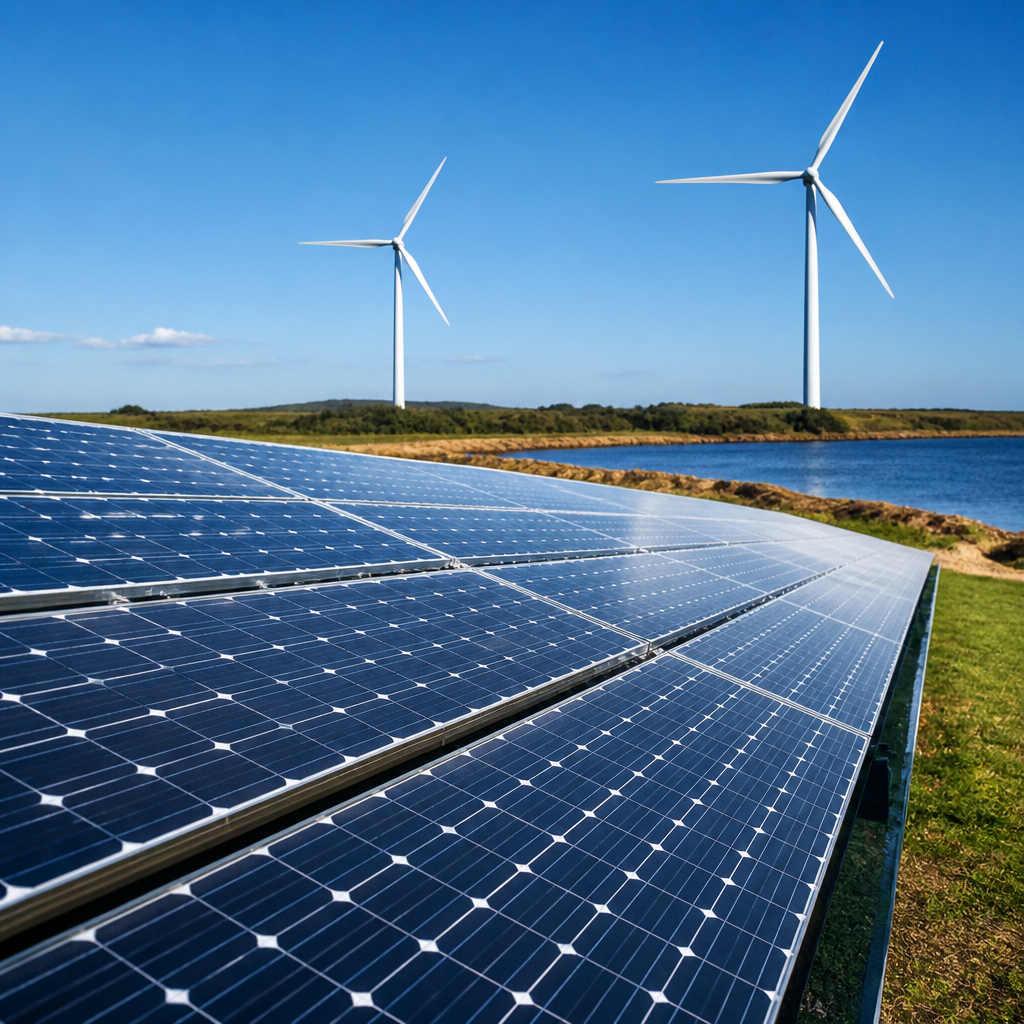
In photovoltaic modules, polymers are fundamental to environmental performance because module longevity determines the footprint of every watt generated. Encapsulants such as ethylene-vinyl acetate and polyolefin elastomers hold cells in place, cushion them against thermal cycling, and block contaminants. Backsheets built from layers such as PET with fluoropolymer outer surfaces provide electrical insulation and weather resistance. Edge seals, junction box potting compounds, and cable insulation complete the protective package. Field data consistently show that moisture ingress, UV degradation, delamination, and cracking can sharply reduce output, so polymer selection directly affects energy yield over twenty-five to thirty years.
The environmental challenge is that durability often conflicts with recyclability. Crosslinked encapsulants bond tightly to glass and cells, making module disassembly expensive. Some fluoropolymer-containing backsheets resist weathering extremely well but are harder to process in conventional recycling streams. Manufacturers have responded with co-extruded structures, fluorine-free backsheets, and encapsulants designed for easier delamination under controlled conditions. These developments matter because global solar waste volumes will rise with cumulative installations. Better design for disassembly, material labeling, and dedicated module recycling infrastructure can turn polymers from a disposal bottleneck into a manageable circular system component.
Wind energy: composites, blade waste, and emerging circular solutions
Wind energy illustrates the dual nature of polymers better than almost any other renewable technology. Turbine blades rely on glass fiber reinforced polymer composites, usually with epoxy or polyester resins, because they need high fatigue resistance and low weight over lengths that now exceed one hundred meters in some offshore designs. Lighter blades reduce root bending moments and enable longer spans, increasing capacity factor and lowering the levelized cost of electricity. Protective coatings and adhesives also improve erosion resistance, especially at the leading edge, where rain can damage surfaces and reduce aerodynamic efficiency.
Yet blade disposal has become a public symbol of renewable energy waste because thermoset composites are difficult to remold. Landfilling is increasingly restricted, and simple shredding captures only low-value filler use. More promising routes include cement kiln co-processing, mechanical recycling into composite feedstock, solvolysis to recover fibers, and resin systems engineered for depolymerization. Companies such as Siemens Gamesa have promoted recyclable blade concepts using resin chemistry that can be separated under specific conditions. These solutions are not fully mature at global scale, but they show that the environmental impact of polymer composites can be improved substantially through chemistry choice, modular blade design, and planned end-of-life pathways rather than disposal after decades of use.
Energy storage and electric infrastructure: safety, efficiency, and material complexity
Batteries, supercapacitors, inverters, cables, and transformers all depend on polymers for safe operation. In lithium-ion cells, polyethylene or polypropylene separators maintain ionic flow while preventing electrode contact. Binders hold active materials onto current collectors; gaskets and sealants prevent electrolyte leakage; thermal pads and foams manage heat and vibration; pack housings increasingly use flame-retardant engineering polymers or polymer-metal hybrids. Grid cables use crosslinked polyethylene insulation because it combines dielectric performance with durability. In transformers for renewable integration, cellulose may still dominate insulation paper, but polymer components support seals, bushings, and coatings throughout the system.
From an environmental perspective, these materials reduce losses and improve reliability, but they add recovery complexity at end of life. Battery recycling is often optimized around high-value metals, not polymers, so separators and binders are usually burned for energy or lost in process residues. That does not make them unimportant. Binder choice can influence solvent use, worker exposure, and recycling efficiency. Water-based binder systems for some electrode chemistries reduce reliance on N-methyl-2-pyrrolidone, a solvent with health and regulatory concerns. Likewise, halogen-free flame retardant packages in electrical components can lower smoke toxicity and simplify waste treatment. Better polymer formulation in energy storage is therefore not cosmetic; it shapes safety, manufacturing emissions, and recyclability.
Bio-based, recyclable, and lower-impact polymers: what is realistic now
Not every polymer in renewable energy must remain fossil-derived. Bio-based polyethylene, polyamide, epoxy precursors, and polyurethane feedstocks are already commercially available in selected markets, often sourced from sugarcane, tall oil, castor oil, or other biomass streams. Recycled PET and polyolefins can enter noncritical parts when purity and long-term stability are controlled. Dynamic covalent thermosets, vitrimer concepts, and thermoplastic composites offer routes to repairability and reprocessing that conventional crosslinked resins cannot provide. In practice, though, substitution is constrained by standards, bankability requirements, and decades-long durability expectations.
The realistic path is targeted replacement where environmental gains do not compromise field performance. For example, thermoplastic composite structures can improve recyclability in certain panels and enclosures. Recyclable resin systems may suit wind blade components before they are accepted in every spar cap design. Fluorine-free solar backsheets can work in many climates when validated for UV and moisture resistance. The key lesson from deployment projects is simple: lower-impact polymers succeed when they meet the same electrical, mechanical, and weathering requirements as incumbent materials, fit existing manufacturing lines, and come with credible qualification data from standards such as IEC and UL frameworks.
How to reduce environmental impact through better polymer decisions
The best environmental outcomes come from design discipline rather than one miracle material. Start with functional requirements and choose the least complex polymer system that will survive the service environment. Avoid unnecessary multilayer constructions that prevent separation. Specify additives carefully, especially flame retardants, pigments, and stabilizers, because they shape emissions, durability, and recycling options. Design joints for disassembly where practical. Use digital material passports and clear labeling to support sorting decades later. Validate outdoor aging with accelerated tests tied to real exposure data, since premature failure erases any benefit from lower embodied carbon.
Procurement also matters. Ask suppliers for environmental product declarations, recycled content data, and evidence of compliance with REACH, RoHS, and relevant fire standards. Compare options using lifetime energy delivered, failure rate, maintenance interval, and end-of-life route instead of purchase price alone. For organizations building a materials and properties knowledge base, this environmental impact hub should connect directly to deeper pages on recyclability, durability, UV resistance, chemical resistance, flame behavior, and composite design. That internal structure helps teams answer practical questions quickly and improves decisions at the system level. The role of polymers in renewable energy technologies is therefore neither inherently green nor inherently harmful. It is decisive, manageable, and highly dependent on informed material selection. Organizations that treat polymers as strategic design variables can cut waste, improve reliability, and lower the footprint of renewable energy assets over their full operating lives. Review your current material specifications, map end-of-life risks, and prioritize the polymer changes that deliver measurable lifecycle gains.
Frequently Asked Questions
What role do polymers play in renewable energy technologies?
Polymers are foundational materials in renewable energy systems because they combine low weight, corrosion resistance, electrical insulation, chemical durability, and cost-effective manufacturing. In practical terms, they help make solar panels lighter and better protected from moisture, enable wind turbine blades to be strong without becoming excessively heavy, insulate cables and electrical components in battery systems, and provide sealing, encapsulation, and barrier functions across a wide range of clean energy equipment. These advantages are especially important in renewable energy because many systems must operate outdoors for years while facing sunlight, heat, humidity, salt, mechanical stress, and repeated thermal cycling.
Another key benefit is design flexibility. Polymers can be formulated as rigid plastics, flexible films, tough engineering thermoplastics, elastomers, foams, coatings, adhesives, and high-performance composites. That means engineers can tailor a polymer-based material for a very specific job, whether that job is protecting a photovoltaic module, reducing the weight of a battery enclosure, damping vibration in a wind turbine, or insulating high-voltage wiring in an electric power conversion system. Compared with relying only on metals, ceramics, or glass, polymers often enable lower-cost production at higher volumes while improving durability, manufacturability, and installation efficiency.
How are polymers used in solar energy systems?
In solar energy, polymers serve many functions beyond what most people realize. They are used in backsheets, encapsulants, sealants, junction box components, cable insulation, protective films, mounting system parts, and in some cases transparent or semi-transparent layers in advanced photovoltaic designs. Encapsulant polymers help hold solar cells in place while protecting them from vibration, moisture ingress, dirt, and electrical failure. Backsheet materials provide electrical insulation and environmental protection on the rear side of the panel, helping modules survive years of UV exposure and changing weather conditions.
Polymers also support the long-term reliability of solar installations through their barrier and sealing properties. Moisture is one of the biggest threats to solar module life, so polymer layers are carefully selected to slow water vapor penetration and resist cracking, yellowing, and delamination. In emerging solar technologies, such as flexible and lightweight photovoltaic systems, polymers become even more important because they allow modules to bend, reduce transport and installation loads, and open up new applications on rooftops, vehicles, portable systems, and building-integrated solar surfaces. Their combination of optical performance, adhesion, electrical insulation, and processability makes them central to both conventional and next-generation solar energy design.
Why are polymer composites important for wind energy applications?
Wind energy depends heavily on polymer composites, particularly in turbine blades, because these materials offer a rare combination of high strength and low weight. A turbine blade must be stiff enough to maintain aerodynamic shape, tough enough to handle repeated loading, and light enough to rotate efficiently and avoid placing excessive stress on the tower and drivetrain. Polymer matrix composites, often reinforced with glass or carbon fibers, make this balance possible. Without them, modern long-blade turbine designs would be far less practical, and energy capture from low and moderate wind speeds would be reduced.
These composites also contribute to durability in harsh operating environments. Wind turbines are exposed to rain, ultraviolet radiation, temperature swings, fatigue cycling, and in offshore settings, salt and humidity. Properly engineered polymer-based composite systems can resist corrosion better than many metallic alternatives and can be molded into the complex shapes needed for aerodynamic efficiency. In addition to blades, polymers are used in coatings, sealants, cable insulation, housings, and vibration-control components throughout turbine systems. Their role is not only structural but also protective, helping extend service life and reduce maintenance demands over the lifespan of wind energy assets.
How do polymers support batteries and energy storage systems?
Polymers are deeply integrated into modern batteries and stationary energy storage systems because they provide electrical insulation, thermal management support, mechanical protection, and chemical separation. Inside many batteries, polymer separators are essential safety components. They keep the positive and negative electrodes apart while still allowing ions to move through the electrolyte. That balancing act is critical for both battery performance and safety. If the separator fails, the risk of internal short circuits and thermal events increases significantly.
Beyond the cell interior, polymers are used in pack enclosures, wire coatings, gaskets, adhesives, potting compounds, flame-retardant parts, and protective barriers that shield sensitive electronics from moisture and contaminants. Their light weight helps reduce overall system mass, while their formability allows compact and modular battery designs. In grid-scale storage and renewable integration projects, polymers also help improve manufacturability and serviceability because they can be processed into complex parts with repeatable precision. As energy storage technologies continue to evolve, polymers remain important not just as passive packaging materials, but as engineered components that influence efficiency, reliability, safety, and system lifespan.
What challenges and future opportunities exist for polymers in renewable energy?
Although polymers offer major advantages, they also come with important challenges that engineers and manufacturers must address. Long-term exposure to heat, ultraviolet light, oxygen, moisture, chemicals, and mechanical stress can cause polymer degradation over time. This may lead to embrittlement, discoloration, reduced adhesion, cracking, or loss of barrier performance if the material is not properly selected and stabilized. In renewable energy applications, where systems are expected to last for decades, these aging mechanisms matter a great deal. Material compatibility, fire performance, recyclability, and end-of-life management are also growing concerns as renewable infrastructure scales worldwide.
At the same time, the future opportunities are substantial. Researchers are developing tougher, more heat-resistant, more recyclable, and more sustainable polymer systems for solar modules, turbine components, hydrogen systems, power electronics, and batteries. There is growing interest in bio-based polymers, improved thermoplastic composites, advanced coatings, self-healing materials, and polymer formulations designed for easier repair or recycling. As renewable energy technologies become more demanding and more widespread, the ability to tailor polymers at the molecular and formulation level gives them a unique advantage. In many cases, the next leap in clean energy performance, durability, and affordability will depend as much on smarter materials design as on breakthroughs in the energy devices themselves.