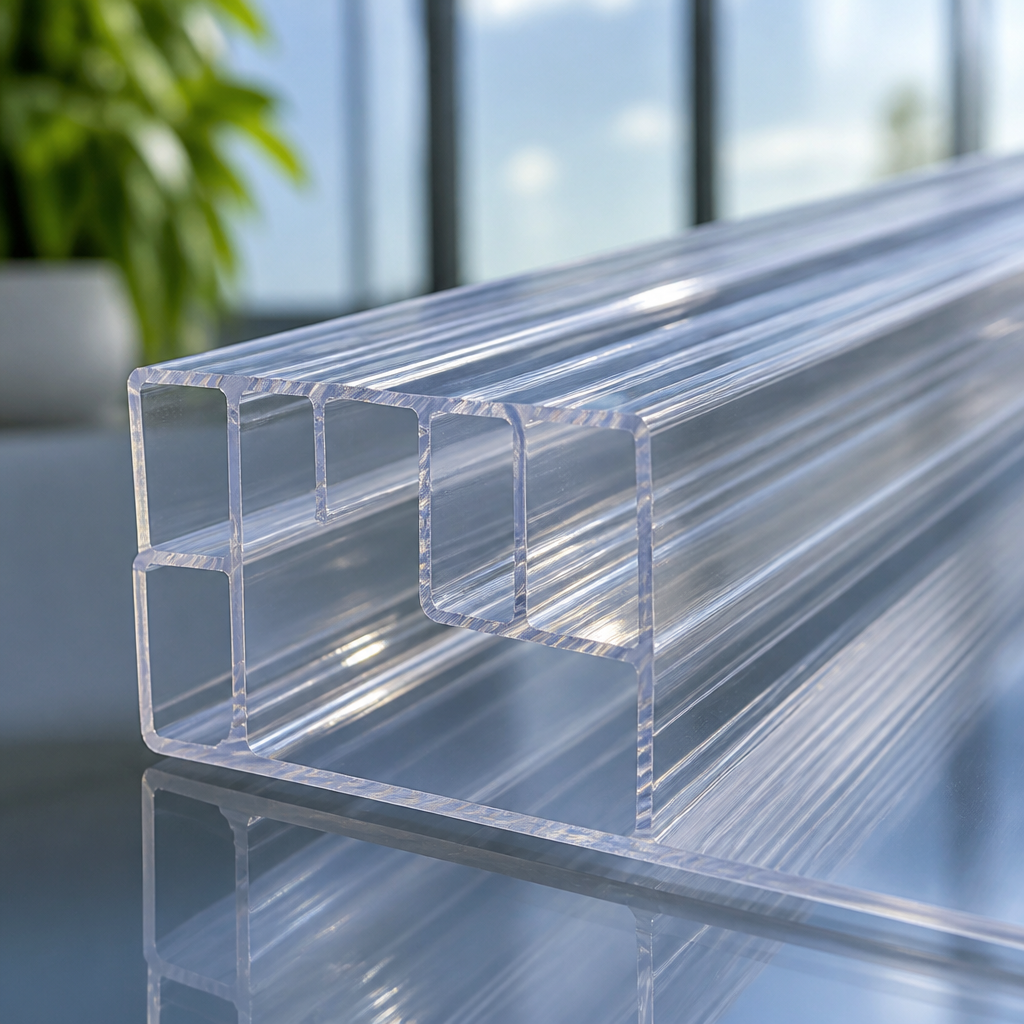
Transparency is one of the most commercially important optical properties in polymer applications because it determines whether a material can transmit light clearly, diffuse it usefully, or block visual access while still delivering strength, low weight, and processability. In practical materials engineering, transparency refers to the degree to which visible light passes through a polymer with minimal absorption and scattering, allowing objects behind it to remain distinct. That simple definition hides a complex reality. A polymer can look clear in a thin film yet appear hazy in a thick molded part. It can transmit most visible light but still yellow under ultraviolet exposure. It can be transparent in laboratory conditions and turn cloudy after poor drying, high shear, or incorrect crystallization control on the production floor.
For designers, converters, and product engineers, transparency matters because it often sits at the intersection of performance and perception. Medical device housings, face shields, packaging windows, automotive lenses, display covers, greenhouse films, and consumer electronics all rely on controlled optical behavior. In many projects I have worked on, teams initially asked for a “clear plastic,” but what they actually needed was a specific combination of total light transmission, low haze, gloss, color neutrality, scratch resistance, and long-term stability. Those requirements affect resin selection, additive packages, mold design, processing conditions, and validation testing. Optical performance is never only a visual issue; it is tied directly to safety, compliance, branding, and product life.
Within the broader topic of materials and properties, optical properties form a critical subtopic because they connect molecular structure to end-use function in a highly visible way. Transparency is the hub concept that leads into haze, transmittance, refractive index, birefringence, gloss, clarity, yellowness, and weathering resistance. It also links naturally to supporting discussions on amorphous versus semicrystalline polymers, additives, coatings, barrier layers, and optical testing standards. Understanding the role of transparency in polymer applications gives readers the framework needed to evaluate why polycarbonate succeeds in impact-resistant glazing, why polymethyl methacrylate is favored for high-clarity signage, why PET performs so well in bottles, and why polypropylene often requires careful nucleation and processing control to improve visual appearance. In other words, transparency is not a niche aesthetic trait. It is a core engineering property that shapes product selection across industries.
What transparency means in polymers and how it is measured
In polymer science, transparency depends on how light interacts with the material’s internal structure. Visible light passes through a polymer successfully when the material does not absorb much of that wavelength range and when internal features do not scatter light strongly. Scattering increases when there are refractive index mismatches inside the part, such as crystals within an amorphous matrix, rubber domains, fillers, voids, contamination, moisture streaks, or surface roughness. That is why a polymer with excellent intrinsic transparency can still produce a visually poor component if the process creates splay, sink, weld-line roughness, or orientation defects.
The most common metrics are total light transmission, haze, and clarity. Total light transmission reports how much incident visible light passes through the sample. Haze measures the percentage of transmitted light that deviates from the incident beam by a wide angle, which makes objects behind the material look washed out or cloudy. Clarity is related to narrow-angle scattering and affects how sharp an image appears through the material. In industry, these properties are often measured using standards such as ASTM D1003 for haze and luminous transmittance. Color change and yellowing are also tracked using ASTM E313 or CIE color coordinates when long-term appearance matters.
Thickness matters greatly. A 100 micrometer cast film and a 4 millimeter injection molded cover should not be compared casually, even if they are made from the same base resin. Surface finish matters too. Polished tooling can improve perceived transparency by lowering scatter at the interface, while matte texturing intentionally disrupts transmission for privacy, antiglare performance, or diffusion. In development work, I have seen teams misread a resin data sheet because the published transmittance came from plaque testing under tightly controlled conditions that did not resemble the actual molded geometry. Good optical design starts by matching test conditions to real parts.
Structure-property relationships that control optical behavior
The biggest structural divide is between amorphous and semicrystalline polymers. Amorphous polymers, including polycarbonate, acrylic, polystyrene, and clear grades of ABS blends, are usually the first candidates for high transparency because they lack the crystalline regions that scatter visible light. Semicrystalline polymers such as polyethylene, polypropylene, nylon, and POM can range from translucent to opaque depending on crystal size, crystallization rate, cooling profile, and additives. If crystals remain much smaller than visible wavelengths and refractive contrast is limited, transparency improves. If crystal structures grow larger or more heterogeneous, haze rises sharply.
Molecular orientation also affects optical properties. During film stretching, blow molding, or injection molding through thin gates, polymer chains can align, creating anisotropy and, in some materials, birefringence. Birefringence changes refractive index with direction and can produce optical distortion, stress patterns, or rainbow effects under polarized light. This is unacceptable in precision lenses and display components, but it can be tolerated in commodity packaging. Residual stress from rapid cooling or uneven packing can worsen birefringence and reduce dimensional stability at the same time.
Additives introduce another layer of control and compromise. Impact modifiers may improve toughness but create dispersed phases that scatter light. UV stabilizers protect against yellowing but can subtly shift color. Slip agents and antiblocks help films process and unwind, yet excess migration can dull surfaces or alter gloss. Clarifying agents, especially in polypropylene, can reduce spherulite size and improve transparency dramatically. Millad NX 8000 is a well-known sorbitol-based clarifier used to make polypropylene containers clearer while also supporting cycle-time benefits through nucleation. These gains are real, but they depend on dosage, resin grade, and thermal history.
Choosing transparent polymers for real applications
Selecting the right transparent polymer begins with application requirements, not with a generic preference for the clearest material. Acrylic, or PMMA, offers excellent visible light transmission, commonly around 92 percent, plus very good weatherability and surface gloss. That makes it a strong choice for signs, skylights, lighting covers, and retail displays. Its tradeoff is lower impact resistance than polycarbonate. Polycarbonate usually transmits around 88 to 90 percent of visible light, enough for many glazing and lens applications, while delivering outstanding toughness. However, it is more prone to scratching and can yellow without proper UV protection.
PET and PETG sit in a useful middle ground for packaging, thermoformed trays, and transparent containers. PET has strong clarity and good gas barrier relative to many commodity plastics, which helps explain its dominance in beverage bottles. PETG improves thermoformability and toughness for displays or medical packaging, though it can sacrifice some chemical resistance and heat performance. Polystyrene can be very clear and easy to process, but brittleness limits use where impact matters. Cyclic olefin copolymers and cyclic olefin polymers, often abbreviated COC and COP, are premium optical materials used in diagnostics, drug delivery components, and microfluidics because they combine clarity with low water absorption and good dimensional precision.
| Polymer | Typical optical strength | Main advantage | Key limitation | Common applications |
|---|---|---|---|---|
| PMMA | Very high transmission, low haze | Excellent weatherability and gloss | Lower impact strength | Signage, lenses, lighting covers |
| PC | High transmission | Exceptional impact resistance | Scratch sensitivity, UV yellowing risk | Safety glazing, shields, housings |
| PET | High clarity | Good barrier and bottle performance | Processing moisture sensitivity | Beverage bottles, packaging |
| PP clarified | Moderate to good transparency | Low cost and chemical resistance | Still less clear than PMMA or PC | Food containers, caps, housewares |
| COC/COP | Excellent optical purity | Low moisture uptake, precision molding | Higher material cost | Medical optics, diagnostics |
When I evaluate clear materials with customers, I always ask what the part must survive: impact, sterilization, cleaners, UV, heat, repeated flexing, or regulatory review. Transparency alone never closes the decision. A brilliant optical result that crazes after alcohol exposure or fogs in steam sterilization is not a successful material choice.
Processing factors that make or break clarity
Processing discipline is often the difference between a premium transparent part and expensive scrap. Moisture control is critical for hygroscopic polymers such as PET, PETG, PC, nylon, and many specialty copolyesters. If they are not dried to the supplier’s recommended dew point and residence conditions, hydrolytic degradation can reduce molecular weight and create defects that show up as haze, splay, or brittleness. PET bottle preform lines, for example, rely on tightly controlled drying because even small deviations can damage both appearance and mechanical performance.
Melt temperature, mold temperature, fill rate, and cooling profile also shape transparency. Too much shear can generate orientation, flow marks, or local degradation. Too little mold temperature can freeze the skin too quickly, trapping stress and reducing surface replication. In semicrystalline materials, cooling rate directly influences crystal size and therefore optical quality. Clarified polypropylene yogurt cups are a classic example: resin selection helps, but mold cooling, wall thickness, and cycle conditions largely determine whether the cup looks acceptably clear on shelf.
Tooling quality should never be underestimated. Venting, gate design, polish level, and uniform wall thickness all affect final appearance. Weld lines scatter light differently than the surrounding matrix and are easy to see in transparent components. Gas traps can burn the resin or leave streaks. Even regrind strategy matters. In some clear applications, especially medical and cosmetic packaging, regrind is restricted or excluded because contamination risk and visual inconsistency are too high. The lesson is simple: transparency is engineered not only in formulation, but also in drying hoppers, screws, molds, and operator practices.
Application-specific uses across packaging, medical, automotive, and construction
In packaging, transparency supports product visibility, shelf appeal, tamper confidence, and consumer trust. Clear PET bottles transformed beverage merchandising because shoppers can inspect the product directly, while transparent thermoformed packs allow retailers to display shape and color without opening the item. In food packaging, however, perfect clarity is not always the goal. Some products need UV blockers to slow oxidation, or controlled haze to hide surface blemishes. Transparent packaging therefore balances optics with barrier, toughness, sealing behavior, and sustainability targets.
Medical applications raise the standard further. Diagnostic cartridges, blood reservoirs, IV components, and sample containers often require optical inspection, low extractables, sterilization resistance, and regulatory traceability. Materials such as polycarbonate, COC, COP, and certain acrylics are used because clinicians need to see fluids, verify fill levels, detect bubbles, or read sensor paths reliably. In this sector, transparency is tied directly to patient safety. Surface stress cracking, gamma discoloration, or fogging after autoclave exposure can disqualify an otherwise promising polymer quickly.
Automotive and construction uses reveal the tradeoffs most clearly. Polycarbonate glazing, headlamp lenses, and interior display covers benefit from transparency combined with impact resistance and design freedom, but they often need hard coats to resist abrasion and maintain long-term visibility. Acrylic remains important in architectural panels and outdoor glazing because of its weatherability and color stability. Greenhouse films depend on carefully tuned transmission and diffusion to optimize plant growth; sometimes diffuse light performs better than perfectly direct transmission because it spreads illumination more evenly through the canopy. These examples show that transparency is not a single target. It is application-specific light management.
Limits, durability concerns, and how transparency fits the wider optical-properties hub
Transparent polymers are not automatically durable optical materials. Scratching, environmental stress cracking, solvent attack, UV exposure, thermal aging, and additive bloom can all reduce visual quality over time. Polycarbonate can lose appearance without hard coating. Acrylic can craze under certain chemical exposures. PET can haze if processing moisture is mishandled. Even the cleanest resin cannot overcome poor cleaning instructions in service. That is why validation should include accelerated weathering, abrasion testing, chemical compatibility, and optical measurement before and after aging, not just on fresh plaques.
Transparency also belongs inside a wider optical-properties framework. Engineers evaluating clear polymers should move outward from this hub into related topics: haze for cloudiness, transmittance for light throughput, refractive index for lens behavior and multilayer design, birefringence for stress and anisotropy, gloss for surface reflectance, color and yellowness for aging, and UV stability for outdoor life. Those links matter because many failures blamed on “lost transparency” are actually changes in one of those companion properties. A part may still transmit light well but look unacceptable because haze rose, gloss fell, or yellow index shifted.
The central takeaway is practical. Transparency in polymer applications is a controllable engineering outcome created by matching polymer structure, additives, processing conditions, surface design, and service environment to the actual job the part must do. Teams that treat transparency as a measurable optical property, rather than a vague visual preference, make better material decisions and avoid expensive surprises. Use this page as the starting point for the broader optical-properties topic, then evaluate each related property in context before locking a resin, tool, or specification. Clear decisions begin with clear materials understanding.
Frequently Asked Questions
What does transparency mean in polymer applications?
In polymer applications, transparency refers to a material’s ability to transmit visible light with very little absorption or scattering, so objects behind the material can still be seen clearly and distinctly. This is one of the most valuable optical properties in commercial plastics because it directly affects appearance, functionality, and user experience. A polymer may be described as fully transparent, translucent, or opaque depending on how it interacts with light. A truly transparent polymer allows light to pass through with minimal distortion, while a translucent one diffuses light and softens visibility, and an opaque material blocks visual transmission almost entirely.
From an engineering standpoint, transparency is not just a visual trait. It is tied closely to polymer structure, purity, crystallinity, surface quality, and processing conditions. If light passes through a polymer without being scattered by internal structures, fillers, voids, or surface defects, the material appears clear. This is why transparency matters in products such as lenses, packaging, medical devices, display covers, lighting components, and protective barriers. In all of these applications, designers rely on transparency to combine optical performance with the traditional advantages of polymers, including low weight, toughness, moldability, and cost-effective manufacturing.
Why is transparency considered such an important property in commercial polymer products?
Transparency is commercially important because it influences both product function and market appeal. In many applications, users need to see through the polymer for safety, inspection, aesthetics, or performance reasons. Clear food packaging allows consumers to view contents before purchase. Medical tubing and containers let healthcare professionals monitor fluid flow or contamination. Automotive and architectural glazing applications depend on light transmission while still benefiting from impact resistance and lower weight than glass. In consumer electronics and lighting, optical clarity can affect brightness, appearance, and overall perceived quality.
Beyond visibility, transparency can also support design flexibility. Polymers can be engineered to provide crystal-clear transmission, soft diffusion, privacy effects, or selective light control, all while maintaining favorable mechanical and processing characteristics. This makes them useful in sectors where materials must do more than simply look clear. They may need to resist impact, withstand sterilization, tolerate outdoor exposure, or be manufactured into complex shapes at high volume. For manufacturers, a transparent polymer can create significant value because it offers a combination of optical performance and practical processing advantages that many competing materials cannot match as easily.
What factors affect whether a polymer is transparent, translucent, or opaque?
Several factors determine how a polymer interacts with visible light. One of the most important is internal structure. Amorphous polymers are often more transparent because they do not contain the same kind of ordered crystalline regions that can scatter light. In contrast, semicrystalline polymers may appear hazy or opaque if their crystalline domains are large enough to disrupt light transmission. The closer the internal material structure is to being optically uniform, the more likely the polymer is to appear clear.
Composition also plays a major role. Additives such as pigments, fillers, reinforcements, flame retardants, and impact modifiers can reduce transparency if they create refractive index mismatches or introduce scattering centers. Even tiny contaminants, trapped moisture, air bubbles, or poor mixing can noticeably reduce clarity. Surface condition matters as well. Scratches, roughness, flow marks, and mold defects can scatter incoming light and create haze, even if the polymer itself is inherently transparent.
Processing conditions are equally critical. Cooling rate, orientation, molding temperature, and residual stress can all influence how the polymer solidifies and how clearly it transmits light. For example, uncontrolled crystallization or internal stress can reduce optical quality. Thickness must also be considered, because a polymer that looks clear in a thin film may appear less transparent in a thicker section due to greater absorption or scattering over a longer light path. In practice, transparency is the result of both material selection and careful manufacturing control.
How do engineers improve or preserve transparency in polymer materials?
Engineers improve transparency by starting with the right polymer chemistry and then controlling every stage of formulation and processing to minimize light scattering and absorption. Material selection is the first step. Naturally transparent polymers such as acrylic, polycarbonate, polystyrene, and certain grades of PET are often chosen when high optical clarity is required. From there, formulators work to keep the material as optically uniform as possible by limiting contaminants, controlling additive choice, and matching refractive indices where additives cannot be avoided.
Processing discipline is just as important. Drying hygroscopic polymers properly helps prevent bubbles and degradation. Optimizing molding temperature, pressure, and cooling conditions can reduce internal defects, residual stress, and unwanted crystallization. Good mold design and polished tooling surfaces help produce smoother parts with less haze. In extrusion and film production, careful control of thickness, orientation, and cooling can dramatically improve clarity and consistency. Engineers may also add coatings that resist scratching or reduce glare, since surface damage over time can undermine transparency even if the original part was optically excellent.
Preserving transparency in service requires attention to the environment the polymer will face. UV exposure, chemicals, heat, and mechanical abrasion can all reduce clarity over time by causing yellowing, crazing, cracking, or surface wear. That is why stabilizers, protective coatings, and application-specific testing are often built into the design process. In short, maintaining transparency is not a single adjustment but a coordinated strategy involving material science, process engineering, and long-term performance planning.
What are some common real-world applications where transparency in polymers is especially important?
Transparency is essential in a wide range of industries because it allows polymers to deliver visibility while still offering low weight, durability, and manufacturing flexibility. In packaging, transparent plastics are used for bottles, trays, blister packs, and films so consumers can inspect products directly. In healthcare, transparent polymers are used in syringes, IV components, diagnostic housings, face shields, and laboratory containers where visual monitoring is critical. In construction and transportation, clear polymer sheets and molded parts appear in windows, protective panels, instrument covers, and lighting assemblies, often replacing heavier or more fragile materials.
Electronics and lighting are also major areas where transparency matters. Display covers, light guides, LED lenses, and optical diffusers all depend on precise control of light transmission and scattering. In these applications, the goal is not always perfect see-through clarity. Sometimes engineers want transparency with controlled diffusion to spread light evenly or reduce glare. In consumer goods, transparency is often used to communicate cleanliness, modern design, or product quality, which adds marketing value alongside technical function.
What makes polymer transparency especially powerful is its versatility. A single class of materials can be engineered to be crystal clear, softly translucent, impact resistant, lightweight, and easy to process into intricate geometries. That combination explains why transparency remains one of the most commercially significant optical properties in polymer applications and why it continues to shape material selection across so many products and industries.