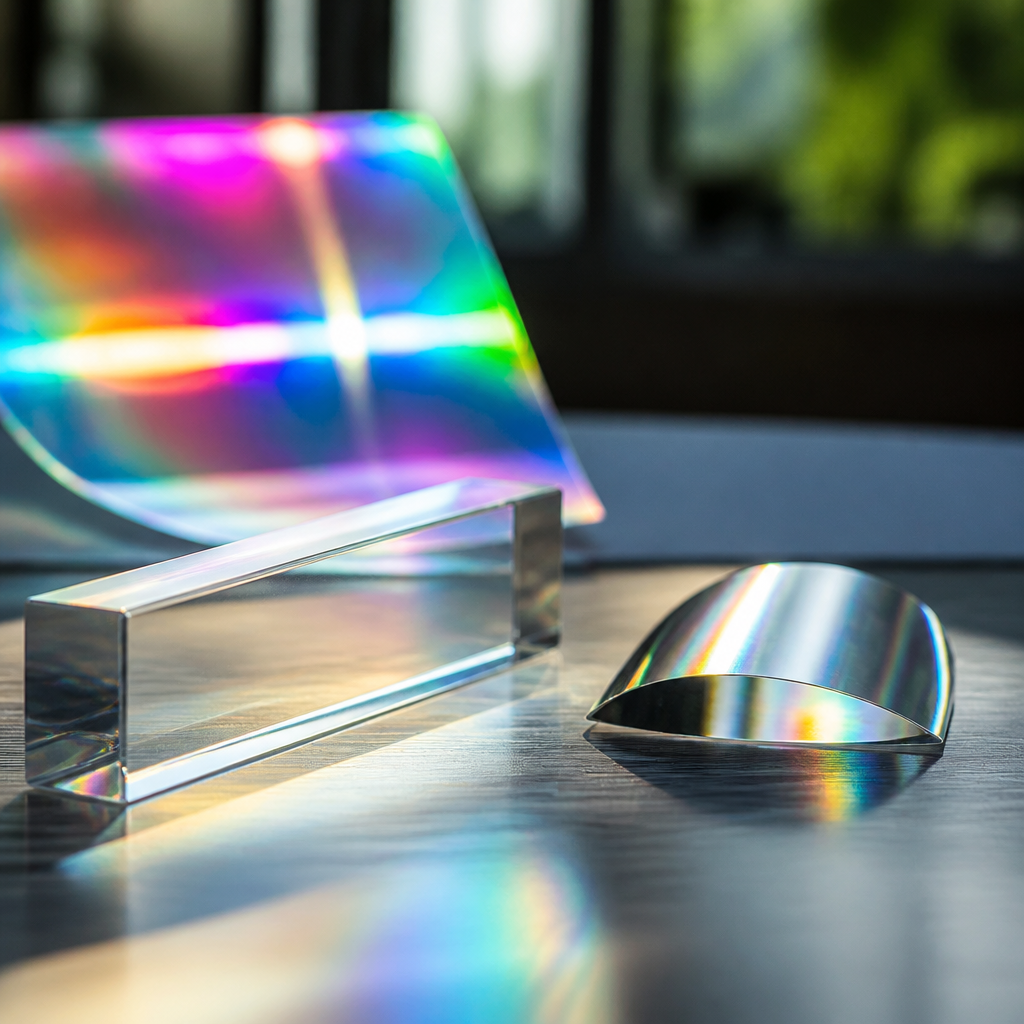
Optical properties determine how polymers interact with light, and that interaction shapes everything from clear food packaging and automotive lenses to medical tubing, display films, and greenhouse covers. In polymer science, optical properties usually refer to measurable behaviors such as transmission, transparency, haze, refractive index, birefringence, gloss, color, fluorescence, reflectance, and resistance to ultraviolet degradation. I have worked with these properties in material selection and failure analysis, and one lesson is constant: a polymer that looks acceptable in a lab sample can perform very differently after extrusion, molding, orientation, weathering, or sterilization. That is why understanding optical properties of polymers matters to product engineers, converters, designers, and buyers. Optical performance affects product safety, brand appearance, sensor accuracy, regulatory compliance, and manufacturing yield. It also influences cost, because reaching a target for clarity or color often requires changes in resin choice, additives, processing conditions, tool design, and quality control. As a hub topic within materials and properties, optical properties connect directly to morphology, crystallinity, molecular orientation, thermal history, and surface quality. A sound grasp of these links helps teams choose the right test methods, interpret datasheets correctly, and avoid common mistakes such as treating transparency and low haze as interchangeable requirements.
At a practical level, light passing through a polymer may be transmitted, absorbed, reflected, refracted, scattered, or converted to heat. The balance depends on chemistry and structure. Amorphous polymers such as PMMA, polycarbonate, and polystyrene can be highly transparent because they lack large crystalline regions that scatter visible light. Semicrystalline polymers such as polyethylene and polypropylene are often more translucent or opaque, especially when spherulites, fillers, voids, or surface roughness disrupt uniform light passage. Additives complicate the picture further. UV absorbers can protect clarity over time, while pigments deliberately alter color and opacity. Nucleating agents, impact modifiers, and recycled content may improve one property while reducing another. For anyone evaluating optical properties of polymers, the key is to separate what the resin can do intrinsically from what the finished part actually delivers after processing and use. That distinction anchors the sections that follow.
Core optical properties and what they mean in practice
The most common optical question is simple: how clear is the material? In testing, clarity is not a single number. Luminous transmittance measures the percentage of visible light passing through a specimen. Haze measures the percentage of transmitted light that is scattered more than a specified angle, commonly reported using ASTM D1003 for plastics. A package window can have high transmittance yet still look cloudy if haze is high. Clarity, in commercial language, often describes image sharpness through a film or molded part. PMMA is valued because it combines high transmittance with low haze and excellent surface gloss. Polycarbonate offers strong transparency and impact resistance, but its scratch sensitivity can reduce optical performance in service without hard coatings.
Refractive index is another foundational property. It describes how strongly a polymer bends light and matters in lenses, light guides, optical adhesives, coatings, and multilayer films. A mismatch in refractive index between phases in a blend or between filler and matrix increases scattering. That is one reason mineral-filled polymers usually lose transparency. Birefringence, by contrast, is the difference in refractive index along different directions within an oriented material. I see this frequently in injection molded polycarbonate parts and stretched films. Residual stress and molecular orientation create optical anisotropy, which can distort images or interfere with polarized light in screens and sensors. For display applications, birefringence is not a minor detail; it can determine whether a material is usable at all.
Surface-dependent properties also matter. Gloss describes how specularly a surface reflects light, often measured under standardized geometries such as ASTM D523. A high-gloss polymer may communicate cleanliness and premium quality, but it can also reveal scratches, weld lines, and flow marks. Color is usually quantified using CIE L*a*b* coordinates and delta E values to track visual differences from a standard. Fluorescence can be useful, as in optical brighteners, or problematic, as when sterilization changes the perceived color of a medical component. Yellowness index, commonly measured by ASTM E313, becomes especially important in transparent parts that must remain visually neutral over time. These metrics give teams a precise language for specification instead of relying on subjective terms such as crystal clear or slightly cloudy.
How polymer structure controls transparency, haze, and color
The optical behavior of a polymer begins at the molecular and morphological level. Amorphous polymers generally transmit visible light well because they do not contain ordered crystalline domains large enough to scatter wavelengths in the visible range. PMMA remains a benchmark for optical clarity for this reason. Semicrystalline polymers behave differently. During cooling, they form lamellae and spherulites, and if these structures approach visible wavelengths, light scattering rises sharply. That is why polyethylene films can range from nearly clear to milky depending on density, comonomer content, cooling rate, and orientation. In polypropylene, clarified grades use sorbitol-based clarifiers to reduce spherulite size and improve transparency for food containers.
Molecular orientation is another decisive factor. In blown film, biaxial orientation can improve gloss and sometimes clarity, but nonuniform orientation creates haze bands or iridescence. In injection molding, gate design, fill speed, and pack pressure affect frozen-in stress. I have seen transparent PC parts pass dimensional checks yet fail visual inspection under polarized light because stress patterns produced rainbow effects and image distortion. Wall thickness matters too. A polymer may appear transparent in a 1 millimeter plaque and only translucent in a 6 millimeter section because the longer optical path amplifies absorption and scattering. This is one reason datasheet values must be matched to end-use thickness before material approval.
Additives, contamination, and moisture can shift optical properties significantly. Antiblock agents in films create micro-roughness that improves handling but can increase haze. Glass fibers make engineering plastics stronger yet almost always destroy transparency because the refractive mismatch is severe. Moisture in hygroscopic resins such as PET and polycarbonate can cause hydrolysis during processing, lowering molecular weight and generating defects that alter appearance. Regrind and post-consumer recycled content may introduce gels, black specks, and color variation. Even when average transmittance remains acceptable, isolated defects can make a product commercially unusable. In optical applications, cleanliness of resin handling, drying discipline, filtration, and tool maintenance are not secondary concerns; they are part of the optical design.
Measurement methods, standards, and interpretation of test data
Reliable decisions depend on standardized measurement. For haze and luminous transmittance, ASTM D1003 remains one of the most cited methods for transparent plastics, while integrating sphere spectrophotometers are widely used for broader transmission and reflectance analysis. Refractive index is often measured with an Abbe refractometer or more advanced optical instruments depending on specimen form. Gloss uses ASTM D523, and color measurements typically rely on spectrophotometers reporting CIE L*a*b* values under defined illuminants and observer angles. UV weathering may be evaluated with accelerated exposure devices under standards such as ASTM G154 or G155, though correlation with outdoor service always requires judgment.
Interpreting data correctly is as important as collecting it. Test thickness, surface finish, and conditioning history can change the result enough to reverse a material ranking. A polished plaque and a textured molded part made from the same resin will not present the same gloss or haze. A film measured before corona treatment may differ from one measured after treatment if the surface chemistry and roughness change. Transparent polymers also need careful reporting of wavelength range. A material can be transparent in the visible region yet block ultraviolet effectively, which is desirable for protective packaging. Near infrared transmission, meanwhile, matters in sensor housings and sorting systems. I recommend asking for the full spectral curve when the application involves machine vision, IR heating, or UV exposure rather than relying on a single visible-light number.
| Optical property | What it indicates | Common standard or tool | Typical use case |
|---|---|---|---|
| Transmittance | Amount of light passing through | ASTM D1003, spectrophotometer | Clear packaging, covers, lenses |
| Haze | Wide-angle scattering of transmitted light | ASTM D1003, haze meter | Film clarity, display layers |
| Refractive index | Degree of light bending | Abbe refractometer | Lenses, optical adhesives |
| Birefringence | Directional index difference from orientation or stress | Polarized light methods | Display parts, precision molding |
| Gloss | Specular surface reflection | ASTM D523, gloss meter | Consumer products, interior trim |
| Color and yellowness | Visual tone and aging-related discoloration | CIE L*a*b*, ASTM E313 | Medical, lighting, branding |
One persistent mistake is assuming a datasheet value guarantees production performance. It does not. Datasheets usually represent controlled test specimens, not the exact tool, surface texture, cycle time, and additive package used in a commercial line. Good optical qualification combines lab tests with molded or extruded parts taken from production-representative conditions. It also defines pass and fail criteria in language operations teams can use, including allowable haze range, maximum delta E, visual defect limits, and weathering retention after specified exposure. Without that discipline, optical disputes drift into subjective debate between supplier, processor, and customer.
Processing effects and common causes of optical defects
Processing determines whether a polymer reaches its optical potential. In injection molding, melt temperature, mold temperature, fill rate, venting, and cooling uniformity all affect final appearance. Low melt temperature can leave flow marks or poor replication of a polished surface. Excessive shear can degrade the resin, causing yellowing or black specks. Inadequate venting traps gas and creates burn marks, especially in transparent parts where any defect is obvious. Weld lines may be structurally acceptable yet remain visible because refractive changes at the interface alter reflection. Hot runner residence time can also damage sensitive transparent grades if turnover is poor.
In extrusion and film production, die lines, gels, sharkskin, and thickness variation quickly translate into optical defects. PET sheet for thermoforming is particularly sensitive to drying and contamination. Even a small amount of moisture can reduce molecular weight and contribute to haze or brittleness. For polyolefin films, frost line height and cooling conditions influence crystal morphology and therefore clarity. Orientation processes used in BOPP and BOPE films improve stiffness and optical consistency, but uneven stretch creates nonuniform gloss and haze. Calendared PVC can achieve excellent surface quality, yet plasticizer choice and long-term migration affect clarity and color stability over time.
Environmental exposure adds another layer. UV light can break polymer chains or trigger oxidation, leading to yellowing, embrittlement, and loss of transmission. Polycarbonate without stabilization yellows faster outdoors than acrylic, while PMMA generally retains optical clarity better in weathering but does not match PC in impact strength. Chemical exposure matters as well. Sanitizers, fuels, and cleaning agents can induce stress cracking or surface whitening in susceptible polymers. Abrasion raises haze by roughening the surface. For that reason, optical parts are often evaluated not only as molded but after scratch testing, sterilization, dishwasher cycling, or outdoor exposure that simulates actual service.
Selecting polymers for optical applications and balancing tradeoffs
No single polymer is best for every optical application. PMMA is often chosen for superior transparency, weatherability, and surface hardness, making it common in signage, lenses, and light guides. Polycarbonate is selected when impact resistance and heat resistance are critical, as in machine guards, automotive glazing components, and medical devices, though coatings are often needed to improve scratch resistance and UV durability. PET and PETG offer good clarity and processability for packaging and thermoformed parts. Polystyrene can be very clear and economical but has lower toughness. Cyclic olefin copolymers and cyclic olefin polymers provide excellent optical purity, low water absorption, and good dimensional stability, which is why they appear in diagnostics, microfluidics, and high-end packaging.
Selection should start with the optical requirement in context, not with a favorite resin. If a part must transmit visible light while blocking UV, a UV-stabilized clear polymer or coextruded structure may be appropriate. If low birefringence is essential near polarized displays, stress behavior and molding design deserve as much attention as nominal clarity. If the product will be outdoors, weathering data matters more than initial transmittance alone. Cost also needs full accounting. A cheaper polymer that needs coatings, tighter scrap control, and shorter service life may cost more in the system than a premium resin. I have found that successful material selection for optical properties of polymers comes from balancing appearance, mechanics, durability, process window, regulatory demands, and inspection capability rather than optimizing a single number.
Understanding the optical properties of polymers gives engineers and product teams a practical framework for better material decisions. The main lesson is that optical performance is not just a resin attribute. It emerges from chemistry, morphology, additives, processing history, surface condition, and service environment. Terms like transparency, haze, refractive index, birefringence, gloss, and color each describe a different aspect of light interaction, and each can be measured with established standards. Real-world success depends on connecting those measurements to part geometry, manufacturing conditions, and end-use exposure. A clear package, durable lens cover, or accurate diagnostic component is the result of that full-system view, not a single datasheet claim.
As a hub within materials and properties, this topic supports deeper work on polymer morphology, weathering, additives, coatings, and process optimization. If you are specifying a resin, troubleshooting visual defects, or comparing clear plastics, begin by defining the exact optical requirement and the test method that proves it. Then validate the material in production-like conditions, including aging and handling. That disciplined approach reduces costly surprises and leads to better products. Use this article as your starting point, and build outward into the linked subtopics that shape optical performance in polymer systems every day.
Frequently Asked Questions
What are the most important optical properties of polymers, and why do they matter in real-world applications?
The most important optical properties of polymers are the measurable ways a plastic material interacts with light, and they directly influence appearance, performance, and durability in finished products. In practice, the key properties usually include light transmission, transparency, haze, refractive index, birefringence, gloss, color, reflectance, fluorescence, and resistance to ultraviolet degradation. Each one tells you something different. Transmission describes how much light passes through a polymer. Transparency refers to how clearly objects can be seen through it. Haze measures the amount of light scattering that causes a cloudy or milky appearance. Refractive index affects how strongly the material bends light, which is especially important in lenses, display layers, and optical films. Birefringence describes directional differences in refractive index, often caused by molecular orientation during processing, and can create distortion in precision optical parts.
These properties matter because polymers are often selected not just for strength or cost, but for how they look and function in light-sensitive environments. Clear food packaging needs high transmission and low haze so the product remains visible and appealing. Automotive lenses require controlled refractive index, low birefringence, and strong UV resistance so they maintain optical performance over time. Medical tubing may need clarity for visual inspection of fluid flow, while greenhouse films are designed to manage transmission, diffusion, and UV stability to support plant growth. Display films, protective covers, and lighting components also depend on tightly controlled optical behavior. In material selection, understanding these properties helps prevent common failures such as yellowing, loss of gloss, visual distortion, poor transparency, or surface dulling after weather exposure. In other words, optical properties are not cosmetic details alone; they are functional design criteria that can determine whether a polymer succeeds in its intended application.
What is the difference between transparency, translucency, haze, and light transmission in polymers?
These terms are closely related, but they are not interchangeable, and understanding the distinction is essential when evaluating polymer clarity. Light transmission is the broadest concept. It measures the percentage of incident light that passes through a material. A polymer with high transmission allows a large amount of light through, but that alone does not guarantee a clear view through the material. Transparency goes a step further. A transparent polymer transmits light in a way that preserves image clarity, allowing objects behind it to be seen sharply. Translucency describes a material that lets light pass through but scatters it enough that objects behind it appear blurred or indistinct.
Haze is the metric commonly used to quantify that scattering. Technically, haze refers to the percentage of transmitted light that is deviated from the incident beam by more than a specified angle. As haze increases, the material looks cloudier, even if total transmission remains relatively high. This is why two polymers can have similar light transmission values but very different visual appearances. One may look crystal clear, while the other appears frosted or milky. In practical terms, low haze is desirable for applications like windows, face shields, display covers, and clear packaging where image sharpness matters. Higher haze can be beneficial in applications such as light-diffusing films, greenhouse covers, or privacy panels where glare reduction and light dispersion are useful. When selecting a polymer, it is important to review both total transmission and haze data together, because relying on transmission alone can lead to misleading conclusions about actual visual clarity.
How do processing conditions affect the optical properties of polymers?
Processing has a major influence on optical performance, even when the base polymer is inherently clear or optically well suited for an application. The reason is that optical properties are highly sensitive to internal structure, surface condition, contamination, and molecular orientation. During processes such as injection molding, extrusion, blow molding, calendaring, and film stretching, polymers can develop orientation, residual stress, crystallinity changes, flow marks, weld lines, or surface roughness. Any of these can alter how light travels through the part. For example, rapid cooling or uneven mold temperatures may create internal stress that increases birefringence and causes optical distortion. Stretching during film production can orient polymer chains and change refractive behavior in different directions. In semi-crystalline polymers, changes in cooling rate can affect crystal size and distribution, which often increases light scattering and reduces transparency.
Surface quality is equally important. A smooth, uniform surface tends to support gloss and clear transmission, while roughness, abrasion, or mold defects can increase scattering and lower visual quality. Additives, colorants, fillers, and even minor contamination can also influence clarity, haze, and color consistency. Moisture-related defects, degradation during processing, or poor dispersion of pigments may create visible streaks, yellowing, or specks. In my experience with material selection, this is why optical performance should never be judged only from resin datasheets. A polymer that looks excellent in laboratory data can perform poorly if the process window is not tightly controlled. For critical applications such as lenses, transparent housings, medical components, or display films, the resin choice and the manufacturing process must be evaluated together. Optical success depends on both material chemistry and disciplined processing conditions.
Why are refractive index and birefringence important when choosing polymers for optical applications?
Refractive index and birefringence are fundamental optical parameters because they determine how a polymer bends and manages light. Refractive index is a measure of how much light slows down and changes direction as it enters the material. This property becomes especially important in applications such as lenses, light guides, optical adhesives, display stacks, sensors, and multilayer films. A polymer with the right refractive index can improve light coupling, reduce optical losses, and help engineers control reflection or focus. It also matters when matching one material to another. For example, if a polymer is used next to glass or another plastic in an optical assembly, refractive index mismatch can increase unwanted reflection, reduce transmission efficiency, or create visual artifacts.
Birefringence is equally important, particularly in precision parts. It occurs when the refractive index varies depending on the direction of light travel or polarization, often as a result of molecular alignment caused by processing stress or stretching. In many non-optical plastic parts, slight birefringence may not matter. But in optical components it can lead to serious issues, including double images, rainbow patterns under polarized light, reduced display quality, and inaccurate light transmission behavior. This is especially critical in lenses, instrument covers, display substrates, and medical diagnostic components. A polymer may have excellent baseline clarity, but if it develops high birefringence during molding, the final part may still fail its optical purpose. That is why engineers evaluate both the inherent optical characteristics of the resin and its tendency to develop orientation under processing. Choosing the right polymer for optical use is not just about whether it looks clear to the eye; it is about whether it controls light predictably and consistently in the final manufactured geometry.
How does ultraviolet exposure affect the optical properties of polymers over time?
Ultraviolet exposure can significantly degrade the optical quality of polymers, sometimes gradually and sometimes quite rapidly depending on the resin type, additives, and service environment. UV radiation carries enough energy to break chemical bonds in many polymer structures, which can trigger photo-oxidation, chain scission, crosslinking, and surface degradation. As these chemical changes accumulate, the material may begin to yellow, lose transparency, develop haze, become brittle, or show reduced gloss. In some cases, microcracking and surface roughening also increase light scattering, further reducing optical performance. This is a major concern for outdoor applications such as greenhouse films, automotive lighting, exterior glazing, protective covers, and any clear component exposed to sunlight or strong artificial UV sources.
The extent of UV damage depends on the polymer chemistry. Some polymers are inherently more resistant, while others require stabilization packages to perform adequately outdoors. UV absorbers, hindered amine light stabilizers, protective coatings, and pigments can all help slow degradation, but they must be chosen carefully because additives can also alter transmission, color, or haze. For example, a stabilizer system that improves weathering may slightly shift optical appearance, so the final balance has to be application-specific. In material selection, this is why long-term optical retention is often more important than initial clarity alone. A polymer that starts out very clear but yellows after a few months outdoors may be a poor choice compared with one that offers slightly lower initial transmission but far better durability. Accelerated weathering tests, outdoor exposure data, and application-specific aging studies are essential for making the right decision. For any polymer expected to maintain visual clarity, color stability, or optical function over time, UV resistance should be treated as a core design requirement rather than an afterthought.