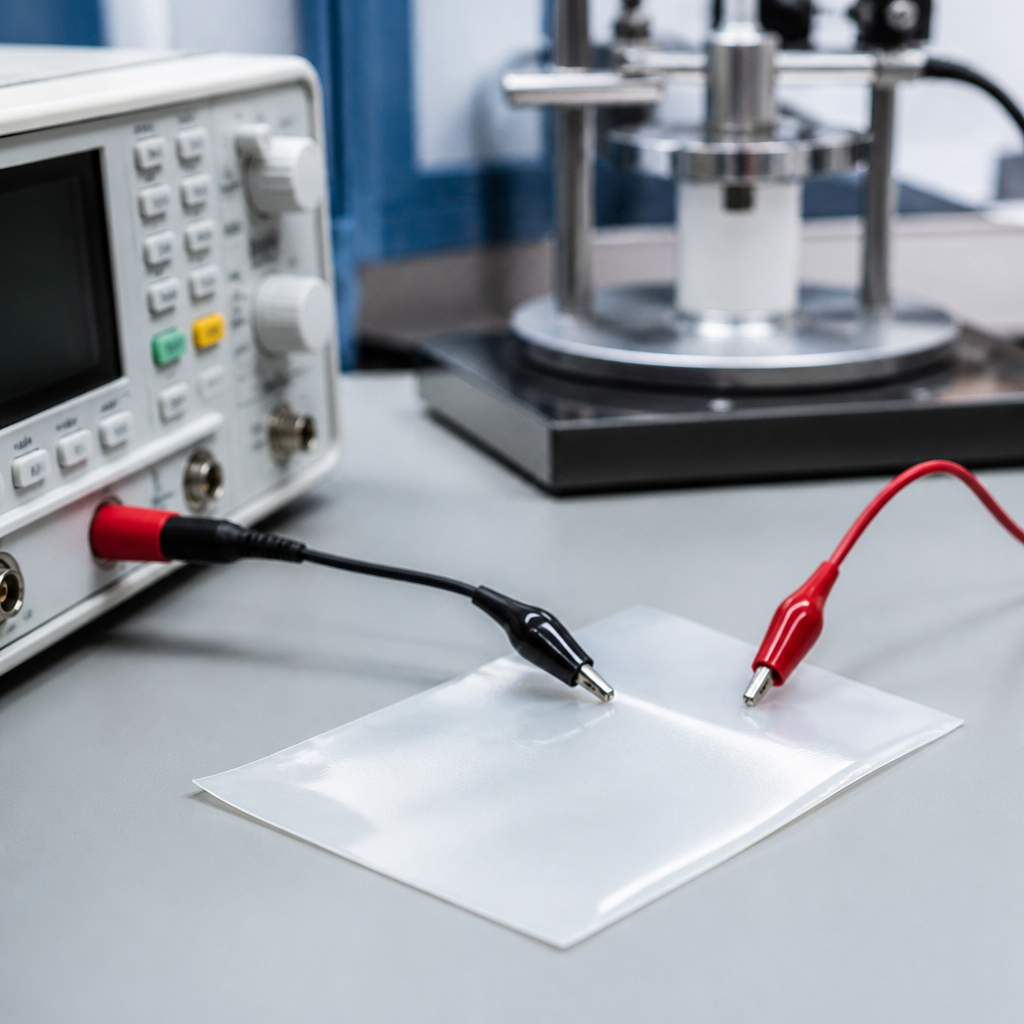
Electrical properties of polymers determine whether a plastic part safely insulates a high-voltage cable, dissipates static on an electronics tray, or conducts signals in a flexible sensor. In materials engineering, electrical properties describe how a polymer responds to an electric field, moving charges, changing voltage, heat buildup, and frequency. The most important terms include dielectric strength, volume resistivity, surface resistivity, permittivity, dielectric loss, arc resistance, tracking resistance, dissipation factor, and electrostatic discharge behavior. Together, these measurements tell engineers how a polymer will perform in wire coatings, printed circuit assemblies, medical devices, electric vehicles, consumer electronics, and aerospace interiors.
I have worked with polymer selection for housings, connectors, and insulating films, and electrical performance is often the factor that decides between materials that otherwise look similar mechanically. Nylon, polypropylene, polycarbonate, PTFE, PEEK, epoxy, silicone, and thermosets can all be called electrical insulators, yet they behave very differently once humidity, temperature, contamination, wall thickness, and operating frequency enter the picture. A material that tests well in a dry laboratory may lose insulation resistance after moisture absorption, while a compound filled with carbon black may intentionally trade insulation for controlled conductivity. Understanding these tradeoffs is essential because electrical failure is rarely graceful: it can lead to leakage current, signal distortion, overheating, premature aging, arcing, or fire risk.
This hub article explains the electrical properties of polymers in plain terms while staying technically precise. It covers how charge moves in polymers, which test methods matter, how structure and additives influence performance, why environment changes results, and where common materials fit in real applications. It also serves as a foundation for deeper pages on dielectric properties, resistivity, electrostatic discharge materials, conductive compounds, insulation systems, and high-frequency polymer selection. If you need to compare materials, read datasheets critically, or choose the right plastic for an electrical environment, this guide gives you the framework.
How polymers behave in an electric field
Most polymers are naturally insulating because their electrons are tightly bound in covalent bonds, leaving few free charge carriers available for conduction. In simple terms, electric current does not move easily through unmodified polyethylene, polypropylene, PTFE, or epoxy. When voltage is applied, the material instead polarizes: charges shift slightly within molecules or along chain segments, storing electrical energy without allowing substantial current flow. That is why many polymers are used as dielectric materials in capacitors, cable jackets, connector bodies, slot liners, and encapsulants.
Conductive behavior can still appear through several mechanisms. Ionic impurities, absorbed moisture, plasticizers, carbonaceous contamination, fillers, and elevated temperature can all increase charge transport. In semicrystalline polymers, conduction may follow amorphous regions differently than crystalline zones. In filled compounds, conductive pathways form once the filler loading passes the percolation threshold. I have seen this clearly in antistatic packaging grades: below a critical carbon loading, the resin remains too resistive; above it, resistivity drops by orders of magnitude. This sharp transition is why formulation control matters as much as base resin choice.
Electrical response also depends on whether the applied field is direct current, low-frequency alternating current, or radio frequency. A polymer that works well as a DC insulator may show unacceptable dielectric loss at higher frequencies because dipoles cannot reorient without dissipating energy as heat. That distinction matters in high-speed electronics, RF connectors, radar structures, and electric drive systems using fast-switching power electronics.
Core electrical properties engineers measure
The first property most engineers review is resistivity. Volume resistivity measures resistance through the bulk material and is usually reported in ohm-centimeters. Surface resistivity measures resistance along the surface and is strongly affected by humidity, contaminants, and finish. Insulating polymers commonly show very high values, while static-dissipative materials are intentionally lower. The difference matters because a part may resist through-thickness conduction yet still leak current across a dirty or wet surface.
Dielectric strength indicates how much electric field a polymer can withstand before breakdown, often expressed in volts per mil or kilovolts per millimeter. Thin films can show very high dielectric strength, but test geometry, defects, and thickness dependence complicate comparison. In practice, breakdown rarely reflects only the polymer molecule; voids, edges, mold marks, weld lines, and contamination often determine failure. For that reason, design rules must consider creepage, clearance, and processing quality alongside datasheet values.
Permittivity, also called dielectric constant, describes how much electric energy a material stores in an electric field relative to vacuum. Lower permittivity is desirable in many signal transmission and high-frequency applications because it reduces capacitive loading and signal delay. PTFE is valued partly because of its low dielectric constant and low dielectric loss, while many polar polymers such as nylon have higher values and stronger sensitivity to moisture.
Dissipation factor and dielectric loss quantify how much electrical energy is converted into heat during polarization. These properties become critical in AC power insulation, high-frequency laminates, and induction environments. Arc resistance measures how well a material withstands electrical arcing on its surface. Comparative tracking index, widely used in safety evaluations, indicates resistance to surface tracking under contaminated conditions. Flame behavior, although not purely electrical, is often considered alongside these properties because electrical components must resist ignition and sustain safe operation.
Standard tests and what the numbers really mean
Electrical polymer data are only useful when tied to recognized test methods. Common standards include ASTM D257 for volume and surface resistivity, ASTM D149 for dielectric breakdown voltage and dielectric strength, ASTM D150 for dielectric constant and dissipation factor, ASTM D495 for arc resistance, and IEC 60112 for comparative tracking index. UL 94 addresses flammability, while UL 746 and related safety evaluations consider long-term electrical and thermal performance for polymeric materials used in equipment. Reading the method matters because electrode geometry, conditioning, thickness, frequency, and environment can change results dramatically.
I routinely caution teams not to compare values across datasheets without checking test conditions. A dielectric constant reported at 1 megahertz cannot be compared directly with one measured at 1 kilohertz. Resistivity measured after dry conditioning may look excellent, yet the same nylon grade can shift substantially after moisture equilibrium at room conditions. Breakdown values are especially easy to misuse because they are often measured on ideal plaques, not molded parts with knit lines, corners, inserts, and residual stress.
| Property | What it shows | Common standard | Typical design use |
|---|---|---|---|
| Volume resistivity | Bulk resistance to current flow | ASTM D257 | Insulation selection, ESD classification |
| Surface resistivity | Resistance along material surface | ASTM D257 | Static control, contamination sensitivity |
| Dielectric strength | Field at electrical breakdown | ASTM D149 | Wall thickness, insulation margins |
| Dielectric constant | Ability to store electrical energy | ASTM D150 | Signal integrity, capacitor films |
| Dissipation factor | Energy lost as heat in AC field | ASTM D150 | High-frequency and power applications |
| Arc resistance | Ability to resist conductive path from arcing | ASTM D495 | Switchgear, connectors, relays |
| Tracking resistance | Resistance to surface failure under contamination | IEC 60112 | Creepage design, safety approvals |
Good engineering practice is to treat test values as screening data, then validate the final design under actual voltage, frequency, contamination, thermal cycling, and mechanical stress. That approach prevents false confidence based on a single headline number.
What controls electrical properties in polymer materials
Polymer chemistry is the starting point. Nonpolar polymers such as polyethylene and PTFE usually provide excellent insulation and low dielectric loss because they contain few strongly polar groups. Polar materials such as polyamide, polycarbonate, and PVC can still be effective electrical materials, but they typically show higher permittivity, higher dielectric loss, or greater environmental sensitivity. Crosslinked systems like epoxy and silicone are often chosen for encapsulation because they combine electrical insulation with dimensional stability and thermal endurance.
Morphology matters almost as much as chemistry. Crystallinity, molecular orientation, free volume, and defects affect charge mobility and polarization behavior. Higher crystallinity can improve some insulating characteristics by reducing molecular mobility, but interfaces between crystalline and amorphous regions may also influence breakdown behavior. Processing defects, including voids and poor filler dispersion, are frequent causes of local field enhancement. In potting compounds and cable insulation, even small voids can trigger partial discharge and progressive failure.
Additives can help or hurt. Glass fiber increases stiffness but may alter tracking behavior and surface performance. Flame retardants are often necessary for electrical equipment, yet some packages can change dielectric properties or moisture uptake. Conductive fillers such as carbon black, carbon nanotubes, stainless fibers, or intrinsically conductive polymers convert insulating resins into antistatic, static-dissipative, or conductive compounds. The challenge is balancing target resistivity with processability, toughness, color, and consistency. Carbon black gives robust conductivity but usually turns parts black and may raise viscosity; inherently dissipative additives preserve color options but can be more humidity dependent.
Environmental effects: moisture, temperature, frequency, and aging
Environmental exposure often decides real-world electrical performance. Moisture is especially important because water can increase ionic conduction, lower surface resistance, and change dielectric behavior. Nylon is the classic example: it is mechanically useful and widely used in connectors and coil formers, but it absorbs moisture readily. That absorption improves toughness yet can reduce resistivity and shift dielectric properties. Designers using polyamide near sensitive circuits must account for conditioning state, sealing, and creepage margins.
Temperature generally lowers resistivity and can accelerate dielectric aging. As polymer chains gain mobility, leakage current rises and dielectric loss may increase. In power electronics, repeated thermal cycling also creates microcracks or interfacial separation around inserts and fillers, opening pathways for discharge. Frequency matters because different polarization mechanisms respond over different time scales. Materials that look stable at 60 hertz may perform poorly in megahertz ranges. For this reason, substrate selection for antennas, 5G devices, and high-speed digital systems leans heavily toward low-loss materials with stable permittivity across frequency and temperature.
Aging adds another layer. UV exposure, oxidation, hydrolysis, electrical treeing, and contamination gradually degrade insulation. In outdoor insulators and under-hood automotive parts, salts, oils, and dust can promote surface tracking. Long-term reliability cannot be inferred from short tests alone. Accelerated life methods, comparative tracking data, relative thermal index values, and application-specific validation are necessary when failure has safety consequences.
Common polymer families and where they fit
Polyethylene and polypropylene are cost-effective insulators used in wire and cable, capacitor films, and appliance parts. PTFE is a benchmark for low dielectric constant, low dissipation factor, chemical resistance, and high temperature capability, which is why it appears in RF cable, aerospace wiring, and microwave components. Polycarbonate offers toughness and dimensional stability for enclosures and connectors, though its electrical performance must be evaluated with flame-retardant packages and humid conditions in mind.
Polyamide, especially PA66 and high-temperature nylons, is common in connectors, bobbins, and automotive electrical housings because it combines strength, heat resistance, and processability. Its moisture sensitivity is manageable, but never optional to consider. PBT is often preferred for connectors because it provides strong electrical insulation, good dimensional control, and lower moisture uptake than many nylons. PEEK serves demanding aerospace, oil and gas, and medical electrical applications where temperature and chemical resistance justify higher cost.
Thermosets remain critical. Epoxy dominates printed circuit boards, potting, and encapsulation, while silicone excels in flexible insulation, high-temperature environments, and outdoor high-voltage service because of its hydrophobic surface behavior. Conductive polymer compounds extend the category further, enabling EMI shielding housings, ESD trays, fuel-system components, and wearable sensors. Material selection is therefore not about asking whether a polymer is electrical; it is about matching a polymer system, additive package, geometry, and environment to a defined electrical duty.
How to select polymers for electrical applications
Start with the function: insulating, static dissipative, conductive, signal-carrying, or high-frequency dielectric. Then define voltage, current, frequency, operating temperature, contamination risk, humidity, flame requirements, and service life. After that, review datasheets for resistivity, dielectric strength, dielectric constant, dissipation factor, tracking resistance, and safety approvals relevant to the end market. For connectors and housings, do not ignore mechanical retention, creep resistance, and process shrinkage; electrical reliability is often lost through dimensional change or cracking rather than immediate dielectric failure.
Prototype with production-intent geometry and molding conditions. Test after realistic conditioning, not just dry-as-molded states. If static control is needed, specify a resistivity window and verify consistency lot to lot. If the application involves fast switching or RF energy, request frequency-dependent dielectric data rather than relying on a single nominal value. In my experience, the best electrical polymer choices come from combining lab numbers, process knowledge, and failure-mode thinking. That discipline reduces field failures and prevents overdesign.
Understanding the electrical properties of polymers gives engineers a practical way to connect chemistry, processing, environment, and safety into one material decision. Polymers can insulate, dissipate, or conduct depending on structure and formulation, but no single datasheet number tells the whole story. Resistivity, dielectric strength, permittivity, loss, tracking resistance, and aging behavior must be read together and verified in the real service environment. That is the central lesson across wire insulation, connectors, electronics housings, encapsulation, and advanced sensing devices.
As the hub for electrical properties within materials and properties, this page provides the foundation for deeper study of dielectric performance, ESD materials, conductive fillers, insulation design, and polymer reliability. The main benefit of mastering this topic is better material selection: safer products, more stable signal performance, fewer qualification surprises, and longer service life. Use this guide as your starting point, then map each application to the specific property that controls success and validate your final choice with targeted testing.
Frequently Asked Questions
1. What are the most important electrical properties of polymers, and why do they matter?
The most important electrical properties of polymers are dielectric strength, volume resistivity, surface resistivity, permittivity, dielectric loss, arc resistance, and tracking resistance. Together, these properties explain how a polymer behaves when exposed to voltage, electric fields, charge buildup, heat, and changing frequencies. In practical terms, they help engineers decide whether a plastic should act as a strong insulator, a static-dissipative material, or part of an electrically functional component.
Dielectric strength describes how much voltage a polymer can withstand before electrical breakdown occurs. This is critical in wire coatings, connectors, housings, and insulating barriers where failure could lead to arcing or short circuits. Volume resistivity measures how strongly the bulk material resists current flow through its interior, while surface resistivity measures resistance along the material’s surface. These two values are especially important because some materials insulate well internally but can still allow surface leakage if moisture, dust, or contamination is present.
Permittivity, also called the dielectric constant, describes how a polymer stores electrical energy in an electric field. This matters in capacitors, high-frequency electronics, antennas, and sensors. Dielectric loss indicates how much electrical energy is converted into heat when the electric field changes over time, which becomes especially important in AC and high-frequency applications. Arc resistance measures how well a material resists degradation from electrical arcing, while tracking resistance reflects its ability to withstand conductive path formation on the surface under voltage and contamination. For engineers, these properties are not just test data points; they directly influence safety, reliability, signal quality, thermal performance, and long-term durability.
2. How do insulating polymers differ from conductive and static-dissipative polymers?
Insulating polymers are designed to strongly resist electrical current, making them ideal for cable jackets, connector bodies, switch housings, and protective enclosures. These materials typically have very high volume and surface resistivity, along with strong dielectric strength. Common examples include polyethylene, polypropylene, PTFE, and certain grades of polycarbonate and nylon when properly formulated. Their primary role is to prevent unwanted current flow and keep electrical systems safe.
Conductive polymers or conductive polymer compounds are very different. In many cases, the base polymer itself is not inherently conductive, but conductivity is introduced by adding fillers such as carbon black, carbon fiber, graphite, metal particles, or intrinsically conductive additives. These materials are used when engineers want controlled current flow, electromagnetic shielding, sensing capability, or signal transmission. Applications include flexible sensors, EMI-shielded enclosures, grounded trays, and specialty electronic devices.
Static-dissipative polymers occupy the middle ground between highly insulating and highly conductive materials. Their purpose is not to carry large electrical currents, but to safely bleed off accumulated electrostatic charge at a controlled rate. That makes them essential in electronics manufacturing, packaging, cleanroom tools, and trays used for handling sensitive components. If a polymer is too insulating, static can build up and discharge suddenly, damaging electronics. If it is too conductive, it may create other design and safety concerns. Static-dissipative materials are engineered to reduce that risk by balancing charge control with material stability.
The key takeaway is that the “best” electrical behavior depends entirely on the application. A high-voltage cable insulator should block current as completely as possible, while an electronics tray may need to dissipate static, and a wearable sensor may need to conduct or respond to electrical signals. Material selection always starts with understanding the electrical job the polymer must perform.
3. What is dielectric strength, and how should engineers interpret it in real applications?
Dielectric strength is the maximum electric field a polymer can withstand before it electrically breaks down. In simpler terms, it tells you how much voltage an insulating plastic can tolerate before it stops behaving like an insulator and begins allowing current to pass through in an uncontrolled way. This property is often reported in units such as volts per mil or kilovolts per millimeter, and it is a foundational parameter for insulation design.
In real applications, dielectric strength is crucial for evaluating materials used around high voltage or compact electrical spacing. For example, in a cable jacket, connector insert, battery separator, or electronic housing, the polymer must maintain separation between conductive elements even when voltage spikes or harsh environmental conditions occur. A high dielectric strength generally indicates better short-term resistance to breakdown, but it should never be interpreted in isolation.
That is because dielectric strength depends on many real-world factors: material thickness, test method, temperature, humidity, sample defects, electrode geometry, and duration of voltage exposure. Thin, pristine lab specimens may test very well, while thicker molded parts with weld lines, voids, fillers, or surface contamination may perform differently in service. In addition, repeated electrical stress, thermal aging, and chemical exposure can gradually reduce actual performance over time.
Engineers should treat dielectric strength as one part of a broader insulation assessment. It should be considered alongside volume resistivity, dielectric loss, comparative tracking behavior, arc resistance, thermal rating, and environmental stability. A polymer with excellent dielectric strength may still be unsuitable if it absorbs moisture, degrades under heat, or loses insulating performance at the frequencies used in the device. Good design uses dielectric strength as a screening and safety parameter, then validates the material under realistic operating conditions.
4. How do frequency and temperature affect the electrical performance of polymers?
Frequency and temperature can dramatically change how a polymer behaves electrically. Many polymers perform well under steady or low-frequency conditions but respond differently when voltage changes rapidly, as it does in AC systems, switching electronics, RF devices, and sensors. This is because polymer molecules and internal polarization mechanisms do not respond equally at all frequencies.
At higher frequencies, permittivity and dielectric loss become especially important. Permittivity affects how the material stores electrical energy and influences capacitance, impedance, and signal behavior. Dielectric loss measures how much of that energy is dissipated as heat. If dielectric loss is too high, a polymer can warm up during operation, reducing efficiency and potentially accelerating aging or failure. In high-speed or high-frequency electronics, even small changes in dielectric behavior can affect signal integrity, timing, and power consumption.
Temperature also plays a major role. As temperature rises, polymers may become more flexible at the molecular level, which can alter charge mobility, polarization response, and resistivity. In many cases, higher temperatures reduce resistivity and increase dielectric loss, making the material less effective as an insulator. If the temperature approaches the polymer’s thermal transition range, electrical properties may shift more noticeably. Conversely, very low temperatures can make some materials more brittle, which can lead to cracks and indirectly compromise electrical insulation.
This is why electrical property data should always be reviewed in the context of the intended operating environment. A polymer chosen for room-temperature insulation may not behave the same way near a motor, in outdoor weather, inside a battery pack, or in a high-frequency communication device. Engineers often look for electrical test data across temperature ranges and frequencies, not just single-point values. Reliable material selection depends on understanding performance over the full range of expected service conditions.
5. What factors should be considered when selecting a polymer for electrical and electronic applications?
Selecting a polymer for electrical use requires more than choosing the material with the highest resistivity or dielectric strength. The first step is defining the application clearly: should the material insulate high voltage, dissipate static, shield electronics, support a sensor, or maintain signal performance at a certain frequency? The intended function determines which electrical properties matter most and what tradeoffs are acceptable.
After the core electrical requirements are identified, engineers should evaluate the full property profile. For insulation applications, dielectric strength, volume resistivity, surface resistivity, arc resistance, and tracking resistance are often critical. For electronic and high-frequency uses, permittivity and dielectric loss may be just as important. If static control is required, the target resistivity range must be carefully specified so the material safely dissipates charge without becoming unintentionally conductive. In all cases, consistency across production batches is essential.
Environmental exposure is another major consideration. Humidity, water absorption, dust, cleaning chemicals, UV exposure, temperature cycling, and long-term thermal aging can all change electrical performance. Some polymers maintain excellent insulating behavior in dry lab conditions but lose reliability when exposed to moisture or contamination. Mechanical demands also matter because cracks, wear, creep, or dimensional instability can undermine electrical integrity even if the material’s nominal test values are strong.
Processing and formulation should not be overlooked. Fillers, flame retardants, plasticizers, pigments, recycled content, and molding conditions can all influence electrical behavior. A base resin may have one set of published properties, while a reinforced or flame-retarded grade may behave quite differently. Compliance requirements, such as UL ratings, safety standards, and industry-specific test methods, must also be considered early in material selection.
Ultimately, the best choice is the polymer that delivers the required electrical performance under actual operating conditions while also meeting mechanical, thermal, regulatory, and manufacturing needs. The most successful selections come from combining published data, application-specific testing, and a realistic understanding of how the part will be used over its full service life.