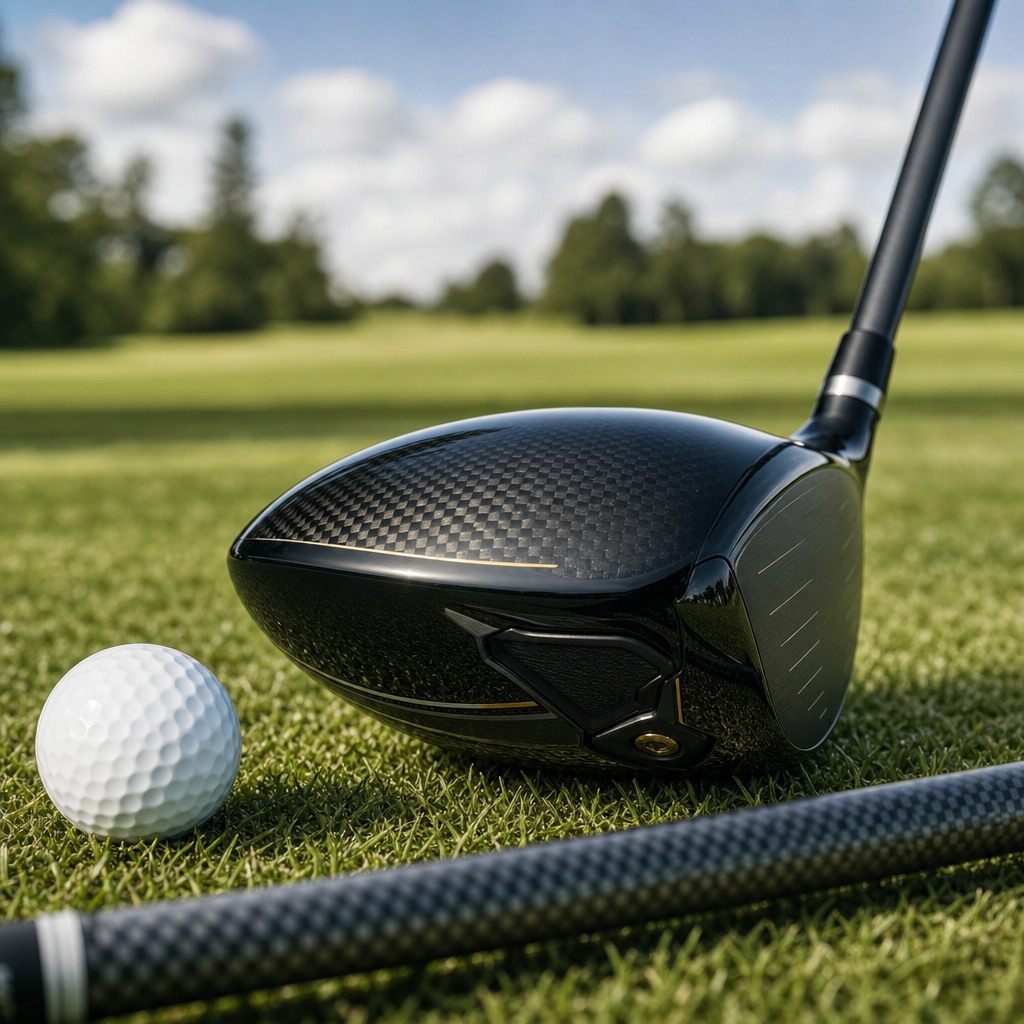
Polymer-based golf equipment has moved from a niche materials story to a central driver of performance, comfort, durability, and product design across modern golf. In this Sports and Leisure hub, the term polymer refers to engineered plastics, elastomers, foams, thermoplastic composites, and resin systems used in clubs, balls, shoes, gloves, bags, carts, and training aids. Advances in polymer science matter because golf demands a rare mix of stiffness, flexibility, energy transfer, vibration damping, weather resistance, low weight, and long service life. I have worked with sporting goods product teams evaluating these tradeoffs, and golf consistently stands out as one of the clearest examples of how materials engineering shapes the player experience. A driver face must recover energy efficiently at impact, a grip must stay tacky in humidity, and a golf shoe outsole must deliver traction without adding unnecessary mass. Polymers make those outcomes possible.
Golf also rewards incremental gains. A few grams moved lower in a clubhead can change launch conditions. A slight reduction in ball cover scuffing can preserve spin characteristics over a round. Better foam structures in midsoles reduce fatigue during four hours of walking. These are not marketing abstractions; they are measurable design improvements tied to modulus, hardness, coefficient of restitution, glass transition behavior, abrasion resistance, and process consistency. The equipment market reflects this reality. Major brands routinely pair metals and carbon fiber with thermoplastic urethanes, ionomers, epoxy matrices, nylon blends, and high-rebound elastomers to tune specific functions. For readers exploring Sports and Leisure applications, golf provides a useful hub because nearly every class of polymer appears somewhere in the category. Understanding where these materials are used, why they are selected, and what tradeoffs they introduce gives a practical map for evaluating both current products and future developments.
Why polymers are foundational in modern golf equipment
The fastest answer is that polymers let designers place the right property in the right place. Metals remain essential in shafts and clubheads, but polymers supply selective flexibility, damping, shape complexity, corrosion resistance, and weight savings that metals alone cannot match. In drivers and fairway woods, carbon fiber reinforced polymer crowns and sole panels reduce mass high in the head, allowing manufacturers to reposition weight low and deep to increase moment of inertia and improve forgiveness. In iron badges and cavity inserts, thermoplastic or elastomer layers alter sound and vibration, producing the solid feel many players prefer without changing the face metallurgy. In golf balls, multi-layer polymer constructions separate speed, spin, and feel in ways balata-era designs never could. In footwear, expanded polymer foams and molded traction elements manage impact, comfort, and grip across changing ground conditions.
From a manufacturing standpoint, polymers also enable repeatability at scale. Injection molding, compression molding, resin transfer molding, overmolding, and blow molding support tight dimensional control and complex geometries. That matters because golf products are tuned systems. A grip with inconsistent wall thickness affects swing feel. A ball with variable cover thickness can produce inconsistent spin. A composite crown with resin-rich zones may shift mass and alter acoustic response. Good polymer processing reduces those risks. The downside is that polymers can be sensitive to temperature, UV exposure, moisture uptake, and creep if the wrong grade or formulation is chosen. That is why serious golf brands rely on accelerated aging tests, robotic impact cycles, Shore hardness verification, and process validation rather than relying on nominal material specifications alone.
Clubheads, shafts, and grips: where polymer engineering changes performance
In clubheads, the most visible advance has been the broader use of carbon fiber reinforced polymer components in drivers, fairway woods, and some hybrids. Replacing titanium or steel sections with composite panels cuts weight dramatically; carbon composites can achieve high specific stiffness at a fraction of metal density. That mass savings is then reassigned through tungsten weighting or geometry changes to optimize center of gravity and stability. Brands such as TaylorMade, Callaway, and COBRA have all commercialized composite-heavy metalwoods, each using proprietary layups and bonding strategies. The technical challenge is not simply attaching carbon to metal. Designers must control adhesive performance, thermal expansion mismatch, impact durability, and acoustic tuning. In practice, the best composite clubheads sound engineered rather than hollow because internal ribs, polymer inserts, and bonding films are tuned together.
Shafts show another important polymer story. Graphite shafts are composite structures built from carbon fiber pre-preg embedded in epoxy resin. The resin system is not a passive binder; it controls interlaminar shear strength, toughness, and processing quality. Improvements in toughened epoxies and layup precision have made shafts lighter without making them fragile. This has expanded fitting options for slower swing speed players, juniors, seniors, and even elite players seeking specific launch windows. Polymer matrices also help manage feel by damping harsh vibration more effectively than all-steel designs. Grips, meanwhile, rely on rubber compounds, thermoplastic elastomers, and polyurethane blends to balance tack, firmness, shock absorption, and wet-weather performance. Cord-reinforced rubber grips remain popular with players who prioritize traction, while softer polyurethane styles appeal to golfers who want comfort and less hand fatigue.
Golf balls: multi-layer polymer design and why cover chemistry matters
The modern golf ball is one of the most sophisticated polymer products in consumer sport. Most premium constructions use a polybutadiene rubber core, one or more mantle layers made from ionomer or related thermoplastic materials, and either a cast urethane or ionomer cover. Each layer serves a different function. The core drives ball speed and compression behavior. Mantle layers influence spin separation, helping create low driver spin with playable iron spin. The cover largely determines feel, short-game control, cut resistance, and durability. Urethane covers dominate the tour category because they generate higher friction and better greenside spin, especially on partial wedges. Ionomer covers, commonly associated with Surlyn-type chemistry, are tougher and often less expensive, making them attractive for distance-focused and recreational balls.
Dimple performance also depends on polymer processing. Cover material viscosity, mold precision, and cure consistency affect dimple edge definition, and that affects aerodynamic stability. Even small deviations can alter lift and drag. Ball makers therefore monitor not just hardness but also cover thickness uniformity and concentricity. The comparison below captures the practical tradeoffs golfers encounter when choosing between common cover systems.
| Feature | Urethane Cover | Ionomer Cover |
|---|---|---|
| Short-game spin | Higher on chips and pitches | Lower, especially on partial wedges |
| Feel | Softer, more responsive | Firmer, more click at impact |
| Durability | Good, but can show wear sooner | Excellent scuff and cut resistance |
| Typical user | Better players, all-around performance seekers | Value and distance-focused golfers |
| Cost position | Premium | Budget to midrange |
One point many golfers miss is that compression is not a single quality score. It is one result of the interaction among core formulation, mantle stiffness, and cover properties. Lower swing speed players often benefit from softer overall constructions, but fit should be based on launch, spin, peak height, and dispersion, not only on advertised softness. Polymer formulation gives manufacturers the ability to tune those variables with surprising precision.
Footwear, gloves, and wearables in Sports and Leisure golf applications
Golf footwear has become a showcase for polymer foams and traction polymers. Ethylene-vinyl acetate was once the standard cushioning material, but expanded thermoplastic polyurethane and supercritical foams now appear in many premium shoes because they offer better resilience and compression set resistance. In plain terms, they rebound better over time and keep their cushioning profile longer. Thermoplastic polyurethane is also widely used in outsole elements and support structures because it balances abrasion resistance, flexibility, and moldability. Spikeless shoes rely heavily on molded polymer lugs, with geometry tuned for rotational traction during the swing and walking comfort between shots. Spiked shoes still use polymer receptacles and stabilizers, even when the cleat itself is replaceable.
Gloves depend on polymer coatings, synthetic leather laminates, elastane blends, and closure systems that preserve fit through repeated flexing. A good golf glove must maintain grip while allowing tactile feedback, and synthetic options have improved substantially through polyurethane surface engineering and better microfiber backings. Rangefinders, swing sensors, and wearable devices add another layer to the Sports and Leisure hub. Their housings often use polycarbonate or ABS blends for impact resistance, while seals, buttons, and straps rely on silicone, thermoplastic elastomers, and engineering nylons. In these products, polymer selection affects not only durability but also weight, battery protection, weather sealing, and user comfort. The category shows that golf is no longer only about clubs and balls; it is a broader equipment ecosystem shaped by smart polymer use.
Sustainability, regulation, and the next wave of polymer innovation
Sustainability in polymer-based golf equipment is improving, but it remains technically constrained. Multi-material products are hard to recycle because bonded composites, foams, metals, and coatings are difficult to separate. Golf balls are particularly challenging due to crosslinked rubber cores and multi-layer constructions. Some brands and specialty recyclers have introduced take-back programs for balls and shoes, while others are incorporating recycled polyester in bags, headcovers, and apparel. Bio-based polyamides, thermoplastic composites, and recyclable thermoplastic polyurethane systems are gaining attention, especially where they can replace thermoset structures or virgin petrochemical content without sacrificing performance. The most credible progress today is in accessories and soft goods, where material substitution is easier than in clubs or balls.
Regulation also shapes innovation. Equipment must conform to standards set by governing bodies such as the USGA and The R&A, including rules covering club characteristics, groove geometry, spring-like effect, and ball performance limits. That means polymer advances cannot simply push speed indefinitely; they must operate within a defined envelope. As a result, the next wave is likely to emphasize consistency, fitting precision, acoustic tuning, player comfort, and durability rather than pure raw distance. Expect more hybrid structures combining metal, fiber reinforcement, and engineered elastomers; more data-informed fitting of ball and shaft constructions; and better lifecycle planning for accessories and footwear. For anyone following Sports and Leisure applications, advances in polymer-based golf equipment offer a practical lesson in material science at work: the best products do not use more polymer indiscriminately, they use the right polymer in the right architecture. If you are building a content cluster or evaluating products, start with the categories covered here, then explore deeper pages on clubs, balls, footwear, bags, and wearable golf technology.
The clearest takeaway is that polymers are no longer supporting materials in golf; they are performance-defining materials across the entire equipment landscape. Composite crowns change mass properties in clubheads, epoxy matrices tune shaft behavior, elastomer grips influence control, and multi-layer ball covers separate speed from spin in ways that directly affect scoring. In footwear and accessories, advanced foams, thermoplastic urethanes, and engineered textiles improve comfort, traction, and weather resistance during long rounds. These gains matter because golf is a sport of accumulation. Small improvements in launch stability, vibration control, grip security, and walking comfort compound over eighteen holes and over a full season.
This hub page also shows why golf is one of the strongest examples within Sports and Leisure for understanding applied polymer engineering. The category combines strict performance expectations, visible product differentiation, governing body constraints, and a customer base willing to evaluate measurable results. That combination pushes manufacturers toward disciplined material selection rather than novelty for its own sake. When a polymer solution succeeds in golf, it usually does so because it solved a specific design problem better than the alternatives. Use that lens when reading subtopic articles and product claims. Look for the exact material, the functional role it plays, the manufacturing method behind it, and the tradeoffs it introduces. Then continue through the related pages in this hub to compare how polymers are advancing golf clubs, balls, footwear, training aids, and connected equipment in greater detail.
Frequently Asked Questions
1. What does “polymer-based golf equipment” actually include?
Polymer-based golf equipment includes far more than just plastic parts. In modern golf, the term covers engineered plastics, elastomers, foams, thermoplastic composites, and resin systems used across clubs, golf balls, shoes, gloves, bags, push carts, and training aids. In drivers and fairway woods, polymers may appear in carbon-composite crown structures, internal damping systems, face inserts, adjustable weight housings, and bonding resins that connect multi-material parts. In irons and wedges, polymer badges, cavity inserts, and vibration-control layers help tune feel and sound while preserving ball speed. Golf balls rely heavily on polymer science, using complex cover materials such as urethane or ionomer blends, along with multi-layer core formulations designed to balance speed, spin, and durability.
Beyond clubs and balls, polymers are central to comfort and usability. Golf shoes use foam midsoles, thermoplastic stability elements, waterproof membranes, and high-grip outsole compounds. Gloves depend on synthetic polymers for flexibility, weather resistance, and long-lasting grip. Golf bags and carts incorporate lightweight polymer frames, molded handles, wheel components, protective housings, and durable fabric coatings. Even training products such as swing aids, impact tapes, alignment tools, and portable mats often rely on advanced polymers because they can be engineered for resilience, flexibility, low weight, and consistent performance. In short, polymers are no longer a niche material choice in golf equipment; they are one of the main reasons products can be lighter, more forgiving, more durable, and more precisely tuned than in earlier generations.
2. How have advances in polymer science improved golf club performance?
Advances in polymer science have improved golf clubs by allowing designers to fine-tune energy transfer, vibration damping, weight distribution, acoustics, and long-term durability in ways that would be difficult with metal alone. One major development is the widespread use of lightweight polymer composites and resin-based carbon structures in clubheads. By replacing certain metal sections with lighter composite materials, engineers can move saved mass to more strategically useful locations, such as lower and farther back in the head. That can increase moment of inertia, improve forgiveness on off-center hits, and help optimize launch conditions for a wider range of players.
Polymers also play a major role in feel and sound tuning. Many golfers associate performance with the sensation at impact, but that sensation is heavily influenced by how vibrations travel through the head and shaft. Elastomer inserts, polymer-filled cavities, and specialized damping layers can reduce harsh vibrations without making the club feel dull or disconnected. This is particularly valuable in irons and putters, where manufacturers want to preserve feedback while softening the sting of mishits. In some designs, polymer systems also support face-flex technologies by reinforcing or stabilizing thin clubface structures so they can be engineered for high ball speed while remaining durable under repeated impact.
Another important advance is in bonding and manufacturing. Modern resin systems and thermoplastic processing allow multi-material construction that combines metals, composites, and polymer components with high precision. This expands design freedom and lets companies produce clubheads with increasingly complex geometry. The result is not just lighter or more futuristic-looking clubs, but equipment that can be built around very specific launch, spin, forgiveness, and feel objectives. For golfers, that means more personalized performance and more consistent results across a full set.
3. Why are polymers so important in modern golf ball design?
Polymers are essential in golf ball design because the ball must do several demanding jobs at once: it needs to launch fast, manage spin differently depending on the club used, maintain shape under extreme impact, resist cuts and scuffs, and still feel responsive around the greens. Achieving that combination depends heavily on the chemistry and structure of polymer layers. Modern golf balls typically feature multi-layer construction, and each layer uses polymer formulations engineered for a specific function. The core may use high-energy polymer blends to maximize compression and rebound, the mantle layers may help regulate spin and energy transfer, and the cover material may be tuned for softness, control, and durability.
One of the biggest material distinctions in premium golf balls is the cover. Urethane-based covers are widely favored by better players because they can provide a softer feel and higher short-game spin, particularly on pitches, chips, and partial wedge shots. Ionomer-based materials often emphasize durability and distance, making them popular in many recreational and value-oriented designs. Recent advances in polymer engineering have narrowed trade-offs by creating cover and mantle systems that deliver both resilience and nuanced performance. Manufacturers can now manipulate molecular structure, crosslink density, and layer thickness to create balls that launch efficiently off the driver while still offering precision into the green.
Consistency is another major benefit. Because modern polymers can be manufactured with tight tolerances, golf ball performance from one ball to the next is more uniform than ever. That matters at every skill level, but especially for players trying to dial in exact carry distances and spin windows. In practical terms, polymer science has transformed the golf ball from a simple sphere into a highly engineered performance system, where each material layer contributes to speed, feel, control, and durability.
4. Do polymer materials make golf equipment more durable, or just lighter?
Polymer materials do both, and in many cases they improve durability precisely because they allow weight reduction without sacrificing structural performance. It is easy to assume that polymer-based parts are less robust than metal or traditional materials, but advanced polymers are engineered for specific mechanical demands. Many can absorb impact, resist fatigue, tolerate moisture, maintain flexibility across temperature changes, and withstand repeated loading cycles extremely well. In golf, that matters because equipment is exposed to sun, rain, turf abrasion, bag chatter, cart transport, repeated impacts, and wide swings in temperature and humidity.
In clubs, polymer composites and resins can provide excellent structural support while also helping protect against cracking, loosening, and vibration-related wear when properly designed. In balls, advanced cover polymers are specifically developed to resist scuffs and shearing while preserving feel and spin. In footwear, polymer foams and stabilizers enhance comfort under continuous walking while maintaining support over time. Waterproof membranes, synthetic uppers, and outsole compounds can also outperform some traditional materials in wet conditions and in long-term abrasion resistance. Likewise, bags and carts benefit from molded polymer components that resist corrosion and reduce overall carrying weight.
That said, durability depends on material quality and engineering, not just on whether a product contains polymers. A poorly designed polymer component can fail, just as a poorly designed metal part can. The real story is that today’s engineered polymers are chosen because they can be tailored to a product’s exact use case. In golf equipment, they are often used not as cheap substitutes, but as performance materials that combine low mass, resilience, weather resistance, and design flexibility. When executed well, that translates into products that last longer and perform more consistently over time.
5. What future trends are likely to shape the next generation of polymer-based golf equipment?
The next generation of polymer-based golf equipment is likely to be shaped by smarter material tuning, sustainability goals, more advanced multi-material construction, and greater product personalization. One clear trend is the move toward highly specialized polymers designed for very narrow performance targets. Instead of using one general-purpose material across a product category, manufacturers are increasingly developing application-specific compounds for impact zones, damping layers, traction surfaces, flexible hinges, and lightweight structural shells. This will likely lead to equipment that feels more precisely optimized, whether the goal is higher ball speed, softer short-game control, better walking comfort, or reduced vibration for players with joint sensitivity.
Sustainability is also becoming a major driver. Golf brands are exploring recycled content, bio-based polymer feedstocks, lower-emission resin systems, and more efficient manufacturing methods. The challenge is preserving elite performance while reducing environmental impact, since golf equipment faces significant demands for toughness, consistency, and weather resistance. As materials science improves, more brands will likely introduce components that combine durability with a more responsible life-cycle profile. This is especially relevant in categories such as bags, shoes, accessories, and practice products, where there may be more flexibility to incorporate recycled or renewable polymers at scale.
Another likely trend is deeper integration of polymers with digital and manufacturing technologies. Thermoplastic composites and advanced molding techniques can support more complex geometry, faster prototyping, and potentially more customized fitting outcomes. Manufacturers may use polymer-rich structures to create clubs, grips, wearables, and training aids that are easier to tailor to swing style, comfort preferences, and physical needs. Overall, the future of polymer-based golf equipment is not just about making products lighter. It is about building equipment that is more responsive, more durable, more comfortable, more tunable, and increasingly aligned with both player performance goals and modern manufacturing priorities.