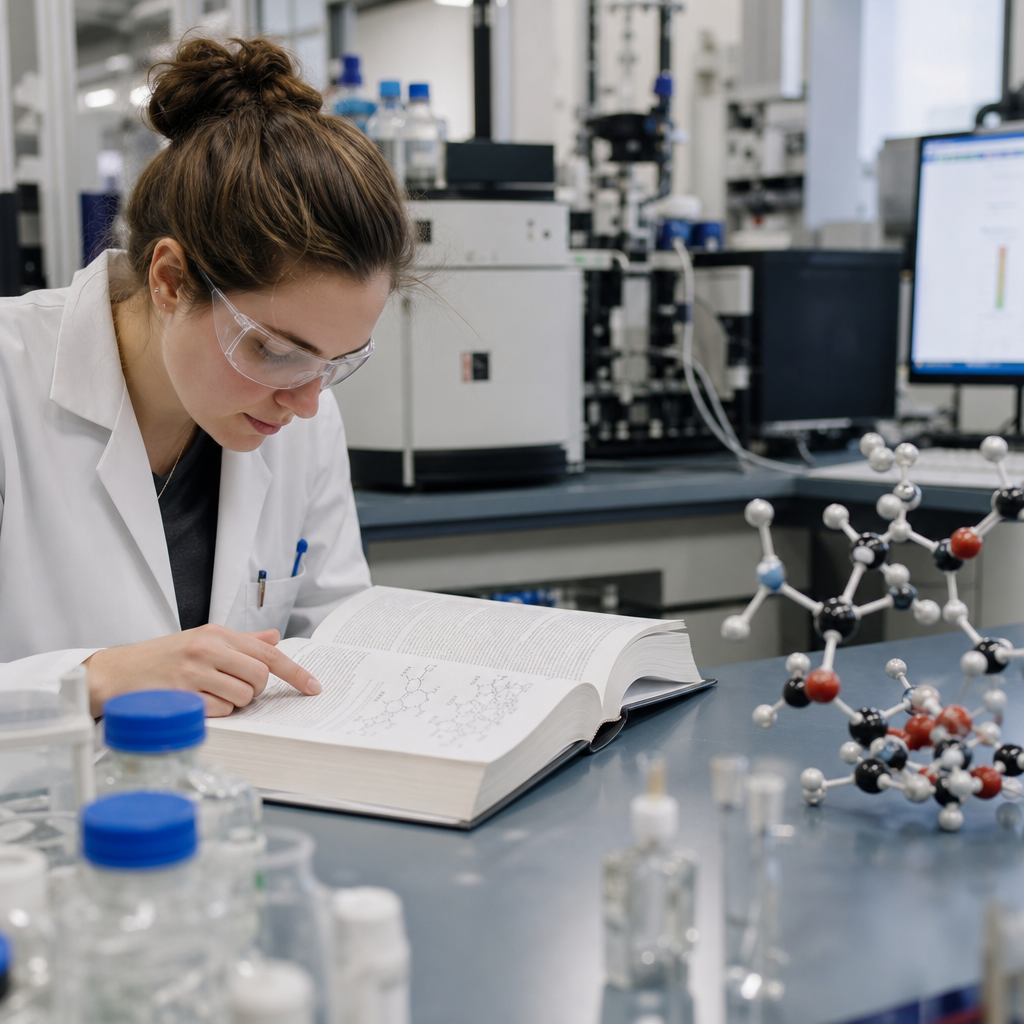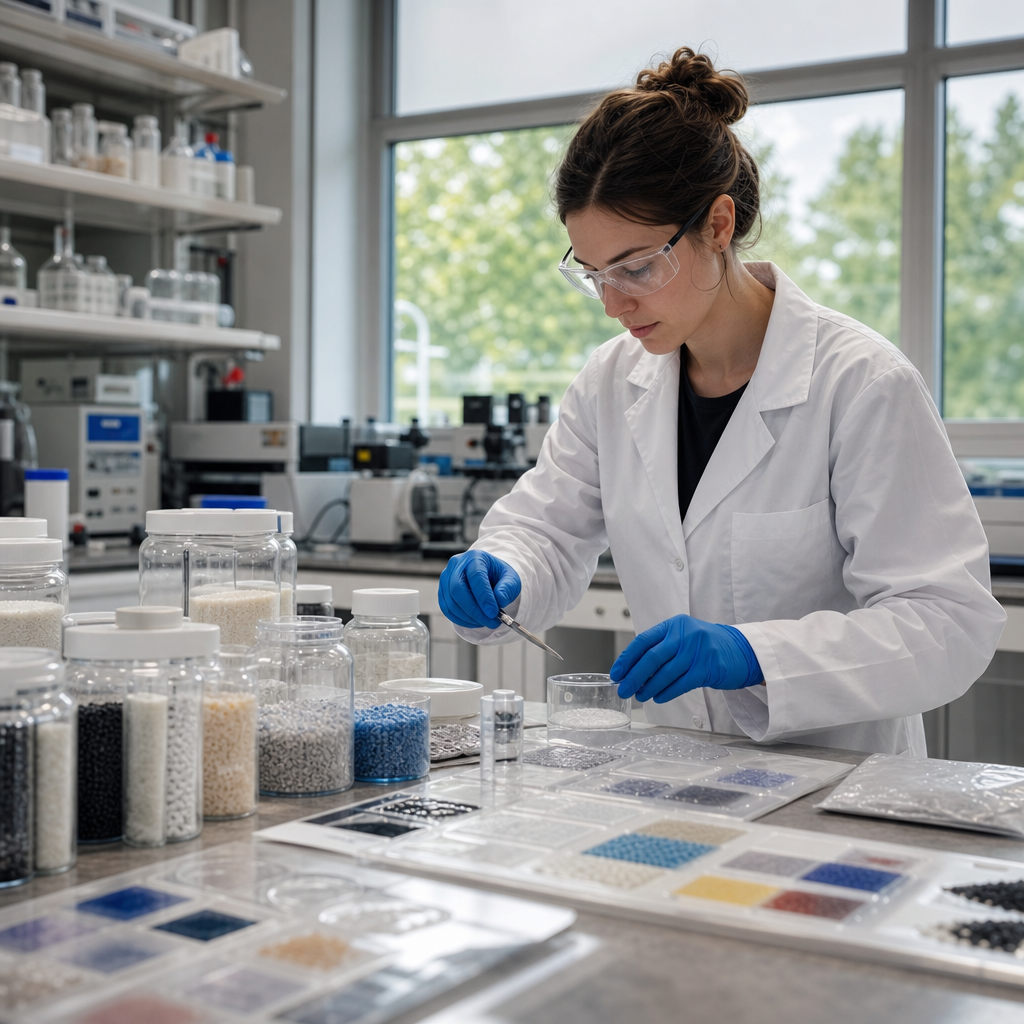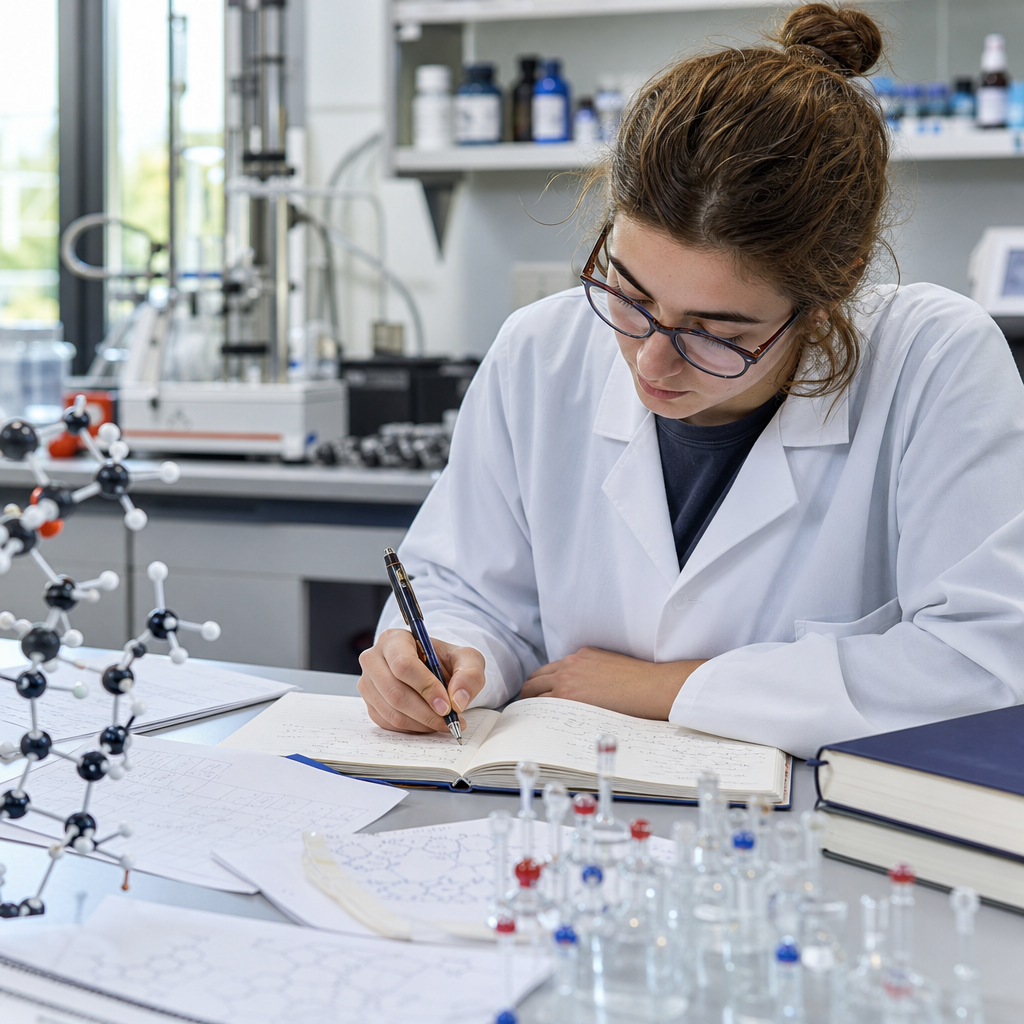
Writing a research paper in polymer science requires more than reporting experimental results; it demands a clear understanding of polymer chemistry, materials characterization, data integrity, and the expectations of journals that publish research and publications in this field. Polymer science spans synthesis, processing, structure-property relationships, rheology, degradation, biomaterials, composites, membranes, coatings, and sustainable plastics, so a strong paper must define its scope early and connect findings to a recognizable scientific question. In practice, the best polymer papers answer a simple but critical prompt: what new knowledge about macromolecules, formulations, or performance has been established, and how do the data prove it?
For students, early-career researchers, and industry scientists, learning how to write a research paper in polymer science matters because the discipline is unusually data dense. A manuscript may combine nuclear magnetic resonance spectra, gel permeation chromatography traces, differential scanning calorimetry thermograms, tensile testing curves, and microscopy images in one coherent story. I have edited polymer manuscripts where the science was sound, but the paper failed because the authors did not explain molecular weight distribution, processing history, or sample conditioning well enough for reviewers to trust the conclusions. Good writing in this field is not cosmetic. It is part of the scientific method because it makes the work reproducible, comparable, and useful to the wider materials community.
This hub article covers the full research and publications workflow for polymer science papers: choosing a paper type, building a logical structure, presenting characterization data, writing methods that others can repeat, selecting journals, handling peer review, and avoiding common reporting errors. If you want a practical guide to drafting polymer manuscripts that can support future articles on literature review, figures, citations, journal selection, and revision strategy, this page provides the foundation.
Start with a focused research question and the right paper type
The first step in writing a polymer science paper is defining the exact contribution. A weak objective such as “we synthesized a new polymer” rarely survives peer review unless the material solves a meaningful problem or reveals a new mechanism. A strong objective is specific: for example, “copolymerizing lactide with trimethylene carbonate reduced brittleness while preserving hydrolytic degradation behavior relevant to resorbable implants.” That statement tells readers what changed, why it matters, and the application context. In polymer research and publications, clarity at this stage determines the title, abstract, figures, and discussion.
Choose the paper type before you draft. Original research articles are the default for full experimental studies. Communications or letters suit urgent findings with a tight data package. Review articles synthesize existing literature and usually require a broader citation strategy and deeper comparison of competing theories. Methods papers focus on reproducible protocols, such as a modified solvent casting process or a validated aging test for recycled polyolefins. If this educational resources hub supports multiple sub-articles, these distinctions matter because each format changes how much background, experimental detail, and discussion depth the manuscript needs.
A useful test is whether the central claim can be stated in one sentence with a measurable outcome. For instance: “Incorporating 3 wt% organoclay increased the storage modulus of epoxy nanocomposites by 28% at 25 degrees Celsius due to improved interfacial restriction of chain mobility.” If you cannot write that sentence, your study may still be at notebook stage rather than manuscript stage.
Build the paper around the standard polymer manuscript structure
Most polymer journals expect a conventional structure: title, abstract, keywords, introduction, experimental or materials and methods, results and discussion, conclusion, acknowledgments, conflicts of interest, data availability, and references. Following this structure is not a formality. It helps editors and reviewers locate evidence quickly. In my experience, polymer manuscripts are reviewed more favorably when every section answers a distinct question. The introduction asks why the problem matters. Methods explain exactly how materials were made and tested. Results show what happened. Discussion interprets why it happened. The conclusion states what the field should take from the work.
The title should include the material system and the main variable or outcome. “Effect of chain extender content on the rheological and mechanical properties of recycled PET blends” is far better than “A study of PET.” The abstract should state the problem, approach, key methods, principal data, and the main conclusion in roughly one paragraph. Avoid vague claims like “significant improvement” unless you quantify the change. Keywords should include the polymer family, analytical methods, and application area, such as “polyurethane,” “dynamic mechanical analysis,” and “shape memory.”
The introduction should move from field context to gap to objective. In polymer science, that often means defining a performance limitation, reviewing prior strategies, identifying what remains unresolved, and stating your hypothesis. A good introduction does not become a mini textbook. It cites the most relevant literature, including recent work from the last three to five years and foundational studies when necessary. When discussing prior publications, compare specific parameters such as molecular weight, filler loading, crystallinity, or testing temperature instead of summarizing broadly.
Report materials and methods with enough detail to reproduce the work
Reproducibility is the backbone of credible research and publications, and polymer science has many variables that can quietly alter results. Always identify polymer grade, supplier, catalog number when relevant, average molecular weight, polydispersity if known, additive package, and pre-processing history. If pellets were dried before extrusion, report temperature, time, and vacuum or air conditions. If a monomer was purified, say how. If a catalyst was used, specify loading relative to monomer or repeat unit. These details are not excessive. They explain why another lab may obtain a different conversion, morphology, or modulus.
Processing conditions are equally important because polymers remember thermal and shear history. For melt compounding, report extruder type, screw speed, temperature profile, feed rate, residence time, and die geometry. For solution casting, report solvent, concentration, mixing time, filtration, casting thickness, evaporation conditions, and post-drying. For electrospinning, include voltage, tip-to-collector distance, humidity, and flow rate. For 3D printing, note nozzle temperature, bed temperature, print speed, infill, raster angle, and layer height. Without this information, readers cannot interpret morphology or mechanical performance accurately.
Characterization methods must cite the instrument model and testing standard where applicable. Tensile properties often follow ASTM D638 or ISO 527. Melt flow index may use ASTM D1238. Thermal transitions are measured by DSC, thermal stability by TGA, viscoelastic behavior by DMA or rheometry, chemical structure by FTIR or NMR, and molecular weight by GPC or SEC. State sample mass, heating rate, atmosphere, calibration method, and number of replicates. If you use microscopy, report sample preparation, coating, accelerating voltage, magnification, and image analysis approach.
Present polymer data in a sequence that supports the main claim
Polymer papers become persuasive when results are ordered logically rather than chronologically. Start with evidence that confirms the material was made correctly, then show structure, then performance, then mechanism. For a copolymer synthesis paper, that might mean NMR for composition, GPC for molecular weight, DSC and XRD for thermal and crystalline behavior, mechanical testing for application performance, and degradation or permeability data for function. Each figure should answer one question clearly.
A practical way to organize results is shown below.
| Section goal | Typical polymer evidence | Question answered |
|---|---|---|
| Material verification | NMR, FTIR, GPC, elemental analysis | Did you make the intended polymer or formulation? |
| Structure and morphology | XRD, SEM, TEM, AFM, DSC | What microstructure, dispersion, or crystallinity formed? |
| Property measurement | Tensile testing, DMA, rheology, permeability, conductivity | How does the material perform quantitatively? |
| Mechanistic interpretation | Fractography, frequency sweeps, aging tests, controls | Why did the performance change? |
Use figure captions that stand alone. A reader should understand sample identity, test condition, and main comparison without hunting through the text. When reporting improvements, give absolute values and relative changes. “Young’s modulus increased from 1.2 to 1.6 GPa, a 33% rise” is stronger than “modulus improved considerably.” Also include negative or neutral results when they affect interpretation. If impact strength drops while stiffness rises, say so directly. Balanced reporting increases reviewer confidence.
Write a discussion that explains mechanisms, limits, and literature context
The discussion section is where many polymer manuscripts either become publishable or unravel. Do not repeat the results in slightly different words. Explain the underlying mechanism using accepted polymer science concepts such as chain entanglement, free volume, phase separation, crosslink density, orientation, interfacial adhesion, crystallite size, or plasticization. For example, if a plasticizer lowers glass transition temperature, link that outcome to increased chain mobility and reduced intermolecular interactions, then support the claim with DSC and DMA data rather than intuition alone.
Connect your findings to prior literature carefully. If your nanocomposite shows a larger modulus gain than earlier studies, discuss whether filler aspect ratio, surface treatment, dispersion quality, or processing route explains the difference. If your degradation rate is slower than published PLA blends, consider crystallinity, sample thickness, medium, pH, and sterilization history. This is where expertise shows: not by using complicated language, but by comparing the right variables and acknowledging tradeoffs.
Every strong discussion also defines limitations. Perhaps your conductivity improvement only appears above a percolation threshold that harms elongation at break. Perhaps your recycling study used only three extrusion cycles, so long-term thermo-oxidative stability remains uncertain. Perhaps a solvent-based membrane method scales poorly. These limitations do not weaken the paper when framed honestly. They help readers judge applicability and often point directly to the next study.
Handle citations, journal selection, and peer review strategically
Research and publications in polymer science are shaped not only by the quality of experiments but also by editorial fit. Select a target journal early by matching your manuscript to scope, article type, typical characterization depth, and readership. Journals focused on macromolecular chemistry may expect stronger synthesis and structural proof, while applied materials journals may prioritize device performance, processing, or sustainability outcomes. Read at least five recent articles from the journal before submission. Note abstract style, figure density, reference count, and whether results and discussion are combined.
Citations should be current, relevant, and balanced. Use reference managers such as Zotero, Mendeley, or EndNote to avoid formatting errors. Cite primary sources whenever possible, especially for landmark reactions, analytical methods, and benchmark property values. Avoid padding the bibliography with loosely related papers. In polymer fields moving quickly, such as chemical recycling, self-healing materials, and solid polymer electrolytes, reviewers notice outdated literature immediately.
Before submission, run a final quality check. Confirm units are consistent, error bars are defined, sample names are readable, and all acronyms are introduced once. Verify whether supplementary information should contain raw spectra, additional micrographs, or repeatability data. When reviewer comments arrive, respond point by point in a calm, evidence-based manner. If you disagree, explain why with data, standards, or literature support. In my own work, the most successful rebuttals have included revised figures, clearer methods, and a direct acknowledgment where the reviewer identified a real ambiguity.
Knowing how to write a research paper in polymer science means learning to convert complex materials work into a rigorous, readable scientific argument. The essentials are consistent across research and publications: define a precise question, choose the correct paper type, follow a standard manuscript structure, document materials and methods in reproducible detail, present results in a logical evidentiary sequence, and discuss mechanisms with honest limits and literature context. When those elements are in place, even highly technical polymer data become accessible to reviewers, editors, and future researchers.
As a hub within educational resources, this article establishes the foundation for every related topic in research and publications, from literature reviews and figure design to journal selection and peer review responses. The central benefit is simple: better writing increases the chance that sound polymer science will be understood, trusted, and published. Use this guide as your starting framework, then apply it to your next manuscript section by section. If you are drafting a paper now, begin with your one-sentence claim and build the manuscript around the data that prove it.
Frequently Asked Questions
1. What should be included in a strong polymer science research paper?
A strong polymer science research paper should do much more than present a set of experimental results. It needs to establish a clear scientific question, define the polymer system being studied, explain why the work matters, and connect the findings to broader structure-property relationships in the field. In practice, that means the paper should begin with a focused introduction that identifies the knowledge gap, whether the study concerns polymer synthesis, characterization, rheology, membranes, composites, biomaterials, degradation, coatings, or sustainable plastics. Readers and journal editors want to understand early on what problem the paper solves and why the polymer community should care.
The methods section should be especially precise in polymer science because small changes in synthesis route, molecular weight distribution, processing conditions, solvent selection, thermal history, or sample preparation can dramatically affect results. Authors should report monomer sources, catalysts or initiators, purification steps, reaction times, temperatures, conversion, molecular characterization data, and any processing details such as extrusion, casting, annealing, curing, or blending protocols. Characterization methods should include instrument models, operating conditions, calibration approaches, and data analysis methods for techniques such as GPC/SEC, NMR, FTIR, DSC, TGA, DMA, XRD, SEM, TEM, AFM, tensile testing, permeability testing, and rheometry.
The results and discussion should not merely describe graphs. They should interpret them. For example, if crystallinity increases, explain how that affects stiffness, barrier properties, degradation, or optical performance. If a copolymer architecture changes viscosity or self-assembly behavior, link those observations to molecular design. A good polymer paper also discusses limitations, reproducibility, and uncertainty, rather than presenting data as if every trend is absolute. Finally, the conclusion should summarize the main scientific contribution without exaggeration. The best papers are technically rigorous, logically organized, transparent in reporting, and firmly grounded in the specific language and expectations of polymer research and publications.
2. How do I define the scope and research question for a paper in polymer science?
Defining scope is one of the most important early steps because polymer science is a broad field and research papers can easily become too scattered. A focused paper does not try to cover everything about a material. Instead, it identifies one central objective and builds the manuscript around it. For instance, rather than writing broadly about a biodegradable polymer, a stronger paper might examine how copolymer composition affects thermal stability, how processing influences membrane selectivity, or how filler-matrix interactions alter the mechanical behavior of a composite. A clear scope helps readers follow the argument and helps journals evaluate whether the study makes a specific, meaningful contribution.
The research question should emerge from the literature rather than from convenience alone. In polymer science, useful questions often involve unresolved mechanisms, inconsistent prior findings, performance tradeoffs, or missing comparisons between structure, processing, and end-use properties. Authors should review recent papers carefully and identify what is still unknown. For example, has a new synthesis route been reported but not linked to rheological behavior? Has a membrane material shown high permeability but poor long-term stability? Has a recycled polymer blend been proposed without enough evidence for interfacial compatibility? Questions like these are compelling because they address a real gap rather than repeating established knowledge.
Once the question is defined, the scope should be reflected consistently throughout the title, abstract, introduction, methods, and conclusion. If the paper is about structure-property relationships, avoid drifting into unrelated application claims that are not fully tested. If it is a synthesis paper, make sure characterization supports the claimed structure and does not overextend into unsupported performance narratives. In short, a good scope is specific, evidence-driven, and manageable. It gives the paper a clear identity, which is essential when writing for specialized journals in polymer chemistry, materials science, or applied polymer engineering.
3. How important are characterization data and methodological detail in polymer science writing?
They are absolutely critical. In polymer science, the validity of the paper often depends on whether the polymer was properly identified, processed, and characterized. Unlike some fields where a single measurement may be enough to support a claim, polymer studies usually require multiple complementary techniques because polymer behavior is influenced by chemistry, morphology, molecular weight, dispersity, thermal history, and processing conditions. If an author claims that a new material has improved performance, readers need enough evidence to understand whether that improvement comes from molecular design, crystallinity changes, filler dispersion, crosslink density, orientation, phase separation, degradation state, or another factor.
That is why methods must be written with exceptional clarity and completeness. If the study involves synthesis, report reactant ratios, atmosphere conditions, catalysts, purification steps, yields, and how composition was verified. If the study involves processing, specify temperatures, residence times, shear conditions, cooling rates, and sample geometry. For characterization, explain exactly how measurements were made and interpreted. In polymer papers, details such as scan rate in DSC, heating atmosphere in TGA, solvent and standards in GPC, strain rate in mechanical testing, or humidity conditions in membrane testing can significantly change the data. Without these details, the work becomes hard to reproduce and less credible.
Good characterization writing also means using data to support claims with discipline. Do not say a material is “highly stable,” “well dispersed,” or “more compatible” unless the evidence directly supports those conclusions. Pair claims with the right data: NMR and FTIR for chemical structure, GPC for molecular weight, DSC and XRD for thermal and crystalline behavior, microscopy for morphology, DMA and tensile testing for mechanical response, and rheology for viscoelastic or processing behavior. The strongest polymer manuscripts are persuasive because the data are not only abundant, but also organized, relevant, and clearly connected to the scientific argument.
4. How should I present results and discuss structure-property relationships effectively?
In polymer science, effective presentation of results means moving beyond simple description and showing the scientific meaning of the data. Many weaker manuscripts list observations in sequence: a peak shifts here, a modulus increases there, a degradation temperature changes slightly, and then the section ends. A stronger paper asks what those changes reveal about the polymer system. If glass transition temperature shifts, what does that suggest about chain mobility, plasticization, crosslinking, or miscibility? If tensile strength improves but elongation drops, what does that indicate about reinforcement, brittleness, crystallinity, or interfacial adhesion? The discussion should convert measurements into mechanism-based interpretation.
One useful approach is to organize the results around scientific themes instead of instrument order alone. For example, discuss chemical structure confirmation first, then morphology, then thermal behavior, then mechanical or transport performance, while continually connecting each result to the same central research question. If you are studying a nanocomposite, show how filler functionalization affects dispersion, how dispersion influences crystallization or rheology, and how those features ultimately determine strength or barrier performance. If you are studying degradation, connect chain scission, mass loss, morphology changes, and property decline into one coherent story. This type of integrated discussion is particularly valuable in polymer research because properties rarely change for a single reason.
Visual presentation matters as well. Figures should be readable, clearly labeled, and designed to make comparisons obvious. Tables can help summarize composition, molecular weight, thermal transitions, and performance metrics. Statistical treatment should be included where appropriate, especially for mechanical testing and comparative studies. Most importantly, avoid overstating the implications of the data. If a trend is modest, say so. If the mechanism is plausible but not fully proven, present it carefully as an interpretation rather than a fact. Thoughtful, balanced discussion is one of the clearest signals that a polymer science paper is mature, credible, and publishable.
5. What are the most common mistakes to avoid when writing for polymer science journals?
One of the most common mistakes is being too vague about the material itself. Polymer papers often fail when authors do not fully define composition, molecular weight, architecture, processing history, or sample preparation. In this field, those details are not minor background information; they are central to the scientific meaning of the results. Another frequent problem is making broad claims based on limited characterization, such as declaring a material sustainable, biocompatible, scalable, or industrially superior without providing the relevant evidence. Editors and reviewers in polymer journals are quick to notice when conclusions extend far beyond the data.
A second major mistake is poor alignment between the research question, methods, results, and target journal. For example, a paper submitted to a polymer chemistry journal may focus too heavily on application testing while underreporting synthesis verification. On the other hand, a materials-focused journal may expect deeper analysis of morphology and performance than a chemistry-oriented manuscript provides. Authors should study recent articles in their target journal and match the expected depth, formatting style, and scientific emphasis. Weak literature reviews, outdated citations, and failure to explain novelty are also common reasons manuscripts struggle in peer review.
Finally, many papers lose strength because of organization and writing quality. Long introductions without a clear gap, repetitive results sections, unexplained acronyms, poorly captioned figures, inconsistent units, and missing error analysis all reduce credibility. In polymer science especially, data integrity and transparency are essential. Report replicates when appropriate, explain anomalies rather than hiding them, and acknowledge limitations honestly. Before submission, revise the manuscript to ensure every section supports the