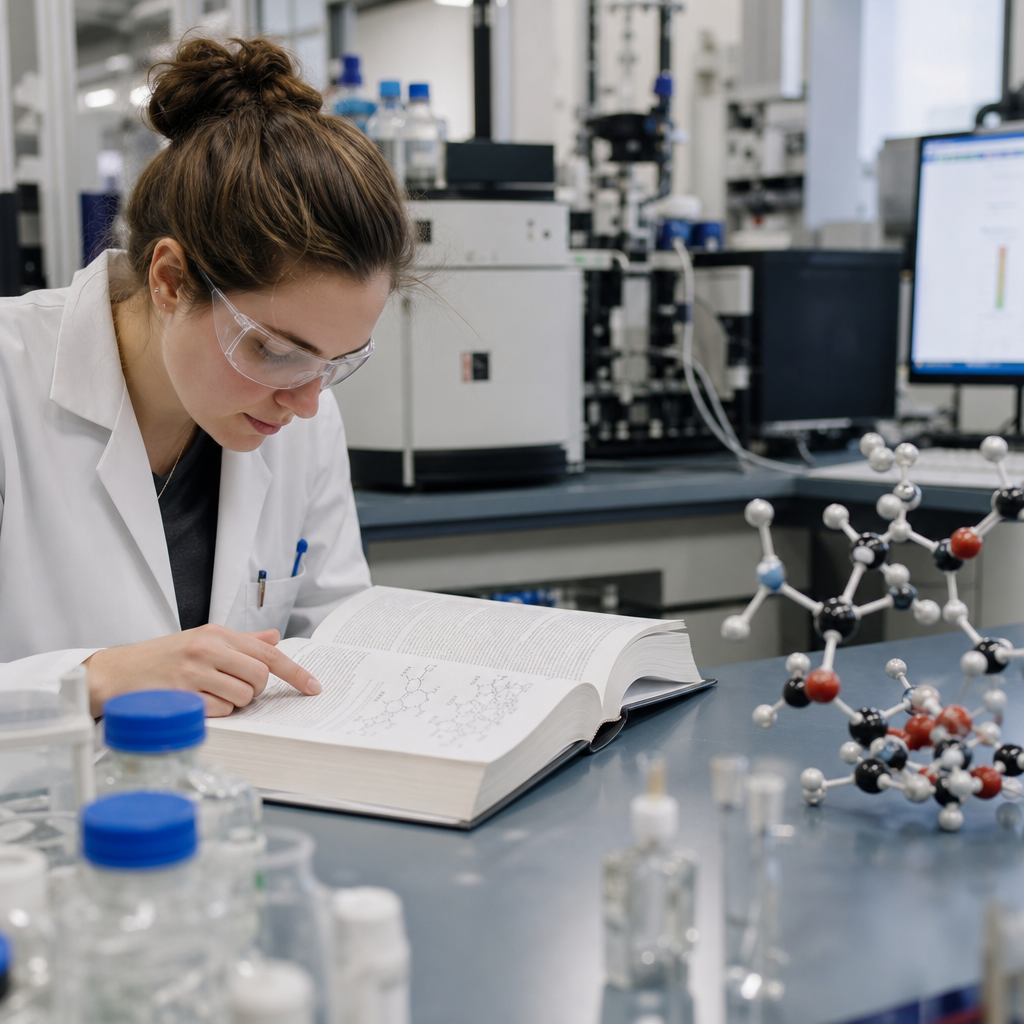
Conducting a literature review in polymer chemistry means systematically finding, evaluating, organizing, and synthesizing published research on polymers, polymerization, characterization, properties, and applications so you can answer a defined scientific question with confidence. In practice, it is the step that separates a broad interest like biodegradable plastics or controlled radical polymerization from a focused research direction that can support a proposal, thesis chapter, review article, or experimental plan. I have done this work for project scoping, manuscript preparation, and group onboarding, and the pattern is always the same: the strongest studies begin with a literature review that is disciplined, reproducible, and chemically precise.
In polymer chemistry, the stakes are higher than in many neighboring fields because terminology is inconsistent, structure-property relationships are context dependent, and small differences in synthesis route or molar mass distribution can completely change conclusions. A paper on poly(lactic acid) degradation, for example, may not be comparable to another unless you check stereochemistry, catalyst residue, crystallinity, molecular weight, dispersity, and testing conditions. A useful literature review therefore does more than collect papers. It maps monomer classes, polymer architectures, reaction mechanisms, analytical methods, benchmark materials, and unresolved contradictions. For students and researchers using educational resources on research and publications, this hub topic matters because it shows how to move from search results to scientific judgment.
A good literature review in polymer chemistry answers several questions directly. What exactly is the polymer system? Which databases should you search? How do you build search strings that catch synonym-heavy terminology? Which papers are foundational, and which are incremental? How do you compare data generated by SEC, NMR, DSC, TGA, rheology, tensile testing, MALDI-TOF, or SAXS when labs report results differently? How do you identify gaps worth pursuing? The process is teachable, and once you learn it, it improves every stage of research and publications, from selecting references to defending claims in peer review.
Define a focused review question and the boundaries of the topic
The first step is to define the review question tightly enough that the literature can be searched and compared. “Sustainable polymers” is too broad. “Catalyst-free synthesis and hydrolytic degradation behavior of aliphatic polyesters for biomedical applications, published from 2015 to 2025” is workable. In polymer chemistry, scope should specify the polymer family, synthesis mechanism, architecture, target property, application context, and time frame. When I set up a review for reversible deactivation radical polymerization, I write down exclusions immediately: not small-molecule kinetics unless directly linked to polymerization control, not emulsion systems if the project concerns solution ATRP, and not review articles older than a practical cut-off unless they are historically foundational.
Clear boundaries prevent the most common failure mode: collecting dozens of interesting but incompatible papers. They also help you choose the right internal links across educational resources in research and publications, such as articles on database searching, citation management, analytical characterization, and scientific writing. Your review question should also be framed so another researcher could reproduce your search logic. That means documenting inclusion criteria like peer-reviewed journal articles, patent relevance, language limitations, polymer class, and the required reporting of molecular weight or characterization data.
Search the right databases with polymer-specific keywords
Polymer chemistry literature is scattered across chemistry, materials science, engineering, and biomedical journals, so database choice matters. Start with SciFinder-n for substance-based and reaction-based searching, because CAS indexing captures polymers, monomers, catalysts, and named reactions more effectively than broad web search. Web of Science and Scopus are essential for citation tracking, author networks, and refining by subject area. Google Scholar is useful for grey literature, theses, and hard-to-find conference material, but it should not be your only source because indexing is uneven. Depending on the topic, PubMed can matter for drug delivery and biomaterials, while Espacenet or Google Patents can reveal commercially relevant polymer formulations before they appear in journals.
Keyword construction in polymer chemistry requires deliberate use of synonyms, abbreviations, and naming variants. A search on polyethylene glycol should also include PEG, poly(ethylene glycol), PEO where relevant, and application-linked terms like stealth polymer or hydrophilic corona. For atom transfer radical polymerization, include ATRP, activators regenerated by electron transfer ATRP, supplemental activator and reducing agent ATRP, and copper-mediated reversible deactivation radical polymerization if the paper avoids the older label. Truncation and Boolean logic are indispensable. A strong search string might combine monomer, mechanism, and performance terms, then exclude irrelevant domains like coatings if the project is biomedical. Save every query. Search discipline saves days later.
Screen papers systematically and separate foundational studies from noise
Once results appear, screening should happen in layers. First read titles and abstracts for relevance. Then screen introductions and experimental sections to check whether the chemistry actually matches your scope. In polymer chemistry, a paper can look relevant based on title alone and still fail because it lacks critical details such as conversion, initiator efficiency, solvent conditions, or calibration method for size exclusion chromatography. I mark papers as foundational, directly relevant, tangential, or excluded. Foundational papers are the ones that introduced a method, established a benchmark, or remain heavily cited because later work depends on them.
Foundational does not always mean oldest. A 1995 paper on RAFT precursors may be historically important, but a 2021 standardization study comparing SEC-MALS and conventional calibration across branched polymers may be more useful to your current argument. Citation counts help, but they are not enough. Read why the paper is cited. Some highly cited polymer papers are popular because they are easy to apply, not because they are methodologically strong. Screening also means checking whether the journal, authors, and reported methods inspire confidence. Missing spectra, incomplete purification details, or unrealistic mechanical performance claims are warning signs.
Extract data in a structured format you can compare
After screening, build a data extraction sheet. This is where a literature review becomes analytical instead of descriptive. For each paper, capture bibliographic details, polymer identity, monomer source, polymerization route, catalyst or initiator, solvent, temperature, reaction time, conversion, number-average molecular weight, weight-average molecular weight, dispersity, end-group analysis, thermal properties, mechanical properties, degradation data, and application notes. Also record how each metric was measured. A glass transition temperature from DSC under one heating rate is not directly equivalent to another measured under different conditions.
For educational resources on research and publications, this structured extraction step is the bridge to every downstream task: comparative analysis, figure creation, manuscript drafting, and accurate citation. It also exposes missing data quickly. In many polymer papers, authors report molecular weight but not calibration standards, report degradation but not buffer composition, or report self-assembly behavior without stating concentration history. Those omissions matter because polymer behavior is path dependent. If you cannot compare studies on equal terms, say so explicitly in your notes and later in your synthesis.
| Data field | Why it matters in polymer chemistry | Example of reporting nuance |
|---|---|---|
| Polymer identity and architecture | Properties depend on composition, tacticity, branching, and block arrangement | Linear polystyrene cannot be compared directly with star polystyrene |
| Polymerization method | Mechanism affects end groups, dispersity, defects, and scalability | RAFT and free-radical routes may yield similar conversion but different chain fidelity |
| Molecular weight metrics | Mn, Mw, and dispersity shape thermal and mechanical behavior | SEC against PMMA standards differs from absolute SEC-MALS values |
| Characterization techniques | Analytical method determines confidence in structure claims | NMR confirms composition, while FTIR alone may be insufficient for copolymers |
| Test conditions | Performance data are only meaningful with context | Tensile strength varies with humidity, strain rate, and specimen preparation |
Evaluate methods, standards, and data quality before synthesizing conclusions
Not all polymer chemistry papers deserve equal weight. Before writing conclusions, evaluate methodological quality. Ask whether the synthesis route is appropriate, whether purification was adequate, and whether the characterization package supports the claims. A living polymerization claim without chain extension or end-group evidence is weak. A biodegradation claim based only on mass loss over a short interval is incomplete unless supported by molecular weight decay, byproduct analysis, or morphology changes. For thermal claims, check whether DSC and TGA parameters are reported clearly. For morphology claims in semicrystalline systems, XRD or SAXS may be necessary alongside microscopy.
Standards matter too. Mechanical testing should ideally align with recognized frameworks such as ASTM or ISO methods. Molecular weight reporting should state solvent, columns, detector type, and calibration protocol. Rheology should specify frequency sweep ranges, temperature control, and sample history. In my own reviews, I often rank evidence strength informally: high when synthesis and characterization are both comprehensive, moderate when data are useful but incomplete, and low when claims outrun methods. This prevents a polished abstract from driving the narrative. In research and publications, credibility comes from weighting evidence, not averaging all papers into a false consensus.
Synthesize the literature into themes, gaps, and research opportunities
Synthesis is the stage where many reviews become summaries instead of scholarship. Do not organize your writing as one paper after another. Organize it by themes that answer the review question. In polymer chemistry, useful themes include synthesis strategies, structure-property relationships, characterization challenges, processing constraints, degradation pathways, and application performance. For example, a review on self-healing polymers might compare dynamic covalent networks versus supramolecular systems, then explain how bond exchange kinetics affect recovery efficiency, modulus retention, and service temperature.
Gaps should be specific and defensible. Instead of saying “more research is needed,” identify what is missing and why it matters. You might note that most studies on chemically recyclable polyesters use narrow-dispersity samples made on small scale, leaving uncertainty about mixed-feedstock tolerance. Or that many reports on conductive polymer composites compare conductivity but neglect rheological processability, which limits translation to extrusion or additive manufacturing. Contradictions are equally valuable. If one set of papers reports improved toughness with increasing block length while another reports embrittlement, inspect whether the disagreement comes from phase separation, testing conditions, or differences in molecular weight distribution.
Write the review so readers can use it for research and publications
The final document should help readers do something practical: design experiments, understand a mechanism, identify benchmark references, or plan their own research and publications workflow. Start each section with a direct answer to the sub-question it covers, then support that answer with selected evidence. Define specialized terms at first use, but do not flatten the chemistry. If discussing step-growth polymerization versus chain-growth polymerization, explain conversion sensitivity, stoichiometric balance, and why gelation risk changes interpretation. If discussing characterization, clarify what each technique proves and what it cannot prove on its own.
Citation management also deserves discipline. Use tools such as Zotero, Mendeley, or EndNote, but do not outsource judgment to software. Tag references by polymer class, mechanism, method, and application so your library becomes searchable later. Keep notes on why a paper matters, not just what it reported. When you draft, cite primary literature for original findings and use review articles strategically for historical framing. Strong literature reviews in polymer chemistry become durable educational resources because they make complex evidence navigable, transparent, and reusable across projects, theses, seminars, and publication planning.
Knowing how to conduct a literature review in polymer chemistry is one of the most valuable skills a researcher can build because it improves question selection, experimental design, writing quality, and scientific credibility at the same time. The core process is straightforward: define a focused scope, search the right databases, screen systematically, extract comparable data, evaluate methods critically, and synthesize findings into themes and gaps. What makes polymer chemistry distinctive is the need to account for naming complexity, architecture effects, characterization limitations, and condition-sensitive properties before making comparisons.
As a hub within educational resources on research and publications, this topic connects directly to every other skill involved in doing publishable science. A careful review tells you which analytical methods are expected, which claims are already saturated, which contradictions are real, and where your work can add value. It also protects you from repeating weak assumptions embedded in secondary citations. The best reviews are not long lists of papers. They are decision tools built from evidence. If you are starting a project, open your database, define your scope in one sentence, and begin building a review table you can trust.
Frequently Asked Questions
1. What is the main purpose of a literature review in polymer chemistry?
The main purpose of a literature review in polymer chemistry is to move from a general topic of interest to a precise, researchable scientific question. Polymer chemistry is a broad field that spans monomer design, polymerization mechanisms, molecular weight control, thermal and mechanical properties, degradation behavior, processing, and real-world applications. A good literature review helps you understand what is already known, what methods are commonly used, where the major debates are, and which important gaps still remain. Instead of simply collecting papers about a topic such as biodegradable polymers, block copolymers, or controlled radical polymerization, you are building a structured understanding of the field.
In practical terms, the literature review helps you evaluate the state of the science with confidence. It lets you identify landmark papers, compare experimental strategies, assess how researchers characterize polymers, and determine whether reported conclusions are well supported. It also shows you how terminology is used across subfields, which is especially important in polymer chemistry because similar materials can be described in different ways depending on the application or analytical method. By reviewing the literature carefully, you can distinguish established knowledge from emerging claims and avoid repeating work that has already been done.
Just as importantly, a literature review provides the intellectual foundation for a proposal, thesis chapter, manuscript, or research plan. It allows you to justify why your project matters, how it fits into current polymer research, and what specific contribution it will make. A strong literature review does not just summarize papers one by one; it synthesizes results into trends, patterns, and unanswered questions. That synthesis is what turns reading into scientific direction.
2. How do I choose and narrow a literature review topic in polymer chemistry?
The best way to choose and narrow a literature review topic in polymer chemistry is to begin with a broad scientific interest and then progressively refine it into a focused question. For example, “sustainable polymers” is too broad for an effective review, but “the effect of chain architecture on the hydrolytic degradation of aliphatic polyesters used in biomedical applications” is much more manageable and scientifically meaningful. Narrowing the topic usually involves defining several boundaries: the type of polymer, the synthesis route, the characterization methods, the property or behavior of interest, and the application context.
A useful approach is to ask a series of framing questions. Are you interested in a class of materials, such as polyolefins, polyesters, hydrogels, or conjugated polymers? Are you focused on a process, such as ring-opening polymerization, RAFT polymerization, ATRP, or step-growth polymerization? Are you trying to understand a property, such as glass transition temperature, crystallinity, conductivity, self-assembly, mechanical strength, or biodegradability? Or are you focused on an application, such as drug delivery, packaging, coatings, membranes, or energy storage? The more clearly you define these dimensions, the more efficient and relevant your search becomes.
You should also narrow the topic based on feasibility and purpose. If the literature is enormous, you may need to limit the time range, specific polymer families, or experimental systems. If your goal is to support a new project, the topic should align with a gap you can realistically address. If your goal is a review article or thesis section, the topic should be broad enough to show context but focused enough to allow critical analysis. A strong topic is one that is specific, searchable, and capable of being synthesized into a coherent scientific argument rather than just a list of references.
3. What sources and search strategies work best for finding polymer chemistry literature?
The most effective literature searches in polymer chemistry combine high-quality databases, thoughtful keyword design, and systematic tracking of references. Core sources often include Web of Science, Scopus, SciFinder, Google Scholar, and publisher databases such as ACS Publications, Wiley, Elsevier, Springer, and the Royal Society of Chemistry. Depending on the topic, patents, dissertations, standards, and conference proceedings can also be valuable, especially in applied polymer research where industrial developments may appear before or alongside journal publications.
Your search strategy should go beyond a single keyword. Polymer chemistry terminology can vary widely, so it is important to use synonyms, related concepts, abbreviations, and alternative naming conventions. For example, if you are studying controlled radical polymerization, you may need to search for “controlled radical polymerization,” “reversible deactivation radical polymerization,” “RAFT,” “ATRP,” “NMP,” and material-specific terms as well. If you are searching for literature on a polymer property, combine the material name with analytical methods and performance outcomes, such as “poly(lactic acid) AND degradation AND molecular weight AND DSC” or “block copolymer self-assembly AND SAXS.” Using Boolean operators, phrase searching, truncation, and citation chaining can dramatically improve both breadth and precision.
It is also essential to search systematically rather than casually. Keep a record of the keywords you used, databases searched, date ranges, and inclusion criteria. Save papers to a citation manager such as Zotero, EndNote, or Mendeley and organize them by theme, mechanism, polymer class, or methodology. One of the best habits in polymer chemistry literature work is to start with recent review articles to map the field, then move backward to foundational papers and forward through citation tracking to identify the newest developments. This layered approach helps you build both historical understanding and current awareness.
4. How do I critically evaluate and organize papers for a polymer chemistry literature review?
Critically evaluating papers in polymer chemistry means looking well beyond the abstract and deciding whether the study is methodologically sound, scientifically relevant, and genuinely informative for your question. Start by examining the research objective: what exactly are the authors trying to prove or compare? Then assess whether their experimental design actually supports that goal. In polymer chemistry, this often requires close attention to synthesis conditions, monomer purity, catalyst or initiator choice, reaction control, purification methods, and reproducibility. Small differences in these details can strongly affect polymer structure and final properties.
You should also evaluate how the polymer was characterized. Reliable conclusions in polymer science depend on proper use of analytical techniques such as NMR, FTIR, GPC or SEC, DSC, TGA, XRD, SAXS, rheology, microscopy, tensile testing, and degradation assays. Ask whether the authors used appropriate methods to confirm composition, molecular weight, dispersity, architecture, thermal behavior, morphology, and performance. Also consider whether the interpretation matches the data. For example, claims about living polymerization, biodegradability, or improved mechanical properties should be supported by clear evidence, not just selective measurements or vague comparisons.
Organization is just as important as evaluation. Instead of arranging papers only by publication date, group them into meaningful categories such as polymerization mechanism, structure-property relationships, analytical approach, application area, or unresolved controversy. Many researchers create summary tables that capture key details: polymer system, synthesis method, characterization techniques, main findings, limitations, and relevance to the research question. This makes it much easier to compare studies directly and spot patterns. The ultimate goal is to transform a pile of papers into a structured map of the field, where major themes, consistent findings, methodological differences, and research gaps become visible.
5. How do I turn my collected sources into a strong, well-written literature review in polymer chemistry?
Turning collected sources into a strong literature review requires synthesis, structure, and clear scientific argument. The most common mistake is to write a paper-by-paper summary, where each paragraph describes a different article without connecting it to a larger theme. In polymer chemistry, a stronger approach is to organize the review around ideas that matter scientifically: how different polymerization strategies influence chain architecture, how characterization methods shape interpretation, how composition affects thermal or mechanical behavior, or why results differ across applications. This allows you to compare studies directly and show how the field has developed.
A well-written review usually begins with a concise introduction that defines the topic, explains its importance, and states the scope of the review. The body should then be divided into logical sections, often moving from fundamentals to specialized findings. For example, you might begin with the chemistry of a polymer class, then discuss synthesis methods, then compare characterization strategies, then analyze reported properties and applications, and finally identify unresolved challenges. Each section should do more than summarize results; it should evaluate trends, highlight agreement and disagreement, explain possible reasons for conflicting data, and connect findings back to the central research question.
The conclusion of the review is where you demonstrate real insight. In polymer chemistry, this often means identifying what is well established, where the evidence remains incomplete, what methodological limitations affect the field, and what research directions are most promising. If your review supports a proposal or thesis, the conclusion should naturally lead to your own project by showing exactly where your work fits. Throughout the writing process, maintain precise terminology, cite carefully, and make sure your interpretation remains balanced and evidence based. A strong literature review reads like a scientific conversation you understand deeply, not just a record of everything you found.