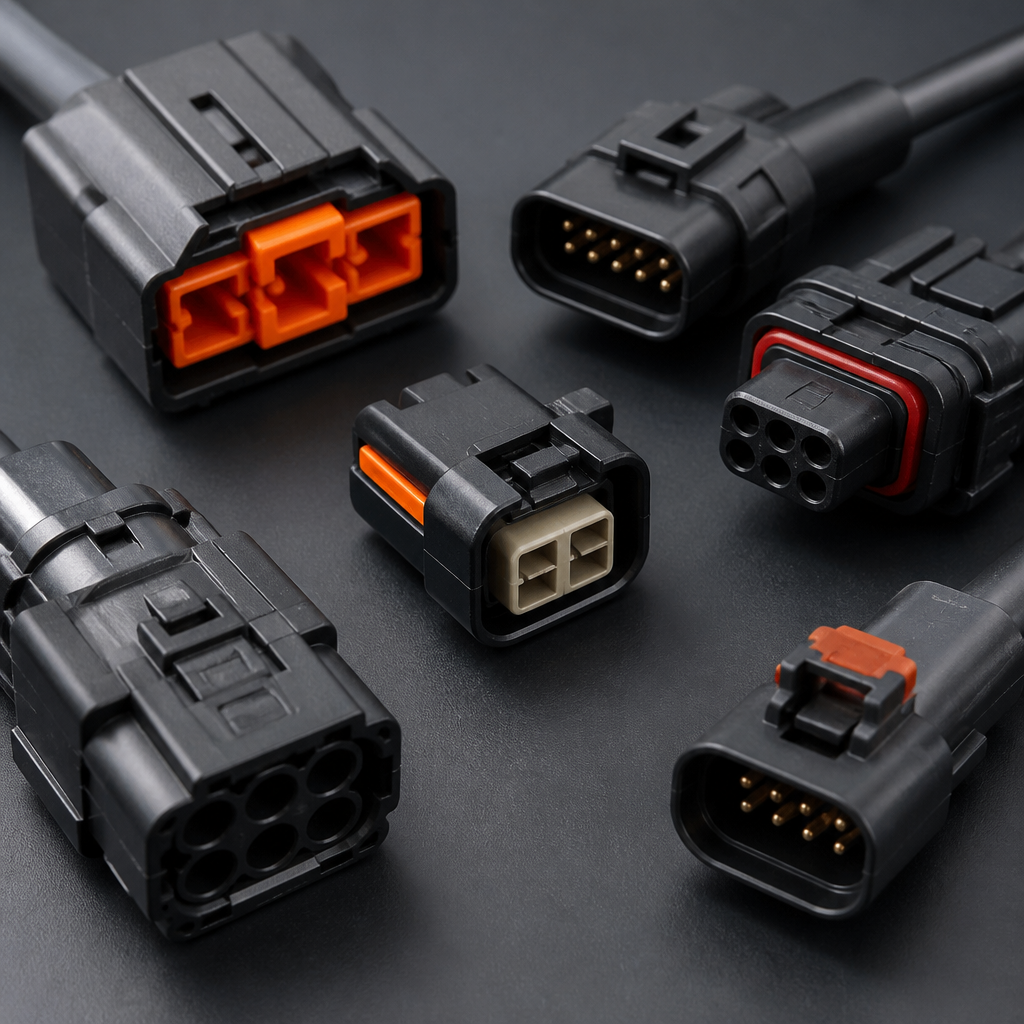
Innovations in polymer-based electrical connectors are reshaping how engineers balance conductivity, insulation, durability, weight, and cost in modern electronic and power systems. In this context, polymer-based electrical connectors are connection components that rely on engineered plastics, elastomers, thermoplastic composites, or conductive polymer formulations for housings, seals, contact supports, and, in some designs, current-carrying elements. Electrical properties refer to the material behaviors that determine how a connector manages current, voltage, resistance, dielectric strength, insulation resistance, arc tracking, electromagnetic effects, and long-term stability under heat and moisture. This matters because connectors are often the hidden failure point in electric vehicles, medical devices, aerospace controls, renewable energy installations, and consumer electronics, where a small shift in contact resistance or insulation breakdown can disable an entire system.
Over the past decade, I have seen connector selection move from a simple metal-and-plastic specification exercise to a much more demanding materials engineering decision. Miniaturization pushes contacts closer together, higher power density raises operating temperatures, and harsh environments expose polymers to chemicals, vibration, ultraviolet radiation, and repeated mating cycles. At the same time, manufacturers want lighter assemblies, lower processing cost, and compliance with safety standards such as UL 94 flammability ratings, IEC creepage and clearance guidance, and ASTM and ISO test methods for polymer performance. As a hub for electrical properties within materials and properties, this article explains the key innovations that now define polymer-based electrical connectors, how those innovations improve real performance, and where engineers should be cautious when specifying next-generation materials.
Why polymers matter in connector electrical performance
Polymers were once treated mainly as passive insulating shells around metal contacts, but that view is outdated. Today, the polymer system directly influences dielectric strength, comparative tracking index, insulation resistance, thermal aging behavior, dimensional stability, and signal integrity. A connector housing made from polybutylene terephthalate, liquid crystal polymer, polyamide, polyphenylene sulfide, or high-temperature nylon does more than hold shape. It controls contact spacing under heat, resists conductive contamination in humid environments, and determines whether fine-pitch terminals can operate safely at elevated voltages. In high-speed data connectors, the dielectric constant and dissipation factor of the surrounding polymer affect impedance control and insertion loss, which is why low-loss materials are increasingly important in automotive Ethernet, telecom backplanes, and industrial automation.
One practical example comes from electric vehicle battery management connectors. Engineers need compact housings with high dielectric strength, low moisture absorption, and strong resistance to thermal cycling. Traditional unfilled nylon can absorb enough water to change dimensions and alter insulation behavior. Switching to glass-filled PPS or LCP often improves dimensional control and supports tighter terminal positioning, although the tradeoff can be higher brittleness or mold complexity. In renewable energy combiner boxes and inverter connections, UV-stabilized polymers and flame-retardant compounds are essential because insulation failure outdoors is rarely caused by one dramatic overload event; it is usually the result of years of heat, moisture, dust, and surface tracking.
Conductive polymers and polymer composites for current-carrying functions
The most significant innovation is not replacing copper everywhere, but selectively using conductive polymers and polymer composites where they add value. Pure intrinsically conductive polymers such as polyaniline, polypyrrole, and PEDOT have specialized roles, yet connector applications more commonly use thermoplastics loaded with carbon black, carbon nanotubes, graphene, stainless fibers, or metal particles to create electrostatic discharge paths, shielding features, smart sensing layers, or low-current conductive elements. These materials are valuable when weight reduction, corrosion resistance, design freedom, or integrated functionality matters more than bulk conductivity equal to metal.
In practice, conductive polymer composites work best in hybrid architectures. I have seen them used for EMI shielding shells, grounding clips integrated into molded parts, and sensor-enabled connector features that detect mate status or overheating. Because conductivity in a composite depends on filler dispersion and percolation threshold, processing quality is critical. A badly compounded resin may show acceptable volume resistivity in a lab plaque but fail in production because weld lines or flow orientation interrupt the conductive network. Engineers must distinguish between surface resistivity for ESD control and true current-carrying capability. A carbon-filled polymer suitable for static dissipation is not automatically suitable for power transmission. That limitation is fundamental, not a marketing nuance.
Insulation materials, dielectric performance, and high-voltage design
For most polymer-based electrical connectors, insulation performance remains the core requirement. Dielectric strength measures how much electric field a material can withstand before breakdown. Insulation resistance indicates leakage current under applied voltage. Comparative tracking index evaluates how well a material resists surface carbonization and conductive path formation under contamination. These are not interchangeable metrics. A resin can have strong dielectric strength in a clean, dry sample yet perform poorly in tracking resistance under humid, dirty field conditions. High-voltage connector design therefore depends on the full material profile, not a single datasheet number.
Innovations in high-voltage polymers focus on halogen-free flame retardant systems, improved CTI performance, lower ion contamination, and better retention of properties after thermal aging. This is especially relevant in EV charging connectors, energy storage systems, and industrial drives operating above 600 volts. Materials such as PPS, PBT blends, and specialized polyamides are engineered to maintain creepage distances and resist embrittlement while meeting flame standards. Designers also use overmolded silicone or thermoplastic elastomer seals to keep moisture away from critical interfaces. When a connector fails in high voltage, the root cause often starts at the surface: dust, condensed water, and local heating create a path for tracking. Better polymer chemistry and smarter geometry reduce that risk significantly.
Thermal management, aging, and long-term electrical stability
Electrical performance in connectors is inseparable from thermal behavior. Contact resistance generates heat, and heat accelerates polymer aging. That feedback loop explains why a connector that passes initial bench testing can still fail in service after months of load cycling. Material innovation now targets heat deflection, thermal conductivity, oxidation resistance, and retention of dielectric properties over time. High-temperature polymers such as LCP, PPS, PEEK, and advanced polyamides allow smaller connector bodies near motors, inverters, and LED power modules, where sustained temperatures can exceed the comfort zone of commodity resins.
Another emerging area is thermally conductive but electrically insulating polymer compounds filled with ceramic particles such as boron nitride or aluminum oxide. These are useful when designers need to move heat away from terminals or embedded electronics without creating unintended conductive paths. In compact board-to-board connectors and power module interfaces, that combination helps manage hot spots and preserve insulation margins. However, filler loading changes viscosity, shrinkage, and sometimes toughness, so the material solution must be evaluated as a processing system, not just an electrical upgrade. Reliable connector engineering always connects polymer chemistry, mold design, terminal force, and operating profile.
| Material family | Primary electrical advantage | Typical connector use | Key tradeoff |
|---|---|---|---|
| PBT | Good insulation and processability | General-purpose housings | Moderate moisture and heat limits |
| PPS | Excellent dimensional and thermal stability | Automotive and high-voltage connectors | Higher cost and potential brittleness |
| LCP | Low warpage and fine-pitch precision | Miniature signal connectors | Thin-wall molding demands careful control |
| Conductive polymer composite | ESD, shielding, or integrated sensing | Hybrid functional parts | Lower conductivity than metal |
Signal integrity, miniaturization, and high-speed applications
As data rates rise, the polymer around the contact system becomes part of the electrical pathway. In high-speed connectors, dielectric constant and dissipation factor influence impedance, crosstalk, return loss, and attenuation. Materials with lower dielectric loss support cleaner transmission in USB4, automotive Ethernet, server interconnects, and RF-adjacent designs. LCP has become especially important because it combines precise molding with relatively favorable high-frequency behavior, which helps maintain tight geometry in very small connectors. Consistency matters as much as headline values. A resin with stable dielectric properties across temperature and humidity can outperform a nominally lower-loss material that drifts in the field.
Miniaturization also raises the stakes for creepage, whisker control, flash management, and contamination resistance. At fine pitch, a slight dimensional shift can change impedance or create leakage risk. That is why low-warpage polymers, cleaner molding compounds, and better surface finish control are now central innovations in connector manufacturing. In medical catheters, wearable electronics, and implant-adjacent systems, polymers must support tiny geometries while surviving sterilization, flexing, and biocompatibility review. In these applications, electrical properties cannot be separated from reliability engineering. The material has to remain electrically predictable after assembly, cleaning, and repeated use.
Manufacturing advances, testing methods, and application-specific design
Material innovation only matters when manufacturing can reproduce it. Connector makers now use precision molding simulation, micro-CT inspection, laser welding of polymer subcomponents, plasma surface treatment, and in-line electrical testing to control variability. Overmolding allows seals, strain relief, and dielectric barriers to be integrated into one assembly, reducing parts count and leak paths. Insert molding around stamped contacts improves positional accuracy, but it also introduces thermal expansion mismatch that must be understood early. I have seen excellent materials fail because gate location caused fiber orientation that weakened latch areas or because reflow exposure exceeded what the resin could tolerate repeatedly.
Testing has become more application specific as well. Standard metrics still include dielectric withstand, insulation resistance, contact resistance, thermal shock, vibration, and flammability, but advanced programs now add mixed flowing gas corrosion, CTI testing, humidity-bias exposure, high-pot screening, and accelerated life models tied to real duty cycles. For aerospace and defense connectors, outgassing and radiation tolerance may matter. For offshore wind and rail, salt fog and pollution degree become major concerns. The best design process starts with the application environment, selects polymer families that fit the electrical stress profile, validates with targeted testing, and then locks process controls so the measured performance is actually manufacturable at scale.
Looking ahead, the most promising developments are multifunctional polymers, better recyclable high-performance resins, digital materials traceability, and connector architectures that combine metal efficiency with polymer intelligence. The main lesson is clear: electrical properties in polymer-based electrical connectors are no longer secondary housing concerns. They are core design variables that influence safety, signal quality, service life, and system economics. Engineers who understand dielectric behavior, tracking resistance, thermal aging, filler effects, and manufacturing interactions make better connector decisions and avoid expensive field failures. If you are building a materials knowledge base for connector selection, use this page as the starting point, then map each application to voltage, environment, data rate, and lifetime requirements before narrowing the polymer choice. That disciplined approach consistently delivers more reliable products.
Frequently Asked Questions
1. What are polymer-based electrical connectors, and how do they differ from traditional connector designs?
Polymer-based electrical connectors are interconnection components that use engineered polymer materials such as high-performance thermoplastics, elastomers, thermoplastic composites, and, in some advanced cases, conductive polymer systems for key structural and functional elements. These materials are commonly used in housings, insulation barriers, contact carriers, strain-relief features, environmental seals, and lightweight support structures around conductive contacts. In more innovative designs, polymer formulations may also contribute to electromagnetic shielding, thermal management, sensing, or limited current-carrying functionality when combined with conductive fillers or hybrid architectures.
Compared with traditional connector designs that rely heavily on metal bodies, ceramic insulators, or less specialized plastics, polymer-based connectors offer a broader design window. Engineers can tailor impact resistance, dielectric strength, flame resistance, chemical compatibility, dimensional stability, and flexibility to match the application. This is especially valuable in automotive electronics, aerospace systems, medical devices, industrial automation, renewable energy equipment, and compact consumer electronics, where connectors must perform reliably under vibration, thermal cycling, moisture exposure, and tight packaging constraints.
The main difference is not that polymers replace metal contacts entirely in every case, but that they enable smarter connector architectures. Metals still usually handle the primary current path because of their superior conductivity, while polymers deliver insulation, weight reduction, corrosion resistance, miniaturization support, and manufacturability. The latest innovations focus on using advanced polymer systems to improve overall connector performance rather than treating plastic as a simple enclosure material.
2. What recent innovations are driving improvements in polymer-based electrical connectors?
Several major innovations are advancing polymer-based electrical connectors at the same time. One of the most important is the development of high-performance engineering polymers with improved thermal endurance, creep resistance, and dimensional stability. Materials such as liquid crystal polymers, PEEK, PPS, high-temperature nylons, and specialized fluoropolymers allow connectors to survive reflow soldering, elevated under-hood temperatures, and long-term mechanical stress while maintaining electrical insulation performance.
Another key innovation is the use of conductive and semi-conductive polymer composites. By incorporating carbon-based fillers, metal particles, or hybrid nanomaterials into polymer matrices, manufacturers can create parts that support EMI shielding, electrostatic discharge control, integrated grounding functions, or selective conductivity. While these materials do not always replace traditional metal contacts for high-current applications, they can reduce part count and enable new connector geometries that would be difficult or costly to produce with conventional materials alone.
Advanced sealing technologies are also reshaping the field. Elastomeric overmolding, multi-shot molding, and integrated gasket designs improve ingress protection against water, dust, oils, and chemicals. This is essential for harsh-environment connectors used in electric vehicles, outdoor infrastructure, factory equipment, and marine applications. At the same time, precision molding and additive manufacturing are making it easier to produce highly miniaturized connectors with tight tolerances, complex internal channels, and customized features for signal integrity and assembly efficiency.
Material innovation is also being paired with simulation-driven design. Engineers now use digital tools to model dielectric behavior, thermal buildup, stress concentration, and long-term aging before tooling begins. That reduces development risk and helps optimize polymer selection based on electrical properties, mechanical loads, and environmental exposure. The result is a new generation of connectors that are lighter, smaller, more durable, and more application-specific than earlier polymer-based designs.
3. How do polymer materials affect the electrical performance of connectors?
Polymer materials strongly influence electrical connector performance, even when they are not the primary current-carrying element. Their most fundamental role is insulation. A well-chosen polymer provides the dielectric strength needed to isolate adjacent contacts, prevent short circuits, and maintain safe performance at the intended voltage level. It also helps control creepage and clearance behavior by preserving geometry under heat, humidity, and mechanical stress. In high-density connectors, that dimensional stability becomes especially important because even small distortions can affect spacing and electrical reliability.
Polymers also affect signal integrity and long-term consistency. Dielectric constant and dissipation factor matter in high-speed data applications because they influence capacitance, impedance behavior, and energy loss. As data rates increase, connector materials must support predictable electrical performance across a wider frequency range. Advanced polymer systems are being selected not only for insulation strength but also for low dielectric loss, low moisture absorption, and resistance to tracking or surface leakage. These factors help maintain cleaner signal transmission in communication, computing, and sensor-rich systems.
Thermal behavior is another critical electrical consideration. If a polymer softens, creeps, or degrades under operating temperature, contact retention and alignment may change, increasing resistance or intermittent failure risk. For that reason, innovations in heat-resistant polymers directly improve electrical reliability. In some emerging designs, conductive polymer composites contribute auxiliary electrical functions such as shielding, charge dissipation, or embedded sensing, although they are generally used alongside metallic conductors rather than as a universal replacement. Overall, the electrical properties of polymer materials are central to connector safety, performance stability, and miniaturization potential.
4. What are the biggest advantages of polymer-based connectors in modern electronic and power systems?
One of the biggest advantages is weight reduction. Polymer-based connectors can be significantly lighter than all-metal alternatives, which is a major benefit in electric vehicles, aircraft, portable electronics, robotics, and distributed energy systems. Lower weight can improve efficiency, simplify installation, and support broader system-level design goals. At the same time, polymers often provide excellent corrosion resistance, making them well suited for humid, chemically exposed, or outdoor environments where metal-heavy designs may require additional protective measures.
Another major advantage is design flexibility. Polymers can be molded into intricate forms that integrate latches, seals, keying features, strain relief, insulation barriers, and mounting details in a single part. This reduces assembly complexity and can lower manufacturing cost at scale. It also enables compact and customized connector solutions for applications where space is limited or where connectors must meet strict ergonomic, safety, or serviceability requirements. In high-volume industries, this integration can translate into meaningful cost and reliability gains.
Polymer-based connectors also support durability when the right materials are selected. Modern formulations can resist vibration, impact, thermal cycling, UV exposure, fuel and oil contact, sterilization chemicals, and repeated mating cycles. In addition, innovations in flame-retardant systems and low-smoke materials have expanded their use in safety-critical environments. For engineers, the appeal is not just that polymers are cheaper or lighter, but that they can be engineered to deliver a balanced combination of insulation, environmental protection, manufacturability, and lifecycle performance that traditional material systems may struggle to match.
5. What challenges and future trends should engineers watch in polymer-based electrical connector development?
One ongoing challenge is balancing electrical, mechanical, thermal, and economic requirements at the same time. A polymer that performs extremely well at high temperature may be too expensive for mass-market use. A material with excellent processability may absorb too much moisture for a precision signal application. A conductive composite may provide useful shielding but still fall short of the conductivity needed for demanding power transmission. Connector development therefore depends on careful tradeoff analysis, qualification testing, and close alignment between material science and application needs.
Long-term reliability remains a major focus area. Engineers must consider aging effects such as creep, oxidation, hydrolysis, UV degradation, chemical attack, and thermal fatigue. These effects can alter dimensional accuracy, sealing performance, insulation resistance, and contact retention over time. For harsh-use sectors such as transportation, grid infrastructure, defense, and industrial automation, validation under real-world conditions is essential. Standards compliance, flame performance, recyclability expectations, and supply chain stability are also becoming more important in material selection decisions.
Looking ahead, the most important trends include smarter multifunctional polymers, more sustainable material platforms, and greater integration with digital manufacturing. Expect to see increased use of recyclable or bio-derived engineering polymers where performance permits, along with materials designed for lower environmental impact without sacrificing safety or durability. Conductive polymer systems will likely continue evolving for shielding, sensing, and selective current-handling roles. Additive manufacturing and highly precise molding will support faster prototyping and more customized connector geometries. Overall, the future of polymer-based electrical connectors lies in using materials not just as passive structural elements, but as active contributors to electrical performance, environmental resilience, and system-level efficiency.