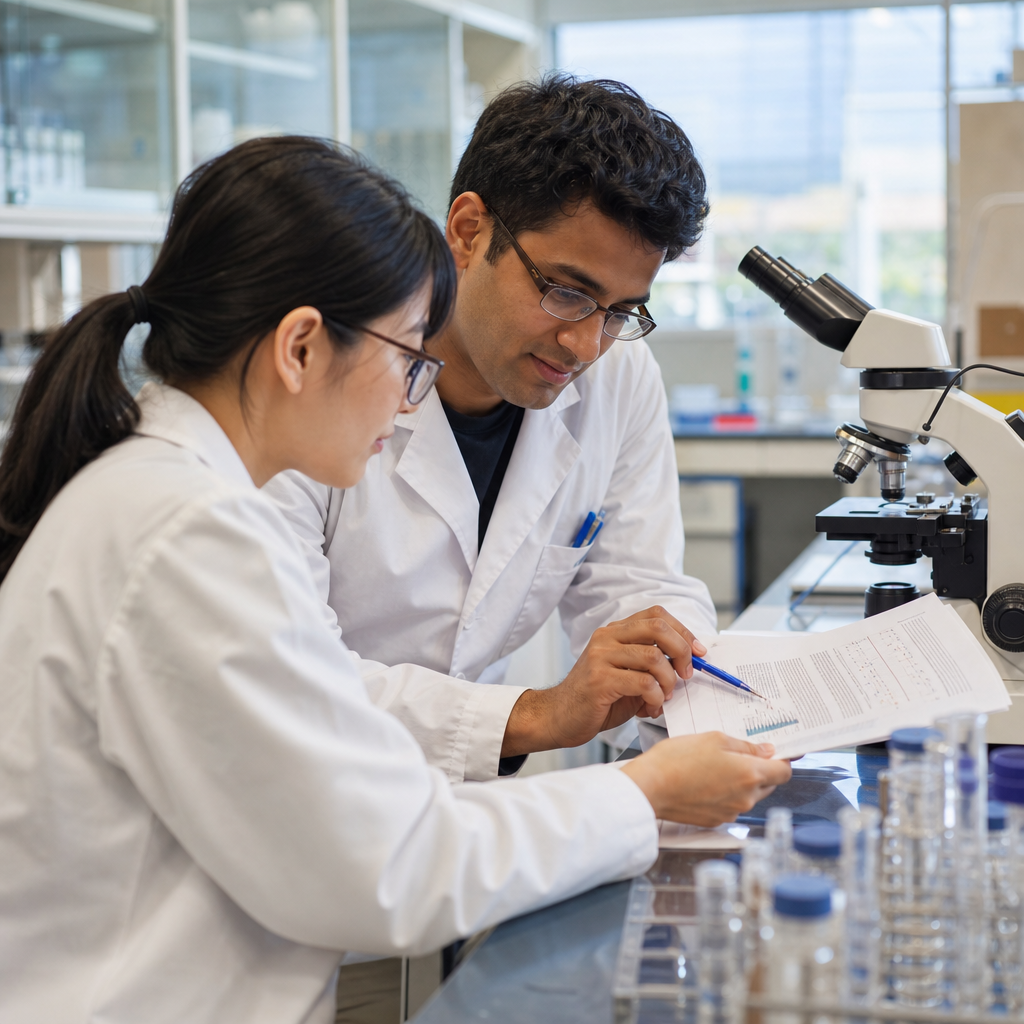
Peer review shapes polymer research by filtering claims, improving experimental design, and connecting laboratory discoveries to the standards that make scientific publishing reliable. In polymer science, the term peer review refers to independent evaluation of a manuscript, grant proposal, or conference paper by experts with relevant technical knowledge before publication or funding. Polymer research itself spans synthesis, characterization, processing, modeling, degradation, recycling, biomaterials, composites, coatings, membranes, and additive manufacturing. Because polymers are used in medical devices, packaging, aerospace parts, batteries, textiles, and electronics, errors in the research record can ripple quickly into product development, regulation, and public safety. I have worked with polymer manuscripts where a reviewer’s single question about molecular weight distribution, residual solvent, or rheology entirely changed the interpretation of results. That is the practical value of review: it does not simply reject weak work; it often transforms incomplete work into credible, reusable knowledge.
As a hub within educational resources on research and publications, this article explains how peer review functions across the polymer literature, what reviewers actually examine, where the system succeeds, where it falls short, and how researchers can use it well. Key terms matter here. A manuscript is the submitted paper. Reviewers are subject specialists invited by an editor. Single-blind review hides reviewer identity, double-blind review hides both sides, and open review reveals identities or reports. Editorial screening, sometimes called desk review, is the first decision point. Reproducibility means another researcher can obtain comparable results using the described methods. In polymer science, that standard is especially demanding because small changes in feed ratio, catalyst purity, humidity, thermal history, or sample conditioning can produce very different properties. Understanding the role of peer review therefore matters not only for authors trying to publish, but also for students reading literature, engineers selecting data, and institutions building trustworthy research programs.
Why peer review is uniquely important in polymer research
Polymer research presents review challenges that are more complex than many readers assume. A paper on a new copolymer may involve synthetic chemistry, kinetics, molecular characterization, thermal analysis, mechanical testing, microscopy, and application data in a single study. Reviewers must ask whether the structure was proven with suitable methods such as NMR, FTIR, GPC or SEC, MALDI where relevant, DSC, TGA, XRD, DMA, or rheometry. They also assess whether processing history was controlled. A tensile strength number means little if the specimen geometry, strain rate, conditioning time, crystallinity, and orientation are not reported. In my experience, many of the strongest reviews in polymer journals are not about style or novelty; they are about hidden variables that only experienced practitioners notice because they have seen how easily data can drift.
The stakes are high because polymer properties are path dependent. Unlike a simple small molecule with one melting point and a fixed structure, polymers often exist as distributions: molecular weight distributions, tacticity distributions, comonomer distributions, filler dispersion distributions, pore size distributions, and more. A biodegradable film can perform differently because of moisture uptake during storage. A conductive polymer can lose performance because of dopant instability. A membrane can appear selective in one lab and mediocre in another because the casting solvent evaporated under different airflow. Peer review helps catch these issues before they become cited facts. It also pushes authors to align with recognized reporting practices from bodies such as IUPAC, ASTM International, ISO, and journal data policies, which is essential if a paper is going to guide future experiments or industrial decisions.
How the peer review process works from submission to publication
The process usually begins with editorial screening. The editor checks scope, baseline quality, ethical compliance, data availability statements, plagiarism reports, and whether the work meets a journal’s novelty threshold. In polymer journals, desk rejection often happens because characterization is incomplete, the application is incremental without mechanistic insight, or the paper is outside the journal’s technical focus. If the manuscript passes, the editor invites reviewers with expertise that matches the paper’s main components. For a study on flame-retardant epoxy nanocomposites, for example, one reviewer may focus on synthesis and formulation, another on fire testing and thermal degradation, and another on morphology or mechanics. Good editors build complementarity into the review panel rather than asking three people the same kind of question.
Reviewers then evaluate originality, methodological rigor, significance, clarity, data integrity, and citation context. Their report may recommend acceptance, minor revision, major revision, or rejection. In polymer research, major revision is common because key claims usually depend on evidence from multiple techniques. A reviewer might ask authors to compare number-average and weight-average molecular weights, add replicates to DMA, include error bars for permeability, report cure conversion, provide SEM images of filler dispersion, or explain why accelerated aging conditions are representative. The editor weighs the reports, sometimes requests another round, and then issues a decision. The system is not perfect, but when the editor actively synthesizes reviewer comments instead of counting votes, the final paper is usually much stronger and more useful to the field.
What reviewers look for in polymer manuscripts
Experienced reviewers in polymer science test whether the manuscript answers a sequence of basic but decisive questions. What exactly was made or studied? How was it characterized? Are the comparisons fair? Are the controls appropriate? Are the results statistically and physically plausible? Do the conclusions match the evidence? A manuscript claiming a “high-performance biopolymer” should define composition, molecular weight, dispersity, degree of substitution or conversion, residual monomer content, and processing conditions. If the paper compares a new material against PLA, PET, or epoxy, the benchmark formulations, test standards, and conditioning procedures must be equivalent. Reviewers notice when one sample is injection molded and the other compression molded, or when one membrane was tested dry and another wet. Those details change outcomes enough to invalidate broad claims.
They also look for mechanistic coherence. If adding nanoclay increases modulus but also raises elongation at break, the explanation must fit the morphology. If a self-healing polymer recovers strength after damage, the chemistry and test protocol must support that claim, not just a single before-and-after image. If a recycling paper reports stable properties over multiple extrusion cycles, reviewers will ask about chain scission, oxidation, gel formation, and rheological changes. The best reports often improve a paper by forcing authors to connect structure, processing, and properties into a consistent narrative. That is one reason peer review remains central to research and publications in this discipline: it rewards completeness, not just excitement.
Common reasons polymer papers are delayed, revised, or rejected
Most rejections in polymer research arise from a predictable set of weaknesses. Incomplete characterization is the first. Authors may claim successful grafting without quantitative evidence, report “uniform dispersion” from one micrograph, or discuss biodegradation without mass balance, controls, and environmental context. Overstated novelty is another frequent problem. A formulation that swaps one filler loading for another or repeats a known photopolymerization route with minor changes may be technically competent but not sufficiently new for a research journal. Weak experimental design also triggers rejection. Examples include testing too few replicates, omitting standard deviations, using a nonstandard mechanical method without justification, or comparing a new membrane to literature values instead of side-by-side controls.
Presentation problems matter too. Polymer papers often fail because methods are not reproducible. Missing catalyst concentrations, unspecified drying times, incomplete cure schedules, absent shear histories, and vague software settings can make a study impossible to repeat. Ethical issues can be even more serious: image manipulation, duplicate publication, salami slicing, inappropriate authorship, and undeclared conflicts damage trust immediately. Reviewers and editors increasingly use Crossref similarity checks, image screening, and data policy compliance to identify these issues early. In my own editorial work, the manuscripts that survive tough review are not necessarily the flashiest. They are the ones that report enough detail for another lab to reproduce the polymer, process it, test it, and understand why the result occurred.
Strengths and limitations of peer review in research and publications
Peer review improves reliability, but it is not a guarantee of truth. Its main strength is expert scrutiny before claims enter the literature. Reviewers can detect incorrect spectral assignments, impossible conversion yields, flawed viscoelastic interpretation, misuse of statistical significance, and unsupported application claims. They also add field memory. Someone who has reviewed ten papers on vitrimer networks or polymer electrolytes can quickly see whether a result is genuinely new or simply a known trend under a new label. That historical awareness is valuable in a fast-moving publication landscape.
Still, limitations are real. Review can be slow, uneven, conservative, and affected by reviewer availability. Specialists in narrow polymer subfields are often overloaded, which leads to delayed reports or shallow comments. Novel interdisciplinary work may be misunderstood if no single reviewer covers chemistry, processing, and device performance equally well. Bias can enter through institution recognition, language quality, citation networks, or intellectual rivalry. Open data and better editorial oversight reduce these risks, but they do not eliminate them. The practical lesson is balanced: peer review is essential for quality control, yet readers should still evaluate methods, data, and interpretation critically after publication.
| Peer review model | How it works | Main advantage in polymer research | Main limitation |
|---|---|---|---|
| Single-blind | Reviewers know authors; authors do not know reviewers | Can produce direct technical criticism without social pressure | Reviewer bias toward known labs or institutions can persist |
| Double-blind | Neither side is identified during review | Helps reduce reputation effects in competitive subfields | True anonymity is hard when methods or preprints reveal identity |
| Open review | Names or reports are published | Encourages accountability and more constructive reports | Junior reviewers may soften valid criticism of senior authors |
| Post-publication review | Community comments after publication | Finds issues that initial reviewers missed, especially in complex data | Correction may come after flawed claims have already spread |
How authors can use peer review to publish stronger polymer papers
Authors who treat review as a technical collaboration usually publish better work. The first step is building a manuscript that anticipates reviewer questions. Report synthesis recipes with exact quantities, purities, and conditions. Use accepted nomenclature. Distinguish clearly between molecular weight averages and dispersity. State whether testing followed ASTM or ISO methods and note deviations. Include replicates, error bars, and sample conditioning details. Show controls that isolate the variable of interest. If your claim is barrier improvement, report thickness, humidity, and permeability method. If your claim is sustainable performance, provide life-cycle context or at least realistic end-of-life discussion rather than assuming “bio-based” automatically means environmentally superior.
When reviewer comments arrive, respond systematically. Address every point in a rebuttal letter, quote the comment, state the revision, and explain your reasoning with evidence. If you disagree, do so respectfully and technically. For example, if a reviewer requests XPS but your conclusion rests on bulk composition demonstrated by elemental analysis and solid-state NMR, explain why those methods are more relevant. Avoid defensive language. Editors notice whether authors are solving problems or arguing around them. In polymer research, a careful revision often adds the exact missing information that later makes the paper highly cited: a control experiment, an aging test, a comparison to a standard grade, or a mechanistic schematic tied to data rather than speculation.
How students and researchers should read peer-reviewed polymer literature
Publication in a respected journal is an important signal, but it is not the endpoint of evaluation. Students entering polymer science should learn to read papers as structured evidence. Start with the research question and identify the claimed contribution. Then inspect whether the chosen characterization techniques can actually support that claim. A paper asserting block copolymer self-assembly should provide morphology evidence at the right length scale. A degradation study should separate hydrolysis, oxidation, biodegradation, and physical disintegration rather than using those terms loosely. A recycling paper should disclose contaminant sensitivity and property retention over realistic processing histories.
Citation patterns also deserve scrutiny. Hub articles on research and publications should guide readers toward reviews, standards, seminal papers, and method papers, not only recent headline results. Use databases such as Web of Science, Scopus, PubMed for biomedical polymer topics, and Google Scholar to map the conversation. Check whether results have been independently reproduced, whether later papers corrected the original interpretation, and whether the testing conditions match your use case. In practice, the best readers of polymer literature become better authors and better reviewers because they see publication not as a final stamp, but as part of an ongoing verification process. If you work in this field, strengthen your next paper by writing and reviewing with reproducibility at the center.
Peer review remains one of the most important safeguards in polymer research because it improves accuracy before findings become part of the scientific record. For a field defined by sensitivity to composition, processing history, morphology, and testing conditions, that safeguard is not optional. It helps editors judge novelty, helps authors close methodological gaps, helps readers trust that key controls were considered, and helps industry and academia make decisions based on stronger evidence. The best-reviewed polymer papers do more than report results. They explain exactly what material was made, how it was characterized, why the comparison is fair, and what limitations still apply. That level of clarity turns a paper into a reliable resource for future experiments, design decisions, and teaching.
As a hub for research and publications within educational resources, the central lesson is straightforward: use peer review actively, not passively. If you are an author, anticipate reviewer questions with full reporting, standards-based testing, and honest claims. If you are a reviewer, focus on reproducibility, mechanism, and practical relevance rather than personal preference. If you are a reader, verify methods and context even after publication. Polymer science advances fastest when publication is treated as disciplined communication rather than a race to print. Apply these principles to your next manuscript review, literature search, or lab report, and you will build research that others can trust and use.
Frequently Asked Questions
What does peer review mean in polymer research?
In polymer research, peer review is the formal process in which independent experts evaluate a manuscript, grant proposal, or conference submission before it is published, presented, or funded. The reviewers are typically scientists or engineers with relevant expertise in areas such as polymer synthesis, characterization, rheology, processing, modeling, degradation, recycling, or biomaterials. Their role is to assess whether the work is technically sound, whether the experimental methods are appropriate, whether the conclusions are supported by the data, and whether the study adds meaningful value to the field.
In practice, peer review acts as a quality-control system for a highly interdisciplinary discipline. Polymer science often combines chemistry, physics, materials science, and engineering, so reviewers may examine everything from molecular design and reaction conditions to mechanical testing, thermal analysis, microscopy, and statistical interpretation. A paper on a new copolymer, for example, may be judged not only on whether the material was successfully synthesized, but also on whether its molecular weight distribution was properly measured, whether structure-property relationships were convincingly demonstrated, and whether the claims about performance are realistic and reproducible.
Peer review does not guarantee perfection, but it significantly improves the reliability of the scientific record. It helps identify gaps, weak controls, unsupported claims, incomplete characterization, and overstatement of novelty. In polymer research, where small differences in composition, processing history, or testing conditions can strongly affect results, that scrutiny is especially important. The process helps ensure that published findings are credible enough to inform future experiments, industrial development, and broader scientific understanding.
Why is peer review especially important in polymer science compared with some other fields?
Peer review is especially important in polymer science because polymer systems are often complex, sensitive, and difficult to interpret without specialized knowledge. Unlike simpler materials, polymers can exhibit behavior that depends on chain architecture, molecular weight, crystallinity, additives, morphology, processing conditions, and environmental exposure. A material may perform very differently depending on how it was synthesized, extruded, cast, annealed, or tested. Because of that complexity, studies can appear convincing on the surface while still missing critical controls or analytical details that change the meaning of the results.
Reviewers in polymer research help determine whether the characterization actually matches the claims being made. If a paper reports a biodegradable polymer with exceptional strength, for instance, reviewers may ask whether degradation was tested under realistic conditions, whether tensile data were collected with proper sample preparation, whether thermal transitions were measured correctly, and whether the material’s chemistry was fully confirmed. They may also look for common issues such as inadequate replication, unclear calibration methods, selective reporting of data, or comparisons to inappropriate benchmarks.
This matters not only for academic accuracy but also for practical consequences. Polymer research supports applications in packaging, aerospace, electronics, medicine, coatings, energy storage, and sustainable materials. Errors or exaggerated conclusions can misdirect future research, waste funding, delay technological progress, or create safety and regulatory concerns. Strong peer review helps connect laboratory results to the standards expected for dependable scientific publishing. It pushes authors to present a complete and transparent picture of their work, which is essential in a field where real-world performance often depends on details that non-specialists might overlook.
How does peer review improve the quality of polymer research papers?
Peer review improves polymer research papers by strengthening nearly every part of the study, from experimental design to interpretation and presentation. Reviewers often identify missing controls, weak comparisons, unclear methods, or conclusions that go beyond the evidence. Their feedback can lead authors to run additional experiments, include more complete characterization, clarify reaction schemes, expand statistical analysis, or temper broad claims. As a result, the final paper is usually more rigorous, easier to evaluate, and more useful to other researchers.
In polymer science, this improvement can be very concrete. Reviewers may request molecular weight data to support synthesis claims, DSC or TGA results to verify thermal behavior, SEM or TEM images to explain morphology, rheological measurements to support processing arguments, or long-term stability testing for application-oriented materials. If a study proposes a new polymer blend, membrane, hydrogel, or recyclable network, reviewers may ask for evidence that performance differences are not caused by batch variation, solvent effects, residual catalyst, or inconsistent processing. These are not minor edits; they often determine whether the work is scientifically persuasive.
Peer review also improves transparency and reproducibility. In many cases, reviewers push authors to describe monomer purity, reaction time, catalyst loading, curing conditions, specimen dimensions, humidity, strain rate, or degradation environment in more detail. Those details are essential in polymer research because they can dramatically influence results. By requiring clearer reporting and better-supported conclusions, peer review helps transform a preliminary claim into a stronger scientific contribution that others can reproduce, build on, and trust.
What are the limitations of peer review in polymer research?
Although peer review is central to scientific reliability, it has real limitations and should not be treated as a guarantee that a study is flawless. Reviewers work with the information provided by the authors, and they usually do not repeat the experiments themselves. If data are incomplete, selectively presented, or difficult to verify, even experienced reviewers may miss problems. In polymer research, this challenge can be significant because complex materials often require many characterization techniques, and not every reviewer will have equal expertise in synthesis, mechanics, spectroscopy, processing, and application testing at the same time.
Another limitation is variability. Different reviewers may focus on different aspects of the same paper. One may emphasize chemical structure confirmation, another may care most about mechanical performance, and another may concentrate on novelty or application relevance. That can lead to inconsistent outcomes between journals or review rounds. There is also the issue of time. Reviewers are typically busy researchers, and highly detailed evaluation of sophisticated polymer studies takes substantial effort. As a result, some manuscripts receive exceptionally thorough review while others receive more limited scrutiny.
Peer review can also be influenced by broader structural issues such as publication pressure, reviewer shortages, disciplinary bias, or preference for positive and novel results. In emerging areas like recyclable thermosets, bio-based polymers, advanced membranes, or polymer nanocomposites, hype can sometimes outpace verification. That is why strong editorial oversight, data transparency, reproducibility, and post-publication discussion remain important. In short, peer review is a powerful filter and improvement mechanism, but it works best as part of a larger scientific culture built on openness, replication, careful reporting, and critical reading.
How should authors prepare a polymer research paper to succeed in peer review?
Authors can improve their chances in peer review by approaching manuscript preparation the way a careful reviewer would. That means presenting a clear research question, using appropriate controls, selecting characterization methods that directly support the claims, and explaining the relationship between polymer structure, processing, and properties in a disciplined way. A strong paper does not simply report a new material or improved performance; it shows exactly how the material was made, how it was verified, how it was tested, and why the conclusions are justified.
For polymer studies, preparation should include thorough experimental detail. Authors should clearly report monomer sources and purity, reaction conditions, catalyst or initiator levels, purification steps, processing history, and sample preparation methods. Characterization should be matched to the claims: molecular structure and composition may require NMR, FTIR, or mass spectrometry; molecular weight may require GPC or related methods; thermal properties may need DSC and TGA; morphology may require microscopy or scattering methods; and mechanical, rheological, electrical, or barrier properties should be tested under well-defined conditions with adequate replication. If the work involves degradation, recycling, or biomedical use, realistic testing environments and limitations should be stated explicitly.
It also helps to write with precision and restraint. Reviewers are more receptive when authors distinguish clearly between what the data prove and what they merely suggest. Claims of novelty, sustainability, scalability, or application readiness should be supported with evidence, not promotional language. Figures should be readable, statistical treatment should be appropriate, and comparisons to prior literature should be fair and technically relevant. Finally, authors should view reviewer comments as part of the scientific process rather than as an obstacle. In polymer research, thoughtful revision often leads to a far better paper, and in many cases it is the review process itself that turns an interesting set of experiments into a reliable and influential contribution.