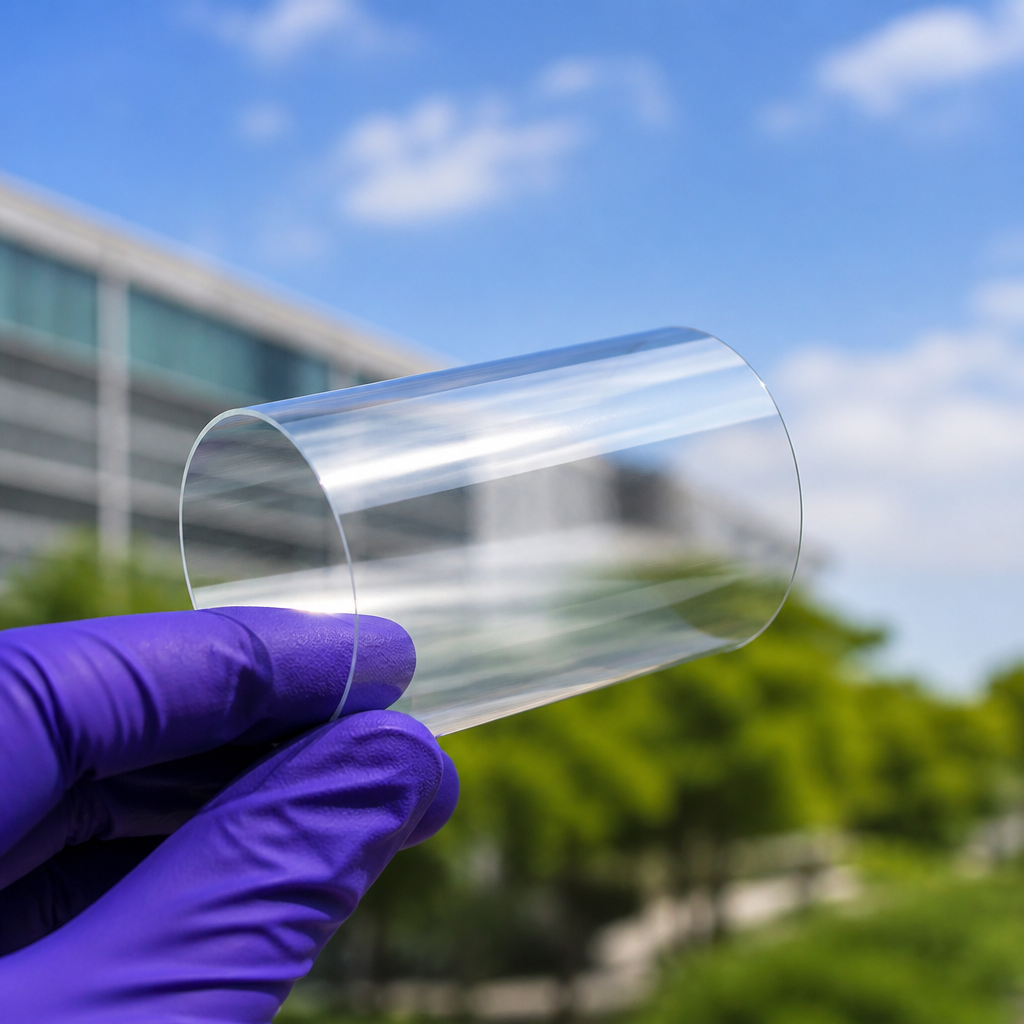
Light-transmitting polymers have moved from niche substitutes for glass to essential engineering materials in electronics, medical devices, transportation, architecture, and consumer products. In the materials and properties landscape, optical properties describe how a material interacts with light through transmission, absorption, reflection, scattering, refraction, and emission. For polymers, those properties are shaped not only by chemistry, but also by morphology, additives, processing history, and environmental exposure. That combination makes polymer optics both powerful and demanding: small formulation changes can produce major differences in clarity, haze, birefringence, ultraviolet stability, or color shift.
This hub article on advances in light-transmitting polymers covers the core optical concepts that guide material selection and product design. When engineers ask which clear plastic offers the best impact resistance, whether a polymer can replace glass in a lens cover, why one transparent part turns yellow outdoors, or how haze differs from total transmittance, they are really asking about the optical properties of polymers in service. From years of reviewing datasheets, troubleshooting molded clear parts, and comparing weathering results across resin families, I have seen that success rarely depends on transparency alone. The winning material balances light transmission with mechanical performance, processability, cost, scratch resistance, and long-term durability.
Today’s advances come from improved resin purity, better control of refractive index, nanostructured additives, anti-fog and hard-coat systems, and processing methods that reduce internal stress and defects. Commodity transparent plastics such as polymethyl methacrylate, polycarbonate, and polystyrene remain important, but high-performance families including cyclic olefin copolymers, cyclic olefin polymers, transparent polyamides, fluoropolymers, silicones, and bio-based optical grades are expanding design options. This matters because modern products demand more from clear materials: vehicle lighting must survive heat and stone impact, medical diagnostics require low autofluorescence and dimensional precision, and display systems need optical clarity with controlled surface reflection. Understanding these advances helps designers choose polymers that deliver reliable optical performance rather than just initial visual appeal.
What makes a polymer light transmitting
A polymer transmits light well when its structure minimizes absorption and scattering within the visible range, roughly 400 to 700 nanometers. The most transparent polymers are amorphous or have domains smaller than the wavelength of visible light, because large crystalline regions scatter light strongly. That is why many semicrystalline polymers appear translucent or opaque, while amorphous resins such as acrylic and polycarbonate can be highly clear. Chemical bonds also matter. Aromatic structures, impurities, residual catalysts, and oxidation products can absorb specific wavelengths, reducing total transmission or causing yellow tint.
In practice, the key metrics are luminous transmittance, haze, clarity, refractive index, Abbe number, birefringence, and yellowness index. Total transmittance tells you how much light passes through. Haze measures the percentage of transmitted light that is widely scattered, making an object look cloudy. Clarity reflects how sharply an image can be seen through the material. Refractive index determines how much the material bends light, which is critical in lenses, light guides, and multilayer films. Abbe number indicates chromatic dispersion; higher values mean less color separation. Birefringence describes direction-dependent refractive index caused by molecular orientation or stress, a major concern in optical disks, displays, and precision lenses.
Standardized measurement is essential. ASTM D1003 is widely used for haze and luminous transmittance, while spectrophotometers characterize wavelength-dependent transmission and UV cutoff. For molded parts, optical inspection often misses process-induced defects such as splay, weld lines, flow marks, and stress whitening, all of which scatter light. I have seen nominally clear polycarbonate parts fail visual quality checks because moisture was not fully removed before molding, generating microbubbles and silver streaks. Material capability and process discipline are inseparable in transparent polymer applications.
Core resin families and how their optical properties differ
Several resin families dominate clear polymer design, each with distinct optical properties and tradeoffs. Polymethyl methacrylate, commonly called acrylic or PMMA, typically offers visible light transmission around 92 percent, which is among the highest for commercial plastics and slightly above standard soda-lime glass. It also has excellent weatherability and surface gloss, which is why it is widely used in signage, lenses, aquariums, and daylighting panels. Its weakness is impact resistance: despite good stiffness and scratch performance relative to many plastics, PMMA can crack under impact and requires careful design in demanding environments.
Polycarbonate usually delivers visible transmission near 88 to 90 percent, lower than PMMA but still high, while providing far superior toughness. That makes it the workhorse material for safety glazing, machine guards, headlamp lenses, protective visors, and transparent housings. The tradeoff is poorer inherent scratch resistance and a greater tendency to yellow without stabilizers or coatings under prolonged UV exposure. Many outdoor polycarbonate grades therefore rely on coextruded UV-protective layers or hard coats. In automotive lighting, these protective systems are not optional; they are central to long-term optical retention.
Cyclic olefin copolymers and cyclic olefin polymers have become increasingly important in medical and optical markets because they combine high clarity, low moisture absorption, low birefringence, and strong dimensional stability. They are widely used in diagnostic cartridges, microfluidic chips, blister packaging, and optical films. Compared with polycarbonate, many COC and COP grades offer lower water uptake and better optical consistency in humid conditions. Compared with PMMA, they often provide better process flexibility for thin-wall precision parts. Their limitations include cost and, depending on grade, lower impact resistance or heat tolerance than polycarbonate.
Other notable families include transparent styrenics such as GPPS and SBC-based compounds, transparent polyamides for chemical resistance and clarity, thermoplastic polyurethanes for flexible transparent applications, fluoropolymers for exceptional chemical and UV resistance, and silicone elastomers for highly stable light transmission across wide temperature ranges. Material selection is never a matter of choosing the clearest resin in a datasheet. It is a matching exercise across optical, mechanical, environmental, regulatory, and manufacturing requirements.
Key optical property comparisons for engineering decisions
When teams evaluate light-transmitting polymers, they should compare optical performance in the context of application stress. A smartphone light guide, an operating-room device cover, and an exterior architectural panel may all need transparency, but they do not need the same polymer. The table below summarizes practical differences engineers review first when narrowing options.
| Polymer | Typical visible transmittance | Main optical strengths | Main limitations | Common uses |
|---|---|---|---|---|
| PMMA | Up to about 92% | Very high clarity, low haze, strong weatherability | Lower impact resistance, notch sensitivity | Signage, skylights, lenses, display covers |
| Polycarbonate | About 88 to 90% | High toughness, good heat resistance, moldability | Scratches easily, needs UV protection outdoors | Safety glazing, headlamps, shields, housings |
| COC/COP | Typically high, often above 90% | Low birefringence, low moisture uptake, precision optics | Higher cost, grade-dependent toughness | Medical cartridges, optical films, labware |
| GPPS | High, often near 90% | Excellent initial clarity, low cost | Brittle, limited durability | Disposable packaging, clear consumer parts |
| Transparent TPU | Moderate to high | Flexibility, abrasion resistance | Can yellow, softer surface | Protective films, tubing, wearable components |
This type of comparison prevents a common error: optimizing only for transmittance. A polymer with slightly lower transmission may still deliver a better optical system if it resists impact, thermal warpage, and environmental degradation. In one lighting project, a team initially favored acrylic because of its clarity, but field exposure and assembly loads pushed the design toward coated polycarbonate. The final system maintained acceptable brightness while surviving use conditions the acrylic version could not handle.
Processing, morphology, and why clear parts fail
Advances in light-transmitting polymers are not limited to resin chemistry. Processing control often determines whether theoretical optical properties appear in the finished part. Injection molding, extrusion, casting, blow molding, and additive manufacturing each introduce variables that affect clarity. Moisture content, melt temperature, residence time, mold surface finish, cooling rate, shear history, and gate design can all create optical defects. Polycarbonate and some copolyesters are especially sensitive to hydrolysis if dried improperly, while acrylic can show stress cracking if molded with excessive residual stress.
Crystallinity is another major factor. In semicrystalline polymers, slower cooling can increase crystal size and opacity. In amorphous polymers, orientation can induce birefringence, which distorts light passing through stressed regions. That matters in camera components, waveguides, and display films where optical path consistency is critical. Annealing, optimized mold temperatures, balanced filling, and lower shear designs help reduce stress-induced defects. Tooling also matters more than many nonoptical programs expect. A polished mold can improve surface quality, but if venting is poor, trapped gas may burn the polymer and discolor the part.
Surface and bulk contamination are frequent root causes of haze. Tiny gels, unmelted particles, additive incompatibility, and mold-release residues can destroy clarity. I have seen acceptable lab plaques turn into hazy production parts because regrind handling introduced fines and dust. For optical-grade parts, closed material handling, strict drying verification, filtered melts, and disciplined housekeeping are basic requirements, not premium extras. The best optical polymer can still fail if the manufacturing environment is treated like a standard opaque molding operation.
Coatings, additives, and engineered optical functions
Many important advances in light-transmitting polymers come from multilayer systems rather than the base resin alone. Hard coats improve abrasion resistance on polycarbonate and acrylic. UV absorbers and hindered amine light stabilizers slow yellowing and embrittlement. Anti-fog coatings reduce water droplet formation on medical visors, refrigerator panels, and greenhouse films by promoting uniform wetting instead of discrete scattering droplets. Anti-reflective treatments reduce surface reflection losses, improving display readability and optical throughput.
Nanoengineered additives have also expanded polymer optical performance. Properly dispersed nanoparticles can tune refractive index, block ultraviolet radiation, or add barrier properties without causing visible haze, provided particle size stays well below visible wavelengths and aggregation is controlled. Diffuser particles are intentionally added in lighting films to scatter light in a designed way, improving luminance uniformity while preserving transmission targets. In LEDs, polymer optics now include molded lenses, encapsulants, and diffusers engineered for precise beam shaping and thermal exposure.
Color management is another specialized area. Optical brighteners, toners, and carefully controlled pigments can produce a desired appearance, but every additive introduces risk of absorption, migration, incompatibility, or weathering change. Medical and analytical applications often demand low extractables and low autofluorescence, narrowing additive choices. For food-contact and healthcare products, regulatory compliance under FDA, EU, or ISO-related frameworks must be considered alongside optical performance. The best formulations are not the most complex ones. They are the ones that achieve the target function with the fewest optical liabilities.
Durability, testing, and where the market is heading
Long-term optical performance depends on how polymers age under ultraviolet light, heat, humidity, chemicals, and mechanical cleaning. Outdoor clear parts can lose transmittance through yellowing, microcracking, oxidation, and surface erosion. Accelerated weathering methods such as ASTM G154 and ASTM G155 are widely used to compare formulations, but they do not perfectly predict every field condition. Real exposure includes local sunlight spectrum, pollutants, stress state, and maintenance practices. That is why validation should combine laboratory testing with relevant outdoor or use-condition trials.
Scratch resistance remains a decisive limitation for many transparent polymers. Glass still outperforms most plastics on surface hardness, so applications with frequent wiping, airborne dust, or abrasive contact often need hard-coated systems. Chemical resistance is another gating issue. Alcohols, cleaners, sunscreen ingredients, fuels, and essential oils can stress-crack some transparent plastics, especially when residual molding stress is present. Engineers should verify compatibility using the actual grade, coating stack, and cleaning protocol rather than relying on broad family assumptions.
The market is moving toward lighter, safer, more functional optical plastics. Automotive makers are increasing polymer use in lighting and interior displays to reduce weight and enable complex shapes. Medical diagnostics continue to favor COC and COP for optical microfluidics and assay cartridges. Renewable-content and mechanically recycled transparent polymers are improving, though maintaining color and low haze remains difficult because contamination and thermal history quickly degrade optics. The most important trend is integration: future light-transmitting polymers will not simply pass light, they will manage it through coatings, gradients, microstructures, and application-specific formulations.
Advances in light-transmitting polymers have broadened what engineers can achieve with clear materials, but the central lesson is straightforward: optical performance is a system property, not a single datasheet number. Total transmittance, haze, refractive index, birefringence, weatherability, scratch resistance, and chemical durability all matter, and each is shaped by resin chemistry, additives, processing, and end-use exposure. PMMA, polycarbonate, COC, COP, transparent styrenics, TPU, fluoropolymers, and silicone each fill valuable roles because no single polymer is best in every optical application.
For anyone building a stronger understanding of optical properties within materials and properties, this hub should serve as the starting point. Use it to compare resin families, frame questions for suppliers, and connect outward to deeper topics such as haze measurement, UV stabilization, optical coatings, stress birefringence, and weathering performance. The practical benefit is better selection decisions early in development, when changing materials is still affordable and before optical defects become field failures.
If you are evaluating a transparent polymer, begin with the service environment, required optical metrics, and processing method, then shortlist materials that can hold those properties over time. That disciplined approach consistently produces better parts than choosing the clearest sample on the bench. Continue through the related articles in this optical properties hub to build a complete material selection framework for your next design.
Frequently Asked Questions
1. What are light-transmitting polymers, and why have they become so important across industries?
Light-transmitting polymers are engineered plastic materials designed to allow visible, ultraviolet, or infrared light to pass through them with controlled levels of clarity, diffusion, refraction, and durability. While they were once viewed mainly as lightweight alternatives to glass, they are now essential performance materials in advanced applications because they offer a unique combination of optical functionality, design flexibility, low weight, impact resistance, and scalable manufacturing. Common examples include acrylics, polycarbonate, cyclic olefin polymers and copolymers, transparent polyamides, and specialty optical silicones and fluoropolymers.
Their importance has grown because modern products increasingly require materials that do more than simply transmit light. In consumer electronics, displays, lenses, light guides, and protective covers must balance transparency with scratch resistance, dimensional stability, and compatibility with high-volume fabrication methods. In medical devices, optical polymers are used in diagnostic cartridges, imaging components, fluidic chips, and implant-related technologies where clarity, sterilization resistance, and biocompatibility matter. In transportation, they support lightweight glazing, interior lighting, sensor housings, and autonomous vehicle optics. In architecture and construction, they enable daylighting panels, protective barriers, and decorative surfaces that combine transparency with impact performance and weatherability.
What makes recent advances especially significant is that engineers can now tailor these polymers at multiple levels. The chemistry of the polymer backbone affects refractive index, color stability, and UV response. Morphology, including crystallinity and phase structure, influences haze and scattering. Additives such as stabilizers, nanoparticles, flame retardants, or anti-fog agents can improve service life or add functionality, but they must be selected carefully so they do not reduce transparency. Processing history also matters: molding temperature, cooling rate, orientation, residual stress, and surface finish can all change final optical performance. As a result, light-transmitting polymers are no longer generic transparent plastics; they are highly engineered optical materials designed for very specific end-use requirements.
2. Which optical properties matter most when evaluating light-transmitting polymers?
Several optical properties are critical, and each one affects performance differently depending on the application. The most commonly discussed is light transmission, which describes how much light passes through the material. High total transmission is essential for lenses, covers, and clear barriers, but transmission alone does not guarantee optical quality. A polymer can transmit a large amount of light and still appear cloudy if scattering is high.
That is where haze becomes important. Haze measures the percentage of transmitted light that is scattered rather than passing directly through. Low haze is desirable for applications requiring sharp visual clarity, such as display covers or optical lenses. Higher haze can be useful in applications like light diffusers, architectural panels, and LED lighting systems where softer, more uniform illumination is preferred. Clarity, gloss, and transparency are related practical descriptors, though they are often interpreted through standardized optical testing methods.
Refractive index is another major property because it determines how strongly the material bends light. This matters in lenses, waveguides, fiber optics, and multilayer optical assemblies. Closely matching or intentionally differentiating refractive indices between layers can improve efficiency, reduce losses, or create specific visual effects. Abbe number, or dispersion, is also relevant in precision optics because it indicates how much the refractive index changes with wavelength, which affects chromatic aberration.
Absorption and color are equally important. Some polymers are highly transparent in the visible range but absorb ultraviolet light, while others are optimized for infrared transmission. This becomes especially relevant in sensing, medical diagnostics, protective filters, and specialty imaging systems. Yellowness index and long-term color stability are frequently monitored because exposure to heat, UV radiation, chemicals, or processing stress can gradually alter appearance and reduce optical performance.
Reflection, surface quality, and birefringence also deserve attention. Surface roughness can increase reflection and scatter, reducing image quality. Birefringence, often caused by molecular orientation during processing, can distort polarized light and become a major issue in display and photonic applications. In short, the best way to evaluate a light-transmitting polymer is not by asking whether it is “clear,” but by assessing the full optical profile in relation to the exact lighting conditions, wavelengths, geometry, and service environment it will face.
3. How do polymer chemistry, morphology, additives, and processing history influence optical performance?
Optical performance in polymers is the result of a complex interaction between intrinsic material design and manufacturing conditions. Polymer chemistry sets the baseline. The molecular structure of the backbone and side groups influences refractive index, transparency window, UV stability, thermal resistance, and susceptibility to yellowing. Amorphous polymers often provide better optical clarity than semicrystalline polymers because they lack crystalline regions that can scatter light. However, advances in resin design and crystallization control have allowed even some traditionally challenging systems to achieve useful levels of light transmission.
Morphology plays a decisive role because light is extremely sensitive to internal heterogeneity. Any mismatch in refractive index between phases, domains, fillers, voids, or crystallites can increase scattering and haze. That means the size, shape, and distribution of internal structures matter greatly. When those features are significantly smaller than the wavelength of visible light, scattering can be minimized. When they approach or exceed that scale, the material can quickly lose transparency. This is why phase separation, incomplete mixing, moisture-related defects, and poor interfacial compatibility are such important concerns in transparent polymer systems.
Additives can either enhance or undermine optical quality. UV stabilizers and antioxidants help preserve clarity during outdoor exposure and thermal aging. Anti-scratch, anti-fog, anti-static, and antimicrobial additives can add value in demanding applications. Diffusers and pigments may be intentionally used when controlled scattering or selective transmission is required. At the same time, every additive introduces the risk of absorption, haze, color shift, or long-term instability. Even highly functional nanoparticles must be carefully dispersed and index-matched to avoid optical losses. The best transparent formulations are therefore not simply “clean” polymers, but balanced systems in which every ingredient supports the intended optical outcome.
Processing history is often the hidden factor that determines whether a theoretically transparent resin actually performs well in practice. Injection molding, extrusion, casting, thermoforming, and additive manufacturing each impose different thermal and mechanical histories. High shear can orient polymer chains, creating birefringence. Rapid cooling may lock in residual stress. Contamination, moisture, and degradation during processing can produce defects, gels, bubbles, or discoloration. Tool surface quality affects gloss and interface optics, while annealing may reduce stress and improve dimensional as well as optical stability. In advanced applications, success depends on treating optical performance as a full materials-and-process systems problem rather than a resin-selection problem alone.
4. What are the most important recent advances in light-transmitting polymers?
Recent advances have focused on pushing transparent polymers beyond traditional limits in durability, functionality, and precision optical performance. One major area of progress is the development of high-clarity, high-heat materials that can survive harsher service conditions without losing transparency or turning yellow. This is particularly valuable in automotive lighting, electronics, and medical components that experience elevated temperatures, repeated sterilization, or long-term UV exposure. Improved stabilization packages, more robust polymer backbones, and better control of impurities have all contributed to these gains.
Another major advance is in optical-grade formulation and microstructure control. Manufacturers are designing polymers and copolymers with lower birefringence, improved refractive-index consistency, and tighter dimensional stability for lenses, sensors, waveguides, and display-related parts. In parallel, better mold design, process simulation, and post-processing methods are helping reduce residual stress and optical distortion. This matters tremendously in precision applications where even minor internal stress or surface waviness can degrade image quality or sensor accuracy.
Functional transparency is also a growing frontier. Today’s light-transmitting polymers can be engineered to do more than pass visible light. They can selectively filter UV, transmit infrared for sensing, diffuse LED output evenly, resist fogging in humid conditions, block glare, or incorporate coatings that enhance scratch resistance and cleanability. Some systems are being integrated into smart surfaces, wearable devices, diagnostic platforms, and photonic components. Advances in multilayer structures, nanostructured surfaces, and hybrid polymer composites are expanding what “transparent” materials can achieve without sacrificing manufacturability.
Sustainability-related innovation is also accelerating. Researchers and manufacturers are working on recyclable transparent polymers, bio-based optical materials, and processing methods that reduce energy use or scrap generation while maintaining optical quality. This is challenging because sustainability improvements must not compromise transmission, color stability, or aging resistance. Even so, progress in resin purification, reprocessing control, and circular material strategies is beginning to make a practical impact. Altogether, the field is moving from simple transparent plastics toward highly specialized optical platforms tailored for demanding, multifunctional, and increasingly sustainable applications.
5. How should engineers and product designers choose the right light-transmitting polymer for a specific application?
The best selection process starts by defining the optical job the material must perform, rather than choosing a familiar polymer and trying to make it fit. Designers should first identify the relevant wavelength range: visible, UV, near-infrared, or another region. A material that works