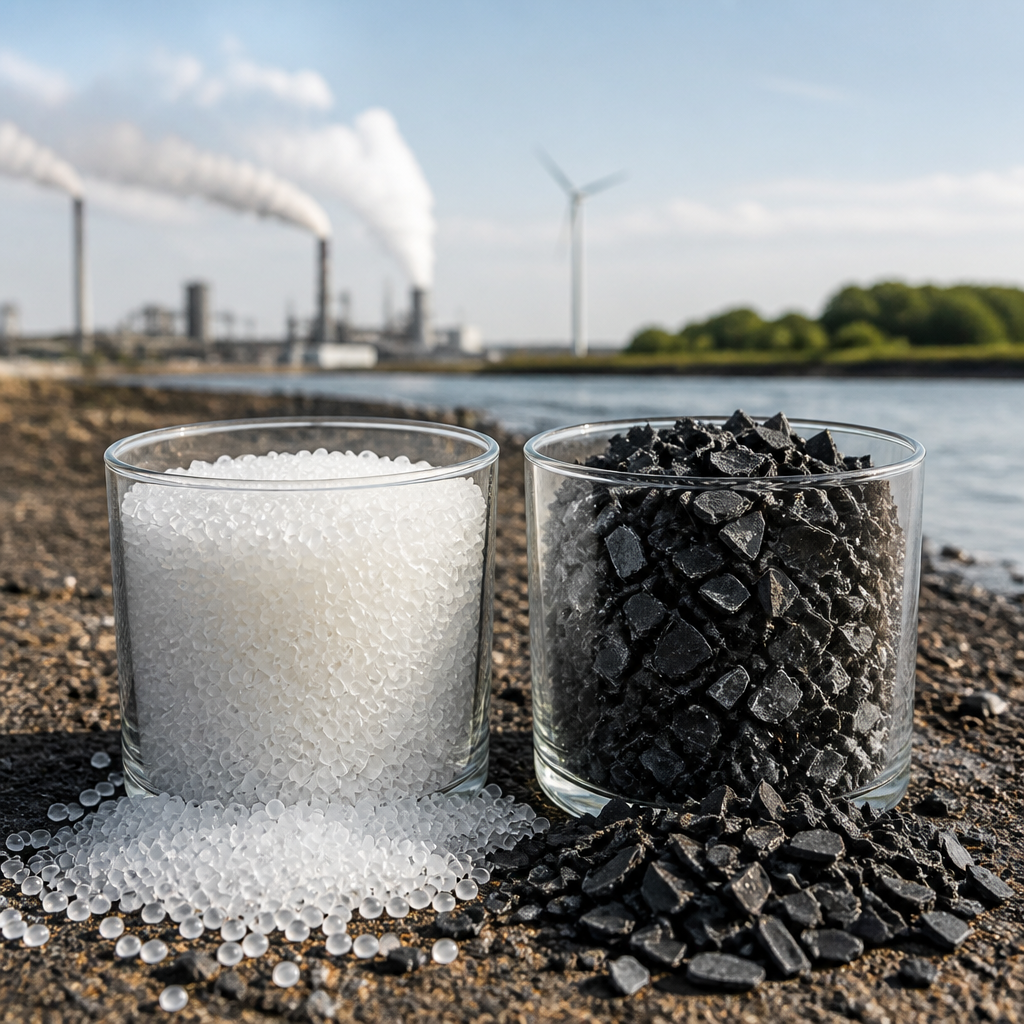
Comparing the environmental impact of thermoplastics and thermosets starts with a basic truth: the chemistry that makes a polymer useful in manufacturing also determines how it consumes resources, survives in service, and behaves at the end of its life. Thermoplastics are plastics that soften when heated and harden when cooled, which allows repeated melting and reshaping. Thermosets cure into permanently crosslinked networks, so they resist remelting and hold their form under heat, load, and chemicals. That structural difference drives most environmental outcomes, from factory scrap rates to recycling feasibility.
In practice, I have seen engineers focus first on performance and cost, then ask about sustainability only after material selection is nearly complete. That sequence often hides the largest environmental tradeoffs. A polypropylene housing may look preferable because it can be mechanically recycled, yet it may fail early in high-temperature service and require replacement. A thermoset composite may be difficult to recycle, but if it cuts vehicle weight for fifteen years, its total footprint can still be lower. Environmental impact is therefore not a single metric. It is a full life-cycle question involving feedstocks, processing energy, additives, durability, transport, repair, reuse, recycling, emissions, and disposal.
This hub article explains environmental impact comprehensively for the materials and properties topic, using thermoplastics and thermosets as the central comparison. It defines the main terms, outlines where impacts occur, and shows how to evaluate tradeoffs using accepted methods such as life cycle assessment, greenhouse gas accounting, and circularity planning. If you need a direct answer, here it is: thermoplastics usually perform better in recyclability and manufacturing flexibility, while thermosets often perform better in durability and heat resistance; the lower-impact choice depends on the application, service life, and available end-of-life system.
Why does this matter? Plastics production accounts for significant fossil resource use and rising greenhouse gas emissions, and design decisions made at the material-selection stage lock in impacts for years. Regulators are tightening rules on waste, hazardous substances, and producer responsibility. Customers increasingly ask for recycled content, product carbon footprint data, and evidence that materials fit a circular economy strategy. For manufacturers, comparing thermoplastics and thermosets accurately is no longer a niche technical exercise. It is a core business decision affecting compliance, cost, brand risk, and long-term product viability.
How material chemistry shapes environmental impact
The environmental profile of a polymer begins with molecular architecture. Thermoplastics include commodity resins such as polyethylene, polypropylene, polystyrene, polyvinyl chloride, and engineering materials such as ABS, polyamide, PBT, PET, polycarbonate, and PEEK. Their chains are mostly linear or branched, with limited permanent crosslinking. Because the polymer can be melted again, scrap generated during injection molding, extrusion, or thermoforming can often be reground and reused in process, reducing waste and virgin resin demand. This ability is a direct environmental advantage in high-volume production.
Thermosets include epoxy, unsaturated polyester, vinyl ester, phenolic, polyurethane, melamine, and silicone systems. Once cured, they form covalent crosslinks that create dimensional stability, chemical resistance, and high heat performance. These properties can extend product life and reduce maintenance, especially in coatings, adhesives, electrical encapsulation, wind turbine blades, brake components, and composite structures. The same crosslinking, however, makes remelting impossible. Manufacturing scrap is harder to recover, and end-of-life pathways are limited to mechanical size reduction, filler recovery, chemical recycling in emerging systems, energy recovery, or landfill where allowed.
Additives also matter. Flame retardants, pigments, plasticizers, stabilizers, curing agents, and reinforcing fibers can improve performance while complicating environmental management. Glass-filled nylon and carbon-fiber epoxy composites deliver strong use-phase benefits through lightweighting, but they are more difficult to sort and recycle than unfilled resins. Certain legacy additives can trigger regulatory restrictions or disposal challenges. A proper comparison therefore looks beyond the base polymer and includes the complete formulation, part geometry, and joining method.
Life cycle stages: where impacts actually occur
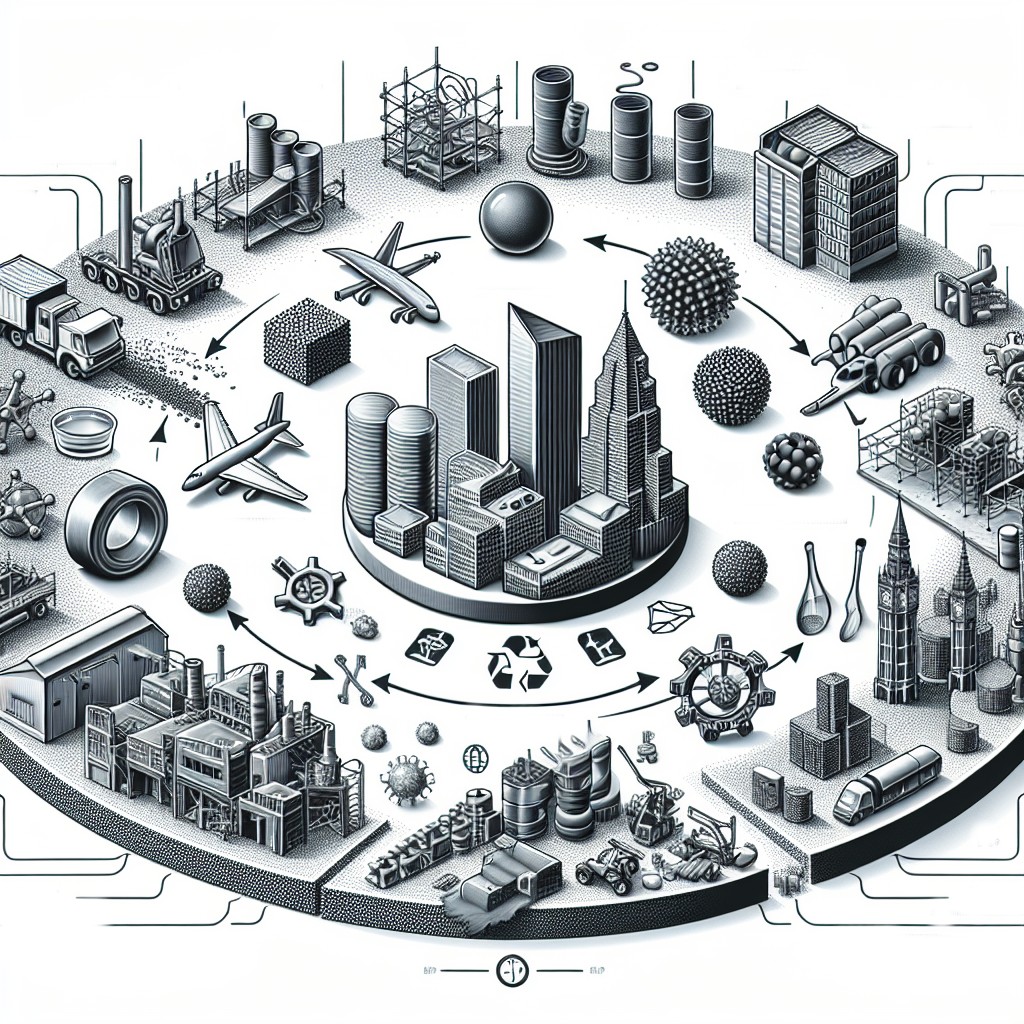
The most reliable way to compare environmental impact is to follow the product through its full life cycle. Standard practice uses ISO 14040 and ISO 14044 for life cycle assessment, with cradle-to-gate, cradle-to-grave, or cradle-to-cradle boundaries depending on the question. Cradle-to-gate captures raw material extraction through manufacturing. Cradle-to-grave adds distribution, use, and end of life. For thermoplastics versus thermosets, the preferred boundary is usually cradle-to-grave because durability and disposal differences are too important to ignore.
Raw material sourcing is the first major stage. Many thermoplastics and thermosets are fossil-derived, typically from naphtha or natural gas liquids. Emissions arise from feedstock extraction, cracking, monomer production, and polymerization. Thermosets often include reactive chemistries such as epichlorohydrin for epoxy or isocyanates for polyurethane, each with specific occupational and environmental controls. Bio-based options exist in both families, including bio-PET, PLA, bio-polyamides, and some bio-based epoxies, but renewable content does not automatically mean low total impact. Land use, agricultural inputs, and processing energy can offset feedstock benefits.
Manufacturing is the next stage. Thermoplastics commonly use injection molding, blow molding, film extrusion, rotational molding, and thermoforming. These processes can be energy intensive, but they are fast, scalable, and often highly automated. Thermosets use casting, resin transfer molding, compression molding, filament winding, pultrusion, reaction injection molding, and curing ovens or autoclaves. Cure cycles can add time and energy demand. On the other hand, thermosets may enable net-shape parts with fewer fasteners and lower assembly complexity. The environmental result depends on cycle time, scrap rate, tooling life, and plant energy mix.
Use phase impacts vary dramatically by application. In packaging, a short-lived thermoplastic usually has an advantage because thermoset alternatives offer little service-life value. In aerospace, automotive, and wind energy, thermoset composites can create substantial downstream savings by reducing weight or increasing structural efficiency. I have worked on component reviews where a heavier recyclable thermoplastic lost out environmentally because transport emissions over ten years exceeded the benefit of easier recycling. This is why a single headline such as recyclable equals greener is often wrong.
End of life is where the contrast becomes most visible. Thermoplastics can be reused, mechanically recycled, or chemically recycled, though real-world success depends on clean collection and stable markets. Thermosets have fewer mature pathways and therefore face a structural disadvantage in circularity. That disadvantage is real, but it should be measured against the full functional unit, such as one vehicle panel lasting fifteen years or one electrical insulator surviving outdoor exposure for decades.
Key environmental tradeoffs by impact category
Different environmental categories lead to different winners, so decision-makers should never rely on one number alone. Global warming potential, cumulative energy demand, water use, toxicity, particulate emissions, land use, eutrophication, and waste generation can point in different directions. The comparison also changes by product format, from films and bottles to structural composites and coatings. The table below summarizes the patterns I see most often in material assessments.
| Impact category | Thermoplastics | Thermosets | Typical decision insight |
|---|---|---|---|
| Manufacturing scrap | Usually favorable because scrap can often be reground and reused | Usually less favorable because cured scrap cannot be remelted | High-volume molded parts often benefit from thermoplastics |
| Processing energy | Moderate to high, but short cycles are common | Variable; curing can add significant oven or autoclave energy | Plant energy source strongly affects results |
| Heat and chemical durability | Can be limited depending on resin grade | Often favorable due to crosslinked structure | Long service life can offset harder end-of-life handling |
| Mechanical recycling potential | Generally better, especially for clean mono-material streams | Generally poor with only niche routes available | Infrastructure matters more than theoretical recyclability |
| Lightweight structural performance | Good for some fiber-reinforced systems | Often excellent in composite applications | Transport and energy savings can dominate total footprint |
| Repair and remanufacture | Often easier through reheating or welding for some parts | Can be harder, though durable bonded structures may last longer | Service model should guide material choice |
Waste leakage and litter risk are not strictly chemistry issues, but they remain central to environmental impact. A recyclable thermoplastic package that escapes collection can persist for decades and fragment into microplastics. A thermoset coating or adhesive usually enters the environment in a different way, through abrasion, demolition waste, or difficult separation from substrates. Product design, collection systems, and user behavior therefore matter alongside material class.
Recycling, circularity, and end-of-life realism
Thermoplastics are often described as recyclable, which is true in principle but incomplete in practice. Mechanical recycling works best when resin streams are clean, sorted, and minimally contaminated by food residue, multilayer structures, fillers, dark pigments, or incompatible blends. PET bottles and HDPE containers are the classic success cases because collection and identification are relatively mature. Engineering thermoplastics can also be recycled in industrial loops, especially manufacturing scrap from known sources. However, repeated heat histories can reduce molecular weight and mechanical properties unless stabilizers, chain extenders, or blending strategies are used.
Chemical recycling expands possibilities for thermoplastics, including depolymerization for PET and solvent-based purification for selected streams. Pyrolysis can convert mixed polyolefin waste into feedstock-like oils, but yields, contamination control, and energy demand vary widely. These processes should be judged carefully, not assumed beneficial by default. Mass balance accounting, actual displacement of virgin feedstock, and verified emissions data are essential if a company wants credible environmental claims.
For thermosets, recycling is improving but still less mature. Mechanical grinding can recover filler-like material for use in cement, asphalt, or lower-value composites. Some processes use solvolysis, supercritical fluids, or catalytic depolymerization to recover fibers or break selected resin systems, especially in epoxy composites. Wind turbine blades are a prominent example because blade waste is growing and landfill options are shrinking in several regions. Recyclable thermoset formulations and vitrimer technologies are promising, yet they remain far from universal commercial replacement. Today, most thermoset applications still require early end-of-life planning rather than optimistic assumptions.
Circularity also includes reuse, refurbishment, and life extension. A returnable thermoplastic transit package can outperform a single-use option many times over if reverse logistics work. A thermoset electrical enclosure that resists UV radiation and corrosion for twenty years can outperform a cheaper resin replaced every five years. The practical lesson is simple: circularity is not only about recyclability; it is about keeping utility in the system for as long as possible with the least added energy and waste.
Application examples that change the answer
Packaging usually favors thermoplastics on environmental grounds because products are short lived, volumes are large, and mechanical recycling infrastructure exists for selected formats. Mono-material polyethylene or polypropylene packs are generally easier to recover than packages built from crosslinked or heavily bonded materials. Yet even within thermoplastics, multilayer films create major end-of-life problems. Design for sorting, label choice, adhesive selection, and pigment strategy can matter almost as much as polymer family.
Transportation is more nuanced. Thermoplastic olefin bumper systems, polypropylene interior parts, and recyclable underbody shields offer clear recovery advantages. At the same time, thermoset composites in body panels, structural components, and electric motor insulation can improve performance in ways that lower emissions over the vehicle life. The decisive variable is the functional unit: not one kilogram of resin, but one component delivering safety, durability, and efficiency for a defined mileage.
Construction often rewards longevity. Thermoset coatings, pipe relining systems, electrical laminates, and insulation products may be difficult to recycle, yet they can protect infrastructure for decades and reduce maintenance visits, leaks, and replacement materials. Thermoplastic piping, membranes, and cladding can also score well when they are durable and separable at demolition. Building products demand long time horizons, so premature failure can erase any apparent recycling advantage on paper.
Electronics present another difficult comparison. Thermosets such as epoxy in printed circuit boards and encapsulants are indispensable for thermal stability and dielectric performance. Thermoplastics such as ABS, HIPS, and polycarbonate blends dominate housings because they process efficiently and can be recycled from controlled streams. Environmental improvement here often comes from modular design, easier disassembly, and reduced additive complexity rather than from switching wholesale between polymer families.
How to choose the lower-impact option
The best process is disciplined and data based. Start with a clear functional unit, such as one enclosure surviving outdoor use for ten years, not one kilogram of material. Build a life cycle inventory using supplier data, environmental product declarations where available, and reputable databases such as ecoinvent or GaBi. Compare at least three scenarios: virgin material, recycled-content option, and alternative design with longer service life. Include transport distances, expected scrap rates, and realistic end-of-life routes in the actual region of sale.
Next, test design changes before changing material family. Wall-thickness optimization, ribbing strategy, fiber orientation control, molded-in color choices, and fastener reduction often cut impact faster than a polymer substitution alone. Favor mono-material assemblies where possible. Avoid coatings, labels, inserts, and adhesive bonds that block recovery unless the durability benefit clearly outweighs disposal cost. If a thermoset is necessary, document why its service life, safety margin, or temperature capability creates net environmental value.
The main benefit of comparing thermoplastics and thermosets carefully is better decisions across the full product life cycle, not just lower waste at the factory gate. Thermoplastics usually offer stronger pathways for scrap reduction, remanufacturing, and mechanical recycling. Thermosets usually offer stronger pathways for heat resistance, dimensional stability, corrosion protection, and structural durability. Neither category is inherently greener in every case. Environmental impact depends on chemistry, additives, process energy, product lifespan, and the reality of local recovery infrastructure.
For this materials and properties hub, the key takeaway is straightforward: use life cycle thinking, define the functional unit precisely, and evaluate feedstock, manufacturing, use phase, and end of life together. If you are selecting materials now, map your application against those four stages and gather supplier-specific data before locking in the design. That one step will reveal whether a thermoplastic or thermoset truly delivers the lower environmental impact for your product.
Frequently Asked Questions
1. Which is generally more environmentally friendly: thermoplastics or thermosets?
There is no universal winner, because environmental impact depends on the full life cycle of the material rather than the polymer category alone. Thermoplastics often appear more favorable at end of life because they can usually be melted and reprocessed, at least in principle, into new products. That recyclability gives them an important circularity advantage, especially in applications where clean collection, sorting, and remanufacturing are realistic. Many commodity and engineering thermoplastics also fit more easily into existing recycling systems than thermosets do.
Thermosets, however, can perform better in use when high heat resistance, dimensional stability, chemical resistance, or structural durability are critical. If a thermoset component lasts much longer, enables lightweighting, reduces maintenance, or prevents failure in demanding service conditions, its overall environmental footprint can be lower in practice despite poor recyclability. This is common in coatings, adhesives, electronics, composites, and high-performance parts where replacement frequency and service efficiency matter.
So the better question is not which family is inherently greener, but which material delivers the required performance with the lowest total burden across raw material extraction, manufacturing energy, transportation, service life, and end-of-life handling. In many packaging or consumer applications, thermoplastics may have the edge because they can be reused or recycled more readily. In long-life industrial or transportation applications, thermosets may justify their footprint through durability and performance. A proper environmental comparison requires a case-specific life cycle assessment rather than a simple material label.
2. Why are thermoplastics usually considered easier to recycle than thermosets?
The main reason is chemistry. Thermoplastics consist of polymer chains that soften when heated and solidify again when cooled, which means they can often be remelted, reshaped, and processed multiple times. This allows mechanical recycling methods such as grinding, melting, filtering, and pelletizing. While material quality can decline with each cycle because of thermal degradation, contamination, additives, and mixed resin streams, the basic ability to remold the material remains a major environmental advantage.
Thermosets behave very differently. Once cured, they form permanently crosslinked molecular networks. That crosslinking gives them excellent heat resistance, rigidity, and dimensional stability, but it also means they do not melt back into a flowable state. When heated aggressively, they tend to char, crack, or degrade rather than remold. As a result, conventional melt recycling is not available for most thermosets. In many cases, end-of-life thermoset parts are landfilled, incinerated, downcycled into filler, or processed through more specialized and less widely available recovery technologies.
That said, “thermoplastics are recyclable” should not be confused with “all thermoplastic products are actually recycled.” Real-world recycling rates depend on product design, color, fillers, reinforcement, multilayer construction, contamination, and collection infrastructure. Similarly, thermoset recycling is an active area of innovation, including chemical recovery, vitrimer-like systems, and composite reclamation methods. Even so, at commercial scale today, thermoplastics generally offer a more practical route to material recovery, which is why they are often viewed more positively from a circular economy perspective.
3. How do manufacturing and processing energy use differ between thermoplastics and thermosets?
Manufacturing impacts can differ significantly because these materials are processed in different ways. Thermoplastics are commonly shaped through energy-intensive melting operations such as injection molding, extrusion, blow molding, and thermoforming. These processes require heat, pressure, and cooling, and they can consume considerable electricity, especially at high production volumes. However, they are often fast, highly automated, and efficient in terms of throughput, with relatively low scrap rates in well-controlled operations. Scrap generated during production can frequently be reground and fed back into the process, which can reduce waste.
Thermosets are typically processed through mixing, molding, layup, casting, resin transfer, or curing steps that create a permanent crosslinked structure. Depending on the resin system, curing may happen at room temperature or require substantial heat in ovens, presses, or autoclaves. Some thermoset composite manufacturing routes are particularly energy- and labor-intensive because they involve long cure cycles, controlled atmospheres, or secondary finishing. In those cases, the manufacturing footprint can be significant. On the other hand, some thermoset systems can be processed at lower initial melt demands than thermoplastics, so the energy profile is not always straightforward.
The environmental takeaway is that processing energy should be evaluated alongside yield, cycle time, waste generation, and the function of the final part. A thermoplastic may require more repeated melting but support faster manufacturing and easier scrap recovery. A thermoset may require curing and more complex fabrication but produce a part that performs longer or better in severe service. For accurate comparison, manufacturers typically examine energy per finished part, scrap handling, process emissions, and the number of replacement cycles expected over the product’s useful life.
4. Does longer product life make thermosets more sustainable even if they are harder to recycle?
Often, yes. Durability is one of the most important and sometimes underappreciated sustainability factors in material selection. If a thermoset part remains stable under heat, load, chemicals, moisture, or electrical stress far longer than a thermoplastic alternative, it can reduce the need for replacement, repair, excess material thickness, and maintenance-related emissions. In sectors such as aerospace, wind energy, construction, electronics, and industrial equipment, that performance can translate into meaningful environmental savings over time.
For example, a thermoset composite may be chosen because it combines low weight with high stiffness and thermal stability. If that choice lowers fuel use in transportation, extends service intervals, or enables a wind turbine blade to function reliably for many years, the environmental benefits during use can outweigh end-of-life disadvantages. Similarly, thermoset coatings, encapsulants, and adhesives can protect critical systems from corrosion, fatigue, or electrical failure, preventing premature product disposal.
Still, durability alone does not automatically make a material sustainable. A long-life product that is difficult to repair, impossible to disassemble, or destined for landfill can still carry a substantial environmental burden. The most sustainable outcome usually comes from balancing longevity with design for recovery, refurbishment, or extended service. In other words, thermosets can be environmentally strong choices when their unique properties clearly prevent higher impacts elsewhere, but that claim should be supported by data rather than assumed.
5. What should manufacturers consider when choosing between thermoplastics and thermosets for lower environmental impact?
Manufacturers should start with functional requirements, because using an underperforming material can create more waste than choosing a slightly higher-footprint material that lasts. The first questions are practical: What mechanical loads, temperatures, chemical exposures, and regulatory constraints will the part face? How long must it last? Can it be repaired, reused, or upgraded? If a thermoplastic can meet performance targets while enabling easier recycling and lower-cost reprocessing, it may be the better environmental choice. If the application demands the heat resistance, structural integrity, adhesion, or dimensional stability of a thermoset, that performance benefit may justify the selection.
Next, manufacturers should evaluate feedstocks, process efficiency, and waste. This includes resin origin, recycled content, bio-based options, scrap generation, curing or melting energy, solvent use, emissions, tooling demands, and transport weight. Lightweight materials can reduce downstream emissions in vehicles and equipment. Parts designed for easy separation from metal inserts, coatings, foams, or fibers usually have better end-of-life prospects. Simpler material systems and clear labeling can also improve recoverability.
Finally, the best decision comes from a full life cycle perspective. That means comparing raw material extraction, manufacturing, distribution, use-phase performance, maintenance frequency, and end-of-life scenarios such as recycling, energy recovery, or landfill. It also means being realistic about actual infrastructure rather than theoretical recyclability. A thermoplastic with no viable collection stream may not outperform a durable thermoset used for decades. In practice, the lowest-impact choice is usually the material that delivers required performance with minimal processing waste, long service life, and the best realistic recovery pathway available in the intended market.