Dynamic mechanical analysis, usually shortened to DMA, is one of the most useful mechanical testing methods for understanding how materials behave when force changes with time, temperature, and frequency. In practical terms, DMA applies an oscillating load to a specimen and measures the material response, allowing engineers to quantify stiffness, damping, and molecular mobility with far greater sensitivity than many static tests. For a hub page within Materials and Properties, DMA matters because it connects directly to tensile testing, flexural testing, impact testing, rheology, creep, stress relaxation, thermomechanical analysis, and fracture characterization. I have used DMA results to explain why a polymer seal failed in winter, why an adhesive softened during sterilization, and why a composite panel buzzed under vibration despite meeting room-temperature strength requirements.
The core outputs of dynamic mechanical analysis are storage modulus, loss modulus, and tan delta. Storage modulus represents the elastic portion of response, or how much energy a material stores during cyclic deformation. Loss modulus captures viscous behavior, or how much energy is dissipated as heat. Tan delta, the ratio of loss modulus to storage modulus, is a practical indicator of damping and molecular transitions. Because these signals change with temperature and frequency, DMA can reveal glass transition temperature, secondary relaxations, cure progression, crystallinity effects, and interfacial weaknesses in filled systems. That sensitivity makes it indispensable across plastics, rubbers, coatings, biomaterials, and fiber-reinforced composites.
This article serves as the central guide to mechanical testing methods through the lens of DMA. It explains how the technique works, what recent advances have improved measurement quality, where DMA fits among other tests, and how engineers should interpret data without overreaching. Understanding these points matters for product development, quality assurance, material selection, and failure analysis. A material that looks adequate in a tensile test can still fail in cyclic service if damping, transition temperature, or frequency dependence were ignored. DMA fills that gap by showing how structure and performance interact under realistic service conditions, especially when heat, vibration, moisture, and time all influence mechanical behavior.
How dynamic mechanical analysis works and what it measures
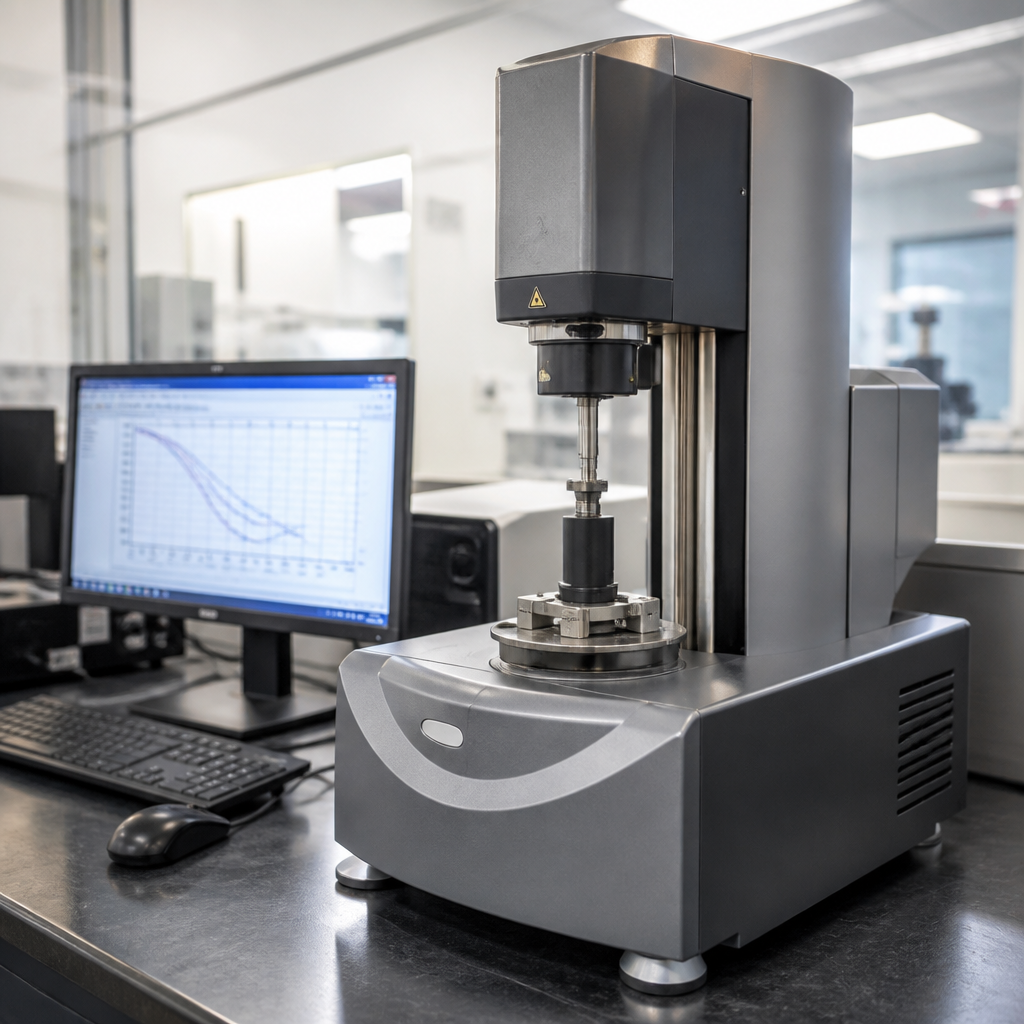
DMA instruments impose a sinusoidal stress or strain and detect the phase lag between input and response. That phase lag is the signature of viscoelasticity. Metals at modest temperatures usually respond almost elastically, while polymers and elastomers often show a pronounced lag because chain segments move and dissipate energy. In the lab, the test may be run in tension, compression, dual cantilever, single cantilever, shear, or three-point bending, depending on specimen geometry and modulus range. Choosing the right clamp is not a minor detail. I have seen poor fixturing create slip artifacts that looked like a transition peak, only to disappear when the specimen was remounted correctly.
The measured signal is transformed into storage modulus, loss modulus, and tan delta as functions of temperature, time, or frequency. A temperature sweep is the most common experiment because it maps relaxation behavior efficiently. For amorphous polymers, the glass transition typically appears as a steep drop in storage modulus and a peak in loss modulus or tan delta. Semi-crystalline materials are more complicated because amorphous regions transition while crystals continue reinforcing the structure. Frequency sweeps show another dimension: a material often appears stiffer at higher frequencies because molecular rearrangement has less time to occur. Time-temperature superposition can extend this insight, generating master curves that estimate long-term mechanical behavior from shorter tests.
Compared with universal testing machines, DMA works at much smaller strain amplitudes and therefore detects subtle structural changes before gross yielding occurs. That is why it complements, rather than replaces, tensile, compression, and impact tests. Tensile testing establishes strength and elongation to failure. Creep testing shows deformation under sustained load. Fatigue testing quantifies damage accumulation over many cycles. DMA adds the viscoelastic map linking these outcomes to molecular motion. On a sub-pillar page about mechanical testing methods, this relationship is essential: no single test defines performance across all service conditions.
Key advances improving DMA accuracy, sensitivity, and usefulness
The biggest advances in dynamic mechanical analysis over the last decade have come from better force control, more stable temperature systems, improved displacement sensing, and smarter software for data correction. Modern electromagnetic drive systems can maintain low-force sinusoidal loading with high fidelity across wider frequency ranges than older motor-driven platforms. High-resolution optical encoders and refined phase detection algorithms reduce noise in modulus calculations, especially near softening transitions where small errors can distort tan delta. Instrument manufacturers have also improved furnace design, gas purging, and thermal uniformity, which matters because even slight temperature gradients across a specimen can shift transition measurements by several degrees.
Another major step forward is automated linear viscoelastic region verification. DMA data are only meaningful when strain amplitude stays within the range where modulus is independent of deformation level. Older workflows relied heavily on operator judgment; newer methods can perform amplitude sweeps, identify nonlinearity, and recommend test settings before a long thermal run begins. In regulated industries such as medical devices and aerospace, this has improved method robustness and reduced operator-to-operator variation. Better clamp compliance correction has also sharpened results for stiff materials, particularly high-modulus composites and engineering thermoplastics where fixture deformation can otherwise contaminate the measured response.
Software integration now allows DMA data to be correlated directly with differential scanning calorimetry, thermogravimetric analysis, dielectric analysis, and rheometry. That integration is more than convenience. When a tan delta peak appears, pairing it with calorimetric or mass-loss data helps determine whether the feature reflects glass transition, residual solvent release, post-cure, oxidation, or another event. In my experience, the most reliable conclusions come from that multi-technique approach. DMA is highly sensitive, but sensitivity alone can mislead if the analyst assumes every modulus drop corresponds to a single material transition. The best advances are the ones that combine better instrumentation with stronger interpretation discipline.
| Mechanical testing method | Primary measurement | Best use case | Typical limitation |
|---|---|---|---|
| Dynamic mechanical analysis | Storage modulus, loss modulus, tan delta | Viscoelastic behavior versus temperature and frequency | Requires careful fixture selection and small-strain control |
| Tensile testing | Strength, modulus, elongation | Design allowables and specification compliance | Limited insight into damping and molecular transitions |
| Creep testing | Strain over time under constant load | Long-term dimensional stability | Slow and sensitive to environmental control |
| Impact testing | Energy absorbed during fracture | Brittleness screening and notch sensitivity | Highly dependent on specimen geometry and rate |
| Rheometry | Viscosity and oscillatory shear response | Melts, resins, uncured systems | Not ideal for fully solid finished parts |
Applications across polymers, composites, adhesives, and rubber
DMA is used most heavily with polymers because polymer performance depends strongly on viscoelastic transitions. In packaging films, a shift in glass transition can change seal integrity and drop resistance. In medical tubing, a modulus change near body temperature can alter kink resistance and patient feel. In electronics, underfill materials and encapsulants must retain sufficient stiffness while damping thermal and vibrational stresses. DMA quickly shows whether formulation changes, plasticizer levels, or processing history have altered these properties. That is why material suppliers often include DMA curves in technical data packages alongside tensile modulus and heat deflection temperature.
For fiber-reinforced composites, DMA is valuable because it highlights matrix-dominated behavior and interfacial quality. A carbon fiber laminate may retain high room-temperature stiffness in static loading yet lose significant damping control as the matrix approaches its glass transition. DMA in bending or torsion can identify the usable service temperature window more realistically than a single static modulus value. It is also widely applied to prepreg cure studies. As cure progresses, storage modulus rises and tan delta changes shape, helping process engineers define dwell times and verify whether a part reached the intended network structure. In aerospace qualification work, those details directly affect dimensional stability, impact tolerance, and environmental durability.
Adhesives and sealants are another area where recent DMA advances have delivered practical value. Structural adhesives must carry load, but they also need enough toughness and damping to tolerate peel, shock, and differential thermal expansion. DMA can compare fully cured and undercured states, reveal post-cure potential, and detect moisture plasticization. I have used it to explain why two epoxy lots passed lap shear acceptance yet behaved differently in vibration testing: their tan delta profiles showed distinct network mobility caused by small differences in cure chemistry. Rubber compounds likewise benefit from DMA because rolling resistance, wet grip, and heat buildup are all related to viscoelastic response over specific temperature and frequency ranges.
Best practices for method development, interpretation, and common pitfalls
Reliable DMA begins with specimen preparation. Dimensions must be consistent, surfaces should be free of machining damage, and residual stresses from molding or cutting need to be considered. For anisotropic materials such as composites or oriented films, test direction matters just as much as temperature program. Method development should define clamp type, span or gauge length, frequency, amplitude, heating rate, atmosphere, and any preconditioning. Standards from ASTM and ISO provide essential frameworks, including ASTM D4065, ASTM D4440, ASTM D5418, and related methods for plastics, wood, and sandwich structures. Following a standard does not guarantee good data, but ignoring one often guarantees avoidable ambiguity.
Interpretation requires restraint. Glass transition temperature is not a single universal number; it depends on which signal is used, test frequency, heating rate, and specimen configuration. A tan delta peak temperature will often differ from the onset of storage modulus decline, and both can be valid if reported clearly. Fillers, plasticizers, crystallinity, and absorbed moisture can broaden or split peaks, creating the impression of multiple phases even when processing variation is the main cause. Frequency sweeps should also be treated carefully. Apparent modulus increases at higher frequency may reflect true viscoelastic behavior, but instrument inertia, fixture resonance, or poor signal-to-noise can create false trends near the measurement limits.
The most common mistakes I see are overclamping soft samples, testing outside the linear viscoelastic region, using heating rates that are too fast for thermal equilibrium, and comparing curves generated under different frequencies as if they were directly interchangeable. Another pitfall is presenting DMA as a stand-alone pass or fail tool. It is stronger when paired with tensile data, creep data, microscopy, thermal analysis, and service-condition knowledge. For a mechanical testing methods hub, that is the key message: good characterization comes from combining complementary methods to answer a practical question, not from collecting isolated numbers. DMA is powerful precisely because it links molecular behavior to engineering performance when used with that broader context.
Where DMA fits in the future of mechanical testing methods
The future of DMA is moving toward faster screening, richer multimodal datasets, and closer integration with digital material models. Automated sample changers and scripted test libraries are already reducing turnaround time in industrial labs. More importantly, data pipelines are improving how modulus-temperature-frequency relationships feed finite element simulations for vibration, sealing, and durability predictions. Instead of entering a single elastic modulus into a model, engineers can increasingly use viscoelastic material functions derived from DMA master curves. That shift produces more realistic predictions for polymers, foams, damping layers, and adhesive joints in real service environments.
There is also growing interest in coupling DMA with humidity control, ultraviolet exposure, liquid immersion, and electrically or magnetically stimulated testing. These hybrid approaches matter because many modern materials are stimuli-responsive or operate in harsh environments. Battery binders, soft wearable devices, 3D-printed lattices, and recycled polymer blends all present behavior that simple room-temperature tests cannot capture. Advances in machine learning may help classify transition patterns and flag anomalous data, but expert review will remain essential because materials still fail for physical reasons, not statistical ones. If you are building knowledge around Materials and Properties, use this hub as the starting point, then connect DMA to tensile, creep, fatigue, impact, rheology, and thermal analysis to make better material decisions.
Frequently Asked Questions
What is dynamic mechanical analysis (DMA), and how is it different from traditional mechanical testing?
Dynamic mechanical analysis, or DMA, is a testing method used to measure how a material responds when a force is applied in an oscillating or time-varying way. Instead of simply pulling, compressing, or bending a sample until it deforms or breaks, DMA subjects the specimen to a controlled sinusoidal stress or strain and records the response over time. This allows engineers and materials scientists to evaluate not only stiffness, but also how much energy the material stores and how much it dissipates as heat. In practice, DMA is especially valuable for studying polymers, composites, adhesives, elastomers, and other viscoelastic materials whose properties change significantly with temperature, loading rate, and frequency.
The key difference between DMA and traditional static mechanical tests is sensitivity to time-dependent behavior. A tensile or compression test may tell you a material’s modulus, strength, or elongation at a single set of conditions, but DMA reveals how those properties evolve across a temperature sweep, frequency sweep, or time sweep. It can detect subtle molecular transitions, such as the glass transition temperature, secondary relaxations, and changes in damping behavior, often long before those changes become obvious in conventional testing. Because many real-world applications involve vibration, cyclic loading, changing climate conditions, and long-term service, DMA offers a more realistic and more informative picture of functional performance.
What material properties does DMA measure, and why are they important?
DMA is best known for measuring storage modulus, loss modulus, and damping, often expressed as tan delta. The storage modulus represents the elastic portion of a material’s response, meaning how much energy is stored and recovered during cyclic loading. This is closely related to stiffness. The loss modulus represents the viscous portion of the response, meaning how much energy is lost through internal friction and converted to heat. Tan delta, which is the ratio of loss modulus to storage modulus, is a widely used indicator of damping behavior and molecular mobility.
These properties matter because they help explain how a material will behave under practical service conditions. A high storage modulus may be desirable when dimensional stability and rigidity are critical, while a higher damping response may be useful in vibration control or impact energy dissipation. DMA also helps identify transitions such as the glass transition temperature, which is often one of the most important benchmarks for polymer selection and design. Knowing where modulus drops, damping peaks, or molecular relaxation begins can determine whether a material will perform reliably in automotive, aerospace, electronics, medical, or industrial environments. In short, DMA connects molecular-scale motion to engineering-scale performance, making it one of the most powerful tools for materials characterization.
Why has DMA become more important in recent materials research and product development?
DMA has become increasingly important because modern materials are more complex, more highly engineered, and more performance-sensitive than ever before. Many current products use multilayer systems, filled polymers, fiber-reinforced composites, structural adhesives, flexible electronics, and specialty elastomers that do not behave like simple homogeneous solids. Their properties depend heavily on temperature, frequency, formulation, processing history, and environmental exposure. DMA is uniquely suited to capture these dependencies with high resolution, which is why it plays such a central role in research, development, quality control, and failure analysis.
Recent advances in DMA instrumentation and analysis have also expanded its value. Improved temperature control, wider frequency capabilities, better force resolution, more precise displacement measurement, and enhanced software modeling make it easier to characterize subtle transitions and compare materials under realistic operating conditions. Researchers now use DMA not only to rank materials, but also to study cure behavior, aging, moisture effects, crystallinity changes, interface quality in composites, and the influence of additives or fillers. As product designs continue to demand lighter weight, higher durability, broader temperature tolerance, and better vibration performance, DMA provides the data needed to optimize formulations and predict long-term behavior with greater confidence.
How does temperature and frequency affect DMA results?
Temperature and frequency are two of the most influential variables in DMA because viscoelastic materials respond differently depending on both thermal energy and loading rate. As temperature rises, many polymers become less stiff because increased molecular motion allows internal chains or segments to move more freely. This often appears in DMA data as a drop in storage modulus and a corresponding increase in damping near transition regions such as the glass transition. At lower temperatures, the same material may appear rigid and glassy, while at higher temperatures it may become leathery, rubbery, or even too soft for structural use.
Frequency has a similarly important effect because materials usually appear stiffer when they are loaded more rapidly. At high frequencies, molecules have less time to rearrange, so the response becomes more elastic and resistant to deformation. At low frequencies, there is more time for relaxation and energy dissipation, which often leads to lower apparent stiffness and different damping behavior. This is especially important when matching material data to real applications. A component exposed to slow cyclic loads may perform very differently than one subjected to high-frequency vibration. By studying temperature and frequency together, DMA helps engineers build a much more complete understanding of service behavior and supports techniques such as time-temperature superposition for predicting long-term performance from shorter-term tests.
What are the latest advances in dynamic mechanical analysis (DMA) that users should know about?
One of the most significant advances in DMA is the improvement in instrument sensitivity and control, which allows users to test smaller samples, weaker materials, and more subtle transitions with greater repeatability. Modern systems offer better furnace design, more stable environmental control, broader dynamic force ranges, and more refined clamping options for tension, bending, compression, shear, and film testing. These improvements are especially useful for advanced composites, thin films, biomedical materials, and additively manufactured parts, where sample geometry and structure can strongly influence the measured response.
Another important area of progress is data interpretation and application-focused testing. Today’s DMA platforms often support automated sweeps, multi-frequency testing, creep and stress relaxation analysis, cure monitoring, and time-temperature superposition workflows. Software has become more capable of identifying transition temperatures, building master curves, and correlating viscoelastic behavior with end-use performance. There is also growing integration between DMA and broader materials characterization strategies, including thermal analysis, rheology, microscopy, and spectroscopy. This combined approach gives researchers a more complete picture of how processing, structure, and molecular architecture influence final properties. For users, the practical takeaway is clear: DMA is no longer just a niche lab tool for measuring modulus. It is now a highly advanced, decision-driving method for selecting materials, refining formulations, validating manufacturing processes, and predicting real-world behavior with much greater precision.