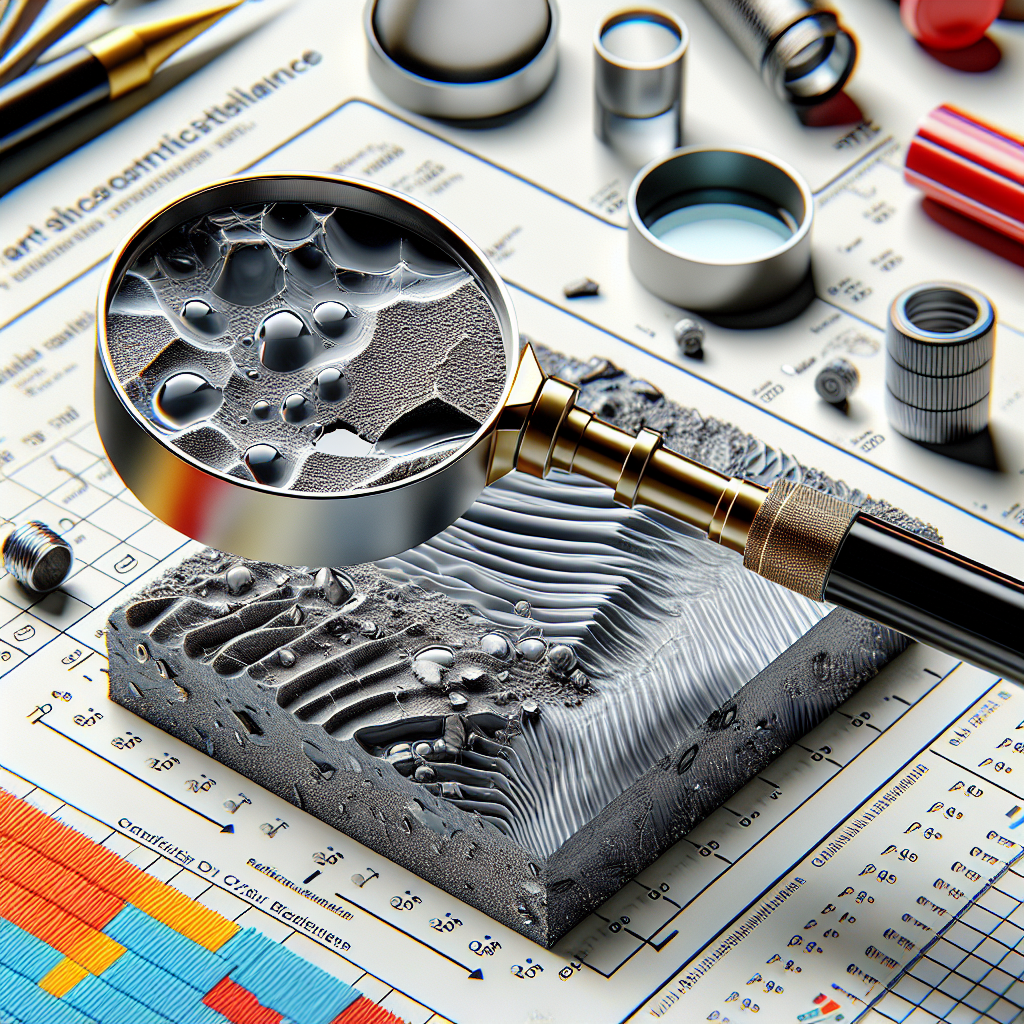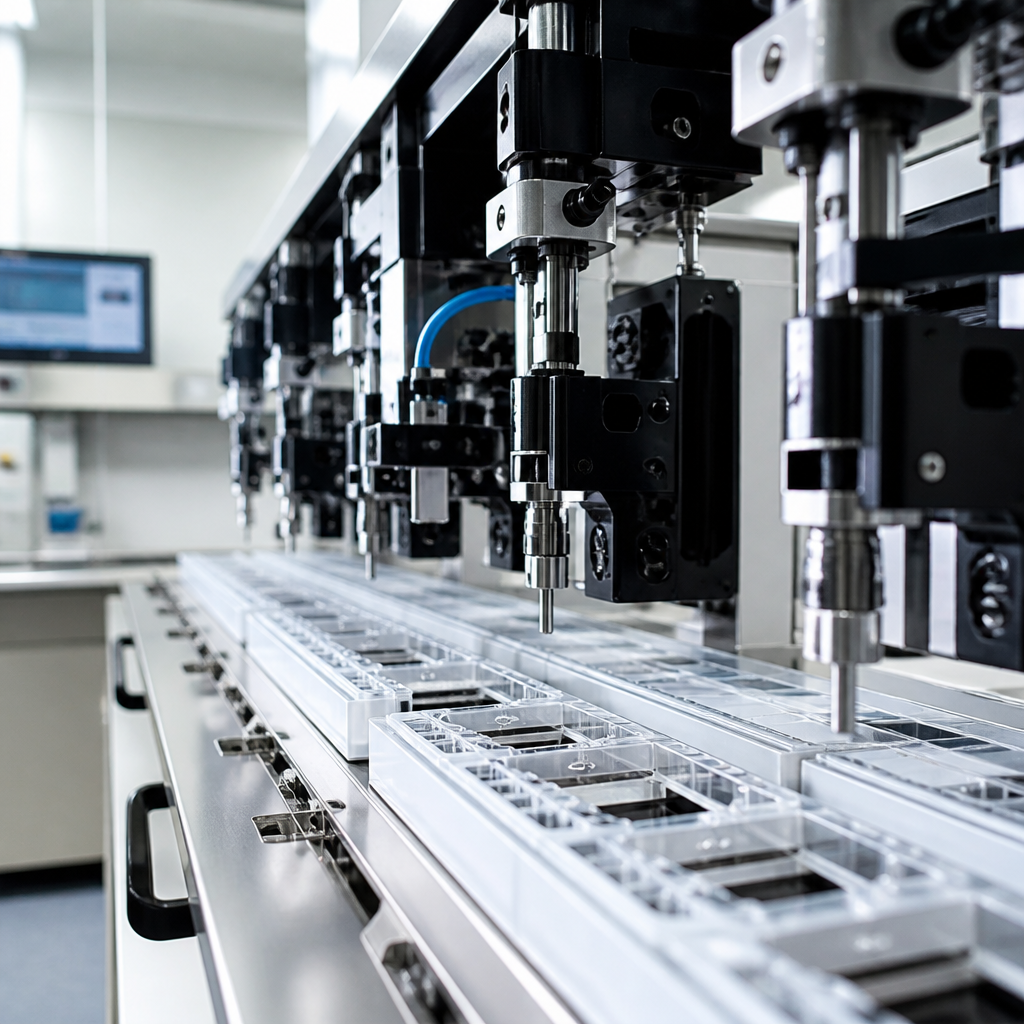
Advances in high-throughput polymer testing are reshaping how materials teams evaluate mechanical performance, shorten development cycles, and connect structure-property relationships across large formulation spaces. In practical terms, high-throughput polymer testing means running many measurements rapidly, often with automation, miniaturized samples, standardized workflows, and software that can compare hundreds or thousands of data points in one program. Within the broader materials and properties landscape, this hub page focuses on mechanical testing methods: the set of techniques used to measure how polymers respond to force, deformation, time, temperature, and repeated loading. These methods include tensile testing, compression, flexural testing, impact testing, hardness, creep, stress relaxation, fatigue, fracture, and dynamic mechanical analysis. I have seen teams cut months from screening programs simply by moving from single-specimen benchtop routines to plate-based sample preparation, robotic handling, and scripted analysis that flags outliers before an engineer ever opens a spreadsheet.
The topic matters because polymer development is now driven by faster iteration in packaging, medical devices, electronics, automotive lightweighting, additive manufacturing, and sustainable materials. Mechanical data still decide whether a resin, blend, elastomer, fiber-reinforced composite, or recycled compound survives design review. Yet conventional testing, while reliable, is often too slow and too expensive for modern formulation programs. A classic ASTM D638 tensile campaign on full dog-bone specimens may deliver excellent modulus, yield strength, and elongation data, but it can become a bottleneck when a chemist needs to compare fifty stabilizer levels, ten molecular weights, and multiple humidity conditions. High-throughput methods solve that bottleneck by preserving scientific rigor while increasing sample velocity. This article explains the core methods, the instrumentation choices behind them, the role of standards such as ASTM and ISO, and the practical tradeoffs engineers must manage when they want both speed and decision-quality mechanical results.
What High-Throughput Mechanical Testing Means for Polymers
High-throughput mechanical testing is not one instrument. It is a workflow built around rapid specimen production, efficient conditioning, automated loading, synchronized metadata capture, and analysis routines that reveal trends without hiding uncertainty. For polymers, that workflow must respect viscoelasticity, thermal history, orientation, crystallinity, filler dispersion, and moisture sensitivity, because these variables can shift apparent properties as much as composition does. In my own testing work, the biggest mistake I see is assuming throughput only means smaller specimens. Miniaturization helps, but true throughput also depends on fixture changeover time, barcode traceability, environmental control, and software that links raw force-displacement curves to formulation records.
Mechanical testing methods remain the backbone of property qualification because they answer direct design questions. How stiff is the material at room temperature and at service temperature? Does it yield, craze, neck, or fail in a brittle mode? How much energy can it absorb during impact? Will it creep under constant load? How quickly does it lose modulus after aging, sterilization, UV exposure, or multiple recycling loops? High-throughput systems bring these questions into earlier phases of development. Instead of testing only final candidates, teams can map broad design spaces and identify nonlinear effects, such as a plasticizer improving toughness up to a threshold before reducing fatigue resistance, or short glass fiber raising tensile modulus while harming weld-line impact performance. That is why this page serves as the hub for the entire mechanical testing methods subtopic.
Tensile, Compression, and Flexural Testing at Screening Scale
Tensile testing is still the primary mechanical screen for polymers because modulus, tensile strength, yield behavior, strain at break, and toughness quickly distinguish formulations. Standard methods include ASTM D638 and ISO 527 for plastics, with specimen geometry, test speed, and strain measurement chosen to fit material class. In high-throughput settings, labs often use mini-dog-bone geometries cut from plaques or molded in multi-cavity tools. The benefit is obvious: less material, shorter molding cycles, and faster testing. The risk is equally real: small dimensions amplify edge defects, thickness variation, and gripping artifacts. Reliable data therefore depend on calibrated load cells, optical or video extensometry, and strict control of gate position and cooling rate. For ductile polymers such as polyethylene or thermoplastic polyurethane, true strain measurement matters because crosshead displacement alone can overstate elongation and understate modulus.
Compression testing is especially useful for foams, filled thermoplastics, elastomers, and lattice structures from additive manufacturing. ASTM D695 is common for rigid plastics, while foam-specific standards adjust specimen shape and strain limits. In throughput programs, compression is often easier to automate than tension because specimen alignment is simpler and gripping is unnecessary. I have used rapid compression arrays to compare expanded polypropylene bead fusion quality across processing windows; the method revealed density gradients that tensile tests missed. Flexural testing, typically ASTM D790 or ISO 178, remains valuable when only rectangular bars are available from plaques or when bending stiffness better reflects end use, as in housings, panels, and snap-fit components. Because flexural stress states combine tension and compression, results should not be treated as direct substitutes for tensile data, but they are excellent comparative screens when sample volume is limited.
Impact, Hardness, and Fracture Methods for Rapid Ranking
When teams ask which polymer testing methods best capture brittleness and toughness, the answer usually starts with impact tests. Izod and Charpy methods, standardized through ASTM D256 and ISO 179 or ISO 180, rank notched and unnotched resistance to sudden loading. Instrumented drop-weight testing goes further by recording force-time and energy-time histories, making it possible to separate crack initiation from crack propagation. In high-throughput screening, compact pendulum systems and automated notchers allow many formulations to be ranked in a single shift. This is particularly useful in recycled-content compounds, where contamination, chain scission, or mixed-polymer inclusions can shift failure mode from ductile to brittle with little warning.
Hardness testing, using Shore A, Shore D, or Rockwell scales depending on polymer type, is among the fastest screening tools available. It does not replace strength or modulus measurements, but it is an efficient process-control indicator for cure state, plasticizer level, or filler loading. In elastomer development, I often pair Shore hardness with compression set and dynamic mechanical analysis because hardness alone can hide poor rebound or elevated hysteresis. Fracture-focused methods, including essential work of fracture, single-edge notch bending, and compact tension variants, are more specialized but increasingly important for thin films, structural adhesives, and high-performance thermoplastics. Their challenge in high-throughput programs is specimen preparation: notch sharpness, thickness consistency, and crack length measurement must be tightly controlled. When they are, fracture metrics provide information that simple impact tests cannot, especially for materials intended for damage-tolerant applications.
Time-Dependent and Temperature-Dependent Mechanical Behavior
Polymers are viscoelastic, so a mechanical testing hub is incomplete without creep, stress relaxation, fatigue, and dynamic mechanical analysis. Creep testing measures strain under constant stress over time; stress relaxation measures stress decay under constant strain. These methods are critical for seals, clips, load-bearing housings, and medical components expected to hold force over months or years. Traditional creep frames can occupy a lab for weeks, but high-throughput approaches use parallel fixtures, stepped isothermal methods, and accelerated protocols to screen many candidates before long-term confirmation testing begins. The data are often interpreted with time-temperature superposition, a well-established concept that uses shift factors to build master curves. Engineers must still verify that the material remains thermorheologically simple; semi-crystalline polymers and heavily filled systems can violate that assumption.
Fatigue testing matters whenever polymers see cyclic loading, from living hinges to under-hood brackets and wearable devices. Throughput improvements come from servo-electric systems, multiplexed flexural fatigue rigs, and software that automatically identifies stiffness loss and failure cycles. Dynamic mechanical analysis, commonly called DMA, deserves special emphasis because it is one of the most information-dense polymer mechanical tests available. DMA measures storage modulus, loss modulus, and tan delta as functions of temperature, frequency, or time. Those outputs reveal glass transition behavior, damping, crosslink density trends, secondary relaxations, and reinforcement effects. In screening work, DMA often explains why two formulations with similar room-temperature tensile modulus perform very differently in service. A bio-based polyester may match a petroleum-based comparator at 23 degrees Celsius yet lose stiffness rapidly near 50 degrees because its transition profile is broader. High-throughput DMA instruments with multi-sample trays now make this insight accessible much earlier in development.
Automation, Data Infrastructure, and Standardization
The real advance in high-throughput polymer testing is the integration of hardware, software, and standards. Robotic sample handling, automated gauge measurement, machine-vision defect checks, and laboratory information management systems reduce human variation and create traceable records. Universal testing machines from vendors such as Instron, ZwickRoell, and MTS increasingly support scripted test sequences, accessory recognition, and direct export into statistical analysis environments. The value of that integration becomes obvious when a team is comparing formulations across process conditions, aging states, and replicate batches. Without disciplined metadata, it is impossible to know whether a modulus shift came from chemistry, moisture uptake, mold temperature, annealing, or operator differences.
| Method | Primary property | Typical standards | High-throughput advantage | Main caution |
|---|---|---|---|---|
| Tensile | Modulus, strength, elongation | ASTM D638, ISO 527 | Fast ranking of formulations | Mini-specimen gripping and strain accuracy |
| Flexural | Bending stiffness, stress at strain | ASTM D790, ISO 178 | Works with plaque-derived bars | Not a direct substitute for tensile behavior |
| Impact | Notch sensitivity, energy absorption | ASTM D256, ISO 179/180 | Rapid brittle-versus-ductile sorting | Notch quality strongly affects results |
| Compression | Compressive modulus, crush response | ASTM D695 | Simple automation for foams and lattices | Alignment and barreling effects |
| DMA | Viscoelastic response versus temperature | ASTM D4065 | Rich insight from small samples | Clamp selection and frequency interpretation |
Standardization remains essential even when speed is the goal. ASTM and ISO methods define dimensions, preconditioning, strain rates, and reporting conventions that make data comparable across suppliers and laboratories. Deviating from those methods is sometimes necessary for miniaturized testing, but the deviation should be documented, validated against conventional specimens, and limited to early-stage screening decisions. A strong workflow uses gauge repeatability and reproducibility studies, control materials, and periodic correlation to full-scale methods. Statistical tools matter too. Design of experiments helps isolate main effects and interactions; Weibull analysis can clarify brittle failure variability; principal component analysis can condense multi-test datasets into actionable patterns. These practices turn high-throughput testing from a fast experiment into a trustworthy decision system.
Applications Across Sustainable, Medical, and Manufacturing Programs
Real-world value appears when high-throughput methods are tied to development goals. In recycled polymers, screening often focuses on retention of tensile strength, impact resistance, and fatigue performance after multiple extrusion histories. Fast mechanical maps can show where stabilizers recover ductility and where contamination still drives scatter. In medical polymers, throughput is useful for comparing sterilization routes such as gamma, EtO, and steam, each of which can alter molecular weight or induce embrittlement. In additive manufacturing, rapid testing across build orientation, raster pattern, and post-cure conditions helps separate material effects from process artifacts. For thin-wall packaging, high-throughput puncture, flexural, and creep methods can identify downgauging limits before line trials begin. In each case, the best programs combine rapid screens with confirmatory tests on final geometry, because polymer mechanics are always influenced by processing and service environment.
Advances in high-throughput polymer testing have made mechanical testing methods more strategic, not less rigorous. The key lesson is simple: use speed to expand learning, then use standards to confirm decisions. Tensile, compression, flexural, impact, hardness, fracture, creep, fatigue, and DMA each answer different questions, and the strongest materials teams know when to combine them rather than chase a single headline number. If this page is your hub for mechanical testing methods, start by matching each design requirement to the property that truly controls failure, then build a testing workflow that captures that property early, repeatedly, and with traceable quality. Review your current methods, identify the slowest steps, and modernize the workflow where automation and better data handling will produce faster, more dependable polymer decisions.
Frequently Asked Questions
What is high-throughput polymer testing, and how is it different from traditional polymer characterization?
High-throughput polymer testing is an approach to materials evaluation that allows researchers and product development teams to measure the properties of many polymer samples in a fast, organized, and highly repeatable way. Instead of preparing and testing one formulation at a time using conventional bench-scale methods, high-throughput workflows rely on automation, miniaturized specimens, parallel testing formats, standardized sample preparation, and integrated data analysis tools. The goal is to generate reliable property data across broad formulation spaces much more efficiently than with traditional methods.
In a traditional polymer characterization program, a team may design a small number of candidate materials, mold larger samples, run mechanical or thermal tests sequentially, and interpret the results over days or weeks. That approach can be effective, but it often limits the number of variables that can be explored at once. High-throughput polymer testing changes that model by enabling rapid screening of many compositions, additives, processing conditions, or curing profiles in a single campaign. This makes it possible to study not only which materials perform well, but also why they perform well across a broader design space.
Another important difference is the quality of insight generated from scale. When hundreds or thousands of measurements are collected in a structured workflow, teams can identify subtle structure-property relationships, detect formulation trends, and build predictive models with greater confidence. In other words, high-throughput testing is not just about speed. It is about creating a richer, more statistically meaningful understanding of polymer behavior while reducing bottlenecks in development.
What types of polymer properties can be evaluated using high-throughput methods?
High-throughput polymer testing can be applied to a wide range of physical, mechanical, thermal, chemical, and sometimes even functional properties, depending on the instrumentation and sample format being used. Mechanical performance is one of the most common focus areas, including stiffness, hardness, tensile behavior, elasticity, impact response, creep resistance, and viscoelastic properties. These are especially important when teams are comparing families of formulations for packaging, automotive, medical, electronics, coatings, or structural applications.
Thermal characterization is also well suited to high-throughput workflows. Researchers often screen glass transition temperature, melting behavior, crystallization trends, thermal stability, cure progression, and heat resistance across many polymer variants. In addition, surface and chemical properties such as adhesion, solvent resistance, swelling, barrier performance, and environmental durability can sometimes be tested in parallelized formats. For specialized applications, teams may also evaluate optical clarity, dielectric response, conductivity, permeability, or biocompatibility-related indicators.
The exact set of measurable properties depends on how closely the high-throughput method correlates with the standard reference test. In many programs, rapid screening methods are used first to rank materials and identify promising candidates, and then a smaller set of formulations is validated using conventional, application-specific testing. This combined strategy allows teams to move quickly without losing confidence in the final performance assessment.
How do advances in automation and data analysis improve high-throughput polymer testing?
Automation is one of the biggest drivers behind recent advances in high-throughput polymer testing because it reduces manual variability, increases testing speed, and enables more consistent experimental design. Automated dispensing, mixing, curing, cutting, handling, and measurement systems help researchers prepare large numbers of samples under tightly controlled conditions. That level of consistency matters because polymer properties are often highly sensitive to composition, processing history, environmental exposure, and specimen geometry.
Equally important is the role of software and data infrastructure. High-throughput testing generates large, multidimensional datasets that are difficult to manage with spreadsheets alone. Modern platforms can capture raw instrument outputs, track sample identities, organize metadata, compare hundreds of formulations at once, and visualize relationships among composition, processing, and performance. This allows teams to detect patterns much faster than they could through manual review.
Advanced analytics and machine learning further expand the value of these datasets. Statistical modeling can reveal which variables most strongly influence performance, while predictive tools can suggest promising new formulations or identify inefficient parts of the design space. Instead of testing materials in a purely trial-and-error fashion, teams can use data-driven strategies to guide their next experiments. In practice, this shortens development cycles, improves decision-making, and helps connect polymer structure to real-world properties more systematically.
What are the main benefits of high-throughput polymer testing for materials development?
The most immediate benefit is speed. High-throughput testing allows materials teams to evaluate many formulations in a fraction of the time required by conventional workflows. That accelerated pace can significantly shorten research and development timelines, which is especially valuable in industries where new product introduction, reformulation, or material substitution must happen quickly. Faster testing also means faster elimination of poor candidates, allowing resources to be focused on the most promising systems.
A second major benefit is broader exploration. Polymer systems are complex, and performance often depends on interactions among resin chemistry, molecular weight, fillers, plasticizers, crosslinking conditions, processing temperatures, and many other factors. Traditional one-variable-at-a-time testing can miss these interactions. High-throughput approaches make it practical to explore larger formulation spaces and identify combinations that might otherwise go unnoticed. This often leads to better-optimized materials and a deeper understanding of formulation sensitivity.
There are also strong benefits in data quality and strategic decision-making. Because high-throughput programs typically use standardized workflows and structured digital records, they can improve reproducibility and make cross-comparison easier. Teams gain a more comprehensive evidence base for selecting candidates, scaling processes, and supporting quality or regulatory documentation. Over time, the accumulated data can become a long-term asset that supports knowledge retention, predictive modeling, and continuous improvement across multiple polymer development programs.
What challenges should companies consider when implementing high-throughput polymer testing?
One of the biggest challenges is ensuring that rapid screening methods remain relevant to real-world application performance. Miniaturized samples and accelerated test formats are useful for speed, but they must correlate well with established benchmark methods and end-use conditions. If that correlation is weak, a program may generate large volumes of data that are fast but not actionable. For this reason, successful implementation usually requires careful method development, calibration, and validation against conventional testing standards.
Another challenge is workflow integration. High-throughput testing is not just a matter of buying faster instruments. It often requires coordinated changes in sample preparation, automation hardware, laboratory information systems, data management practices, and experimental design. Without clear standards for sample labeling, metadata capture, instrument qualification, and data interpretation, the benefits of scale can be lost. Organizations also need personnel who understand both polymer science and data-centric experimentation, since the most valuable insights often come from combining domain expertise with robust analytics.
Cost and change management can also be important considerations. Initial investment in automation platforms, software, and method development may be substantial, particularly for organizations transitioning from conventional lab workflows. In addition, teams may need to adjust how they define success, moving from small-batch testing toward iterative, statistically grounded screening campaigns. Despite these challenges, companies that implement high-throughput polymer testing thoughtfully often find that the long-term gains in speed, insight, and innovation justify the effort.