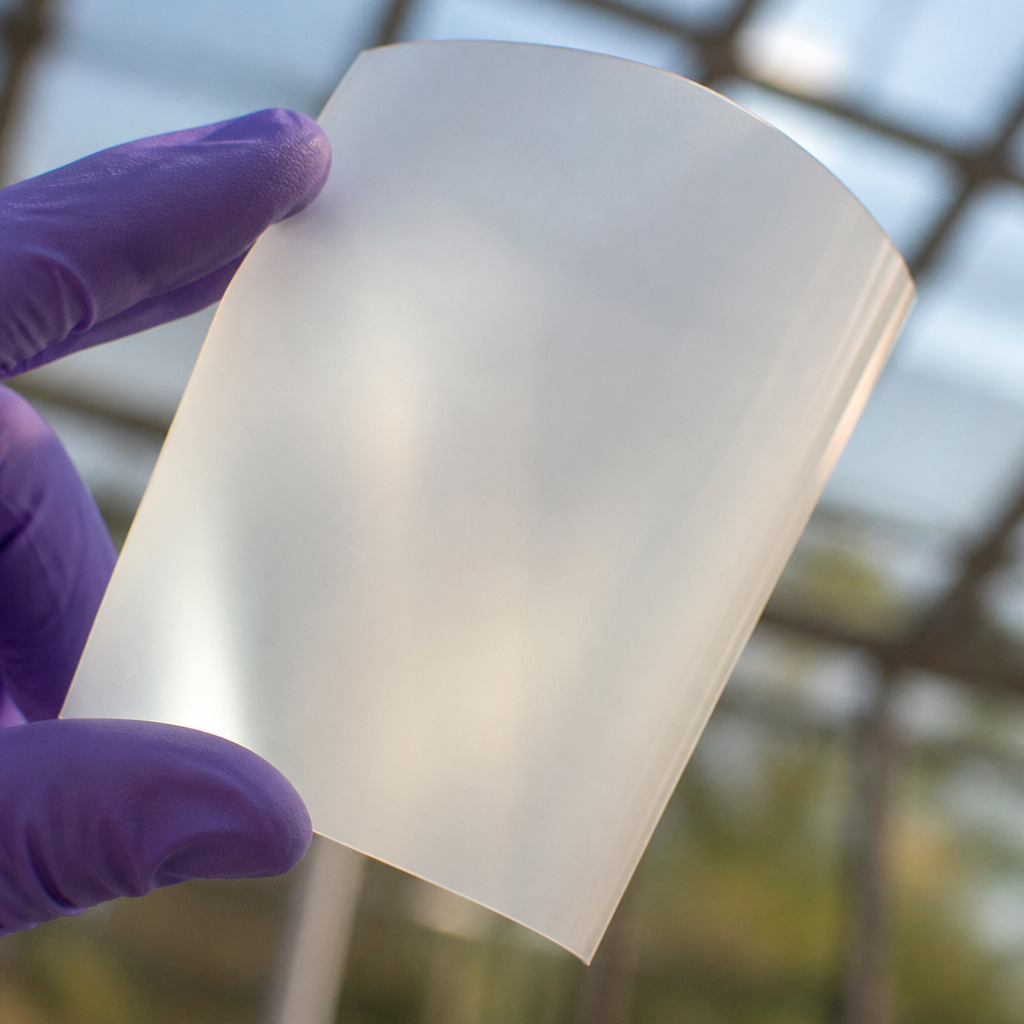
Light-diffusing polymers have moved from niche specialty materials to core components in displays, luminaires, automotive interiors, medical devices, and architectural products because they control how light spreads without sacrificing the manufacturing advantages of plastics. In practical terms, a light-diffusing polymer is a resin or compounded plastic engineered to scatter transmitted light so bright points become uniform illumination. That optical behavior matters whenever designers need to hide LEDs, reduce glare, improve viewing comfort, or create a consistent visual surface across complex shapes. Within the broader study of optical properties, diffusion sits alongside transmittance, haze, refractive index, clarity, color stability, birefringence, and weathering resistance. I have worked with product teams selecting diffuser grades for molded light guides and LED covers, and the same lesson keeps recurring: the best material is not the one with the highest haze or the lowest cost, but the one that balances optical performance, processability, durability, and part geometry. Recent advances in light-diffusing polymers are important because solid-state lighting, thinner consumer electronics, and stricter efficiency targets have raised expectations. Manufacturers now need materials that spread light evenly at lower wall thickness, maintain color under heat, survive UV exposure, and integrate with high-volume processes such as injection molding, extrusion, thermoforming, and additive manufacturing.
The category includes commodity and engineering polymers such as polycarbonate, polymethyl methacrylate, polyethylene terephthalate, cyclic olefin polymers, silicone-modified thermoplastics, and specialized masterbatch systems containing scattering particles. The optical outcome depends on controlled refractive index contrast, particle size distribution, morphology, crystallinity, and surface texture. A diffuser can be bulk diffusing, where particles inside the polymer scatter light throughout the thickness, or surface diffusing, where a textured finish redirects incoming light mainly at the interface. Bulk diffusion is often preferred for LED point-source hiding because it produces more uniform luminance across viewing angles, while surface texturing may preserve higher total transmittance in some applications. Understanding these distinctions is essential for anyone comparing grades, specifying parts, or linking material choice to end-use performance across the wider optical properties landscape.
How Light Diffusion Works in Polymers
Light diffusion in polymers is governed by scattering, absorption, and transmission. When light enters a clear polymer with a uniform refractive index, most rays pass through with limited deviation. When the material contains particles, voids, phase-separated domains, or crystalline structures with a different refractive index from the matrix, each interface bends and redirects the light. The cumulative effect broadens the angular distribution of transmitted light and converts concentrated hotspots into softer, more uniform illumination. This is why a diffusing polycarbonate lens can hide individual LED emitters while a clear lens reveals every diode. In engineering practice, the most useful metrics are total light transmission, diffuse transmission, haze, clarity, and angular intensity distribution. ASTM D1003 remains a widely referenced method for haze and luminous transmittance in transparent plastics, although advanced goniospectrophotometers are often needed to fully characterize modern diffuser grades.
The relationship between scattering strength and visual quality is not linear. Too little scattering leaves visible hotspots. Too much scattering reduces efficiency, lowers on-axis brightness, and can create a cloudy or dull appearance. A good diffuser grade spreads light enough to achieve luminance uniformity at the designed LED pitch and air gap while preserving as much transmitted flux as possible. I have seen prototype teams solve a hotspot issue by simply increasing haze, only to fail efficiency requirements because fixture output dropped several percentage points. The better solution was changing particle loading and wall thickness together. That illustrates a basic rule: diffuser performance must be evaluated at the system level, not from resin datasheets alone.
Material Platforms and Additive Technologies
Polycarbonate and acrylic remain the dominant platforms for light-diffusing polymers, but their roles are distinct. Polycarbonate offers high impact resistance, broad temperature capability, and easier compliance in applications that demand toughness, such as industrial luminaires, transportation interiors, and vandal-resistant covers. Acrylic, especially PMMA, typically delivers higher intrinsic clarity, excellent weatherability, and lower yellowness growth under outdoor exposure, which makes it common in signage, decorative lighting, and daylighting panels. PET and copolyesters are used where chemical resistance, sheet processing, or cost-performance balance is attractive. Cyclic olefin materials appear in premium optical components requiring low birefringence and high purity. Silicone-containing systems and thermoplastic elastomer blends are emerging where flexibility and broad-angle diffusion need to coexist.
Most advances in the last decade have come from additive design rather than from entirely new base resins. Diffuser compounds now use tightly controlled microspheres, inorganic particles such as silica or barium sulfate, polymeric beads, and in some cases hollow particles that create strong refractive index contrast at low loading. Particle size often falls in the micrometer range because the scattering effect depends on wavelength-scale interactions. Narrow particle size distributions help maintain repeatable optical performance lot to lot. Surface-treated particles improve dispersion and reduce agglomeration, which is critical because agglomerates act like optical defects and can also weaken mechanical properties. Masterbatch technology has also improved, giving processors a way to tune diffusion in extrusion or molding operations without reformulating the entire polymer matrix.
| Material system | Typical strengths | Key limitations | Common applications |
|---|---|---|---|
| Polycarbonate diffuser | High impact strength, heat resistance, good processability | Can yellow under UV without stabilization, lower scratch resistance | LED lenses, industrial fixtures, transport interiors |
| PMMA diffuser | High clarity, strong UV stability, good surface appearance | Brittleness, lower heat resistance than polycarbonate | Signage, decorative panels, outdoor covers |
| PET or copolyester diffuser | Chemical resistance, sheet extrusion suitability, balanced cost | Moisture sensitivity in processing, moderate heat limits | Thermoformed panels, appliance lighting |
| Cyclic olefin polymer | Low birefringence, optical purity, dimensional precision | Higher cost, narrower processing window | Precision optics, medical illumination components |
Optical Properties That Determine Performance
For a hub page on optical properties, it is important to place diffusion in context. The first property users usually ask about is total transmittance: how much light gets through the part at all. The second is haze: what percentage of transmitted light deviates from the incident beam by more than a defined angle. High haze can be useful, but haze alone does not guarantee LED hiding or pleasing appearance. Clarity describes image sharpness through the material and often drops as diffusion rises. Refractive index determines how strongly additives can scatter light relative to the polymer matrix. Birefringence matters in applications using polarized light, including some displays, because stress-induced optical anisotropy can create unwanted patterns. Color coordinates, often measured in CIE L*a*b* or YI terms, become critical when a white diffuser must stay visually neutral under heat and aging.
Uniformity is another essential but underreported property. Many OEM specifications define acceptable luminance variation across a panel, often measured with imaging photometers. In backlit devices, a diffuser may need to suppress hot spots at LED pitch distances below 10 millimeters while holding transmittance above 80 percent. In office lighting, the target may be low-glare distribution that supports Unified Glare Rating limits. In automotive ambient lighting, the challenge is consistent line-of-light appearance around curves and joints. These are optical properties translated into user experience. A material that tests well in a flat plaque can still fail in the final part if flow orientation, knit lines, sink variation, or surface gloss alter scattering behavior.
Processing, Morphology, and Part Design
Processing has a direct effect on optical performance because diffusion is not determined by formulation alone. Injection molding can orient polymer chains and dispersed phases, creating directional optical effects. Excessive shear may break down certain additive structures or induce local stress that changes refractive behavior. Drying conditions matter for hygroscopic resins like polycarbonate and PET; inadequate drying leads to hydrolytic degradation, reduced molecular weight, and defects that impair both appearance and strength. In sheet extrusion, roll temperature and cooling rate influence surface smoothness and internal morphology. Thermoforming can thin the sheet unevenly, which changes local transmission and diffusion. Anyone specifying a diffuser should request plaques molded or extruded under process conditions close to production reality.
Part geometry is equally influential. Wall thickness changes the optical path length; a 3 millimeter plaque and a 1 millimeter ribbed cover made from the same resin can look completely different. Air gaps between LEDs and diffuser surfaces alter the amount of mixing before light exits. Microstructures, prisms, and reflective cavities can complement diffusion, allowing lower additive loading and higher efficiency. In one lighting project, the most effective improvement came from changing the internal reflector geometry rather than changing polymer grade. That result is common. Light-diffusing polymers work best as one element in an optical stack that may include reflective films, light guides, extraction features, and textured outer surfaces.
Durability, Sustainability, and Emerging Directions
Durability separates laboratory success from commercial success. Heat from LEDs can drive long-term yellowing, embrittlement, or additive migration if the formulation is not stabilized. UV exposure is especially important in skylights, outdoor luminaires, greenhouse panels, and vehicle exteriors. PMMA generally retains color and transmittance better outdoors than unstabilized polycarbonate, but UV-stabilized polycarbonate grades have improved significantly. Chemical resistance matters in healthcare and public settings where cleaners, alcohols, or disinfectants contact the surface. Scratch resistance matters because fine abrasion can increase diffuse appearance unpredictably and lower perceived quality. Flame performance can also be decisive in electrical housings and transportation interiors, where UL 94 ratings or rail and aerospace smoke requirements may apply.
Sustainability is shaping the next wave of development. Recycled-content diffusers are gaining attention, but post-consumer streams can introduce color variability, contamination, and inconsistent optical performance. Suppliers are responding with tighter sorting, deodorization, and optical-grade recycling processes. Bio-based polymers and mass-balance feedstocks are entering the conversation, though many still face tradeoffs in heat resistance, weatherability, or cost. Another active area is additive reduction: using optical design and highly efficient scattering particles to achieve target diffusion with less filler, which improves recyclability and can preserve toughness. Digital manufacturing is also opening new possibilities. Additive manufacturing can produce custom diffusing geometries and gradient structures for short runs, prototyping, and medical illumination, though surface finish and repeatability still limit broad replacement of conventional molding for volume production.
Looking ahead, the most important advances in light-diffusing polymers will come from integration. Material suppliers, optical engineers, and processors are increasingly co-designing resin, additive package, surface finish, and part geometry rather than treating the polymer as a commodity chosen late in development. That approach produces better optical properties because it links measurable material behavior to the actual lighting or display task. For readers using this page as a hub within materials and properties, the key takeaway is clear: diffusion cannot be evaluated in isolation. It connects directly to transmittance, haze, refractive index, color stability, weathering, and process-induced morphology. Choosing the right light-diffusing polymer means defining the application first, then matching optical targets, mechanical requirements, regulatory needs, and manufacturing constraints with test data from realistic parts, not just supplier brochures. If you are building a specification or comparing materials, start by mapping the optical properties that matter most in your design and use that framework to narrow the field quickly and confidently.
Frequently Asked Questions
1. What are light-diffusing polymers, and how do they work?
Light-diffusing polymers are plastic materials engineered to scatter light as it passes through them, transforming intense point sources into soft, even illumination. Instead of allowing light to travel straight through with full clarity, these materials redirect it in many controlled directions. This effect is achieved by carefully designing the polymer’s internal structure, surface texture, additive package, or all three. In many formulations, microscopic particles, phase-separated domains, or refractive index differences inside the resin cause incoming light to spread out rather than remain concentrated.
That behavior is especially valuable in applications where LEDs or other compact light sources would otherwise create visible hotspots, glare, or uneven brightness. In a display backlight, for example, a light-diffusing polymer helps distribute illumination uniformly across the viewing area. In architectural lighting or consumer luminaires, it softens harsh brightness and improves visual comfort. In automotive interiors, it supports elegant ambient lighting effects while preserving part design flexibility. The core advantage is that these polymers manage light while still offering the familiar benefits of plastics: lower weight, design freedom, high-volume processability, and compatibility with extrusion, molding, and thermoforming.
2. What recent advances have improved the performance of light-diffusing polymers?
Recent advances have focused on improving the balance between diffusion efficiency, light transmission, durability, and manufacturability. Historically, designers often had to trade one property for another: stronger diffusion could reduce total transmitted light, while higher clarity might allow visible hotspots. New material engineering approaches are narrowing that compromise. Resin developers now use more precise additive dispersion, tighter particle size control, and more sophisticated polymer blends to achieve better optical uniformity with less brightness loss.
Another major area of progress is tunable diffusion. Instead of relying on a one-size-fits-all material, manufacturers can now tailor diffusion angles, haze levels, and transmission targets to specific end uses. A display application may require highly controlled optical behavior for image quality, while a luminaire cover may prioritize wide-angle softening and visual comfort. Advances in compounding and process control make those application-specific targets more practical at scale.
Durability has improved as well. Many newer grades are designed for better UV resistance, thermal stability, color consistency, and long-term optical performance, which is critical for LED lighting, automotive environments, and medical equipment. Some modern formulations are also being developed with cleaner aesthetics in mind, reducing yellowing over time and maintaining uniform appearance under demanding service conditions. In parallel, sustainability is becoming more central, with growing interest in recyclable systems, more efficient processing, and material solutions that support longer product lifecycles without sacrificing optical performance.
3. Where are light-diffusing polymers used most often, and why are they replacing traditional materials in some applications?
Light-diffusing polymers are now widely used in displays, lighting products, automotive components, medical devices, and architectural systems. In display technology, they help create even backlighting and improve visual consistency. In commercial and residential luminaires, they are used in lenses, diffusers, and covers that soften LED output and reduce glare. In automotive interiors, they support illuminated trim, instrument panel features, and ambient lighting elements that need both styling flexibility and optical control. In medical devices, they can assist with controlled illumination in diagnostic, analytical, or user-interface applications. Architectural products use them for illuminated panels, partitions, signage, and daylight-management features where appearance and light quality are equally important.
They are replacing glass and other traditional diffusing materials in certain applications because plastics offer a compelling combination of performance and practicality. Compared with glass, polymers are typically lighter, more impact resistant, easier to shape into complex geometries, and often more cost-effective in high-volume production. They can integrate mechanical features directly into a molded part, reducing assembly steps. They also allow designers to combine optical function with decorative, structural, or ergonomic goals in a single component. That said, material selection still depends on the application. The shift toward light-diffusing polymers is strongest where manufacturers need optical control plus lightweight construction, processing efficiency, and design versatility.
4. What properties should engineers and product designers evaluate when selecting a light-diffusing polymer?
Selection starts with optical performance, but it should never end there. Engineers need to assess total light transmission, haze, diffusion angle, hotspot hiding ability, and visual uniformity under real operating conditions. A material that looks excellent in a lab sample may perform differently once paired with a specific LED layout, wall thickness, surface finish, or viewing distance. For that reason, optical testing should reflect the final product geometry as closely as possible.
Mechanical and thermal properties are equally important. Designers should evaluate stiffness, impact resistance, dimensional stability, heat tolerance, and compatibility with the intended manufacturing process. A polymer used near high-output LEDs may need excellent thermal aging behavior. An automotive interior part may need scratch resistance, flame performance, and color stability across a wide temperature range. A medical device may require sterilization compatibility or tight regulatory documentation.
Long-term appearance is another key consideration. Yellowing, surface degradation, additive migration, and environmental stress can all affect how a diffuser looks and performs over time. UV exposure, cleaning chemicals, humidity, and repeated thermal cycling may alter optical consistency if the material is not properly matched to the use case. Finally, processing matters more than many teams expect. Resin flow, additive dispersion, mold design, extrusion conditions, and part thickness all influence the finished optical effect. The best material choice is usually the one that delivers the right optical behavior while remaining stable, manufacturable, and cost-effective throughout the product’s full lifecycle.
5. What challenges still remain in the development of light-diffusing polymers?
Despite substantial progress, several technical and commercial challenges remain. One of the biggest is continuing to improve diffusion without unnecessarily sacrificing transmission efficiency. Many applications want maximum brightness and excellent hotspot elimination at the same time, which is a difficult optical balance. As lighting and display systems become thinner and more compact, this challenge becomes even more demanding because there is less physical distance available for light mixing.
Consistency is another major issue. Light-diffusing polymers must perform reliably from batch to batch and across large production runs, especially in applications where visual differences are immediately noticeable. Small variations in additive distribution, polymer morphology, processing temperature, or wall thickness can change the final appearance. Maintaining tight quality control is therefore critical, not only for performance but also for aesthetic acceptance in consumer-facing products.
Sustainability adds another layer of complexity. The industry is under pressure to improve recyclability, reduce waste, and lower environmental impact, but optical materials often depend on finely tuned formulations that can be difficult to replicate in recycled or mixed-material streams. Developers are working to align environmental goals with precision optical performance, but that takes careful materials engineering. Cost is also a factor. Advanced formulations may offer impressive results, yet they must still fit real manufacturing budgets and supply chain constraints. The next phase of innovation will likely focus on solving these interconnected challenges: higher efficiency, greater consistency, smarter customization, and better sustainability without losing the processing advantages that made these polymers so attractive in the first place.