Evaluating the chemical stability of polymer materials is essential in product design because polymers often fail by chemistry long before they fail by strength. Chemical stability describes how well a polymer resists change when exposed to acids, bases, solvents, oxidizers, water, ultraviolet light, heat, fuels, and process chemicals over time. In practical terms, it answers a simple question: will this material remain safe, functional, and dimensionally reliable in its real service environment? I have seen promising parts pass tensile testing, impact testing, and dimensional inspection, only to craze, swell, discolor, embrittle, or leach additives after months in use because their chemical properties were not evaluated early enough.
This topic matters across every major polymer application. Medical tubing must withstand disinfectants and sterilization cycles without extractables exceeding limits. Automotive fuel-system parts face gasoline, ethanol blends, biodiesel, and under-hood heat. Packaging films contact oils, flavor compounds, and cleaning agents. Semiconductor, water-treatment, and battery systems require plastics that survive aggressive chemistries while preserving purity. For engineers, purchasers, quality teams, and product managers, evaluating chemical stability is not a laboratory formality; it is a direct control on warranty risk, regulatory compliance, maintenance intervals, and brand reputation.
As a hub within chemical properties, this article maps the full evaluation process: key degradation mechanisms, environmental stressors, test methods, standards, data interpretation, material comparisons, and selection workflow. It also connects the idea of stability to related material behaviors such as permeability, hydrolysis resistance, solvent compatibility, oxidation resistance, extractables, and long-term aging. A sound evaluation combines polymer chemistry, additive package knowledge, processing history, and end-use exposure details. The goal is not to find a universally inert plastic, because none exists, but to match a polymer system to the chemistry, temperature, stress, and lifetime demands of the application with evidence rather than assumptions.
What Chemical Stability Means in Polymers
Chemical stability in polymers is the ability to maintain molecular structure and useful properties during chemical exposure. That includes retention of mass, dimensions, surface quality, color, mechanical performance, dielectric behavior, optical clarity, and purity. A polymer can appear visually unchanged yet lose molecular weight, plasticizer content, or stress-crack resistance. Conversely, slight staining may be cosmetic rather than functional. The evaluation therefore starts by defining the acceptance criteria that matter for the application: tensile retention, hardness change, weight gain, permeation rate, gloss loss, ionic extractables, or another measurable endpoint.
The most important distinction is between reversible interaction and irreversible degradation. Solvent sorption and swelling may be partly reversible after drying. Chain scission, oxidation, dehydrochlorination, hydrolysis, and crosslinking are irreversible because they alter the polymer backbone or network. Another distinction is between the base resin and the compound. Polyvinyl chloride, for example, behaves differently depending on plasticizer type, thermal stabilizer system, filler loading, and residual processing stresses. Nylon grades vary in hydrolysis resistance and solvent uptake depending on monomer composition, crystallinity, glass fiber content, and conditioning state. Chemical properties belong to the formulated material, not just the generic polymer family name.
Main Degradation Mechanisms and Why They Matter
Most polymer chemical failures trace back to a short list of mechanisms. Oxidation occurs when oxygen, ozone, or oxidizing chemicals attack vulnerable sites in the chain, often accelerated by heat, ultraviolet exposure, and metal contaminants. Polyolefins can embrittle through oxidative chain scission if antioxidant packages are depleted. Hydrolysis is common in condensation polymers such as polyesters, polycarbonates, and many nylons, where water cleaves susceptible bonds, especially at elevated temperatures or extreme pH. Environmental stress cracking affects materials like polyethylene, polypropylene, ABS, and polycarbonate when tensile stress combines with surfactants, oils, or solvents, producing cracks below the polymer’s nominal strength.
Solvent attack follows the principle of chemical affinity: similar solubility parameters often mean higher uptake and swelling. Amorphous polymers generally absorb solvents faster than highly crystalline ones, while crosslinked systems resist dissolution but may still swell. Acetal can depolymerize in strong acids. PVC can lose plasticizer to oils or fuels, becoming brittle. Polycarbonate is vulnerable to many alkaline cleaners and certain solvents despite excellent impact strength. Fluoropolymers such as PTFE and PVDF offer broad chemical resistance, yet even they have limits with molten alkali metals, some fluorinating conditions, and high-temperature amines. Understanding the mechanism narrows the test plan and prevents false confidence from a single immersion result.
Service Environment Variables That Control Stability
The same polymer can perform perfectly in one plant and fail quickly in another because chemical stability is controlled by exposure details. Temperature is often the largest multiplier; reaction rates and diffusion both rise with heat, so a mild solvent at room temperature can become destructive at 80°C. Concentration matters because dilute sulfuric acid and concentrated sulfuric acid can produce very different outcomes. Exposure mode matters too. Continuous immersion is not the same as splash exposure, vapor exposure, cyclic wet-dry exposure, or intermittent cleaning contact. Mechanical stress, whether from assembly load, residual molding stress, or pressure, can convert a marginally compatible chemistry into a stress-cracking failure.
Time is equally important. Short screening tests reveal obvious incompatibilities, but long-term aging is needed for slow hydrolysis, antioxidant depletion, additive extraction, or permeation-driven property loss. Mixed chemicals deserve special caution. Ethanol in fuel changes the swelling behavior of many elastomers and plastics. Cleaning formulations contain surfactants, alkalinity, sequestrants, and oxidizers whose combined effect differs from any single ingredient. Purity requirements introduce another layer: a polymer may survive chemically yet contaminate ultrapure water or drug product through leachables. Accurate evaluation begins with a service profile listing chemicals, concentrations, temperature range, contact duration, pressure, stress state, cleaning cycles, and required life.
How Chemical Stability Is Tested
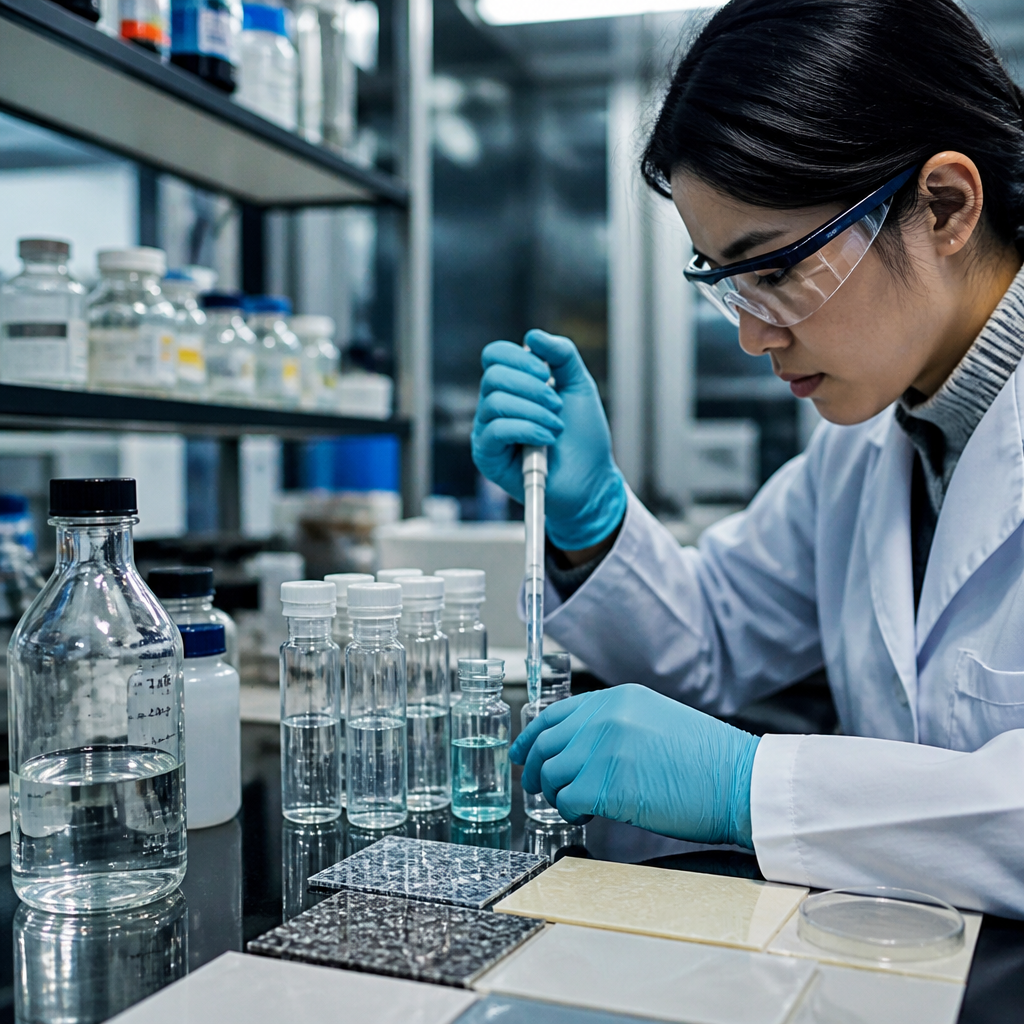
In practice, I use a tiered testing approach. First, screen materials using published compatibility data, resin-supplier technical notes, and known chemistry rules. Second, run controlled lab tests on production-representative specimens with realistic processing history. Third, validate on molded parts or assemblies because geometry, weld lines, and residual stress often change outcomes. Common tests include immersion at defined temperature and duration, followed by weight change, dimensional change, hardness, tensile properties, impact retention, and visual inspection. For volatile fluids, sealed-vessel exposure is important. For gases and fuels, permeation measurements may matter as much as bulk property retention.
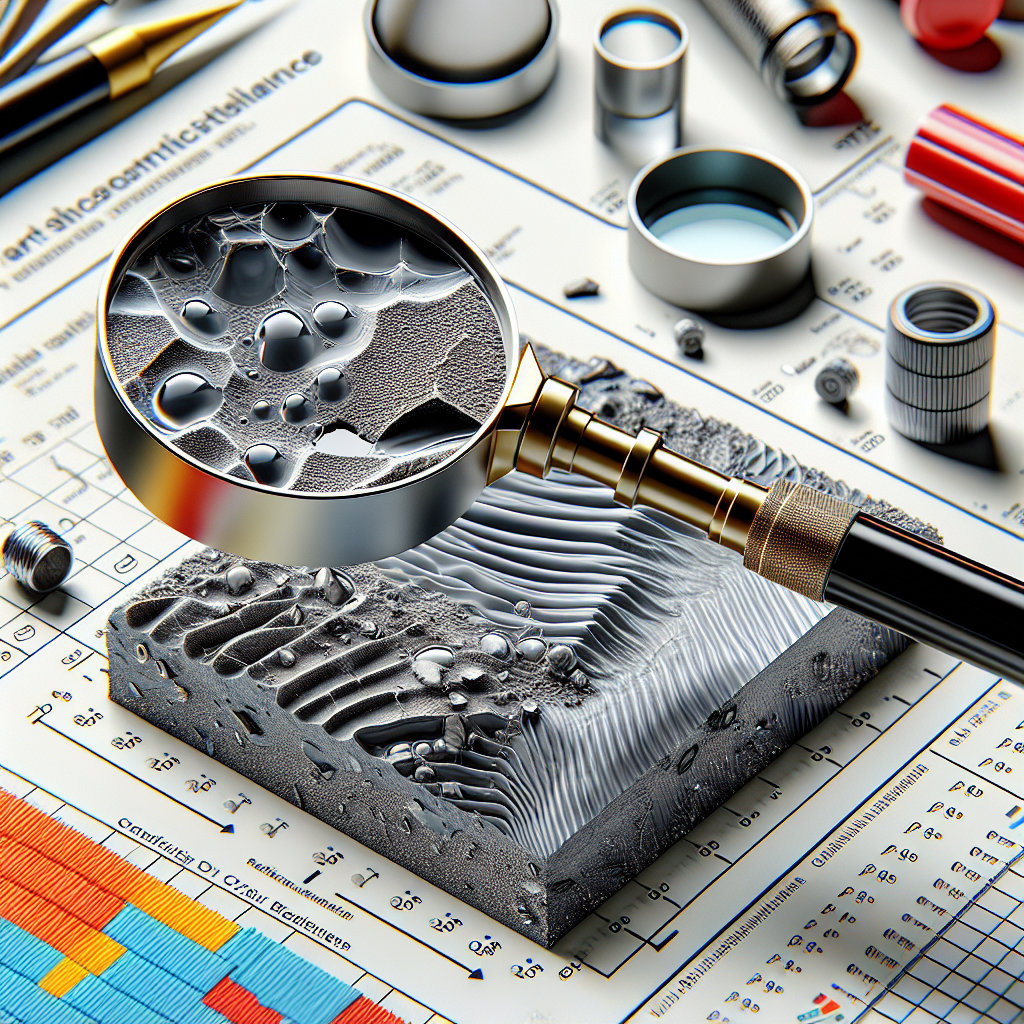
Analytical methods help identify what changed at the molecular level. FTIR spectroscopy can detect oxidation, hydrolysis products, or additive depletion signatures. DSC measures crystallinity shifts, melting behavior, and oxidation induction time in stabilized polyolefins. TGA tracks volatile loss and thermal stability changes. GPC shows molecular weight reduction from chain scission. SEM reveals crazing and crack morphology. For high-purity systems, TOC, ion chromatography, and GC-MS support extractables and leachables evaluation. Standard methods provide structure and comparability. ASTM D543 is widely used for resistance of plastics to chemical reagents, while ISO 175 covers methods for determining the effects of liquid chemicals. When stress cracking is a concern, additional fixture-based or bent-strip protocols are often necessary.
Reading Compatibility Data Without Making Costly Mistakes
Chemical resistance charts are useful starting points, but they are not design approvals. Many charts use broad ratings such as A, B, C, or “recommended with caution,” often derived from short-term immersion of unstrained specimens. Those ratings rarely capture grade-specific additives, actual temperature, molded-in stress, or blended chemical systems. I have seen teams choose polypropylene for a cleaner because the chart said “excellent,” only to discover hinge regions cracked after repeated hot alkaline washdown. The issue was not the polymer family alone; it was local stress concentration, temperature, and surfactant-assisted cracking. Data sheets also tend to emphasize successful exposures and may omit borderline conditions.
| Evaluation factor | Question to answer | Why it matters |
|---|---|---|
| Chemical identity | What exact fluid, blend, or contaminant contacts the polymer? | Trade-name products may contain solvents or surfactants not obvious from the label. |
| Temperature | What is the normal and peak exposure temperature? | Compatibility often changes dramatically with heat. |
| Stress state | Is the part loaded, pressurized, snapped together, or solvent welded? | Stress can trigger cracking below nominal property limits. |
| Duration | Is contact seconds, hours, continuous, or repeated over years? | Slow diffusion and additive loss require longer evaluation. |
| Acceptance metric | What property must be retained? | Appearance, strength, purity, and dimensions may fail at different times. |
The safest way to interpret compatibility information is to treat it as directional evidence. Use it to eliminate clearly poor candidates and prioritize testing, not to skip testing. Ask whether the source names the grade, temperature, exposure duration, and pass criteria. Check whether the data refers to immersion, vapor, splash, or intermittent contact. Compare more than one source, especially for aggressive media such as sodium hypochlorite, ketones, aromatic hydrocarbons, and concentrated caustics. If the application is regulated or safety-critical, require confirmation on the actual compounded grade and final part condition.
Material Families and Typical Chemical Performance
No short summary replaces testing, but broad patterns are reliable. Polyethylene and polypropylene resist many aqueous acids and bases well, which is why they are common in tanks, caps, and labware; however, they can suffer environmental stress cracking from detergents, oils, and wetting agents. PVC offers good resistance to many chemicals and is widely used in piping, but plasticized grades may lose flexibility through extraction, and strong solvents can attack the matrix. PET has strong barrier and packaging utility yet is vulnerable to hydrolysis at elevated moisture and temperature. Polycarbonate brings clarity and toughness but has notable sensitivity to alkalinity and many organic solvents.
Nylons provide excellent mechanical strength and wear resistance, though water uptake changes dimensions and properties, and strong acids can be highly damaging. Acetal performs well in fuels and many solvents but needs caution with acids and oxidizing environments. ABS is easy to process and cost-effective, yet solvents can attack the butadiene phase and produce rapid crazing. High-performance materials extend the envelope. PPS resists many automotive and industrial fluids and keeps properties at elevated temperatures. PEEK combines strong chemical resistance with heat capability, though concentrated sulfuric acid is a well-known exception. PTFE remains the benchmark for broad chemical inertness, balanced against cost, creep behavior, and processing constraints. Elastomers follow different rules again, with EPDM excelling in hot water and glycol, nitrile in oils, and FKM in many fuels and chemicals.
Design, Processing, and Lifecycle Factors
Chemical stability is shaped as much by design and manufacturing as by resin selection. Sharp corners, knit lines, high press-fit strain, and residual molding stress all raise the probability of environmental stress cracking. Drying and melt-processing conditions matter because hydrolysis-sensitive polymers such as PET, PBT, PLA, and many nylons can lose molecular weight before the part ever sees service if moisture is not controlled. Additive selection is equally critical. Antioxidants, UV stabilizers, acid scavengers, carbon black, and HALS can extend life substantially, while incompatible pigments or recycled content variability may shorten it. Crystallinity also matters; higher crystallinity often improves solvent resistance by reducing diffusion pathways, though it may affect impact performance.
A complete evaluation therefore spans the full lifecycle. Consider manufacturing chemicals such as mold release, degreasers, and sterilants; shipping temperatures; field maintenance cleaners; and end-of-life recycling streams. In medical and food applications, ISO 10993, USP, FDA food-contact regulations, and extractables protocols may define what “stable” means beyond simple property retention. In infrastructure and pressure systems, long-term standards and safety factors become decisive. The most successful teams document assumptions, test to the harshest credible condition, and revisit compatibility when a supplier changes formulation, a customer changes cleaning chemistry, or a service environment adds heat, pressure, or new contaminants. If you are building a materials and properties knowledge base, use this chemical properties hub as the starting point, then dive deeper into solvent resistance, hydrolysis, oxidation, permeability, extractables, and stress cracking for each polymer system you specify.
Evaluating the chemical stability of polymer materials comes down to matching chemistry, temperature, stress, and time with evidence from realistic testing. The key lessons are straightforward: define the service environment precisely, understand the likely degradation mechanism, screen with published data but do not rely on charts alone, test the exact grade under realistic conditions, and judge success using the property that truly matters in service. When teams follow that process, they avoid common failures such as swelling seals, cracked housings, embrittled tubing, contaminated fluid paths, and premature discoloration that signals deeper molecular damage.
The main benefit of doing this work well is durable performance with fewer surprises. Better chemical stability evaluation improves safety, extends service life, reduces warranty exposure, supports compliance, and prevents overengineering with unnecessarily expensive resins. It also creates a cleaner decision path for future projects because each tested material builds a useful compatibility record. Use this page as your hub for chemical properties, then map your next step: compare candidate polymers, identify the chemicals and temperatures that matter most, and set up a focused validation plan before the design is released. That is the fastest route to polymer selection you can defend with confidence.
Frequently Asked Questions
What does chemical stability mean for polymer materials?
Chemical stability describes a polymer’s ability to maintain its original properties when it is exposed to real-world environments over time. In simple terms, it asks whether the material will stay safe, functional, and dimensionally reliable when it comes into contact with substances such as acids, bases, solvents, fuels, oxidizers, water, cleaning agents, and process chemicals, while also facing heat, ultraviolet light, and oxygen. A chemically stable polymer resists unwanted reactions such as swelling, softening, cracking, discoloration, embrittlement, chain scission, oxidation, and stress cracking. If a polymer is not chemically stable in its service environment, it can fail long before its mechanical strength on paper becomes relevant.
This matters because polymer failure is often driven by chemistry rather than load alone. A part may look strong in a datasheet, but if it absorbs a solvent, hydrolyzes in hot water, oxidizes at elevated temperature, or degrades under UV exposure, its performance can change dramatically. Dimensions can shift, seals can lose compression, housings can crack, and surfaces can become brittle or tacky. Chemical stability therefore is not a narrow laboratory concept; it is a design requirement that affects safety, durability, maintenance intervals, product life, and regulatory compliance.
Why is evaluating chemical stability so important during product design?
Evaluating chemical stability early in product design helps prevent expensive failures later in development or in the field. Many polymer components operate in environments that are chemically complex: automotive systems see fuels, oils, coolants, and road chemicals; medical devices encounter sterilants and bodily fluids; industrial equipment faces cleaners, acids, caustics, and elevated temperatures; outdoor products must survive moisture, oxygen, heat cycling, and sunlight. A polymer that performs well mechanically in dry room-temperature testing may behave very differently after months of chemical exposure. If chemical compatibility is not understood from the beginning, designers risk selecting a material that deforms, loses strength, crazes, or becomes unsafe in service.
Good chemical stability evaluation also supports more accurate service-life predictions. It helps engineers understand not just whether a material survives a short exposure, but how it changes over time under realistic conditions. That distinction is critical because degradation can be gradual and cumulative. A polymer might retain most of its properties after a one-week immersion test yet fail after repeated temperature cycles, intermittent chemical contact, or long-term oxidation. By evaluating chemical stability at the design stage, teams can compare materials intelligently, choose proper additives or stabilizers, define wall thickness and safety factors, refine maintenance recommendations, and avoid unnecessary overdesign. In short, it reduces uncertainty and makes the final product more reliable in the environment where it actually has to work.
What factors most strongly affect the chemical stability of a polymer?
Chemical stability is influenced by both the polymer’s internal structure and the external conditions it experiences. On the material side, the polymer backbone, side groups, polarity, crystallinity, molecular weight, crosslink density, and additive package all play major roles. For example, some polymers are naturally resistant to nonpolar solvents but vulnerable to oxidizers or strong acids, while others resist hydrolysis yet degrade quickly in UV-rich outdoor exposure. Crystalline regions often improve resistance to chemical penetration, but formulation details such as plasticizers, fillers, pigments, flame retardants, and processing aids can also affect how a material behaves. Even two grades sold under the same family name can perform differently if their stabilizer packages or reinforcement systems are different.
On the environmental side, concentration, exposure time, temperature, pressure, UV intensity, oxygen availability, and mechanical stress all matter. Temperature is especially important because it often accelerates chemical attack, diffusion, and reaction rates. A polymer that tolerates a liquid at room temperature may fail rapidly at higher temperature. Mechanical stress can also interact with chemicals to cause environmental stress cracking, where a part fractures under conditions that would not damage it chemically or mechanically on their own. Exposure pattern matters too: continuous immersion, splash contact, vapor exposure, cleaning cycles, sterilization, and intermittent wet-dry conditions can produce very different outcomes. This is why chemical stability cannot be judged accurately from a single generic compatibility rating alone; it must be assessed in the context of the actual service environment.
How is the chemical stability of polymer materials typically tested and evaluated?
Chemical stability is usually evaluated through a combination of screening data, controlled laboratory testing, and application-specific validation. The process often begins with published compatibility charts, polymer family behavior, and supplier technical data, but those sources are only starting points. Engineers then perform exposure testing that reflects the intended environment as closely as possible. Common methods include immersion tests in specific chemicals, elevated-temperature aging, humidity or hydrolysis testing, UV weathering, oxidation studies, and chemical exposure under mechanical load. After exposure, the polymer is examined for changes in mass, dimensions, hardness, tensile strength, elongation, impact resistance, appearance, and other performance indicators.
More advanced evaluation may involve thermal analysis, spectroscopy, microscopy, and fracture analysis to understand what type of degradation occurred and how severe it is. For example, one test may show weight gain from solvent uptake, while another reveals oxidation or chain scission that reduces toughness. In many cases, the most useful testing is not just a pass-fail snapshot but a time-based study that shows how properties evolve with repeated or prolonged exposure. The best evaluations also account for real geometry and service stresses, because thick molded parts, thin films, bonded joints, and loaded seals do not all respond the same way. Ultimately, strong chemical stability assessment combines material science with realistic test design, so decisions are based on how the polymer will actually be used rather than how it behaves in idealized conditions.
Can a polymer be mechanically strong but still chemically unsuitable for an application?
Yes, and this is one of the most common causes of unexpected polymer failure. Mechanical properties such as tensile strength, stiffness, and impact resistance are important, but they do not guarantee durability in a hostile environment. A polymer can have excellent dry-state strength and still become unusable when exposed to a specific solvent, oxidizer, fuel blend, disinfectant, or humid high-temperature condition. In those cases, chemical exposure may cause swelling, softening, plasticization, hydrolysis, oxidation, or stress cracking, which can reduce load-bearing ability, alter dimensions, or create brittle fracture. Once chemistry begins changing the structure of the material, the original mechanical data may no longer describe the part’s actual performance.
This is why material selection must always balance mechanical, thermal, and chemical requirements together. A polymer chosen purely for strength may perform worse in service than a slightly lower-strength material with much better chemical resistance. For example, a component in contact with process chemicals may need a polymer that retains stiffness after long-term exposure rather than one that starts stronger but degrades quickly. The key is to evaluate the total service environment, including chemicals, temperature, UV exposure, moisture, stress level, and exposure duration. When designers treat chemical stability as a core performance property instead of an afterthought, they make better decisions and greatly reduce the risk of premature failure.