Thermal Mechanical Analysis, usually abbreviated TMA, is one of the most practical tools for understanding how polymers respond when heat and mechanical force act at the same time. In polymer testing, that combination matters because plastics rarely face temperature or load in isolation. A medical catheter must stay dimensionally stable during sterilization, an automotive clip must keep its fit near an engine compartment, and a packaging film must tolerate sealing temperatures without shrinking unpredictably. TMA measures dimensional change under a controlled force as temperature or time changes, turning those real-use questions into quantifiable data.
Within the broader field of mechanical testing methods, TMA occupies a specific but important position. Traditional mechanical tests such as tensile, compression, flexural, impact, and hardness testing describe strength, stiffness, ductility, or resistance to deformation under defined loading conditions. Dynamic Mechanical Analysis evaluates viscoelastic behavior across temperature and frequency. Thermomechanical testing, however, focuses on how dimensions shift under small, well-defined loads as thermal conditions change. That makes TMA especially valuable for detecting softening, glass transition-related expansion changes, coefficient of thermal expansion, penetration behavior, and shrinkage or recovery effects in polymers, composites, films, fibers, adhesives, coatings, and molded parts.
I have used TMA most often when standard tensile data looked acceptable but parts still failed in service because fit, seal integrity, or flatness changed with temperature. That is the gap TMA closes. It answers direct questions manufacturers ask every day: At what temperature will this polymer begin to soften under load? How much will it expand between room temperature and operating temperature? Will annealing reduce molded-in stress and post-mold shrinkage? Can two bonded materials expand together without warping? Because these questions connect laboratory data to design decisions, TMA has become a core method in serious polymer characterization programs.
As a hub within mechanical testing methods, this article explains what TMA measures, how it compares with other polymer testing techniques, where it fits in product development, which standards and modes matter, and how to interpret results without common mistakes. The goal is not to treat TMA as an isolated niche instrument, but as part of a decision-making framework for selecting the right polymer, validating processing conditions, and predicting dimensional performance in service.
What Thermal Mechanical Analysis Measures in Polymer Testing
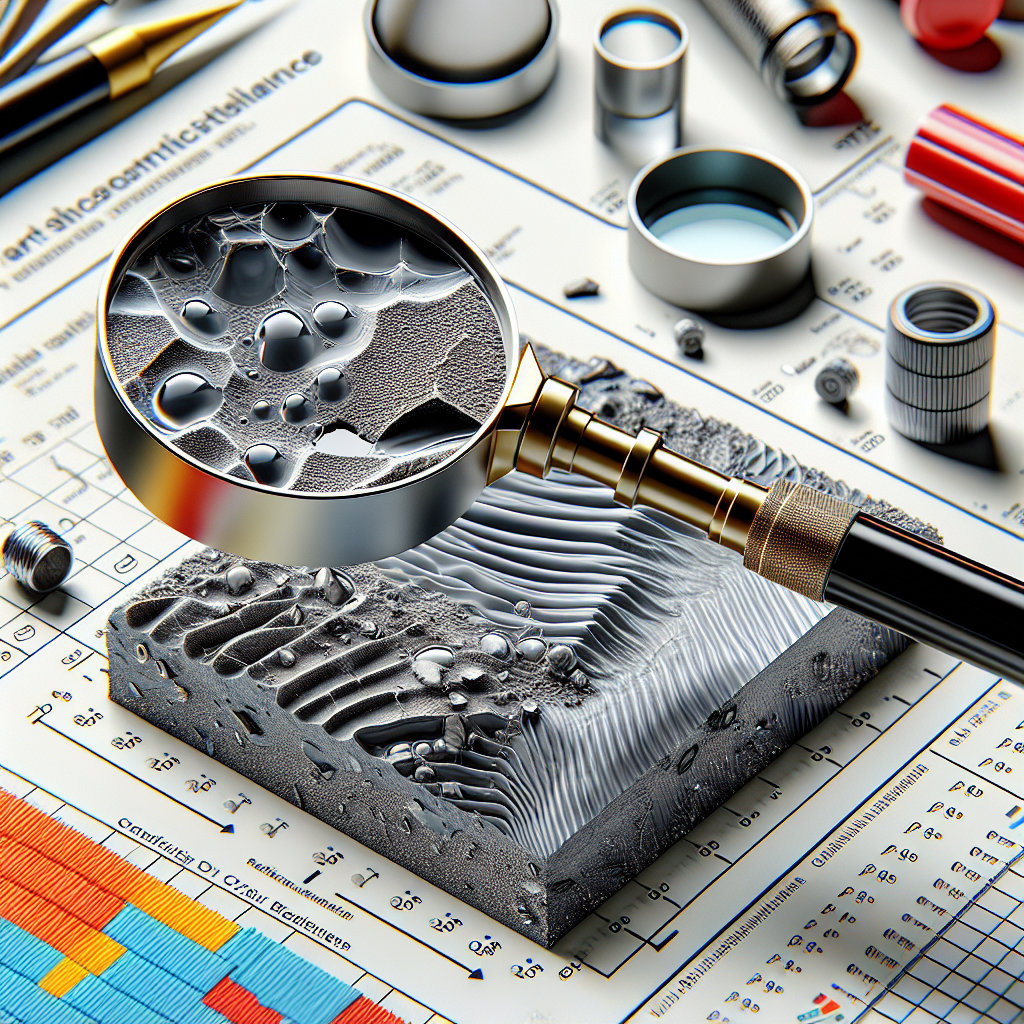
TMA measures the dimensional response of a sample while it is subjected to a programmed temperature profile and a controlled mechanical load. The output is typically displacement versus temperature or time. From that simple signal, the instrument can determine coefficient of thermal expansion, softening temperature, transition points, penetration characteristics, contraction, swelling, creep, stress relaxation-related movement, and recovery after thermal exposure. For polymer testing, the most useful insight is often not ultimate strength, but the temperature range where dimensional stability begins to change.
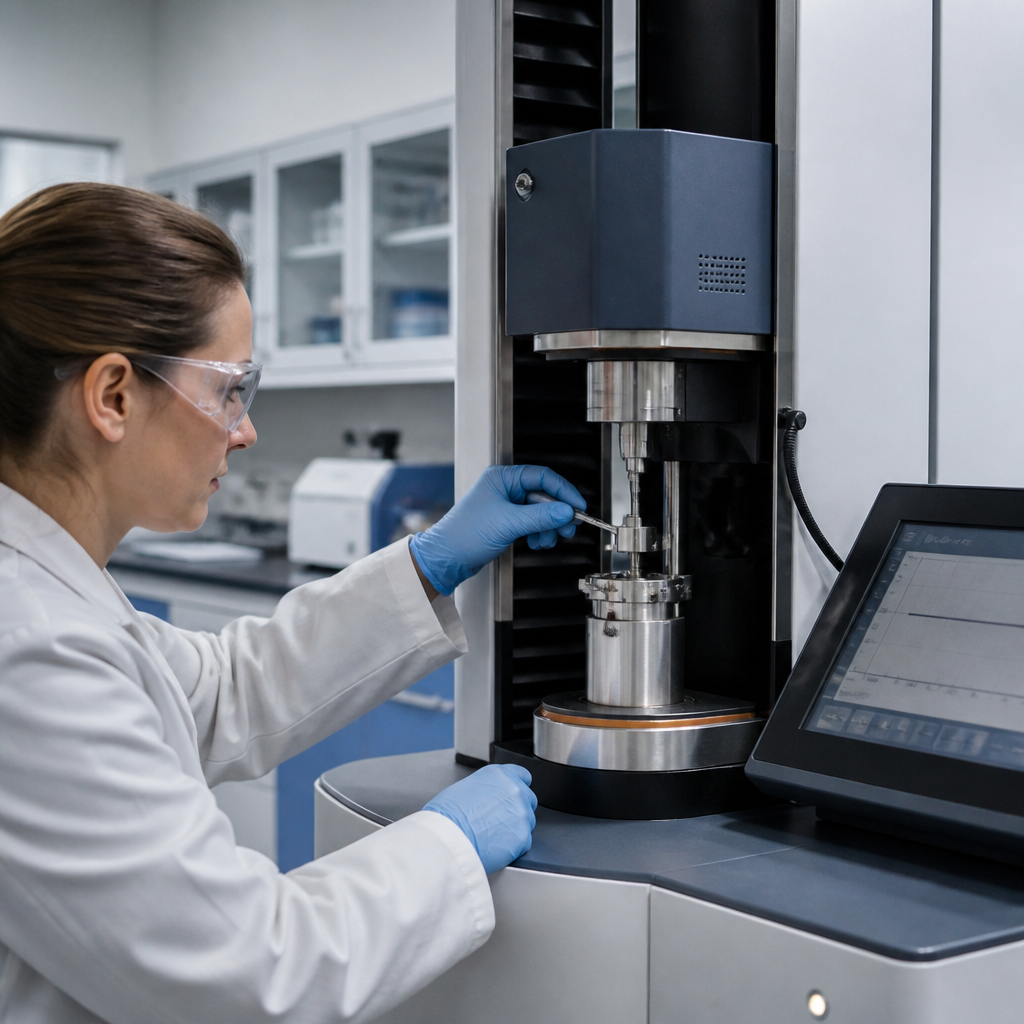
The test uses a probe in contact with the sample. As the furnace heats or cools, the instrument records movement with high sensitivity, often in the micrometer or sub-micrometer range. Different probe geometries support different measurement modes. Expansion mode tracks length or thickness change. Penetration mode pushes a small probe into the material to identify softening behavior. Compression, tension, flexure, and dilatometric arrangements allow laboratories to tailor the method to films, molded bars, foams, fibers, laminates, and thin coatings. This flexibility is one reason TMA matters in a mechanical testing methods hub: it bridges thermal analysis and mechanical response better than many single-purpose tests.
In practical terms, TMA is the method engineers use when dimensions matter as much as strength. Consider a polycarbonate lens holder that passes tensile testing but loses alignment after repeated heat cycles. TMA may show a significant change in expansion behavior near its glass transition region, explaining why assembly tolerances drift. A semicrystalline polyethylene component may show shrinkage from relaxation of processing stresses before expected thermal expansion dominates. An adhesive tape may creep under low compressive load during heating long before catastrophic failure. These are dimensional performance issues, and TMA reveals them clearly.
How TMA Fits Among Mechanical Testing Methods
Mechanical testing methods for polymers each answer a different question. Tensile testing, commonly run under ASTM D638 or ISO 527, measures modulus, yield, tensile strength, and elongation. Flexural testing under ASTM D790 captures bending stiffness and strength. Compression testing assesses load-bearing behavior. Impact methods such as Izod or Charpy estimate resistance to sudden fracture. Hardness tests provide surface resistance indicators. Dynamic Mechanical Analysis measures storage modulus, loss modulus, and damping as a function of temperature or frequency. Differential Scanning Calorimetry tracks heat flow to identify melting and crystallization. TMA complements all of these by showing whether dimensions remain stable under thermal and mechanical exposure.
That distinction is important because polymers fail in multiple ways. A material may be strong enough but expand too much. It may survive a tensile pull but soften under a contact load at an elevated temperature. It may show an acceptable glass transition in DSC, yet the engineering concern is the actual dimensional response under force, which TMA captures more directly. In one electronics housing project, DMA confirmed the transition region of a flame-retardant blend, but TMA gave the more useful specification because the issue was board-to-housing clearance after solder-reflow-adjacent heating. Expansion and probe penetration data guided the final resin choice.
Used together, these methods create a fuller picture. TMA does not replace tensile or creep testing when structural performance is the main concern. It also does not replace DMA when frequency-dependent viscoelastic properties are central. But for fit, tolerance, warpage, seal compression, laminate compatibility, and thermal expansion matching, TMA is often the fastest path to a clear decision. That is why it deserves hub-level attention within mechanical testing methods rather than a brief mention under thermal analysis alone.
Key TMA Test Modes, Standards, and Outputs
The most common TMA mode in polymer testing is expansion. A sample, often cut into a small rectangular or cylindrical geometry, is subjected to a light force while the instrument records dimensional change through heating or cooling. From the slope of the displacement curve, the coefficient of thermal expansion, or CTE, is calculated. CTE is crucial when polymers are paired with metals, glass, ceramics, or electronics because mismatched expansion creates stress, delamination, or distortion. For isotropic materials, one value may be sufficient. For oriented films, fibers, or composites, direction-specific testing is essential.
Penetration mode is widely used to estimate softening behavior. As temperature increases, a probe begins to sink more rapidly once the polymer loses resistance to localized deformation. This helps compare heat resistance among formulations and often correlates with application problems like denting, embossing, or seal-face deformation. Compression mode evaluates thickness loss under load, useful for foams, gaskets, and elastomeric components. Tension mode can assess thermal shrinkage or expansion in films and fibers. Flexure mode helps with thin laminates or unsupported strips where bending behavior during heating is relevant.
Laboratories frequently align methods with standards from ASTM or ISO, depending on customer and industry requirements. Common references include ASTM E831 for linear thermal expansion by TMA and ASTM E1545 for assignment of glass transition temperature by TMA. Instrument manufacturers such as TA Instruments, NETZSCH, PerkinElmer, and Mettler Toledo provide validated procedures and software for probe calibration, force control, and baseline correction, but good results still depend on sample preparation, orientation control, and realistic test conditions.
| TMA mode | What it measures | Typical polymer application |
|---|---|---|
| Expansion | Dimensional change and CTE | Molded parts, composites, electronic housings |
| Penetration | Softening under localized load | Coatings, hot-fill packaging, appliance surfaces |
| Compression | Thickness change under force | Foams, seals, gaskets, cushioning materials |
| Tension | Shrinkage or elongation during heating | Films, fibers, drawn materials, labels |
| Flexure | Bending-related displacement | Thin laminates, strips, layered constructions |
The output itself requires context. A change in slope may indicate glass transition, but exact values depend on heating rate, probe force, orientation, moisture, and prior thermal history. A shrinkage event before expansion can reflect stress relaxation from molding or drawing. Step changes may come from transitions, but also from fixture effects or poor sample contact. In experienced hands, TMA is precise and revealing. Without disciplined method control, it can be misread. That is true of many mechanical testing methods, but TMA is especially sensitive to setup details.
Why TMA Is So Valuable for Real-World Polymer Development
The biggest advantage of TMA is that it mirrors dimensional performance under service-like thermal conditions. In development work, that means fewer surprises between bench data and field behavior. Injection-molded components often carry residual stress from rapid cooling, flow orientation, and packing gradients. TMA can show early shrinkage or anisotropic expansion that explains why a flat part warps after paint bake or sterilization. Extruded film producers use TMA to quantify thermal contraction in machine and transverse directions, which directly affects label performance and heat-shrink packaging behavior.
TMA is also effective in comparing formulations. Adding glass fiber usually lowers CTE and improves dimensional stability, but the effect depends on loading level, fiber orientation, and matrix adhesion. Mineral-filled polypropylene can outperform unfilled grades in heat-exposed assemblies, yet may remain more anisotropic than expected. Plasticizers can lower softening resistance and alter probe penetration response. Annealing can reduce stress-relaxation shrinkage in semicrystalline polymers such as POM, PA, or PET, though it may also change crystallinity and downstream toughness. TMA helps quantify these tradeoffs instead of leaving them to trial and error.
In regulated sectors, the method supports validation. Medical device teams use TMA to check whether polymer dimensions shift during steam or dry-heat exposure. Electronics suppliers use it to evaluate thermal expansion near soldering or enclosed heat buildup. Aerospace interiors teams study expansion mismatch in bonded assemblies where decorative films, adhesive layers, and substrates must move together. Packaging groups use TMA to verify whether trays, closures, and multilayer structures retain shape during filling, sealing, transport, and storage. These are not abstract laboratory curiosities; they are production and warranty issues.
Another strength is efficiency. A TMA run often requires a small sample, straightforward preparation, and relatively short test time compared with longer-term environmental aging or creep programs. That makes it ideal for screening candidate resins before committing to expensive prototype tooling. I have seen TMA eliminate months of iteration by identifying that a “stronger” polymer was actually the wrong choice because its thermal expansion pushed an assembly out of tolerance above 80 degrees Celsius. The tensile chart looked better; the dimensional data made the decision obvious.
Interpreting TMA Results Correctly and Avoiding Common Errors
Good TMA interpretation starts with understanding that polymers are history-dependent materials. Heating rate affects apparent transition temperatures. Faster rates usually shift observed events upward because the sample lags the programmed temperature. Probe force matters because higher loads can exaggerate penetration or compressive deformation, especially near softening. Moisture matters for hygroscopic polymers such as nylon, where absorbed water acts as a plasticizer and changes dimensional response. Orientation matters in films and fiber-reinforced systems because expansion can differ dramatically by direction. Without documenting these variables, comparisons are weak.
Sample preparation is another common failure point. Surfaces should be flat and representative. Thickness should match method guidance and instrument sensitivity. If a molded plaque has skin-core differences, the cut location must be consistent. If testing composites, note fiber direction. If evaluating post-cure adhesives or coatings, ensure cure completion before attributing movement to thermal expansion alone. Calibration with standards of known expansion behavior is essential, as is baseline verification. Experienced labs also run replicates because one unusual specimen can hide a processing defect rather than reveal a true material property.
It is equally important to connect TMA data to application limits. A single CTE number over a broad range may be less useful than segmented values below and above a transition. A softening onset from penetration mode is not the same as heat deflection temperature or Vicat softening temperature, even if the trends align. TMA is best read as part of a broader polymer testing strategy. Pair it with tensile data for load capacity, DMA for viscoelastic transitions, DSC for thermal events, and microscopy when morphology or filler dispersion may explain odd curves. When teams interpret TMA in that integrated way, the method becomes a powerful design tool rather than a stand-alone chart.
Building a Strong Mechanical Testing Methods Program Around TMA
For companies creating a complete mechanical testing methods program, TMA should sit alongside the core tests rather than at the margins. Start by mapping product risks. If the polymer part must hold tolerances across temperature, prioritize expansion mode and CTE. If the concern is surface indentation or thermal softening under contact pressure, add penetration mode. If the product is a seal, foam, or compressible spacer, use compression mode to study thickness change with heat. Then link each TMA result to related methods and specifications so data can guide actual design decisions.
A practical hub strategy is to organize testing by question. Can the material carry the load? Use tensile, flexural, or compression testing. Can it survive sudden force? Use impact testing. Will it stay dimensionally stable when heated? Use TMA. How does stiffness change across temperature and time scale? Use DMA. What transitions or melting events drive behavior? Use DSC. This question-based structure helps engineers, buyers, and quality teams choose the right method quickly and prevents overreliance on any single test.
The key takeaway is straightforward: Thermal Mechanical Analysis enhances polymer testing by showing how heat and force together change dimensions, and those dimensional changes often determine whether a part succeeds in service. TMA strengthens material selection, explains field failures, improves process validation, and complements the full suite of mechanical testing methods. If you are building or upgrading a materials and properties program, make TMA part of the standard workflow, then connect its findings to tensile, impact, flexural, and dynamic mechanical results for a complete view of polymer performance.
Frequently Asked Questions
What is Thermal Mechanical Analysis (TMA), and why is it so useful in polymer testing?
Thermal Mechanical Analysis, or TMA, is a testing technique that measures how a polymer’s dimensions change as temperature changes while a defined mechanical force is applied. That combination is what makes TMA especially valuable. In real-world applications, polymers are rarely exposed to heat without stress or to stress without temperature change. A component may be compressed, stretched, or supported under load while also being heated during sterilization, assembly, transport, or service. TMA helps simulate those conditions in a controlled way and shows how the material responds.
For polymer testing, this matters because dimensional change often determines whether a part succeeds or fails. TMA can reveal expansion, contraction, softening behavior, transition points, penetration under load, and deformation patterns that are directly tied to product performance. For example, a catheter must maintain shape during sterilization, an automotive fastener must not loosen near elevated engine temperatures, and a heat-sealed film must not distort before the seal is formed. TMA provides the data needed to evaluate those risks early, making it one of the most practical tools for selecting materials, refining formulations, and validating end-use performance.
How does TMA differ from other thermal analysis methods like DSC and DMA?
TMA, DSC, and DMA are all important polymer characterization techniques, but they answer different questions. TMA focuses on dimensional change under a controlled load as temperature changes. In other words, it tracks how a material physically expands, contracts, softens, or deforms. Differential Scanning Calorimetry, or DSC, measures heat flow associated with transitions such as melting, crystallization, and glass transition. Dynamic Mechanical Analysis, or DMA, evaluates viscoelastic behavior by applying an oscillating force and measuring stiffness and damping across temperature or frequency ranges.
What makes TMA distinct is its direct relevance to dimensional stability. If a manufacturer wants to know whether a polymer part will grow, shrink, compress, or lose fit at a certain temperature under a practical load, TMA is often the clearest choice. DSC may identify a transition temperature, and DMA may show changes in modulus, but TMA can demonstrate whether those changes translate into actual movement or deformation that affects product function. In many polymer development programs, these methods are most powerful when used together. TMA adds a highly application-focused layer of insight because it connects thermal transitions to real mechanical consequences in the final part.
What kinds of polymer properties and performance issues can TMA help evaluate?
TMA is widely used to assess properties that directly affect how polymer components perform in service. One of the most common is the coefficient of thermal expansion, which describes how much a material expands or contracts with temperature. This is critical when a polymer must maintain tight tolerances, align with other materials, or survive repeated thermal cycling. TMA is also used to detect softening points, glass transition-related dimensional changes, creep-like behavior under load, and thickness changes in films, sheets, molded parts, coatings, and laminates.
Beyond basic properties, TMA helps identify practical failure risks. It can show whether a plastic housing will warp during assembly, whether a multilayer film will shrink during heat sealing, or whether a polymer seal will compress excessively at elevated temperature. It is also useful in comparing filled versus unfilled compounds, studying the effects of moisture or processing history, and evaluating dimensional stability after aging. For engineers and quality teams, the value of TMA is that it translates material behavior into application terms. Rather than only describing a polymer in abstract thermal language, it shows how that polymer may actually move or deform when exposed to the conditions it will face in use.
Why is TMA especially important for industries such as medical devices, automotive, and packaging?
These industries depend heavily on polymers, and in each case, dimensional reliability under thermal and mechanical stress is a major requirement. In medical devices, polymers often undergo sterilization cycles involving heat, pressure, or both. A catheter, tubing component, or molded connector may need to retain precise dimensions to preserve flow, fit, and patient safety. TMA helps determine whether the material will expand, soften, or permanently deform under those conditions, making it an important tool for design verification and material selection.
In automotive applications, polymer parts are often located near heat sources and must continue performing under mechanical load. Clips, brackets, connectors, and interior components may experience temperature fluctuations, sustained stress, and repeated cycling over long service lives. TMA can reveal whether a material will lose dimensional accuracy, relax under load, or mismatch with adjacent materials. In packaging, heat exposure during sealing, storage, and transport can cause unwanted shrinkage, distortion, or layer instability. TMA helps manufacturers understand how films and containers behave under process-relevant temperatures, which supports better machine settings, stronger seals, and more consistent product quality. Across all three sectors, TMA is valuable because it brings laboratory testing closer to real operating conditions.
How does TMA improve material selection, product development, and quality control for polymer components?
TMA improves decision-making by giving teams clear, measurable data about how a polymer behaves when temperature and force act together. During material selection, it helps engineers compare candidate materials based on dimensional stability, thermal expansion, softening behavior, and load-bearing performance at elevated temperatures. That is especially useful when two materials appear similar in datasheets but behave very differently in a real application. TMA can uncover those differences before tooling, qualification, or production begins, reducing costly trial-and-error.
In product development, TMA supports smarter design choices by identifying where geometry, wall thickness, reinforcement, or material grade may need adjustment. It can help explain why a prototype warps, why a snap-fit loosens after heating, or why a film behaves inconsistently during sealing. In quality control, TMA serves as a reliable method for monitoring lot-to-lot consistency, verifying supplier changes, and detecting formulation or processing shifts that affect thermal-mechanical performance. Because dimensional behavior is often directly tied to function, even subtle changes can be important. TMA gives manufacturers a practical way to catch those issues early, improve reliability, and build greater confidence that polymer components will perform as intended throughout production and end use.