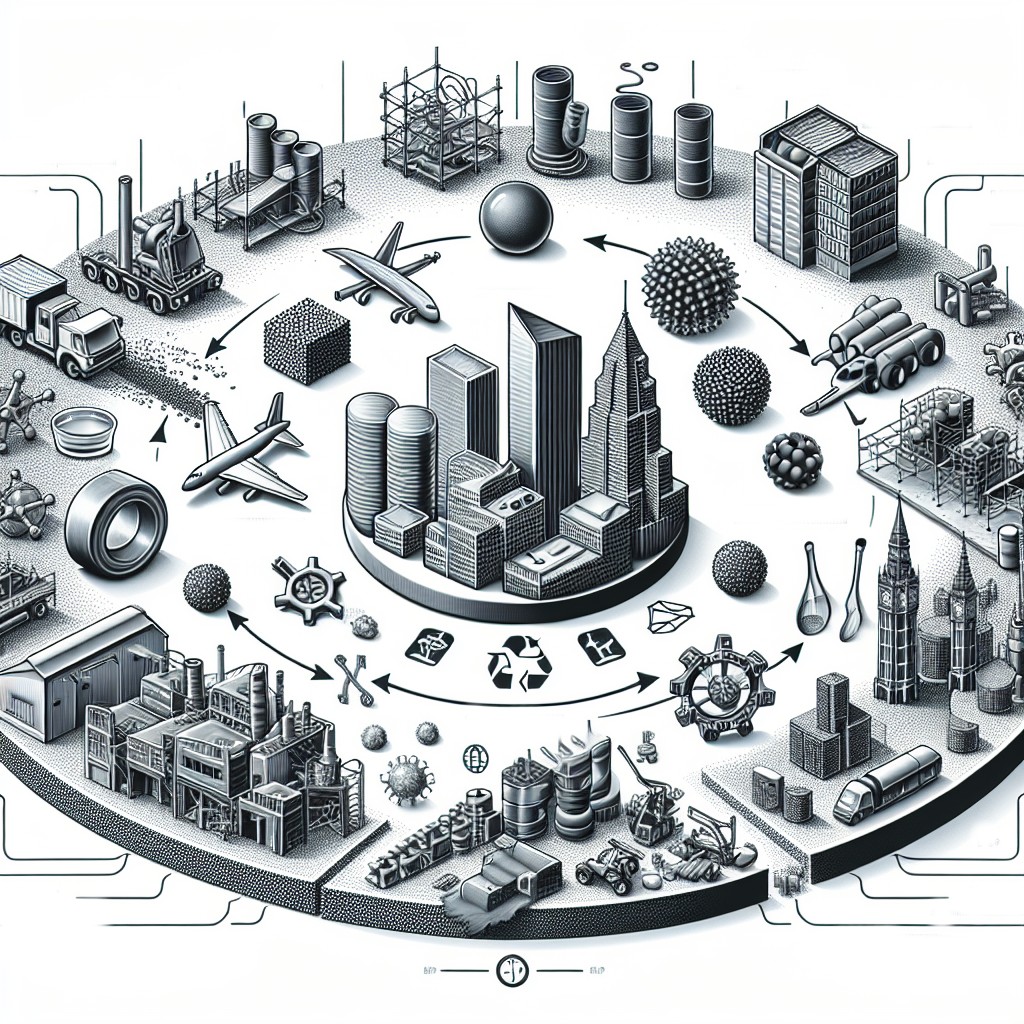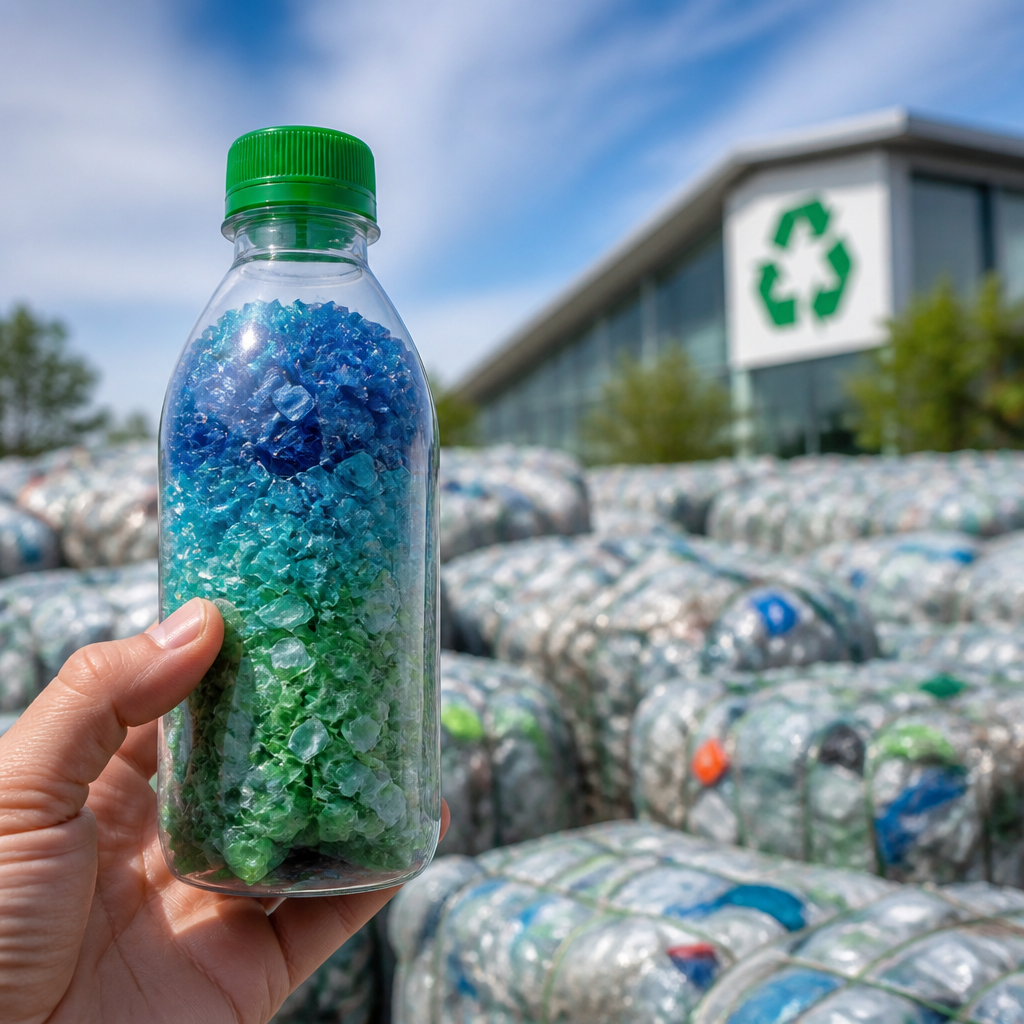
Polymers sit at the center of modern life, from food packaging and medical tubing to automotive parts and insulation, yet their future now depends on how well they fit within a circular economy. In practical terms, polymers are large molecules built from repeating units, including familiar materials such as polyethylene, polypropylene, polyethylene terephthalate, polyamide, polyurethane, and epoxy resins. A circular economy is an economic system designed to keep materials in use for as long as possible through reduction, reuse, repair, remanufacturing, and recycling, while minimizing waste and pollution. When applied to plastics and other polymer-based materials, this model changes the core question from “How cheaply can we make it?” to “How long can this material deliver value, and what happens after first use?”
I have worked with packaging specifications, recycling assessments, and materials selection decisions where a resin that looked efficient on a cost sheet created downstream waste problems no municipality could solve economically. That experience makes one point clear: the environmental impact of polymers cannot be judged only at the moment of disposal. It must be evaluated across the full life cycle, including feedstock extraction, polymerization, additive use, product design, collection systems, reprocessing losses, emissions, and the likelihood of leakage into land and water. This broader view matters because the same polymer can perform very differently depending on whether it is made from virgin fossil feedstocks or renewable carbon, used in a durable product or a single-use format, and designed for mechanical recycling or destined for incineration.
This article serves as a hub for environmental impact within the wider materials and properties landscape. It explains why polymers remain indispensable, where they create environmental burdens, and which technical and policy shifts will define their future. It also clarifies several key terms that are often blurred together. “Recyclable” means a material can, in principle, be reprocessed; it does not guarantee that collection and end markets exist. “Recycled content” measures how much recovered material is actually used in a new product. “Biobased” describes feedstock origin, not end-of-life behavior. “Biodegradable” means microorganisms can break a material down under specific conditions, which may require industrial composting rather than open environments. Understanding these distinctions is essential for anyone comparing polymer options responsibly.
Why does this topic matter now? Global plastics production has grown from niche industrial output in the mid-twentieth century to hundreds of millions of tonnes per year, and waste management systems have not kept pace. Regulators are setting recycled content mandates, restricting certain single-use items, and expanding producer responsibility rules. Brand owners are redesigning packaging to reduce carbon footprints and improve recovery. Investors increasingly treat material circularity as a business resilience issue because volatile virgin resin prices, carbon policy, and waste compliance costs directly affect margins. At the same time, polymers still provide major environmental benefits when correctly deployed: lightweight vehicles use less fuel, durable pipes reduce leakage, multilayer medical packaging protects sterility, and high-performance insulation lowers building energy demand. The future of polymers in a circular economy is therefore not a story of simple replacement. It is a story of redesign, systems thinking, and disciplined tradeoff management.
Why polymers create both environmental value and environmental cost
Polymers became dominant because they deliver a rare combination of low density, corrosion resistance, tunable barrier properties, electrical insulation, impact performance, and cost-efficient manufacturing. In life-cycle work, I have repeatedly seen polymer components outperform heavier alternatives on transport emissions alone. Replacing glass with PET in beverage bottles cuts shipping weight dramatically. Polypropylene interior parts reduce vehicle mass. Cross-linked polyethylene pipes resist corrosion better than metal in many applications. These advantages can lower energy use during the use phase, which is why a blanket claim that all plastic is environmentally worse than paper, glass, or metal is inaccurate.
The environmental cost arises because most conventional polymers are derived from fossil hydrocarbons, often include complex additive packages, and are used in applications with short service lives. If a lightweight package becomes litter within days, the use-phase benefit cannot offset weak end-of-life performance. Greenhouse gas emissions come from extraction, cracking, polymerization, conversion, transport, and waste treatment. There are also concerns around microplastic generation, hazardous additives in some formulations, and low material recovery rates. The decisive issue is not whether polymers are inherently good or bad; it is whether the material choice, product architecture, and recovery pathway are aligned from the start.
Life-cycle assessment is the right lens for environmental impact
The most credible way to compare polymer options is life-cycle assessment, usually conducted according to ISO 14040 and ISO 14044. A proper assessment defines the functional unit first, because comparing one kilogram of plastic to one kilogram of aluminum tells you little unless both provide the same service. For example, the meaningful comparison for packaging is usually the delivery of a set amount of food with acceptable shelf life and damage rates. In my own project reviews, errors often began when teams optimized resin mass instead of product function.
Life-cycle assessment examines multiple stages: raw material sourcing, manufacturing, distribution, use, and end of life. It can include impact categories such as climate change, eutrophication, acidification, water use, photochemical smog formation, and resource depletion. The method has limits. Results depend on system boundaries, regional electricity mixes, collection assumptions, and allocation rules for recycled content or energy recovery. Even so, it remains the best decision framework available because it makes tradeoffs visible. A compostable polymer with higher agricultural inputs may reduce persistent waste in one context while increasing other impacts in another. A multilayer flexible pouch may cut transport emissions and food waste compared with a rigid container, yet remain difficult to recycle mechanically. Good decisions come from quantified context, not slogans.
Design for circularity starts at the polymer selection stage
Most environmental outcomes are locked in before a product reaches production. Design for circularity means selecting polymers, additives, colors, labels, closures, and formats that preserve value after use. The easiest products to recycle are usually mono-material structures with established collection systems, limited pigments, and compatible barrier layers. Clear PET bottles and natural HDPE containers remain strong examples because they fit mature sorting and reprocessing streams in many markets. By contrast, black plastics can be missed by near-infrared sorting equipment, multilayer laminates often lack economically viable separation pathways, and thermosets such as many epoxies cannot be remelted like thermoplastics.
Design choices extend beyond recyclability labels. The product must survive real collection and reprocessing conditions. Shrink sleeves that cover an entire bottle can disrupt optical sorting. Silicone valves in dispensers may contaminate streams if not removable. In-mold labels and adhesive residues can reduce reprocessor yields. The Association of Plastic Recyclers and RecyClass both publish design guidance that many converters now use during development. Following such protocols reduces contamination risk and improves bale value. Circular design also means reducing unnecessary material diversity across a portfolio. When companies standardize compatible resins, they simplify procurement, testing, and post-consumer recovery.
| Polymer or Format | Common Use | Circularity Strength | Main Environmental Limitation |
|---|---|---|---|
| PET | Beverage bottles, trays, fibers | Widely collected and mechanically recycled | Quality loss and tray-to-tray systems still uneven |
| HDPE | Bottles, caps, household containers | Stable recycling markets in many regions | Additives and colors can reduce end-market quality |
| PP | Rigid packaging, automotive parts | Growing recovery infrastructure | Collection rates still lower than PET and HDPE |
| Flexible multilayer films | Snacks, pouches, sachets | Excellent lightweight performance | Difficult to sort and recycle at scale |
| PLA | Compostable food service items | Renewable feedstock potential | Requires the right composting system and clear labeling |
Mechanical, chemical, and biological recycling each have distinct roles
Mechanical recycling remains the backbone of polymer circularity because it is generally the lowest-energy route for suitable thermoplastics. The process includes collection, sorting, washing, shredding, melt filtration, and pelletizing. When feedstock quality is high, recycled polymers can displace virgin resin in bottles, pipes, films, and durable goods. However, every loop faces constraints from contamination, odor, polymer degradation, and color buildup. Recycled polyethylene from mixed household waste will not perform like prime resin without careful compounding, and some high-purity applications, especially food contact, require advanced decontamination and strict regulatory review.
Chemical recycling covers several different technologies, including pyrolysis, gasification, depolymerization, and solvent-based purification. The strongest use case is for streams that mechanical recycling cannot recover well, such as mixed polyolefins, contaminated waste, or polymers designed for monomer recovery, like certain PET and polyamide systems. Depolymerization can, in principle, return a polymer to monomers that can be repolymerized to near-virgin quality. The challenge is economics and energy demand. Some routes are promising but still need scale, reliable feedstock, and transparent mass-balance accounting. Biological pathways, including composting of certified compostable polymers, have a narrower but legitimate role where food contamination makes recycling impractical, such as specific organics collection programs. They are not a universal solution and should not be marketed as permission to litter.
Feedstocks, carbon intensity, and the shift beyond virgin fossil resin
A circular polymer economy depends not only on end-of-life systems but also on lower-impact feedstocks. Virgin fossil resin has dominated because petrochemical infrastructure is mature and efficient, yet its carbon footprint is increasingly scrutinized. Producers are responding through three main pathways: higher recycled content, renewable feedstocks, and low-carbon process energy. Recycled content usually offers the most immediate emissions benefit because it avoids parts of the extraction and cracking stages. Many consumer brands now specify post-consumer recycled PET or HDPE targets to cut Scope 3 emissions and meet regulatory obligations.
Biobased polymers and bio-attributed drop-in resins can reduce dependence on fossil carbon, but environmental performance depends on land use, agricultural inputs, and end-of-life compatibility. Bio-PET still behaves like PET in recycling, which is helpful because existing systems can process it. PLA comes from renewable feedstocks but requires appropriate composting or specialized recovery routes. Mass-balance approaches, certified by schemes such as ISCC PLUS, are increasingly used to attribute renewable or recycled feedstock inputs across complex production networks. These systems can support transition, but they must be communicated carefully so buyers understand what is physically recycled in a product versus what is allocated through accounting rules.
Policy, infrastructure, and market demand will determine what scales
Technology alone will not create circularity if collection infrastructure, policy design, and end-market demand remain weak. Deposit return systems consistently improve beverage container capture because they create a clean, high-value stream. Extended producer responsibility programs can shift waste costs upstream and fund better sorting, public education, and local processing. Minimum recycled content rules create demand certainty that justifies investment in reprocessing capacity. In Europe, packaging directives and single-use plastics rules have already accelerated redesign. In the United States, progress is more fragmented because regulation varies by state, but corporate commitments are still reshaping specifications.
Infrastructure matters just as much as legislation. A package designed for recyclability on paper may still fail if the local materials recovery facility cannot sort it or if no reclaimer buys the output. That is why environmental impact must be assessed regionally. What works in Germany may not work in India, Brazil, or rural North America. Informal collection networks, landfill prevalence, energy prices, and contamination rates all influence the best pathway. The future belongs to systems that connect design standards, collection logistics, digital tracing, and stable end markets. Brands, resin producers, converters, recyclers, municipalities, and regulators all need shared data and common definitions.
What the future of polymers in a circular economy looks like
The future will favor polymers that are easier to recover, easier to verify, and more efficient in service. Expect stronger growth in mono-material packaging, advanced sorting using digital watermarks and AI-enabled vision systems, and higher recycled content in PET, polyolefins, and engineering plastics. Expect broader use of compatibilizers and stabilizers that improve recycled resin performance, along with solvent purification for specific high-value streams. Durable applications such as automotive, construction, and electronics will increasingly be designed for disassembly so that polymer parts retain value instead of becoming shredder residue.
The core lesson is straightforward. Environmental impact is not an inevitable property of polymers; it is the outcome of material choice, product design, business model, and recovery system working together or failing together. Companies that treat circularity as a technical discipline rather than a marketing claim will make better decisions on cost, compliance, and carbon. If you are evaluating materials and properties for future products, start with function, test circular pathways early, and map environmental impacts across the full life cycle before locking in the resin. That is how polymers remain useful in a resource-constrained world, and that is where the biggest gains now lie.
Frequently Asked Questions
1. What does a circular economy mean for polymers?
A circular economy changes the role of polymers from short-term consumables into long-term material resources. Instead of the traditional linear model of take, make, and dispose, a circular system is designed to keep polymer-based products, components, and raw materials in use for as long as possible through reuse, repair, refurbishment, remanufacturing, and recycling. For polymers, this means thinking beyond initial performance and cost to include durability, recoverability, compatibility with recycling systems, and the ability to retain value over multiple life cycles.
In practical terms, this affects every stage of a polymer’s journey. Product designers may reduce unnecessary material complexity, manufacturers may favor resins that can be more easily sorted and reprocessed, and waste systems may invest in better collection and separation technologies. The future of polymers in a circular economy also depends on stronger links between chemistry, engineering, logistics, and policy. Materials such as polyethylene, polypropylene, and polyethylene terephthalate already play major roles in packaging and consumer goods, but their long-term sustainability will increasingly depend on whether they can circulate effectively through real-world recovery systems rather than becoming waste after a single use.
2. Which polymers are most likely to play a major role in a circular economy?
Several widely used polymers are well positioned to remain important in a circular economy, especially those that already have established collection, sorting, and recycling pathways. Polyethylene and polypropylene are central examples because they are used in large volumes across packaging, consumer products, industrial containers, and household goods. Polyethylene terephthalate, especially in bottles and fibers, is also highly significant because it already benefits from relatively mature recycling infrastructure in many regions. These materials are likely to remain at the forefront because scale matters in circular systems: the more consistent the waste stream, the easier it is to justify investment in recovery and reprocessing.
That said, the future is not limited to the easiest polymers to recycle today. Engineering plastics such as polyamides, polyurethanes, and certain thermosets may also become more circular through advanced mechanical recycling, chemical recycling, improved depolymerization methods, and better product design. Epoxy resins and other crosslinked materials have historically been difficult to recover because they do not remelt like thermoplastics, but innovation is advancing in reversible chemistries, composite recovery, and selective breakdown processes. In short, the polymers most likely to thrive in a circular economy will be those that combine strong technical performance with realistic pathways for reuse, recovery, and reintegration into manufacturing.
3. How will polymer design need to change to support circularity?
Polymer design will need to shift from a narrow focus on immediate function toward a broader systems-based approach. In the past, many products were optimized for cost, appearance, strength, barrier performance, or lightweighting without enough consideration for what would happen at end of life. In a circular economy, designers must ask whether a polymer can be identified by sorting equipment, whether additives will interfere with reprocessing, whether multilayer structures can be separated, and whether the material can maintain useful properties after repeated cycles. This is a major change because circularity begins at the design stage, long before waste management enters the picture.
Future-ready polymer design is likely to emphasize simplicity, compatibility, and traceability. That may include mono-material packaging where possible, standardized resin choices, labels and adhesives that do not disrupt recycling, and formulations that minimize problematic fillers, dyes, or additives. It may also involve designing for disassembly in durable goods such as vehicles, appliances, and electronics so that polymer parts can be recovered more cleanly. In more advanced applications, chemists are developing polymers with built-in recyclability, dynamic bonds, or selective depolymerization pathways. The overall goal is not just to make polymers recyclable in theory, but to make them recoverable and valuable in the actual industrial systems that handle them.
4. What technologies will shape the future of polymer recycling and recovery?
The future of polymer circularity will be shaped by a combination of improved mechanical recycling, more selective chemical recycling, and better digital and physical infrastructure. Mechanical recycling will remain essential because it is generally the most established and energy-efficient option for many thermoplastics when materials are collected cleanly and sorted well. Advances in automated sorting, near-infrared detection, washing, contaminant removal, odor reduction, and melt stabilization are helping recyclers produce higher-quality recycled polymers that can compete in more demanding applications. These upgrades are especially important for maintaining performance in polyethylene, polypropylene, and polyethylene terephthalate streams.
Chemical recycling technologies are also gaining attention because they can address polymer waste that is mixed, contaminated, or difficult to recycle mechanically. Depending on the polymer and process, this can include depolymerization back to monomers, solvent-based purification, pyrolysis, or other conversion routes. For example, certain polyester and polyamide systems are particularly promising for monomer recovery. However, these technologies must prove themselves not only technically but also economically and environmentally at scale. Beyond recycling itself, the future will also depend on digital product passports, improved material tracking, better collection systems, and stronger market demand for recycled content. In other words, the next generation of polymer recovery is not just about one breakthrough technology, but about building an integrated system that keeps material quality and value as high as possible.
5. What are the biggest challenges to making polymers truly circular?
The biggest challenge is that polymer circularity is not just a materials problem; it is a systems problem. Many polymer products are made from blends, composites, multilayer structures, or additive packages that improve performance but complicate recovery. Contamination from food residue, inks, labels, and incompatible polymers can reduce recycling quality and value. Collection systems also vary widely by region, and even a recyclable polymer may still end up discarded if local infrastructure cannot capture and process it efficiently. This gap between technical recyclability and practical recyclability is one of the most important realities shaping the future of polymers.
There are also economic and policy barriers. Virgin polymers can sometimes be cheaper or more predictable in supply than recycled materials, especially when fossil feedstock prices are low. Manufacturers may hesitate to redesign products without clear regulatory signals or reliable access to high-quality recyclate. At the same time, not every application can simply switch to recycled content without meeting strict standards for safety, durability, and performance, particularly in medical, food-contact, and engineering uses. Solving these challenges will require coordinated action across the value chain, including material producers, converters, brand owners, recyclers, policymakers, and consumers. The future of polymers in a circular economy is promising, but success will depend on aligning chemistry, design, infrastructure, economics, and regulation so that circularity becomes the default rather than the exception.