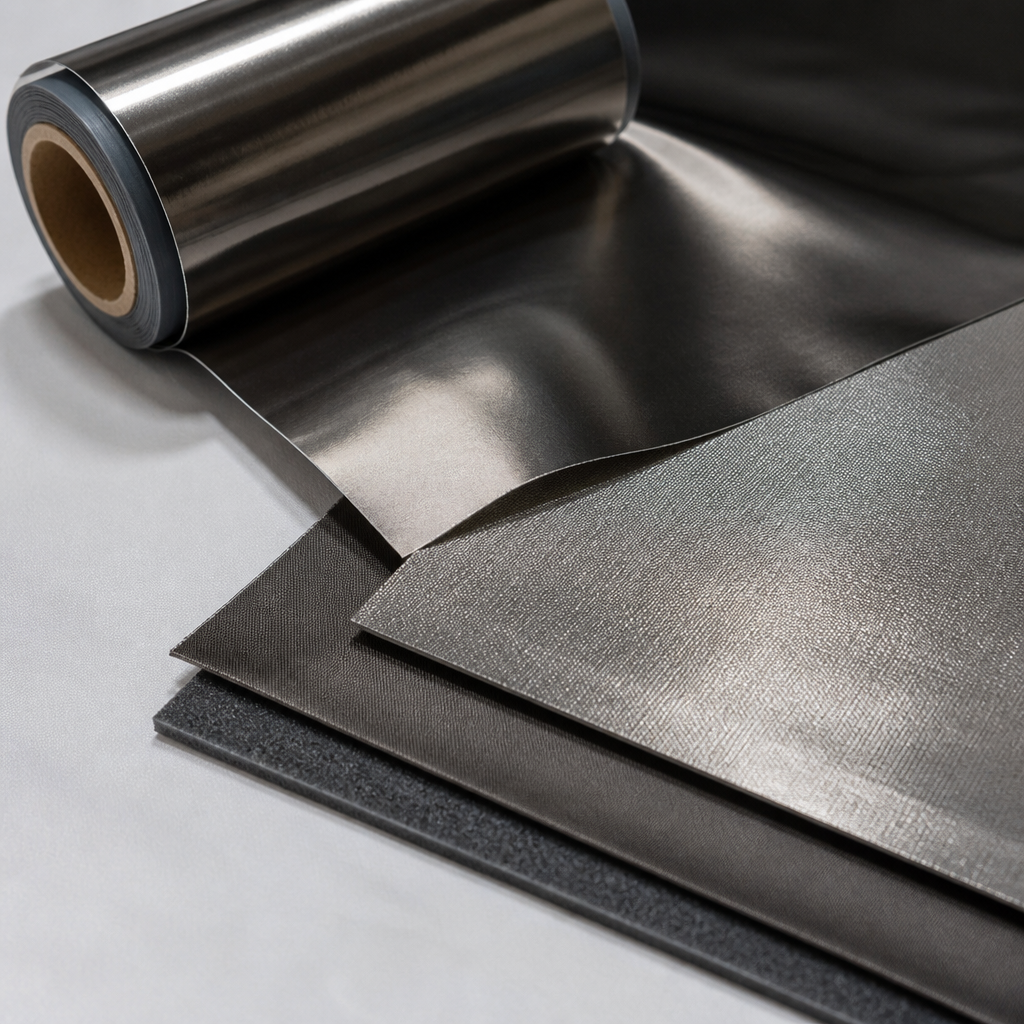
Electromagnetic interference shielding with polymers has moved from a niche research topic to a practical design strategy in electronics, vehicles, medical devices, and industrial equipment. Electromagnetic interference, usually shortened to EMI, is unwanted electromagnetic energy that disrupts the operation of nearby circuits, sensors, communication links, or power systems. Shielding is the deliberate use of materials and structures to block, reflect, absorb, or dissipate that energy before it degrades performance. In this context, polymers matter because they are lightweight, corrosion resistant, moldable, and compatible with high-volume manufacturing, yet most neat polymers are electrical insulators and therefore poor shields unless their electrical properties are engineered.
I have worked on material selection for housings, cable components, and sensor enclosures where EMI performance had to be balanced against weight, cost, flame resistance, and mechanical durability. In those projects, the electrical properties of polymer systems always determined whether a concept was viable. Volume resistivity, surface resistivity, dielectric constant, dielectric loss, percolation threshold, skin depth, and shielding effectiveness are not abstract lab terms; they directly control whether a molded part passes compliance testing under standards such as IEC 61000, MIL-STD-461, or automotive OEM specifications. A polymer enclosure that looks robust can still fail if conductive pathways are discontinuous, if absorption is weak at target frequencies, or if gaps and seams dominate the leakage path.
This article serves as a hub for the electrical properties side of materials and properties. It explains how polymers are adapted for EMI shielding, which conductive fillers change their behavior, how electrical performance is measured, where polymer shields outperform metal, and where they do not. It also addresses common design questions directly: Can plastic block EMI effectively? What conductivity level is needed? Which polymers are used most often? How do frequency, thickness, and filler choice change results? By the end, you will have a practical framework for evaluating polymer-based EMI shielding materials and for linking this topic to related discussions on conductivity, dielectric behavior, antistatic materials, and conductive composites.
Why Electrical Properties Control Polymer EMI Shielding
The electrical properties of a polymer shielding system determine how electromagnetic energy interacts with the material. Shielding effectiveness, typically reported in decibels, reflects three mechanisms: reflection, absorption, and multiple internal reflections. Reflection increases when a material has mobile charge carriers and lower impedance relative to air. Absorption increases when the material has sufficient electrical conductivity, magnetic loss, dielectric loss, or internal interfacial polarization that converts field energy into heat. Multiple reflections matter in porous or multilayer systems but become less significant when absorption is high.
For polymer engineers, conductivity is the first gate. Most base polymers such as polypropylene, ABS, polycarbonate, nylon, PEEK, and epoxy have extremely low conductivity, often around 10^-16 to 10^-10 S/cm depending on chemistry and conditions. That is excellent for insulation but ineffective for EMI shielding. Once conductive fillers are introduced and a percolated network forms, conductivity can rise by many orders of magnitude. In practice, that transition is the turning point between an antistatic material that merely reduces charge buildup and a conductive composite that can meaningfully shield RF energy.
Dielectric properties are equally important. Relative permittivity and dielectric loss tangent influence field penetration, polarization, and frequency response. In sensor housings and high-frequency electronics, I have seen a material with acceptable bulk conductivity still perform poorly because dielectric mismatch and geometry created local resonances. Good polymer EMI design therefore requires matching electrical properties to the frequency band, source type, and enclosure architecture rather than relying on conductivity alone.
How Conductive Fillers Turn Insulating Polymers into Shielding Materials
Polymers become useful EMI shields when conductive or lossy fillers are dispersed through the matrix or applied as coatings. The most common filler families are carbon based materials, metals, and magnetic particles. Carbon black is widely used because it is relatively low cost, processable, and capable of forming conductive networks at moderate loading. Carbon fiber improves both conductivity and stiffness, which is useful in structural housings. Carbon nanotubes and graphene nanoplatelets can deliver conductivity at lower loadings due to their high aspect ratio, though dispersion quality, cost, and consistency remain real production issues.
Metal-filled polymers use silver, copper, nickel, stainless steel, or aluminum flakes and fibers to create highly conductive pathways. These systems can achieve excellent shielding effectiveness, especially by reflection, but they raise density, cost, and corrosion concerns. Magnetic fillers such as ferrites, iron oxides, and carbonyl iron are often used when absorption is the priority, particularly at microwave frequencies. Hybrid formulations combine conductive and magnetic fillers to broaden the shielding mechanism and tune performance across bands.
The key concept is the percolation threshold, the filler concentration at which isolated particles become a connected network. Below this threshold, resistivity remains high. Just above it, conductivity increases dramatically. In manufacturing, this is where formulation skill matters. A compound designed only to reach the threshold may pass one test lot and fail the next if dispersion shifts slightly. Robust EMI compounds are usually formulated with enough margin above percolation to survive process variation, weld lines, anisotropy from flow, and aging effects.
Common Polymer Matrices and What They Contribute
The polymer matrix is not just a passive carrier for conductive filler; it influences processability, environmental stability, mechanical performance, and long-term electrical consistency. ABS and polycarbonate blends are common in electronics housings because they mold well and support plating or conductive coatings. Polyamide compounds are used in connectors and under-hood automotive parts where heat resistance matters. Polypropylene is attractive for consumer and automotive applications because it is light and economical, though high filler loading can reduce impact strength. Engineering thermoplastics such as PBT, PPS, PEI, and PEEK are chosen when dimensional stability and elevated temperature performance are critical.
Thermosets also play a major role. Epoxy systems are widely used in printed circuit boards, conductive adhesives, encapsulants, and composite panels. Silicone matrices appear in gasketing and flexible shielding parts. In aerospace interiors and battery systems, I have seen flame-retardant requirements drive the matrix decision as strongly as shielding targets. A polymer that achieves 60 dB in the lab is not useful if it cannot meet UL 94 flammability, chemical exposure, or creep requirements in service.
Matrix selection also affects moisture uptake, thermal expansion, and adhesion to coatings. Nylon, for example, absorbs water and can show shifts in dielectric behavior and dimensional tolerance. Polycarbonate offers good toughness but must be evaluated for stress cracking with chemicals. These tradeoffs are central to electrical properties because cracks, swelling, and interfacial failure disrupt conductive continuity and create leakage paths.
Key Electrical Metrics, Typical Ranges, and Design Meaning
Engineers should evaluate polymer EMI materials using a small set of electrical metrics that connect directly to performance. Surface resistivity and volume resistivity indicate whether a material is insulating, antistatic, static dissipative, or conductive. Bulk conductivity gives a more direct view of charge transport. Shielding effectiveness, measured in decibels over a defined frequency range, indicates actual EMI attenuation. Relative permittivity and loss tangent help predict field interaction, especially in high-frequency systems. For composites, anisotropy must also be characterized because flow orientation can make conductivity very different in-plane and through-plane.
| Metric | Typical Range in Polymer Systems | Practical Meaning for EMI Shielding |
|---|---|---|
| Surface resistivity | 10^12 to 10^3 ohm/sq | Higher values are insulating; lower values improve charge dissipation and reflective shielding |
| Volume conductivity | 10^-12 to 10^2 S/cm | Conductive networks usually need to be established before strong shielding appears |
| Shielding effectiveness | 20 to 80 dB for many commercial composites | 20 dB blocks about 90% of field amplitude, 40 dB about 99%, 60 dB about 99.9% |
| Relative permittivity | 2 to 30+ | Affects impedance matching, polarization, and microwave behavior |
| Loss tangent | 0.001 to 1+ | Higher loss can improve absorption but may hurt signal integrity in nearby functions |
These numbers must always be tied to frequency and test method. A material advertised at 50 dB may only achieve that in a narrow band or under plane-wave conditions that do not resemble your product. ASTM D4935 is common for planar materials, while IEEE 299 and enclosure-level methods address more realistic assemblies. The right question is not simply “How many dB?” but “How many dB, over which frequencies, in what geometry, and after which environmental exposures?”
Processing Methods and Their Effect on Shielding Performance
Processing has a major effect on the electrical properties of polymer shields. Injection molding is the dominant route for consumer electronics and automotive parts, but it can orient fibers, create weld lines, and cause skin-core structures that alter conductivity. In carbon fiber reinforced thermoplastics, conductivity is often stronger along flow paths than through the thickness, which can weaken seam performance. Compression molding and extrusion can produce different network structures, and additive manufacturing introduces its own porosity and layer-to-layer contact issues.
Coating technologies provide another path. Vacuum metallization, electroless plating, conductive paints, and sputtered layers can turn ordinary plastic housings into high-performing shields. This approach often achieves better conductivity than bulk-filled polymers with less effect on mechanical properties. However, adhesion, wear resistance, and edge coverage become critical. I have seen plated housings pass initial chamber tests and then fail after thermal cycling because coating cracks formed at snap fits and bosses.
Foaming, multilayer lamination, and textile integration are increasingly important in lightweight systems. Expanded polymer foams loaded with conductive nanocarbon can produce strong absorption at low weight. Conductive fabrics embedded in thermoplastic composites are used in aircraft panels and portable electronics. These methods show that polymer EMI shielding is not one material class but a family of architectures, each with distinct electrical behavior.
Where Polymer EMI Shields Excel in Real Applications
Polymer-based shielding is especially valuable when weight, corrosion resistance, shape complexity, or integration matters more than maximum conductivity. In automotive radar modules and camera housings, conductive polymers reduce mass and simplify molding of clips, ribs, and sealing features that would be expensive in die-cast metal. In medical electronics, polymers can support sterilization needs, improve touch temperature, and isolate sensitive areas while still controlling emissions. Consumer devices use conductive coatings on plastic housings to protect antennas, processors, and display electronics without sacrificing industrial design freedom.
Battery systems provide another good example. Electric vehicles contain inverters, DC-DC converters, battery management electronics, and high-current bus structures that generate wideband noise. Polymer shields are used in connector components, cable layers, module covers, and gaskets because they can combine flame resistance, dielectric isolation, and selective conductivity. Aerospace interiors also benefit from low-density shielding panels where every kilogram matters. In these environments, polymer solutions can outperform metal on system value even when raw shielding numbers are lower.
The strongest application cases are usually hybrid. A molded conductive polymer housing paired with a conductive gasket, grounded fasteners, and careful seam design often delivers better field performance than a metal box with poor apertures. Effective shielding is a system outcome, not a material badge.
Limitations, Failure Modes, and How to Specify Better Materials
Polymers are not universal replacements for metal shielding, and understanding their limitations prevents costly redesigns. First, conductivity in polymer composites is usually far below that of aluminum, copper, or steel. That means very high attenuation targets, especially at low frequencies dominated by magnetic fields, can be difficult without thick sections, magnetic fillers, or hybrid metal layers. Second, electrical properties can drift with processing, moisture, temperature, and mechanical strain. Third, seams, vents, windows, and connector penetrations often dominate EMI leakage more than the wall material itself.
Common failure modes include nonuniform filler dispersion, coating delamination, oxidation of metal fillers, contact resistance at joints, and loss of conductivity after abrasion. To specify materials well, define the frequency range, target shielding effectiveness, environmental exposures, flammability class, mechanical loads, and grounding strategy at the start. Request data by test standard, not brochure summary. Ask whether results are for molded plaques, coated parts, or full enclosures. Validate after aging, because salt fog, humidity, thermal shock, and vibration can change performance substantially.
The best next step is to treat polymer EMI shielding as an electrical materials problem, not just a plastics choice. Build your shortlist around conductivity network type, dielectric behavior, process route, and enclosure design. Then compare measured performance in the exact use case. That disciplined approach leads to lighter, more manufacturable products that still meet emissions and immunity requirements. If you are planning a new component, start by mapping the interference source, target frequency band, and required electrical properties before selecting the polymer system.
Frequently Asked Questions
What makes polymers useful for electromagnetic interference shielding?
Polymers are useful for electromagnetic interference shielding because they offer a combination of design flexibility, low weight, corrosion resistance, and processability that traditional metal shields often cannot match. In EMI applications, the goal is to control unwanted electromagnetic energy so it does not disturb nearby electronics, sensors, data links, or power systems. Pure polymers are generally electrical insulators, so they do not shield efficiently on their own. However, when they are engineered as composites with conductive or magnetic fillers, they can become highly effective shielding materials while still retaining many of the practical benefits of plastics.
One of the biggest advantages is weight reduction. In vehicles, aerospace systems, portable electronics, and medical devices, every gram matters. Polymer-based shielding materials can often provide meaningful EMI performance at a fraction of the weight of stamped metal enclosures or heavy metallic housings. They are also easier to mold into complex geometries, which helps designers create integrated housings, covers, gaskets, and internal barriers without adding as many separate parts. That can reduce assembly complexity and support higher-volume manufacturing.
Polymers also perform well in environments where corrosion, moisture, and chemical exposure are concerns. Unlike many metals, polymer composites can be tailored for better environmental durability while still meeting mechanical and electrical requirements. This makes them attractive for industrial electronics, battery systems, under-hood automotive components, and wearable or portable products. In practical terms, polymers are valuable not because they replace every metal shield, but because they give engineers another tool: a material platform that can be tuned for shielding performance, mechanical strength, thermal behavior, manufacturability, and cost.
How do polymer-based EMI shielding materials actually block electromagnetic interference?
Polymer-based EMI shielding materials work through the same core mechanisms as other shielding materials: reflection, absorption, and multiple internal reflections. The difference is that polymers usually need to be modified so they can interact effectively with electromagnetic fields. This is typically done by adding conductive fillers such as carbon black, carbon nanotubes, graphene, metal particles, metal-coated fibers, or stainless steel fibers, and in some cases magnetic fillers such as ferrites. Once these additives form a functional network inside the polymer, the composite can attenuate incoming electromagnetic energy.
Reflection occurs when the material has sufficient electrical conductivity to interact with the electric component of the incoming wave. Conductive networks near the surface can cause part of the incident energy to bounce away from the protected area. Absorption happens when the energy penetrates the material and is dissipated internally, often as heat, through electrical losses, magnetic losses, or polarization effects. In polymer composites, absorption can be especially useful when engineers want to reduce secondary reflection rather than simply redirect interference elsewhere. Multiple internal reflections can also contribute to attenuation, particularly in porous, layered, or structurally complex materials where the wave encounters repeated interfaces.
The effectiveness of these mechanisms depends on many variables, including filler type, loading level, dispersion quality, thickness, frequency range, and the overall part design. A housing with poor seam control or cable entry management can underperform even if the base material has strong lab-measured shielding effectiveness. That is why engineers evaluate not just the material, but the entire shielding strategy. In real-world applications, polymer shielding works best when material formulation, geometry, grounding, apertures, and product architecture are developed together.
What types of polymer composites are commonly used for EMI shielding?
Several classes of polymer composites are commonly used for EMI shielding, and each has its own strengths depending on the application. Conductive polymer composites are the most widely discussed. These are made by combining a polymer matrix such as polypropylene, polycarbonate, ABS, nylon, PEEK, silicone, or epoxy with conductive fillers. Carbon-based fillers are especially common because they can improve conductivity while helping control weight and, in some cases, cost. Carbon black is often used for moderate conductivity and scalable processing. Carbon fibers can add both structural reinforcement and shielding capability. More advanced fillers such as graphene and carbon nanotubes can achieve strong performance at lower loading levels, although cost and dispersion challenges may influence commercial use.
Metal-filled polymers are another important category. These materials may contain aluminum, nickel, copper, silver, or metal-coated glass or polymer fibers. They can deliver strong shielding, especially where high conductivity is needed, but they may increase density and cost. In some applications, conductive coatings applied to polymer surfaces serve as an alternative to fully filled bulk composites. Vacuum metallization, electroless plating, and conductive paints can all create a conductive outer layer while preserving the lightweight benefits of the underlying polymer part.
There are also hybrid and multilayer systems that combine different fillers or structural layers to balance reflection, absorption, and mechanical properties. For example, a part may use a conductive outer layer for reflection and an absorptive internal layer for damping. Elastomer-based conductive gaskets are also widely used to maintain shielding continuity across seams and access points. The best material is not simply the one with the highest conductivity. It is the one that fits the needed frequency range, thermal environment, mechanical demands, production method, regulatory requirements, and total system cost.
Where are polymer EMI shielding materials used in real-world products?
Polymer EMI shielding materials are now used across a wide range of industries because electronics are becoming more compact, more connected, and more sensitive to interference. In consumer electronics, polymer-based shielding appears in device housings, internal barriers, cable components, connectors, and coatings for products such as smartphones, laptops, routers, tablets, and wearable devices. These applications benefit from lightweight construction, compact packaging, and the ability to mold intricate parts that support both shielding and structural functions.
In automotive and transportation systems, EMI control has become especially important because modern vehicles contain advanced driver-assistance systems, radar, high-speed data networks, battery management electronics, inverters, infotainment systems, and numerous sensors. Polymer composites can help shield electronic control units, sensor enclosures, cable pathways, and battery-related components while reducing mass compared with metal alternatives. Electric vehicles make this even more relevant, since dense electrical architectures increase the importance of electromagnetic compatibility.
Medical devices are another major use case. Monitoring equipment, implant-related external systems, imaging support electronics, and portable diagnostic instruments all need reliable operation in environments filled with potential electromagnetic noise. Polymer-based shields can be attractive here because they support precision molding, sterilization-compatible designs in some cases, and lower-weight portable products. Industrial equipment, robotics, aerospace systems, telecommunications infrastructure, and defense electronics also use polymer shielding materials where a balance of durability, manufacturability, and EMI performance is required. In practice, these materials are often chosen when engineers need shielding that can be integrated directly into the product structure rather than added later as a separate metallic enclosure.
What design factors determine how effective a polymer EMI shield will be?
The effectiveness of a polymer EMI shield depends on much more than the base resin or filler type. Material conductivity is important, but it is only one part of the overall design picture. Engineers also consider shield thickness, frequency range, filler dispersion, percolation behavior, mechanical stability, thermal conditions, and whether the shield needs to favor reflection, absorption, or a combination of both. A material that performs well at one frequency band may not provide the same level of attenuation at another, so the intended operating environment matters greatly.
Part geometry is equally critical. Openings, seams, joints, ventilation features, cable penetrations, and connector interfaces are common weak points in any EMI shield. Even a high-performance conductive polymer can lose effectiveness if the enclosure has large apertures or poor continuity between mating surfaces. That is why designers often combine molded conductive parts with conductive gaskets, coatings, grounding features, and carefully controlled fastener layouts. The shield must be treated as a system, not just as a material selection exercise.
Manufacturing considerations also have a major impact. Filler orientation during molding, variation in wall thickness, surface quality, and processing consistency can all affect shielding behavior. Cost targets, recyclability goals, flame ratings, thermal management needs, and mechanical load requirements may further influence the final material choice. The most successful polymer shielding solutions come from early-stage collaboration between materials engineers, product designers, EMC specialists, and manufacturing teams. When those elements are aligned, polymers can deliver highly practical EMI shielding performance in applications where traditional metal-only approaches are too heavy, too rigid, too complex, or too expensive to implement efficiently.