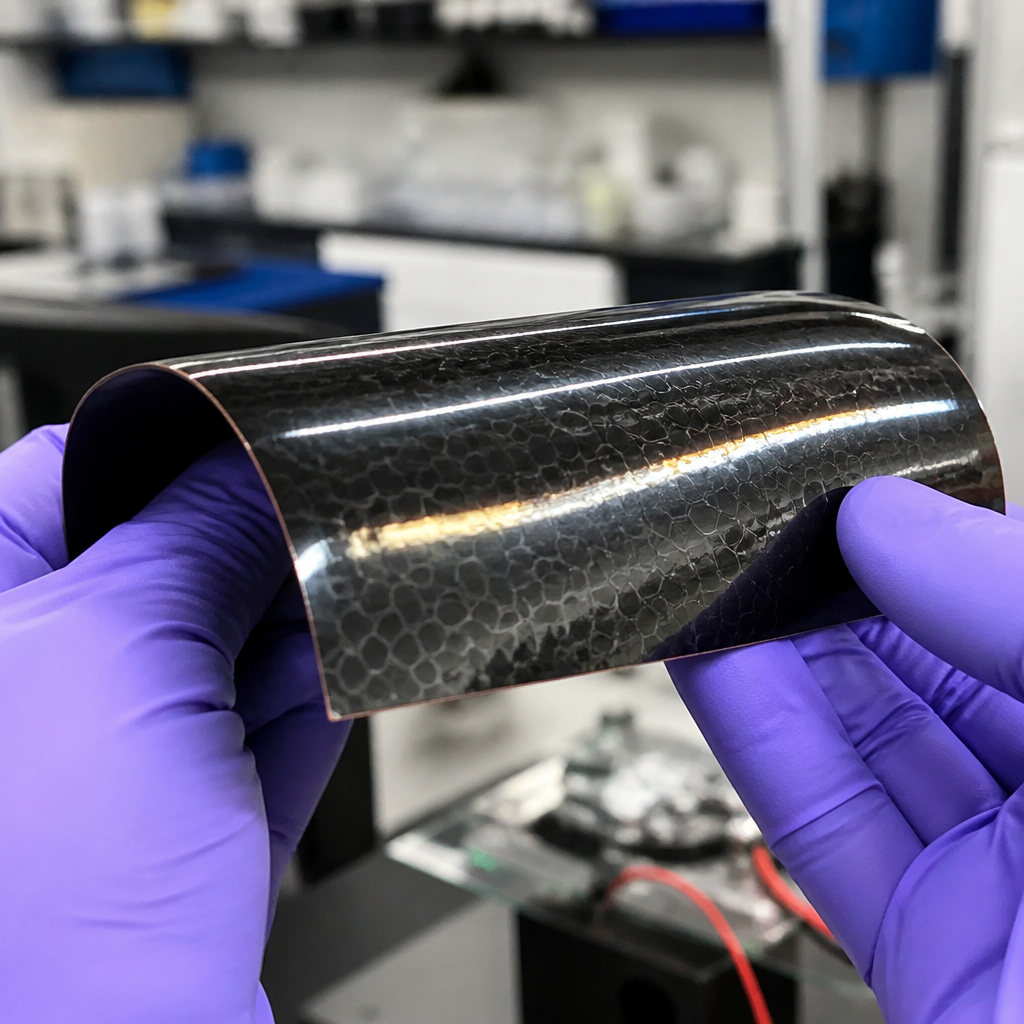
Electrically active polymer composites are engineered materials that combine a polymer matrix with conductive, semiconductive, dielectric, or electroresponsive fillers to create plastics that do more than provide structure. In practice, this field sits at the intersection of polymer science, solid-state physics, and manufacturing engineering. I have seen it move from niche antistatic packaging compounds to a broad class of materials used in sensors, batteries, flexible circuits, electromagnetic interference shielding, soft actuators, and printable electronics. As a hub topic within materials and properties, electrical properties matter because they determine whether a polymer part insulates, stores charge, dissipates static, senses strain, heats under voltage, or carries current reliably over time.
The term electrical properties covers several distinct behaviors. Electrical conductivity describes how easily charge moves through a material and is typically reported in siemens per meter. Dielectric constant, also called relative permittivity, indicates how much electric energy a material can store in an electric field. Dielectric loss measures how much of that energy becomes heat. Volume resistivity and surface resistivity are the practical metrics used for insulating and antistatic products. Other critical behaviors include percolation threshold, piezoresistivity, breakdown strength, impedance, and frequency response. These are not abstract lab values. They directly influence battery separator safety, cable insulation performance, capacitive sensor sensitivity, and the reliability of housings placed near radios, motors, or high-voltage electronics.
Recent advances have accelerated because modern applications demand combinations that traditional metals, ceramics, or neat polymers cannot deliver alone. Electric vehicles need lighter shielding materials and safer dielectric layers. Wearable devices need conductors that bend repeatedly without cracking. Industrial automation needs sensors molded into parts rather than bolted on later. Medical electronics need soft, biocompatible interfaces. At the same time, compounding and characterization tools have improved. Manufacturers now tune carbon black structure, graphene aspect ratio, silver flake loading, ceramic particle surface treatment, and polymer crystallinity with much greater precision. The result is a fast-expanding design space where electrical performance is co-optimized with processability, mechanical strength, thermal management, cost, and environmental stability.
How electrically active polymer composites work
The basic mechanism depends on the filler class and the role assigned to the composite. For conductive polymer composites, electrons move through networks formed by conductive fillers such as carbon black, carbon nanotubes, graphene, metal particles, metal-coated fibers, or intrinsically conductive polymers like polyaniline and PEDOT-based systems. A key concept is the percolation threshold, the point at which isolated particles become a connected network and conductivity rises sharply, often by orders of magnitude. In production work, I have seen a small loading change around this threshold alter a compound from insulating to static dissipative with the kind of abruptness that surprises teams used to linear property trends.
For dielectric composites, the goal is often the opposite: maintain insulation while increasing permittivity or energy storage. Here, ceramic fillers such as barium titanate, titanium dioxide, aluminum oxide, or boron nitride are dispersed in polymers like epoxy, polyimide, silicone, polyethylene, or PVDF. Interfaces dominate performance. Surface treatment with silanes, titanates, or tailored polymer shells improves dispersion and reduces voids, which in turn affects dielectric loss and breakdown strength. In ferroelectric polymer systems, dipole orientation and phase content also matter. PVDF and its copolymers are well known because the beta phase supports strong polarization behavior useful in sensors and energy harvesting films.
Electrical response is also shaped by morphology. Filler size, aspect ratio, orientation, agglomeration state, and interparticle distance all matter. A nanotube network aligned during extrusion behaves differently from a randomly dispersed network in injection molding. A foamed conductive composite may achieve conductivity at lower filler loading because the filler concentrates in cell walls. Layered structures can localize expensive conductive fillers only where current paths are needed. These structure-property relationships are why electrically active polymer composites are not commodity blends. They are engineered systems in which chemistry, processing history, and application geometry are inseparable.
Major material classes and what they deliver
Different composite families solve different electrical problems. Carbon black remains one of the most commercially important fillers because it is relatively affordable, scalable, and effective for electrostatic discharge control, semiconductive cable layers, and some shielding formulations. Furnace black grades with high structure can reduce resistivity at lower loading, though they also raise viscosity. Carbon nanotubes and graphene offer much higher aspect ratio, allowing conductivity and sensing response at lower loadings. That lower loading can preserve toughness and reduce density, but it raises dispersion difficulty and cost sensitivity. In flexible electronics, I have found nanotube networks especially useful where repeated bending would fracture brittle metallic pathways.
Metal-filled polymer composites use silver, copper, nickel, stainless steel, or hybrid plated fillers when low resistivity is essential. Silver flake in silicone or epoxy is common in conductive adhesives, die attach, and stretchable interconnect formulations. Copper can offer better cost performance, but oxidation control is critical. Nickel-coated graphite is widely used for EMI gaskets because it balances shielding performance with compressibility. Ceramic-filled systems occupy another important class. Barium titanate boosts dielectric constant for embedded capacitors, while boron nitride and aluminum nitride help combine electrical insulation with thermal conductivity in power electronics potting and interface materials.
| Composite type | Typical fillers | Primary electrical function | Common applications |
|---|---|---|---|
| Conductive | Carbon black, CNTs, graphene, silver, copper | Current transport or charge dissipation | ESD trays, sensors, flexible circuits, conductive adhesives |
| Dielectric | Barium titanate, titanium dioxide, PVDF-based systems | Charge storage and polarization control | Capacitors, embedded passives, piezoelectric films |
| Shielding | Nickel-coated graphite, stainless fibers, hybrid carbons | Electromagnetic attenuation | Device housings, gaskets, automotive electronics |
| Insulating and thermally conductive | Boron nitride, aluminum nitride, alumina | Electrical isolation with heat transfer | Power modules, LED encapsulation, battery systems |
| Electroactive and sensing | CNTs, graphene, ionic additives, conductive polymers | Resistance change under strain, pressure, or field | Wearables, soft robotics, structural health monitoring |
Hybrid systems are where many of the strongest advances are happening. Combining carbon black with nanotubes can lower percolation and stabilize conductivity. Pairing ceramic nanoparticles with conductive nanofillers can tailor both dielectric response and loss. Multiphase polymer blends can force fillers into one phase, creating a segregated network that reaches conductivity with less total filler. That matters because lower loading usually means better elongation, easier molding, and less warpage. The industry is moving away from single-filler thinking toward architectures designed around interfacial engineering and hierarchical transport pathways.
Breakthroughs in conductivity, sensing, and field response
One of the most important advances is control of conductive networks at lower filler loading. Researchers and compounders use segregated structures, latex assembly, in situ polymerization, and surface-functionalized nanofillers to create connected pathways without overfilling the polymer. This is not merely a laboratory curiosity. Lower loading often means improved fatigue resistance, lower part weight, and better surface finish. In automotive pressure sensors and smart seals, piezoresistive composites now provide stable resistance changes across thousands of compression cycles because the network can deform reversibly instead of crumbling under repeated strain.
Another major advance is printable and stretchable conductivity. Screen-printable silver-elastomer composites are already common, but newer formulations based on hybrid silver nanowires, graphene, and conductive polymers can sustain repeated stretching with lower change in resistance. In soft robotics and wearable health patches, that durability matters more than headline conductivity alone. Self-healing approaches are also emerging. By combining dynamic polymer networks with conductive fillers, a cracked path can reconnect after heating or pressure. This is promising for long-life flexible devices, though the tradeoff is often slower processing or narrower environmental windows than standard thermoplastics.
Electroactive polymer composites that respond to electric fields are also improving. Dielectric elastomers rely on soft insulating films that deform when voltage is applied, and composite design can raise permittivity while maintaining breakdown strength and elastic recovery. Ionic polymer composites and conductive hydrogel systems support low-voltage actuation and biosignal interfacing. The challenge is balancing electrical response with moisture sensitivity, creep, and package-level reliability. Even so, practical progress is visible in haptic interfaces, adaptive optics components, and medical electrode materials where softness and conformability are not optional but essential.
Dielectric performance, insulation, and energy storage
Electrical properties are not only about conductivity. Some of the most commercially valuable advances involve materials that resist current while controlling electric fields precisely. In high-voltage systems, the priorities are volume resistivity, dielectric breakdown strength, partial discharge resistance, and long-term aging under thermal and electrical stress. Crosslinked polyethylene remains central in power cable insulation, but composite strategies have improved treeing resistance and space charge behavior through nanofillers and cleaner interface control. In rotating equipment and power modules, epoxy and silicone composites are tailored to suppress corona damage while managing heat.
For capacitors and embedded energy storage, the target is high dielectric constant with low loss and adequate breakdown strength. Barium titanate filled polymers can raise permittivity significantly, but simply adding more ceramic often hurts flexibility and increases defect risk. Better results come from particle surface engineering, core-shell structures, and controlled particle size distributions. In film applications, PVDF-based composites remain important because they combine processability with strong polarization behavior. The key design lesson is that energy density depends not just on permittivity, but on the balance among permittivity, loss, and breakdown strength. Chasing a single number usually creates failure elsewhere.
Thermally conductive electrical insulators are another high-growth category. Power electronics in electric vehicles, fast chargers, LEDs, and telecommunications hardware generate heat that must be removed without creating short circuits. Boron nitride platelets and aluminum nitride particles are widely used because they improve through-plane or in-plane thermal transport while preserving dielectric integrity. Processing determines whether those gains are realized. I have seen excellent filler data fail in molded parts because orientation was ignored, leaving heat trapped in the wrong direction. Electrical properties must therefore be evaluated alongside anisotropy, interface resistance, and assembly conditions.
Manufacturing, testing, and design tradeoffs
Processing is often the hidden factor that determines whether a promising formulation becomes a stable product. Twin-screw extrusion, internal mixing, solution casting, melt blending, in situ polymerization, and additive manufacturing each create different dispersion states and filler networks. Shear can break agglomerates, but it can also shorten fibers or damage fragile nanotubes. Drying, moisture control, and pellet handling matter because voids and contamination can dominate electrical outcomes, especially in dielectric systems. Around the percolation threshold, lot-to-lot variation in filler surface area or polymer viscosity can shift resistivity enough to fail an ESD specification.
Testing must match the application. Volume resistivity and surface resistivity are commonly measured using ASTM D257. Shielding effectiveness is often assessed under ASTM D4935 or related methods, while dielectric constant and loss may be measured by impedance analyzers across frequency. Breakdown testing, dissipation factor, thermal aging, humidity exposure, and cyclic flex testing are equally important. A composite that looks excellent at room temperature in dry lab air may drift badly in a warm, humid enclosure. I always advise teams to test electrical properties across the actual use window, including frequency, strain, voltage, and environmental exposure, not just under one nominal condition.
Tradeoffs are unavoidable. Higher conductive filler loading can improve shielding but reduce elongation and weld-line strength. A ceramic that raises dielectric constant may also raise brittleness or processing torque. Nanofillers can lower percolation, but they complicate dispersion, quality control, and occupational handling. Cost also matters. Silver offers excellent conductivity, yet many commercial designs succeed with carbon systems because the total system value, not the best lab number, wins the specification. The strongest development programs set target ranges for electrical, mechanical, thermal, and manufacturing properties simultaneously, then optimize the composite and process as one system.
Where the field is going next
Advances in electrically active polymer composites are reshaping how engineers think about plastics. Instead of choosing a polymer first and accepting its electrical limits, teams now design electrical properties into the material from the start. The field now spans conductive pathways, dielectric control, EMI shielding, sensing, actuation, and insulation with thermal management. The biggest gains are coming from hybrid filler systems, interface engineering, lower-percolation network design, and processing methods that preserve morphology at production scale. Those advances make composites more useful in electric vehicles, wearables, medical devices, industrial automation, and power electronics.
The practical lesson is simple: electrical properties cannot be separated from filler architecture, polymer chemistry, and manufacturing history. Conductivity depends on network formation. Dielectric performance depends on interfaces and defects. Reliability depends on how the material responds to heat, moisture, frequency, strain, and time. If this page is your hub for electrical properties within materials and properties, use it as the starting point for deeper work on conductivity, dielectric behavior, shielding, antistatic design, and electroactive applications. Build your material selection process around measured use conditions, and you will make better, safer, and more durable products.
Frequently Asked Questions
What are electrically active polymer composites, and how are they different from conventional plastics?
Electrically active polymer composites are engineered materials made by combining a polymer matrix with fillers that introduce electrical functionality. In a conventional plastic, the polymer mainly provides mechanical structure, chemical resistance, and processability, but it is usually electrically insulating. In contrast, an electrically active composite is designed so that the final material can conduct electricity, dissipate static charge, respond to electric fields, store charge, sense environmental changes, or shield against electromagnetic interference. That added functionality comes from the filler system, which may include carbon black, carbon nanotubes, graphene, metal particles, metal-coated fibers, intrinsically conductive polymers, ceramic dielectrics, piezoelectric phases, or semiconductive additives.
The key distinction is that the polymer and filler are selected as a system rather than as separate ingredients. The polymer determines flexibility, thermal behavior, chemical durability, and manufacturability, while the filler network determines the electrical response. For example, a thermoplastic elastomer loaded with conductive carbon may become a stretchable sensor, while a high-temperature engineering polymer filled with metal or ceramic particles may be used in electronics packaging or battery components. This means the material is not simply “plastic with particles in it.” It is a tuned composite in which microstructure, filler dispersion, interfacial adhesion, orientation, and processing history all affect performance.
These materials also differ from traditional metals and ceramics in important ways. They are often lighter, easier to shape, and more compatible with high-volume manufacturing methods such as extrusion, injection molding, film casting, or additive manufacturing. At the same time, they can be engineered for a broad range of electrical behaviors, from antistatic performance to full conductivity and from dielectric energy storage to electroresponsive actuation. That combination of functionality and processing versatility is what has made electrically active polymer composites increasingly important in sensors, batteries, flexible circuits, EMI shielding, wearable devices, and other advanced applications.
How do fillers make a polymer composite electrically conductive or electroresponsive?
The electrical behavior of these composites depends on how the filler phase is distributed throughout the polymer and how effectively it creates pathways for charge transport or field interaction. In conductive systems, the most important concept is often percolation. As conductive filler is added to an insulating polymer, there comes a point where isolated particles begin to connect into a continuous network. Once that percolation threshold is reached, the composite’s electrical resistance can drop dramatically. The exact threshold depends on filler shape, aspect ratio, surface chemistry, dispersion quality, and processing conditions. High-aspect-ratio fillers such as carbon nanotubes or graphene nanoplatelets can often achieve conductivity at lower loading levels than spherical particles because they form networks more efficiently.
Electroresponsive behavior can arise in other ways besides direct conductivity. Dielectric fillers can increase permittivity, enabling better charge storage in capacitive applications. Piezoelectric or ferroelectric ceramics can create composites that convert mechanical stress into electrical signals, or respond to electric fields with measurable strain. Semiconductive fillers can support sensing functions by changing resistance under strain, temperature variation, humidity exposure, or chemical interaction. In some formulations, ions rather than electrons carry charge, which is important in solid polymer electrolytes and battery-related materials. The mechanism therefore depends on the intended function: conduction, dissipation, sensing, dielectric response, actuation, or energy storage.
Interfacial engineering is just as important as filler selection. If fillers agglomerate, the composite may show inconsistent properties, poor mechanical strength, or unreliable processing behavior. If the interface between filler and polymer is well controlled, the material can achieve better network stability, lower contact resistance, and more predictable electrical performance over time. Processing methods such as melt compounding, solution mixing, in situ polymerization, and surface functionalization all influence how the filler network forms. In practical terms, the performance of an electrically active polymer composite is not determined by chemistry alone. It is determined by chemistry plus structure, and structure is created by processing.
What are the most important recent advances in electrically active polymer composites?
One major area of progress has been the development of more efficient filler architectures. Researchers and manufacturers have moved beyond simple high-loading conductive compounds toward smarter microstructures that achieve strong electrical performance with less filler. This matters because lower filler content often preserves flexibility, lowers density, improves toughness, and makes processing easier. Nanostructured carbons, hybrid filler systems, segregated networks, and aligned conductive pathways have all helped push performance upward while reducing some of the tradeoffs that once limited adoption.
Another important advance is the rise of multifunctional composites. Instead of optimizing only conductivity, current materials are increasingly designed to deliver several properties at once, such as electrical activity plus mechanical compliance, thermal management, barrier performance, self-sensing capability, or EMI shielding. That multifunctionality is especially relevant in flexible electronics, structural health monitoring, electric vehicles, aerospace systems, and wearable devices. A composite used in a battery pack, for example, may need not only conductivity but also dimensional stability, thermal resistance, flame retardancy, and compatibility with automated manufacturing.
Manufacturing compatibility has also improved significantly. Electrically active polymer composites are now being adapted for 3D printing, printed electronics, roll-to-roll processing, and stretchable device fabrication. Better control over rheology and filler dispersion has made it more realistic to produce complex geometries and thin functional layers at scale. At the same time, advances in simulation and characterization have allowed engineers to connect nanoscale structure with macroscopic electrical behavior more reliably, speeding up development cycles. There is also growing attention to recyclable matrices, bio-based polymers, and lower-energy processing routes, which reflects the broader industry shift toward sustainability. Taken together, these advances are helping move the field from specialty formulations toward more mainstream use in high-performance, manufacturable products.
Where are electrically active polymer composites used today, and why are they so valuable in those applications?
These materials are used across a surprisingly wide range of industries because they offer a useful combination of lightweight construction, electrical functionality, and scalable processing. One longstanding application is antistatic and electrostatic discharge protection, where polymer composites help prevent charge buildup in packaging, electronics housings, industrial flooring, and handling equipment. They are also widely used for electromagnetic interference shielding in consumer electronics, telecommunications hardware, medical devices, and transportation systems. In these cases, the goal is to manage charge or electromagnetic energy without relying entirely on heavier metallic enclosures.
In sensing and flexible electronics, electrically active polymer composites are especially valuable because they can deform without losing function. Strain sensors, pressure sensors, wearable patches, soft robotics components, and human-machine interface devices often rely on composites whose resistance changes with motion or contact. In energy-related systems, they appear in battery components, current-collecting structures, polymer electrolytes, dielectric films, and encapsulation materials. Conductive and dielectric polymer composites can also play roles in capacitors, actuators, and smart surfaces. Their ability to be cast, printed, molded, or laminated onto flexible substrates makes them attractive wherever traditional rigid electronic materials are difficult to use.
They are valuable not only because they work, but because they can be integrated efficiently into real manufacturing environments. A molded conductive plastic part can combine mechanical support and electrical function in one component, reducing part count and assembly complexity. A flexible sensor made from a polymer composite can conform to curved surfaces and survive repeated bending better than many brittle alternatives. In automotive and aerospace applications, weight savings are often critical, and replacing metal with a functional composite can support that goal while still meeting electrical requirements. This balance of performance, integration, and manufacturability is what continues to expand their commercial relevance.
What are the biggest design challenges and future opportunities for electrically active polymer composites?
The biggest challenge is balancing electrical performance with everything else a real product requires. Adding filler may improve conductivity or dielectric response, but it can also make the material more brittle, harder to process, heavier, or more expensive. In many systems, increasing electrical functionality comes at the cost of elongation, transparency, surface finish, or long-term durability. Achieving a stable filler network is another challenge, especially under repeated mechanical strain, thermal cycling, humidity exposure, or chemical attack. A composite that performs well in the lab may drift over time if the conductive network breaks down, fillers migrate, or interfaces degrade.
Consistency at scale is another major issue. Small differences in compounding, shear history, moisture content, or filler dispersion can cause large changes in resistivity or sensing behavior. That makes quality control and process repeatability essential, particularly for electronics, automotive, aerospace, and medical applications. Designers also need to think carefully about anisotropy, since some composites conduct differently in different directions depending on how fillers align during processing. In addition, joining, coating, recyclability, and compatibility with downstream assembly methods can all affect whether a promising formulation succeeds commercially.
Looking ahead, the opportunities are substantial. There is strong momentum around stretchable electronics, structural energy storage, self-monitoring components, soft actuators, advanced EMI shielding, and materials that combine electrical activity with thermal or mechanical intelligence. Better filler surface treatments, machine-learning-guided formulation design, and more precise processing tools are likely to produce composites with increasingly tailored behavior. Sustainable development is also becoming a central opportunity, with interest in recyclable thermoplastics, bio-derived polymers, and lower-impact conductive systems. The future of electrically active polymer composites