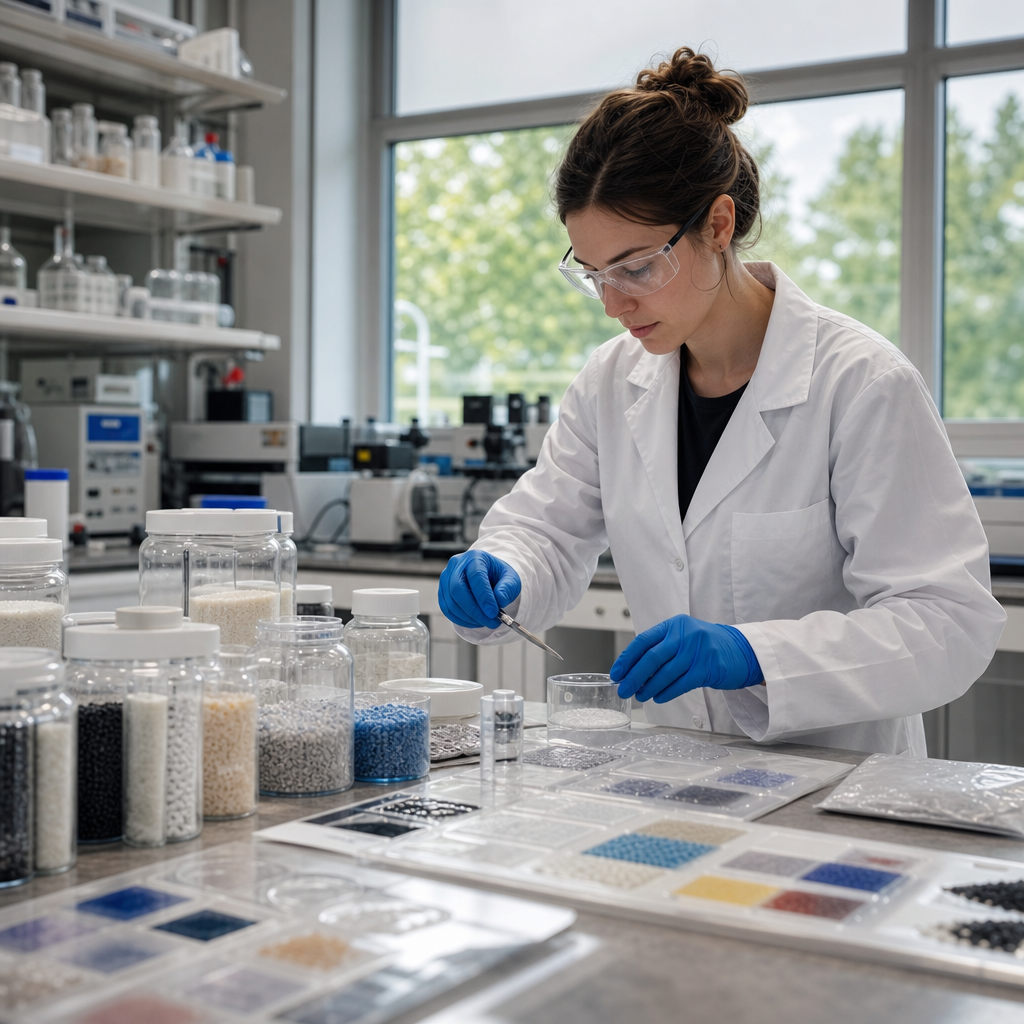
Career fairs in the polymer industry can open doors to internships, entry-level roles, graduate research opportunities, and long-term technical careers, but success depends on far more than showing up with a résumé. In this field, employers look for evidence that candidates understand polymer science, manufacturing realities, safety culture, and the commercial uses of materials in packaging, medical devices, automotive parts, electronics, textiles, coatings, and sustainability programs. A polymer industry career fair is any recruiting event where companies, research organizations, equipment suppliers, and universities meet students or professionals interested in plastics, elastomers, composites, adhesives, resins, recycling, and related materials roles. These events matter because polymer employers often hire for specialized positions that are difficult to fill through generic recruiting channels. I have attended and supported recruiting at university engineering fairs, Society of Plastics Engineers events, and materials-focused conferences, and the candidates who stood out were rarely the ones with the fanciest design. They were the ones who connected coursework, lab work, plant understanding, and business awareness to a real industry need. This guide serves as a career development hub for educational resources, helping you prepare before the event, perform well during conversations, follow up effectively afterward, and build a broader strategy around polymer industry networking, technical credibility, and job search momentum.
Understand the polymer industry before you approach recruiters
The polymer industry is broad, and treating it as one monolithic sector is a common mistake. Recruiters may represent resin producers, compounders, converters, additive suppliers, equipment manufacturers, testing laboratories, consumer brands, or recyclers. Each segment uses different language and values different experience. A resin producer may focus on polymerization, rheology, catalyst systems, molecular weight distribution, and process safety. A medical device converter may care more about validation, cleanroom operations, biocompatibility, and regulatory documentation. A packaging company may ask about barrier properties, seal performance, multilayer structures, and life cycle analysis. If you understand these distinctions, your conversations become sharper and more persuasive.
Start by mapping the main role families. Research and development roles often involve formulation, characterization, structure-property relationships, and scale-up. Manufacturing and process engineering roles center on extrusion, injection molding, blow molding, thermoforming, compounding, mixing, troubleshooting, scrap reduction, and statistical process control. Quality roles often touch ISO 9001 systems, root cause analysis, metrology, and test methods such as DSC, TGA, FTIR, tensile testing, and melt flow index measurement. Sales and technical service roles blend customer interaction with material selection, failure analysis, and application development. Sustainability roles increasingly include mechanical recycling, chemical recycling, design for recyclability, extended producer responsibility, and circular materials strategy.
A strong candidate can explain where personal interests fit. For example, if you enjoyed capstone work on fiber-reinforced composites, target aerospace, sporting goods, wind energy, and automotive lightweighting employers. If your lab experience includes DMA, DSC, and viscosity measurement, emphasize analytical and formulation roles. If you completed a co-op on an injection molding line, discuss cycle time reduction, warpage, gating, and defect troubleshooting. This specificity signals maturity. Recruiters in technical sectors want candidates who can enter a conversation already understanding the operating environment, even if they are still early in their careers.
Prepare a career fair strategy that matches polymer hiring realities
Preparation starts at least one week before the event. Review the employer list and classify companies into three groups: priority targets, exploratory targets, and stretch targets. Priority targets are organizations whose products, locations, and role types clearly match your background. Exploratory targets are firms you know less about but that operate in an area you want to enter, such as recycling technologies or high-performance thermoplastics. Stretch targets are highly selective employers or organizations seeking experience beyond your current level, but still worth approaching for visibility and practice.
For each priority company, prepare a one-minute summary covering what the company makes, the markets it serves, one technical issue likely relevant to its business, and why your experience is useful. If a company manufactures PET packaging, know the basics of intrinsic viscosity, acetaldehyde concerns, barrier improvement, recycling streams, and food-contact expectations. If an employer produces silicone elastomers, understand cure systems, thermal stability, and application areas such as medical tubing or sealants. Good preparation does not require expert depth on every polymer class, but it does require enough precision to ask intelligent questions.
Your résumé should be tuned for polymer career fair screening. Place technical keywords where recruiters can find them quickly: polymer chemistry, materials characterization, extrusion, injection molding, compounding, CAD, DOE, SPC, Lean, FTIR, DSC, TGA, rheology, and safety training. Quantify results whenever possible. “Reduced scrap by 8 percent during extrusion trials” is stronger than “helped improve process performance.” “Tested tensile and thermal behavior of PLA blends across five formulations” is stronger than “worked on sustainable materials.” Bring printed résumés, but expect digital workflows too; many employers now scan QR codes or direct candidates to an applicant system during the event.
Your introduction should combine technical identity and direction. A strong version sounds like this: “I am a senior chemical engineering student focused on polymer processing, with internship experience in injection molding and lab work using DSC and FTIR. I am looking for process engineering or materials development roles in packaging, medical, or specialty compounds.” That statement gives a recruiter enough information to route the conversation efficiently. Avoid vague openers like “I’ll do anything” or “I just want experience.” In polymer recruiting, focus suggests readiness.
What to say at the booth and how to ask better questions
At the booth, your goal is not to deliver a rehearsed monologue. Your goal is to start a technically credible, memorable conversation. After your introduction, ask questions that reveal how the company operates and where your background may fit. Good questions include: “Which polymer families are most central to your current hiring?” “Are your entry-level hires more involved in process optimization, formulation, or quality testing?” “What analytical tools or manufacturing methods do new hires use most often?” “How does your team approach sustainability goals without compromising performance requirements?” These questions move beyond generic interest and tell the recruiter you understand how polymer businesses make decisions.
When discussing your experience, use a challenge-action-result structure. For example: “During my internship, we saw inconsistent shrinkage in an injection molded polypropylene component. I collected process data, compared lot differences, and worked with the team on temperature and hold pressure adjustments. We reduced dimensional variation enough to improve first-pass yield.” That answer shows problem solving, process awareness, and collaboration. If your experience is academic, that is acceptable; explain your methods clearly. A recruiter can translate a well-run capstone or lab project into workplace potential when the reasoning is solid.
You should also be ready for common polymer career fair questions: What materials have you worked with? Which instruments have you used? Have you been in a plant or pilot environment? Are you comfortable with shift-based manufacturing roles? What does safety mean in a chemical or plastics setting? How do you balance performance, cost, and sustainability in material selection? Direct, practical answers work best. If you lack a certain experience, say so honestly and bridge to adjacent skills. For instance, if you have not used a twin-screw extruder, mention relevant experience with rheology, thermal analysis, or formulation trials and your willingness to learn quickly.
| Career fair stage | What strong candidates do | Common mistake |
|---|---|---|
| Before the event | Research target companies, tailor résumé, prepare industry-specific questions | Using one generic résumé and no company notes |
| Opening conversation | State degree, polymer focus, tools used, and target role in under one minute | Giving a long life story or speaking too vaguely |
| Technical discussion | Explain projects with challenge, method, data, and outcome | Listing tasks without showing results or reasoning |
| Closing the conversation | Ask about next steps, application process, and best contact method | Walking away without a clear follow-up path |
| After the event | Send a concise follow-up tied to the conversation within 24 to 48 hours | Sending a generic message or failing to follow up |
Present technical credibility without sounding overprepared
Technical credibility in the polymer industry comes from clarity, not jargon density. Recruiters do not need a textbook recital on crystallinity or viscoelasticity. They need evidence that you can connect material behavior to application and process. If you mention polyethylene, explain whether your work involved film, blow molding, rotational molding, or pipe applications, because property priorities vary. If you mention composites, state the matrix, reinforcement, fabrication method, and performance goal. If you reference thermal analysis, explain what decision the data supported. A recruiter remembers candidates who make technical work understandable.
Use named methods accurately. If you ran differential scanning calorimetry, say whether you used it to estimate melting behavior, glass transition, or crystallinity trends. If you used Fourier transform infrared spectroscopy, explain whether it helped identify contamination, verify material identity, or track chemical changes. If you carried out design of experiments, mention the variables studied and the practical outcome. Employers notice when candidates understand why a tool matters, not just that it appeared in a course or internship.
It also helps to show awareness of standards and constraints. In packaging, cost, seal integrity, migration, and recyclability can matter as much as tensile strength. In automotive applications, heat aging, chemical resistance, impact behavior, and supply consistency are critical. In medical polymers, sterilization compatibility and regulatory traceability may dominate. Mentioning ASTM or ISO test frameworks where relevant can strengthen your position, provided you use them correctly. Precision builds trust; exaggerated expertise damages it fast in a technical field.
Use the fair as a hub for broader career development
A polymer career fair should support a larger career development plan, not replace one. The strongest candidates use these events to gather information that shapes future coursework, projects, certifications, and networking. If several recruiters mention a need for extrusion knowledge, that is a signal to pursue a processing elective, a lab assistant role, or training through SPE, PMMI, or a university plastics center. If employers consistently ask about data analysis, strengthen your skills in Minitab, JMP, Excel, or Python for process and quality work. Career fairs are feedback systems as much as recruiting events.
This is also where hub thinking matters. Your career development resources should connect résumé writing, interview preparation, internship strategy, technical portfolio building, LinkedIn optimization, graduate school evaluation, and professional association engagement. For example, a student interested in polymer sustainability might start with this career fair guide, then move into deeper resources on recycling careers, materials science interview questions, technical résumé examples, and networking email templates. Someone targeting manufacturing may need linked guidance on plant tours, process engineer interview prep, Six Sigma basics, and troubleshooting case studies. When career content is organized this way, each article supports the next practical decision.
Outside the event, keep building evidence of fit. Join the Society of Plastics Engineers or the American Chemical Society if your work leans more toward polymer chemistry. Attend webinars on compounding, bio-based polymers, additive manufacturing, or circular packaging. Read company technical pages, annual sustainability reports, patent summaries, and product data sheets. If possible, create a small portfolio showing a capstone poster, a process improvement summary, or a characterization project. In hiring discussions, proof always beats aspiration.
Follow up, track progress, and improve after each event
Most candidates underperform after the fair, not during it. Within 24 to 48 hours, send a concise message to each recruiter or engineer you met. Reference a specific detail from the conversation, restate your interest, and mention the role or business area discussed. For example: “I appreciated learning about your work in thermoplastic elastomer applications for automotive interiors. Our conversation about odor control and processing stability matched my internship experience in compounding, and I have submitted my application for the process engineering role.” That kind of message is specific enough to trigger recognition.
Track your activity in a simple spreadsheet or CRM-style document. Include company name, contact, business segment, roles discussed, application status, follow-up date, and next action. This keeps momentum from disappearing after a busy week. If you do not hear back, a polite second follow-up after seven to ten days is reasonable. After that, continue engaging through LinkedIn, webinars, or future events without becoming repetitive. Recruiting cycles in manufacturing and materials businesses can move slower than students expect, especially when plant leaders, HR, and technical managers all need to align.
Finally, run a personal debrief. Which questions worked? Where did you struggle? Did recruiters respond more strongly to your processing experience, lab skills, or sustainability interests? Did your résumé invite the right discussion? I have seen candidates improve dramatically across one recruiting season simply by revising a weak introduction, adding measurable outcomes to project bullets, and learning enough industry structure to target the right employers. Career fair performance is trainable. The polymer industry rewards candidates who prepare carefully, communicate technically, and follow through consistently.
Navigating career fairs in the polymer industry becomes easier when you treat the event as part research mission, part technical interview, and part relationship-building exercise. The core principles are straightforward: learn the structure of the polymer sector, identify target companies, tailor your résumé to materials and process keywords, speak clearly about your projects, ask informed questions, and follow up with discipline. These habits help you stand out because polymer employers hire for fit at the intersection of science, manufacturing, safety, quality, and commercial application. A candidate who can connect polymer fundamentals to real products and real plant challenges will always be more compelling than one who presents only broad enthusiasm.
As a hub for career development within educational resources, this guide points to the larger truth that successful job searches are built from connected skills. Career fairs work best when they link to stronger interviewing, better technical storytelling, sharper networking, and deliberate professional growth. Whether you want to work in compounding, medical materials, packaging, composites, recycling, coatings, or polymer research, the path starts with preparation and improves through repetition. Use your next event to gather information, test your message, and create momentum. Then keep building on it with every conversation, application, and project you complete.
Frequently Asked Questions
1. How should I prepare before attending a polymer industry career fair?
The strongest candidates in polymer industry career fairs do much more than print copies of a résumé the night before. Start by researching the companies that will attend and sort them into categories such as materials producers, compounders, converters, equipment manufacturers, testing labs, medical device companies, packaging firms, automotive suppliers, coatings businesses, and sustainability-focused organizations. That research helps you tailor your conversations and show employers that you understand where polymers fit into real products and real supply chains. If one company focuses on flexible packaging, for example, be ready to discuss barrier properties, processing considerations, recyclability challenges, or resin selection. If another works in medical applications, you should expect conversation around quality systems, biocompatibility, regulatory awareness, and clean manufacturing environments.
You should also prepare a concise personal introduction that connects your background to the field. Mention your degree or area of study, your relevant coursework or lab experience, and the specific kinds of roles you are targeting, such as R&D, process engineering, quality, applications development, technical sales, manufacturing, product stewardship, or graduate research. In polymer settings, employers often want proof that you can bridge theory and practice, so be ready to explain projects involving extrusion, injection molding, rheology, thermal analysis, materials characterization, failure analysis, compounding, or sustainability assessments. Even if your experience is academic, frame it in industry terms by emphasizing problem-solving, data interpretation, teamwork, documentation, and safety awareness.
Finally, bring polished materials and a strategy. Your résumé should highlight polymer-relevant skills, software, instrumentation, and project outcomes rather than using overly general language. Have a shortlist of meaningful questions for each employer, and prioritize the booths you most want to visit so you can spend your time well. Dress professionally, arrive early if possible, and review your talking points before entering the event. Preparation signals seriousness, but in the polymer industry specifically, it also shows that you understand the technical, operational, and commercial realities employers deal with every day.
2. What do polymer industry employers usually look for in candidates at career fairs?
Employers in the polymer industry typically assess more than academic credentials. They want candidates who demonstrate technical curiosity, practical awareness, professionalism, and the ability to contribute in environments where materials performance, manufacturing consistency, and safety all matter. A recruiter or hiring manager may quickly scan your résumé for coursework in polymer science, materials engineering, chemistry, chemical engineering, or mechanical engineering, but what often makes a candidate memorable is the ability to explain how that knowledge applies to actual products and processes. They want to hear that you understand why a material was selected, how it is processed, what can go wrong during manufacturing, and how performance requirements vary by end use.
Safety culture is another major factor. Polymer production and processing can involve high temperatures, rotating equipment, pressurized systems, solvents, additives, and strict handling requirements. Employers value candidates who speak naturally about lab safety, process discipline, documentation, standard operating procedures, and quality systems. Even for entry-level positions, showing respect for safe operations can distinguish you from candidates who focus only on technical theory. In many organizations, especially those serving medical, automotive, aerospace, electronics, or food packaging markets, quality expectations are deeply tied to compliance, traceability, and customer trust.
Just as important is commercial awareness. The polymer industry sits at the intersection of science and market demand, so employers appreciate candidates who understand the broader applications of materials in packaging, medical devices, automotive parts, electronics, textiles, coatings, and sustainability initiatives. You do not need to sound like a sales executive, but it helps to recognize that material choices affect cost, manufacturability, performance, regulations, and sustainability goals. Candidates who can discuss both technical details and business relevance often stand out because they seem ready to work across teams, communicate with customers, and contribute beyond the lab bench.
3. What are the best questions to ask recruiters and hiring managers at a polymer career fair?
The best questions are specific, thoughtful, and tied to the employer’s work. Avoid opening with questions that are answered on the company website, and instead ask about the technical challenges, team structure, training opportunities, and materials applications relevant to the organization. For example, you might ask what polymer systems or processing methods are most important in the role, how new hires are trained on manufacturing and quality expectations, or what kinds of projects interns and entry-level employees typically support. Questions like these show that you are thinking seriously about contribution, not just collecting information.
You can also ask questions that reveal how the company operates in practice. Good examples include asking how R&D collaborates with manufacturing, what qualities make early-career employees successful, how the company approaches material innovation versus cost control, or how sustainability is influencing product development and customer demands. In the polymer industry, these questions are especially useful because many roles require balancing formulation performance, processability, regulations, supply constraints, and end-market needs. Asking about those tradeoffs helps you understand the company while also signaling that you appreciate the complexity of real industrial work.
If you are interested in graduate research opportunities or highly technical roles, ask about instrumentation, testing methods, modeling tools, or the types of development cycles the team follows. If you are focused on manufacturing or process engineering, ask about scale-up, troubleshooting, continuous improvement, and cross-functional problem-solving. End the conversation by asking what advice they would give someone hoping to stand out for that specific company. That final question often produces practical insight and creates a natural opening to express your interest. Strong questions turn a short booth visit into a more memorable professional interaction.
4. How can I stand out if I do not have direct polymer industry work experience yet?
Lack of direct industry experience does not automatically put you at a disadvantage if you know how to present your background strategically. Many students and early-career professionals enter polymer-related roles from academic labs, capstone projects, internships in adjacent industries, or broader materials and manufacturing experiences. The key is to translate what you have done into skills and outcomes that matter to polymer employers. If you worked in a lab, discuss experimental design, sample preparation, thermal or mechanical testing, data analysis, troubleshooting, and technical reporting. If you completed a project involving plastics, composites, coatings, elastomers, fibers, or additive manufacturing, make the connection explicit rather than assuming the recruiter will make it for you.
You can also stand out by demonstrating applied understanding of the industry. Talk about how polymer materials are selected based on properties such as strength, flexibility, chemical resistance, barrier performance, thermal stability, electrical behavior, or durability. Show that you understand the importance of manufacturing methods like extrusion, injection molding, blow molding, thermoforming, or compounding, even if your experience with them is limited. Employers are often encouraged by candidates who may not know everything yet but clearly understand the ecosystem and can learn quickly. Reading trade publications, following industry companies, joining materials or chemical engineering societies, and staying aware of sustainability and recycling trends can all strengthen your conversations.
Professionalism matters just as much as technical potential. Speak clearly, listen carefully, and tailor your message to the employer rather than repeating a generic pitch. Bring energy and curiosity to the conversation. If you can explain why you are drawn to polymers specifically, whether because of materials innovation, product impact, manufacturing problem-solving, or sustainability challenges, you will sound far more credible than someone pursuing the field casually. Employers hiring for entry-level roles know they may need to train new talent. What they want to see is evidence of initiative, relevance, and a mindset that fits the technical and operational demands of the polymer industry.
5. What should I do after the career fair to improve my chances of getting an interview?
Follow-up is where many promising candidates lose momentum, so treat it as an essential part of the career fair process. Within 24 to 48 hours, send a concise thank-you message to each recruiter, engineer, scientist, or manager you spoke with, if you have their contact information. Reference something specific from your conversation, such as a discussion about packaging materials, medical device quality standards, compounding challenges, sustainability initiatives, or the company’s internship program. Specificity helps them remember you and shows that your interest is genuine. If they encouraged you to apply online, do that promptly and tailor your application to the role rather than sending a generic résumé.
It is also important to document your interactions while they are still fresh. Write down who you met, what they discussed, what roles were mentioned, what skills seemed important, and what next steps they recommended. This record will help you personalize future communication and prepare for interviews. If a company emphasized processing knowledge, for example, you can use the following days to review relevant concepts. If another highlighted quality systems or regulatory work, you can prepare examples from your coursework or projects that align with those themes. Thoughtful follow-up is not just about being polite; it is about building continuity from a short conversation to a stronger candidacy.
Finally, keep the relationship active in a professional way. Connect on LinkedIn when appropriate, engage with the company’s job postings or updates, and continue learning about the markets they serve. If you complete a new project, present research, or gain a relevant certification after the fair, it can be worthwhile to send a brief update if you are already in contact with the employer. In the polymer industry, hiring often favors