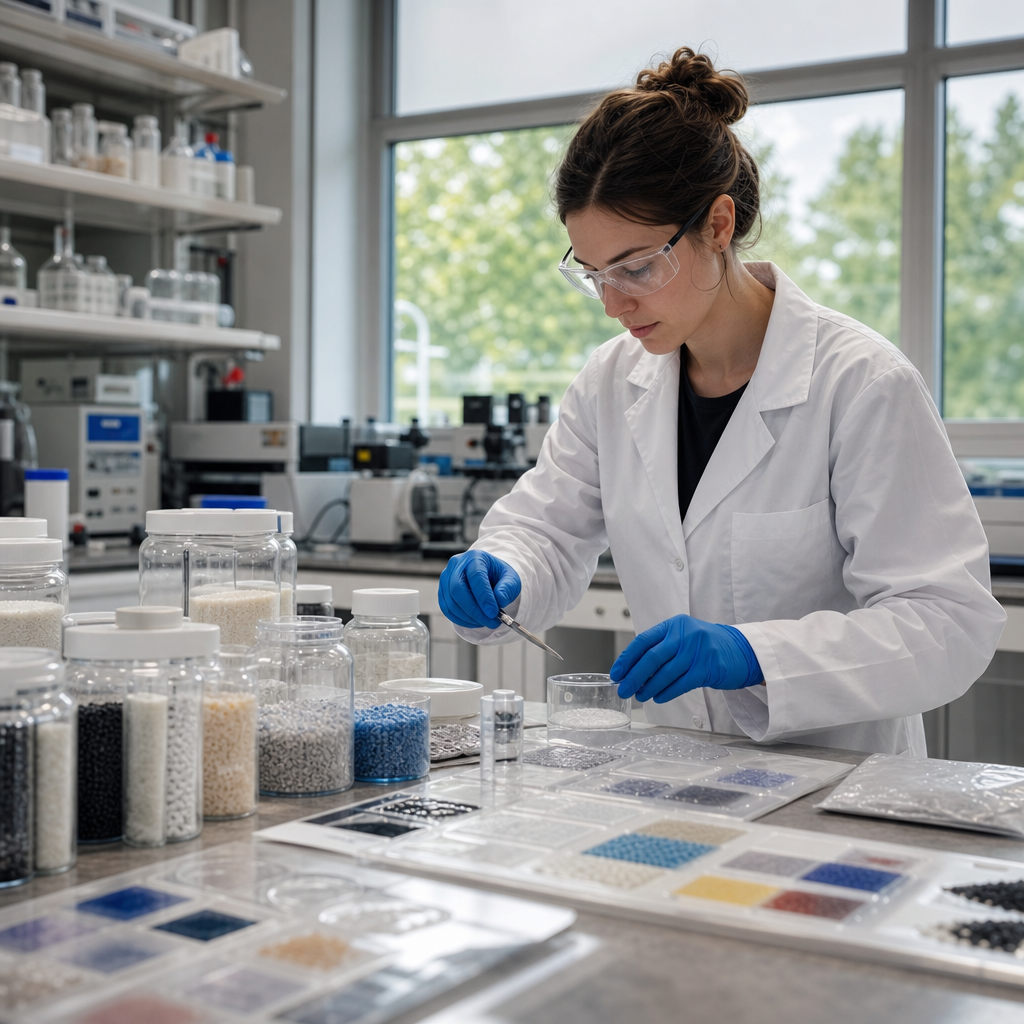
A professional portfolio in polymer science is a structured record of your technical skills, research output, problem-solving ability, and industry readiness, presented so employers, graduate programs, collaborators, and clients can quickly understand the value you bring. In polymer science, a portfolio does more than list degrees and job titles. It shows how you approach synthesis, characterization, processing, data analysis, safety, and communication across real projects. I have reviewed student, academic, and industry portfolios for research assistants, formulation chemists, materials engineers, and PhD applicants, and the strongest examples always do one thing well: they convert complex laboratory work into clear evidence of competence.
That matters because polymer science careers are unusually broad. A candidate may move between thermoplastics, elastomers, hydrogels, coatings, adhesives, composites, biomaterials, membranes, or sustainable packaging. Hiring managers often cannot infer your capabilities from a transcript alone. They want proof that you can design experiments, interpret SEC traces, explain DSC transitions, compare FTIR spectra, troubleshoot extrusion defects, or document results under regulated conditions. A portfolio makes those capabilities visible. It also helps you prepare for networking, interviews, scholarship applications, conference submissions, and internal promotion discussions.
For students and early-career scientists, building a polymer science portfolio is also a form of career development. It forces you to define your niche, collect credible work samples, and communicate technical work to different audiences. For experienced professionals, it becomes a living archive of product launches, scale-up work, patents, technical presentations, validation reports, and cross-functional leadership. Whether your goal is academia, R&D, manufacturing, quality, regulatory, or technical sales, a professional portfolio strengthens your positioning because it demonstrates outcomes, not just intentions.
This hub article explains how to build a professional portfolio in polymer science from the ground up. It covers what to include, how to organize evidence, how to present lab and industrial work ethically, which tools to use, and how to tailor the final result for specific career paths. If you need one practical definition, use this: a polymer science portfolio is a curated body of evidence that proves you can apply polymer principles to real problems, communicate results clearly, and work to professional standards.
Start with a clear career target and portfolio strategy
The most effective polymer science portfolio begins with a specific destination. Before collecting files, define the roles you are targeting: polymer chemist, materials scientist, process engineer, analytical scientist, coatings formulator, biomedical researcher, product developer, or graduate researcher. Each path values different evidence. A hiring manager for a plastics processing role may care deeply about rheology, extrusion, injection molding, and design of experiments. A biomaterials lab may prioritize surface modification, hydrogel mechanics, cell compatibility, and literature synthesis. If you try to show everything equally, your portfolio becomes unfocused.
I recommend writing a one-sentence positioning statement first. For example: “I am a polymer science graduate focused on sustainable packaging materials with experience in melt processing, barrier testing, and thermal analysis.” That sentence guides what stays in the portfolio and what gets removed. It also becomes the basis for your summary section, LinkedIn headline, and interview introduction. A strong career development habit is to maintain one master portfolio and then create tailored versions for academic applications, industrial jobs, and networking outreach.
Your strategy should also match the review context. A professor may spend ten minutes reading a project summary and publication list. An industry recruiter may scan for two minutes before deciding whether to forward your materials. That means your portfolio needs layers: a concise landing page, a technical projects section, and supporting evidence such as posters, reports, and presentations. Think of it as a system rather than a single document.
Include the core sections every polymer science portfolio needs
A complete portfolio should make your background easy to verify and your technical value easy to understand. At minimum, include a professional summary, education, technical skills, project highlights, research or industry experience, presentations or publications, and contact information. If relevant, add patents, certifications, awards, software proficiency, safety training, and leadership activities. In polymer science, skills sections should be specific. “Characterization” is too broad. “DSC, TGA, DMA, FTIR, tensile testing, contact angle measurement, SEC/GPC, and rheometry” is useful because it maps directly to common laboratory needs.
The projects section is usually the deciding factor. For each project, include the problem, your role, methods used, key results, and what changed because of the work. Good examples include developing a UV-curable coating with improved scratch resistance, synthesizing block copolymers by RAFT polymerization, optimizing an epoxy formulation for lower cure shrinkage, or evaluating recycled PET blends for mechanical performance retention. Employers want to know whether you simply followed instructions or actually made technical decisions. State the variables you changed, the data you gathered, and the conclusion you reached.
Documentation quality matters. Use dates, project titles, institution or company names when allowed, and consistent formatting. If a project involved confidential data, present the structure without exposing protected details. You can say, “Improved tensile elongation by 18 percent in a proprietary elastomer blend through plasticizer screening and mixing protocol refinement,” without naming the customer or exact formulation. That still proves impact while respecting confidentiality.
| Portfolio Section | What to Include | Why It Matters in Polymer Science |
|---|---|---|
| Professional Summary | Target role, specialization, strongest technical areas | Helps reviewers quickly place you in coatings, biomaterials, plastics, composites, or analysis |
| Technical Skills | Named instruments, software, synthesis methods, processing methods | Shows immediate laboratory or manufacturing relevance |
| Projects | Objective, methods, data, outcome, your contribution | Provides direct evidence of problem-solving ability |
| Research or Industry Experience | Roles, responsibilities, deliverables, collaboration | Demonstrates applied experience beyond coursework |
| Outputs | Posters, papers, patents, presentations, reports | Confirms communication skills and professional credibility |
Show technical depth with evidence, not broad claims
Polymer science employers and faculty members are trained to evaluate evidence. They trust portfolios that show how you think. That means every major claim should be supported by a result, method, or artifact. If you say you understand polymer characterization, show a one-page case summary where DSC identified a glass transition shift after plasticizer addition, FTIR confirmed functional group incorporation, and tensile testing demonstrated the tradeoff between flexibility and strength. If you say you can optimize formulations, show a screening matrix, explain the criteria, and note the final recommendation.
Use plain language even when the science is advanced. A portfolio should not read like an unedited thesis chapter. It should translate technical work into a decision story. For instance: “I compared three compatibilizers in a recycled polyolefin blend. Torque during mixing suggested one additive improved processability. SEM imaging later showed reduced phase separation, and Izod impact testing confirmed the best overall blend.” That description tells a reviewer you can connect processing behavior, morphology, and performance.
Named tools increase credibility when they are relevant. Mention Origin, Minitab, JMP, MATLAB, Python, ChemDraw, ASTM test methods, ISO standards, or LIMS platforms if you used them competently. Mention laboratory practices such as design of experiments, gauge repeatability and reproducibility, standard operating procedures, hazard communication, and root cause analysis when applicable. In regulated or industrial settings, these details signal that you can work within quality systems rather than only in exploratory research.
Build strong project pages from coursework, research, and industry work
Many people assume a portfolio requires patents or published papers. It does not. In polymer science, excellent portfolios are often built from capstone courses, undergraduate research, thesis work, internships, co-ops, and plant assignments. The key is to choose projects that demonstrate transferable skills. A semester project on biodegradable films can show literature review ability, sample preparation discipline, statistical analysis, and interpretation of barrier properties. A teaching assistant role can show technical communication, mentoring, and safe lab supervision.
Each project page should answer five questions directly. What was the problem? Why did it matter? What did you do? What did you find? What was your specific contribution? If you worked in a group, state your part clearly: experimental design, sample preparation, instrument operation, data cleaning, microscopy analysis, or presentation development. Ambiguity weakens credibility. Specificity builds it.
Real-world examples make the page memorable. One portfolio I helped restructure featured a polyurethane foam project that originally listed only “conducted testing.” After revision, it explained that the student varied surfactant concentration, monitored rise profile, measured density and compression set, and identified a formulation window that balanced cell uniformity with mechanical recovery. Another successful portfolio from a packaging candidate used a simple project brief to show oxygen transmission rate testing, seal strength analysis, and comparison of virgin versus recycled resin blends. Those details turned generic experience into clear professional evidence.
Present your results visually and write for mixed audiences
Polymer science work is visual by nature, but portfolios often fail because they dump graphs without explanation. Use figures selectively. Include one or two clean visuals per project if they clarify a conclusion: a stress-strain comparison, a thermal transition chart, a microscopy image with labels, or a process flow diagram. Then explain the takeaway in plain terms. A recruiter may not interpret tan delta peaks, but they can understand that dynamic mechanical analysis showed one material retained stiffness better at elevated temperature.
Write so both specialists and non-specialists can follow. In practice, your portfolio may be reviewed by an HR recruiter, a principal scientist, and a plant manager. The summary sentence for each project should be understandable to all three. The supporting detail should satisfy the technical reviewer. A useful structure is “headline, context, methods, result, implication.” For example: “Developed a waterborne acrylic coating with improved abrasion resistance. I screened crosslinker levels, measured viscosity stability over four weeks, and evaluated Taber abrasion. The final formulation reduced wear while maintaining application viscosity, making it suitable for pilot-scale evaluation.”
Clarity is part of professional credibility. Use units, define abbreviations at first mention, and keep charts readable. If you reference ASTM D638 or ISO 11357, do so accurately. If results were inconclusive, say so and explain why. Honest interpretation is more persuasive than overstated success.
Choose the right format, tools, and publishing workflow
Your portfolio can exist as a personal website, a well-designed PDF, or both. For most polymer science professionals, the best approach is a short PDF for applications and a simple website for discoverability and deeper review. A website built in Notion, WordPress, Wix, Squarespace, or GitHub Pages is usually enough. It does not need elaborate design. It needs clear navigation, fast loading, mobile readability, and working links. A PDF should be easy to email and optimized for printing, with active links to project pages, publications, or poster files.
Organize your site around career development goals. Useful pages include About, Projects, Resume or CV, Publications, Presentations, and Contact. If this article sits within a larger educational resources hub, related pages should branch into resume writing, interview preparation, graduate school applications, networking for scientists, and laboratory skill development. That structure helps readers and employers move naturally between topics while reinforcing your specialization.
Maintenance is part of the workflow. Update your portfolio after every semester, internship, conference, major experiment series, or product milestone. Save project assets in a consistent folder system with version control. I advise keeping a master evidence archive containing raw figures, cleaned figures, abstracts, photos, SOP references, and presentation files. Then publish only the pieces appropriate for public viewing. This habit prevents the common problem of trying to reconstruct two years of work the night before an application deadline.
Tailor the portfolio for industry, graduate school, and specialized roles
A general portfolio is helpful, but tailored portfolios win opportunities. For graduate school, emphasize research questions, experimental rigor, literature engagement, and technical curiosity. Include thesis summaries, conference posters, journal club leadership, and evidence that you can work independently through ambiguous results. Faculty reviewers look for intellectual fit and research stamina. For industry roles, emphasize time-to-result, reproducibility, safety, documentation, cross-functional work, and business relevance. If you improved throughput, reduced scrap, supported validation, or solved a customer complaint, say so directly.
Specialized roles require sharper targeting. A coatings employer may want dispersion stability, cure kinetics, weathering resistance, and application testing. A medical polymer role may require biocompatibility awareness, sterilization effects, hydrolytic stability, and regulatory discipline. A recycling and sustainability role may prioritize life cycle thinking, mechanical property retention after reprocessing, compatibilization, and contamination tolerance. Adjust your summary, featured projects, keywords, and examples accordingly.
Finally, ask for review from people who understand both science and hiring. A principal investigator may improve the technical framing. A recruiter may show where language is too dense. A former manager may tell you whether your impact statements sound credible. The best professional portfolio in polymer science is never static. It evolves with your skills, tracks your achievements, and gives your career development a concrete structure. Start with three strong projects, document them well, and refine from there. If you want faster progress, build your first version this week and update it every month.
Frequently Asked Questions
What should a professional polymer science portfolio include?
A strong polymer science portfolio should present clear evidence of both your technical depth and your practical value. At minimum, it should include a concise professional summary, your education and relevant certifications, core technical skills, research or industry project descriptions, publications or presentations, and selected examples of your work. In this field, employers and academic reviewers want more than a résumé-style list. They want to see how you think, how you solve problems, and how you apply polymer science concepts in real settings.
Your technical sections should highlight competencies such as polymer synthesis, formulation, characterization, processing, thermal and mechanical testing, rheology, spectroscopy, microscopy, and data interpretation. If you have experience with specific methods or instruments, name them clearly. Examples might include GPC, DSC, TGA, DMA, FTIR, NMR, SEM, tensile testing, extrusion, injection molding, or emulsion polymerization. This helps readers quickly understand your hands-on capability and whether your background aligns with their needs.
Each featured project should explain the objective, your role, the methods used, key challenges, results, and why the work mattered. For example, instead of simply stating that you worked on biodegradable polymers, explain what property targets were involved, what synthesis or blending strategy you used, how you characterized the material, and what conclusions were supported by the data. This level of detail makes your experience more credible and memorable.
It is also important to include evidence of professionalism beyond lab technique. Safety knowledge, documentation practices, collaboration, technical writing, and presentation ability are all highly relevant in polymer science. If you contributed to standard operating procedures, maintained instrument logs, supported scale-up, or communicated findings to cross-functional teams, those details strengthen your portfolio. A good portfolio shows not just what you studied, but how you operate as a scientist or engineer.
How do I present polymer science projects in a way that looks professional and impressive?
The most effective approach is to treat each project like a short technical case study. Start with the problem or research question. Then explain the scientific or industrial context, the approach you selected, the techniques you used, and the outcome. This structure helps the reader follow your reasoning and see your direct contribution. In polymer science, where projects often involve multiple variables and iterative testing, a well-organized narrative can make a major difference.
For each project, include the material system, performance goal, experimental design, and analytical methods. If you developed a copolymer, optimized a curing system, improved barrier properties, or investigated degradation behavior, say so explicitly. Then describe what you actually did. Did you design experiments, run synthesis reactions, prepare samples, perform mechanical testing, analyze spectra, or compare formulation performance? Specificity creates trust and demonstrates ownership.
Whenever possible, include measurable results. Numbers make your work more compelling. You might mention increases in tensile strength, shifts in glass transition temperature, improvements in viscosity control, reduced defect rates, improved yield, or more reproducible processing conditions. If confidentiality prevents full disclosure, you can still describe the project in a generalized way while preserving the technical significance. For example, you can say that you improved thermal stability within a target range or reduced batch variability through process optimization.
Visuals can also strengthen your portfolio if they are clean and relevant. Simple graphs, tables, microscopy images, process diagrams, or before-and-after comparisons can communicate your work quickly. The key is to avoid clutter. Every figure should support a point and include enough context to be understood. A professional portfolio is not a data dump. It is a curated record that shows your judgment, technical rigor, and ability to communicate complex polymer science clearly.
How important are technical skills and instrumentation details in a polymer science portfolio?
They are extremely important because polymer science is a highly applied discipline, and many decisions about hiring, admissions, or collaboration depend on whether you can work with relevant materials, methods, and tools. A reader often wants to know quickly whether you have experience in synthesis, characterization, processing, or application testing that matches a specific role. Listing your technical capabilities in a precise and organized way makes your portfolio far more useful.
Rather than creating a vague skills section, group your abilities into meaningful categories. For example, you might separate polymer synthesis techniques, analytical characterization methods, processing methods, mechanical and thermal testing, data analysis software, and safety or quality systems. This structure makes it easier for the reader to scan your qualifications. It also signals that you understand the workflow of real polymer science work, from material design to validation and interpretation.
Instrumentation details matter because they show operational familiarity, not just theoretical exposure. If you have independently used GPC for molecular weight analysis, DSC for thermal transitions, FTIR for functional group identification, or rheometry for flow behavior, say so directly. If you only observed or assisted with a method, represent that honestly. Accuracy matters. Overstating your competence can create problems later, while a well-defined description of your actual experience builds credibility.
It also helps to explain what you did with the data, not just which instrument you used. Employers and faculty are often more interested in interpretation than button-pushing. Mention how you used results to compare formulations, confirm reaction success, diagnose processing issues, assess degradation, or support recommendations. In polymer science, technical value comes from connecting experimental evidence to material behavior and practical decisions. A strong portfolio makes that connection visible.
How can students or early-career professionals build a polymer science portfolio if they have limited industry experience?
You do not need years of industrial work to build a credible portfolio. What matters most is your ability to document relevant experience thoughtfully and show growth, technical understanding, and initiative. Coursework, laboratory classes, capstone projects, undergraduate research, graduate research, internships, conference posters, and even well-executed independent learning can all contribute to a strong portfolio if they are presented well.
Start by identifying projects where you applied polymer-related concepts in a meaningful way. These might include synthesizing a polymer in a teaching lab, characterizing thermal properties in a materials course, studying structure-property relationships in research, or evaluating processing behavior during an internship. Even a smaller academic project can be valuable if you explain the goal, methods, reasoning, and outcomes clearly. The quality of presentation often matters more than the prestige of the project itself.
If your background is still developing, emphasize transferable strengths that matter in polymer science. These include experimental design, careful recordkeeping, data analysis, troubleshooting, literature review, scientific writing, safety awareness, and communication. For example, if you learned how to compare competing material formulations, interpret a DSC thermogram, or prepare a poster explaining polymer morphology results, those are legitimate portfolio assets. They show readiness for more advanced work.
You can also strengthen your portfolio by adding brief reflections on what you learned from each project. Explain how a challenge affected your approach, how you improved your methods, or how the experience shaped your scientific interests. This adds maturity and helps reviewers see your potential. A student portfolio should not pretend to be a senior scientist’s portfolio. It should honestly demonstrate curiosity, discipline, technical promise, and the ability to contribute effectively in a polymer science environment.
How often should I update my polymer science portfolio, and what common mistakes should I avoid?
You should update your portfolio regularly, ideally after every significant project, presentation, publication, internship, certification, or technical milestone. Waiting too long often means forgetting useful details such as your exact role, instrument settings, decision points, or quantitative outcomes. In polymer science, those details matter because they help distinguish routine participation from meaningful contribution. A living portfolio is easier to maintain and usually much stronger than one assembled hurriedly when you need to apply for a position.
As you update it, think strategically about relevance. Different audiences care about different things. A graduate program may focus more on research thinking, literature engagement, and analytical depth. An industrial employer may care more about processing experience, product development, safety, teamwork, and practical problem-solving. Keeping a master portfolio with all of your material and then tailoring a shorter version for each opportunity is often the best approach.
One common mistake is being too general. Phrases like “worked on polymers” or “assisted with research” do not tell the reader much. Replace them with specific materials, methods, and outcomes. Another mistake is overloading the document with raw data, long lab-report-style writing, or jargon without explanation. A professional portfolio should be technically credible but still readable. Clear organization, concise explanations, and selective detail are far more effective than volume alone.
Other frequent problems include inconsistent formatting, weak visual design, missing context for projects, and lack of evidence for claims. It is also important to avoid confidentiality issues. Do not include proprietary formulas, restricted results, or sensitive client information. Finally, proofread carefully. In a field built on precision, spelling errors, mislabeled figures, and unclear descriptions can weaken your credibility. A polished, current portfolio tells people that you take your science and your professional development seriously.