Technical skills in polymer engineering are built through a deliberate mix of scientific fundamentals, laboratory practice, data literacy, and industry awareness, because the field connects chemistry, physics, manufacturing, and product performance in ways few disciplines do. Polymer engineering focuses on designing, processing, testing, and improving materials made from long-chain molecules, including commodity plastics, elastomers, thermosets, composites, and advanced biomaterials. Career development in this field therefore depends on more than classroom knowledge. It requires the ability to interpret structure-property relationships, run processing equipment, analyze failures, communicate with cross-functional teams, and keep pace with changing sustainability and regulatory expectations.
I have seen early-career engineers struggle not because they lacked intelligence, but because they underestimated how broad the technical toolkit must be. A polymer engineer may need to understand rheology in the morning, troubleshoot an injection molding defect after lunch, and review DSC or FTIR data before the day ends. Employers value engineers who can move between material selection, processing windows, quality systems, and application requirements without losing technical rigor. That is why developing technical skills for polymer engineering should be treated as a structured career project rather than a vague goal.
This career development hub explains how to build those skills in a practical sequence. It covers the core knowledge areas, the laboratory and processing capabilities that matter most, the software and data tools worth learning, and the professional habits that turn technical ability into advancement. Whether you are a student, a recent graduate, a technician moving into engineering, or a practicing engineer seeking specialization, the path becomes clearer when you break it into defined competencies and measurable milestones.
Build a strong foundation in polymer science and materials behavior
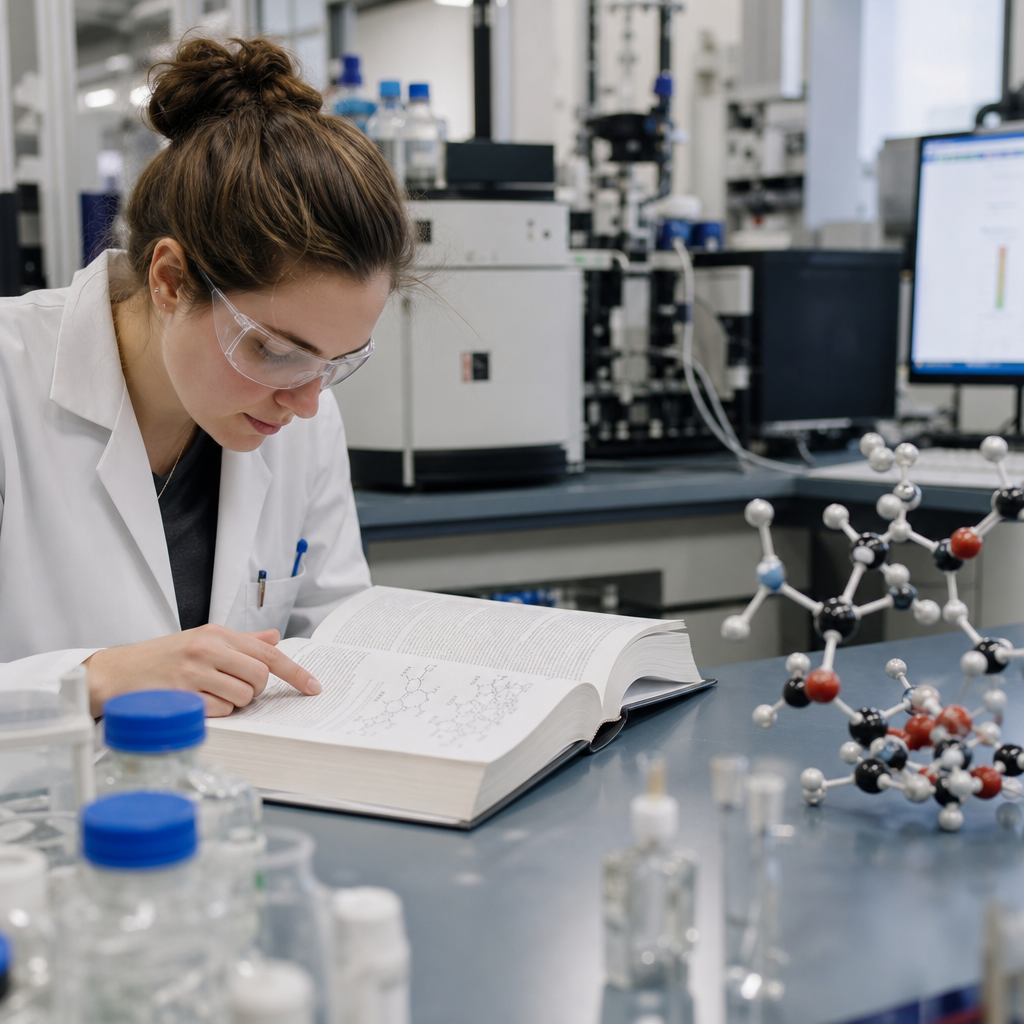
The first technical skill area is understanding how polymers behave from the molecular scale upward. This means knowing the difference between thermoplastics, thermosets, and elastomers; recognizing how molecular weight, molecular weight distribution, branching, crystallinity, tacticity, and crosslink density influence performance; and connecting these concepts to actual product behavior. If you cannot explain why polypropylene shrinks differently than amorphous ABS, or why nylon absorbs moisture and changes dimensions, you will struggle in design, processing, and troubleshooting roles.
Focus first on structure-property-processing relationships. Learn glass transition temperature, melting temperature, viscoelasticity, creep, stress relaxation, environmental stress cracking, and degradation pathways such as oxidation, hydrolysis, UV attack, and chain scission. These are not academic side notes. They explain why a medical tube becomes brittle after sterilization, why an outdoor housing fades and cracks, or why a film line loses consistency when resin moisture is uncontrolled. Strong engineers make decisions by linking polymer chemistry to manufacturing reality.
Use recognized references and standards while learning. Texts by Osswald, Callister, and Sperling remain useful for fundamentals, while ASTM and ISO methods show how industry defines test conditions and acceptance criteria. Reading technical data sheets also matters. Study tensile modulus, Izod impact, HDT, MFI or MFR, specific gravity, and flammability classifications until these numbers stop looking abstract. A data sheet is not a marketing brochure; it is often the first technical document used in material selection and failure review.
Master laboratory testing and characterization methods
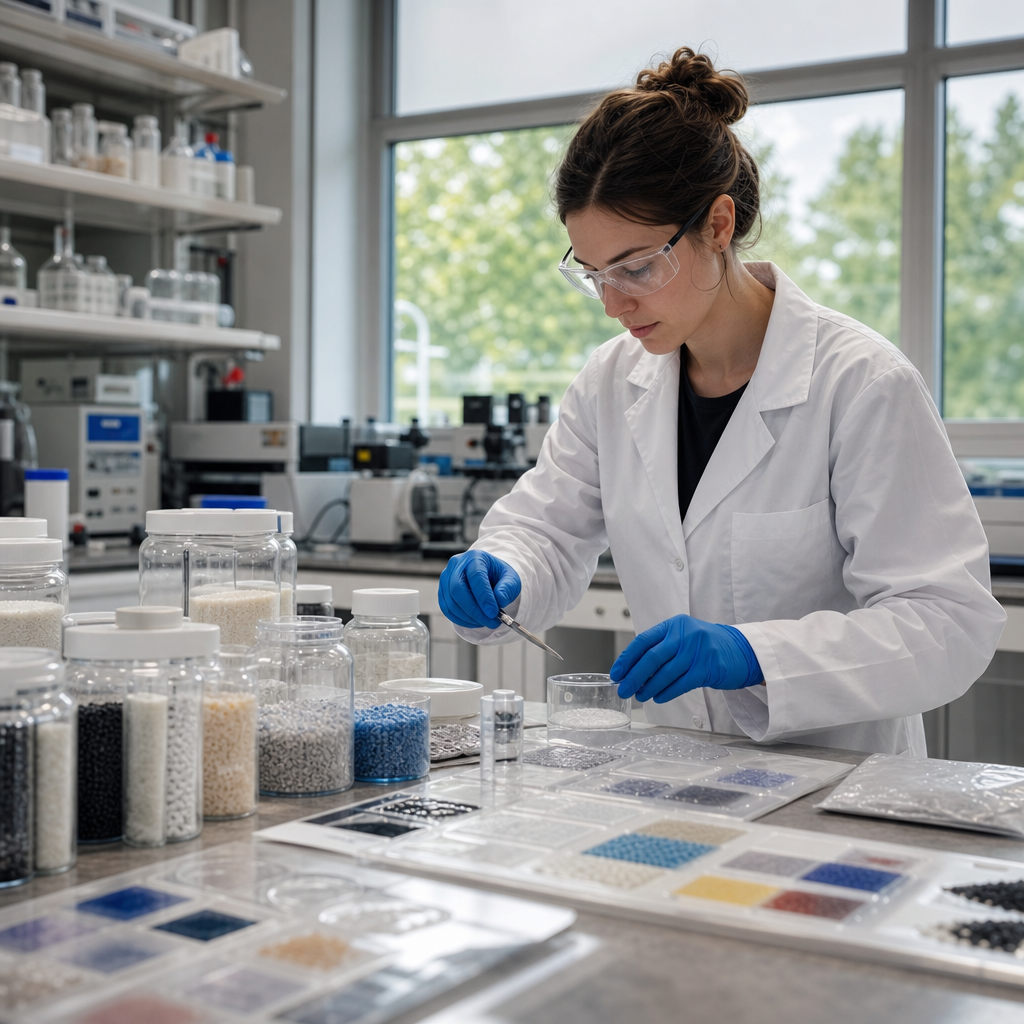
Polymer engineers gain credibility quickly when they can generate, interpret, and question test data. The most valuable technical skills in polymer engineering include mechanical testing, thermal analysis, spectroscopy, microscopy, and basic analytical troubleshooting. In practice, that means learning tensile, flexural, compression, impact, hardness, and fatigue testing, then understanding sample preparation, conditioning, fixture effects, and statistical variation. Bad test setup produces false confidence, and false confidence is expensive.
Thermal methods are especially important for career development because they reveal processing history and material identity. Differential scanning calorimetry helps determine melting behavior, crystallinity, and transitions. Thermogravimetric analysis shows decomposition trends and filler content. Dynamic mechanical analysis reveals modulus changes with temperature and can detect transitions missed by simpler methods. In many plants, being the engineer who can read a DSC curve correctly is more valuable than being the one who merely orders a test.
FTIR, Raman, optical microscopy, SEM, and melt flow testing are also central. I have used FTIR to confirm wrong-material mix-ups, microscopy to identify voids and filler dispersion issues, and melt flow data to spot resin degradation after excessive residence time. Learn not just what each tool does, but when to use it, what its limitations are, and how to combine results into a defensible conclusion. A single test rarely solves a polymer problem; a pattern across tests usually does.
Develop hands-on processing skills that match industry needs
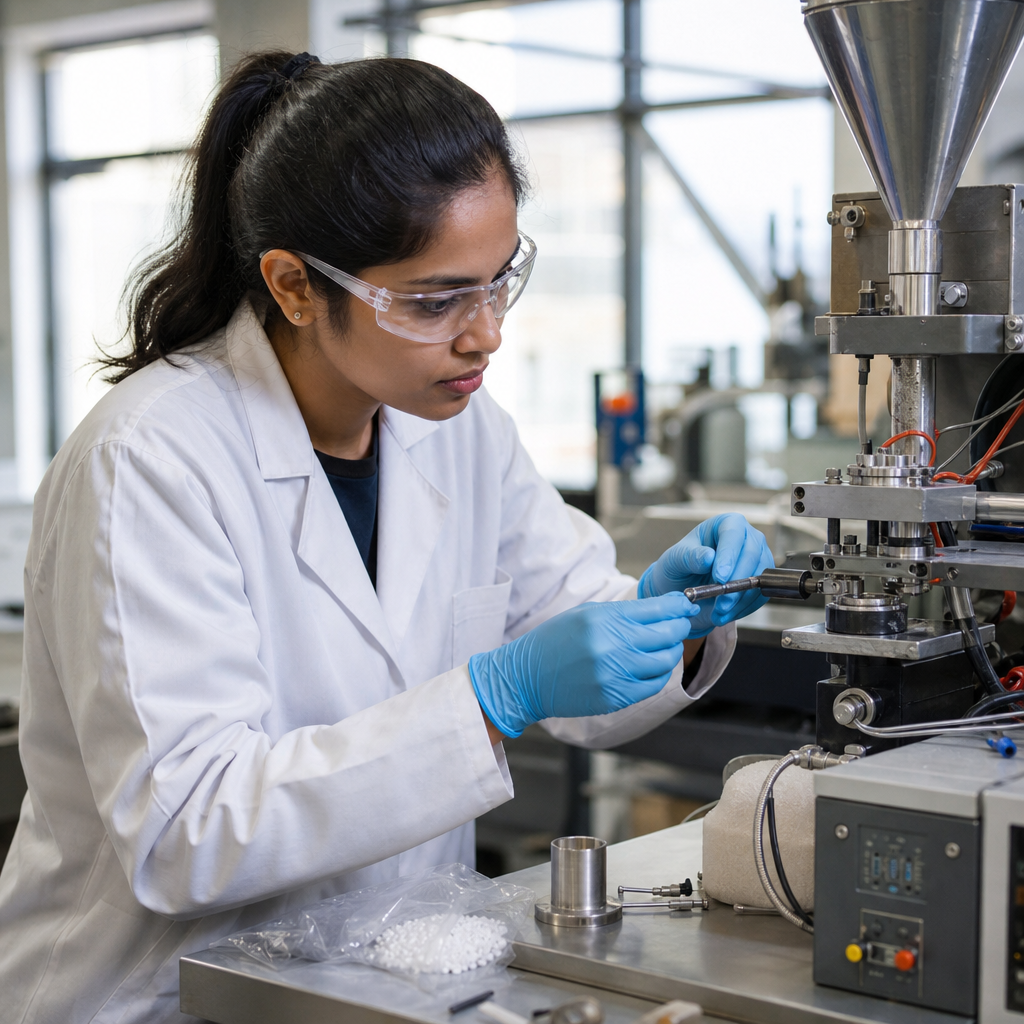
Polymer engineering careers accelerate when technical knowledge is tied to actual processing experience. The most employable engineers understand how materials behave in injection molding, extrusion, blow molding, thermoforming, rotational molding, compression molding, additive manufacturing, and compounding. Even if your role is in R&D or quality, processing knowledge determines whether your recommendations are practical. A material that performs well in a lab but runs poorly on the line may still fail commercially.
Start with the dominant processes in your target industry. For consumer products and automotive components, injection molding is often the best place to begin. Learn screw design basics, barrel temperature profiles, mold temperature control, gate design, packing, cooling, warpage drivers, and common defects such as sink, flash, short shots, burn marks, splay, weld lines, and delamination. For packaging or pipe applications, extrusion knowledge may matter more, including die swell, drawdown, melt strength, gauge control, and line speed interactions.
Compounding deserves special attention because many polymer engineers work with filled and reinforced systems rather than neat resins. Understanding twin-screw extrusion, feeder control, residence time, dispersion, devolatilization, and pellet quality helps you evaluate formulations realistically. Real-world examples include adjusting glass fiber loading to balance stiffness with toughness, adding impact modifiers to reduce brittleness, or changing antioxidant packages to improve thermal stability during regrind use. These are technical career skills employers notice immediately.
| Skill area | What to learn | Why it matters for career development |
|---|---|---|
| Injection molding | Process windows, mold cooling, defect diagnosis | Common requirement in consumer, medical, and automotive manufacturing |
| Extrusion | Die behavior, screw fundamentals, gauge control | Essential for film, sheet, pipe, wire, and profile applications |
| Thermal analysis | DSC, TGA, DMA interpretation | Supports material selection, failure analysis, and quality investigations |
| Material testing | ASTM and ISO mechanical methods | Builds confidence in specification, validation, and customer communication |
| Data tools | DOE, SPC, Minitab, Excel, Python basics | Improves troubleshooting speed and process optimization accuracy |
Learn data analysis, design of experiments, and process control
Technical skills for polymer engineering now extend well beyond the lab bench. Engineers are expected to work with data, identify root causes, and improve processes systematically. That is why design of experiments, statistical process control, measurement system analysis, and capability analysis are core career development areas. When a molded part fails dimensional inspection, guessing at the cause wastes time. A structured DOE can separate the effects of melt temperature, hold pressure, cooling time, and moisture content far more reliably than trial and error.
At minimum, become fluent in Excel and Minitab, and consider learning Python for larger datasets or automation. Control charts, Pareto analysis, regression, ANOVA, and Gage R&R should feel familiar. In manufacturing environments, these tools help reduce scrap, stabilize cycle time, and justify process changes with evidence. In product development, they help optimize formulations and quantify tradeoffs between stiffness, impact strength, density, and cost. Engineers who can present statistically grounded recommendations are promoted faster because they reduce uncertainty.
Process control also includes understanding sensors, machine data, and quality documentation. Learn what variables are actually critical to quality in your process. For extrusion, that may be melt pressure, barrel zone temperatures, amp load, die temperature, and haul-off speed. For injection molding, it may include cavity pressure, fill time, clamp force, cushion, and cooling water stability. Strong polymer engineers do not just collect numbers; they know which numbers predict defects before defects occur.
Build application, design, and failure analysis capability
A complete polymer engineering career requires the ability to connect materials to end-use requirements. This includes material selection, part design awareness, environmental exposure considerations, joining methods, regulatory requirements, and failure analysis. Engineers often enter the field assuming the best material is the strongest one. In practice, the best material is the one that meets performance, processing, cost, compliance, and supply requirements at the same time.
Develop the habit of evaluating applications through a structured lens: load, temperature, chemical exposure, UV exposure, moisture, wear, electrical needs, aesthetics, tolerance requirements, expected life, and assembly method. A housing for outdoor electronics may need UV stabilization, flame resistance, dimensional stability, and color retention. A medical component may require sterilization compatibility, biocompatibility, traceability, and tight particulate control. An under-hood automotive part may face heat aging, fluids, vibration, and long-term creep. Material selection becomes more accurate when application context leads the decision.
Failure analysis is one of the fastest ways to build judgment. Study fracture surfaces, processing records, service conditions, and resin history together. A cracked snap-fit may reflect poor radius design, over-drying, excessive regrind, residual stress, or chemical attack from a cleaner. The point is not to jump to conclusions. It is to gather evidence methodically. Engineers who solve failures well become trusted because they protect both product performance and business relationships.
Use projects, certifications, and industry networks to accelerate growth
Once the fundamentals are in place, progress depends on visible proof of competence. Build a portfolio of technical projects: a molding optimization study, a comparative material selection matrix, a DSC-based degradation investigation, or a DOE that reduced scrap on an extrusion line. Document objective, method, data, result, and business impact. Hiring managers and technical leaders respond strongly to candidates who can describe what they changed, how they measured success, and what they learned when results were mixed.
Targeted certifications and training can strengthen credibility, especially when tied to your role. Programs from the Society of Plastics Engineers, Paulson, RJG, ASTM training resources, and supplier technical academies can deepen practical knowledge. A formal certificate alone will not replace experience, but it can shorten the ramp-up period and signal commitment. For engineers working in regulated sectors, familiarity with quality frameworks, validation protocols, and documentation discipline is equally important.
Industry networking is not separate from technical development; it is part of it. Attend SPE chapter events, trade shows such as NPE or K, supplier webinars, and local manufacturing forums. Conversations with toolmakers, resin suppliers, processors, and test lab specialists often reveal lessons not covered in textbooks. The polymer field changes constantly through new additive packages, recycled-content strategies, bio-based materials, and processing analytics. Staying connected helps you keep your technical skills current and your career options open.
Developing technical skills for polymer engineering is ultimately a matter of building depth in the right order and proving that depth through work that others can trust. Start with polymer science fundamentals, then add testing and characterization, processing knowledge, data analysis, and application-driven judgment. These areas reinforce one another. Understanding crystallinity improves molding decisions. Better data analysis sharpens troubleshooting. Stronger failure analysis improves design recommendations and customer communication.
For career development, the most important shift is moving from passive learning to active practice. Read standards, but also run tests. Study processing theory, but also spend time at the machine. Learn statistics, but apply them to real defects and material comparisons. Keep records of projects, results, and lessons learned. Over time, this creates a technical narrative that shows employers and colleagues exactly how you solve problems and why your conclusions are reliable.
If you want to grow faster, choose one priority area this month and go deep: thermal analysis, injection molding, extrusion, failure analysis, or DOE. Build a project around it, seek guidance from experienced professionals, and document your progress. That disciplined approach is how polymer engineers turn knowledge into skill, skill into credibility, and credibility into long-term career opportunity.
Frequently Asked Questions
What technical skills are most important to develop first in polymer engineering?
The best place to start is with the scientific and process fundamentals that support everything else in polymer engineering. That means building a strong understanding of polymer chemistry, materials science, thermodynamics, mechanics, and transport phenomena. You should know how polymers are structured at the molecular level, how chain architecture affects behavior, and why properties such as crystallinity, glass transition temperature, viscosity, toughness, chemical resistance, and thermal stability matter in real applications. These concepts are not just academic. They directly influence how a resin will process in extrusion, injection molding, blow molding, thermoforming, compounding, or curing operations.
After that, focus on relating material structure to performance. A strong polymer engineer can explain why one material fails under impact, why another warps during molding, or why a formulation changes after exposure to heat, moisture, or UV light. This requires familiarity with common polymer families such as polyethylene, polypropylene, PVC, PET, nylon, polycarbonate, epoxies, silicones, and elastomers, along with the additives and fillers that modify their behavior. Reinforcements, plasticizers, stabilizers, compatibilizers, flame retardants, and pigments all influence final properties and processability.
It is also important to develop technical literacy in testing and processing early on. Learn how to read a datasheet critically, interpret mechanical and thermal test results, and connect laboratory measurements with manufacturing decisions. Skills in rheology, thermal analysis, microscopy, spectroscopy, and failure analysis become much more valuable when they are grounded in basic science. In practical terms, the strongest foundation comes from mastering core theory first, then continually tying that theory to laboratory observations, processing challenges, and end-use product requirements.
How can students and early-career engineers gain hands-on laboratory and processing experience in polymer engineering?
Hands-on experience is essential because polymer engineering is a field where theory and reality constantly interact. The most effective route is to seek repeated exposure to labs, pilot-scale equipment, and applied projects. University laboratory courses, capstone design work, research assistantships, internships, and co-op placements are all excellent starting points. In these environments, you can begin working with characterization tools such as DSC, TGA, DMA, FTIR, tensile testing frames, impact testers, melt flow index equipment, rheometers, and microscopes. The goal is not only to learn how to operate equipment, but to understand what each test reveals about structure, processing behavior, and performance.
Processing experience is equally important. If possible, spend time around extrusion lines, injection molding machines, mixers, compression molding presses, or composite layup and curing operations. Watch how temperature profiles, screw speed, residence time, mold design, cooling rate, and moisture content affect final part quality. Many technical skills in polymer engineering are developed by learning to notice patterns: a part with sink marks, brittleness, discoloration, poor dispersion, warpage, delamination, or inconsistent dimensions often tells a story about material selection, formulation, or process control.
If access to industrial equipment is limited, you can still build practical ability by working through case studies, analyzing published processing data, joining faculty projects, or participating in materials competitions and design teams. Document what you do, what went wrong, how parameters changed, and what outcomes improved. That habit of technical observation is one of the most valuable skills you can develop. Employers consistently value engineers who can move beyond textbook knowledge and make sound decisions based on actual material behavior, test results, and manufacturing constraints.
Why are data analysis and software skills so important in polymer engineering?
Data analysis matters because polymer engineering decisions are rarely based on a single property or a simple pass-fail result. Engineers routinely compare materials, optimize formulations, troubleshoot defects, validate process windows, monitor quality, and predict long-term performance using data from multiple sources. You may be working with tensile strength, elongation, modulus, melt viscosity, thermal transitions, weathering data, creep behavior, fracture surfaces, and process output measurements all at once. Without strong data literacy, it becomes much harder to identify trends, separate real effects from noise, and make technically defensible recommendations.
At a minimum, polymer engineers should be comfortable with spreadsheets, graphing, statistical analysis, and technical reporting. Beyond that, experience with software for data visualization, statistical process control, design of experiments, CAD, simulation, and laboratory instrumentation can significantly strengthen your technical profile. Depending on the role, useful tools may include Minitab, MATLAB, Python, JMP, CAD platforms, finite element analysis software, and specialized polymer processing or materials modeling programs. Even basic programming can be valuable when cleaning datasets, automating calculations, or comparing experimental runs efficiently.
Just as important is learning how to interpret data in context. A polymer engineer should be able to ask whether a property shift is caused by molecular weight changes, filler dispersion, moisture uptake, degradation, orientation effects, or processing variation. Data becomes powerful only when paired with materials knowledge and engineering judgment. The professionals who stand out are not necessarily the ones using the most advanced software, but the ones who can connect numbers to mechanisms, explain uncertainty clearly, and turn experimental findings into practical improvements in product design, process reliability, and material performance.
How do you stay current with new materials, processing methods, and industry trends in polymer engineering?
Polymer engineering evolves quickly, so technical skill development has to include continuous learning. New resin systems, sustainable materials, recycling technologies, additive manufacturing methods, barrier solutions, lightweight composites, and biomedical polymers are changing the field all the time. To stay current, make it a habit to follow technical journals, trade publications, conference proceedings, professional societies, webinars, and materials suppliers’ application notes. Organizations connected to plastics, rubber, composites, and materials engineering often provide some of the most useful updates because they bridge academic research and industrial practice.
Supplier literature and technical datasheets are especially valuable when used carefully. They can teach you how materials are positioned for specific processing methods, regulatory environments, and performance targets. However, it is important to read them critically and compare manufacturer claims with independent test results, published literature, and real-world processing considerations. Staying current also means understanding broader forces shaping the field, including sustainability requirements, circular economy initiatives, regulations on additives and waste, lightweighting demands, electrification, medical material standards, and higher expectations for durability and traceability.
Networking is another major part of technical growth. Speaking with process engineers, product designers, quality specialists, researchers, and equipment suppliers can expose you to challenges that do not always appear in textbooks. Technical conferences, plant visits, internships, and professional association events can help you understand what problems companies are trying to solve right now. The most effective polymer engineers combine formal knowledge with market awareness. They understand not only how a polymer behaves, but also why certain materials and processes are becoming more important in manufacturing, sustainability, and product innovation.
What is the best way to build technical skills for a long-term career in polymer engineering?
The most effective strategy is to treat skill development as a layered process rather than a one-time achievement. Start by mastering the fundamentals of chemistry, physics, and materials behavior. Then add laboratory competence, processing knowledge, testing methods, data interpretation, and communication skills. Over time, deepen your expertise in one or more areas such as compounding, injection molding, extrusion, elastomers, composites, biomaterials, failure analysis, product development, or quality engineering. Broad competence helps you understand the field, while focused expertise helps you stand out professionally.
It is also essential to build a habit of solving real problems. Whenever you study a material or process, ask practical questions: Why was this polymer selected? What failure mode is most likely? Which processing variables matter most? What test methods would confirm the root cause of a defect? How would a change in formulation affect cost, manufacturability, and performance? This problem-solving mindset is what transforms technical knowledge into engineering ability. Employers look for people who can connect formulation, processing, characterization, and end-use requirements in a structured way.
Finally, do not overlook communication and documentation. In polymer engineering, technical value often depends on how clearly you can explain results, justify recommendations, and work across disciplines. You may need to communicate with chemists, manufacturing teams, quality personnel, customers, suppliers, and regulatory stakeholders. Keep records of projects, test methods, conclusions, and lessons learned. Build a portfolio of technical work if possible. The engineers who succeed long term are usually the ones who keep learning, stay curious about materials behavior, and consistently connect scientific understanding with manufacturing reality and product performance.