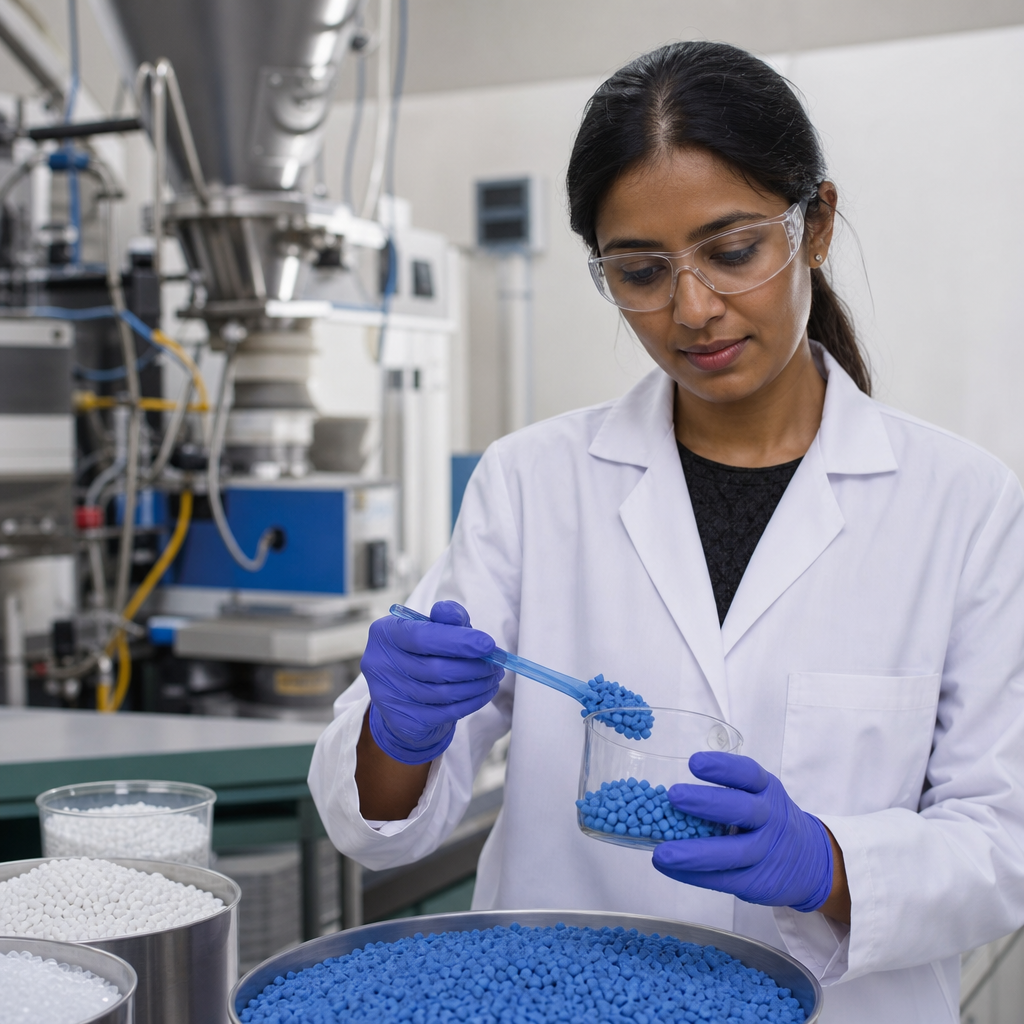
Certifications can materially change a professional’s trajectory in the polymer industry because they convert technical ability, safety awareness, and process knowledge into recognizable proof that employers trust. In a sector that spans resin production, compounding, extrusion, injection molding, elastomers, composites, recycling, quality control, and product design, career advancement often depends on more than years of experience alone. Hiring managers want evidence that a candidate understands standards, can work within regulated environments, and can contribute to productivity, compliance, and innovation from day one.
In practical terms, a certification is a formal credential awarded after assessment by a recognized body, training provider, professional association, equipment manufacturer, or standards-based organization. It differs from a degree because it is narrower, more applied, and usually tied to a job function such as plastics processing, quality systems, lean manufacturing, laboratory testing, project management, health and safety, or sustainability reporting. In polymer careers, these credentials matter because the field is deeply interdisciplinary. A process engineer may need rheology knowledge, statistical process control, and machine troubleshooting. A quality specialist may need ISO 9001 auditing competence, test method discipline, and root cause analysis. A technical sales manager may need polymer chemistry fluency plus regulatory literacy.
I have seen this firsthand in manufacturing and materials teams: two candidates with similar plant exposure can be viewed very differently when one can point to structured validation in injection molding, Six Sigma, auditing, or occupational safety. The credential does not replace performance, but it reduces uncertainty for employers. That matters in an industry where scrap rates, cycle times, customer complaints, and compliance failures directly affect margins. Certifications also help professionals move between segments of the value chain. Someone starting on the shop floor in thermoforming can build a pathway toward process engineering, quality management, technical service, operations leadership, or supplier development by stacking relevant credentials over time.
For readers exploring career development within educational resources, this article serves as a hub. It explains which certifications have the strongest impact, how they influence hiring and promotion, where they fit across common polymer career paths, and how to choose credentials strategically instead of collecting badges that do little for advancement. The central point is simple: in the polymer industry, the right certification can increase credibility, expand access to specialized roles, strengthen pay negotiations, and create a clearer roadmap for long-term growth when it aligns with actual job demands.
Why Certifications Matter Across Polymer Career Stages
The polymer industry rewards applied competence. Whether a professional works in resin synthesis, additive formulation, film extrusion, blow molding, medical plastics, automotive composites, packaging, or recycling, employers consistently look for people who can stabilize processes, improve quality, maintain safety, and document compliance. Certifications matter because they make those capabilities visible. They also signal a habit of continuous learning, which is critical in a field shaped by new materials, tighter environmental expectations, automation, and customer-specific performance standards.
At the entry level, certifications help candidates stand out when they lack deep experience. A recent graduate with coursework in materials science becomes more employable when paired with training in quality tools, safety procedures, or processing fundamentals. For technicians and operators, credentials can formalize skills learned informally on the line, making internal promotion easier. Mid-career professionals use certifications to pivot. I have watched maintenance technicians move into process optimization after gaining structured plastics processing training and data-analysis skills. I have also seen chemists move into regulatory and quality roles after auditor education and standards-based certification.
At senior levels, the effect changes but does not disappear. Managers and technical leaders benefit when certifications support broader responsibilities such as operational excellence, project governance, supplier qualification, product stewardship, and sustainability. In many polymer businesses, especially those serving aerospace, healthcare, food packaging, electronics, or automotive markets, leadership roles require fluency in systems and standards. A production manager who understands ISO-based quality management, corrective action systems, and risk assessment frameworks is easier to trust with customer audits and cross-functional accountability.
Importantly, certifications are most valuable when linked to business outcomes. Employers care less about the credential itself than about what it predicts: lower scrap, safer plants, faster troubleshooting, stronger documentation, more consistent testing, and smoother audits. That is why the best career development plans tie each certification to a role transition or measurable capability rather than treating education as a checkbox exercise.
Which Certifications Have the Strongest Career Impact
Not all credentials carry equal weight in polymer industry careers. The most influential are those connected to recognized standards, specialized processing knowledge, or transferable operational disciplines. In practice, they usually fall into six categories: plastics-specific processing and troubleshooting, quality management and auditing, lean and Six Sigma, health and safety, project and program management, and sustainability or regulatory compliance.
Plastics-specific certifications often have immediate value for technicians, operators, process engineers, and supervisors. Training from respected industry associations, major equipment suppliers, and technical institutes can improve competence in injection molding, extrusion, thermoforming, blow molding, mold setup, drying, material handling, and defect analysis. These credentials are especially powerful because they map directly to daily plant performance. A processor who understands residence time, melt temperature, shear sensitivity, moisture control, and part warpage causes is more useful than someone relying on trial and error.
Quality certifications have broad impact because polymers serve demanding end markets. Internal auditor credentials, quality engineer certifications, metrology training, and statistical process control coursework help professionals manage capability studies, gauge repeatability and reproducibility, nonconformance reporting, corrective and preventive actions, and customer complaint investigations. Where products must meet ASTM, ISO, UL, FDA, or automotive requirements, quality discipline can be career defining.
Lean and Six Sigma credentials also travel well across polymer operations. They show competence in waste reduction, variation control, data-driven improvement, and structured problem solving. In compounding and molding environments, these methods can address high scrap, inconsistent cycle times, excessive changeover duration, and unstable yield. Safety credentials matter just as much. Chemical handling, machine guarding, lockout/tagout, hazard communication, and occupational risk management are nonnegotiable in plants processing resins, additives, solvents, heated equipment, and moving machinery.
| Certification category | Typical roles | Primary career benefit | Example impact |
|---|---|---|---|
| Processing and machinery | Operator, technician, process engineer | Faster technical credibility | Reduced scrap and shorter startup time |
| Quality and auditing | Quality technician, lab analyst, quality manager | Access to regulated customers | Stronger audit readiness and complaint resolution |
| Lean and Six Sigma | Supervisor, engineer, operations leader | Promotion into improvement roles | Higher yield and lower downtime |
| Safety and compliance | EHS specialist, plant leader, supervisor | Broader operational responsibility | Safer processes and better regulatory performance |
| Project management | Technical manager, commercialization lead | Cross-functional leadership credibility | Smoother launch of new materials or tooling |
| Sustainability and recycling | Product steward, development engineer, strategy lead | Relevance in emerging growth areas | Support for circularity goals and customer reporting |
How Certifications Influence Hiring, Pay, and Promotion
The clearest effect of certification is often at the hiring stage. Recruiters screening polymer industry resumes need fast signals that a candidate can function in technical environments. A degree in chemistry, mechanical engineering, materials science, or industrial technology establishes foundation. A relevant certification adds proof of job readiness. When a plant is struggling with molded part defects or a customer is pressuring a supplier on audit findings, employers favor candidates who already speak the language of process windows, capability indices, control plans, FMEA, and corrective action.
Certifications also help candidates pass the internal credibility test after they are hired. In many polymer businesses, advancement depends on whether operations leaders trust someone with expensive equipment, customer-facing investigations, or process changes that could affect output and compliance. A credential does not guarantee trust, but it shortens the time needed to earn it. I have seen young engineers gain influence faster when they could combine data from rheometers, DSC testing, and line performance with formal training in root cause analysis or continuous improvement.
Pay impact varies by role and region, but the mechanism is straightforward. Credentials can increase compensation when they move a person into a higher-value function, make them eligible for regulated programs, or reduce employer training risk. For example, an operator who earns specialized molding or extrusion training may qualify for lead technician responsibilities. A quality professional who becomes a certified auditor may handle supplier audits, customer documentation, and corrective action systems previously reserved for managers. A supervisor with lean credentials may be assigned plant-wide improvement targets tied to bonus structures.
Promotion benefits are strongest when certifications are paired with visible project results. Employers promote outcomes, not certificates. The winning combination is a credential plus evidence such as reduced scrap by 18 percent, improved first-pass yield, successful launch of a recycled-content formulation, or closure of a major customer complaint through disciplined analysis. That is why professionals should document before-and-after performance whenever training is applied on the job.
Matching Credentials to Common Polymer Industry Career Paths
Career development in polymers works best when certifications align with the path a professional wants to follow. For processing roles, the priority is usually machine, material, and troubleshooting expertise. Injection molding professionals benefit from training in mold setup, scientific molding concepts, resin drying, cavity balance, and defect diagnosis. Extrusion specialists gain from instruction in screw design basics, die behavior, melt pressure interpretation, temperature profiling, and line optimization. For compounding, knowledge of feeders, dispersion, devolatilization, pellet quality, and formulation control is especially valuable.
Laboratory and quality paths demand a different stack. Here, credentials connected to test methods, calibration discipline, internal auditing, measurement system analysis, and statistical software often carry more weight than broad management courses. A polymer lab analyst working with tensile testing, impact testing, DSC, TGA, FTIR, melt flow index, and moisture analysis gains leverage by demonstrating precision, traceability, and standards familiarity. Quality managers serving automotive or medical customers may need sector-specific quality system competence in addition to generic quality credentials.
Research and development professionals benefit from certifications less frequently than manufacturing staff, but the right ones still matter. Project management, design of experiments, regulatory affairs, sustainability assessment, and intellectual property awareness can all strengthen commercialization roles. In product development, success depends on translating formulation ideas into scalable, compliant products. That transition is where structured credentials add real value.
Commercial roles also benefit. Technical sales, business development, and customer success professionals in polymers often win trust by demonstrating enough processing and application knowledge to diagnose customer problems credibly. A salesperson who understands why a nylon compound is moisture sensitive, why a PET preform needs careful drying, or why a recycled polyolefin blend may shift impact performance can create more value than someone relying only on relationship skills. Certifications that deepen technical fluency can therefore improve both career mobility and sales effectiveness.
How to Choose Certifications Strategically and Avoid Low-Value Credentials
The smartest approach is not to collect as many certifications as possible. It is to select credentials with strong signaling power, direct job relevance, and practical application. Start by identifying the next role you want, not the next course you could take. Then map the competence gaps between your current responsibilities and that target role. If you want to move from operator to process technician, prioritize processing fundamentals and troubleshooting. If you want to move from lab analyst to quality engineer, prioritize statistical methods, auditing, and quality systems. If you aim for plant leadership, operational excellence and safety become more important.
Next, evaluate the source. Credentials from recognized industry associations, accredited bodies, major standards organizations, well-known universities, and respected equipment or training providers generally carry more credibility than generic online badges. Look at assessment rigor. A strong certification requires demonstrated understanding through exams, practical work, or case-based evaluation. Also consider whether employers in your segment mention the credential in job postings. That is a reliable market signal.
Cost and time matter, but return on effort matters more. Some of the highest-value certifications are not the most expensive; they are the ones that solve a current business need. I advise professionals to discuss choices with managers before enrolling. If a plant is trying to reduce changeover loss, a lean credential may receive immediate support. If a site is preparing for customer audits, internal auditor training may create faster visibility. Finally, avoid credentials with vague titles, no recognizable standard, and no clear tie to polymer industry work. In career development, specificity beats accumulation.
Building a Long-Term Learning Plan for Polymer Career Growth
The best certification strategy is cumulative. Early in a polymer career, build technical depth and safety discipline. In the middle stage, add quality, analytics, and improvement methods. Later, layer in leadership, project delivery, regulatory knowledge, and sustainability. This sequence mirrors how responsibility expands in real companies. It also creates a portfolio of evidence that supports internal movement across operations, quality, development, supply chain, and commercial functions.
Because this page serves as a hub for career development under educational resources, use it as a framework for deeper exploration. Review role-specific guidance on processing careers, quality careers, laboratory advancement, operations leadership, technical sales, and sustainability-focused polymer jobs. Compare certifications against your target market, whether that is packaging, automotive, medical devices, consumer goods, building products, or recycling. Different sectors reward different combinations of credentials and experience.
The key takeaway is clear: certifications have the greatest impact on polymer industry careers when they validate a skill that employers urgently need and when the professional applies that skill to measurable results. Choose credentials that fit your next role, learn them deeply, and connect them to plant performance, product quality, compliance, or customer value. Done well, certifications become more than educational milestones. They become career leverage. Audit your current skill gaps, select one high-impact certification, and make it the next deliberate step in your polymer career growth.
Frequently Asked Questions
1. How do certifications influence career growth in the polymer industry?
Certifications can have a direct and measurable impact on career growth in the polymer industry because they turn specialized knowledge into verified professional credibility. In a field as broad and technical as polymers, employers are often evaluating candidates for roles in resin manufacturing, compounding, extrusion, injection molding, thermoset processing, elastomers, composites, recycling, quality assurance, and product development. A certification helps hiring managers quickly identify whether a candidate has mastered specific competencies that matter on the job, such as material selection, process optimization, quality systems, safety protocols, and troubleshooting methods.
For early-career professionals, certifications can help close the gap between academic learning and real-world manufacturing expectations. They show initiative, discipline, and a willingness to learn beyond basic job requirements. For experienced professionals, certifications can reinforce years of hands-on expertise with formal recognition that is easier for employers, clients, and internal leadership teams to evaluate. This matters especially when competing for promotions, technical specialist roles, supervisory positions, or cross-functional opportunities in quality, operations, R&D, or regulatory compliance.
Certifications also support career mobility. A technician or engineer with recognized credentials may be better positioned to move between companies, regions, or polymer subsectors because the certification communicates a standardized level of competence. In many cases, it can strengthen salary negotiations, improve promotion prospects, and increase visibility for leadership-track roles. While certifications do not replace practical experience, they often accelerate advancement by proving that a professional understands both the science and the operational standards that drive performance in polymer-related environments.
2. Which types of certifications are most valuable for polymer industry professionals?
The most valuable certifications depend on a professional’s role, specialization, and long-term career goals, but the strongest credentials are typically those that align closely with technical function, safety responsibility, quality expectations, and manufacturing performance. In the polymer industry, certifications related to plastics processing, injection molding, extrusion, materials science, quality management, lean manufacturing, Six Sigma, health and safety, and regulatory compliance tend to carry the most practical value.
For professionals working directly in production, process-focused certifications can be especially useful because they demonstrate understanding of machine setup, material behavior, troubleshooting, cycle optimization, scrap reduction, and process control. In quality and operations roles, certifications tied to quality systems, statistical process control, root cause analysis, auditing, or ISO-related practices can significantly strengthen a candidate’s profile. In technical development and engineering roles, credentials that emphasize polymer chemistry, composite materials, testing methods, design validation, or failure analysis may be more relevant.
Safety and environmental certifications are also increasingly important. Because polymer manufacturing often involves heat, pressure, chemicals, additives, dust management, and waste handling, employers place a high value on professionals who understand safe operating procedures and environmental responsibilities. In areas such as recycling and sustainability, certifications connected to circular materials systems, waste minimization, life-cycle thinking, or compliance can provide a strong competitive advantage.
The best strategy is not simply to collect credentials, but to choose certifications that clearly support a career direction. A process technician aiming for production leadership should prioritize processing, quality, and supervisory credentials. A materials engineer targeting R&D may benefit more from advanced technical certifications and testing expertise. Relevance matters more than quantity, and the most respected certifications are those that can be directly applied to better plant performance, product quality, compliance, or innovation.
3. Can certifications help someone enter the polymer industry without extensive experience?
Yes, certifications can be very helpful for entering the polymer industry when a candidate does not yet have extensive experience. One of the biggest hiring challenges for entry-level applicants is proving job readiness. Employers may see interest and potential, but they still need evidence that the candidate understands the fundamentals of materials, manufacturing processes, workplace safety, and quality expectations. Certifications help provide that evidence in a clear and credible way.
For someone transitioning from another manufacturing sector, a technical school program, or an academic background in chemistry, engineering, or industrial technology, a certification can bridge knowledge gaps and signal commitment to the polymer field. It shows that the candidate has taken the time to learn industry-specific concepts such as melt flow behavior, resin handling, moisture control, tooling basics, process parameter management, defect identification, and standard operating practices. Even when a certification does not substitute for plant-floor experience, it often makes a resume stronger and helps applicants perform better in interviews because they can discuss terminology, workflows, and technical principles with more confidence.
Certifications can also support access to trainee roles, junior technician positions, quality inspection jobs, and operator-development pathways. Employers are often more willing to invest in onboarding and practical training when they see that a candidate already understands the language and core expectations of the industry. In competitive hiring environments, a relevant certification can be the difference between being screened out and being invited to interview.
That said, certifications work best when paired with practical signals of readiness, such as internships, lab work, apprenticeships, project experience, or familiarity with industrial equipment and documentation. In other words, certifications open doors, but candidates should still show how they can contribute in a real production or technical setting. For newcomers, they are often one of the most effective ways to build credibility quickly and begin a polymer career on stronger footing.
4. Do certifications matter more for technical roles or leadership positions in polymer companies?
Certifications matter for both technical roles and leadership positions, but they provide different kinds of value depending on the career stage and job scope. In technical roles, certifications are often used to validate specific capabilities. For example, employers may look for proof that a candidate understands polymer processing conditions, material properties, test methods, tooling interactions, defect analysis, quality control systems, or safe equipment operation. In these cases, the certification acts as evidence that the professional can perform or support highly specialized work with consistency and competence.
In leadership positions, certifications are valuable because they demonstrate not only technical grounding but also familiarity with systems that drive operational success. Supervisors, plant managers, quality leaders, and engineering managers are expected to make decisions that affect throughput, safety, waste reduction, compliance, staffing, and customer satisfaction. Certifications in areas such as quality management, continuous improvement, Six Sigma, lean operations, EHS, or regulatory standards show that a leader understands the frameworks behind disciplined decision-making and process improvement.
Technical depth remains important even in management, especially in polymer manufacturing environments where leadership teams must understand how materials, machinery, tooling, and process controls interact. A manager who has both hands-on experience and recognized certifications often earns stronger credibility with operators, engineers, auditors, customers, and senior executives. This can be particularly important in troubleshooting environments, capital project planning, new product launch support, and customer complaint resolution.
Ultimately, certifications may be more immediately visible in technical hiring, but they can be just as strategic for leadership advancement. They show a pattern of professional development, a commitment to standards, and the ability to connect technical knowledge with business performance. In the polymer industry, where product quality and process reliability are tightly linked, that combination is highly valued at every level of the organization.
5. Are certifications alone enough to build a successful long-term career in the polymer industry?
No, certifications alone are not enough to build a successful long-term career in the polymer industry, but they can be a very strong foundation. The polymer sector is highly practical, and long-term success depends on applying knowledge in real environments where materials, equipment, people, deadlines, and quality standards all interact. Employers value certifications because they verify learning, but they also want to see problem-solving ability, production awareness, adaptability, communication skills, and a record of dependable performance.
A successful polymer career usually develops through a combination of technical education, on-the-job experience, continuous training, and professional credibility. Certifications strengthen that combination by showing that a professional is serious about mastery and industry standards. They can help someone win an interview, qualify for promotion, shift into a new specialty, or gain trust in a customer-facing or compliance-related role. However, long-term advancement often comes from what a person does after the credential is earned: improving yields, reducing defects, supporting audits, leading teams, solving processing problems, contributing to innovation, and helping facilities operate more safely and efficiently.
The most effective professionals use certifications as part of an ongoing development strategy. They keep learning as materials evolve, sustainability demands increase, quality expectations tighten, and processing technologies become more sophisticated. In polymers, new additives, advanced composites, recycled content integration, automation, and digital process monitoring are changing skill requirements across the industry. Certifications can help professionals stay relevant, but they need to be supported by real results, practical experience, and a willingness to grow with the market.
In short, certifications are powerful career accelerators, not standalone guarantees. They provide recognized proof of knowledge and commitment, which is extremely valuable in a technical industry. But the professionals who build the strongest long-term careers are those who combine certifications with hands-on expertise, measurable impact, and a reputation for solving the kinds of challenges that matter most in polymer manufacturing and materials development.