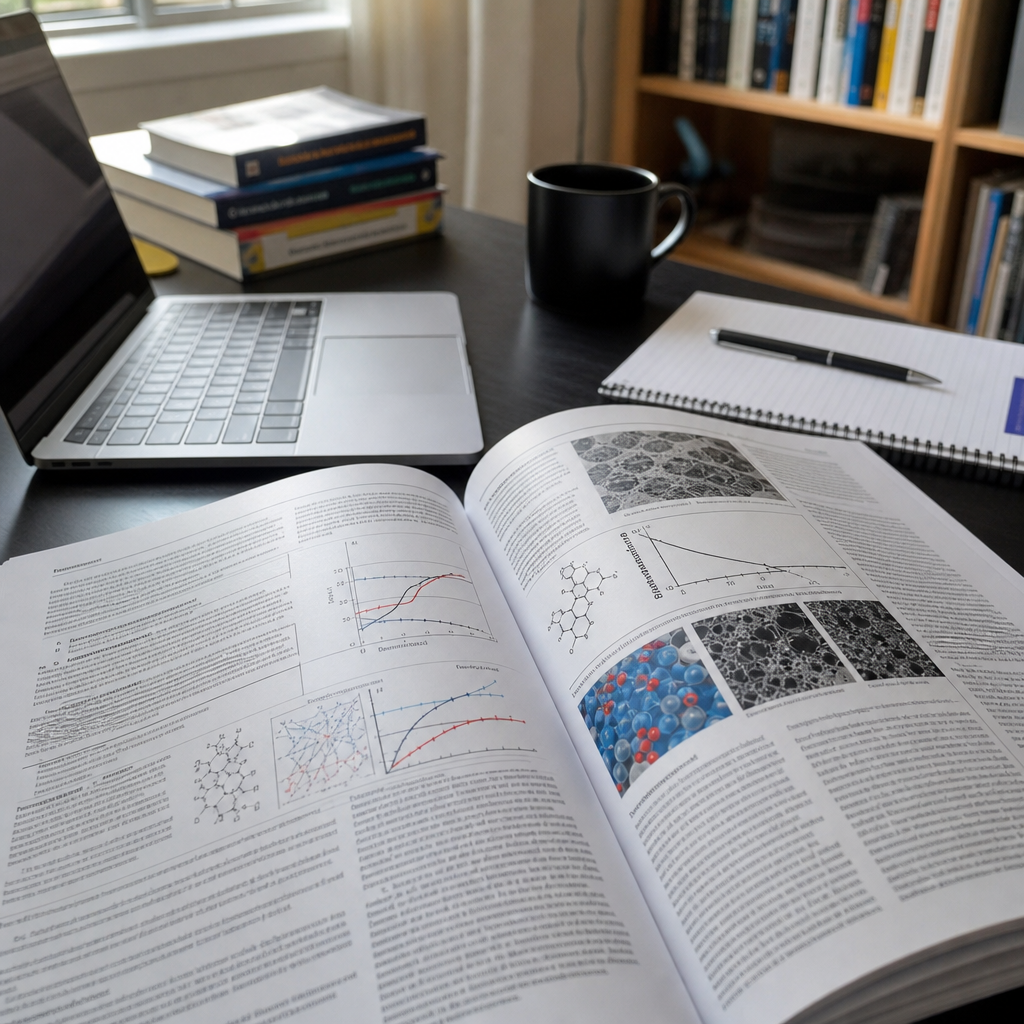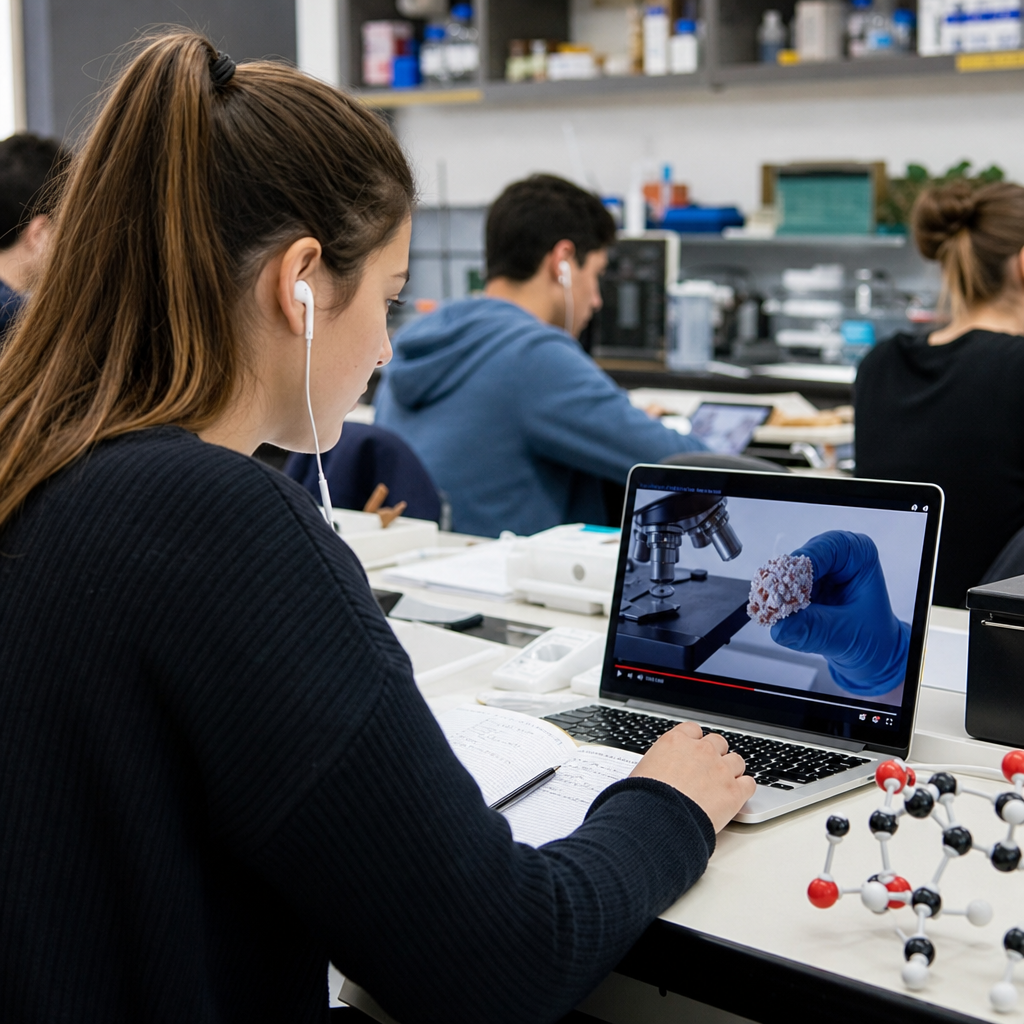
Integrating videos and podcasts into polymer curriculum gives educators a practical way to make abstract materials science concepts visible, current, and memorable. In polymer education, students often struggle with scales and processes they cannot directly observe: chain entanglement, crystallization, viscoelastic deformation, extrusion, additive manufacturing, degradation, and recycling systems. Well-chosen educational videos and podcasts bridge that gap by combining demonstration, expert explanation, and industry context. In my experience supporting technical training and curriculum design, these media formats consistently improve attention, discussion quality, and retention when they are tied to clear learning outcomes rather than used as passive add-ons.
A polymer curriculum includes the structured content used to teach plastics, elastomers, fibers, composites, polymer chemistry, processing, testing, sustainability, and product design. Educational videos are short or long-form visual resources such as laboratory demonstrations, process walkthroughs, animations, webinars, and recorded lectures. Educational podcasts are audio resources including interviews, explainers, case studies, and industry roundtables. Together, they help instructors teach both foundational principles and fast-moving topics such as biopolymers, chemical recycling, life-cycle assessment, and regulatory change. They also support different learning environments, from secondary career and technical education to undergraduate engineering, workforce upskilling, and continuing professional education.
This topic matters because polymer science is inherently interdisciplinary and strongly linked to manufacturing reality. Students need to connect molecular structure to end-use performance, processing conditions to defects, and material selection to cost, compliance, and environmental impact. Traditional lectures can establish vocabulary, equations, and theory, but they rarely capture the sound of an injection molding floor, the sequence of a tensile test, or the decision-making behind selecting polypropylene instead of ABS for a consumer part. Media-rich teaching can. It also matches how learners increasingly consume technical information: through mixed formats they can revisit on demand. A strong hub for educational videos and podcasts therefore helps instructors choose media with purpose, integrate it into lessons, assess learning, and build a curriculum that feels relevant to real polymer work.
Why multimedia works in polymer education
Videos and podcasts are effective in polymer curriculum because they address three persistent instructional challenges: invisibility, variability, and relevance. Invisibility refers to mechanisms students cannot easily see, such as diffusion, phase separation, or crosslink density effects. Animation and microscopy footage make these mechanisms concrete. Variability refers to the fact that polymer properties depend on thermal history, moisture, additives, molecular weight distribution, and process parameters. Recorded case studies let students compare controlled examples side by side. Relevance matters because students are more motivated when they understand how a DSC thermogram, melt flow index result, or stress-strain curve affects packaging, medical devices, automotive components, or 3D printed parts.
In practice, I have found that video is strongest for showing processes and spatial relationships, while podcasting excels at context, professional judgment, and current industry developments. A video showing twin-screw compounding can help students identify feeders, barrel zones, venting, and die behavior. A podcast interview with a process engineer can explain why screw design, residence time, and filler dispersion become commercial issues when throughput targets rise. Used together, the formats support layered learning: watch to understand what happens, then listen to understand why tradeoffs matter. That combination is especially useful in polymer programs where course time is limited and lab access varies by institution.
Multimedia also supports inclusive instruction. Students with different levels of prior chemistry or manufacturing exposure benefit from replayable explanations. Captions improve accessibility and technical vocabulary recognition. Audio content supports commuting learners and apprentices who may not have long uninterrupted study blocks. For multilingual cohorts, transcripts help with terminology such as spherulites, rheometry, compatibilization, and thermoset cure kinetics. The result is not entertainment replacing rigor; it is a better delivery system for rigorous content.
What to include in an educational videos and podcasts hub
An effective hub page for educational videos and podcasts in polymer curriculum should organize content by instructional purpose, not just by format. The first category is foundational science: polymerization mechanisms, chain architecture, glass transition, crystallinity, viscoelasticity, diffusion, and degradation. The second is processing: extrusion, injection molding, blow molding, thermoforming, compression molding, rotational molding, fiber spinning, and additive manufacturing. The third is characterization and testing: FTIR, DSC, TGA, DMA, rheology, tensile testing, impact testing, hardness, permeability, microscopy, and failure analysis. The fourth is applications and design: packaging, medical polymers, electronics, automotive, construction, and consumer products. The fifth is sustainability: recycling streams, design for disassembly, bio-based feedstocks, compostability standards, and life-cycle thinking.
Each category should answer a direct teaching question. For example: What video best explains shear thinning? Which podcast gives a balanced view of mechanical versus chemical recycling? What lab demonstration clearly shows the effect of cooling rate on crystallinity? What industry panel explains why PET bottle design must consider barrier properties, top-load performance, and recyclability together? When the hub is structured around these questions, instructors can find resources quickly and students can use the page for revision. This also strengthens internal linking across related educational resources such as lab activities, assessment guides, safety protocols, and case studies.
The best hub pages describe why a resource is useful before linking to it. A short annotation should identify audience level, duration, technical focus, and likely classroom use. For instance, a ten-minute microscopy video may work as a pre-lab primer in an introductory course, while a one-hour webinar on reactive extrusion belongs in an advanced processing elective. Without that context, educators waste time screening content that does not fit their syllabus, equipment, or learning outcomes.
How to align media with polymer learning outcomes
Integration starts with course objectives. If a module requires students to explain how molecular structure affects polymer properties, choose media that makes cause-and-effect explicit. A concise animation comparing linear, branched, and crosslinked systems is more useful than a general documentary on plastics. If the outcome is process troubleshooting, use factory footage, defect analysis clips, or practitioner interviews that reveal parameter changes and consequences. Alignment prevents the common mistake of assigning interesting media that does not advance assessment performance.
A reliable planning method is to map every video or podcast to one cognitive task: define, explain, compare, apply, diagnose, or evaluate. In an introductory materials course, a video on DSC might support defining glass transition and melting behavior. In a processing course, a podcast on warpage in injection-molded parts could support diagnosis by asking students to connect mold temperature, gate placement, and differential shrinkage. In a sustainability module, a panel discussion might support evaluation by having students weigh recycled content targets against contamination risk, food-contact regulation, and mechanical property loss.
| Curriculum goal | Best media format | Example polymer topic | Suggested activity |
|---|---|---|---|
| Visualize invisible phenomena | Short video or animation | Crystallization and spherulite growth | Pause and label key stages |
| Hear expert reasoning | Podcast interview | Material selection for medical tubing | Write a tradeoff summary |
| Prepare for laboratory work | Demonstration video | Tensile testing of HDPE and PLA | Predict results before lab |
| Compare processing routes | Factory walkthrough video | Extrusion versus injection molding | Create a process comparison chart |
| Discuss current issues | Panel podcast or webinar recording | Chemical recycling economics | Debate feasibility and limits |
This mapping approach works because it clarifies instructional value in advance. Students know why they are watching or listening, and instructors can connect media to quizzes, lab reports, design briefs, or exam questions. In polymer education, that connection is essential because learners often enjoy process footage yet miss the underlying science unless tasks are explicit.
Selecting high-quality videos and podcasts for polymer courses
Quality control matters. The most useful resources are technically accurate, current, clearly produced, and appropriate for the learner’s level. Start by checking source credibility. Strong providers include professional societies, universities, standards organizations, reputable manufacturers, instrumentation companies, and experienced industry educators. The American Chemical Society, Society of Plastics Engineers, NIST, MatWeb, and suppliers such as Bruker, TA Instruments, Anton Paar, or Instron often publish educational content grounded in recognized methods. When a source discusses testing or compliance, verify that terminology matches accepted standards such as ASTM, ISO, or USP where relevant.
Next, check for completeness and bias. A vendor video on rheometers may explain oscillatory testing well but understate limitations, sample preparation issues, or competing methods. A recycling podcast may highlight one technology pathway without discussing contamination, energy demand, or collection infrastructure. Balanced instruction requires noting those gaps. I recommend building a short review checklist covering technical accuracy, date, production clarity, accessibility features, source expertise, and classroom fit. This is especially important in polymers because outdated claims about biodegradability, recycling rates, or material safety can mislead students quickly.
Duration is another selection criterion. For most classes, ten to fifteen minute videos and twenty to thirty minute podcast segments work better than assigning full hour-long recordings. If a longer webinar is valuable, segment it by timestamp and pair each section with a focused prompt. That keeps cognitive load manageable and lets students revisit exactly the part on nucleating agents, melt fracture, oxygen transmission rate, or environmental stress cracking that they need.
Practical ways to use media before, during, and after class
Before class, videos and podcasts work best as primers. Assign a short animation on polymerization, a lab safety walkthrough, or a podcast introducing packaging design constraints. Ask students to submit one misconception they had corrected and one question they still have. That simple routine creates diagnostic information for the instructor. In classes I have supported, pre-class media significantly improved the quality of live discussion because students arrived with baseline vocabulary already in place.
During class, use short segments, not uninterrupted screenings. Pause to annotate a process diagram, compare two materials, or ask students to predict what happens if barrel temperature rises or mold cooling becomes uneven. In a rheology lesson, a brief clip showing capillary versus rotational measurement can lead directly into a discussion of shear rate dependence and why processing data and formulation data are not interchangeable. In a design module, a podcast excerpt on medical device regulation can anchor a case study about selecting PVC, TPU, or silicone for tubing.
After class, use media for reinforcement and extension. Students can revisit a microscope demonstration before writing a morphology report, or listen to an industry interview before drafting a material selection memo. Advanced learners may compare multiple perspectives, such as a sustainability podcast from a brand owner and a recycling webinar from a materials recovery expert. This staged use turns media into part of the learning sequence rather than a standalone supplement.
Assessment strategies that make media accountable
To ensure videos and podcasts improve learning, attach them to visible assessment. Low-stakes quizzes work well for terminology, process steps, and core concepts. Reflection prompts work well for tradeoffs and professional judgment. More advanced assessments can ask students to critique a process decision, interpret test data shown in a video, or compare claims from two podcast guests. In polymer curriculum, this is where media becomes academically serious.
Good prompts are specific. Instead of asking students what they learned from a recycling episode, ask which contamination sources most reduce recyclate quality and how design changes could mitigate them. Instead of asking for a summary of a compounding video, ask students to identify where poor filler dispersion could originate and what operating changes might help. Rubrics should reward evidence-based reasoning, use of correct terminology, and ability to connect media content to course concepts such as modulus, permeability, cure state, residence time distribution, or chain scission.
Student-created media is also powerful. Have teams produce a three-minute explainer on stress whitening, a podcast interview with a local processor, or a narrated lab walkthrough on FTIR sample preparation. Creating media forces precision. Students quickly discover that explaining why PLA behaves differently from PET or why moisture control matters for nylon requires true understanding, not memorized definitions.
Common mistakes and how to avoid them
The biggest mistake is treating media as enrichment instead of instruction. If the connection to outcomes, activities, and assessment is weak, students perceive videos and podcasts as optional. A second mistake is choosing resources that are engaging but technically shallow. Polymer education needs visual clarity and scientific depth. A third mistake is ignoring accessibility. Every core resource should have captions or a transcript, and audio quality must be high enough for technical terms to be understood reliably.
Another common error is failing to update the collection. Polymer industries change quickly, especially in sustainability, additives regulation, additive manufacturing, and recycling technologies. Review hub resources at least annually. Remove broken links, replace outdated claims, and add new examples that reflect current commercial practice. Finally, avoid overwhelming students with too many resources. A curated path beats a large archive. The goal of this educational videos and podcasts hub is not volume; it is relevance, credibility, and teachable structure.
Videos and podcasts can transform polymer curriculum when they are selected carefully, tied to learning outcomes, and used across the full teaching cycle. They help students see invisible material behavior, hear real engineering judgment, and connect classroom concepts to manufacturing, testing, and sustainability decisions. The most effective hub pages organize resources by teaching purpose, annotate them clearly, and support instructors with practical ways to use them before, during, and after class.
The central benefit is better understanding that transfers beyond a single lesson. Students do not just remember that polymers have different properties; they learn why structure, processing, and application context interact. They do not just hear that recycling is important; they evaluate the technical and economic limits of real systems. For educators, that means stronger engagement, more informed discussion, and assessments that reflect authentic polymer work.
If you are building or revising educational resources, start by auditing one module in your polymer curriculum. Add one high-quality video, one focused podcast segment, and one assessment prompt linked to a clear outcome. Then expand your educational videos and podcasts library into a structured hub that supports the entire program.
Frequently Asked Questions
1. Why should educators use videos and podcasts in a polymer curriculum?
Videos and podcasts help translate polymer science from an abstract, highly theoretical subject into something students can see, hear, and connect to real-world applications. Many polymer concepts are difficult to visualize through static diagrams alone. Students may read about polymer chain entanglement, crystallization, viscoelastic behavior, extrusion, or degradation, yet still struggle to understand what those ideas actually look like in practice. A well-selected video can show a melt-processing line in motion, demonstrate how a polymer specimen stretches and recovers, or visualize additive manufacturing layer by layer. That kind of direct representation improves comprehension because it links terminology to observable phenomena.
Podcasts add a different but equally valuable dimension. They expose students to expert voices from research, manufacturing, sustainability, product development, and recycling. This helps learners understand that polymer science is not just a textbook topic; it is an active field shaped by innovation, regulation, environmental concerns, and industrial constraints. Hearing a materials engineer explain why one polymer is chosen over another, or a sustainability specialist discuss circular design and recyclability, gives students context that supports deeper learning. Together, videos and podcasts make polymer curriculum more current, memorable, and relevant while also supporting a wider range of learning preferences.
2. What types of videos and podcasts work best for teaching polymer concepts?
The most effective media are those that directly support specific learning outcomes rather than simply adding variety to a lesson. For videos, process demonstrations are especially useful in polymer education. These may include footage of extrusion, injection molding, thermoforming, fiber spinning, blow molding, 3D printing, mechanical testing, thermal analysis, or recycling operations. Animation-based videos are also powerful when teaching structure-property relationships because they can illustrate microscopic or molecular-scale events that cannot be observed directly, such as chain alignment, amorphous versus crystalline regions, diffusion, crosslinking, and stress relaxation. Laboratory demonstration videos are another strong option because they help students connect instrumentation and procedure with theoretical concepts.
For podcasts, the best choices usually feature clear expert discussion tied to materials science, manufacturing, sustainability, biomedical polymers, packaging, composites, or emerging polymer technologies. Episodes that include interviews with scientists, engineers, product designers, or industry leaders often work particularly well because they reveal how concepts learned in class are applied in decision-making environments. Educators should prioritize media that are accurate, accessible, current, and appropriately pitched to the students’ level. Strong selections do more than explain facts; they show why those facts matter in research, industry, and society.
3. How can instructors align videos and podcasts with learning objectives in a polymer course?
The key is to treat videos and podcasts as instructional tools, not as standalone content fillers. Start by identifying the exact concept students need to understand. If the goal is to explain viscoelastic deformation, choose media that show creep, stress relaxation, or dynamic mechanical response in a way students can interpret. If the objective is to compare processing methods, select videos that clearly contrast extrusion, injection molding, and additive manufacturing. If students are learning about polymer sustainability, assign a podcast episode on recycling systems, design-for-reuse, or material life cycle analysis and tie it to a discussion or written reflection.
Alignment becomes stronger when the media are embedded in a structured activity. Before students watch or listen, give them guiding questions that focus attention on the intended outcome. During the activity, ask them to identify terminology, processes, tradeoffs, or cause-and-effect relationships. Afterward, reinforce learning through application: problem sets, short concept maps, process comparisons, case-study analysis, lab preparation, or group discussion. Instructors can also connect media to assessment by asking students to explain what they observed using correct polymer science vocabulary. This approach ensures the resource supports measurable learning rather than passive consumption.
4. What are some practical ways to use videos and podcasts in class, labs, and assignments?
There are many flexible ways to integrate media into polymer instruction. In lecture settings, short videos can serve as concept openers, especially for topics that benefit from motion and process visibility. For example, an extrusion or injection molding clip can introduce polymer processing before discussing rheology and thermal behavior. An animation of semicrystalline morphology can prepare students for a deeper explanation of crystallization and mechanical properties. In laboratories, videos are useful for pre-lab orientation because they familiarize students with equipment, safety procedures, specimen preparation, and expected observations before they begin hands-on work.
Podcasts work especially well for homework, flipped learning, and discussion-based assignments. Students might listen to an episode about polymer recycling or biodegradable materials and then analyze the scientific, economic, and environmental tradeoffs involved. Instructors can also assign reflective prompts such as asking students to connect a podcast discussion to class concepts like degradation mechanisms, barrier properties, or material selection. For advanced courses, students can compare industry perspectives from a podcast with peer-reviewed literature, which strengthens critical thinking and source evaluation skills. Group projects are another excellent option: students can review a video or podcast, summarize the technical content, assess its accuracy, and explain how it relates to polymer chemistry, structure-property relationships, processing, or sustainability.
5. How can educators make sure videos and podcasts improve learning rather than distract from it?
Effective integration depends on curation, framing, and follow-up. First, educators should evaluate every resource for scientific accuracy, clarity, relevance, and production quality. In polymer education, misleading simplifications can create confusion, especially when discussing molecular behavior, phase structure, degradation pathways, or manufacturing constraints. Media should also match the students’ background knowledge. A highly technical industry interview may be ideal for upper-level materials students but too dense for beginners unless paired with supporting notes or vocabulary guidance.
Second, instructors should actively frame the resource. Students learn more when they know what to look for and why it matters. Brief introductions, targeted questions, note-taking templates, and post-viewing summaries all help turn media into focused learning experiences. Third, learning should be reinforced through interaction and assessment. Ask students to explain a process shown in a video, critique the claims made in a podcast, compare examples to textbook models, or apply what they learned to a new polymer problem. This kind of active engagement prevents videos and podcasts from becoming background content and instead makes them part of a coherent instructional strategy. When chosen carefully and used intentionally, these media can significantly improve understanding, retention, and student engagement across the polymer curriculum.