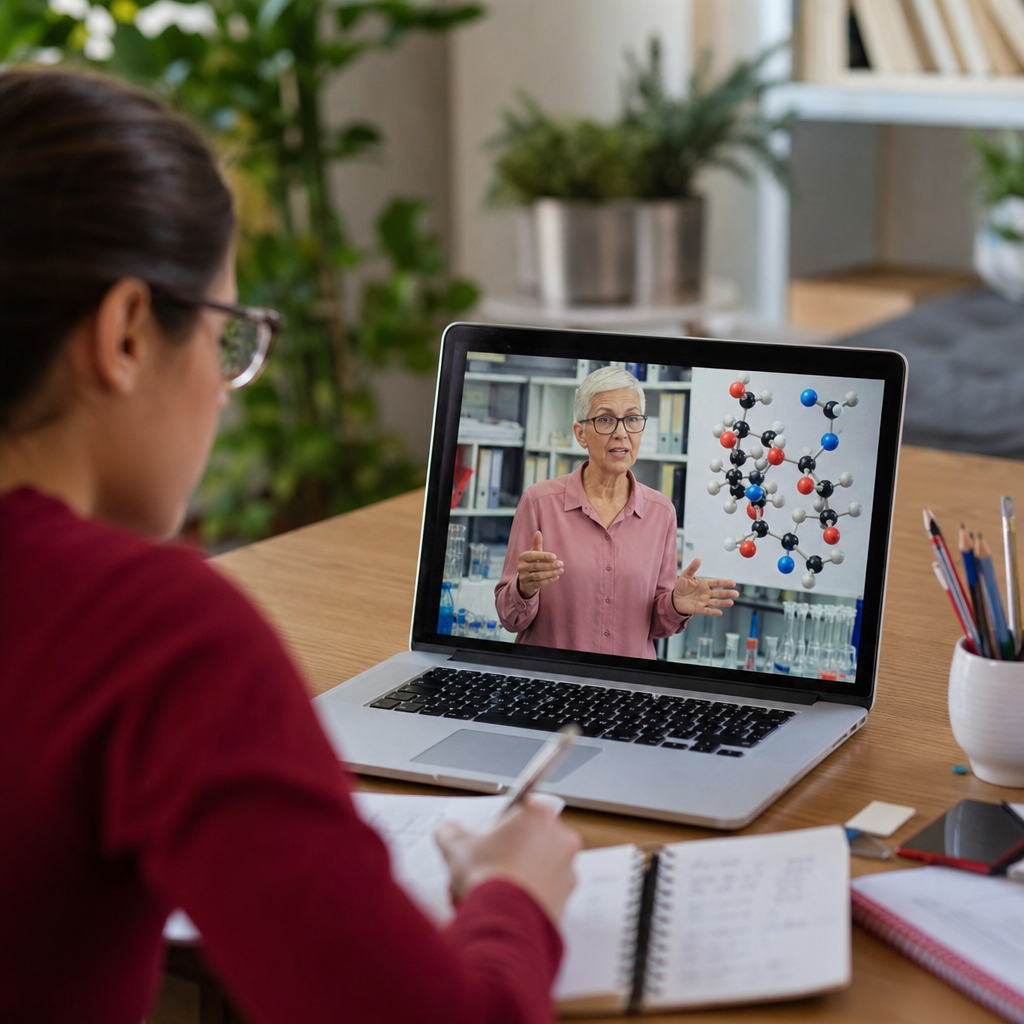
Webinars have become one of the most effective formats for polymer science education because they combine expert instruction, visual demonstration, live discussion, and on-demand access in a way that lectures, textbooks, and static slides cannot match. In polymer science, where students and professionals must understand synthesis routes, structure-property relationships, rheology, characterization methods, processing conditions, and sustainability issues, the ability to see data explained in real time matters. A webinar is a seminar delivered online, usually with slides, video, chat, polling, and recording features. In practice, the term now overlaps with educational videos, virtual workshops, panel discussions, and even podcast-style interviews that are streamed live and archived later. I have used webinars to train graduate researchers on DSC interpretation, onboard new staff to GPC workflows, and connect formulation teams with instrument vendors without travel delays. That experience has shown me that the best webinar programs do more than broadcast information. They create a repeatable learning system for polymer science education. As a hub within educational resources, this article explains how webinars support learning, where educational videos and podcasts fit, which formats work best for different audiences, and how institutions, societies, and companies can build stronger digital teaching libraries around polymer science topics.
Why webinars fit polymer science education so well
Polymer science is unusually well suited to webinar-based teaching because the field is inherently visual, data-heavy, and interdisciplinary. A strong lesson on semicrystalline morphology, for example, often needs microscopy images, X-ray diffraction patterns, thermal traces, and processing context. In a live online session, an instructor can move from a schematic of chain entanglement to an actual torque rheometer curve and then answer a question about why two polypropylene grades behave differently during extrusion. That layered explanation is harder to deliver through text alone.
Webinars also solve a practical access problem. Polymer expertise is distributed across universities, instrument manufacturers, resin suppliers, converters, and professional societies such as the American Chemical Society, SPE, and Royal Society of Chemistry. Students in one department may never meet an expert in reactive extrusion, membrane casting, or polymer electrolyte design in person, yet they can join a webinar from anywhere. During the past several years, many labs normalized hybrid instruction, and recorded webinars became durable educational assets rather than one-time events.
Another reason webinars matter is speed. Polymer science changes quickly in areas such as recycling, biobased feedstocks, additive manufacturing, and battery materials. A textbook chapter on chemical recycling can be outdated before the next edition. A webinar series can respond within weeks, bringing in researchers who are actively publishing on depolymerization catalysts, life-cycle assessment, or compatibilization strategies for mixed plastic waste. When the content is archived, the result is a living library that supports both foundational learning and current awareness.
How educational videos and podcasts expand the webinar model
A hub page on educational videos and podcasts should treat webinars as the center of a broader content ecosystem, not as an isolated format. In polymer science education, each medium serves a different instructional purpose. Live webinars are strongest when learners need interaction, direct Q&A, and timely interpretation of new research or industrial methods. Recorded educational videos work best for evergreen topics such as polymerization mechanisms, tensile testing basics, FTIR peak assignment, or the meaning of glass transition temperature. Podcasts are especially useful for context, career insight, and thought leadership because they allow experts to explain decision-making, research direction, or commercialization lessons in conversational form.
I have seen the strongest learning outcomes when these formats are linked intentionally. A department might host a live webinar on differential scanning calorimetry, then publish a ten-minute video on baseline selection and enthalpy calculation, and finally release a podcast interview with a thermal analysis specialist discussing common interpretation errors. The webinar teaches the concept, the short video reinforces the procedure, and the podcast broadens understanding by connecting technique to real lab work. This layered model also supports different learning preferences and time constraints.
For content planning, it helps to separate educational goals into three buckets: concept mastery, method demonstration, and professional context. Educational videos usually dominate method demonstration because they can zoom in on sample preparation, software settings, or instrument maintenance. Podcasts excel at professional context, such as explaining how a polymer scientist moved from academic biomaterials research into medical device development. Webinars sit across all three buckets because they can blend teaching, demonstration, and discussion in one event.
Core use cases for webinars in polymer science
The most valuable polymer science webinars usually fall into a few recurring categories. First are fundamentals webinars. These cover topics such as chain architecture, molecular weight averages, copolymer composition, viscoelasticity, crystallization kinetics, and degradation pathways. They are ideal for undergraduates, new graduate students, and professionals entering the field from chemistry, materials science, or mechanical engineering.
Second are instrument and characterization webinars. These are among the most attended sessions because polymer analysis depends heavily on technique selection and correct interpretation. Common topics include gel permeation chromatography, DSC, TGA, DMA, rotational rheometry, capillary rheometry, FTIR, NMR, SAXS, WAXS, and scanning electron microscopy. A good webinar in this category does not stop at theory. It shows sample limitations, calibration choices, and typical sources of error. For example, a GPC webinar should explain why absolute molecular weight values depend on standards, detector configuration, solvent system, and polymer conformation.
Third are processing and application webinars. These connect material science to manufacturing realities such as shear heating, residence time, die swell, orientation, and additive dispersion. Real-world examples might compare how moisture affects polyamide extrusion, why nucleating agents alter polypropylene cycle time, or how reactive compatibilizers improve recycled blend performance. These sessions attract both students and industry professionals because they bridge classroom concepts with production outcomes.
Fourth are sustainability and regulation webinars. Interest here has expanded rapidly, driven by circular economy targets, extended producer responsibility, food-contact rules, and reporting demands from brands and regulators. Learners want direct answers about mechanical versus chemical recycling, compostability standards, PFAS concerns, design for disassembly, and how to evaluate environmental claims. Webinars allow experts from multiple disciplines to address technical, commercial, and policy questions together.
What effective webinar instruction looks like in practice
Not all webinars teach well. In polymer science education, the strongest sessions share a common design pattern: they define the problem clearly, show the scientific principle, present real data, interpret that data step by step, and end with practical implications. If the topic is dynamic mechanical analysis, the presenter should not simply list storage modulus and loss modulus definitions. They should show a temperature sweep, identify the glass transition, explain frequency dependence, and connect the result to material selection for vibration damping or service-temperature performance.
Good webinar educators also manage cognitive load carefully. Dense polymer topics can overwhelm learners when slides are packed with equations, spectra, and acronyms. Effective presenters reveal information progressively and translate jargon into plain language without losing precision. When I teach rheology online, I define shear thinning in one sentence, then immediately show a viscosity curve for a filled formulation and explain why the curve affects pumping and coating. That sequence gives learners both terminology and application.
Interactivity is another marker of quality. Polls can test whether attendees understand the difference between number-average and weight-average molecular weight before the instructor moves forward. Chat questions can uncover confusion about crystallinity calculations or solvent selection. Breakout rooms are less common in technical webinars, but they can work in graduate seminars or short courses where learners compare characterization strategies for an unknown sample.
| Format | Best use in polymer education | Main strength | Main limitation |
|---|---|---|---|
| Live webinar | New research, Q&A, expert panels | Immediate interaction and clarification | Attendance depends on scheduling |
| Recorded video | Technique tutorials, evergreen lessons | Repeatable self-paced learning | Little or no direct feedback |
| Podcast | Career insight, industry trends, interviews | Convenient long-form context | Weak for visual data and equations |
| Hybrid series | Full topic coverage across formats | Reinforces learning in multiple ways | Requires stronger editorial planning |
Benefits for universities, industry, and professional societies
For universities, webinars extend faculty reach and help close curriculum gaps. A department with limited instrumentation can still expose students to advanced topics by partnering with external speakers or vendors. Recorded sessions support flipped classrooms, where students watch a webinar before discussion or lab work. This is especially useful in polymer labs, where in-person time should focus on experiments, not introductory theory.
For industry, webinars reduce training friction. New hires in compounding, coatings, adhesives, packaging, medical devices, or automotive materials often need fast orientation to polymer fundamentals and application-specific issues. A well-built webinar library standardizes knowledge across sites and time zones. Companies also use webinars for customer education, though the best ones avoid turning technical instruction into product promotion. Credibility rises when the teaching includes limitations, comparative methods, and transparent data interpretation.
Professional societies benefit because webinars support community building and continuing education at scale. They can bring together academic researchers, processors, brand owners, recyclers, and policymakers for discussions that would be difficult to organize locally. Archiving those sessions creates institutional memory. Over time, a society can build topic clusters around rheology, polymer composites, biomaterials, elastomers, and sustainability, turning scattered events into a structured educational resource.
Challenges and limitations to address
Webinars are powerful, but they are not a complete substitute for hands-on polymer science training. Students still need to prepare samples, run instruments, troubleshoot noisy baselines, clean dies, and see how materials behave physically. Watching a melt flow index demonstration is useful; actually handling a degraded resin and correlating odor, color change, and viscosity shift is different. The best programs acknowledge this gap and pair digital teaching with lab sessions, office hours, or supervised practice.
Another limitation is uneven quality control. Some webinars are excellent technical resources, while others are thinly disguised sales presentations. Learners need signals of trust: clear learning objectives, named speakers with relevant credentials, disclosed affiliations, and claims supported by standards or accepted methods. In polymer characterization, references to ASTM, ISO, or USP methods often help anchor the instruction in recognized practice.
Accessibility also deserves attention. Captions, transcripts, readable slides, and downloadable figures improve learning for non-native English speakers and for anyone reviewing dense material later. Podcasts should include show notes and key references. Videos should be segmented by topic so users can revisit a section on tan delta or melt strength without scrubbing through an hour-long file.
How to build a strong polymer webinar and media library
An effective educational hub organizes content by learner intent. Start with foundational pathways such as polymer chemistry, polymer physics, characterization, processing, applications, and sustainability. Within each pathway, connect live webinars, short videos, and podcast interviews so users can move from basics to advanced discussion naturally. This internal structure helps learners find related resources and strengthens the value of the entire educational collection.
Editorial standards matter. Use consistent titles, abstracts, speaker bios, timestamps, and takeaway summaries. Tag each resource by polymer family, method, industry segment, and skill level. If a webinar covers DMA for thermosets, link it to related videos on cure kinetics and a podcast on composite qualification. I have found that simple post-event summaries dramatically increase reuse because they tell busy readers exactly what they will learn before they click.
Measurement is important too. Useful metrics include registration-to-attendance rate, average watch time, repeat viewing, question volume, and downstream actions such as syllabus adoption or training completion. Those numbers reveal whether a topic needs a shorter companion video, a glossary, or a follow-up podcast to answer unresolved questions.
Webinars now play a central role in polymer science education because they make expert knowledge more accessible, current, and reusable than many traditional teaching formats. They are particularly effective in a field that depends on visual data, instrument literacy, and cross-disciplinary explanation. When webinars are combined with educational videos and podcasts, they form a complete learning ecosystem: live sessions for interaction, videos for repeatable technical instruction, and audio interviews for professional insight and industry context. Universities can use this model to expand curriculum depth, companies can use it to standardize training, and professional societies can use it to strengthen communities of practice across the polymer value chain.
The key is thoughtful design. Strong polymer webinars answer specific questions, show real data, explain limitations, and connect science to applications such as extrusion, recycling, adhesives, biomaterials, and packaging. Strong media libraries then organize that content so learners can move easily from introductory concepts to advanced methods. If you are building an educational resources hub, treat webinars as the anchor format and support them with targeted videos and podcasts. Start by mapping your audience’s biggest polymer science questions, then create a linked series that answers them clearly and completely.
Frequently Asked Questions
Why are webinars especially effective for polymer science education?
Webinars are particularly effective in polymer science education because they bring together several teaching advantages that are difficult to achieve through textbooks, traditional lectures, or static slide decks alone. Polymer science is a highly visual and interdisciplinary field. Learners need to understand how molecular structure influences material behavior, how synthesis conditions affect performance, and how characterization data connects to real processing and application outcomes. In a webinar, an instructor can walk through reaction schemes, microscopy images, rheology curves, thermal analysis plots, and processing diagrams in real time while explaining not just what the data shows, but why it matters.
Another major strength is the ability to combine expert instruction with live interaction. Students, researchers, and industry professionals can ask questions as concepts are introduced, which is invaluable in a subject where confusion often arises at the intersection of chemistry, physics, and engineering. A webinar can also include demonstrations of software, instrumentation workflows, or case studies from industrial practice, making the material feel more immediate and applied. Because sessions are often recorded, learners can revisit complex topics such as crystallization behavior, viscoelastic response, or structure-property relationships at their own pace. That combination of expert guidance, visual explanation, discussion, and on-demand access makes webinars one of the most efficient and engaging formats for polymer science education.
What polymer science topics are best suited to webinar-based learning?
Many core and advanced polymer science topics are ideally suited to webinars because they benefit from visual explanation, step-by-step interpretation, and discussion of real data. Polymer synthesis is a strong example. Instructors can explain mechanisms such as free-radical polymerization, step-growth polymerization, ring-opening polymerization, or controlled/living techniques while simultaneously showing reaction pathways, kinetic behavior, and practical examples. This helps learners connect abstract chemistry to actual material design.
Webinars are also highly effective for teaching structure-property relationships, which are central to polymer science. Concepts such as molecular weight distribution, branching, crosslink density, crystallinity, glass transition temperature, and copolymer architecture become easier to understand when supported by charts, spectra, microscopy images, and comparative case studies. Characterization methods are another natural fit. Techniques like DSC, TGA, FTIR, NMR, GPC, DMA, rheometry, SEM, and XRD involve data interpretation that is much easier to teach when an expert can annotate graphs and discuss what common patterns and anomalies mean.
In addition, webinars work very well for processing-related topics such as extrusion, injection molding, compounding, film formation, and additive manufacturing. These areas require learners to connect processing conditions with morphology and final performance, and a webinar can bridge that gap through diagrams, videos, and troubleshooting examples. Sustainability, recycling, biodegradability, and circular materials design are also well suited to this format, especially because these topics evolve quickly and often require discussion of current research, regulation, and industrial practice. In short, any polymer science topic that depends on visual evidence, expert interpretation, and practical context can benefit significantly from webinar-based learning.
How do webinars improve understanding of complex polymer data and characterization results?
One of the biggest educational challenges in polymer science is learning how to interpret data rather than simply recognize terminology. Webinars address this challenge very effectively because they allow instructors to explain results dynamically and in context. Instead of presenting a finished conclusion, a webinar speaker can show raw or processed data and walk learners through the reasoning process step by step. For example, an instructor can display a DSC thermogram and explain how to identify the glass transition, melting behavior, crystallization events, and thermal history. The same can be done for rheology frequency sweeps, GPC traces, tensile curves, or FTIR spectra.
This format helps learners develop analytical thinking, which is essential in both research and industry. In polymer characterization, the meaning of a dataset often depends on the material system, processing history, test conditions, and intended application. A webinar allows the presenter to compare multiple datasets, highlight subtle differences, and explain why one result points to chain scission, another to branching, and another to filler-network formation or phase separation. Because participants can ask questions in real time, they can clarify points of confusion before misunderstandings become fixed.
Recorded webinars add another layer of value. Learners can pause and review difficult sections, especially when dealing with advanced topics such as viscoelastic modeling, morphology development, or multi-technique analysis. Over time, this repeated exposure helps students and professionals become more confident in reading graphs, evaluating experimental quality, and drawing technically sound conclusions. That is a major reason webinars have become so useful for polymer science education: they teach not only facts, but also interpretation.
Can webinars support both students and working professionals in polymer science?
Yes, and that broad applicability is one of their greatest strengths. Polymer science includes a wide audience: undergraduate and graduate students, academic researchers, quality-control analysts, formulation chemists, process engineers, product developers, and sustainability specialists. These groups often have different learning goals, but webinars can be structured to serve all of them. For students, webinars provide access to expert explanations that reinforce classroom learning and expose them to real-world applications beyond the curriculum. They can make difficult concepts feel more approachable and help learners see how foundational topics such as polymerization, morphology, and mechanics are used in practice.
For professionals, webinars offer a convenient way to stay current without the time and cost associated with travel or extended in-person training. Polymer technology changes continuously, whether in new bio-based materials, advanced composites, recycling strategies, analytical methods, or processing optimization. A webinar allows professionals to gain targeted knowledge from specialists, often with examples directly relevant to manufacturing, product performance, compliance, or innovation. Because many sessions are available on demand, they fit well into demanding schedules.
Webinars also create a valuable bridge between academia and industry. Students can hear how polymer principles apply in commercial settings, while professionals can revisit theoretical concepts that improve troubleshooting and decision-making. When done well, webinar programs can include introductory sessions for newcomers, advanced technical deep dives for specialists, and panel discussions that bring multiple perspectives together. This flexibility makes webinars a practical educational tool across the full polymer science community.
What makes a high-quality polymer science webinar truly valuable for learning?
A high-quality polymer science webinar does much more than present information on slides. The most valuable webinars are carefully designed around clear learning objectives, strong technical accuracy, and relevant examples. An effective presenter explains concepts in a logical sequence, connects theory to experimental or industrial practice, and uses visuals that genuinely support understanding. In polymer science, that often means including molecular diagrams, property-performance comparisons, instrument outputs, processing schematics, and case studies that show how material choices affect real outcomes.
Equally important is the quality of explanation. Polymer science can quickly become dense, especially when discussing kinetics, thermomechanical behavior, morphology, or sustainability trade-offs. A strong webinar speaker knows how to break down complex ideas without oversimplifying them. They clarify terminology, interpret data carefully, and address common misconceptions. Interactive elements such as live questions, polls, or discussion segments increase value because they make it easier for learners to test their understanding and engage with the material.
Accessibility also matters. Good webinars are easy to attend live, available on demand, and supported by useful resources such as slides, reading lists, references, or certificates of completion. The best sessions acknowledge the diversity of the audience by balancing scientific depth with practical clarity. In the context of polymer science education, a truly valuable webinar is one that helps learners move from passive exposure to active understanding, giving them knowledge they can apply in study, research, process development, characterization, or material selection.