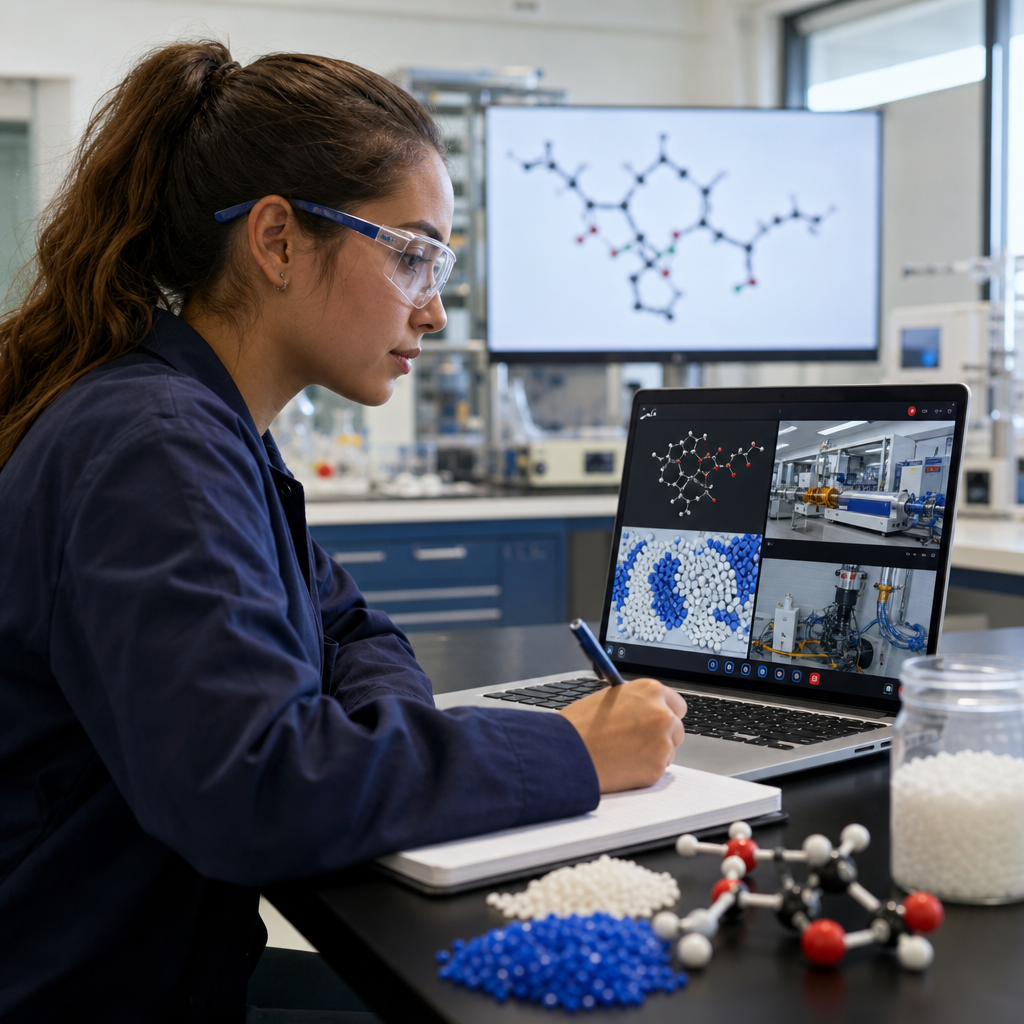
Multimedia resources have become one of the most effective ways to build polymer knowledge because they combine visual demonstration, expert narration, and repeatable lessons in formats that match how technicians, engineers, students, and managers actually learn on the job. In polymer training, multimedia resources usually mean educational videos, podcasts, webinars, recorded lab demonstrations, animated explainers, and interactive presentation libraries that support learning about plastics, elastomers, composites, additives, processing, testing, and product performance. I have used these formats in technician onboarding, customer education, and process troubleshooting, and the difference is clear: a short video showing splay in injection molding or a podcast with a resin supplier explaining moisture sensitivity often teaches faster than pages of static text alone.
This matters because polymer work is highly visual, process-driven, and terminology-heavy. People need to see screw design concepts, hear how specialists discuss melt flow index, and watch how a DSC curve is interpreted in context. Educational videos and podcasts also solve a practical problem: many polymer teams are spread across plants, labs, and time zones, and not everyone can attend live training. Well-structured multimedia training creates a reusable knowledge base, supports consistent instruction, and helps learners move from basic definitions to applied decision-making. As the hub page for this subtopic, this article explains how to use multimedia resources for polymer training, what formats work best, how to evaluate content quality, and how to build a learning pathway that connects broad education with more specialized resources.
Why Educational Videos and Podcasts Work for Polymer Training
Educational videos and podcasts work especially well in polymer training because polymers are not purely theoretical materials. Their behavior depends on temperature history, shear, formulation, moisture, crystallinity, orientation, and processing conditions. In practice, learners struggle when they only read a definition of warpage, gate blush, sink marks, oxidation, or environmental stress cracking without seeing a real part, a machine setting, or a failure surface. Video closes that gap. A concise explainer can show the relationship between barrel temperature, residence time, and discoloration in a way that a manual cannot match.
Podcasts add a different strength. They are ideal for context, trends, and expert interviews. A production supervisor can listen during a commute to a discussion on recycled content in polyethylene film. A materials engineer can hear a supplier explain how coupling agents improve filler dispersion in polypropylene compounds. Because polymer decisions often involve tradeoffs between cost, performance, compliance, and manufacturability, spoken conversation helps learners understand why experienced professionals make certain choices. Good podcast episodes also expose listeners to the language of the field, including terms such as viscoelasticity, glass transition, annealing, rheology modifiers, and weathering protocols.
Another reason multimedia performs well is repetition. New staff can replay a five-minute lesson on the difference between amorphous and semi-crystalline polymers until the concept sticks. Teams can revisit a webinar on ASTM tensile testing before an audit or a customer qualification project. This repeatability is critical in regulated or quality-sensitive environments where training consistency matters.
Choose the Right Multimedia Format for the Learning Goal
The most common mistake is using one format for every training need. In polymer education, the format should match the learning objective. If the goal is conceptual understanding, animated videos are strong for explaining chain structure, branching, crosslinking, morphology, and diffusion. If the goal is operational performance, recorded machine walkthroughs are better for topics such as mold temperature control, dryer setup, screw recovery, extrusion die cleaning, or press safety. If the goal is awareness of industry developments, podcasts and expert panels usually outperform slide-heavy modules.
For example, when I trained new injection molding technicians, short videos worked best for startup checks, purging practices, and defect recognition. When I trained account managers who sold engineered plastics into medical and electrical markets, interview-style audio content was more useful because they needed to understand application requirements, UL ratings, sterilization effects, and supply chain realities rather than machine operations. For lab analysts learning FTIR, DSC, TGA, and melt flow testing, screen-recorded software demonstrations paired with narrated sample preparation videos provided the best results.
Use webinars when a topic requires layered explanation, such as polymer selection for outdoor applications, resin drying standards, or comparing nylon, acetal, PBT, and polypropylene in dimensional stability. Use short clips when the learner needs one answer quickly, such as how to identify silver streaking or why PET hydrolyzes during processing. Use podcasts when the objective is to broaden commercial and technical judgment across a wider field.
Core Polymer Topics That Benefit Most from Multimedia
Some polymer subjects are especially suited to educational videos and podcasts because they involve motion, sequence, interpretation, or cross-functional discussion. Processing is the strongest example. Learners understand extrusion, injection molding, blow molding, thermoforming, rotational molding, and compression molding faster when they can see the material flow path and machine components. A good video can demonstrate what happens when regrind percentage changes, when a vented barrel is misused, or when residence time becomes excessive.
Materials science also benefits. Visual content helps explain polymerization basics, molecular weight distribution, crystallization, orientation, and additive function. A podcast can then extend that lesson by discussing how those fundamentals affect pricing, recyclability, compliance, and end-use performance. Testing and failure analysis are another strong fit. Videos can show tensile specimen preparation, Izod impact setup, DSC pan sealing, or microscopy sample handling. Audio interviews with quality managers can explain why one test method was selected over another and where interpretation often goes wrong.
Safety and compliance training should also use multimedia. Polymer workplaces deal with hot surfaces, rotating equipment, dust, fumes, compressed air, and chemical exposure. Videos improve hazard recognition. Podcasts can cover broader issues such as REACH, RoHS, FDA food-contact considerations, or the documentation needed for aerospace and medical traceability.
| Training goal | Best multimedia format | Polymer example |
|---|---|---|
| Understand a concept | Animated video | Difference between amorphous and semi-crystalline polymers |
| Perform a task | Recorded demonstration | Setting dryer dew point for nylon before molding |
| Troubleshoot a problem | Short video plus commentary | Diagnosing burn marks, splay, or short shots |
| Learn industry context | Podcast interview | How recycled resin affects processing windows and properties |
| Review complex standards | Webinar | ASTM and ISO testing differences for tensile and impact data |
How to Evaluate Quality in Polymer Videos and Podcasts
Not all content is worth using. Polymer training should be technically accurate, current, and grounded in real processing or laboratory practice. Start by checking who produced the content. Strong sources include resin suppliers, equipment makers, recognized trade associations, universities, accredited labs, and experienced consultants with a clear track record. Look for references to established standards such as ASTM, ISO, UL, or SPI terminology where relevant. If a video discusses drying hygroscopic resins but never mentions moisture limits, dew point, or the consequences of hydrolysis, it is probably too shallow for serious training.
Also evaluate whether the content distinguishes between material families. Advice that works for polypropylene may be wrong for PEEK, TPU, PVC, or PET. Reliable training will state conditions, limitations, and application context. It will separate general principles from machine-specific practices. In my own reviews, I reject content that treats all warpage as a mold issue, all brittleness as over-drying, or all black specks as contamination. Polymer problems are multivariable, and useful educational media should reflect that reality.
Production quality matters too, but clarity matters more. A simple recording with clear visuals, accurate terminology, labeled graphs, and audible narration is better than polished marketing content with weak technical substance. For podcasts, prioritize hosts who ask informed follow-up questions and guests who explain mechanisms, not just outcomes.
Build a Structured Learning Path Instead of a Random Playlist
The best polymer training programs do not rely on scattered links. They use a sequenced learning path that moves from fundamentals to application. For this educational hub, the practical structure is four stages. First, start with foundation content: polymer families, basic chemistry, thermal behavior, common additives, and major process types. Second, assign role-specific media: machine operation for technicians, material selection for designers, testing methods for lab staff, and market or compliance content for commercial teams. Third, add troubleshooting resources organized by symptom, such as haze, cracking, voids, delamination, odor, or dimensional drift. Fourth, reinforce learning with review sessions, quizzes, and internal discussion.
I have found that short, stacked modules outperform long, one-time seminars. A twenty-minute block combining one video, one podcast excerpt, and one short worksheet often produces better retention than a two-hour lecture. This approach also makes internal linking easier across a resource center. A hub article like this one should point learners toward narrower resources on injection molding videos, polymer testing webinars, materials selection podcasts, recycling explainers, and safety training clips. That creates a system where broad understanding leads naturally into specialized study.
To keep the path useful, update it quarterly. Polymer markets and regulations change. New grades enter the market. Sustainability claims evolve. Processing recommendations shift as equipment and formulations improve. A learning path should be treated like a living technical asset, not a one-time content dump.
Use Multimedia Alongside Hands-On Practice and Documentation
Multimedia training is powerful, but it should not replace hands-on work, standard operating procedures, or mentorship. In polymer environments, competence depends on transfer from screen to shop floor or lab bench. A technician can watch ten excellent videos on dryer setup and still make poor decisions if no one checks actual hopper loading, airflow, and desiccant condition. An engineer can listen to a smart podcast on impact modifiers and still misapply the idea if they do not review data sheets, rheology, and test results.
The strongest method is blended training. Pair each video or podcast with a practical task, a documented standard, and a review conversation. After a lesson on extrusion line startup, have the learner walk the line and identify barrel zones, die components, melt pressure readings, and cooling controls. After a podcast on polymer failure analysis, ask them to inspect fracture surfaces and classify signs of brittle versus ductile behavior. After a webinar on DSC, require a short interpretation of an actual thermogram from your materials.
Documentation should anchor every module. Attach resin data sheets, machine setup sheets, ASTM method summaries, preventive maintenance instructions, and troubleshooting logs. This combination turns passive viewing into applied learning and reduces the risk of oversimplified takeaways. In my experience, multimedia works best when it prepares people for action, then documentation and coaching lock the lesson into daily practice.
Measure Results and Keep the Content Library Useful
A polymer multimedia program should be measured the same way any serious training initiative is measured: by improved knowledge, fewer repeated mistakes, faster onboarding, and stronger process consistency. Track completion rates, quiz performance, time-to-competency, scrap trends, setup deviations, audit findings, and recurring defect categories. If operators still confuse moisture streaks with thermal degradation after training, the content needs revision. If new lab analysts reach independent testing status faster after adding recorded demonstrations, that is a meaningful result.
Organize the library so people can find answers quickly. Use plain-language titles and technical keywords together, such as “Nylon Drying Basics: Moisture, Dew Point, and Hydrolysis” or “Injection Molding Burn Marks: Causes, Venting, and Speed Control.” Tag resources by process, material, test method, and skill level. Retire outdated media. Add transcripts for searchability and accessibility. Summaries at the top of each asset help busy professionals decide whether the content fits their need.
As a hub under Educational Resources, this page should guide users toward the right educational videos and podcasts for polymer training, not just describe them. The main benefit of multimedia is speed with clarity: people can see, hear, and revisit complex polymer concepts until they can apply them confidently. Build a structured library, choose technically credible sources, connect every lesson to real tasks, and review performance data regularly. If you manage polymer education, start by mapping your top training gaps and assigning one high-quality video or podcast to each gap this month.
Frequently Asked Questions
1. What kinds of multimedia resources are most useful for polymer training?
The most useful multimedia resources for polymer training are the ones that make complex material behavior easier to see, hear, and revisit. In practice, that usually includes educational videos, recorded webinars, podcasts, animated explainers, virtual lab demonstrations, interactive slide libraries, and process walkthroughs focused on plastics, elastomers, and composite materials. Each format supports a different part of the learning process. Videos are especially effective for showing extrusion, injection molding, testing procedures, material handling, and troubleshooting steps because learners can observe equipment settings, operator technique, and visual changes in the polymer itself. Animated explainers are ideal for topics that are hard to capture in real time, such as molecular structure, crystallinity, viscosity changes, thermal transitions, degradation mechanisms, and additive interactions.
Podcasts and audio interviews are valuable when the goal is to build broader industry understanding, such as learning about resin selection, market trends, sustainability, regulatory issues, or best practices from experienced professionals. Webinars work well for combining technical instruction with live or recorded expert commentary, often including charts, case studies, and question-and-answer segments. Recorded lab demonstrations are especially important in polymer education because they allow learners to repeatedly review test methods like melt flow index testing, tensile testing, DSC analysis, impact testing, or sample preparation without needing immediate access to a lab. Interactive presentation libraries can bring all of these pieces together by organizing lessons into topics like materials science fundamentals, processing methods, failure analysis, quality control, and application development. The best training programs usually do not rely on one format alone. Instead, they mix several multimedia tools so learners can build foundational understanding, see practical application, and review concepts as often as needed.
2. How can companies and training managers use multimedia to improve polymer workforce development?
Companies and training managers can use multimedia resources to create more consistent, scalable, and job-relevant polymer education across teams. One of the biggest advantages is standardization. When a company uses recorded lessons, process videos, and expert-led training modules, every technician, operator, engineer, salesperson, or manager receives the same core information. That reduces knowledge gaps, improves onboarding, and supports a stronger baseline understanding of materials, processing conditions, safety procedures, and quality expectations. In polymer operations, where small errors in temperature, moisture control, screw speed, residence time, mold setup, or raw material selection can affect product performance, this kind of consistency matters.
Multimedia also helps training managers tailor learning to specific roles. A machine operator may need detailed visual instruction on startup procedures, purge methods, contamination prevention, and defect recognition. A product engineer may need modules focused on polymer selection, testing data interpretation, and design implications. A quality professional may benefit most from recorded demonstrations of inspection methods, lab testing, and root-cause analysis. Because multimedia resources can be organized by job function, skill level, and process type, companies can build targeted learning paths instead of offering one generic training session for everyone. Another major benefit is repeatability. Employees can revisit lessons before performing a task, after a process issue, or when preparing for a new project. This supports retention and reduces reliance on informal tribal knowledge. Over time, a well-planned multimedia training system can shorten onboarding time, improve troubleshooting ability, reduce scrap, strengthen compliance, and make internal expertise easier to preserve even when experienced personnel retire or change roles.
3. What is the best way to combine videos, webinars, podcasts, and interactive content in a polymer training program?
The best way to combine these resources is to match the format to the learning objective and build them into a structured sequence. A strong polymer training program often starts with short foundational content that introduces terminology and core principles. For example, an animated explainer or brief educational video can introduce polymer families, material properties, thermal behavior, and processing basics in a way that feels approachable. Once learners understand the basics, recorded webinars can add depth by walking through technical case studies, application examples, and expert interpretation of real-world processing challenges. Webinars are particularly useful because they often connect theory to operational decisions, such as why a certain resin responds differently under heat, shear, or moisture exposure.
Podcasts are most effective as a supplement rather than the primary training tool. They help reinforce ideas during downtime, commuting, or between shifts, especially when they feature subject-matter experts discussing material innovation, compounding, recycling, design challenges, or production lessons learned. Interactive content should be used to strengthen retention and application. This might include searchable presentation libraries, process decision trees, visual defect guides, digital glossaries, or module-based assessments that require learners to identify causes of warpage, brittleness, sink marks, voids, or inconsistent melt behavior. The key is not simply offering many media types, but using them intentionally. A common structure is learn, observe, apply, and review: learners first study a concept, then watch it demonstrated, then engage with an interactive scenario or checklist, and finally revisit the lesson when needed. That approach mirrors how polymer professionals actually build competence on the job and makes training more practical, memorable, and effective.
4. How do multimedia resources help people understand difficult polymer concepts more clearly?
Multimedia resources help because many polymer concepts are inherently visual, dynamic, and process-dependent. Reading about melt behavior, crystallization, orientation, crosslinking, shrinkage, or degradation in a text-only format can be useful, but it often does not fully communicate what those changes look like in practice. Videos and animations can show how a polymer responds under heat, pressure, stress, or cooling conditions, making abstract ideas much easier to grasp. For example, an animation can illustrate how polymer chains move, entangle, align, or break down, while a recorded processing video can show how those molecular-level effects appear as surface defects, dimensional instability, poor flow, or mechanical weakness in finished parts.
Another reason multimedia works so well is that it connects theory to observation. In polymer training, learners often need to move back and forth between material science principles and real manufacturing outcomes. A webinar discussing viscosity is more powerful when it includes graphs, machine footage, and examples of what happens when processing temperatures are too high or too low. A recorded lab demonstration becomes much more meaningful when learners can pause and replay the exact steps involved in specimen preparation, instrument setup, and result interpretation. Audio commentary from an experienced engineer can also add important context by explaining not just what is happening, but why it matters in production, quality, or product design. Because multimedia engages multiple learning modes at once, it often improves comprehension and recall. Learners are not just hearing terminology; they are seeing the process, watching the consequence, and hearing expert explanation together. That combination is especially valuable in polymer education, where subtle differences in material behavior can have major effects on performance.
5. What should learners look for when choosing high-quality multimedia resources for polymer training?
Learners should look for multimedia resources that are technically accurate, clearly organized, current, and directly relevant to real polymer applications. The first priority is credibility. High-quality resources are usually created or presented by experienced polymer engineers, materials scientists, processing specialists, testing professionals, or reputable industry organizations. Good training content should use correct terminology, explain concepts without oversimplifying them, and connect lessons to real-world materials and processes. It should also reflect current industry practices, since polymer technology, testing standards, sustainability expectations, and processing methods continue to evolve. Outdated content may still be useful for fundamentals, but learners should verify that recommendations align with modern equipment, materials, and compliance requirements.
It is also important to evaluate how well the content teaches, not just how much information it contains. The best multimedia resources have a logical flow, clear visuals, strong narration, and examples that help learners apply ideas in actual work settings. In polymer training, that could mean showing a test method step by step, comparing resin behaviors side by side, breaking down common defects visually, or linking processing variables to measurable part outcomes. Learners should also value resources that allow repetition and easy reference, such as recorded sessions, chapter markers, downloadable diagrams, or searchable lesson libraries. Practical relevance is another major factor. A resource may be technically impressive, but if it does not help the learner solve actual challenges related to material selection, processing, troubleshooting, testing, or product performance, its training value is limited. The strongest multimedia resources are the ones that make polymer knowledge easier to understand and easier to use, helping learners build confidence as well as technical skill.