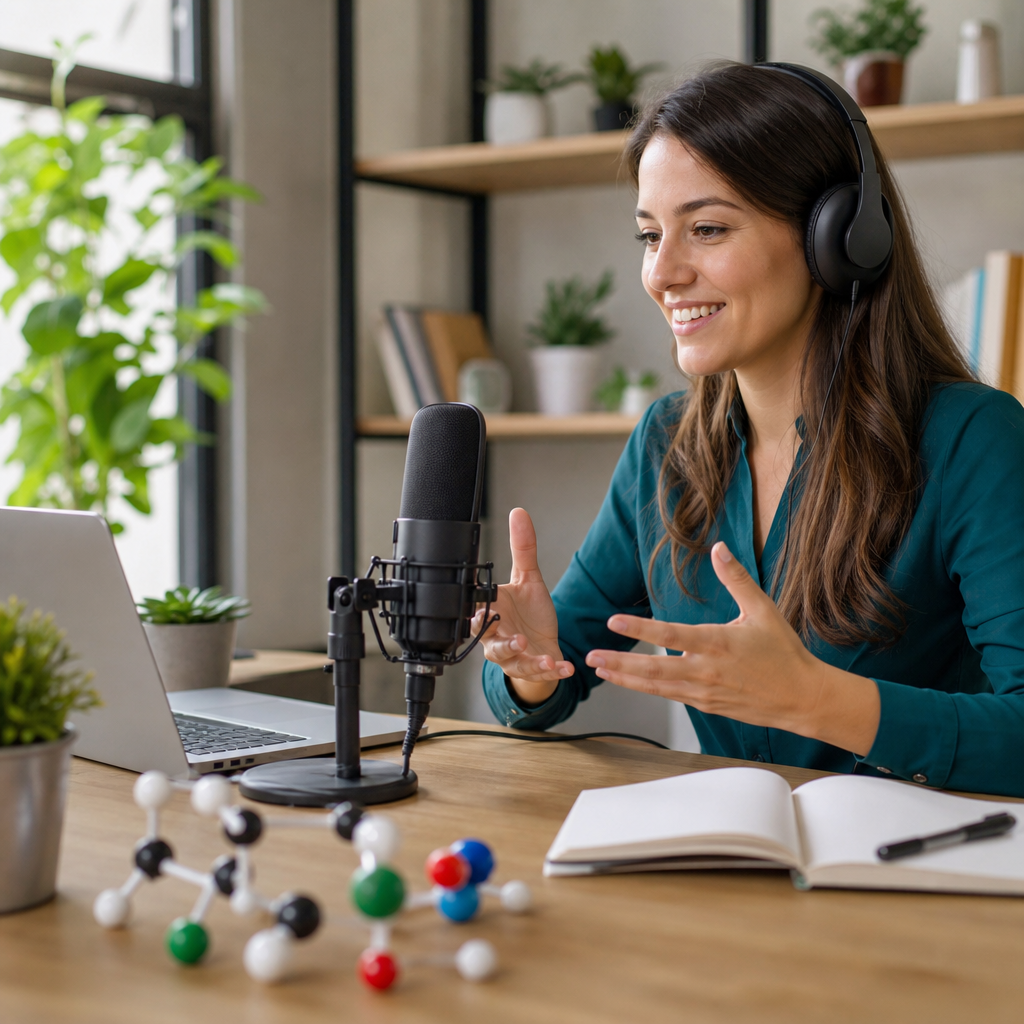
Educational polymer videos and podcasts can turn a complex subject into an accessible learning channel, but promotion determines whether that content reaches students, engineers, researchers, and industry buyers who need it. In this context, educational polymer content includes recorded explainers, lab demonstrations, interviews, webinar replays, short-form clips, and audio episodes focused on plastics, elastomers, composites, additives, recycling, testing, and processing. A hub page for educational videos and podcasts should do more than list assets. It should organize formats, audiences, topics, and distribution methods so visitors quickly find relevant material and search platforms clearly understand the page’s scope. That combination matters because polymer education sits at the intersection of science communication, manufacturing practice, and commercial decision-making, where trust, clarity, and discoverability directly influence engagement.
I have worked on technical content programs where excellent polymer explainers attracted almost no traffic until we restructured the page, clarified the audience, and matched distribution to actual user intent. The lesson was consistent: promotion is not a final step added after publishing. It begins with topic selection, continues through packaging and metadata, and extends into email, social, partner outreach, and internal linking across a broader educational resources section. People searching for educational polymer videos often want practical answers fast. They may ask what polymer testing method to use, how extrusion differs from injection molding, why a resin fails impact requirements, or how recycled content changes process stability. Audio listeners may want expert commentary from formulators, academics, sustainability leaders, or machine suppliers during commutes or lab work. If the content and promotion strategy anticipate those questions, performance improves.
This article serves as the hub for educational videos and podcasts within an educational resources ecosystem. It explains how to structure content, choose channels, package technical material for different skill levels, and measure what actually drives growth. It also helps connect this subtopic to related resources such as polymer glossaries, material selection guides, case studies, recycling primers, and testing articles. The central goal is simple: make educational polymer media easier to find, easier to trust, and easier to use.
Build the hub around audience intent and topic architecture
The first step in promoting educational polymer videos and podcasts is defining who the content serves. In practice, polymer education rarely has one audience. A single library may attract university students, quality managers, production supervisors, purchasing teams, R&D chemists, sustainability officers, and OEM engineers. Each group uses different search language and expects a different level of depth. Students may search “what is polymer crystallinity,” while a processor searches “how crystallinity affects shrinkage in injection molding.” A sustainability manager may look for “mechanical recycling of polypropylene explained.” Promotion works when the hub reflects these distinctions instead of forcing every asset into one generic archive.
Organize the hub by both format and subject area. Format categories might include short educational videos, webinar recordings, expert interviews, plant-floor demonstrations, and podcasts. Subject categories should map to the way polymer professionals think: materials, processing, testing, design, additives, failure analysis, regulations, and recycling. This structure supports discovery because someone interested in polymer testing can browse every related asset without filtering through unrelated media on bio-based resins or compounding economics. It also creates strong internal linking signals to adjacent educational resources, which helps users move deeper into the site.
Clear taxonomy improves promotion off-site too. When I have built content calendars for technical libraries, the best-performing episodes were tied to recurring content clusters rather than isolated one-off topics. For example, a “Polymer Processing Fundamentals” series can include episodes on melt flow index, drying hygroscopic resins, screw design basics, common extrusion defects, and gate design principles. That makes it easier to promote a new episode by referencing a complete learning path. It also encourages binge consumption, which increases average session duration and repeat visits.
Every hub page should answer direct user questions near the top. Explain what educational polymer videos and podcasts cover, who they are for, and how often new content appears. If videos include CE-style training, product-neutral tutorials, or recorded conference sessions, say so explicitly. Searchers reward precision. Ambiguous pages lose engagement because visitors cannot tell whether the content is promotional, academic, or practical industry training.
Create educational media that is technically accurate and easy to distribute
Promotion starts with the asset itself. Polymer topics are detail sensitive, and weak technical framing limits shares even if production quality is high. Good educational media solves one problem per episode, uses correct terminology, and states the practical takeaway early. In a six-minute video about differential scanning calorimetry, for example, define DSC, explain what the thermogram shows, mention common applications such as identifying melting point and glass transition behavior, and note where interpretation can become ambiguous with filled or blended systems. In a podcast on recycled polyethylene, discuss contamination, melt filtration, odor control, and property variability instead of staying at a broad sustainability level.
Strong packaging also improves promotion. Titles should describe the benefit and the topic in plain language: “How Melt Flow Index Affects Polymer Processing” performs better than “Understanding MFI.” Episode descriptions should include named methods, materials, and use cases. Mention ASTM or ISO standards when relevant, because engineers often search by test name or standard number. If an episode covers tensile testing, reference ASTM D638 or ISO 527 where appropriate and explain why the standard matters. These details help both human readers and machine systems classify the content accurately.
Transcripts are essential. They make technical vocabulary indexable, improve accessibility, and provide material for derivative content such as quote graphics, article summaries, newsletters, and social posts. For podcasts, publish show notes that summarize key points, define specialized terms, and link to related educational resources. For videos, add chapter markers so a visitor can jump directly to sections like “sample preparation,” “common failure modes,” or “interpretation of results.” Educational users value speed, and chaptered content is promoted more often internally because it supports targeted linking from related pages.
Consistency matters more than cinematic polish. In my experience, a reliably published monthly polymer podcast with respected guests outperforms an irregular premium series because audiences form habits. Set a realistic cadence, maintain audio clarity, and use a standardized intro that states the topic, speaker, and intended learning outcome. Reliable publication creates momentum for email promotion, social scheduling, and partner outreach.
Use a multichannel promotion plan that matches how polymer audiences consume information
Educational polymer content reaches people through a mix of search, email, professional networks, video platforms, trade associations, and direct referrals. The most effective promotion plan treats each channel differently instead of reposting the same message everywhere. Engineers and scientists usually respond best to specificity. A generic social post that says “new episode available” underperforms a post that says “new video: why nylon must be dried before molding, including moisture targets, splay defects, and property loss.” Specificity communicates value immediately.
Email remains one of the strongest channels for technical education. Segment lists by interest when possible: materials, testing, sustainability, processing, or medical polymers. A subscriber interested in rheology should not receive the same lead message as someone following polymer recycling policy. Keep the copy practical, include one clear call to action, and feature the educational benefit in the subject line. In previous campaigns, subject lines framed as questions, such as “What causes warpage in injection molded parts?” consistently produced better opens than neutral release announcements.
Video platforms and podcast directories need tailored optimization. On YouTube, custom thumbnails should show the topic in plain language, not just a logo. Descriptions should summarize the problem, list major points covered, and link back to the hub page. On podcast platforms, category selection, episode summaries, and guest credentials affect click-through rates. If a guest is a polymer scientist specializing in flame-retardant formulations, say that directly. Professional credibility drives listens in technical niches.
LinkedIn is often more productive than broad consumer social platforms for polymer education because the audience includes engineers, suppliers, academics, and technical sales teams. Short clips, quote cards, and carousels can highlight one concept from a longer asset. Trade newsletters, university departments, conference organizers, and industry groups can also amplify reach. A recorded interview with a known SPE chapter speaker or a webinar recap featuring ASTM-related testing practices has built-in promotional relevance for those communities.
| Channel | Best use for polymer education | Promotion tactic |
|---|---|---|
| Driving repeat engagement from known subscribers | Segment by topic interest and feature one clear learning outcome | |
| Reaching engineers, researchers, and industry professionals | Post short clips with specific technical takeaways and expert names | |
| YouTube | Capturing search demand for how-to and explainer content | Use precise titles, chapters, transcripts, and links to the hub page |
| Podcast apps | Building habitual listening around expert commentary | Write descriptive show notes and publish on a predictable cadence |
| Partner outreach | Expanding trust through associations and academic networks | Share guest episodes with contributors, labs, and trade groups |
Connect videos and podcasts to the wider educational resources hub
A sub-pillar page succeeds when it acts as a navigation center, not a dead-end archive. Educational videos and podcasts should link naturally to adjacent educational resources that deepen understanding. A video on polymer rheology should connect to a glossary entry for shear thinning, a guide to capillary rheometry, and a case study on extrusion instability. A podcast about PET recycling should link to articles on contamination control, design for recyclability, and food-contact regulatory considerations. These connections improve user journeys because different people prefer different learning formats at different stages.
Use concise summaries beneath featured assets so visitors understand why each item matters. “This episode explains why impact modifiers improve toughness in PVC and where tradeoffs appear in stiffness and clarity” is more helpful than “Listen now.” Descriptive summaries also create opportunities to surface related keywords naturally. That matters on technical topics where search intent is often very narrow. Someone may not search for “educational polymer podcast” directly; they may search for “how carbon black affects UV resistance” and discover the hub through a linked episode.
Featured collections work well on sub-pillar pages. Group content into learning tracks such as Polymer Basics, Processing and Troubleshooting, Materials Testing, Sustainability and Recycling, and Expert Interviews. This lets visitors self-select by need. It also helps site owners identify content gaps. If the Sustainability track has three episodes and Processing has twenty, the imbalance is obvious and can guide future production.
Internal links should be deliberate. Link from material pages, application pages, glossary entries, and technical articles to relevant media. For example, a page about polypropylene compounds can point to a video on filler effects and a podcast on automotive lightweighting. These pathways increase time on site and expose users to multiple content types, which is especially valuable when promoting educational resources to mixed audiences with different preferences.
Measure performance with metrics that reflect learning and business value
Promoting educational polymer videos and podcasts requires metrics beyond raw views. A view count alone can be misleading, especially for short clips. Track watch time, completion rate, repeat visitors, click-through to related resources, email signups, and assisted conversions. For podcasts, monitor downloads, listener retention, subscriber growth, and referral traffic from show notes to your site. For a hub page, measure whether visitors continue into other educational resources, because that behavior shows the page is functioning as a true topic center.
Set metrics by intent. If the goal is awareness, impressions and new users matter. If the goal is education, completion rate, transcript engagement, and visits to linked guides matter more. If the goal is lead support, track whether prospects who consume technical media later request data sheets, contact sales, register for webinars, or return to product pages. In industrial markets, educational content often influences deals indirectly by reducing uncertainty rather than generating immediate form fills.
Use tools that support this analysis. Google Analytics 4 can identify traffic sources and engagement paths. YouTube Analytics shows retention drops that reveal where explanations become too abstract or too slow. Podcast hosting platforms such as Libsyn, Buzzsprout, or Spotify for Podcasters provide episode-level data, though podcast analytics are less granular than video analytics. Heatmap tools can help on the hub page itself by showing whether visitors use category filters, click featured collections, or ignore lower-page assets entirely.
Review performance quarterly and update the hub accordingly. Remove weak labels, improve summaries, refresh thumbnails, and add links where audience demand is strongest. Promotion is cumulative. The most effective educational media libraries improve because each release teaches you how polymer audiences search, watch, listen, and learn.
Promoting educational polymer videos and podcasts successfully depends on treating the page as a strategic hub rather than a simple media list. Start with clear audience intent, organize topics in a way polymer learners recognize, and package every asset with precise titles, transcripts, summaries, and links to related resources. Then distribute through channels that fit technical audiences, especially email, LinkedIn, video platforms, podcast directories, and trusted partners such as universities, labs, and industry groups. This approach makes complex material easier to discover and far more useful once people arrive.
The strongest hub pages also connect learning formats. Videos answer visual process questions, podcasts deliver expert perspective, and supporting articles provide deeper reference material. When these resources work together, visitors can move from introductory concepts to practical application without leaving your educational ecosystem. That increases trust, improves engagement, and supports both learning outcomes and commercial credibility in a field where accuracy matters.
If you manage educational resources in the polymer industry, audit your current media library, group assets into clear topic tracks, and build promotion around real user questions. A well-structured hub will help the right audience find your educational videos and podcasts, use them, and return for more.
Frequently Asked Questions
What is the best way to promote educational polymer videos and podcasts to a highly specialized audience?
The most effective approach is to promote educational polymer videos and podcasts through a combination of search visibility, audience segmentation, and consistent distribution across industry-specific channels. Polymer content serves multiple groups at once, including students, materials engineers, R&D teams, quality professionals, procurement staff, technical sales teams, and manufacturing decision-makers. Because each audience segment searches for information differently, promotion should begin with clear topic mapping. A video about melt flow index testing, for example, should be positioned differently than a podcast episode on sustainable packaging resins or a lab demonstration covering tensile strength in composites.
Start by organizing content into a central educational hub page that groups resources by topic, material type, process, or application. This helps search engines understand topical depth and also makes it easier for users to find related polymer content in one place. Each individual video or podcast episode should have its own optimized page with a keyword-focused title, a detailed summary, timestamps when relevant, and supporting text that explains what viewers or listeners will learn. Search traffic often comes from highly specific phrases such as “how polymer extrusion works,” “differences between thermoplastics and thermosets,” or “recycling challenges for multilayer plastics,” so detailed topic targeting matters.
Promotion should then extend into the channels where polymer professionals already spend time. That often includes LinkedIn, email newsletters, association communities, university networks, webinar follow-up campaigns, niche forums, and industry publication outreach. Short clips can be repurposed from longer explainers or interviews and used to drive traffic back to the full video, podcast episode, or educational resource library. In a specialized field, authority grows when content is distributed consistently around real technical questions rather than broad generic promotion. The goal is not just to attract views, but to reach the right audience with the right format at the right stage of learning or buying intent.
How can SEO help educational polymer videos and podcasts reach more students, engineers, and industry buyers?
SEO is one of the strongest long-term promotion strategies for educational polymer content because it captures demand from people actively searching for answers. Unlike passive social media exposure, search traffic often comes from users with a defined question, problem, or learning objective. That is especially valuable in polymer education, where audiences frequently look for very specific information related to material selection, processing methods, testing standards, additive performance, recycling systems, or polymer chemistry fundamentals.
To use SEO effectively, each video and podcast should live on a dedicated web page rather than being embedded only on a third-party platform. That page should include an optimized page title, a concise meta description, a descriptive URL, and substantial supporting copy. Transcripts are particularly useful because they turn spoken content into indexable text, giving search engines much more context. For polymer topics, transcripts can naturally include terminology such as polypropylene, elastomer compounding, rheology, injection molding defects, DSC testing, impact modifiers, or post-consumer resin, all of which help improve relevance for specialized searches.
Internal linking is also critical. A hub page for educational polymer media should connect videos, podcasts, article summaries, case studies, glossary pages, and related topic clusters. For example, a podcast on mechanical recycling can link to videos on sorting technologies, blog content on recycled resin performance, and articles on sustainability regulations. This helps users continue learning while signaling topical authority to search engines. Schema markup, video optimization, image alt text, and clean page structure can further improve visibility.
SEO for this type of content is not only about ranking broad industry terms. It is often more productive to target long-tail educational searches, comparison queries, application-based questions, and problem-solving phrases. A page titled around “how polymer additives improve UV resistance” may outperform a generic “polymer additives podcast” page because it aligns more closely with how users search. When done well, SEO turns educational polymer videos and podcasts into durable assets that continue attracting qualified traffic long after publication.
Which channels are most effective for distributing polymer education content after it is published?
The best distribution channels depend on the format of the content and the audience you want to reach, but in practice the most effective strategy is multi-channel distribution built around a core owned asset, usually your website or educational hub page. Once a video, webinar replay, lab demonstration, or podcast episode is published, it should be promoted in stages rather than posted once and forgotten. That means adapting the same content for search, email, social, partner sharing, and community engagement.
LinkedIn is often one of the strongest channels for polymer education because it reaches engineers, technical sales professionals, product developers, operations leaders, and procurement teams in a professional context. A full-length video on polymer processing can be repackaged into short clips focused on key takeaways, while a podcast interview with a composites expert can be turned into quote graphics, short audiograms, or text posts highlighting practical lessons. Email is equally important because subscribers to a polymer-focused newsletter are usually highly relevant and more likely to engage deeply with technical content. Segmenting email lists by interest area, such as recycling, additives, testing, or processing, can significantly improve open rates and click-through performance.
Industry associations, trade publications, event organizers, and university departments can also expand reach. If your content includes expert interviews, standards discussions, market trends, or application-specific education, there may be opportunities for cross-promotion through partner newsletters, member portals, or conference follow-up communications. YouTube and podcast platforms help with discoverability, but they work best when paired with web pages that provide additional context and conversion paths. Short-form channels can generate awareness, but your website should remain the central destination where users can browse related resources, subscribe, request information, or continue learning.
The most effective distribution plans treat every content piece as a campaign, not a single upload. A webinar replay can become multiple clips, a summary article, an email feature, a classroom resource, a podcast excerpt, and a landing page entry on the educational polymer hub. That kind of layered promotion improves visibility, increases content lifespan, and creates more entry points for specialized audiences.
How should educational polymer videos and podcasts be structured to improve engagement and promotion results?
Strong promotion begins with content that is easy to consume, easy to understand, and easy to repurpose. Educational polymer topics can become technical very quickly, so structure plays a major role in whether audiences stay engaged and whether the content performs well in search, email, and social campaigns. Videos and podcasts should start with a clear statement of the topic and why it matters. Instead of opening with a broad company introduction, lead with the practical question being answered, such as how a testing method works, why a formulation issue occurs, or what a particular polymer family is best suited for.
Good structure also means dividing complex material into logical sections. In videos, on-screen chapter markers, visual demonstrations, diagrams, and concise transitions can improve retention. In podcasts, clear segmenting, strong host framing, and focused expert commentary make technical discussion easier to follow. Educational polymer content performs best when it balances precision with accessibility. A student may need conceptual context, while an experienced engineer may want direct discussion of methods, variables, or application implications. Content that acknowledges both levels often performs more broadly without losing technical credibility.
From a promotion standpoint, structured content is easier to repurpose. If a webinar replay includes well-defined sections on testing, processing, and sustainability, each section can become a short clip, article excerpt, social post, or email teaser. Timestamps are especially helpful because they improve usability on the page and create multiple talking points for distribution. Titles and introductions should use language that reflects actual user intent. For example, “How Polymer Recycling Streams Affect Material Performance” is usually more compelling than a vague title that does not communicate a specific learning outcome.
Calls to action should also fit the educational nature of the content. Rather than pushing aggressively for a sale, invite users to explore related resources, subscribe for future episodes, download a guide, register for a webinar, or visit the main educational polymer hub page. Well-structured content supports deeper engagement, improves watch and listen time, and makes every promotional effort more effective because the audience immediately understands the value being offered.
What metrics should you track to measure the success of polymer video and podcast promotion?
Success should be measured using both visibility metrics and quality-of-engagement metrics. In a niche field like polymer education, raw impressions or views are not enough on their own. A smaller number of highly relevant views from engineers, researchers, lab managers, or technical buyers can be far more valuable than a large volume of untargeted traffic. The first level of measurement usually includes page views, organic search traffic, video starts, podcast downloads, click-through rates from email and social campaigns, and referral traffic from partner sites or industry publications.
The second level focuses on engagement and relevance. For videos, watch time, audience retention, completion rate, and interaction with chapter markers can show whether the topic and structure are working. For podcasts, look at average consumption, subscriber growth, return listeners, and the episodes that drive the strongest downstream site activity. On the website, measure time on page, scroll depth, internal link clicks, transcript interaction, and visits to related educational resources. If your educational hub page is doing its job, users should move from one content asset to another rather than leaving after a single visit.</p