Advances in conductive polymers are reshaping electronics by combining electrical functionality with the lightweight, flexible, and processable qualities of plastics. Conductive polymers are organic macromolecules that can transport charge through conjugated backbones, often enhanced by doping, blending, or structural engineering. Unlike conventional insulating plastics, these materials can serve as electrodes, interconnects, sensors, antistatic coatings, and active semiconductor layers. That shift matters because modern electronics increasingly demand thin, bendable, low-temperature-manufactured components for wearables, medical patches, foldable displays, smart packaging, and distributed sensors. In my work reviewing materials choices for printed electronics programs, conductive polymers repeatedly emerge when metal films are too brittle, inorganic semiconductors are too rigid, or vacuum deposition is too expensive for the target product.
The field spans several classes of materials, each with distinct behavior. Poly(3,4-ethylenedioxythiophene) polystyrene sulfonate, commonly abbreviated PEDOT:PSS, is the most commercially mature conductive polymer system and is used in transparent electrodes, hole transport layers, and biosignal electrodes. Polyaniline and polypyrrole are valued for tunable conductivity, relatively straightforward synthesis, and sensor compatibility. Semiconducting polymers such as poly(3-hexylthiophene), diketopyrrolopyrrole copolymers, and donor-acceptor backbones enable transistors, photodetectors, and organic solar cells. A related category includes polymer composites filled with carbon nanotubes, graphene, carbon black, or silver nanowires, where the polymer provides form and toughness while the filler network carries charge. Together, these innovations in polymer solutions form a practical platform for next-generation electronics rather than a narrow laboratory curiosity.
Why has progress accelerated? Three reasons stand out. First, chemists now control molecular design far better than they did two decades ago, tuning bandgap, crystallinity, side chains, and redox stability for targeted applications. Second, manufacturing methods such as slot-die coating, gravure printing, inkjet printing, and roll-to-roll drying have matured, making polymer electronics compatible with scalable production. Third, device architectures have improved through interface engineering, encapsulation, crosslinking, and hybrid stacks that pair polymers with oxides, metals, or elastomers. The result is measurable performance gains: lower sheet resistance in transparent films, higher carrier mobility in polymer semiconductors, longer operational lifetimes in organic light-emitting devices, and more reliable stretchability in soft sensors. For companies exploring innovative products and solutions, understanding conductive polymers is now essential because the technology affects cost, form factor, sustainability, and user experience at the system level.
This hub article covers the core innovations in polymer solutions for electronics, from material science fundamentals to manufacturing, use cases, and commercialization realities. It is designed to answer practical questions: what conductive polymers are, how they work, where they outperform traditional materials, what limitations still matter, and which application areas deserve close attention. It also serves as a roadmap for deeper articles on printed electronics, flexible sensors, transparent conductors, polymer batteries, organic photovoltaics, bioelectronics, and recyclable electronic materials. If you are evaluating future-facing electronics platforms, conductive polymers belong near the top of the materials shortlist because they uniquely bridge chemistry, device engineering, and product design.
How conductive polymers work and why structure determines performance
Conductive polymers work because their molecular backbones contain alternating single and double bonds, creating conjugated systems in which electrons are less tightly localized. In an undoped state, many conjugated polymers are semiconducting rather than highly conductive. Conductivity rises when the polymer is oxidized or reduced through chemical or electrochemical doping, which introduces charge carriers such as polarons and bipolarons. That distinction is important: conductivity is not a fixed property of the polymer name alone. It depends on oxidation state, counterion choice, chain alignment, crystallinity, humidity exposure, and processing history. I have seen nominally identical PEDOT:PSS inks produce very different film resistances simply because one line used dimethyl sulfoxide treatment and controlled drying while another skipped both steps.
Structure-property relationships drive nearly every performance gain in this category. Longer effective conjugation lengths generally support better charge transport, but side chains influence solubility and film formation, often trading transport for manufacturability. Regioregular P3HT, for example, packs more efficiently than irregular analogs, improving mobility in organic field-effect transistors. In PEDOT:PSS films, post-treatment with ethylene glycol, sulfuric acid, or methanol can reorganize the morphology, enriching PEDOT pathways and reducing insulating PSS content at critical transport interfaces. For stretchable devices, researchers often add plasticizers, ionic liquids, or block copolymer segments to preserve conductivity under strain. The practical lesson is clear: in conductive polymers, chemistry, microstructure, and process conditions are inseparable. Good electronics performance comes from optimizing the full system, not selecting a resin from a catalog in isolation.
Breakthrough materials leading current electronics development
PEDOT:PSS remains the benchmark because it balances processability, optical transparency, and conductivity better than most alternatives. High-conductivity grades can reach sheet resistances suitable for touch sensors, antistatic layers, and low-current transparent electrodes, especially when combined with secondary dopants and multilayer designs. Its softness and mixed ionic-electronic conduction also make it exceptionally useful in bioelectronics, where skin contact, low interfacial impedance, and hydration tolerance matter. Polyaniline continues to attract interest for electromagnetic shielding, corrosion protection, and gas sensing because protonic acid doping enables reversible conductivity changes. Polypyrrole, meanwhile, has a strong position in actuators and neural interfaces due to favorable electrochemical behavior and biocompatibility in selected formulations.
On the semiconducting side, donor-acceptor polymers have pushed organic transistor mobility and solar-cell efficiency to levels that were once considered unrealistic for solution-processed materials. Families based on diketopyrrolopyrrole, isoindigo, benzodithiophene, and naphthalene diimide offer tunable energy levels for p-type, n-type, or ambipolar transport. In organic photovoltaics, polymer donor systems paired with non-fullerene acceptors have delivered dramatic jumps in power conversion efficiency, aided by morphology control and reduced voltage loss. Researchers are also developing intrinsically stretchable semiconducting polymers by embedding flexible segments into the backbone or introducing dynamic crosslinks. These materials are opening paths to strain-tolerant transistor arrays for e-skin and conformal health monitoring, where brittle silicon islands add complexity and failure points.
Manufacturing advances making polymer electronics commercially viable
The strongest argument for conductive polymers in electronics is not only materials novelty but manufacturing compatibility. Most systems can be deposited from solution at relatively low temperatures onto polyethylene terephthalate, polyethylene naphthalate, thermoplastic polyurethane, paper, textiles, and even biodegradable substrates. That means manufacturers can replace or reduce vacuum processes with printing and coating steps that waste less material and support large areas. Slot-die coating is especially important for uniform films in batteries, solar modules, and barrier-layer stacks. Inkjet printing offers digital patterning without masks, useful for rapid prototyping or mass customization, although ink rheology and nozzle reliability remain constant concerns. Screen printing remains dominant for thicker functional layers such as electrodes, heaters, and stretchable traces.
Production success depends on process windows, not just lab demonstrations. Viscosity, surface tension, particle size, solvent evaporation rate, substrate energy, and drying profile all affect line quality and conductivity. In pilot lines I have reviewed, the biggest avoidable mistakes were inadequate filtration, inconsistent humidity control, and insufficient inline metrology. Tools such as four-point probe mapping, UV-visible spectroscopy, atomic force microscopy, and optical inspection help track whether a film is conductive, transparent, smooth, and defect free. Manufacturers also increasingly use plasma treatment, primer layers, and photonic curing to improve adhesion and performance. These innovations in polymer solutions are turning printed electronics from a promising niche into a disciplined manufacturing ecosystem.
| Material system | Primary strengths | Common electronics uses | Main limitation |
|---|---|---|---|
| PEDOT:PSS | Transparent, printable, flexible | Electrodes, hole transport layers, biosignal interfaces | Moisture sensitivity and moderate conductivity versus metals |
| Polyaniline | Tunable conductivity, simple doping chemistry | Sensors, antistatic coatings, shielding | Processing consistency and environmental stability |
| Polypyrrole | Electrochemical activity, actuator compatibility | Neural interfaces, soft actuators, coatings | Brittleness in some formulations |
| Semiconducting donor-acceptor polymers | Charge transport, bandgap tunability | Transistors, photodetectors, solar cells | Air stability and morphology sensitivity |
| Polymer nanocomposites | Mechanical toughness, scalable compounding | EMI shielding, heaters, structural sensing | Percolation variability and filler dispersion challenges |
Key application areas from flexible displays to medical wearables
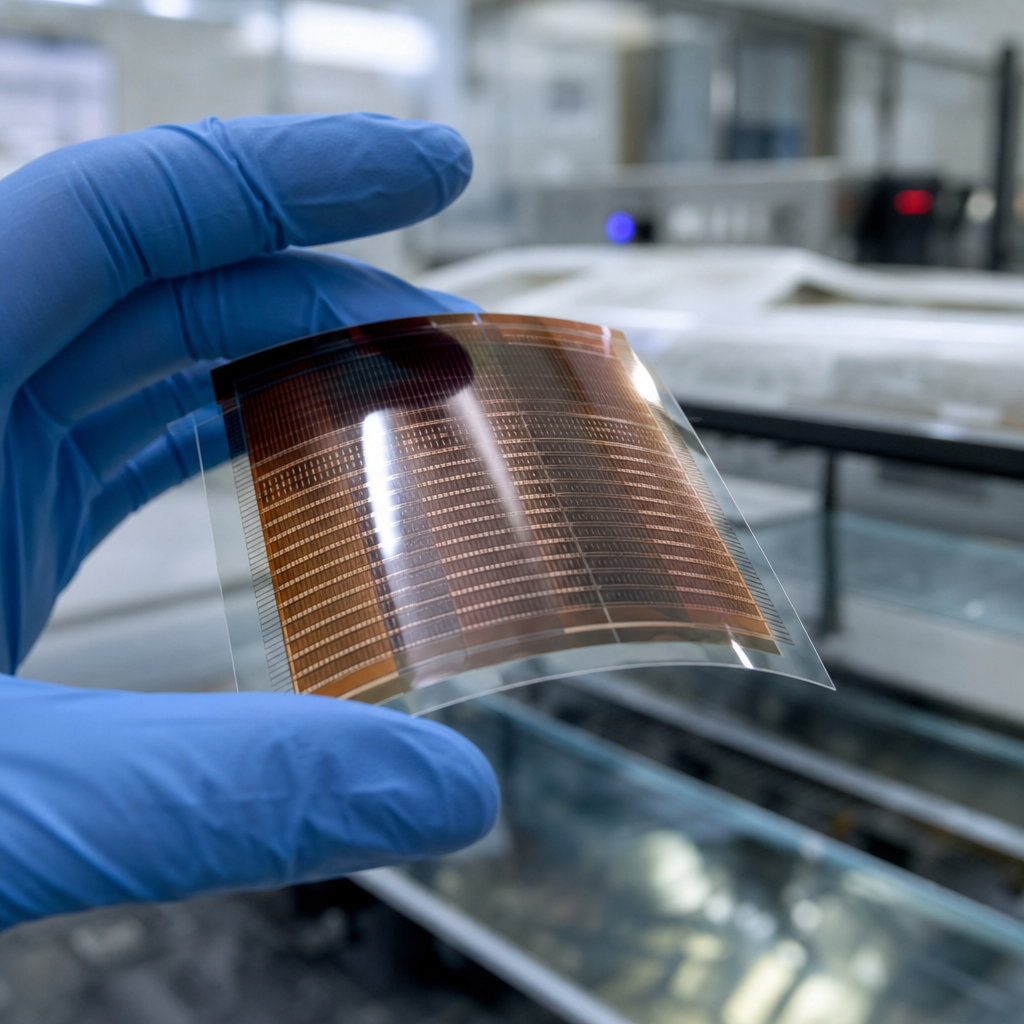
Flexible and printed electronics are the clearest commercial win. Conductive polymers are used in touch panels, thin-film heaters, flexible antennas, and smart labels because they tolerate bending better than indium tin oxide and can be patterned over large areas. In displays and lighting, PEDOT-based layers improve hole injection and smooth rough electrode surfaces in organic light-emitting diodes. In energy devices, conductive polymers appear in supercapacitor electrodes, battery binders, current-collecting coatings, and organic photovoltaic layers. Their value is often not headline conductivity alone but interfacial function: reducing contact resistance, enabling ion transport, or maintaining performance under flex.
Medical and wearable electronics may become the most transformative use case. Dry electrodes based on conductive polymers can record electrocardiogram, electromyogram, and electroencephalogram signals more comfortably than rigid gel electrodes, especially during long monitoring sessions. Mixed conduction allows signal transduction between ionic biological environments and electronic circuits, which is why PEDOT derivatives are widely studied for neural recording and stimulation. Conductive polymer hydrogels add another layer of innovation by pairing softness, water content, and conductivity for wound monitoring, drug delivery, and tissue interfaces. Outside healthcare, automotive interiors, aerospace structures, and industrial equipment use conductive polymer composites for electrostatic discharge control, de-icing, lightweight sensing, and electromagnetic interference shielding. These are not speculative markets; they are active engineering programs where material tradeoffs are evaluated against reliability, weight, and assembly cost.
Limits, reliability concerns, and what still needs improvement
Conductive polymers do not replace metals or crystalline semiconductors in every role. Their conductivity usually remains lower than copper, silver, or aluminum, which limits use in high-current interconnects and ultra-low-resistance transparent electrodes. Environmental stability is another constraint. Oxygen, humidity, ultraviolet exposure, and thermal cycling can change doping state, morphology, and adhesion, reducing performance over time. Some high-performing formulations depend on solvents, acids, or additives that complicate scale-up, worker safety, or regulatory approval. Encapsulation helps, but barrier layers add cost and may reduce flexibility. Device-to-device variability also remains a problem, particularly when nanoscale morphology strongly influences charge transport.
Still, the gap is narrowing through disciplined engineering. Crosslinkers improve wash resistance and multilayer compatibility. Acid-treated PEDOT films can approach conductivities once thought unattainable for polymeric conductors. Self-healing matrices, vitrimer concepts, and dynamic bonds are being explored to recover electrical pathways after strain or damage. Standardized reliability testing is equally important. Teams should evaluate bend radius, cyclic strain, sheet resistance drift, contact resistance, damp heat exposure, and biocompatibility where relevant. The companies that succeed are usually the ones that treat conductive polymers as engineered systems with defined qualification plans, not miracle materials. For organizations building innovative products and solutions, that mindset turns promising polymer science into durable electronic products.
Where the next wave of innovation in polymer solutions is headed
The next advances in conductive polymers for electronics will come from convergence. Material scientists are combining electronic conductivity with stretchability, self-healing, recyclability, and biointegration instead of optimizing one metric at a time. Expect broader use of hybrid architectures in which polymers provide compliance and interface control while nanocarbons, metallic nanostructures, or ultrathin oxides raise conductivity and stability. Expect more waterborne and lower-toxicity formulations as sustainability and worker exposure standards tighten. Expect machine-learning-guided materials discovery to accelerate backbone design and processing optimization, particularly in organic semiconductors where subtle structural changes can shift mobility and lifetime dramatically.
For decision-makers, the key takeaway is simple: conductive polymers have moved from exploratory chemistry to strategic electronics enablers. They unlock form factors and manufacturing routes that rigid, high-temperature materials cannot match, especially in flexible, printed, wearable, and biointerfacing devices. The most successful projects begin with application requirements, then map conductivity, transparency, stretchability, lifetime, and cost targets to the right polymer platform and process. Use this hub as a starting point for deeper evaluation of printed sensors, organic optoelectronics, energy devices, and smart materials integration. If your product roadmap includes thinner, lighter, more adaptable electronics, now is the right time to assess conductive polymer solutions and identify where they create a defensible advantage.
Frequently Asked Questions
What are conductive polymers, and how do they differ from traditional plastics and metals in electronics?
Conductive polymers are organic polymers engineered to transport electrical charge, which sets them apart from conventional plastics that normally act as electrical insulators. Their conductivity comes from conjugated molecular backbones, where alternating single and double bonds allow electrons to move more freely along the chain. In many cases, their electrical performance is further improved through doping, blending with other functional materials, or tailoring the polymer’s nanostructure. This combination of chemistry and materials engineering enables polymers to perform roles that would otherwise require metals, metal oxides, or rigid inorganic semiconductors.
Compared with metals, conductive polymers are typically lighter, more flexible, easier to process, and better suited to large-area manufacturing methods such as printing, coating, and roll-to-roll fabrication. Compared with traditional plastics, they add electrical functionality without losing many of the benefits that make polymers attractive in the first place, including mechanical compliance, tunable properties, and lower manufacturing temperatures. While they usually do not match the raw conductivity of copper or silver in every application, ongoing advances have made them highly valuable in flexible electronics, wearable devices, sensors, antistatic coatings, organic transistors, and energy-related components where weight, conformability, and scalable production are just as important as conductivity.
How do conductive polymers actually conduct electricity?
Conductive polymers carry charge through their conjugated backbones, which contain delocalized pi-electron systems created by alternating bond structures. In a standard insulating polymer, electrons are tightly localized and cannot move efficiently. In a conductive polymer, the molecular structure creates pathways that support charge transport along the chain and, under the right conditions, between neighboring chains as well. Well-known examples include polyaniline, polypyrrole, polyacetylene derivatives, and poly(3,4-ethylenedioxythiophene), often referred to as PEDOT.
One of the most important factors in improving conductivity is doping. In this context, doping does not mean adding silicon-like impurities as in traditional semiconductors, but rather oxidizing or reducing the polymer system or introducing counterions that create mobile charge carriers such as polarons and bipolarons. These carriers help move charge through the material more effectively. Researchers also enhance conductivity by improving chain alignment, increasing crystallinity, optimizing molecular weight, reducing defects, and designing better interfaces with electrodes or adjacent layers. Because charge transport in polymers depends on both molecular structure and morphology, even small changes in processing conditions can significantly affect performance.
What recent advances are making conductive polymers more important in modern electronics?
Recent progress has come from several directions at once. Chemists have developed new monomers and backbone designs that improve charge mobility, environmental stability, and compatibility with other electronic materials. Materials scientists have made significant gains in controlling polymer morphology at the nano- and microscale, which is essential because the arrangement of chains strongly influences conductivity, flexibility, and device efficiency. Better doping strategies, solvent systems, and post-treatment methods have also raised performance levels, making conductive polymers more viable for demanding applications.
Another major advance is the integration of conductive polymers into scalable manufacturing. These materials can often be deposited from solution by printing, spraying, spin coating, or slot-die coating, enabling lower-cost and larger-area production than many traditional electronic materials. This is especially important for flexible displays, wearable sensors, thin-film transistors, organic solar cells, bioelectronics, and transparent conductive coatings. In parallel, hybrid material approaches are expanding their usefulness, such as combining conductive polymers with carbon nanomaterials, metal nanowires, or insulating polymers to balance conductivity, toughness, transparency, and environmental resistance. As a result, conductive polymers are no longer viewed as niche materials; they are increasingly central to the next generation of lightweight, flexible, and customizable electronic systems.
What are the main applications of conductive polymers in electronics today?
Conductive polymers are used across a broad range of electronic applications because they can provide conductivity while remaining mechanically soft, lightweight, and easy to process. One common use is in electrodes and interconnect layers for flexible and printed electronics. They are also widely applied as antistatic and electromagnetic shielding coatings, where they help control charge buildup without adding significant weight or rigidity. In sensors, conductive polymers are especially valuable because their electrical properties can change in response to strain, temperature, humidity, gases, chemicals, or biological signals, making them ideal for wearable and environmental monitoring devices.
They also play important roles in active electronic components. For example, conductive and semiconducting polymers can be used in organic field-effect transistors, organic light-emitting devices, electrochromic systems, and energy devices such as supercapacitors, batteries, and solar cells. In bioelectronics, their softness and mixed ionic-electronic conduction make them attractive for neural interfaces, electrophysiology electrodes, and medical sensing platforms. What makes these applications so compelling is that conductive polymers enable form factors that rigid conventional materials often cannot achieve, including bendable patches, stretchable circuits, lightweight displays, and disposable smart labels. Their usefulness continues to expand as researchers improve durability, conductivity, and compatibility with industrial fabrication methods.
What challenges still limit conductive polymers, and what does the future look like for this field?
Despite impressive progress, conductive polymers still face several practical challenges. Their conductivity, while greatly improved over the years, can still be lower than that of metals in applications requiring very high current carrying capacity or extremely low resistance. Long-term stability is another concern, since some conductive polymers can be sensitive to oxygen, moisture, heat, ultraviolet light, or mechanical fatigue. In real devices, performance often depends not only on the polymer itself but also on interfaces, encapsulation, film uniformity, and manufacturing consistency. Balancing conductivity with transparency, stretchability, adhesion, and environmental durability remains a major engineering task.
Even so, the future is highly promising. Research is moving toward materials with better intrinsic conductivity, more stable doping chemistries, self-healing behavior, recyclability, and improved biocompatibility. There is also strong momentum behind multifunctional polymers that can sense, conduct, actuate, or store energy within the same material platform. As artificial intelligence hardware, wearable health monitoring, soft robotics, and sustainable electronics continue to evolve, conductive polymers are expected to play a larger role because they offer design freedom that rigid materials cannot easily match. In short, the field is shifting from proving that conductive polymers work to refining how reliably, efficiently, and economically they can be deployed in real-world electronic products.