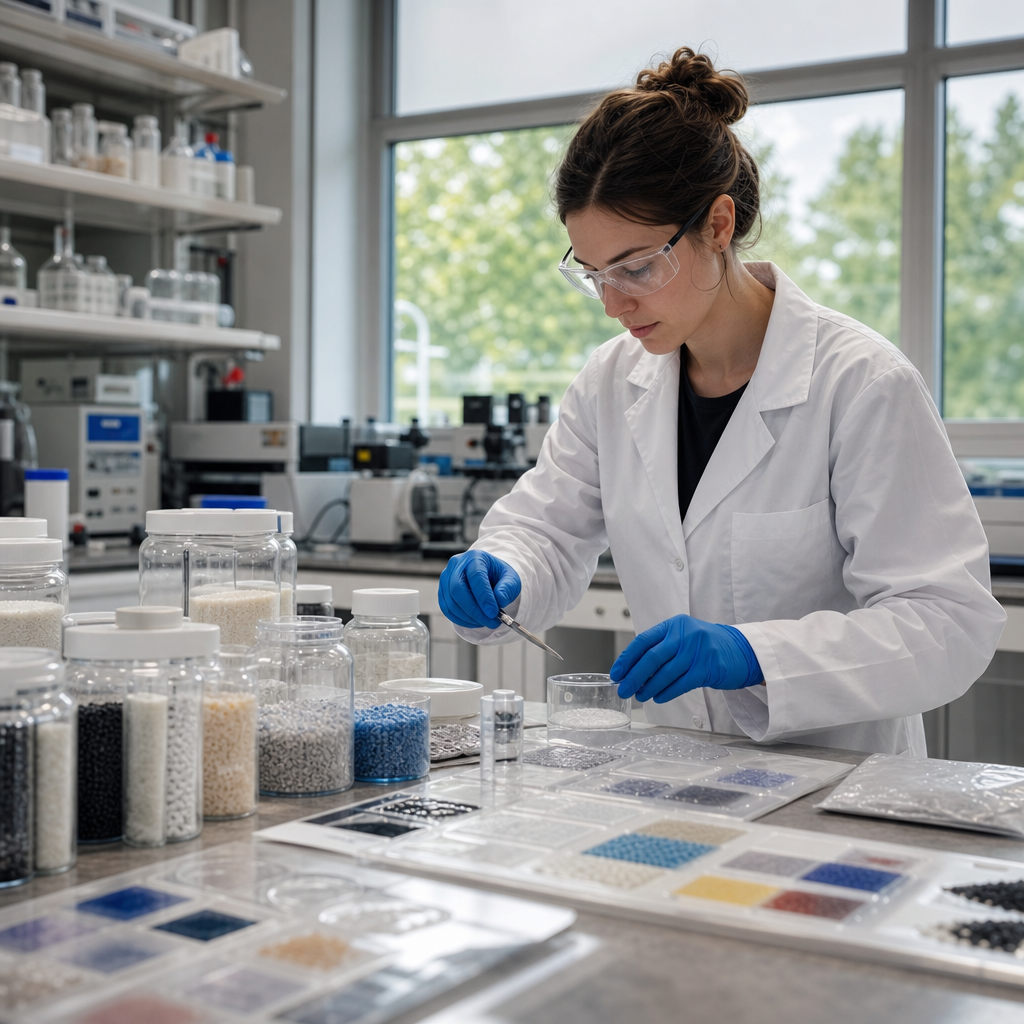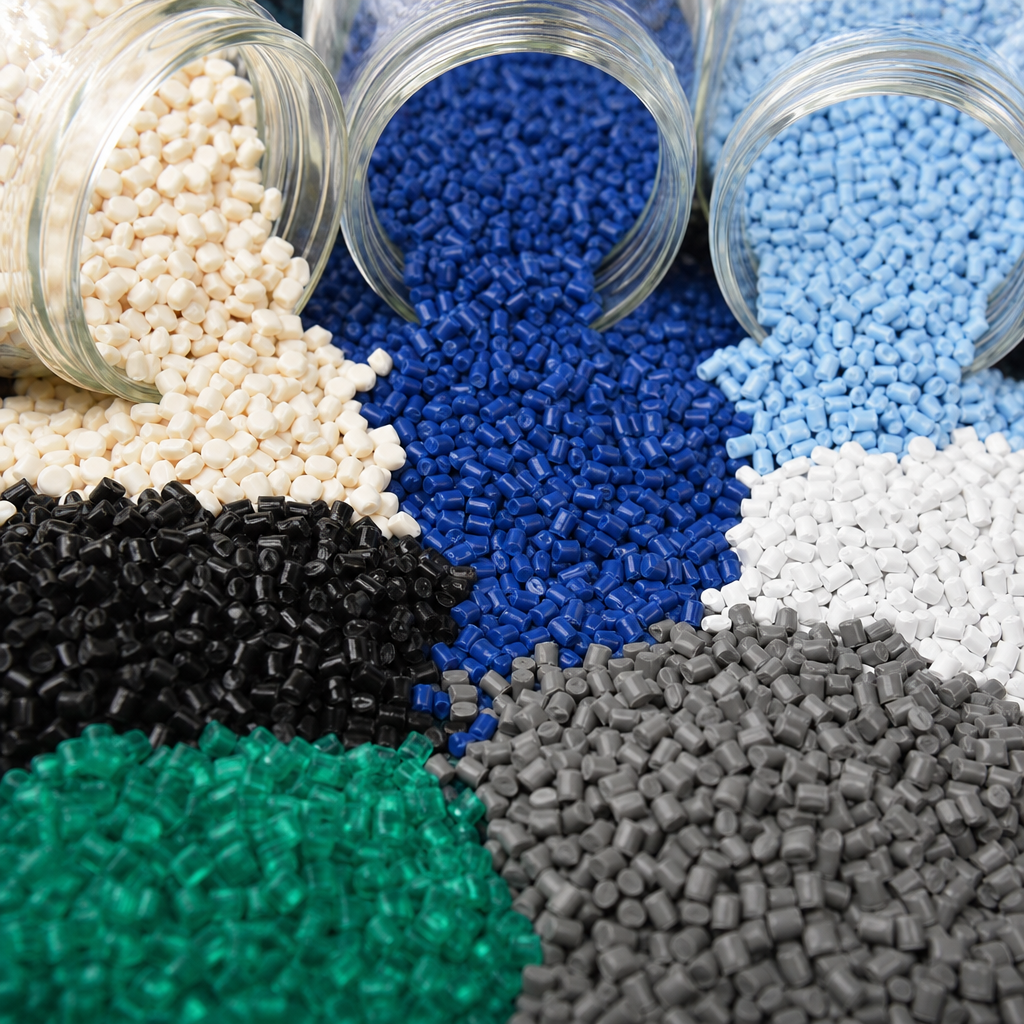
Polymer blends and alloys are engineered combinations of two or more polymers designed to deliver property profiles that a single resin cannot achieve alone. In practice, they let manufacturers balance toughness, stiffness, heat resistance, processability, chemical resistance, cost, and appearance without inventing an entirely new polymer family. I have worked with blend selection for housings, interior trim, and extrusion compounds, and the same principle appears again and again: a carefully chosen blend can solve a design problem faster than a full material redevelopment program.
To understand the subject, start with the terms. A polymer blend is a physical mixture of polymers, usually prepared by melt compounding, solution blending, or latex mixing, with no requirement for covalent bonding between the components. A polymer alloy is commonly used in industry for a blend that has been compatibilized or engineered to produce a stable morphology and superior performance, although terminology varies by company and market. Some suppliers use alloy for high-value commercial systems such as PC/ABS or PPO/PS, while researchers may reserve it for blends with strong synergistic behavior. The important point is functional: the components must work together in a predictable microstructure.
This topic matters because modern products rarely optimize only one property. An appliance bezel must resist impact, mold cleanly, and keep gloss. An under-hood clip must survive temperature cycles, fluids, and vibration. Medical, packaging, electronics, and mobility sectors all rely on polymer blend technology to tune tradeoffs. This guide serves as a hub for tutorials and guides across the subject, from blend design and miscibility to processing, testing, troubleshooting, and application selection, so readers can move from definitions to practical decision-making with confidence.
What polymer blends and alloys are, and why manufacturers use them
A polymer blend combines separate macromolecular species into one material system so the final part can inherit useful traits from each component. The reason manufacturers use blends is straightforward: commercial polymers come with strengths and weaknesses that are difficult to escape. Polypropylene is light and economical but can lack low-temperature toughness. Polycarbonate is strong and heat resistant but expensive and notch sensitive under some conditions. ABS processes well and delivers good impact performance but cannot match engineering thermoplastics in thermal capability. By blending, compounders create a property package positioned between or beyond the neat polymers.
Common commercial examples illustrate the concept clearly. PC/ABS is used in electronics housings, automotive interior parts, and battery enclosures because it pairs polycarbonate heat resistance with ABS flow and impact balance. Nylon blends with elastomers improve impact strength for power tool housings and air-intake components. PPE or PPO blended with polystyrene improves processability while retaining dimensional stability and electrical performance. TPO and TPV systems combine polyolefins with elastomeric phases for seals, fascia, and soft-touch applications. In many cases, the blend also lowers cost versus a premium homopolymer while simplifying molding or extrusion.
Blending is not random mixing. The value of a blend depends on morphology: whether one phase forms droplets, co-continuous domains, fibrils, or layered structures. Domain size, interfacial adhesion, viscosity ratio, and crystallization behavior all affect performance. I have seen two compounds with identical nominal composition perform very differently because one had fine dispersed rubber domains and the other had coarse phase separation caused by poor screw design and insufficient compatibilizer. That is why blend engineering belongs as much to processing and interfacial science as to formulation.
Miscibility, morphology, and compatibilization fundamentals
The first technical question in any polymer blend tutorial is whether the polymers are miscible, partially miscible, or immiscible. Most polymers are immiscible because mixing long chains reduces entropy very little, and favorable enthalpic interactions are uncommon. In practical terms, immiscible systems separate into phases, often visible under electron microscopy. Miscible blends, such as certain grades of PPO with PS or PVC with NBR under defined conditions, show a single glass transition or closely merged thermal transitions. Differential scanning calorimetry and dynamic mechanical analysis are standard tools for checking this behavior.
When a system is immiscible, compatibilization becomes the central strategy. Compatibilizers lower interfacial tension and improve adhesion between phases, leading to smaller domain sizes and better stress transfer. They may be block copolymers, graft copolymers, reactive functionalized polymers, or in situ generated species formed during melt processing. Maleic anhydride grafted polyolefins are widely used with polyamide or filled polyolefin systems because the anhydride can react with amine end groups and improve interface strength. SEBS is a familiar modifier and compatibilizer in styrenic and polyolefin-rich systems. For PET blends, epoxy-functional chain extenders and reactive compatibilizers can simultaneously control viscosity and interfacial bonding.
Morphology control depends on more than chemistry. Screw configuration, residence time, melt temperature, shear rate, and viscosity ratio shape the final microstructure. A viscosity ratio near one often favors finer dispersions, though reactive systems complicate the picture. Cooling rate influences crystallization and can freeze in different domain geometries. Annealing can coarsen or stabilize structures depending on the pair. Because of this complexity, a reliable blend development program couples thermal analysis, rheology, microscopy, and mechanical testing instead of relying on datasheet assumptions alone.
How polymer blends are made and processed
The dominant industrial route for producing polymer blends is melt compounding, usually in a co-rotating twin-screw extruder. Feeders meter pellets, powders, fillers, reinforcements, and additives into zones designed for melting, distributive mixing, dispersive mixing, devolatilization, and pressure building. The extrudate is then pelletized for downstream molding or extrusion. Twin-screw systems are preferred because they offer controlled shear, modular screw elements, and consistent residence time distribution. Single-screw extrusion can process precompounded blends effectively but is less flexible for creating them from scratch.
Alternative routes still matter. Solution blending is useful for laboratory development or specialty systems where thermal degradation is a concern. Latex blending is used in some rubber-modified plastics and coatings. Dry blending before injection molding is sometimes attempted for simple color or additive changes, but it rarely substitutes for proper compounding when phase morphology matters. In production, I generally treat dry blending of immiscible polymers as a risk unless the supplier explicitly validates the approach, because feeding inconsistency and poor dispersion can produce lot-to-lot variation.
Processing conditions must match the thermal stability window of every component. PC/ABS can hydrolyze or lose impact performance if moisture control is poor, so desiccant drying and dew point management are essential. Nylon-containing blends require careful drying and mold-temperature control to stabilize dimensions and mechanical properties. Shear heating can degrade sensitive elastomer modifiers, while excessive residence time can yellow styrenic systems or reduce molecular weight in polyester blends. Good process setup therefore starts with resin handling, not just barrel temperature settings.
| Blend system | Main benefit | Typical applications | Key processing note |
|---|---|---|---|
| PC/ABS | Impact and heat balance | Electronics housings, interior trim | Dry thoroughly to prevent hydrolysis |
| PA6/elastomer | Improved toughness | Power tools, automotive ducts | Control moisture and mold temperature |
| PPO/PS | Dimensional stability and electrical performance | Appliances, connectors | Watch melt temperature for surface quality |
| TPO | Ductility and weatherability | Bumpers, packaging, roofing | Use sufficient shear for uniform dispersion |
Property design: mechanical, thermal, barrier, and chemical performance
Designing a polymer blend begins with the target property window, not the ingredients list. Mechanical performance includes tensile modulus, elongation at break, notched Izod or Charpy impact, creep resistance, and fatigue behavior. Adding a rubbery phase often raises impact strength by initiating crazing or shear yielding, but modulus usually falls. Reinforcement can recover stiffness, although it may harm surface finish and weld-line toughness. In glass-filled nylon blends, fiber orientation and interfacial adhesion become as important as the base resin ratio.
Thermal performance includes heat deflection temperature, Vicat softening, glass transition, crystallization, and long-term thermal aging. A blend may show better short-term toughness yet worse dimensional stability at elevated temperature if the softer phase dominates above its transition. Crystalline and amorphous components interact differently during cooling; nucleating agents can shift cycle times and shrinkage behavior. Flame performance also deserves early attention. FR packages based on phosphorus, brominated systems, mineral hydrates, or melamine derivatives can alter viscosity, impact, and color, so they must be integrated into the blend design rather than added at the end.
Barrier and chemical resistance often drive packaging, fuel system, and medical choices. Blending can improve solvent resistance, but it can also introduce weak pathways if the dispersed phase swells or debonds. For example, polyamide-rich systems may resist hydrocarbons well but absorb moisture, changing dimensions and modulus. Polyolefin-rich blends offer lower water uptake but weaker gas barrier. This is why serious selection work includes exposure testing at use temperature with the actual fluid, disinfectant, oil, or cleaning chemistry, not just generic resistance charts.
Testing, troubleshooting, and quality control in real production
Reliable blend performance depends on disciplined testing. At minimum, developers should verify melt flow or rheology, moisture content where relevant, DSC transitions, impact strength, tensile properties, color, density, and dimensional stability. For critical parts, add DMA, HDT, microscopy, VOC or fogging tests, electrical properties, and accelerated aging. Standards such as ASTM D638 for tensile testing, ASTM D256 for impact, ISO 1133 for melt mass-flow rate, and ISO 75 for heat deflection temperature provide a common language across suppliers and converters.
Troubleshooting usually starts with the morphology-process relationship. If impact drops unexpectedly, check for moisture, degraded compatibilizer, oversized dispersed domains, contamination, or excessive regrind. If gloss or surface streaking appears, review melt temperature, screw speed, venting, pigment interaction, and elastomer dispersion. Warpage can come from asymmetric cooling, filler orientation, or phase-specific shrinkage. In one housing program, a blend that passed lab testing failed in production because the molder switched to a hotter runner system that increased residence time and degraded the PC fraction. The fix was process adjustment, not reformulation.
Quality control must also address supply chain variation. Different lots of the same base polymer can vary in molecular weight distribution, residual monomer, additive package, and pellet moisture. These shifts may be acceptable in neat resin but significant in a compatibilized blend. Strong incoming inspection, supplier change notification, and retained sample programs reduce that risk. For regulated sectors, traceability and documented validation are indispensable.
How to choose the right blend and build a learning path
Choosing the right polymer blend starts with application requirements translated into measurable criteria: service temperature, impact level, chemical exposure, UV conditions, regulatory constraints, appearance, processing method, and target cost. From there, screen candidate families rather than individual grades. If the part needs high heat and good paintability, PC/ABS or PC/PBT may be sensible starting points. If low-temperature toughness and chemical resistance matter more, TPO, TPV, or modified polyamides may fit better. Always compare full system cost, including drying, cycle time, scrap rate, and tooling behavior, because a cheaper pellet can become a more expensive part.
As a hub for tutorials and guides, this page should lead readers into deeper topics: miscibility theory, compatibilizer selection, twin-screw screw design, fiber-filled blend optimization, flame-retardant formulation, recycled-content blends, and failure analysis. It should also connect material science to end-use sectors such as automotive, electrical, consumer goods, healthcare, construction, and packaging. That structure reflects how professionals actually learn the field: by linking first principles to processing decisions and then to application outcomes.
Polymer blends and alloys matter because they give engineers a practical route to tailored performance without starting from zero. The core lessons are consistent: understand miscibility, control morphology, choose compatibilization deliberately, process within the thermal limits of every component, and verify properties with standards-based testing. When those pieces are managed well, blends unlock durable, cost-effective solutions across industries. Use this guide as your starting point, then build outward into the specific tutorials most relevant to your products, processes, and performance targets.
Frequently Asked Questions
What are polymer blends and alloys, and how are they different from standard polymers?
Polymer blends and alloys are combinations of two or more polymers formulated to achieve a set of properties that a single material usually cannot provide on its own. In a standard polymer system, a manufacturer selects one base resin and works within the limits of that resin’s natural performance profile. With blends and alloys, the idea is more strategic: one polymer may contribute impact strength, another may improve stiffness, another may enhance heat resistance, and additives or compatibilizers may help those ingredients work together more effectively. The result is a material tailored for real-world performance targets rather than a compromise forced by a single resin choice.
Although the terms are sometimes used interchangeably in industry, “polymer blend” often refers broadly to a physical mixture of polymers, while “polymer alloy” is commonly used for a more engineered system in which compatibility, morphology, and interfacial performance are carefully controlled to deliver predictable, often superior properties. In practical terms, this distinction matters because the success of a blend depends heavily on how well the different phases interact. If two polymers are poorly matched, the material may process inconsistently or fail to deliver the expected mechanical performance. If they are properly compatibilized and balanced, the blend can offer a very efficient path to improved functionality.
This is exactly why polymer blends and alloys are so valuable in product development. They allow engineers and manufacturers to fine-tune toughness, chemical resistance, surface appearance, dimensional stability, and processing behavior without having to invent an entirely new polymer family. For applications such as housings, interior trim, and extrusion compounds, that flexibility can reduce cost, shorten development time, and improve overall design freedom.
Why do manufacturers use polymer blends and alloys instead of developing a brand-new material?
The main reason is efficiency. Developing an entirely new polymer from scratch is expensive, time-consuming, and often unnecessary when an existing combination of polymers can already deliver the desired property balance. Manufacturers are usually solving practical problems: a part may need better impact strength in cold weather, improved heat resistance near an engine compartment, better scratch performance for interior surfaces, or easier flow in a thin-wall molded housing. In many of these cases, blending known polymers is a faster and lower-risk way to reach the target.
Polymer blends also give manufacturers a much broader design toolkit. Rather than choosing between materials with rigid tradeoffs, they can create a more balanced profile. For example, one resin might process beautifully but lack toughness, while another is very tough but harder to mold or more expensive. A well-designed blend can close that gap. This approach is especially useful in high-volume industries where even small improvements in cycle time, scrap rate, material cost, or field durability have a major financial impact.
Another important advantage is the ability to build on existing supply chains and processing knowledge. When engineers work with established polymer families, they often already understand drying requirements, molding windows, extrusion behavior, and long-term durability concerns. That reduces uncertainty during scale-up. It also simplifies regulatory, qualification, and manufacturing validation work compared with launching a completely novel material system. In short, blends and alloys are widely used because they offer a practical path to property optimization, commercial scalability, and cost control.
What properties can be improved by using polymer blends and alloys?
One of the biggest strengths of polymer blends and alloys is their ability to improve multiple properties at the same time. Common targets include impact resistance, tensile strength, flexural stiffness, heat deflection temperature, dimensional stability, chemical resistance, flame performance, weatherability, and surface appearance. In many applications, the goal is not to maximize one property in isolation, but to create the right overall balance for how the part will actually be used. That is where blends are especially effective.
For instance, in a housing application, a manufacturer may need a material that looks clean on the surface, resists cracking under load, maintains shape at elevated temperature, and still flows well enough to fill thin sections during molding. A single polymer may do one or two of those things well, but not all of them together. A blend can be engineered so that one component improves toughness, another raises stiffness or heat resistance, and the formulation as a whole remains processable. In extrusion compounds, similar logic applies when balancing melt strength, surface finish, dimensional control, and cost.
It is also important to understand that improving one property can affect another. Increasing stiffness may reduce impact strength. Enhancing heat resistance may make processing more demanding. Boosting toughness may change scratch behavior or gloss. This is why polymer blend selection is rarely just a datasheet exercise. The real value comes from understanding the interaction between materials, processing conditions, and end-use requirements. The best blends are designed not simply to improve properties, but to improve the right properties in the right proportions for the intended application.
What challenges should be considered when selecting a polymer blend or alloy?
The most important challenge is compatibility between the polymers being combined. Not all polymers mix well, and poor compatibility can lead to phase separation, weak interfacial bonding, inconsistent mechanical properties, and surface defects. In many engineered blends, compatibilizers are used to improve adhesion between phases and stabilize the morphology. Without that control, a blend may look acceptable in a lab sample but perform poorly in production or under real service conditions.
Processing behavior is another major factor. A blend must be workable on the equipment available, whether that means injection molding, extrusion, thermoforming, or another process. Different polymers can have different melt viscosities, thermal sensitivities, and drying requirements. If those differences are not managed properly, the material may degrade, show flow imbalance, warp, or exhibit inconsistent finish. The selected blend also needs to fit the practical realities of manufacturing, including cycle time, tool design, regrind strategy, and quality tolerances.
Long-term performance must also be evaluated carefully. A blend that tests well initially may respond differently over time when exposed to heat, moisture, chemicals, UV light, or repeated mechanical loading. Environmental stress cracking, color shift, gloss change, embrittlement, and dimensional drift are all issues that can matter depending on the application. Cost and supply stability should not be overlooked either. A technically excellent blend is not always the best commercial choice if it is too expensive, difficult to source consistently, or overly sensitive to processing variation. Good selection work means balancing performance, manufacturability, durability, and business realities all at once.
How do engineers choose the right polymer blend or alloy for a specific application?
Engineers usually begin with the actual performance demands of the part, not with a favorite material family. That means defining the real requirements as clearly as possible: mechanical loads, operating temperature range, chemical exposure, environmental conditions, dimensional tolerances, cosmetic expectations, regulatory constraints, and manufacturing process. For a housing, the priorities may include impact resistance, appearance, and stiffness. For interior trim, scratch resistance, tactile quality, UV stability, and low warpage may matter more. For extrusion compounds, melt behavior, dimensional consistency, and downstream fabrication performance may dominate the decision.
Once those requirements are clear, candidate blends are screened based on property data, prior application experience, and process fit. At this stage, experienced engineers look beyond headline values on a datasheet. They want to know how the material behaves in the specific geometry, wall thickness, gating strategy, extrusion profile, and service environment involved. Trial parts, prototype runs, and validation testing are essential because polymer blend performance depends heavily on morphology and processing history. The same nominal material can behave differently when molded under different conditions or used in a different design.
The final selection is usually the result of iteration. Engineers compare lab data, processing feedback, appearance results, cost targets, and field performance expectations, then adjust the formulation or choose a different blend if necessary. This is why successful polymer blend selection is both technical and practical. It requires material science knowledge, but also a strong understanding of manufacturing and end-use behavior. When done well, a carefully chosen blend can solve multiple design challenges at once and deliver a more robust, economical product than a single resin could provide alone.