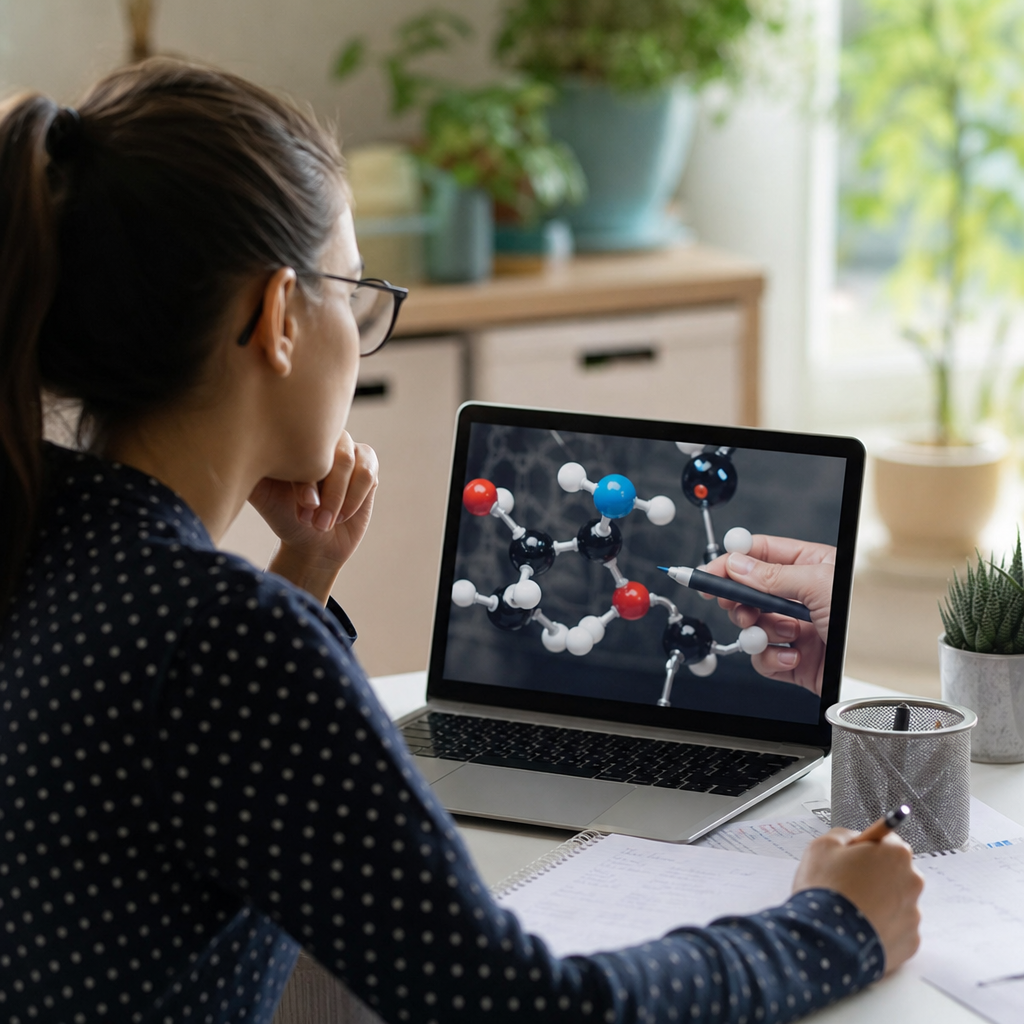
Online videos have become one of the most practical ways to learn polymer science because they combine visual demonstration, expert explanation, and repeatable access in a format that fits both classroom study and independent training. In polymer learning, “online videos” includes recorded lectures, laboratory demonstrations, webinar archives, animation-based explainers, conference talks, short tutorials, and course modules hosted on platforms such as YouTube, university learning portals, professional society websites, and commercial education platforms. “Polymer learning” spans foundational topics such as monomers, polymerization, crystallinity, glass transition temperature, rheology, additives, compounding, processing, characterization, sustainability, and end-use performance. I have used video libraries extensively when onboarding interns, training new materials engineers, and refreshing my own understanding before troubleshooting extrusion, molding, and testing problems. The reason this format matters is simple: polymers are easier to understand when learners can see molecular concepts translated into equipment behavior, sample preparation, test results, and product outcomes. A written definition of melt flow index is useful, but watching a technician run the test, discuss temperature control, and compare resin grades makes the concept stick faster and with fewer misconceptions.
For students, technicians, product designers, and manufacturing teams, the value of online resources goes beyond convenience. Good videos compress years of tacit knowledge into minutes by showing what experts notice: how a polymer melt changes under shear, why moisture ruins nylon processing, what stress whitening looks like in a molded part, or how DSC and FTIR outputs are interpreted in context. They also support different levels of learning. Beginners need plain-language explanations and strong visuals. Intermediate learners benefit from worked examples, data interpretation, and material selection cases. Advanced learners need nuanced treatment of morphology, kinetics, degradation pathways, standards, and tradeoffs between performance, processability, and cost. As a hub for educational resources, this guide explains where online videos fit, how to choose trustworthy sources, what topics to prioritize, and how to turn passive watching into usable polymer knowledge. It also highlights how video learning connects to broader online resources such as digital textbooks, standards databases, simulation tools, and technical forums, so readers can build a complete study system rather than rely on one format alone.
Why online videos work so well for polymer learning
Online videos are effective for polymer learning because polymer science sits at the intersection of abstract chemistry and highly practical engineering. Many core ideas are difficult to grasp through text alone. Chain entanglement, viscoelasticity, spherulite growth, shear thinning, orientation, and phase separation all become clearer when shown through animation, microscopy, or live process footage. In training environments, I have seen new hires understand injection molding defects faster after watching side-by-side clips of short shots, sink marks, flash, and burn marks than after reading several pages of defect definitions. Video closes the gap between concept and observation.
Another strength is sequencing. A strong lesson can move from monomer structure to polymer architecture, then to thermal behavior, then to processing consequences. For example, a lesson on polyethylene can connect branching to density, crystallinity, stiffness, chemical resistance, and blow molding performance in one continuous explanation. That progression mirrors how materials decisions are made in real work. Video also supports repetition. Learners can pause when a speaker introduces differential scanning calorimetry, replay a section on time-temperature superposition, or slow down a demonstration of tensile specimen preparation. This is especially valuable in polymer topics where terminology is dense and one misunderstood term can derail the next five minutes.
What makes a polymer video source trustworthy
Not every video is useful. The best sources are created by universities, recognized professional associations, instrument manufacturers with strong technical teams, standards-based trainers, conference organizers, and experienced engineers who show evidence rather than opinion. When evaluating a source, check whether the speaker names the polymer grade, test method, processing conditions, and limitations of the example. A credible lesson on thermal analysis should mention techniques such as DSC, TGA, or DMA accurately and explain what each method can and cannot reveal. A credible processing lesson should discuss variables such as melt temperature, mold temperature, residence time, screw speed, drying conditions, and shear history instead of presenting one simple rule that supposedly fits every resin.
Trustworthy videos also align with established references. ASTM and ISO standards matter for testing discussions. Polymer handbooks, university textbooks, and supplier technical data sheets matter for property claims. Reputable instrument companies such as TA Instruments, Netzsch, Malvern Panalytical, Bruker, Anton Paar, or Thermo Fisher often publish application videos that are technically sound, although naturally focused on their equipment. Professional societies and conference channels can be excellent for current topics like chemical recycling, bio-based polymers, barrier materials, and additive manufacturing. The key is balance: use vendor videos for method insight, academic videos for theory, and processing videos from experienced practitioners for plant-level reality.
Core topics every polymer learner should cover with video
A complete online resources plan for polymer learning should cover fundamentals first, then characterization, processing, application, and sustainability. Start with polymer chemistry basics: monomers, addition and condensation polymerization, molecular weight, molecular weight distribution, copolymers, branching, crosslinking, amorphous versus semicrystalline structure, and the meaning of glass transition and melting temperature. Without this foundation, later videos on molding, extrusion, film, fiber, or composites become a list of disconnected observations.
Next, focus on characterization. Learners should watch clear explanations of DSC, TGA, DMA, FTIR, GPC or SEC, rheometry, tensile testing, impact testing, hardness, density, microscopy, and permeability testing. These methods are the language of polymer evidence. If a compounder claims a new additive improves toughness, the learner should know which tests would support that claim and what confounding variables might exist. After characterization, move to processing topics such as extrusion, injection molding, blow molding, thermoforming, rotational molding, fiber spinning, compounding, and mixing. Then study application areas: packaging, medical devices, automotive parts, electronics, coatings, elastomers, adhesives, and 3D printing. Finish with recycling, biodegradability, life cycle assessment, and design for circularity, because these issues now shape material selection in nearly every industry.
| Learning stage | Video topics to prioritize | Best outcome |
|---|---|---|
| Beginner | Polymer basics, chain structure, Tg vs Tm, common resins, simple processing overviews | Builds vocabulary and core mental models |
| Intermediate | Thermal analysis, rheology, drying, molding defects, extrusion variables, material selection cases | Connects properties to process behavior and performance |
| Advanced | Crystallization kinetics, viscoelastic models, degradation mechanisms, barrier science, composites, recycling systems | Supports troubleshooting, R&D, and evidence-based decision making |
Best types of online video resources and how to use each one
Different video formats solve different learning problems. University lecture recordings are strongest for theory. They usually explain polymer thermodynamics, kinetics, morphology, and structure-property relationships with the rigor needed for formal study. Laboratory demonstration videos are best for showing sample preparation, instrument setup, calibration habits, and common mistakes. Webinar recordings are often the fastest route to current industrial topics, especially when they focus on one issue such as recycled content in polypropylene, moisture management in polyamides, or DMA for predicting service temperature. Conference presentations can expose learners to cutting-edge work, though they often assume prior knowledge and may move quickly.
Short-form tutorials are useful for single questions: What is melt strength? Why does PET need drying? How do nucleating agents affect crystallization? They are convenient, but they should supplement, not replace, structured study. Instrument-company videos are excellent when you need to understand what a method measures in practical terms. Supplier videos from companies like BASF, Dow, SABIC, Covestro, ExxonMobil, or Arkema can help explain resin families and application design, but learners should remember that commercial examples emphasize products that fit the company portfolio. The most effective pattern is to pair formats. For example, watch a lecture on viscoelasticity, then a rheometer demo, then a processor webinar on die swell or sag control. That combination creates understanding that transfers to real materials work.
How to build a structured video learning path
Most people fail with online resources because they collect links instead of building a sequence. A structured path should begin with clear goals. Are you preparing for an exam, supporting a manufacturing role, selecting materials for product design, or moving into polymer R&D? The answer determines what to watch and how deeply to go. In one onboarding program I built for a plastics manufacturing team, week one covered polymer families and morphology, week two focused on drying and thermal behavior, week three addressed extrusion and molding fundamentals, and week four centered on characterization and defect analysis. The sequence mattered because operators and engineers needed a common vocabulary before discussing process windows and quality failures.
A useful path also includes note templates. For each video, record the topic, definitions, key variables, named test methods, equations or models mentioned, and one real-world implication. If a lesson covers nylon hydrolysis, note the role of moisture, drying recommendations, and the property changes that appear after degradation. Then connect that note to data sheets, standards, and plant observations. Finally, schedule review. Polymer learning compounds over time because concepts recur in different contexts. Tg appears in adhesives, films, elastomers, and structural plastics. Crystallinity appears in barrier behavior, shrinkage, stiffness, and transparency. Revisiting concepts across videos turns isolated facts into working knowledge.
How online videos connect with other online resources
Video should be the gateway, not the entire system. The strongest educational resources ecosystems combine videos with textbooks, supplier databases, journal articles, standards summaries, calculators, simulations, and discussion forums. A video may explain DSC, but a handbook chapter provides the deeper interpretation of overlapping transitions. A webinar may introduce moisture sensitivity in PET, but a supplier processing guide gives exact drying ranges and residence time cautions. A conference talk may describe compatibilizers for recycled polyolefin blends, while a journal paper provides the morphology images and tensile data behind the claim.
For practical work, I recommend linking every major video topic to at least one supporting resource. Use MatWeb or supplier technical data sheets to compare resin properties. Use ASTM or ISO references to identify official test methods. Use university notes or textbooks to verify equations and definitions. Use application guides from equipment and instrument manufacturers to understand setup and limitations. Use forums carefully to see how practitioners troubleshoot, but always verify advice against material data and process constraints. This hub approach is what makes online resources powerful: videos create clarity quickly, while companion sources provide the depth and verification needed for serious polymer learning.
Common mistakes when learning polymers through video
The first mistake is confusing familiarity with competence. Watching ten videos on injection molding does not mean you can set a machine, diagnose splay, or choose a gate design. Video accelerates learning, but polymers remain an applied field where understanding must be tested against data, process outcomes, and sometimes failure. The second mistake is skipping fundamentals in favor of trendy topics such as bioplastics or 3D printing. Without grounding in chain structure, rheology, thermal transitions, and degradation, advanced topics are easy to misunderstand.
Another common mistake is trusting oversimplified explanations. Statements like “higher molecular weight is always better” or “crystalline polymers are stronger than amorphous polymers” ignore tradeoffs involving processability, impact behavior, transparency, and service conditions. Learners also often miss context. A property value without test conditions is incomplete. Tensile strength depends on specimen geometry, conditioning, strain rate, and standard used. Melt flow index is not a universal processing predictor across all resin families. Finally, many learners never practice retrieval. After a video, try to explain the concept from memory, sketch the process, or compare two materials in writing. If you cannot do that, the learning has not yet become usable.
Online videos are one of the best entry points into polymer learning because they make invisible structures, complex instruments, and real processing behavior easier to understand. Used well, they help beginners build vocabulary, help working professionals connect theory to plant or lab decisions, and help advanced learners stay current on methods, materials, and sustainability issues. The key is not simply to watch more content. The key is to choose reliable sources, follow a structured path, and connect each video to supporting online resources such as data sheets, standards, textbooks, and technical papers.
As the hub page for online resources within educational resources, this guide should serve as your starting framework. Prioritize fundamentals first, then characterization, processing, applications, and circularity. Mix university lectures with lab demonstrations, webinars, and supplier or instrument application videos. Take notes on variables, methods, and limitations. Verify claims with established references. Most importantly, turn every video into action by summarizing it, discussing it, or applying it to a polymer selection, test result, or processing question. If you are building your polymer knowledge library, start by selecting one core topic today, find three high-quality videos from different source types, and map what each adds to your understanding.
Frequently Asked Questions
What kinds of online videos are most useful for learning polymer science?
The most useful online videos for polymer learning usually fall into several complementary categories, and each supports a different stage of understanding. Recorded university lectures are excellent for building theoretical foundations in subjects such as polymer chemistry, chain structure, molecular weight, crystallinity, viscoelasticity, and processing behavior. Laboratory demonstrations are especially valuable because they show techniques that can be difficult to understand from text alone, including extrusion, injection molding, tensile testing, DSC, TGA, rheometry, spectroscopy, and sample preparation. Animation-based explainers help clarify microscopic concepts such as chain entanglement, crosslinking, amorphous versus semi-crystalline structure, diffusion, and degradation mechanisms. Webinar archives and conference presentations are useful for more advanced learners because they often focus on current industrial applications, sustainability, recycling, biopolymers, additives, and emerging materials research.
Short tutorials can also be highly effective when you need help with one specific topic, such as interpreting stress-strain curves, understanding polymerization routes, or comparing thermoplastics and thermosets. Course modules hosted on university learning platforms or professional training sites are often the most structured option because they organize videos into a logical sequence and may include quizzes, assignments, or reading support. In practice, the best approach is not to rely on a single video type. A strong learning path often combines lectures for core concepts, animations for visualization, lab videos for technique, and webinars for real-world application. That mix gives learners a fuller picture of how polymer science works in both academic and industrial settings.
How can beginners use online videos to learn polymer concepts without getting overwhelmed?
Beginners do best when they use online videos in a planned sequence rather than jumping randomly between advanced topics. Start with introductory content that explains the language of polymer science: monomers, polymers, molecular structure, branching, crosslinking, thermoplastics, thermosets, elastomers, and common processing methods. Once those terms are familiar, move into videos on polymerization methods, material properties, thermal behavior, and mechanical performance. This progression matters because polymer science is cumulative. A learner who understands chain structure and intermolecular interactions will have a much easier time understanding viscosity, toughness, crystallization, or barrier properties later.
It also helps to watch actively instead of passively. Pause to write down definitions, sketch diagrams of polymer chains, and summarize the main idea of each section in your own words. Replaying difficult sections is one of the biggest advantages of online video learning, especially for topics like rheology or spectroscopy that may not make sense on the first viewing. Beginners should also avoid assuming that polished visuals automatically mean accurate teaching. It is better to follow reputable educators, universities, research organizations, and industry professionals with clear technical credibility. Finally, pair video learning with simple reinforcement methods such as reading a textbook chapter, reviewing a glossary, or answering your own questions after each lesson. That combination turns videos from a passive resource into a reliable foundation for long-term understanding.
Are online videos effective for learning practical polymer lab and processing skills?
Yes, online videos can be extremely effective for learning practical polymer lab and processing skills, particularly as a preparation tool and a review resource. In polymer science, many procedures involve motion, timing, equipment setup, safety practices, and visual cues that are hard to capture fully in static diagrams or written instructions. A well-made laboratory demonstration can show how to prepare a specimen, calibrate an instrument, control heating conditions, observe melt behavior, measure deformation, or recognize signs of poor sample quality. Videos are especially useful for introducing techniques such as tensile testing, rheological measurements, thermal analysis, microscopy, extrusion, compounding, and molding processes because learners can see the sequence of actions in context.
That said, videos are usually most effective when combined with hands-on practice rather than used as a complete substitute. Watching a demonstration can teach you what the equipment looks like, how the procedure flows, and what a successful result should resemble, but practical skill also depends on physically performing the task, handling materials, troubleshooting errors, and following site-specific safety protocols. For students and trainees, the best use of videos is often before entering the lab or plant floor, where they reduce uncertainty and improve readiness, and after the session, where they reinforce what was observed. In industrial training environments, online videos can also standardize instruction across teams by showing the same approved methods repeatedly. Used this way, they are not just convenient—they are a powerful bridge between theory, observation, and real technical practice.
How do you know whether a polymer learning video is accurate and trustworthy?
Evaluating credibility is essential because polymer science includes technical terminology, specialized data, and application-specific detail that can easily be oversimplified or misrepresented. A trustworthy video usually has a clear source, such as a university instructor, recognized researcher, professional society, established training provider, instrument manufacturer, or experienced industry specialist. Check whether the presenter identifies their qualifications, whether the channel or platform is connected to a credible institution, and whether the explanation aligns with accepted scientific concepts. Strong videos tend to use correct terminology, define terms carefully, and distinguish between introductory simplifications and real-world complexity. They also often reference standards, published research, application examples, or supporting materials rather than relying only on broad claims.
It is also wise to compare information across multiple sources. If one video explains crystallinity, glass transition temperature, or polymer degradation in a way that conflicts sharply with textbook or university material, that is a signal to investigate further. Quality educational videos usually show internal consistency, present limitations, and avoid exaggerated promises such as “master polymer processing instantly” or “one formula explains all materials.” Production quality can help with clarity, but it should not be mistaken for technical accuracy. A simple lecture from a respected professor may be far more reliable than a flashy animation with weak scientific grounding. The safest strategy is to build a shortlist of trusted channels and organizations, then use them consistently as your primary learning base while treating unverified videos as supplemental rather than authoritative.
What is the best way to combine online videos with other study methods for polymer learning?
The best results come from treating online videos as one part of a broader learning system rather than the only resource. Videos are especially strong at demonstrating processes, visualizing structures, and making abstract ideas easier to grasp, but polymer science also requires close reading, problem solving, data interpretation, and repeated review. A practical approach is to begin each topic with a video overview to build context, then follow with textbook or article reading to deepen the technical detail. After that, use notes, flashcards, diagrams, or practice questions to reinforce terminology and concepts. For example, you might watch a lecture on polymer morphology, read about amorphous and crystalline regions, then answer questions about how morphology affects stiffness, transparency, and heat resistance.
For more advanced learners, combining videos with lab reports, standards documents, journal papers, and case studies is especially valuable. If you watch a webinar about recyclable polymers or high-performance composites, follow it with real material data sheets or published research so you can connect broad explanation to measurable properties and applications. Discussion is another powerful layer. Talking through a video with classmates, colleagues, or mentors often reveals misunderstandings that would otherwise go unnoticed. Finally, keep your learning organized. Create playlists by topic, maintain a glossary of polymer terms, and write short summaries of what each video taught you. This turns scattered viewing into a structured reference library that supports both exam preparation and practical professional development. When used intentionally, online videos become one of the most flexible and effective tools in polymer education.