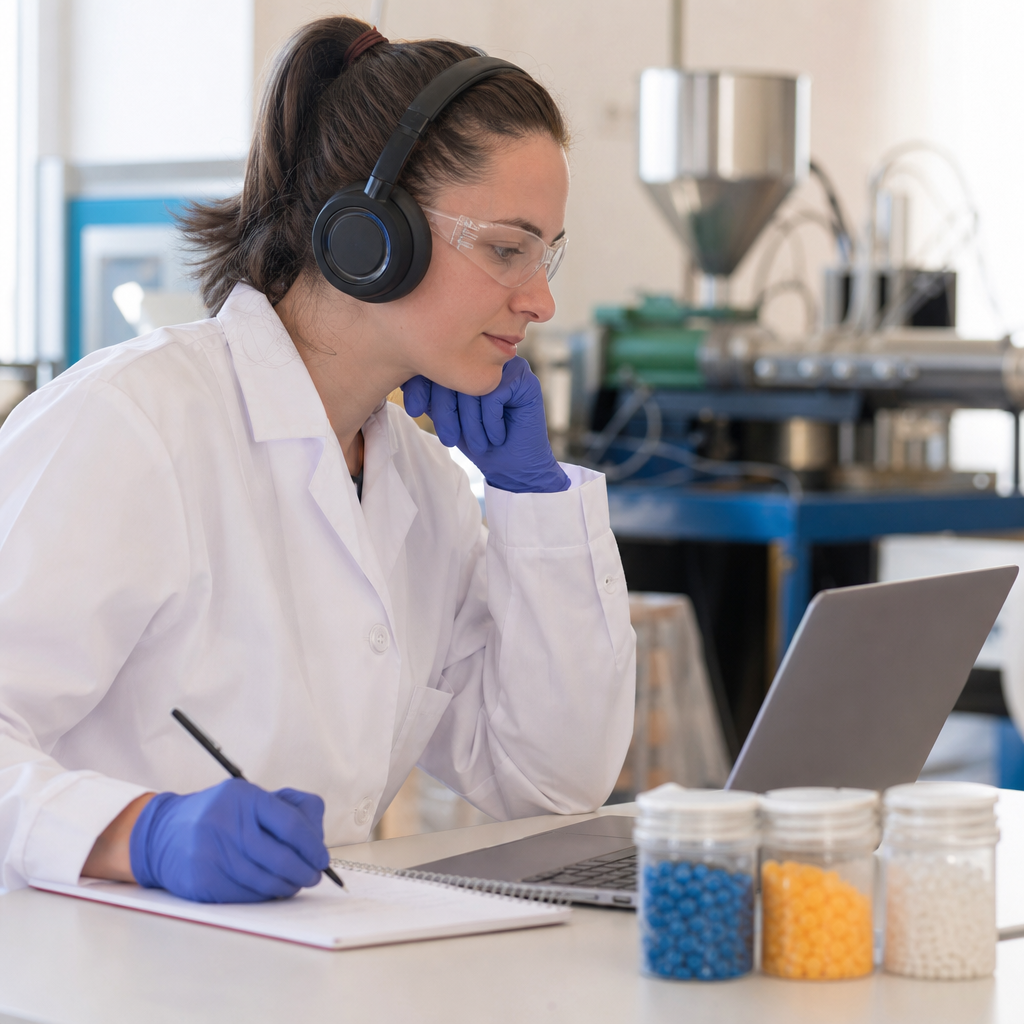
Podcasts have become one of the most practical tools for continuing education in polymers, giving engineers, technicians, researchers, product developers, and students a flexible way to stay current while commuting, traveling, or working in the lab. In this context, continuing education means structured, ongoing learning after formal coursework, and polymers includes commodity plastics, engineering resins, elastomers, composites, additives, recycling systems, processing methods, and testing standards. I have used podcasts to track changes in resin supply, understand new analytical methods, and prepare for conference sessions, and they work best when treated as part of a deliberate learning system rather than passive background audio. For polymer professionals, that matters because the field moves quickly: regulations change, material prices shift, sustainability claims evolve, and processing know-how often spreads through conversations before it appears in textbooks. A strong educational media strategy now includes educational videos and podcasts together, with videos helping on visual topics like extrusion setup or fracture surfaces, and podcasts helping on trends, interviews, standards, and decision making.
This article serves as a hub for educational videos and podcasts within the broader educational resources category, with a specific focus on how to use podcasts effectively for polymer learning. The key idea is simple: a podcast is not automatically educational just because it discusses materials. The most useful polymer podcast content has a clear audience, technically credible guests, practical examples, and enough context to connect chemistry, processing, testing, cost, and end-use performance. Learners also need a framework for choosing shows, taking notes, validating claims, and linking episodes to standards such as ASTM, ISO, UL, FDA guidance, or regional packaging and recycling rules. When used well, podcasts can sharpen technical vocabulary, expose listeners to specialists outside their daily niche, and help teams build cross-functional understanding between R&D, quality, procurement, regulatory affairs, and manufacturing.
Because this page is the hub for educational videos and podcasts, it also frames where each format fits. Podcasts excel when the topic is expert interpretation: why a polypropylene grade failed in impact testing, how a compounder balances filler loading with flow, what design for recyclability means in practice, or how life cycle assessment assumptions change material comparisons. Educational videos are better when the lesson depends on seeing a rheometer, mold venting pattern, screw design feature, DSC thermogram, or tensile bar preparation sequence. The strongest continuing education plans combine both formats, then reinforce them with datasheets, standards, supplier technical bulletins, application notes, and internal trial reports. That blended approach saves time, improves retention, and turns scattered media consumption into measurable professional development.
Why Podcasts Work for Polymer Continuing Education
Podcasts work in polymers because much of the field is interdisciplinary and conversation driven. A single formulation decision can involve polymer chemistry, additive interactions, tooling, cycle time, weatherability, compliance, and customer expectations. Long-form audio lets subject matter experts explain that complexity in a way short articles often cannot. In my own work, an interview with a packaging engineer can reveal more about seal integrity, oxygen transmission rate, and downgauging tradeoffs than a generic blog post. Good hosts also ask the questions listeners actually need answered: What problem was the team solving? Which variables mattered most? What failed first? What test method confirmed the result?
Audio is especially effective for professionals who already understand basic terminology and need context, judgment, and examples. A polymer scientist can listen to a discussion on compatibilizers during a commute and later connect that insight to a recycling project involving mixed polyolefin streams. A process engineer can hear a case study on moisture control in nylon and immediately compare it with dryer logs from the plant floor. This practical transfer is the real value. Podcasts make expert reasoning portable, and in a field where tacit knowledge is critical, hearing how experienced people think through problems is often as important as memorizing facts.
What to Look for in a High-Quality Polymer Podcast
Not all technical podcasts are worth your time. The best polymer podcasts show evidence of preparation, technical accuracy, and relevance to real industrial decisions. Start with the host and guest mix. Look for presenters with experience in materials science, compounding, converting, molding, testing, sustainability, or market analysis. Guests should have identifiable roles such as R&D director, technical service engineer, professor of polymer engineering, laboratory manager, or standards specialist. Vague job titles and promotional talking points are warning signs.
Next, evaluate substance. Strong episodes define terms, explain mechanisms, and tie claims to measurable outcomes. If someone says a bio-based polymer reduced environmental impact, the episode should clarify whether that refers to renewable feedstock content, greenhouse gas emissions, compostability under ASTM D6400 or EN 13432 conditions, or improved recyclability. If a guest discusses barrier packaging, they should mention variables such as multilayer structure, EVOH content, humidity sensitivity, or test methods for permeability. Precision matters because polymer terminology is easy to misuse.
Production quality also affects learning. Clear audio, chapter markers, transcripts, and show notes make episodes far more usable. Transcripts are valuable because you can search for terms like crystallinity, melt flow index, dynamic mechanical analysis, or PFAS. Show notes should include guest names, companies or institutions, standards mentioned, and links to supporting resources. This is where educational videos and podcasts intersect: a podcast episode that links to diagrams, plant footage, or webinar replays becomes much more actionable for technical learners.
Core Topics Every Polymer Learner Should Cover
A good continuing education plan uses podcasts to build breadth across the polymer value chain. At minimum, listeners should cover materials fundamentals, processing, characterization, application design, sustainability, and regulation. Materials fundamentals include resin families such as polyethylene, polypropylene, PVC, PET, polyamide, polycarbonate, PEEK, silicones, and thermoplastic elastomers. Processing coverage should include injection molding, extrusion, blow molding, thermoforming, rotational molding, compounding, fiber spinning, and additive manufacturing. Characterization topics should cover rheology, DSC, TGA, FTIR, impact testing, tensile testing, weathering, microscopy, and permeability.
Application design matters because polymers are selected in context. Medical devices require biocompatibility and sterilization resistance. Automotive components need heat aging, chemical resistance, and dimensional stability. Packaging must balance cost, sealability, printability, and shelf life. Electrical products bring flammability and dielectric concerns. Sustainability and recycling deserve equal weight, including mechanical recycling, chemical recycling, design for disassembly, PCR variability, and mass balance claims. Finally, regulation cannot be an afterthought. Episodes on REACH, RoHS, FDA food contact, extended producer responsibility, and recycled content laws help learners avoid expensive blind spots.
| Learning goal | Best podcast topic examples | Useful companion video topic |
|---|---|---|
| Understand material selection | Polymer family comparisons, additive effects, failure case interviews | Datasheet walkthroughs and side-by-side specimen demonstrations |
| Improve processing decisions | Drying, residence time, screw design, mold temperature control | Machine setup, die swell, venting, and startup procedures |
| Strengthen testing knowledge | ASTM and ISO method discussions, interpretation of lab results | Instrument operation, sample prep, and fracture analysis |
| Track sustainability changes | Recycling markets, LCA assumptions, policy updates | Sorting lines, reprocessing footage, and package teardown reviews |
How to Build a Podcast Learning System That Actually Works
The difference between casual listening and continuing education is process. I recommend setting a learning objective for each month or quarter. For example, one month might focus on polyolefin recycling, another on engineering thermoplastics in under-hood automotive use, and another on test methods for failure analysis. Then create a playlist of six to ten episodes around that theme. Mix foundational episodes with current interviews and one or two market or policy updates. This sequence gives you both conceptual grounding and practical relevance.
Take notes actively. A simple template works: key concept, example application, test method or standard mentioned, open question, and action item. If an episode mentions that moisture in PET can depress intrinsic viscosity during processing, write down how that relates to dryer dew point checks or resin handling procedures in your environment. If a guest describes stress cracking in ABS from a cleaner or adhesive, note the chemicals involved and whether your team uses them. These notes become searchable institutional knowledge, especially when stored in OneNote, Notion, Confluence, or a shared quality system folder.
Validation is essential. Podcasts can surface ideas, but standards, supplier data, and internal trials confirm what should be implemented. When an episode raises a useful claim, follow up with an ASTM or ISO method, a technical data sheet, a peer-reviewed paper, or a supplier application guide. This habit prevents the common mistake of overgeneralizing from one company’s experience. In polymers, processing windows, part geometry, and additive packages change outcomes quickly. Treat podcasts as expert briefings, not final proof.
How Educational Videos and Podcasts Work Together
As the hub page for educational videos and podcasts, this article should make the division of labor clear. Use podcasts when you need explanation, interpretation, and industry perspective. Use educational videos when learning depends on motion, equipment, or visual evidence. For example, a podcast can explain why shear heating affects viscosity and color stability in a filled polypropylene compound, but a video is better for showing screw elements, purge behavior, or splay at the press. A podcast can discuss FTIR as a tool for polymer identification, while a video can show sample preparation, spectral interpretation, and contamination signatures.
This pairing is powerful for teams. A quality manager might assign a podcast interview on root-cause analysis in molded parts, followed by a short video on microscopy techniques or gate blush identification. A new product engineer could listen to an episode on multilayer packaging economics, then watch a video explaining coextrusion structures and tie-layer function. This blended model supports different learning styles without losing rigor. It also mirrors how technical professionals actually solve problems: they listen to experts, review visual evidence, check standards, and then test assumptions against plant or lab data.
Best Use Cases for Different Polymer Roles
Podcast use should reflect job responsibilities. For R&D scientists, the best episodes often cover structure-property relationships, additive chemistry, analytical methods, and early-stage innovation. Process engineers benefit most from discussions on drying, melt temperature control, residence time, venting, startup discipline, tooling, and scrap reduction. Quality professionals should prioritize test method interpretation, statistical process control, contamination analysis, complaint investigations, and specification management. Procurement and sourcing teams need market outlooks, resin availability updates, substitution risks, and supplier qualification insights.
Students and early-career professionals can use podcasts to bridge the gap between theory and industry language. University courses may teach polymerization mechanisms and phase behavior, but podcasts reveal how those ideas affect cycle time, customer complaints, or sustainability claims in commercial settings. Managers also gain value. Leaders overseeing technical teams do not need to become specialists in every polymer family, but they do need enough fluency to ask better questions about cost, compliance, and manufacturability. Well-chosen educational videos and podcasts can build that fluency efficiently.
Common Mistakes and How to Avoid Them
The first mistake is listening too broadly without a plan. Polymer content spans chemistry, machinery, markets, regulation, and sustainability, so random listening creates fragmented understanding. Tie episodes to a goal. The second mistake is trusting unsupported claims. Marketing language around biodegradable materials, chemical recycling, or low-carbon resins often compresses important caveats. Ask what standard, boundary condition, feedstock, or end-of-life pathway the speaker is using. The third mistake is ignoring older episodes. In polymers, some fundamentals such as crystallization behavior, moisture sensitivity, and creep remain highly relevant even if the recording is several years old.
Another common error is treating podcasts as a replacement for direct technical documentation. They are not. Resin data sheets, processing guides, safety documentation, design manuals, and standards still anchor decisions. Finally, many learners fail to share what they hear. A short internal debrief after a strong episode can spread useful knowledge across maintenance, tooling, quality, and product teams. Over time, that habit turns individual listening into organizational learning, which is where continuing education produces the highest return.
Podcasts are now a serious continuing education tool for polymer professionals because they deliver expert insight in a format that fits real workdays. Used well, they help listeners understand materials, processing, testing, sustainability, and regulation with more nuance than short articles usually provide. They are most effective when selected carefully, organized around clear learning goals, and supported by transcripts, notes, standards, supplier documents, and internal validation. For this educational videos and podcasts hub, the central principle is straightforward: audio builds context and judgment, while video shows equipment, samples, and visual evidence that audio cannot fully convey.
The main benefit is not convenience alone. It is faster, better-informed decision making across the polymer value chain. A scientist can spot a more relevant analytical method, a process engineer can recognize a drying problem sooner, a quality manager can ask sharper questions about test results, and a sourcing team can understand the real implications of a resin change. Those gains compound when teams build shared playlists and discuss what they learn. If you want to strengthen continuing education in polymers, start by choosing one priority topic, assemble a small set of credible podcast episodes and companion videos, and turn listening into a repeatable learning practice this month.
Frequently Asked Questions
How can podcasts support continuing education in polymers in a meaningful way?
Podcasts can be a highly effective continuing education tool in polymers because they make it easier to learn consistently without needing to be in a classroom or at a desk. For polymer engineers, technicians, researchers, product developers, quality professionals, and students, that flexibility matters. A well-chosen podcast can expose listeners to new resin developments, processing techniques, testing standards, sustainability trends, recycling systems, additive technologies, and real-world troubleshooting insights while they commute, travel, exercise, or handle routine lab and plant tasks.
The real value comes from using podcasts as part of a structured learning process rather than passive background listening. In polymers, technical progress often happens across several connected areas at once, including materials science, compounding, processing, regulations, end-use performance, and circularity. Podcasts help professionals keep pace with those changes by bringing in perspectives from industry experts, academics, equipment suppliers, consultants, and manufacturers. Hearing practitioners explain why a material failed, how a formulation was optimized, or what a new standard means in production can make technical concepts more practical and memorable.
Podcasts are also especially useful because polymer education is inherently interdisciplinary. Someone focused on injection molding may benefit from episodes about rheology, additives, recycled content, barrier properties, or quality testing. A researcher working on elastomers may gain insight from conversations about compounding, cure systems, processing windows, or field performance. In that sense, podcasts help learners connect specialized topics to broader industry realities, which is an important part of continuing education.
Used well, podcasts do not replace textbooks, standards documents, technical papers, or hands-on training. Instead, they reinforce and extend them. They can introduce emerging topics, summarize industry shifts, highlight best practices, and point listeners toward deeper resources. That makes them one of the most practical and sustainable ways to maintain professional growth in polymers over time.
What kinds of polymer podcast topics are most useful for engineers and technical professionals?
The most useful podcast topics are the ones that align directly with a listener’s technical responsibilities while also expanding their understanding of the broader polymer value chain. For many professionals, that starts with material-specific content such as polypropylene, polyethylene, polycarbonate, nylon, PEEK, TPU, silicone, epoxy, thermoplastic elastomers, or fiber-reinforced composites. Episodes that explain resin selection, structure-property relationships, performance tradeoffs, and common failure modes are especially valuable because they support better technical decision-making.
Processing-focused topics are also extremely important. Engineers and technicians often benefit from podcast discussions on extrusion, injection molding, blow molding, thermoforming, rotational molding, compounding, mixing, drying, curing, welding, and additive manufacturing. These subjects become even more useful when they include practical challenges such as warpage, sink, moisture sensitivity, melt fracture, poor dispersion, dimensional instability, or cycle time optimization. Podcasts that translate processing science into plant-floor relevance can have immediate educational value.
Another strong category includes testing, standards, and quality topics. Continuing education in polymers should include familiarity with mechanical testing, thermal analysis, rheology, spectroscopy, microscopy, weathering, barrier testing, flammability, chemical resistance, and failure analysis. Podcast episodes that discuss ASTM, ISO, UL, FDA, REACH, RoHS, or automotive and aerospace qualification frameworks can help technical professionals stay current on compliance expectations and how those requirements affect design and manufacturing decisions.
Sustainability and recycling are now essential podcast subjects as well. Professionals increasingly need continuing education on mechanical recycling, chemical recycling, recycled content incorporation, life cycle thinking, design for recyclability, bio-based polymers, compostability claims, and legislation affecting packaging and durable goods. In many organizations, these issues are no longer separate from core polymer engineering; they directly influence material selection, product development, and customer communication.
Finally, the best educational podcasts often include trend analysis and career-relevant topics such as supply chain shifts, innovation strategy, commercialization, application development, and collaboration between R&D and manufacturing. In short, the strongest podcast topics combine technical depth with practical relevance, helping listeners improve both their specialized knowledge and their industry awareness.
How should I build a structured learning routine around podcasts for polymer education?
The most effective approach is to treat podcasts as one component of a deliberate continuing education plan. Start by defining a few learning goals based on your role. For example, a process engineer may want to improve understanding of melt rheology and troubleshooting, while a product developer may focus on material selection, regulatory compliance, and sustainability. A lab professional might prioritize analytical methods, test interpretation, and failure analysis. Once the goals are clear, choose podcasts and episodes that map to those objectives instead of listening randomly.
It helps to organize podcast listening by theme. You might dedicate one month to engineering resins, another to recycling systems, another to composites, and another to testing standards. This creates continuity and makes it easier to build layered understanding. As you listen, take short notes on key terms, material names, processing conditions, test methods, and expert recommendations. Even a few bullet points per episode can turn casual listening into retained learning.
To deepen the educational value, follow each podcast episode with a reinforcing action. That could mean reading a technical data sheet, reviewing an ASTM or ISO standard, finding a supplier white paper, reading a journal abstract, or discussing the topic with a colleague. For example, if a podcast covers moisture-sensitive polymers, you might follow up by reviewing drying requirements for PET, nylon, or polycarbonate and comparing them with your facility’s procedures. This step is what transforms exposure into application.
Many professionals also benefit from keeping a simple learning log. Record the podcast title, date, topic, major takeaways, questions raised, and any process or design implications for your work. Over time, this creates a personal knowledge base and can be useful for performance reviews, certification maintenance, internal training, or documenting self-directed professional development. If your company supports continuing education, you may even be able to connect podcast-based learning to broader competency goals.
Consistency matters more than intensity. Listening to one or two high-value episodes each week and reviewing your notes is often more effective than consuming large amounts of content without reflection. In a field as broad as polymers, a steady and organized routine helps you accumulate useful technical knowledge in a way that is realistic, relevant, and sustainable.
Can podcasts really help me stay current with fast-changing areas like recycling, additives, and processing technology?
Yes, podcasts can be very effective for staying current, particularly in areas that change quickly and involve a mix of technical, commercial, and regulatory developments. Recycling systems, additive technologies, and processing innovations evolve rapidly because they are shaped by new equipment, market demands, legislation, customer expectations, and material science breakthroughs. Podcasts are well suited to these topics because they can deliver timely interviews, case studies, and trend discussions much faster than many traditional educational formats.
For example, in recycling, a podcast may cover practical issues such as contamination control, odor management, property retention, compatibilization, multilayer packaging challenges, or the economics of post-consumer resin. In additives, episodes may explore stabilizers, flame retardants, impact modifiers, slip agents, nucleating agents, antistats, pigments, or PFAS-related reformulation concerns. In processing, podcasts often discuss automation, digital monitoring, screw design, energy efficiency, tool design, process optimization, and defect reduction. These are all areas where current knowledge has direct value.
What makes podcasts especially powerful is the way they combine technical explanation with current industry context. A white paper may explain how an additive works, but a podcast interview might also reveal why adoption is increasing, what performance limitations users are seeing, how regulatory pressure is influencing reformulation, and what processors should watch for during implementation. That combination helps listeners understand not just the science, but also the real-world implications.
That said, staying current does require discernment. Not every podcast episode will have the same level of rigor, and some content may reflect vendor priorities or broad commentary rather than validated technical guidance. The best practice is to use podcasts as an early awareness and interpretation tool, then verify important points through technical literature, standards documents, supplier data, peer-reviewed research, and internal testing. When used this way, podcasts are not merely informative; they become a practical front line for ongoing professional awareness in polymers.
What is the best way to evaluate whether a polymer podcast is credible and worth my time?
The first step is to look at who is speaking and what experience they bring. Credible polymer podcasts usually feature hosts or guests with clear technical backgrounds in materials science, polymer engineering, processing, testing, product development, recycling, or related industrial roles. That does not mean every speaker must be an academic researcher. In fact, some of the most useful podcast guests are plant engineers, compounders, application specialists, technical service experts, or lab managers who can explain how polymer principles work in practice. What matters is whether their expertise is relevant, specific, and evident in the discussion.
Next, pay attention to how the content is presented. Strong educational podcast episodes tend to define terms clearly, distinguish facts from opinions, explain tradeoffs, and avoid oversimplified claims. In polymers, blanket statements are often a warning sign because material performance depends on formulation, processing history, geometry, environment, testing method, and end-use