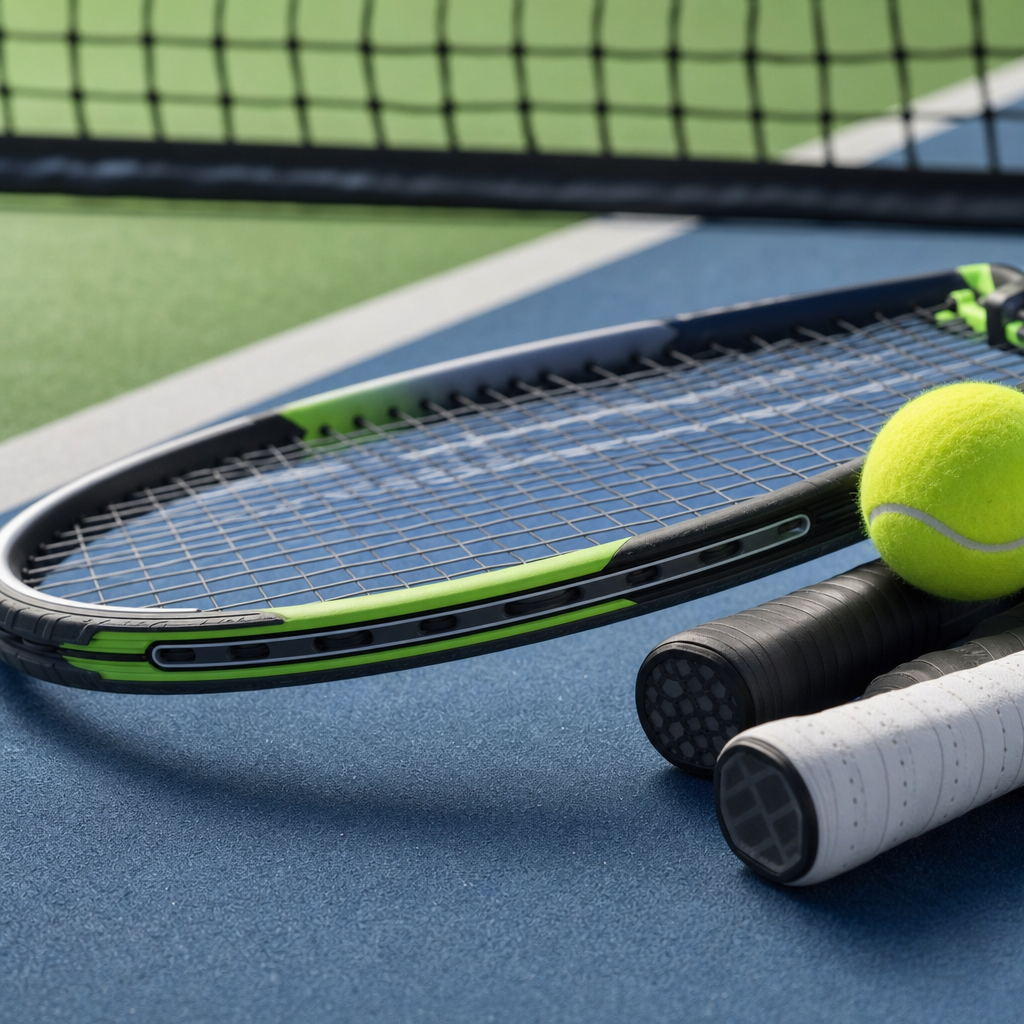
Innovations in polymer-based tennis and racket sports have reshaped how rackets are built, how balls perform, how strings respond, and how athletes manage comfort, control, and durability across recreational and elite play. In this sports and leisure hub, polymer-based tennis and racket sports refers to the use of engineered plastics, elastomers, composite resins, foams, and fiber-reinforced polymer systems in equipment for tennis, padel, badminton, squash, pickleball, and related games. I have worked with sporting-goods product teams and materials suppliers long enough to see a clear pattern: polymer choices affect nearly every performance variable that players notice, from swing feel and vibration damping to weather resistance and product lifespan. That matters because modern racket sports demand lighter frames, faster swings, better injury management, and more consistent manufacturing at scale. It also matters commercially. Tennis and adjacent racket categories depend on repeat purchasing of strings, grips, overgrips, dampeners, balls, footwear components, and protective accessories, many of which are polymer-heavy products. As participation broadens across age groups and new formats such as padel and pickleball grow globally, manufacturers are pushing beyond simple nylon parts toward advanced thermoplastics, polyurethane systems, EVA foams, polyester monofilaments, TPU inserts, and carbon fiber composites bound by epoxy or thermoplastic matrices. The result is a broad innovation landscape where polymers are not a side note; they are the enabling platform behind modern sports equipment design, player safety, and on-court experience.
Why polymers dominate modern racket sports equipment
Polymers dominate because they solve the central engineering problem in racket sports: balancing low mass with high stiffness, impact resilience, manufacturability, and comfort. Wood frames once defined tennis and squash, but they absorbed moisture, varied in quality, and limited shape optimization. Metal improved consistency, yet often produced harsher feel and design constraints. Polymer composites changed the equation by allowing engineers to tune frame sections, layup orientation, and damping behavior with far more precision. In tennis, a carbon fiber frame relies on a polymer matrix, usually epoxy, to bind fibers and transfer load. In padel, polymeric core foams and surface finishes define rebound and control. In badminton, thin-walled composite shafts depend on resin toughness as much as fiber strength. Even seemingly simple components such as grommets, butt caps, grips, bumper guards, and vibration dampeners rely on selected polymers for abrasion resistance, elasticity, and dimensional stability.
The practical benefit is custom performance. A stiff beam can be made more forgiving through elastomer inserts, foam filling, or alternative layup schedules. A string can shift from soft multifilament comfort to snapback-focused polyester spin potential by changing polymer chemistry, extrusion conditions, and surface treatment. Manufacturers also prefer polymers because high-volume methods such as injection molding, compression molding, thermoforming, pultrusion, and automated prepreg layup support repeatable quality. That repeatability is critical when consumers expect two frames of the same model to play almost identically. Standards from organizations such as the International Tennis Federation and Badminton World Federation influence dimensions and test methods, but materials innovation is where brands create separation. In real product development work, the breakthrough usually is not a single miracle material; it is a system-level optimization of polymer matrix, geometry, surface texture, and process control.
Frame engineering: composites, thermoplastics, and tuned feel
The frame is the most visible example of polymer innovation. Advanced tennis, badminton, and squash rackets are typically carbon fiber reinforced composites using epoxy resin systems, but the sector is moving beyond conventional layups. Toughened epoxies improve crack resistance during off-center impacts. Thermoplastic composite concepts are gaining attention because they can offer faster processing, weldability, and better recyclability than thermosets, though cost and consistency remain barriers at premium performance levels. Some brands add aramid fibers for damping, basalt fibers for feel tuning, or glass fiber in selected regions to reduce brittleness. In padel and pickleball, polymer honeycomb or foam core structures work with composite skins to control rebound and sound while meeting target weight.
Designers use polymers to tune more than strength. They tune flex profile, torsional stability, and vibration transmission. For example, a frame with a stiffer throat and slightly more compliant hoop can preserve directional control while reducing shock at contact. Foam-filled handles, polyurethane pallets, and elastomer bridge inserts are all methods used to alter feedback. Wilson, Babolat, Head, Yonex, and Tecnifibre have all marketed different damping architectures, but the underlying principle is the same: specific polymer layers or inserts absorb selected vibration frequencies without making the frame feel dead. In my experience, the best products avoid over-damping. Competitive players still want ball connection and timing cues. The goal is filtered feedback, not muted feedback. That distinction explains why successful polymer design in racket frames always combines material science with player testing, swing analysis, and repeated impact validation.
String technology: nylon, polyester, hybrids, and surface science
Strings are where players most directly experience polymer behavior. Nylon remains foundational, especially in synthetic gut and multifilament constructions, because it provides elasticity, comfort, and accessible cost. Multifilament strings bundle hundreds or thousands of fine polymer filaments, often with polyurethane bonding, to mimic some qualities of natural gut while improving weather tolerance and manufacturing consistency. Polyester and co-polyester monofilaments transformed competitive tennis because they deliver control, durability, and the snapback behavior associated with heavy topspin. That said, polyesters are generally stiffer and lose tension over time, so they suit fast swings better than slower recreational strokes. Polyetheretherketone and liquid crystal polymer have appeared in niche or blended applications, but nylon and polyester remain the market anchors.
What changed in the past decade is the sophistication of extrusion and finishing. Manufacturers now engineer shaped profiles, low-friction coatings, additives for softening, and cross-sectional geometries that affect bite and movement. A pentagonal polyester string can increase edge interaction with the ball, but edge sharpness alone does not guarantee spin; inter-string friction and elastic recovery matter just as much. Hybrid stringing pairs a polyester main with a softer cross, often nylon or natural gut, to balance spin and comfort. That is a polymer system decision, not a simple brand preference. String innovation also extends to badminton and squash, where high-performance multifilaments use heat-resistant coatings and precise gauge control to withstand higher tensions. Players asking what string material is best need a direct answer: the best string depends on swing speed, injury history, and desired feel, but for most non-elite players, softer nylon-based options remain the safest starting point.
Balls, grips, grommets, and shock control components
Many players think innovation lives only in the frame, yet accessory polymers influence daily performance more consistently because they wear faster and are replaced more often. Tennis balls depend on vulcanized rubber cores engineered for compression retention, rebound consistency, and temperature response. Pressureless practice balls and stage balls for junior development use modified rubber and felt systems to produce lower speeds and more predictable bounce. In pickleball, polymer construction is even more central because the ball itself is a perforated plastic shell, typically rotationally molded or injection molded from durable polymers that must balance crack resistance with flight stability. Indoor and outdoor pickleballs differ in hole count, wall behavior, and polymer toughness because wind, court texture, and impact conditions differ.
Grips and overgrips combine polyurethane, EVA, and tackified surface treatments to manage sweat, traction, and cushioning. The best grip design is not simply soft; it must maintain friction under moisture and compress without bottoming out. Grommets and bumper guards, usually nylon-based engineering plastics, protect strings from frame abrasion and preserve structural integrity at the hoop. Vibration dampeners made from silicone or other elastomers change stringbed acoustics and attenuate some high-frequency vibration, though they do not meaningfully reduce the larger shock loads associated with arm injury. That nuance matters. Players often overestimate what a small dampener can do and underestimate the role of string stiffness, racket balance, and impact location. In practice, polymer accessories work best as part of a broader comfort system that includes appropriate string selection, grip size, and swingweight management.
How polymer choices affect performance across sports
Different racket sports stress materials in different ways, so polymer innovation follows sport-specific priorities. Tennis frames must endure repeated high-energy impacts and string tensions while preserving torsional stability for off-center shots. Badminton emphasizes extremely light frames and fast shaft recovery, making resin quality and microcrack resistance especially important. Squash rackets deal with compact swings and frequent wall contact, so abrasion resistance and hoop durability matter. Padel rackets rely heavily on polymer foams, face textures, and hole patterns to control rebound, maneuverability, and comfort. Pickleball paddles use polymer honeycomb cores, edge guards, and face laminates to manage a very different impact signature from strung rackets.
| Sport | Key polymer systems | Main performance goal | Typical tradeoff |
|---|---|---|---|
| Tennis | Epoxy composites, polyester strings, polyurethane grips | Spin, control, stability | Higher stiffness can reduce comfort |
| Badminton | Light composite resins, nylon multifilaments | Speed, repulsion, fast recovery | Lower mass can reduce impact robustness |
| Squash | Composite frames, abrasion-resistant grommet polymers | Maneuverability in tight spaces | Thin beams may wear faster at the hoop |
| Padel | EVA foams, surface polymers, composite skins | Controlled rebound and comfort | Softer cores may lose response over time |
| Pickleball | Polymer honeycomb cores, thermoplastic edge systems | Touch, stability, durability | Quiet feel can reduce perceived feedback |
This comparison shows why no single polymer formula wins everywhere. The right material package depends on impact energy, court environment, rules, and user expectations. Brands that understand these differences create better sport-specific products rather than forcing a tennis-derived solution into every category.
Sustainability, durability, and the next development cycle
Sustainability is now a serious design constraint in sports and leisure, but polymer-based racket sports still face hard limitations. Thermoset composites are difficult to recycle. Short product cycles encourage waste. Polyester strings are durable on court yet become frequent discard items for competitive players. Tennis balls are notoriously challenging to recover because they combine rubber, fabric, and pressurization. Even so, progress is real. Brands are increasing use of recycled PET in packaging and apparel-linked accessories, exploring bio-based polyamides, and testing thermoplastic composite frames that may enable easier reprocessing. Wilson, Head, and Babolat have all highlighted recycled or lower-impact materials in selected product lines, though claims vary in significance and should be evaluated carefully.
Durability remains essential because the most sustainable product is often the one that performs well for longer. Resin toughening, better grommet design, improved UV stabilizers, and tighter process controls reduce premature failure. In padel and pickleball, where participation is growing rapidly, the next development cycle will likely focus on polymer systems that survive heat, moisture, and repeated edge impacts without large weight penalties. Expect more work on foams with stable cell structures, low-volatile adhesives, and repairable or modular components. Smart manufacturing will also matter. Digital quality control, CT inspection of composite layups, and finite element modeling can identify weaknesses before products reach players. For buyers, the practical takeaway is straightforward: evaluate claims about comfort, spin, sustainability, and durability through the full equipment system, not a single headline material. For brands and product teams, the opportunity is equally clear. The future of polymer-based tennis and racket sports belongs to companies that combine material science, athlete feedback, and responsible design into equipment that performs consistently, protects the player, and lasts long enough to earn trust. If you are building a sports and leisure product strategy, start by mapping where polymers influence feel, safety, replacement cycles, and end-of-life options, then use that map to guide smarter development.
Frequently Asked Questions
1. What does “polymer-based” mean in tennis and other racket sports equipment?
In tennis and racket sports, “polymer-based” refers to equipment made with engineered plastics, elastomers, resins, foams, and fiber-reinforced composite systems rather than relying only on traditional materials such as wood, natural gut, or metal. These polymers may appear in racket frames, grommets, grip layers, dampening inserts, overgrips, shoes, protective guards, ball components, shuttle skirts, and string coatings. In many modern rackets, the frame itself is not just a single material but a carefully designed composite structure in which polymer resins bind reinforcing fibers such as carbon, glass, aramid, or basalt into a lightweight, high-strength system.
This matters because polymers can be precisely engineered for specific playing characteristics. A manufacturer can tune stiffness, flexibility, impact damping, abrasion resistance, weight distribution, and feel by changing the resin chemistry, fiber orientation, foam density, or elastomer insert placement. For example, a tennis racket designed for power may use a stiffer layup and vibration-filtering polymers, while a squash or badminton racket may prioritize fast handling, torsional stability, and impact resilience. In balls and string systems, polymers help determine rebound, spin potential, pressure retention, durability, and comfort. In short, polymer-based innovation gives brands and athletes a much broader design toolbox, which is why it has become central to performance across recreational, competitive, and elite play.
2. How have polymer innovations changed modern racket frame design?
Polymer innovation has transformed racket frames from relatively simple structures into highly engineered performance platforms. Earlier generations of rackets often faced clear tradeoffs: more strength usually meant more weight, and more flexibility could reduce stability. Advanced polymer composites have greatly reduced those compromises. By combining fiber reinforcements with specialized resins, manufacturers can produce frames that are lighter, stronger, more aerodynamic, and more precisely tuned to the demands of different sports and player types. This is especially important in tennis, badminton, padel, squash, and pickleball, where swing speed, maneuverability, and shock behavior strongly affect performance.
One major breakthrough is the use of layered composite construction with carefully oriented fibers. Instead of making a frame uniformly stiff, engineers can create localized performance zones. The throat, hoop, shaft, and handle can each behave differently under load. A frame may be built to resist twisting on off-center contact, flex slightly to improve pocketing and control, or absorb some high-frequency vibration to improve comfort. Polymer foams inside hollow structures can further improve feel, mute harshness, and reinforce key sections without adding excessive weight. Thermoplastic and thermoset resin systems also influence durability, manufacturing consistency, and impact response.
Another important development is integration. Modern rackets often include polymer grommet systems, bumper guards, dampening channels, handle inserts, and grip substrates that work together with the composite frame rather than acting as separate afterthoughts. The result is equipment that can be tailored for beginner forgiveness, intermediate all-around play, or elite-level precision. For players, this means more options: power frames, control frames, arm-friendly frames, spin-oriented frames, and models optimized for quick exchanges at the net or explosive baseline play. Polymer science is the reason those categories now feel so distinct and refined.
3. In what ways do polymers affect strings, balls, and overall playing feel?
Polymers play a huge role in how strings and balls behave, and that directly shapes what players describe as feel. In strings, the influence is especially obvious. Polyester monofilaments, co-polymers, nylon multifilaments, polyurethane-bonded constructions, and hybrid combinations all produce different responses in power, control, spin, comfort, and tension maintenance. A firmer polyester string may provide excellent snapback and spin generation for advanced players with fast swings, while a softer multifilament made from thousands of fine filaments held together with polymer binders may offer greater comfort and easier depth for players seeking shock reduction and livelier response. Surface coatings and additives also matter, since low-friction polymer finishes can help strings slide and return more efficiently, which can influence spin potential and durability.
In balls, elastomer chemistry determines rebound and consistency. Tennis balls rely on rubber compounds and pressurization behavior, along with felt interaction, to create their bounce characteristics. Small adjustments in polymer formulation can affect resilience, wear rate, and responsiveness across different court surfaces. Similar principles apply to pickleballs and padel balls, though the exact construction differs. A pickleball’s polymer shell design, hole pattern, wall thickness, and material stiffness all influence flight stability, durability, sound, and bounce. In badminton, synthetic shuttle skirts made from advanced polymers aim to improve durability and flight consistency compared with natural feather alternatives, especially for training or recreational use.
When players talk about “feel,” they are often experiencing the combined effect of polymer systems across the entire equipment chain. The frame’s composite layup, the string’s elasticity and friction profile, the grip foam’s cushioning, and the ball’s rebound behavior all contribute. That is why polymer innovation is not just about making gear lighter or stronger. It is about shaping the sensory feedback players receive on contact, which can influence confidence, timing, shot selection, and even injury risk over long sessions.
4. Are polymer-based materials better for comfort, injury prevention, and durability?
In many cases, yes, but the answer depends on how the materials are engineered and matched to the player. One of the biggest advantages of polymer-based systems is their ability to manage shock and vibration. Elastomer inserts, foam-filled handles, compliant grip layers, and more flexible resin systems can all reduce the harshness that travels into the hand, wrist, elbow, and shoulder. For players concerned about comfort, especially those with a history of tennis elbow or general joint sensitivity, these materials can make a meaningful difference. Softer string constructions, cushioned grips, and less rigid composite layups often create a more forgiving setup without completely sacrificing control.
From an injury-prevention standpoint, polymers are valuable because they can be tuned. A racket does not have to be uniformly stiff and unforgiving. Engineers can design a frame that remains stable during impact while still filtering unwanted vibration. Strings can also be selected based on comfort profile. For example, a very stiff polyester may suit a powerful advanced player but feel too demanding for someone with slower swings or arm discomfort. A multifilament or hybrid setup may be a better choice because its polymer structure allows for greater elasticity and impact absorption. Proper equipment pairing matters as much as the material itself.
Durability is another area where polymer innovation has delivered major gains. Composite rackets resist fatigue better than many older constructions, protective polymer bumpers reduce frame wear, synthetic grip materials handle sweat and abrasion well, and modern string coatings can improve resistance to notching and breakage. Ball and shuttle durability have also benefited from improved material formulations. That said, “more durable” does not always mean “better for every player.” Extremely stiff, abrasion-resistant materials can sometimes reduce comfort. The best modern designs seek balance: enough toughness for regular play, enough responsiveness for performance, and enough damping for long-term usability. That balance is one reason polymer-based sports equipment continues to evolve so rapidly.
5. What future innovations are likely in polymer-based tennis and racket sports?
The next wave of innovation will likely focus on smarter material tuning, sustainability, and more personalized performance. On the performance side, expect continued refinement of hybrid composite structures that combine multiple fiber types and resin systems within a single frame. Manufacturers are increasingly interested in placing stiffness, damping, and stability exactly where players need them, rather than applying one design philosophy across the entire racket. We may also see greater use of advanced thermoplastics, impact-modified resins, and internal foam architectures that improve repairability, consistency, and manufacturing efficiency while preserving elite-level play characteristics.
Sustainability is another major frontier. Traditional high-performance composites can be difficult to recycle, so companies are exploring bio-based resins, recycled polymers, lower-waste manufacturing methods, and more circular product designs for grips, strings, packaging, and accessories. In balls and training equipment, longer-lasting elastomer blends and more environmentally responsible polymer formulations could reduce replacement frequency and waste. While high performance will remain the priority for many competitive players, the market is clearly moving toward materials that perform well without ignoring environmental impact.
Personalization may become the most visible change for consumers. As manufacturing and data tools improve, polymer-based products can be tailored more precisely to swing style, impact patterns, comfort needs, and skill level. That could mean custom string formulations, grip systems with adjustable cushioning, pickleball paddles and tennis rackets with targeted dampening profiles, or badminton and squash frames built around specific speed and balance preferences. In the longer term, embedded sensing technologies may work alongside polymer structures to monitor wear, impact loading, and performance trends. The broader direction is clear: polymer innovation is no longer only about making equipment stronger and lighter. It is about making racket sports gear more responsive, more specialized, more sustainable, and better aligned with how real athletes actually play.