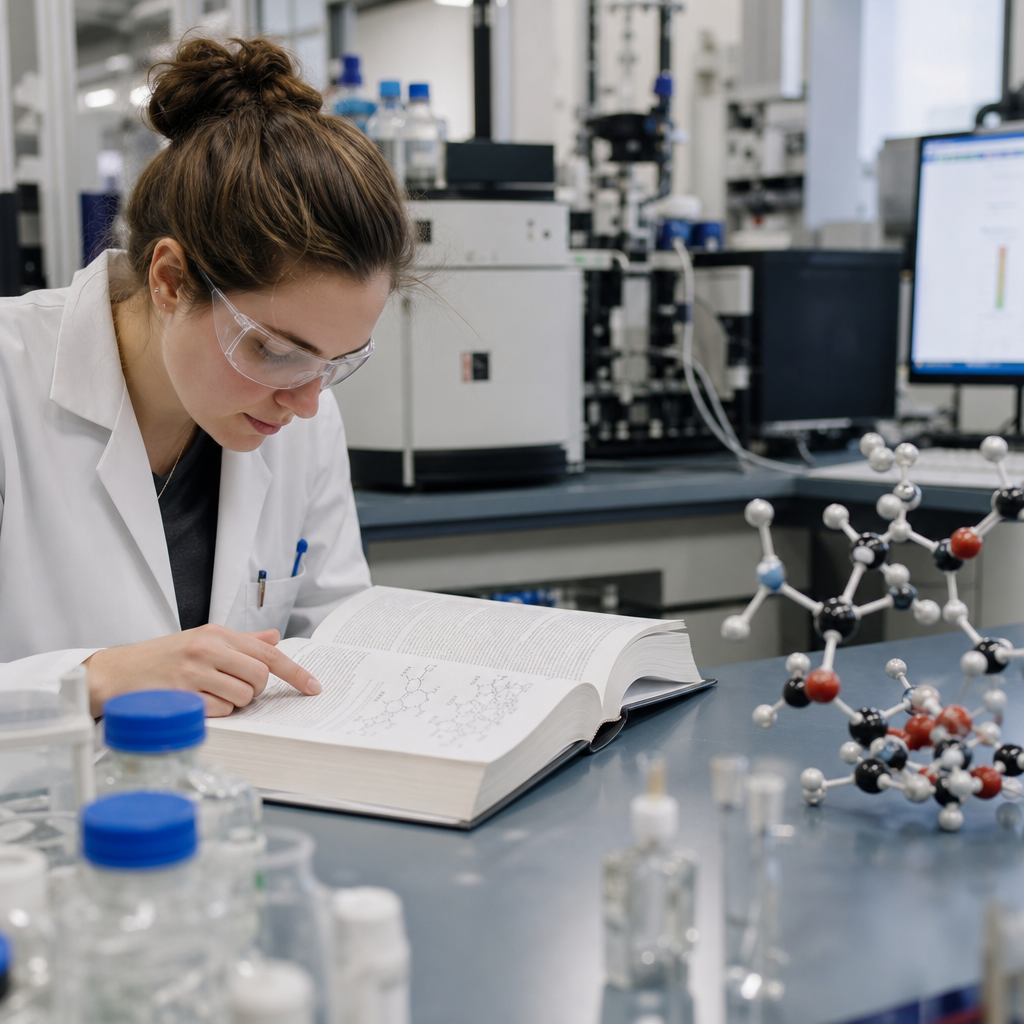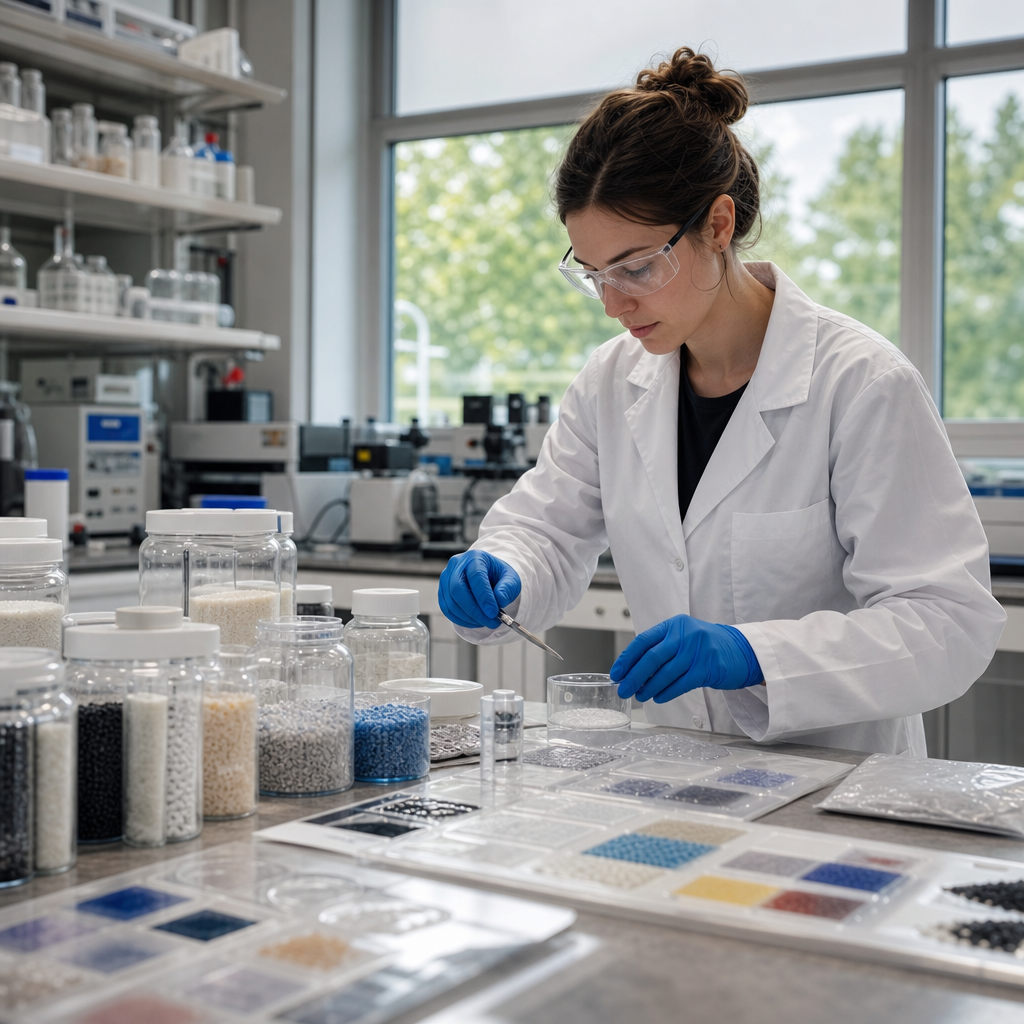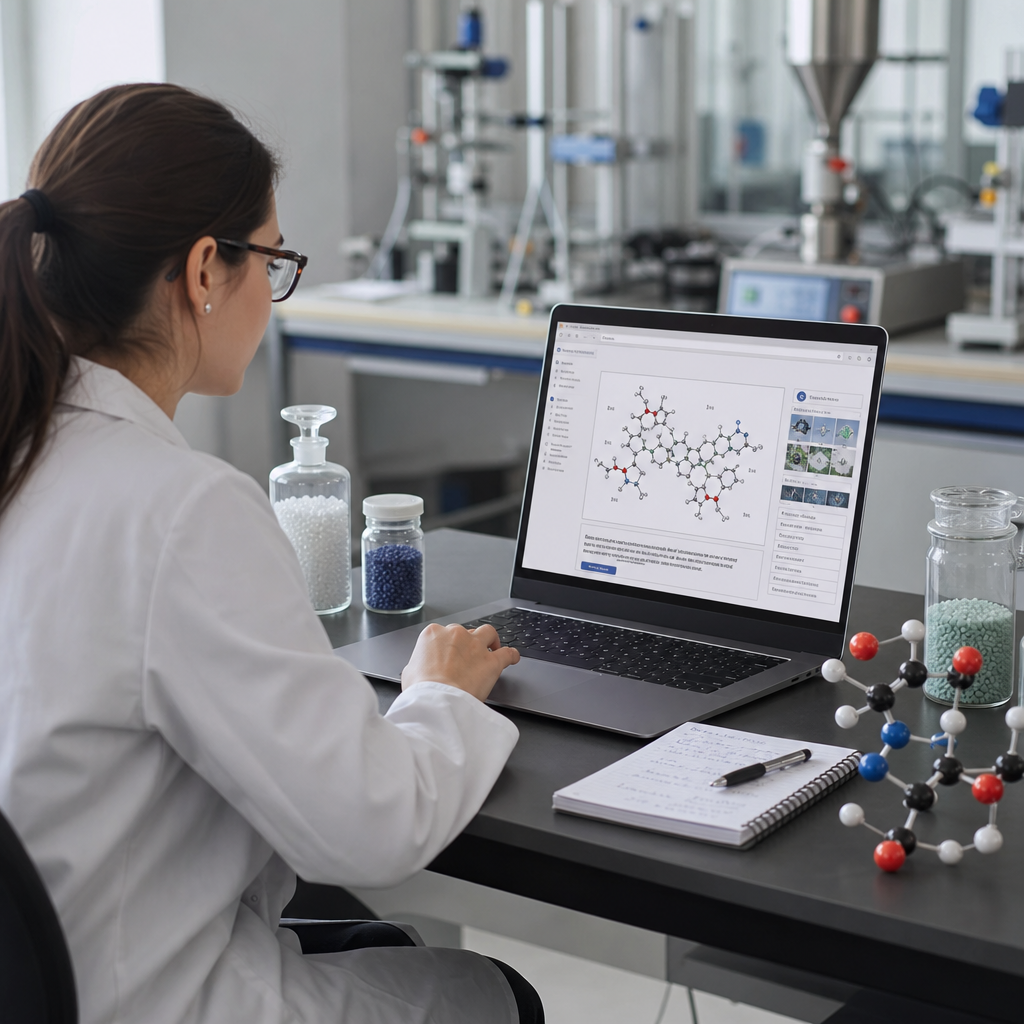
Online learning management systems have become central to polymer education because they organize complex content, connect theory with laboratory practice, and make specialized training accessible to students, technicians, researchers, and manufacturing teams across locations. In polymer education, a learning management system is the digital platform used to deliver courses, track progress, host discussions, assess understanding, and manage credentials. Common systems include Canvas, Moodle, Blackboard, Brightspace, and enterprise training platforms used by materials companies. Polymer education itself spans chemistry, physics, processing, characterization, product design, sustainability, compliance, and quality control. That breadth creates a teaching challenge: learners must understand molecular structure and chain dynamics, but also extrusion, injection molding, rheology, thermal analysis, additive selection, recycling, and application standards. I have seen this firsthand while building technical training for mixed audiences, where one cohort needed fundamentals like glass transition temperature and crystallinity, while another needed practical troubleshooting for warpage, melt fracture, or environmental stress cracking. A well-designed online learning management system solves that fragmentation by providing a structured path from foundational concepts to advanced industrial decision-making. It matters because polymer industries move quickly. New bio-based resins, circularity targets, fire and food-contact regulations, and simulation-driven design all require faster upskilling than traditional classroom models can support alone. For universities, these systems extend laboratory instruction, preserve teaching continuity, and support blended learning. For industry, they reduce downtime, standardize onboarding, and document competence for regulated environments. As the hub for online resources in polymer education, this article explains how learning management systems support teaching, where they fit among broader digital tools, what features matter most, and how educators can use them to produce better technical outcomes.
Why Polymer Education Benefits from Digital Course Delivery
Polymer science is unusually well suited to online course management because the subject depends on layered understanding. Students cannot interpret differential scanning calorimetry results unless they already understand crystallization, transition temperatures, and formulation effects. They cannot troubleshoot sink marks or poor weld lines in molded parts unless they can connect flow behavior, cooling profiles, gate design, and material selection. In a classroom, that progression is often disrupted by calendar limits. In a learning management system, prerequisite modules, knowledge checks, and sequenced assignments keep learners on track. An instructor can require completion of a module on viscoelasticity before opening a unit on capillary rheometry or die swell. That is not just administrative convenience; it improves comprehension because each concept is introduced in the order engineers actually use it.
Accessibility is another major advantage. Many polymer programs rely on expensive equipment such as FTIR spectrometers, DMA instruments, universal testing machines, twin-screw extruders, and microcompounders. Learners do not always have frequent physical access. A platform can host instrument walkthroughs, sample data files, standard operating procedures, and interpretation exercises so students practice analysis before entering the lab. When I have built training around materials characterization, completion rates improved when videos, annotated spectra, and downloadable worksheets lived in one place rather than scattered across email, shared drives, and lecture slides. The result was less confusion and more time spent on interpretation instead of logistics.
Digital delivery also supports multiple audiences at once. A chemical engineering student studying polymerization kinetics needs different depth than a converting plant operator learning moisture management for PET or nylon. A good system handles both by tagging courses, segmenting pathways, and issuing role-specific assignments. This makes the platform not just a classroom supplement but a long-term knowledge infrastructure for an educational department, professional society, or manufacturing organization.
Core Functions of Learning Management Systems in Polymer Programs
The most effective systems do more than store PDFs. In polymer education, they act as the operating layer for content delivery, assessment, collaboration, and evidence of skill attainment. Content delivery includes lectures on chain architecture, morphology, mechanical behavior, compounding, processing windows, degradation mechanisms, and recycling methods. Assessment tools then verify understanding through quizzes, open-response case studies, lab reports, and scenario-based troubleshooting exercises. Collaboration spaces support discussion of fracture surfaces, contamination sources, color variation, or material substitutions. Gradebooks and analytics show where learners struggle, such as repeated errors in interpreting melt flow index versus true rheological behavior.
These capabilities become more valuable when aligned with professional standards and common industry workflows. For example, an instructor can build modules around ASTM test methods, ISO standards, resin datasheet interpretation, and safety documentation. A unit on tensile testing can pair a lesson on stress-strain behavior with assignments referencing ASTM D638. A packaging course can connect oxygen transmission rate concepts to barrier polymer selection. In quality and failure analysis training, the platform can host image libraries showing brittle fracture, ductile yielding, weld line weakness, voids, and contamination signatures. Because every file, discussion, submission, and score is time-stamped, the system creates a useful record for accreditation, audits, and continuous course improvement.
Another important function is version control. Polymer knowledge changes quickly. Regulatory restrictions on PFAS, shifting recycled-content requirements, and advances in mechanical and chemical recycling all affect curriculum. When content sits inside a managed platform, updates are faster and old versions can be retired cleanly. That matters in technical education because outdated process guidance can lead to real mistakes on the plant floor or in the lab.
How Online Resources Extend Polymer Laboratories and Hands-On Learning
Digital systems cannot replace every tactile aspect of polymer education, but they significantly improve laboratory readiness and post-lab reflection. Before a lab, students can complete safety briefings, watch a compression molding setup, review an injection molding cycle, or answer questions on residence time and shear heating. During the lab, mobile access allows quick consultation of protocols and troubleshooting trees. Afterward, learners can upload raw data, compare rheology curves, annotate microscopy images, and discuss why a sample showed lower impact strength after thermal aging.
A common concern is whether online systems dilute hands-on competence. In practice, the best programs use them to protect lab time for higher-value work. Instead of spending thirty minutes explaining instrument menus, the instructor assigns a pre-lab module with screenshots and a short quiz. Students arrive prepared, and the session focuses on specimen preparation, calibration judgment, and interpretation of unexpected data. In polymer processing courses, virtual simulations embedded or linked through the platform can help learners predict the effects of screw speed, mold temperature, cooling time, or filler loading before they run actual material. Even simple video comparisons between stable extrusion and surging can sharpen process observation skills.
These systems also help institutions share scarce expertise. Not every department has a specialist in elastomers, biopolymers, flame-retardant systems, or polymer composites. A centralized course hub lets guest experts contribute modules, recorded seminars, or office hours without traveling. For learners, that means broader exposure to real industrial problems, such as balancing stiffness, toughness, and recyclability in consumer packaging or managing fiber orientation in composite parts.
Essential Features for a Strong Polymer Education Hub
Not every platform serves technical education equally well. The best learning management systems for polymer education support file types beyond text, including spectra, microscopy images, CAD files, simulation outputs, and high-resolution process videos. They integrate with video tools, virtual labs, plagiarism detection, survey forms, and analytics dashboards. Searchability is critical. Learners should be able to find “DSC baseline shift,” “MFI limitations,” or “amide moisture conditioning” quickly. Discussion tools must allow image sharing because polymer problems are often visual. Rubrics should support lab-specific evaluation criteria such as data quality, method compliance, uncertainty analysis, and root-cause reasoning.
Because this article serves as a hub for online resources, it helps to define what a complete ecosystem usually includes around the LMS. The platform is the home base, but it works best when connected to digital libraries, standards databases, simulation tools, webinar archives, virtual instrument demonstrations, and community discussion spaces. In higher education, common integrations include Zoom or Microsoft Teams for live sessions, Panopto or Kaltura for lecture capture, and library authentication for journal access. In industrial training, integrations may include SAP SuccessFactors, Cornerstone, or compliance record systems.
| Need in Polymer Education | LMS Feature | Practical Example |
|---|---|---|
| Teach test methods clearly | Video hosting and quizzes | Pre-lab module on ASTM D790 flexural testing with setup checkpoints |
| Interpret complex data | File upload and annotation | Students mark DSC peaks and explain crystallization behavior |
| Troubleshoot processing issues | Discussion boards with images | Teams compare photos of flash, burns, and short shots in molding |
| Track competency | Mastery paths and certificates | Technicians unlock extrusion modules after safety and drying assessments |
| Support distributed learners | Live session integration | Guest lecture from a composites engineer at a remote plant |
Using Learning Paths for Different Polymer Audiences
One reason online systems work so well in this field is their ability to personalize progression. Polymer education is not a single audience. Undergraduate learners may need introductions to step-growth versus chain-growth polymerization, morphology, and structure-property relationships. Graduate students may need deeper content on rheological models, spectroscopy, kinetics, and multiscale characterization. Industry learners may need practical modules on resin drying, screw design, regrind limits, color control, and nonconformance investigation. A robust platform can host all of these while keeping each path coherent.
For example, a university materials department might create three tracks: fundamentals, processing, and sustainability. Fundamentals covers polymer classes, thermal transitions, crystallinity, molecular weight, and additives. Processing covers extrusion, thermoforming, rotational molding, blow molding, and additive manufacturing. Sustainability covers design for recycling, life cycle assessment basics, mechanical recycling limits, compatibilizers, and bio-based feedstocks. A learner interested in packaging can move through all three paths and emerge with a far more applied understanding than a stand-alone lecture course would provide.
In industry, pathways can mirror job roles. Operators may complete modules on safe material handling, moisture-sensitive resins, barrel temperature control, and defect recognition. Quality engineers may take advanced modules on DMA, FTIR, microscopy, and statistical process control. Sales and technical service teams may need enough understanding of processing and end-use performance to explain why a customer should choose a copolymer over a homopolymer or when a UV stabilizer package is necessary. The same system can support each audience without flattening content into one generic course.
Best Practices for Building Effective Online Polymer Courses
The most successful courses start with real decisions polymer professionals must make. Instead of organizing every unit around textbook chapters alone, build modules around questions such as: Why did this molded part crack? How does filler content change stiffness and impact resistance? What test method best validates a claimed property? Why does recycled resin behave differently from virgin material in processing? This problem-centered design keeps learners engaged and produces stronger transfer to work or research settings.
Clarity matters even more in technical subjects. Each module should define terms precisely, distinguish related concepts, and state limitations. Melt flow index is useful for quick comparison, but it is not a full rheological profile. Glass transition temperature affects performance, but end-use behavior also depends on morphology, loading rate, additives, and environment. I have found that short, focused lessons paired with worked examples outperform long recordings. A ten-minute explanation of shear thinning linked to an extrusion die pressure exercise is often more effective than an hour of uninterrupted lecture.
Assessment design should test interpretation, not memorization alone. Good online polymer courses use spectra reading, process parameter selection, defect diagnosis, and material comparison. They also provide feedback quickly. If a learner misidentifies hydrolytic degradation as oxidation in a case study, the platform should explain the distinguishing signs and direct the learner to review resources. Finally, every course needs maintenance. Review analytics, retire unclear content, and update standards references regularly.
Limits, Risks, and the Future of Online Polymer Learning
Online learning management systems are powerful, but they are not a complete substitute for physical experimentation, mentorship, and manufacturing exposure. Students still need to feel differences in pellet flow, observe venting issues on a line, prepare specimens correctly, and appreciate how small process changes alter real parts. There is also a risk of overloading learners with fragmented resources. A hub page should simplify navigation, not become a dumping ground for every webinar and file ever produced. Strong curation is essential.
Another limitation is digital inequality. High-resolution microscopy files, simulation videos, and live classes require bandwidth and devices that not all learners have. Accessibility design, captioning, mobile-friendly layouts, and downloadable resources are therefore not optional. Data privacy matters too, especially when industrial case studies involve proprietary formulations or customer failures. Permissions, retention rules, and secure integrations must be managed carefully.
Looking ahead, polymer education platforms will become more interactive. Expect tighter integration with simulation software, digital twins of processing equipment, adaptive quizzes that respond to learner errors, and searchable knowledge bases built from prior course discussions. AI-assisted tutoring will help explain terms, summarize lab data, and suggest review content, but it will not replace expert oversight. Polymer decisions have consequences for safety, compliance, cost, and product performance. The best future systems will combine machine assistance with experienced instruction, rigorous standards, and carefully designed hands-on practice.
Online learning management systems now play a defining role in polymer education because they turn a broad, technical, and fast-changing subject into an organized learning journey. They support foundational teaching, laboratory preparation, industrial training, assessment, and long-term knowledge management in one place. When designed well, they help learners connect molecular concepts to processing behavior, characterization data, product performance, and sustainability decisions. They also make online resources usable rather than overwhelming by structuring courses, pathways, and supporting materials around real needs.
For educators and training leaders building an educational resources hub, the lesson is clear: treat the learning management system as the center of the online polymer ecosystem, then connect it to standards, digital libraries, simulations, recorded seminars, and expert communities. Choose features that match technical instruction, keep content current, and design courses around authentic polymer problems. If you are expanding your polymer education resources, start by auditing your current platform, mapping your learner groups, and building one strong pathway that moves from fundamentals to application. That first structured course can become the foundation for a scalable, durable online learning program.
Frequently Asked Questions
What is an online learning management system, and why is it important in polymer education?
An online learning management system, or LMS, is the digital platform used to deliver courses, organize learning materials, track learner progress, host discussions, assess understanding, and manage certificates or credentials. In polymer education, this matters because the subject combines chemistry, materials science, processing, quality control, and practical application. Students and professionals are often expected to understand everything from polymer structure and rheology to testing methods, compounding, extrusion, injection molding, and product performance. An LMS brings all of that content into one structured environment.
Its importance comes from the way it turns complex technical training into a manageable learning experience. Instead of relying on scattered documents, in-person sessions alone, or informal mentoring, instructors can build sequenced modules that move learners from fundamentals to advanced topics. For example, a course can begin with polymer classifications and molecular behavior, then progress into processing parameters, defect analysis, and laboratory interpretation. This kind of structure is especially valuable in polymer education, where concepts are interconnected and often difficult to master without a clear pathway.
An LMS is also important because it supports consistency across different learner groups. Universities, research teams, manufacturers, technicians, and quality personnel may all need polymer training, but their schedules, locations, and skill levels vary. A good LMS makes specialized education accessible across sites and time zones while preserving the same instructional standards. That helps organizations scale training, reduce knowledge gaps, and document competency more effectively.
How do learning management systems help connect polymer theory with laboratory and manufacturing practice?
One of the biggest strengths of a learning management system in polymer education is its ability to connect abstract scientific principles with real-world application. Polymer science can be highly theoretical, covering molecular structure, crystallinity, viscoelasticity, thermal transitions, degradation, and other foundational concepts. At the same time, polymer professionals must apply that knowledge in laboratories, pilot lines, and manufacturing environments. An LMS helps bridge that gap by organizing content in a way that links theory directly to process and performance.
For example, an instructor can pair a lesson on melt flow behavior with a video demonstration of capillary rheometry, a case study on extrusion instability, a quiz on processing variables, and a discussion prompt about troubleshooting production defects. This creates a much stronger learning experience than treating theory and practice as separate subjects. Learners are able to see how molecular weight distribution, temperature, shear rate, and formulation choices influence actual outcomes in testing and processing.
Many LMS platforms also support multimedia, simulations, lab instructions, image-based assessments, and workflow documentation. That makes them especially useful for polymer education, where visual interpretation and procedural understanding are often critical. A learner might review microscopy images, compare DSC curves, interpret tensile test results, or follow a standard operating procedure for sample preparation. In manufacturing settings, the LMS can also reinforce safety, equipment use, quality protocols, and process standardization. In short, it helps turn polymer education into applied learning rather than purely academic study.
Who benefits most from using an LMS for polymer education?
A wide range of learners benefit from using an LMS in polymer education. University students benefit because polymer-related subjects are content-dense and technically layered. An LMS helps them revisit lectures, review diagrams, complete assessments, join discussions, and learn at a pace that supports deeper understanding. Since many students need time to absorb concepts like polymerization mechanisms, morphology, additive interactions, or processing-performance relationships, having centralized digital access can improve retention and confidence.
Technicians and laboratory personnel also benefit significantly. Their training often needs to be precise, repeatable, and directly tied to procedures such as material handling, specimen preparation, thermal analysis, spectroscopy, mechanical testing, and quality documentation. An LMS can deliver standardized instruction, confirm understanding through assessments, and provide ongoing reference materials that support day-to-day work. This is especially useful in regulated or quality-sensitive environments where consistency matters.
Researchers and engineers benefit because an LMS makes advanced training easier to share across teams. New staff can be onboarded more efficiently, and specialized topics such as polymer characterization, formulation design, failure analysis, sustainability, or recycling technologies can be delivered in a structured way. Manufacturing teams benefit as well, particularly when companies operate across multiple sites. Training on machinery, process windows, troubleshooting, compliance, and product specifications can be delivered consistently regardless of location. Ultimately, anyone involved in learning, applying, or managing polymer knowledge can benefit from the organization, accessibility, and accountability that an LMS provides.
What features should educators and organizations look for in an LMS for polymer training?
When selecting an LMS for polymer education, the most important features are those that support technical content, practical instruction, and measurable outcomes. First, the system should make it easy to organize complex coursework into modules, lessons, assessments, and learning paths. Polymer education often involves prerequisite knowledge, so a platform that supports sequential learning is especially valuable. Learners should be able to progress from fundamentals to more advanced topics without confusion.
Second, strong multimedia support is essential. Polymer instruction often depends on charts, spectra, microscopy images, lab videos, process diagrams, and equipment demonstrations. A good LMS should handle these materials smoothly and make them easy to access on different devices. Discussion tools are also important because technical learning improves when learners can ask questions, compare observations, and engage with instructors or peers. In fields like polymer science and manufacturing, these discussions often surface practical insights that formal course materials alone may not capture.
Third, assessment and tracking capabilities matter a great deal. Educators and employers need to know whether learners truly understand topics such as material selection, testing interpretation, processing variables, and quality control. Quizzes, assignments, competency checks, completion records, and reporting dashboards help verify progress. Credentialing features can also be useful for documenting completed training, especially for technicians, operators, or teams working under compliance requirements.
Finally, usability and scalability should not be overlooked. Common systems such as Canvas, Moodle, and Blackboard are widely used because they provide flexible course management, communication tools, and reporting functions. The best LMS for polymer education is one that can serve different audiences, support specialized technical content, and remain easy enough to use that instructors and learners focus on the material rather than the platform itself.
Can an LMS improve access, consistency, and long-term outcomes in polymer education?
Yes, an LMS can significantly improve access, consistency, and long-term outcomes in polymer education. Access improves because learners do not need to be in the same room, facility, or even country to participate in high-quality training. This is particularly important in polymer-related fields, where expertise may be concentrated in certain universities, research centers, or manufacturing hubs. Through an LMS, specialized instruction can reach students, technicians, and professionals who might otherwise have limited access to expert-led education.
Consistency improves because the platform delivers standardized materials, assessments, and learning expectations. In polymer education, inconsistent training can lead to misunderstanding of scientific principles, variation in laboratory practice, and uneven manufacturing performance. An LMS reduces that risk by ensuring that all learners encounter the same core content, procedures, and evaluation criteria. This is especially valuable for organizations training teams across multiple sites or onboarding new personnel into technical roles.
Long-term outcomes improve because learning becomes easier to sustain and update. Polymer science and polymer processing continue to evolve, with ongoing developments in sustainable materials, recycling, bio-based polymers, additive technologies, characterization methods, and digital manufacturing. An LMS allows educators and organizations to revise content efficiently, add new modules, and keep training aligned with current industry practice. It also creates a record of learner progress over time, which supports professional development, competency planning, and continuous improvement. In practical terms, that means better-prepared learners, stronger technical performance, and a more resilient approach to polymer education overall.