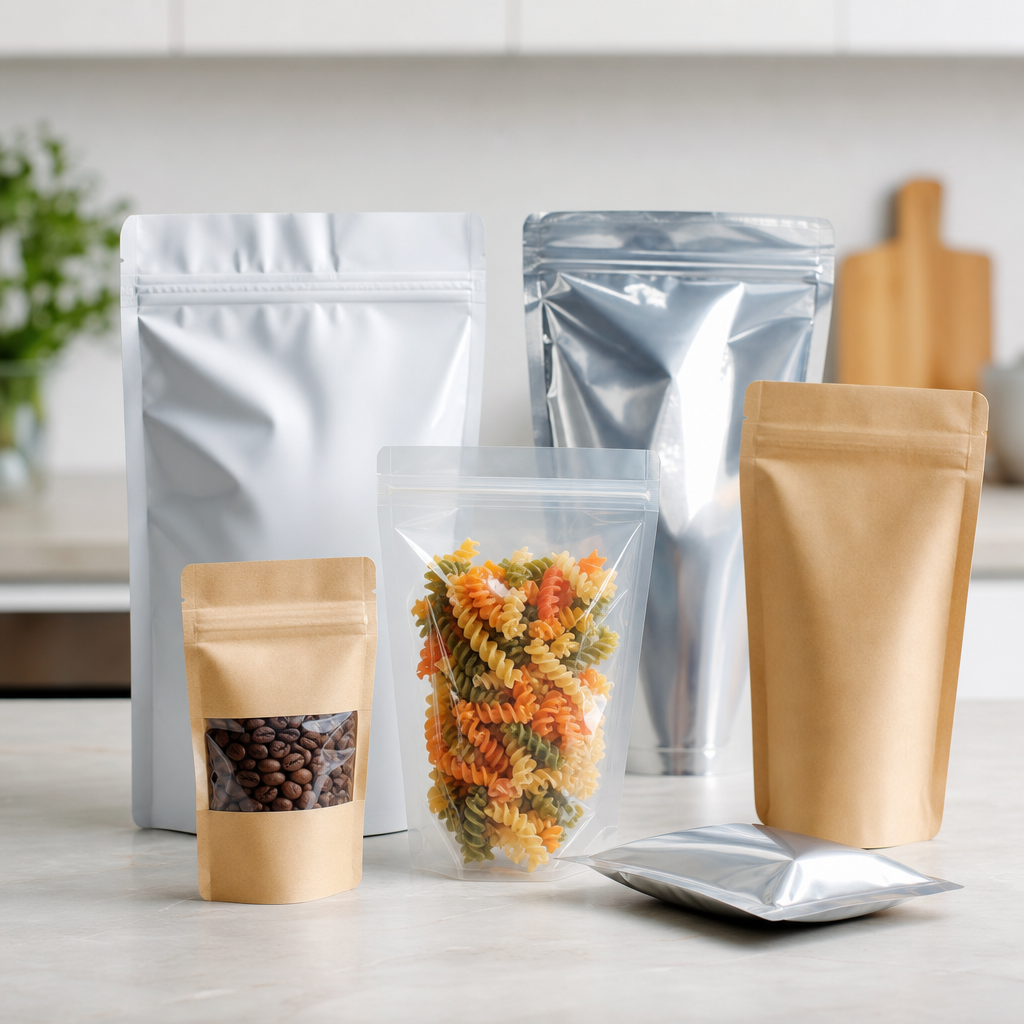
Flexible packaging relies on polymers because they deliver the exact combination of light weight, sealability, printability, barrier performance, and cost control that modern food, beverage, personal care, medical, and industrial supply chains require. In practical terms, flexible packaging means any package made from easily shaped materials such as films, pouches, wraps, sachets, and lidding rather than rigid bottles, jars, or cans. The polymers used in flexible packaging include polyethylene, polypropylene, polyethylene terephthalate, polyamide, ethylene vinyl alcohol, and a growing set of biobased or compostable resins. Each polymer contributes a specific function, and the best package structures combine those functions to protect products through filling, transport, storage, retail display, and consumer use.
I have worked with packaging teams selecting films for snack foods, household chemicals, and medical components, and the same lesson appears in every project: polymer choice determines whether a package performs or fails. If oxygen transmission is too high, chips go stale or coffee loses aroma. If moisture barrier is poor, powders cake and labels wrinkle. If seal integrity is inconsistent, leakage, contamination, and product returns follow quickly. That is why understanding the role of polymers in flexible packaging matters for converters, brand owners, procurement teams, sustainability managers, and engineers. This hub article explains the core packaging polymer families, how multilayer flexible packaging works, what performance properties matter most, where sustainability is changing design decisions, and how packaging teams choose materials for real applications.
Why polymers dominate flexible packaging
Polymers dominate flexible packaging because they can be engineered with precision across mechanical, thermal, optical, and barrier properties while remaining highly processable at scale. Flexible packaging producers use extrusion, coextrusion, cast film, blown film, biaxial orientation, lamination, metallization, coating, and heat sealing to convert polymer pellets into functional structures. Compared with paper alone, polymers provide superior heat sealing and moisture resistance. Compared with metal foil, they reduce weight and often improve puncture flexibility. Compared with rigid plastics, they use less material per packaged unit and lower transport emissions because more empty packages fit into less space.
The economics are equally important. Polyethylene and polypropylene are among the most widely produced plastics globally, giving packaging buyers a broad supply base and mature converting know-how. These materials can be tailored by density, molecular architecture, additives, and orientation. Low-density polyethylene offers toughness and sealability. Linear low-density polyethylene improves puncture resistance and load holding. High-density polyethylene adds stiffness and better moisture barrier. Cast polypropylene provides clarity and hot-tack performance, while biaxially oriented polypropylene improves stiffness, gloss, and machinability. This range allows packaging engineers to tune structures without reinventing the entire process.
Polymers also support shelf life extension, one of the most important benefits in packaging. A well-designed film can slow oxygen ingress, moisture transfer, aroma loss, grease migration, and light exposure. Extending shelf life reduces food waste, and in many life cycle assessments that benefit outweighs the environmental burden of the package itself. The package is not separate from the product; it is part of the preservation system. That is why flexible packaging design starts with the product’s sensitivity profile, then maps that profile to polymer properties and structure.
Core polymer families used in packaging
Polyethylene, usually abbreviated PE, is the workhorse of flexible packaging. It is used in inner sealant layers, frozen food bags, detergent pouches, overwraps, and many monomaterial recycle-ready structures. PE offers excellent heat sealability, toughness, low-temperature flexibility, and water vapor resistance. Its main limitation is relatively poor oxygen barrier unless combined with other layers. Different grades matter. LDPE is softer and seals easily. LLDPE offers stronger impact and puncture performance. HDPE is stiffer and provides better moisture barrier but less clarity.
Polypropylene, or PP, is another essential packaging polymer. In flexible applications it appears as cast polypropylene and biaxially oriented polypropylene, commonly called CPP and BOPP. PP provides higher stiffness and heat resistance than PE, making it useful for snack wrappers, bakery packs, labels, and retortable structures in the right form. BOPP has excellent gloss and print surface characteristics and runs well on high-speed packaging lines. However, PP can become brittle at lower temperatures, so frozen packaging often favors PE-rich structures unless impact modifiers or specific grades are used.
Polyethylene terephthalate, PET, plays a major role as an outer web in laminates. Oriented PET film offers high tensile strength, dimensional stability, abrasion resistance, and print quality. It also handles higher process temperatures than PE or many PP grades, which is useful during lamination and converting. PET by itself is not the top oxygen barrier film, but metallized PET or coated PET can provide strong barrier performance for coffee, snacks, and powdered beverages. Recycled PET content is also increasingly used where regulatory and application requirements allow.
Polyamide, usually nylon, is chosen when puncture resistance and toughness are critical. Vacuum pouches for meat and cheese often use polyamide because sharp bones or hard product edges can damage weaker films. Ethylene vinyl alcohol, known as EVOH, is used when high oxygen barrier is needed, especially for sauces, processed meats, and condiments. EVOH performs best in dry conditions and loses some barrier at high humidity, so it is usually sandwiched between moisture-protective polyolefin layers. Specialty polymers such as ionomers, ethylene vinyl acetate, and thermoplastic polyurethane fill narrower roles involving seal behavior, elasticity, or abuse resistance.
How multilayer flexible packaging works
Most high-performance flexible packaging is multilayer because one polymer rarely provides every required property. A typical pouch may need printability on the outside, stiffness for machine handling, oxygen barrier for shelf life, and a sealant layer inside that bonds reliably through product contamination. Converters create these structures through coextrusion or lamination. Coextrusion forms multiple molten layers in one process, while lamination joins separately made webs using adhesives or extrusion tie layers. The resulting package functions as a system, not as a stack of unrelated films.
When I evaluate a structure, I usually divide the job into four functions: outside, core, barrier, and inside. The outside layer must print cleanly, resist scuffing, and survive handling. The core contributes stiffness or toughness. The barrier layer controls oxygen, moisture, aroma, grease, or light. The inside layer seals to itself and contacts the product. A snack pouch, for example, may use BOPP for stiffness and graphics, metallized film for barrier, and PE or CPP for sealing. A medical pouch may use PET, foil or EVOH, and a sealant selected for sterile barrier performance and controlled peel.
| Packaging need | Common polymer choice | Why it is used |
|---|---|---|
| Heat-sealable inner layer | LDPE or LLDPE | Reliable seals, toughness, moisture resistance |
| Stiff printable outer web | BOPP or PET | Good graphics, machinability, dimensional stability |
| High oxygen barrier | EVOH or metallized PET | Protects aroma, flavor, and oxidation-sensitive products |
| Puncture resistance | Polyamide | Withstands sharp edges in meat, cheese, and hardware packs |
| Recycle-ready monomaterial pouch | All-PE structure | Simplifies recovery where PE film streams exist |
The tradeoff in multilayer design is complexity. Performance increases, but compatibility with recycling systems can decline when many dissimilar layers are bonded permanently. That tension is shaping current innovation. Packaging teams now ask whether a traditional PET/foil/PE laminate can be replaced by a high-barrier PE or PP structure, whether metallization can substitute for foil, or whether a removable label and simplified adhesive system can improve circularity without sacrificing shelf life. There is no universal answer; the correct decision depends on product sensitivity, filling conditions, distribution risk, and end-of-life infrastructure.
Critical performance properties in packaging applications
The most important performance properties in flexible packaging are barrier, sealability, mechanical strength, thermal resistance, optical appearance, and chemical compatibility. Barrier is measured through standardized tests such as oxygen transmission rate and water vapor transmission rate. Products respond differently. Roasted coffee needs excellent aroma and oxygen barrier. Dry pasta mainly needs physical protection and merchandising appeal. Fresh meat may need controlled gas exchange in modified atmosphere packaging. Pharmaceutical and medical products often require exceptionally low moisture ingress and validated sterile barrier performance.
Sealability is often underestimated until a line starts leaking. A polymer can have impressive barrier numbers and still fail commercially if it does not seal consistently across the plant’s speed range, dwell time, jaw temperature, and contamination conditions. Seal initiation temperature, hot tack, seal through contamination, and peel behavior all matter. PE remains dominant in sealant layers because it offers a forgiving sealing window. In stand-up pouches, spouted packs, and heavy-duty bags, the seal design is just as important as the resin. Poor geometry or uneven heat distribution can defeat a good film specification.
Mechanical strength includes tensile strength, elongation, puncture resistance, tear propagation, coefficient of friction, and flex crack resistance. These properties determine how a package survives form-fill-seal operations, pallet loads, e-commerce handling, and consumer use. A retort pouch for shelf-stable meals must endure heat, pressure, and handling without delamination. A frozen vegetable bag must stay tough at low temperatures. A refill pouch for household cleaner must resist stress cracking from surfactants and maintain seals when squeezed repeatedly. Polymer selection directly controls these outcomes.
Printability and appearance also influence polymer choice because packaging must sell as well as protect. PET and BOPP provide excellent surfaces for high-definition graphics, reverse printing, matte and gloss effects, and tactile finishes. Clarity matters for produce, bakery items, and premium confectionery, where seeing the product supports purchase decisions. In other cases, opacity is desirable to block light and preserve quality, as with dairy powders or light-sensitive ingredients. Additives, coatings, and orientation can modify haze, gloss, slip, antistatic behavior, and anti-fog performance for these specific needs.
Sustainability, regulation, and the future of polymer packaging
Sustainability is changing the role of polymers in flexible packaging, but not by eliminating them overnight. The real shift is toward better material efficiency, improved recovery, lower-carbon feedstocks, and packaging designs that protect products with fewer tradeoffs. Flexible packaging already uses less material than many rigid alternatives for the same delivered product volume. A pouch can replace a heavier bottle, jar, or can in some applications, cutting transport weight significantly. However, lightweight does not automatically mean circular. The decisive question is whether the package fits real collection, sorting, and recycling systems.
That has pushed the market toward monomaterial PE and PP structures, especially in Europe and North America where design-for-recycling guidance is influencing procurement. Groups such as the Association of Plastic Recyclers and RecyClass publish compatibility recommendations, and major brand owners increasingly write those requirements into packaging briefs. Chemical resistance, barrier, and stiffness still need to be met, so converters use EVOH sparingly, develop PE-based high-barrier films, and optimize tie layers and adhesives. Post-consumer recycled content is growing in secondary and nonfood packaging first, then in food-contact applications where regulations and decontamination technologies permit.
Biobased and compostable polymers receive strong attention, but they are not universal solutions. PLA, PHA, starch blends, and cellulose-based films can work well in selected applications, especially where industrial composting systems exist or where biobased content supports corporate goals. Yet many of these materials have limits in heat resistance, moisture sensitivity, sealing behavior, or available waste infrastructure. In my experience, the best packaging decisions compare full system performance: shelf life, line efficiency, waste reduction, carbon impact, and end-of-life reality. For many products today, optimized conventional polymers still outperform alternatives on overall functionality.
Regulation will continue to reshape packaging choices. Extended producer responsibility fees, recycled content mandates, single-use restrictions, food-contact compliance rules, and packaging waste reporting all affect resin selection and structure design. Companies that treat polymer choice as a strategic packaging decision rather than a commodity purchase are better prepared. They test with actual product, validate barrier over shelf life, review recyclability against local infrastructure, and document compliance from resin supplier to finished pack. That disciplined approach is becoming the standard for competitive packaging programs.
Polymers are the foundation of flexible packaging because they combine protection, processing efficiency, branding potential, and cost control in ways few materials can match. PE, PP, PET, polyamide, and EVOH each serve distinct roles, and the best packaging structures use them deliberately rather than interchangeably. The right polymer system improves shelf life, supports high-speed filling, prevents leaks and damage, and can reduce total material use across the supply chain. Just as important, modern packaging design increasingly balances performance with recyclability, regulatory compliance, and realistic sustainability goals.
For anyone building a packaging strategy, the key lesson is simple: start with the product, then select polymers based on the exact barrier, sealing, mechanical, and end-of-life requirements. Packaging is never one-size-fits-all. A snack pouch, medical pack, detergent refill, and vacuum meat bag may all look similar on shelf, but their polymer architecture is fundamentally different because their risks are different. As you explore the broader Packaging subtopic, use this hub as the starting point for material selection, structure design, sustainability planning, and application-specific packaging decisions across the full flexible packaging landscape.
Frequently Asked Questions
Why are polymers so important in flexible packaging?
Polymers are central to flexible packaging because they provide a highly adaptable balance of properties that is difficult for other materials to match at the same weight and cost. In flexible formats such as films, pouches, wraps, sachets, and lidding, packaging materials need to do several jobs at once: protect the product, run efficiently on high-speed equipment, accept printing and branding, seal reliably, and remain economical across large production volumes. Polymers make that possible because their molecular structure can be engineered for specific performance targets, whether the priority is toughness, clarity, puncture resistance, heat seal strength, moisture protection, or flexibility.
Another reason polymers matter is that they support lightweight packaging designs, which can reduce material use and improve transportation efficiency compared with many rigid alternatives. For food, beverage, personal care, medical, and industrial products, this lighter weight can help lower shipping costs and simplify handling without sacrificing practical performance. Polymers also enable packaging manufacturers to create structures ranging from simple single-layer films to advanced multilayer constructions, allowing the package to be tailored to the product’s sensitivity, shelf-life needs, and distribution environment. In short, polymers are important because they give flexible packaging its combination of functionality, efficiency, and commercial viability.
Which polymers are most commonly used in flexible packaging, and what does each one do?
Several polymer families are widely used in flexible packaging, and each brings a distinct set of advantages. Polyethylene, often used in forms such as LDPE, LLDPE, and HDPE, is one of the most common because it offers excellent sealability, flexibility, toughness, and moisture resistance. It is frequently found in pouches, bags, liners, and sealant layers. Polypropylene is another key material, valued for its clarity, stiffness, heat resistance, and good print performance. It is often used in snack packaging, labels, and lidding applications, especially where a crisp appearance and strong machinability are important.
Polyethylene terephthalate, or PET, is commonly selected for its strength, dimensional stability, transparency, and strong print surface. In many laminates, PET serves as the outer layer that carries graphics and helps the package withstand converting and filling operations. Nylon, or polyamide, is often chosen where puncture resistance and mechanical durability are critical, such as in vacuum packaging or heavy-duty applications. Ethylene vinyl alcohol, known as EVOH, is used when strong oxygen barrier performance is needed to protect flavor, freshness, or product stability. In many cases, no single polymer can provide every desired feature, so packaging engineers combine multiple polymers into layered structures to achieve the right mix of barrier protection, seal strength, appearance, and processability.
How do polymers help protect products and extend shelf life in flexible packaging?
Polymers play a direct role in product protection by controlling the movement of moisture, oxygen, aromas, grease, and other external factors that can degrade quality. Different products have different vulnerabilities. For example, dry foods may need protection from moisture pickup, while coffee, sauces, meats, or medical items may require stronger oxygen barriers to preserve freshness, sterility, flavor, color, or functional performance. By selecting the right polymer or combination of polymers, packaging designers can create a structure that matches the product’s exact sensitivity profile.
Protection is not only about barrier performance. Polymers also contribute through physical durability and secure sealing. A package that resists punctures, flex cracking, or seal failure is better able to maintain its protective environment throughout filling, shipping, storage, retail display, and consumer use. This is especially important in demanding supply chains where packages may face compression, vibration, temperature variation, or rough handling. In practical terms, polymers help extend shelf life by preserving the intended internal conditions of the package and reducing the chance of contamination, leakage, or premature spoilage. That combination of barrier control and package integrity is one of the main reasons flexible polymer-based packaging is used across so many industries.
Why are multilayer polymer structures used in flexible packaging instead of a single material?
Multilayer structures are used because flexible packaging often needs to deliver several performance benefits at the same time, and no single polymer is ideal for every requirement. One layer may be selected for printability and appearance, another for puncture resistance, another for oxygen barrier, and another for heat sealing. By combining these layers into a laminate or coextruded film, manufacturers can design a package that performs efficiently from production through end use. This approach is common in applications where product sensitivity, shelf-life demands, filling conditions, and distribution stresses are too complex for a one-material solution.
For example, a pouch for a food product may use PET on the outside for strength and graphics, EVOH in the middle for oxygen protection, and polyethylene on the inside for reliable sealing and moisture resistance. Each layer contributes a specific function, and together they create a package that is more effective than any one material alone. Multilayer design also allows packaging engineers to optimize cost by using higher-performance materials only where they are truly needed. The result is a structure that is both technically efficient and commercially practical. This is a major reason polymers are so valuable in flexible packaging: they can be combined in highly customized ways to support product performance, machine compatibility, and brand presentation.
What factors determine which polymer is best for a flexible packaging application?
The best polymer choice depends on the product, the packaging format, the processing method, and the performance goals of the brand owner or manufacturer. One of the first considerations is the product’s sensitivity to oxygen, moisture, light, aroma loss, or contamination. A product that requires long shelf life and high freshness retention may need a stronger barrier structure than one intended for rapid consumption. Sealability is another major factor, since the package must close consistently and maintain integrity during transport and storage. Mechanical requirements such as puncture resistance, tear behavior, stiffness, and flexibility also matter, especially for pouches, heavy-fill applications, or vacuum-packed products.
Converters and brand teams also evaluate how the material will perform during manufacturing and use. That includes print quality, coefficient of friction, heat resistance, machinability on form-fill-seal equipment, and compatibility with lamination or coextrusion processes. Cost is always part of the decision, but it is typically considered alongside efficiency, waste reduction, and total package performance rather than as a stand-alone issue. Regulatory and end-use requirements are equally important, particularly in food contact, pharmaceutical, and medical packaging where safety and compliance standards are strict. Ultimately, choosing a polymer for flexible packaging is a technical balancing act. The goal is to match the material’s properties to the product’s protection needs, the production environment, and the commercial realities of the market.