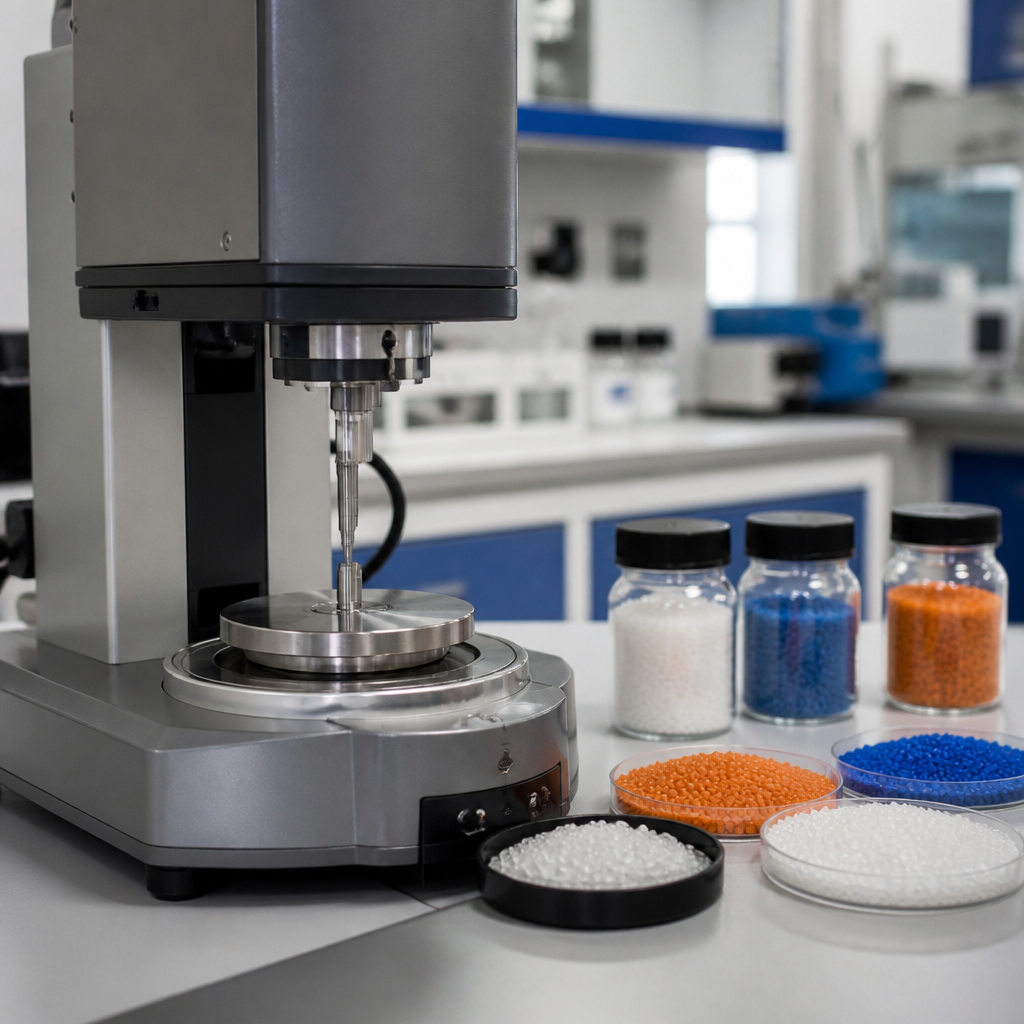
Rheology is one of the most practical tools for understanding polymer properties because it connects how a material flows and deforms to the molecular structure that controls real product performance. In polymer science, rheology means the measurement of stress, strain, viscosity, elasticity, and time-dependent deformation under defined conditions. Mechanical testing methods are the broader family of techniques used to evaluate stiffness, strength, toughness, creep resistance, impact behavior, and viscoelastic response. When this topic sits within a materials and properties framework, rheology acts as the hub that links melt processing, solid-state performance, quality control, formulation development, and failure analysis.
I have seen this connection repeatedly in development labs and production troubleshooting. A tensile test may show that two polypropylene grades reach similar yield strength, yet a rotational rheometer quickly reveals why one extrudes cleanly and the other surges at the die. Likewise, dynamic mechanical analysis can explain why an adhesive passes room-temperature peel testing but fails after a cold-soak cycle. These methods matter because polymers are not simple solids or simple liquids. They are viscoelastic materials whose behavior changes with temperature, loading rate, molecular weight distribution, crystallinity, filler content, and processing history.
For manufacturers, the stakes are commercial as well as technical. Rheological and mechanical data guide material selection for packaging, medical devices, automotive parts, coatings, electronics, and consumer goods. They also support compliance work. Standards from ASTM and ISO define common methods so teams can compare data reliably across suppliers and plants. A melt flow index value can help with incoming inspection, but it cannot replace the richer picture from oscillatory shear, creep testing, compression, flexural analysis, or fracture-focused methods. To understand polymer properties fully, engineers need a connected view of mechanical testing methods rather than isolated numbers.
This article serves as that hub. It explains how rheology fits into the wider landscape of mechanical testing methods, what each major method measures, when to use it, how results should be interpreted, and where the limitations lie. It also points to the practical questions engineers ask most often: Why does a polymer process well but crack in service? Why does a filled compound stiffen yet become brittle? Why do identical formulations show different test results after drying, annealing, or regrind addition? The answers are usually found by combining rheology with complementary tests, not by relying on any single metric.
Why rheology sits at the center of polymer mechanical testing
Rheology earns a central role because polymers respond to force over time, and time dependence is the defining feature of viscoelasticity. In a Newtonian liquid, viscosity is constant at a given temperature. In a polymer melt, viscosity often drops as shear rate increases, a phenomenon called shear thinning. In a rigid plastic, modulus appears high in a fast test, then falls during long-term loading as chains rearrange. Rheology captures these transitions directly. That makes it the bridge between processing conditions such as mixing, extrusion, injection molding, and coating, and end-use properties such as stiffness, dimensional stability, damping, and creep resistance.
The most common rheology platforms are rotational rheometers and capillary rheometers. Rotational systems measure steady shear viscosity, oscillatory storage modulus, loss modulus, complex viscosity, and yield behavior. Capillary instruments extend the accessible shear-rate range closer to processing conditions found in extrusion and molding. Together they show whether a resin has broad molecular weight distribution, long-chain branching, strong filler networking, or sensitivity to thermal degradation. These are not abstract features. They explain practical outcomes such as sharkskin, melt fracture, die swell, sagging, warpage, and uneven mold filling.
Rheology also supports structure-property interpretation in solids. Dynamic mechanical analysis, often grouped with mechanical testing methods because it measures modulus under oscillatory deformation, tracks storage modulus, loss modulus, and tan delta as temperature or frequency changes. From this, engineers identify the glass transition, secondary relaxations, damping peaks, and stiffness retention across service temperatures. For elastomers, pressure-sensitive adhesives, and impact-modified plastics, this information is often more predictive than a single room-temperature tensile value. A polymer that looks acceptable on a datasheet can still fail if its transition temperatures do not match the use environment.
The key point is simple: rheology does not replace other mechanical testing methods. It organizes them. It explains why measured properties change with loading rate, thermal history, orientation, moisture, and formulation details. As a hub discipline, it helps teams ask better questions before they cut tools, scale production, or approve a supplier.
Core mechanical testing methods and what each one reveals
Mechanical testing methods for polymers fall into several groups, each answering a specific performance question. Tensile testing, standardized in methods such as ASTM D638 and ISO 527, measures elastic modulus, yield strength, tensile strength, elongation at break, and sometimes secant modulus. It is the default method for comparing unfilled thermoplastics and many thermosets because it is straightforward and widely available. However, tensile data depend strongly on specimen geometry, strain rate, molding conditions, and conditioning. For semicrystalline polymers such as nylon or polypropylene, moisture content and cooling rate can change results significantly.
Flexural testing, commonly ASTM D790 or ISO 178, is useful when a part experiences bending rather than pure tension. It often highlights stiffness differences more clearly than tensile testing, especially in glass-filled systems. Compression testing is essential for foams, seals, and structural composites where compressive modulus, crush behavior, and permanent deformation matter. Hardness methods such as Shore A, Shore D, and Rockwell provide quick comparative screening, but hardness should never be treated as a substitute for full mechanical characterization because it reflects only localized surface resistance.
Impact testing methods, especially Izod and Charpy, evaluate notch sensitivity and energy absorption under rapid loading. They are valuable for consumer housings, automotive trim, and safety-relevant parts, yet they can be misleading if used alone. A polymer can show strong notched impact performance at room temperature and become brittle below its glass transition region. Fracture toughness methods and instrumented impact testing often give a deeper view because they separate crack initiation from crack propagation. For engineering plastics, that distinction matters in real service environments where stress concentrators are unavoidable.
Creep and stress relaxation tests measure long-term viscoelastic behavior. These methods are critical for load-bearing parts, snap fits, piping, seals, and insulated electrical components that must hold stress or dimension over months and years. Fatigue testing addresses cyclic loading, which is especially relevant for hinges, gears, medical components, and vibration-exposed assemblies. Dynamic mechanical analysis adds temperature and frequency dependence, making it one of the most informative tools in the entire subtopic. Used together, these methods reveal how a polymer behaves in immediate loading, repeated loading, and long-duration service.
| Method | Primary property measured | Best use case | Main limitation |
|---|---|---|---|
| Rotational rheology | Viscosity, storage modulus, loss modulus, yield behavior | Formulation development and processability screening | May not reach very high industrial shear rates |
| Capillary rheology | High-shear viscosity and melt elasticity indicators | Extrusion and injection molding simulation | Requires correction methods and careful temperature control |
| Tensile testing | Modulus, yield strength, elongation, tensile strength | General material comparison | Sensitive to strain rate and specimen preparation |
| DMA | Temperature-dependent modulus and damping | Glass transition and service-temperature analysis | Small-strain data may not predict large-deformation failure |
| Impact testing | Energy absorption under rapid loading | Brittleness screening and notch sensitivity | Results can be geometry dependent |
| Creep testing | Time-dependent deformation under constant load | Long-term dimensional stability | Testing can be slow |
How rheology explains processing behavior and final part performance
One of the biggest mistakes in polymer selection is separating processability from performance. In practice, the two are linked by rheology. Melt viscosity determines how easily a material fills a mold or forms a stable extrudate. Elastic recovery influences die swell and surface quality. Relaxation time affects orientation frozen into the part, which in turn influences shrinkage, warpage, transparency, and crack resistance. When a processor switches from one resin grade to another with the same nominal chemistry, rheology often explains why settings suddenly drift out of the acceptable window.
Consider high-density polyethylene pipe compounds. A resin with higher melt strength may process more stably in extrusion and also retain better resistance to slow crack growth because molecular architecture influences both melt elasticity and long-term fracture behavior. In polypropylene thermoforming, long-chain branching improves sag resistance, allowing deeper draws and more uniform wall thickness. In pressure-sensitive adhesives, viscoelastic balance determines whether a tape wets a surface quickly, holds under load, or peels cleanly. These are direct examples of rheology translating into commercial outcomes.
Filled and reinforced systems make the value of rheology even clearer. Add carbon black, silica, talc, calcium carbonate, glass fiber, or nanoclay, and the flow curve changes alongside modulus and toughness. A silica-filled seal compound may show Payne effect behavior, indicating a breakdown of the filler network with strain. That same network can improve green strength yet complicate mixing and extrusion. In conductive compounds, percolation can raise low-shear viscosity sharply, signaling the onset of a connected particle network that also controls electrical performance.
Thermal history matters as much as formulation. Moisture hydrolysis lowers molecular weight in PET and some polyamides, reducing viscosity and often lowering toughness. Overdrying can also alter behavior in moisture-sensitive materials. Regrind may broaden molecular weight distribution or introduce oxidative damage. Annealing can increase crystallinity and stiffness while reducing impact strength. Rheology detects these shifts early, often before destructive part failures appear. That is why experienced teams use rheological fingerprints as part of root-cause analysis rather than relying only on final-part pass or fail data.
Best practices for interpreting polymer test data accurately
Good mechanical characterization starts with disciplined sample preparation. In polymers, molding history, specimen orientation, gate design, cooling rate, and post-conditioning can move results enough to hide or create trends. I have seen teams compare tensile bars molded on different presses and draw incorrect conclusions about resin quality, when the real driver was variation in packing and moisture control. ASTM and ISO methods exist to reduce this noise, but following the standard is only the baseline. Laboratories still need documented conditioning protocols, instrument calibration, replicate testing, and clear acceptance criteria.
Interpretation also improves when engineers match the method to the service condition. If a product will face static load for years, creep and stress relaxation are more relevant than short tensile tests. If a polymer sees vibration across changing temperatures, DMA and fatigue matter more than hardness. If processing is unstable, capillary or rotational rheology should be reviewed before changing the mold or die. The most useful question is not “What is the strongest polymer?” but “Which test reproduces the failure mode and time scale that matter in use?”
Data should always be read in context. A higher modulus may benefit dimensional stability but reduce ductility. Higher melt flow can improve fill in thin-wall molding but may signal lower molecular weight and weaker weld lines. Better impact values in a notched specimen do not guarantee better scratch resistance, creep resistance, or chemical durability. For this reason, hub-level understanding of mechanical testing methods is essential. It prevents single-number decision making and encourages balanced material selection based on the full property profile.
Teams that build this discipline make faster, safer decisions. They use rheology to screen incoming materials, DMA to map temperature-dependent behavior, tensile and flexural methods to compare stiffness and strength, impact and fracture methods to assess damage tolerance, and creep or fatigue to judge long-term reliability. The reward is fewer production surprises, better correlation between lab data and field performance, and more confidence when qualifying materials, compounds, and finished parts.
Choosing the right testing strategy for development, quality, and failure analysis
No single test can describe polymer behavior completely, so the best strategy is layered. In early development, start with rheology to assess processability and molecular architecture, then add tensile, flexural, and DMA to establish baseline structure-property relationships. For filled or elastomeric systems, include frequency sweeps, temperature ramps, and, where relevant, creep or compression set. In production quality control, use fast screens such as melt flow, rotational viscosity at defined conditions, hardness, or limited tensile checks, but confirm critical changes with deeper methods when trends drift.
Failure analysis requires the most integrated approach. If a molded housing cracks near a snap feature, examine not only tensile strength but also weld-line formation, residual orientation, low-temperature DMA behavior, and impact sensitivity. If an extruded film tears during converting, compare extensional or shear rheology, molecular weight distribution, and dart impact response. If a gasket loses sealing force, pair compression set with stress relaxation and thermal aging. The pattern is consistent: reliable conclusions come from combining rheology with targeted mechanical testing methods that mirror the application.
This is why rheology is so valuable within the materials and properties landscape. It helps engineers move from isolated results to causal understanding. It shows how chain length, branching, entanglement density, crystallinity, and filler networking appear in measurable behavior. It also keeps teams honest about limitations. Lab tests are models, not reality itself. They must be designed around service temperature, loading rate, geometry, environment, and manufacturing history.
The practical takeaway is clear. Build your mechanical testing program around the decisions you need to make, then use rheology as the connective framework that explains those decisions. When you do, polymer selection becomes more accurate, process troubleshooting becomes faster, and product reliability improves. If you are building a deeper materials and properties resource, use this hub as the starting point, then connect each test method to dedicated pages, application examples, and standards-based interpretation guidance.
Frequently Asked Questions
What is rheology, and why is it so important for understanding polymer properties?
Rheology is the study of how materials flow and deform when forces are applied, and it is especially valuable in polymer science because polymers rarely behave like simple liquids or perfectly rigid solids. Instead, they are typically viscoelastic, meaning they show both liquid-like and solid-like responses depending on temperature, time, stress level, and deformation history. Rheology measures properties such as viscosity, elasticity, stress, strain, and time-dependent deformation, then relates those responses to the molecular architecture of the polymer.
This makes rheology one of the most practical tools for understanding polymer properties because it bridges microscopic structure and real-world performance. For example, molecular weight, molecular weight distribution, branching, crosslinking, crystallinity, filler content, and chain entanglement all influence how a polymer responds in shear, extension, creep, and oscillation. Rheological behavior can therefore reveal whether a material will pump easily, mold cleanly, sag during processing, recover after deformation, or resist long-term creep in service. In short, rheology helps scientists and engineers predict both manufacturability and end-use behavior from measurable material responses under controlled conditions.
How does rheology differ from general mechanical testing of polymers?
Rheology is part of the broader family of mechanical testing methods, but it serves a distinct purpose. Mechanical testing often focuses on final performance characteristics such as tensile strength, modulus, elongation at break, impact resistance, toughness, hardness, and creep under specific loading conditions. These tests are essential for determining whether a finished polymer or plastic part can survive its intended application. They answer questions such as how much load the material can bear, how stiff it is, and how it fails.
Rheology, by contrast, is more focused on how the material responds during flow and deformation over time, especially under conditions relevant to processing and viscoelastic behavior. It is commonly used to examine melt flow in extrusion and injection molding, structural buildup in suspensions, elastic recovery, frequency-dependent modulus, and how viscosity changes with shear rate or temperature. This means rheology is often more sensitive to subtle structural differences that may not be obvious in a simple strength test.
The two approaches are complementary. Rheology can reveal whether a polymer melt will process smoothly, whether additives are interacting properly, or whether the material has sufficient melt strength for film blowing or foaming. Mechanical testing then confirms how the final solid product performs in use. Together, they provide a fuller picture: rheology explains how structure affects deformation and flow, while broader mechanical testing confirms how that structure performs under practical service conditions.
What polymer characteristics can rheological measurements reveal?
Rheological measurements can reveal a remarkable amount about polymer structure and behavior. One of the most important insights is molecular weight and molecular weight distribution. In general, higher molecular weight increases chain entanglement, which tends to raise viscosity and elasticity. A broader molecular weight distribution can also affect processability, often changing how the material responds across low and high shear conditions.
Rheology can also detect branching and long-chain branching, which are critical in many commercial polymers. A branched polymer may show greater melt elasticity, longer relaxation times, and improved melt strength compared with a more linear version of the same chemistry. This matters directly in processes such as blow molding, thermoforming, and fiber spinning. Similarly, crosslinking and network formation strongly affect viscoelastic response, often producing more solid-like behavior, reduced flow, and higher storage modulus.
Beyond molecular architecture, rheology is useful for evaluating polymer blends, filled systems, emulsions, and composite formulations. It can show whether phases are well dispersed, whether filler networks are forming, and whether interactions between ingredients are strengthening or weakening the material structure. It is also sensitive to degradation. Chain scission during processing, oxidation, or excessive heat exposure often lowers molecular weight and reduces viscosity, while branching or gel formation may increase elasticity unexpectedly. Because of this sensitivity, rheology is widely used in quality control, product development, and failure analysis.
How does rheology help improve polymer processing and manufacturing?
Rheology is central to polymer processing because nearly every manufacturing operation depends on controlled flow and deformation. During extrusion, injection molding, blow molding, calendaring, coating, and 3D printing, a polymer must move through equipment, respond to stress, and solidify in predictable ways. Rheological data helps engineers understand how easily a material flows under shear, how strongly it resists deformation, how quickly it relaxes after stress is removed, and how temperature changes alter those responses.
For example, viscosity curves help determine whether a polymer will fill a mold efficiently or require excessive pressure. Shear-thinning behavior is often desirable because it allows easier flow during processing while maintaining stability at lower shear. Melt elasticity is equally important. Too little elasticity may reduce melt strength and create problems such as sagging, draw resonance, or poor bubble stability in film processing. Too much elasticity can cause die swell, sharkskin, melt fracture, or surface defects. Rheology allows these issues to be anticipated and corrected before they become costly production problems.
It is also a powerful formulation tool. Manufacturers can compare grades, optimize additive packages, tune filler loading, and select processing temperatures based on rheological performance rather than trial and error alone. In quality control, rheology can identify lot-to-lot variation, contamination, incomplete mixing, or degradation during repeated thermal histories. As a result, it reduces waste, improves consistency, and shortens development time while making processing decisions far more data-driven.
What are the most common rheological tests used for polymers, and what do they tell us?
Several rheological tests are widely used in polymer science, each designed to probe different aspects of material behavior. One of the most common is steady shear testing, where the material is subjected to a constant or varying shear rate and the resulting viscosity is measured. This test is highly useful for understanding process flow, especially in extrusion, pumping, and molding operations. It shows whether the polymer is Newtonian or shear-thinning and helps define the relationship between applied deformation rate and flow resistance.
Oscillatory rheology is another key method. In this test, the material is subjected to small sinusoidal deformations, and the response is separated into elastic and viscous components, often reported as storage modulus and loss modulus. These measurements are extremely informative because they reveal how solid-like or liquid-like a polymer is across different timescales or frequencies. Oscillatory testing is especially useful for studying melts, gels, curing systems, phase transitions, and relaxation behavior without severely disrupting the structure.
Creep and stress relaxation tests are also important for time-dependent behavior. In creep testing, a constant stress is applied and the deformation over time is measured, which helps evaluate long-term dimensional stability and resistance to gradual deformation. In stress relaxation, a fixed strain is imposed and the decay in stress is monitored, providing insight into how the polymer redistributes internal stress through molecular motion. Additional tests such as extensional rheology can assess melt strength and strain hardening, which are critical for processes involving stretching, including film blowing, foaming, and fiber formation. Together, these methods provide a detailed and practical picture of how polymer structure controls processing behavior and final performance.