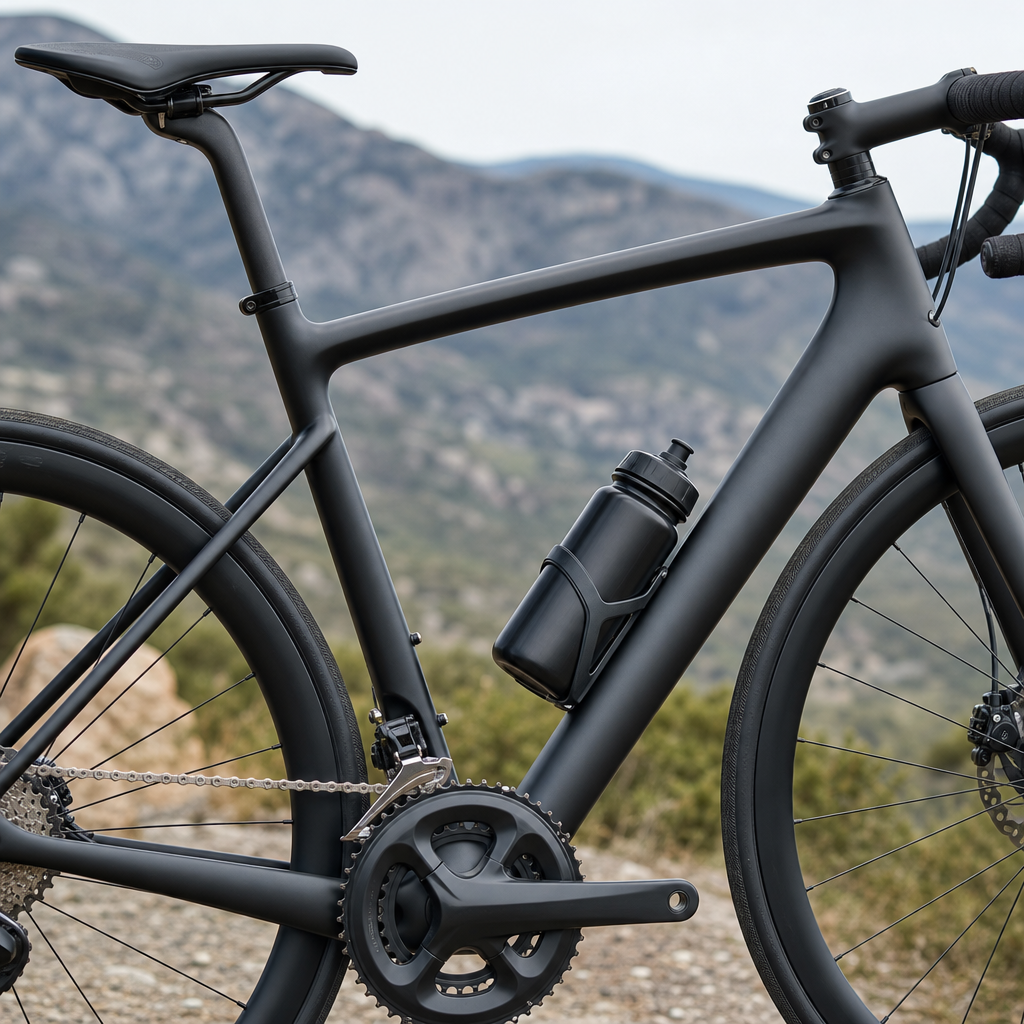
Polymers are central to modern bicycle manufacturing because they reduce weight, control vibration, resist corrosion, and enable shapes that metals alone cannot deliver. In the sports and leisure market, where riders expect speed, comfort, durability, and style at different price points, polymers appear in frames, helmets, saddles, tires, grips, pedals, protective coatings, bearings, bottles, bags, and packaging. The term polymer covers a broad family of materials made of repeating molecular chains, including commodity plastics such as polypropylene, engineering plastics such as nylon and polycarbonate, elastomers such as thermoplastic polyurethane, and high-performance composites such as carbon fiber reinforced epoxy. Each class behaves differently under load, heat, ultraviolet exposure, moisture, and impact, so material selection in bicycle design is a precise engineering decision rather than a cosmetic choice.
In practice, the role of polymers in bicycle manufacturing extends beyond replacing metal. I have worked with product teams evaluating frame layups, injection-molded components, and fatigue failures, and the recurring lesson is that polymers let designers tune performance locally. A down tube can be stiff for power transfer while seat stays remain compliant for comfort. A helmet shell can spread impact while the foam liner manages energy. A tire can balance rolling resistance and wet grip through tread compound chemistry. For sports and leisure brands, this matters because the category includes road racing, mountain biking, gravel, commuting, fitness riding, e-bikes, and children’s bikes, all with different use cases and liability requirements. Understanding how polymers function across these applications helps manufacturers build better products and helps buyers evaluate claims with more confidence.
Why polymers matter in frames, forks, and structural parts
The most visible polymer story in bicycles is the rise of composite frames and forks. Carbon fiber bicycles are not made from polymer alone; they are composite structures in which carbon fibers carry most of the load and a thermoset resin, usually epoxy, binds the fibers, transfers stress, and protects the reinforcement. This combination offers a high stiffness-to-weight ratio, which is why it dominates competitive road cycling, triathlon, and premium mountain bike segments. A well-designed carbon frame can weigh far less than an aluminum equivalent while maintaining targeted torsional stiffness at the bottom bracket and head tube. Brands such as Trek, Specialized, Giant, and Cervélo differentiate products through fiber grade, layup schedule, resin system, and molding process rather than through shape alone.
Polymers also appear in structural thermoplastics and hybrid composites. Nylon reinforced with glass fiber is common in pedals, chain guides, bottle cages, and some wheel components because it combines strength, moldability, and cost efficiency. Thermoplastic composites are gaining attention because they can offer faster cycle times and better impact tolerance than traditional thermosets, though they require careful control of consolidation and joining. In children’s bikes and lower-cost leisure models, polymers may form chain guards, fenders, integrated baskets, and even frame-adjacent elements where toughness and corrosion resistance matter more than ultimate stiffness. The main engineering challenge is creep, fatigue, and environmental aging. Unlike steel, many polymers can deform gradually under sustained load, and unlike aluminum, some can lose properties with heat or ultraviolet exposure unless stabilized. Good design accounts for those limits through ribbing, inserts, thicker sections, and validated test protocols.
Comfort, safety, and ride feel in sports and leisure bicycles
One reason polymers are so important in sports and leisure bicycles is that ride quality is not defined by weight alone. Cyclists feel vibration, shock, grip, hand pressure, saddle pressure, and noise, and polymer components strongly influence those sensations. Thermoplastic elastomers and silicone-based materials are used in grips, bar tape, saddle padding, and shoe interfaces to absorb small vibrations and improve control. In mountain biking and gravel riding, frame protection films made from polyurethane prevent paint damage from cable rub and stone strikes. Rubber compounds in tires govern rolling behavior more directly than most riders realize. A road tire optimized for low hysteresis rolls quickly on smooth asphalt, while a trail tire uses softer side knobs and more compliant compounds to maintain traction on roots, rocks, and loose soil.
Safety components rely heavily on polymer engineering. Bicycle helmets typically combine a polycarbonate outer shell with an expanded polystyrene liner. In-mold construction bonds these layers to reduce weight while preserving impact management. Some systems add low-friction layers to address rotational energy, a major concern in angled impacts. Protective eyewear uses polycarbonate lenses because they are lightweight and highly impact resistant. Pads, child seats, lights, and reflectors also depend on polymers for impact performance, weather resistance, and optical clarity. In leisure cycling, comfort and confidence often determine whether a consumer rides regularly, so polymer selection directly affects participation. A commuter with numb hands from poor grips or a child with an uncomfortable helmet is less likely to stay engaged than someone using well-designed polymer-based contact points and safety gear.
Common polymers used in bicycle manufacturing
Material choice depends on load, geometry, production volume, cost target, and regulatory demands. The table below summarizes several polymers frequently used in bicycle manufacturing and sports and leisure accessories.
| Material | Typical bicycle applications | Key advantages | Main limitations |
|---|---|---|---|
| Epoxy resin in carbon composites | Frames, forks, rims, handlebars, seatposts | High stiffness-to-weight ratio, tunable layup, aerodynamic shaping | Labor intensive, impact sensitivity, difficult repair assessment |
| Polyamide (nylon), often glass filled | Pedals, bottle cages, cable guides, housings, small structural parts | Good strength, wear resistance, injection moldability | Moisture absorption can affect dimensions and stiffness |
| Polycarbonate | Helmet shells, lenses, light covers | Impact resistance, optical clarity, low weight | Scratch sensitivity unless coated, UV aging if unstabilized |
| Polypropylene | Fenders, guards, cases, packaging, some saddle bases | Low cost, chemical resistance, fatigue hinge performance | Lower stiffness and heat resistance than engineering plastics |
| Thermoplastic polyurethane | Frame protection films, shoe parts, seals, soft-touch components | Abrasion resistance, flexibility, shock absorption | Can yellow or hydrolyze in harsh conditions depending on grade |
| Expanded polystyrene | Helmet liners | Excellent energy absorption per weight, established safety use | Single-impact crushing, limited durability after severe hits |
| Synthetic rubber blends | Tires, tubes, sealants, grips | Grip, damping, air retention, puncture sealing options | Wear, rolling resistance tradeoffs, ozone and heat aging |
This mix of materials illustrates a core principle: there is no universally best polymer for bicycles. The correct choice depends on the application and service environment. A downhill mountain bike pedal must survive impacts and mud contamination. A racing rim must be stiff, heat-stable, and aerodynamically smooth. A child carrier must meet safety regulations, resist sunlight, and remain easy to clean. Manufacturers that understand polymer behavior at the formulation level, including fillers, stabilizers, plasticizers, and processing aids, generally produce more reliable sports and leisure products than those making decisions on headline material names alone.
Manufacturing processes and quality control
Polymers shape not only bicycle performance but also factory economics. Carbon composite frames are typically made with prepreg sheets, cut and oriented according to a layup schedule, then compacted in molds with internal bladders or mandrels before curing. The exact sequence matters. Fiber direction controls stiffness, resin content affects toughness and weight, and voids can become crack initiators. Higher-end factories use ultrasonic inspection, laser ply projection, and strict cure-cycle monitoring to maintain consistency. Compression molding and resin transfer molding can improve repeatability in some parts, while thermoplastic overmolding helps integrate soft and hard zones in contact components. The market often focuses on frame weight, but quality control is a bigger differentiator than a few grams.
Injection molding dominates non-frame polymer parts because it scales efficiently for sports and leisure volumes. Pedal bodies, derailleur pulleys, reflectors, bottle cages, lighting housings, and mudguards can all be molded with tight tolerances. Tool design, gate placement, cooling rates, and fiber orientation in filled polymers affect warpage and strength. A seemingly minor issue such as knit lines near a screw boss can lead to field failures after repeated vibration. Reputable manufacturers validate designs with finite element analysis and then confirm results through fatigue, impact, salt spray, UV, and environmental conditioning tests aligned with standards such as ISO 4210 for bicycles and related safety requirements. In my experience, the brands with the fewest warranty surprises are those that test assembled systems, not just isolated polymer coupons, because real failures usually occur at interfaces.
Performance tradeoffs across cycling disciplines
Different sports and leisure segments ask different things of polymers. Road cycling rewards low mass, aerodynamic integration, and efficient power transfer, so carbon composites dominate premium products. Gravel bikes need many of the same benefits but place a greater premium on vibration damping, debris resistance, and storage integration. Mountain bikes impose severe impact, abrasion, and fatigue loads, which is why polymer chain guides, bash guards, frame guards, and suspension seals are so important. Commuter and hybrid bikes emphasize weather resistance, low maintenance, and value, making polypropylene fenders, nylon pedals, ergonomic elastomer grips, and puncture-resistant tire compounds especially relevant. E-bikes add battery housings, cable management, and thermal considerations that increase polymer usage even further.
These tradeoffs explain why material marketing can be misleading when stripped of context. A carbon component is not automatically better than an aluminum one, and a polymer pedal is not automatically inferior to a metal pedal. In some applications, reinforced nylon offers enough stiffness with better impact behavior and lower cost. In others, metal inserts inside polymer housings provide the right balance of load capacity and corrosion resistance. Tire compounds show the clearest tradeoff: softer polymers increase grip but usually wear faster and may raise rolling resistance. Saddle foams can improve comfort but may compress over time. Smart design means tuning the polymer system to the discipline rather than chasing a single headline property.
Sustainability, repair, and the future of polymer use
Sustainability is now a major factor in bicycle manufacturing, and polymers present both opportunities and challenges. On the positive side, lightweight polymer-rich bicycles can reduce transport emissions and encourage cycling as a low-carbon mode of mobility and recreation. Many non-structural parts already use recyclable thermoplastics, and some brands are incorporating recycled nylon, bio-based polyamides derived partly from castor oil, and recycled packaging films. Durable coatings and better UV stabilizers also extend product life, which is often more important environmentally than a small increase in recycled content. For helmets and protective equipment, however, end-of-life recovery remains difficult because multiple materials are bonded together for safety performance.
Composite frames present the hardest recycling problem because carbon fibers are embedded in cured thermoset resin. Mechanical grinding produces low-value filler, while thermal and chemical recovery methods can reclaim fibers with some property loss and cost. Repair is possible and often effective when done by specialists using controlled scarfing and relamination, but damage assessment must be conservative because subsurface delamination is not always visible. Looking ahead, thermoplastic composites, reversible resin chemistries, and digital product passports may improve circularity and traceability. For sports and leisure consumers, the practical takeaway is simple: buy for longevity, inspect polymer components regularly, replace impact-damaged safety gear promptly, and maintain bicycles according to manufacturer guidance. Polymers have transformed bicycle manufacturing not because they are fashionable, but because they solve real performance problems across the entire riding experience. If you are building, specifying, or buying within the Sports and Leisure segment, use this hub as your starting point and evaluate every bicycle component by the specific job its polymer material must do.
Frequently Asked Questions
1. Why are polymers so important in modern bicycle manufacturing?
Polymers matter in bicycle manufacturing because they help solve several performance and design challenges at the same time. In simple terms, a polymer is a material made from repeating molecular chains, and that broad category includes everything from flexible rubbers and foams to rigid engineering plastics and high-performance composites. For bicycle brands, that variety is extremely valuable. Different polymers can be selected to reduce weight, improve comfort, resist weather and corrosion, and make parts easier or more economical to produce.
One of the biggest advantages is weight reduction. Cyclists care about efficiency, handling, and acceleration, and lighter parts can make a bike feel quicker and more responsive. Polymers often weigh less than comparable metal components, which is why they are widely used in grips, pedals, saddles, bottle cages, fenders, and many accessory parts. In more advanced applications, polymer-based composites such as carbon fiber reinforced polymers allow manufacturers to create frames and forks that are both light and exceptionally stiff in the right areas.
Another major reason is vibration control. Unlike many metals, certain polymers can absorb or damp road buzz and impacts more effectively. That contributes to rider comfort, especially on rough pavement, gravel, or trails. You see this advantage in saddles, bar tape, grips, tires, protective inserts, and frame components designed to smooth out the ride. Comfort is not just a luxury feature; it can reduce fatigue and improve bike control over long distances.
Polymers also stand out for corrosion resistance. Bicycles are exposed to rain, mud, sweat, cleaning products, UV light, and road grime. Many polymer materials perform well in those conditions and do not rust like ferrous metals. That makes them useful for housings, coatings, seals, bearing parts, storage accessories, and protective covers. In a market where consumers expect durability with minimal maintenance, this is a clear benefit.
Finally, polymers enable shapes and design features that are difficult or expensive to achieve with metal alone. Molding processes can create ergonomic grips, aerodynamic helmet shells, integrated cable guides, complex pedal bodies, sleek water bottles, and impact-managing protective equipment. That gives manufacturers more freedom to balance function, appearance, and price. In short, polymers are important because they are not a single-purpose material family; they are a versatile toolkit that supports performance, comfort, safety, durability, and product differentiation across the entire bicycle industry.
2. What bicycle parts are commonly made from polymers?
Polymers appear throughout the bicycle, often in places riders do not immediately notice. Some applications are obvious, such as tires, handlebar grips, saddles, water bottles, and helmets. Others are more technical, including bearing retainers, cable liners, frame protection films, seal components, composite frame structures, and impact-absorbing foams. Because polymers include both soft and rigid materials, they can be matched to a wide range of functions.
Tires are one of the most familiar examples. They rely on elastomeric polymers and rubber compounds to provide traction, shock absorption, puncture resistance, and rolling efficiency. Different polymer formulations help manufacturers tune performance for road, gravel, mountain, commuter, or e-bike use. Saddles also use multiple polymer-based materials, including foam padding, synthetic covers, flexible shells, and elastomer bumpers. These layers work together to support the rider while reducing pressure and vibration.
Helmets are another critical area. Most modern bicycle helmets combine a hard outer polymer shell with an expanded foam liner designed to absorb impact energy. Advanced models may also include polymer slip-plane systems or reinforcement structures to help manage rotational forces during a crash. This is a strong example of how polymers contribute directly to rider safety, not just convenience or aesthetics.
At the component level, manufacturers frequently use engineering plastics in pedals, derailleur pulleys, cable routing systems, bearing cages, seals, and various housings. These materials can be durable, lightweight, and resistant to dirt and moisture. Polymer coatings and films are also common on frames and components, where they help prevent scratches, chemical damage, or corrosion. Even small parts like spacers, bushings, and clips are often polymer-based because they can be produced with tight tolerances and low weight.
In higher-end bicycles, polymer composites play an especially prominent role. Carbon fiber reinforced polymer is widely used in frames, forks, handlebars, seatposts, rims, and crank components because it offers a powerful combination of low weight and tuneable stiffness. Beyond the bike itself, polymers show up in bags, hydration systems, protective packaging, display materials, and workshop accessories. Taken together, these uses show that polymers are not limited to one part of the bicycle ecosystem; they are woven into nearly every aspect of modern bike design, manufacturing, use, and transport.
3. How do polymers improve bicycle performance and rider comfort?
Polymers improve performance and comfort by allowing manufacturers to control properties that matter on the road or trail, including weight, flexibility, grip, damping, and impact response. A bicycle is not just a machine that needs to be strong; it also needs to feel efficient, predictable, and comfortable under real riding conditions. Polymers help engineers fine-tune those qualities more precisely than many traditional materials can on their own.
From a performance standpoint, lower weight is one of the clearest advantages. Reducing weight can make climbing easier, acceleration faster, and bike handling more agile. This is why polymer-rich parts are so common in sports and leisure cycling, where riders often compare performance across different budgets and riding styles. Lightweight polymer pedals, cages, accessories, and composite structural parts all contribute to a more responsive ride without necessarily sacrificing durability.
Comfort is where polymers often have an even bigger impact. Roads and trails transmit constant small vibrations and occasional larger shocks into the frame and contact points. If those forces are not managed well, they can create hand numbness, saddle discomfort, and overall fatigue. Materials such as foams, elastomers, and carefully engineered thermoplastics can absorb or damp these inputs. In practice, that means more comfortable saddles, softer grips, more stable foot support, quieter accessories, and a smoother ride feel over long distances.
Polymers also improve grip and control. Handlebar tape, grip compounds, saddle covers, shoe interface surfaces, and tire tread materials all depend heavily on polymer chemistry. The right formulation can increase traction in wet or dry conditions, improve confidence while cornering, and reduce unwanted slipping at critical contact points. That can affect both performance and safety, particularly in racing, mountain biking, and commuting in variable weather.
In composite applications, polymers make it possible to tailor stiffness and flex. For example, a carbon fiber reinforced polymer frame can be designed to be very stiff in the bottom bracket and head tube areas for efficient power transfer and precise steering, while still allowing some compliance elsewhere for comfort. That level of tuning is one reason polymer composites have become so influential in premium bicycles. Overall, polymers improve the riding experience not through one single feature, but by helping bikes become lighter, smoother, more controllable, and better matched to the needs of different riders.
4. Are polymer-based bicycle components durable and safe?
Yes, polymer-based bicycle components can be highly durable and safe when they are correctly designed, properly manufactured, and used in the right application. A common misconception is that anything non-metallic is automatically weaker or less reliable. In reality, many polymers are engineered specifically for demanding environments, and some outperform metals in areas such as corrosion resistance, impact absorption, chemical resistance, and fatigue behavior under certain conditions.
Durability depends heavily on material selection. Commodity plastics used for low-stress accessories are very different from engineering polymers or reinforced composites used in structural parts. For example, a simple bottle cage and a carbon composite fork are both polymer-based, but they are designed to serve completely different functions under very different loads. Reputable bicycle manufacturers account for these differences through material testing, stress analysis, impact testing, fatigue testing, and quality control during production.
Safety is especially important in products such as helmets, pedals, protective guards, and structural composites. In helmets, polymer shells and energy-absorbing foams are central to impact management. In composite frames and forks, polymer matrices bind reinforcing fibers together and transfer loads through the structure. These systems can be extremely safe when manufactured to specification, but they also require careful engineering because their performance depends on fiber orientation, resin quality, curing conditions, and design details.
That said, polymer components are not maintenance-free or indestructible. Some can degrade over time due to UV exposure, repeated impacts, chemical contact, abrasion, or extreme temperatures. A scratched helmet, a cracked pedal body, a damaged composite rim, or hardened rubber components should be inspected and replaced when necessary. The same is true for metal parts, which can corrode, dent, or fatigue. The key point is that durability and safety are not determined by whether a part is metal or polymer alone, but by whether the material fits the job and has been engineered responsibly.
For riders, the best approach is to buy from trusted brands, follow manufacturer weight and usage limits, inspect components regularly, and replace safety-critical items after crashes or visible damage. When those steps are followed, polymer-based bicycle parts are not just acceptable alternatives to metal; in many cases, they are the preferred choice