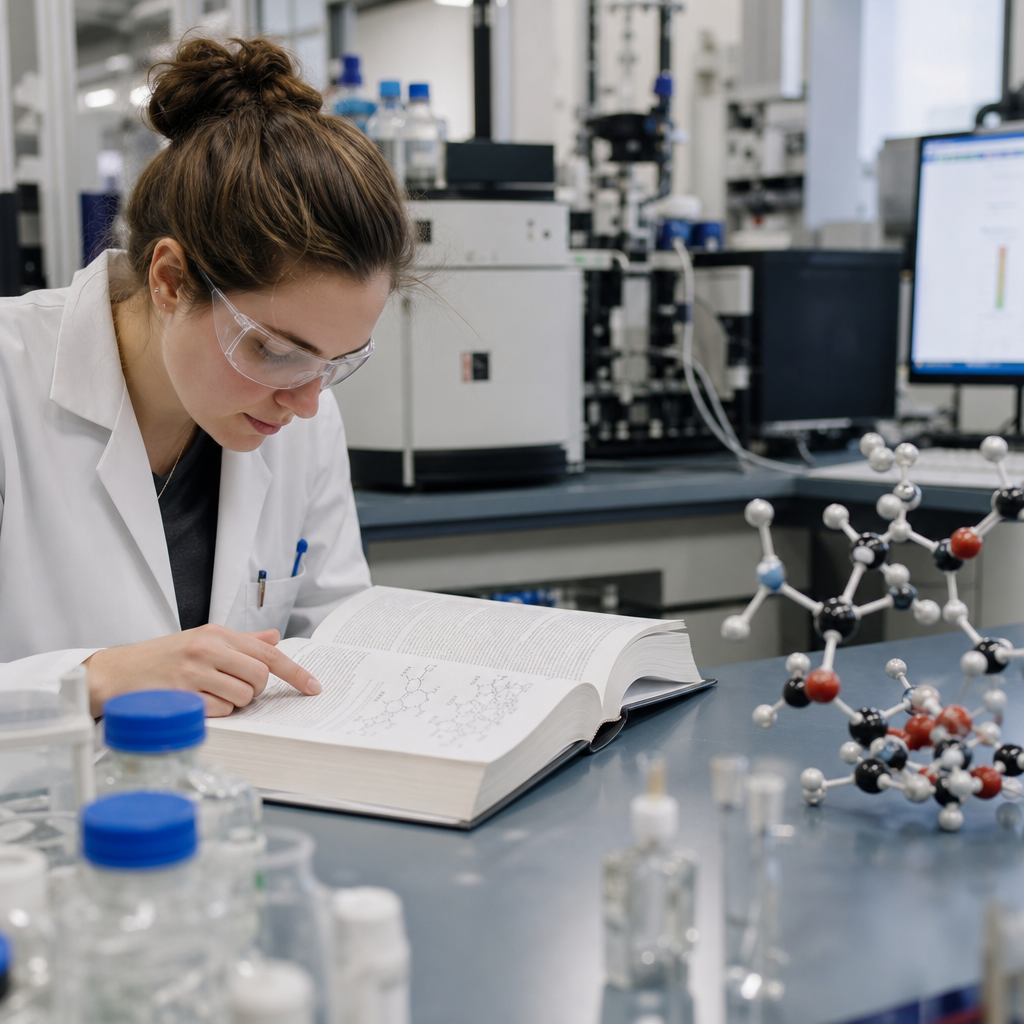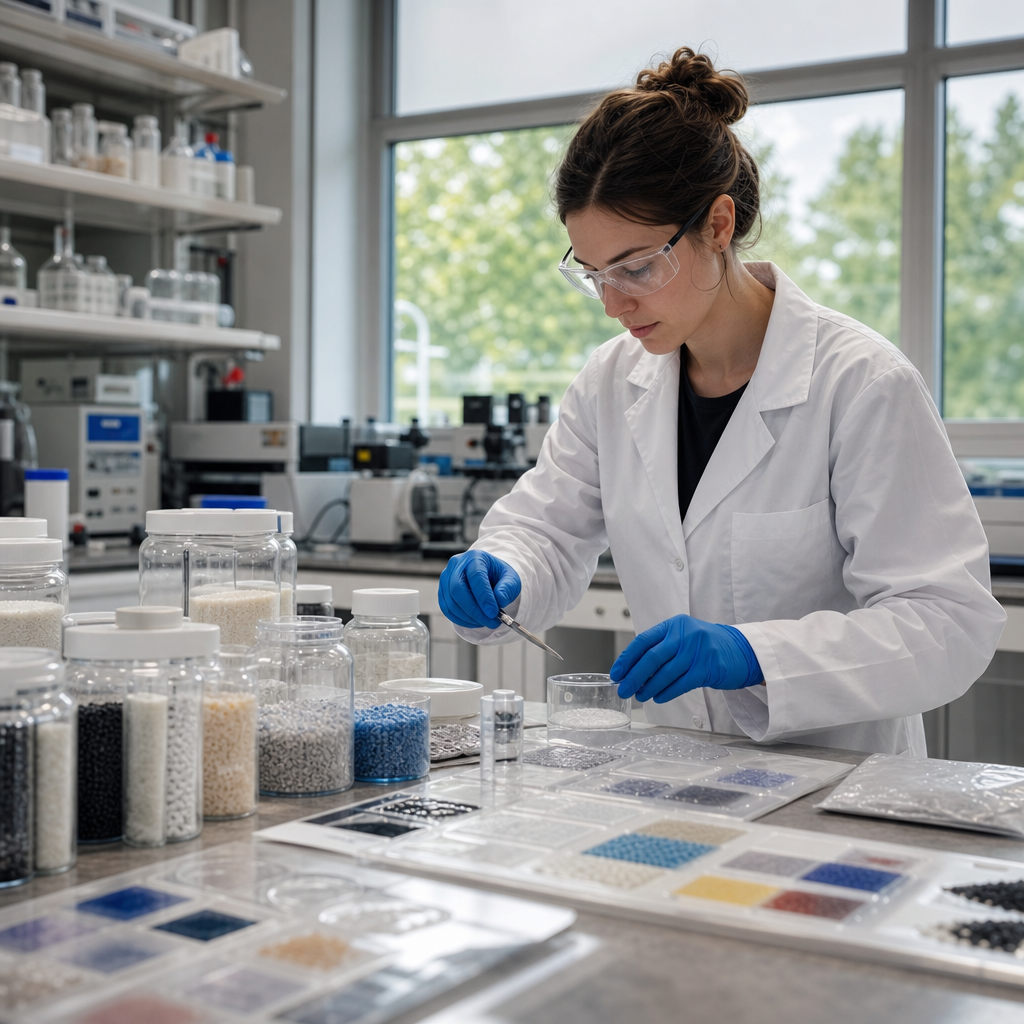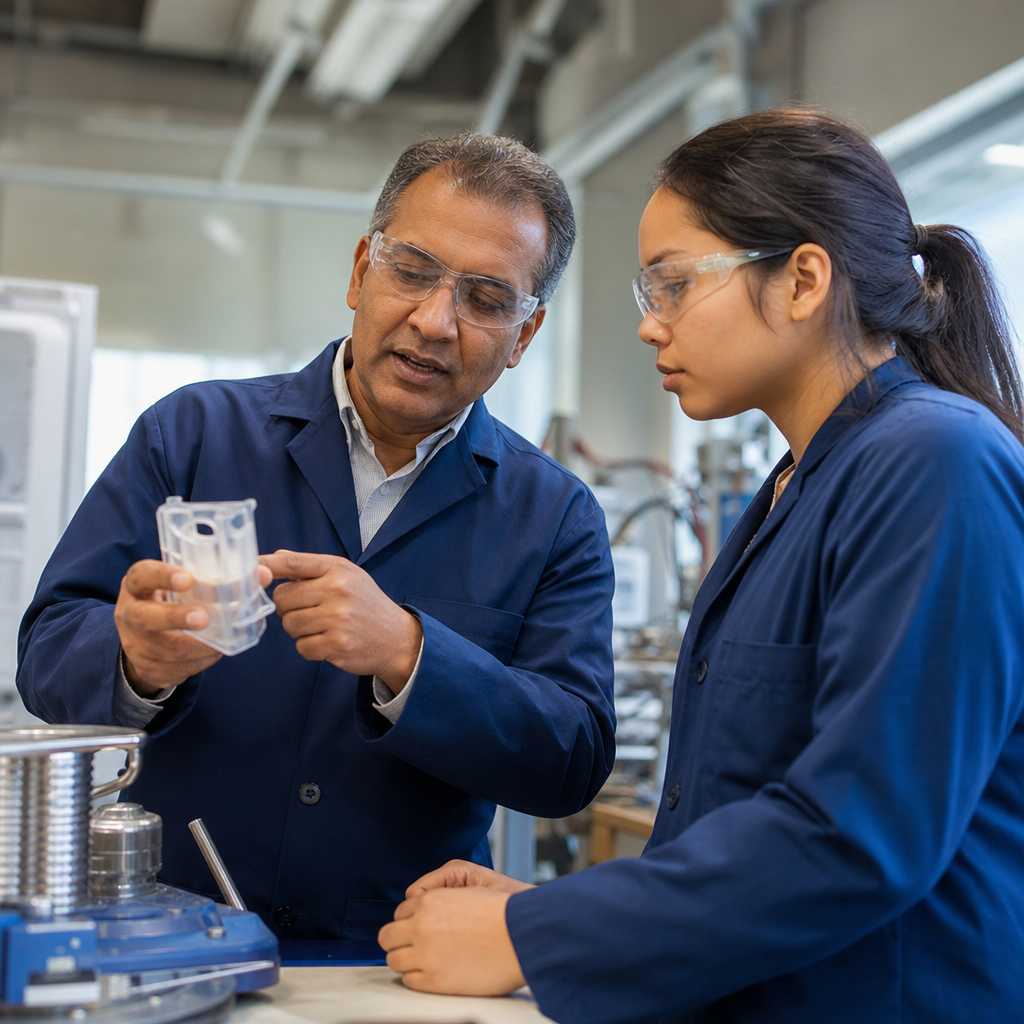
Mentorship in polymer engineering bridges the gap between classroom theory and the realities of designing, processing, testing, and scaling polymer materials in industry. In this field, mentorship means a structured relationship in which a more experienced engineer, researcher, or technical leader helps a student or early-career professional build judgment, laboratory discipline, problem-solving habits, and a clear learning path. It matters because polymer engineering is unusually interdisciplinary: success depends on chemistry, materials science, rheology, product design, quality systems, manufacturing economics, and safety. A textbook can explain crystallinity, viscoelasticity, extrusion, injection molding, additive compounding, and failure analysis, but only guided practice shows how these concepts interact on a production line, in a pilot plant, or during a customer complaint investigation.
I have seen this firsthand while working with junior engineers moving from university labs into plastics processing environments. The strongest performers were rarely the ones with the highest grades alone; they were the ones who had mentors who translated theory into operating decisions. A mentor explains why drying conditions matter before molding hygroscopic resins, how melt temperature affects degradation and cycle time, when a DSC curve is enough, and when you need DMA, FTIR, GPC, or microscopy to understand a defect. Good mentorship also clarifies training options. Many people searching for courses and training programs in polymer engineering are not asking only, “What should I study?” They are really asking, “What sequence of learning will make me competent, employable, and credible?” This guide answers that question and serves as a hub for the educational resources that support long-term growth in polymer engineering.
Why Mentorship Matters in Polymer Engineering Education
Polymer engineering is a field where small knowledge gaps can create expensive mistakes. A new engineer may understand polymer structure-property relationships, yet still struggle to set barrel zones, interpret residence time effects, identify shear overheating, or distinguish between weld line weakness and material embrittlement. Mentorship reduces that risk by accelerating pattern recognition. An experienced mentor can review a trainee’s assumptions, point out hidden variables, and teach practical heuristics that are rarely covered thoroughly in formal coursework.
Mentorship is especially valuable because polymer engineering training is fragmented across several formats. Universities may excel at polymer chemistry, morphology, and testing, while industrial short courses focus on troubleshooting extrusion, mold design, part warpage, compounding, and process optimization. Equipment suppliers often teach machine-specific methods, such as screw design fundamentals or dryer maintenance. Standards bodies and professional associations add another layer with courses on ASTM and ISO test methods, quality control, and regulatory expectations. Without guidance, learners often collect credentials without building a coherent skills stack.
A strong mentor helps organize learning into stages. Early on, the focus is usually terminology, safety, material families, and processing basics. Next comes analytical competence: understanding rheology, thermal analysis, mechanical testing, and statistical process control. Later, training shifts toward commercial judgment, supplier communication, root-cause analysis, and leading qualification programs. This progression matters because polymer engineering careers are built on applied decisions, not memorized definitions. Mentorship turns courses and training programs from isolated events into a connected professional development system.
Core Learning Paths: Courses and Training Programs That Build Competence
The best courses and training programs in polymer engineering match the learner’s current role and target industry. A student interested in medical devices needs different exposure than a production engineer in packaging or an R&D scientist developing automotive composites. Even so, most effective learning paths begin with foundations. These include polymer chemistry, chain architecture, molecular weight, crystallinity, glass transition, viscoelasticity, additives, degradation mechanisms, and common processing methods such as injection molding, extrusion, blow molding, thermoforming, and compounding.
After the foundation stage, specialized training becomes more important. Processing courses teach how machine settings influence morphology and final part performance. Materials characterization programs cover DSC, TGA, DMA, FTIR, MFI or MFR testing, capillary rheometry, impact testing, tensile testing, and microscopy. Product-focused training addresses sectors like films, fibers, elastomers, thermosets, adhesives, coatings, and high-performance engineering plastics. Regulatory and quality courses are also essential in industries governed by documentation and validation, such as aerospace, electronics, medical, and food contact packaging.
In practice, I advise mentees to build breadth first, then depth. For example, an engineer working in injection molding benefits from understanding extrusion and compounding because resin history affects molding behavior. Likewise, a compounding specialist should understand end-use testing and product design to avoid optimizing only for throughput. The most useful courses and training programs therefore do not just teach a machine or a test. They show the full material journey from monomer selection and additive package design to processing window, testing protocol, product performance, and field failure risk.
| Training format | Best for | Main strengths | Typical limitation |
|---|---|---|---|
| University degree modules | Students and career changers | Strong theory in polymer science, mechanics, and thermodynamics | Less exposure to plant troubleshooting and production economics |
| Professional short courses | Working engineers and technicians | Focused, practical instruction on processing, testing, and defects | Can be narrow if not combined into a larger learning plan |
| Supplier or equipment training | Operators, process engineers, maintenance teams | Hands-on knowledge of machines, resins, and operating windows | Often centered on one platform or product line |
| Mentored in-house programs | New hires and promoted staff | Direct relevance to plant problems, products, and quality systems | Quality depends heavily on internal expertise and documentation |
How Mentors Help Learners Choose the Right Program
Choosing among polymer engineering courses and training programs becomes easier when a mentor starts with the actual problem to be solved. If the learner needs a first job, portfolio-building and fundamentals matter most. If the learner is already in manufacturing, the priority may be scrap reduction, faster root-cause analysis, and stronger communication with toolmakers, resin suppliers, and quality teams. If the goal is R&D advancement, then experimental design, advanced characterization, and literature review skills carry more weight.
A mentor also distinguishes between credentials that signal knowledge and training that changes performance. For example, a certificate in polymer processing can be valuable, but only if the learner can explain how pressure, shear rate, cooling rate, and moisture affect morphology and defects in real production. I often ask mentees to connect each course to a practical output: a better setup sheet, a validated test method, a reduced cycle time, an improved material selection report, or a cleaner failure analysis workflow. If a program cannot be tied to a measurable skill, it may not be the best next step.
Another role of the mentor is to assess teaching quality. Strong programs use case studies, lab work, process data, and recognized standards. They refer to ASTM, ISO, and material datasheet interpretation rather than vague theory alone. In processing-focused courses, learners should see how to diagnose burn marks, voids, sink, splay, delamination, die lines, gels, or dimensional instability. In characterization training, they should learn not only how instruments work, but also common artifacts, calibration issues, and the limits of each technique. That level of specificity is what makes training useful in polymer engineering.
Essential Skills a Mentorship-Centered Training Plan Should Cover
Every mentorship-centered plan in polymer engineering should cover five capability areas. First is material understanding: commodity thermoplastics, engineering resins, elastomers, thermosets, composites, fillers, reinforcements, plasticizers, stabilizers, flame retardants, and colorants. Second is processing literacy, including machine components, screw function, gate design basics, residence time, melt flow behavior, cooling, drying, and troubleshooting. Third is characterization and testing, where learners need fluency in thermal, mechanical, rheological, chemical, and microscopic methods.
Fourth is data-based decision making. This includes statistical process control, measurement system awareness, design of experiments, and disciplined root-cause analysis. A mentor should teach when to run a controlled DOE rather than changing one setting at a time and hoping for improvement. Fifth is professional execution: technical writing, presentation of findings, cross-functional communication, and awareness of standards, compliance, and cost tradeoffs. In real organizations, engineers who can explain a material decision to procurement, quality, operations, and customers create more value than those who understand the science but cannot communicate it.
One example illustrates how these skills connect. A trainee investigating brittle parts in a nylon component might initially blame mold temperature. A good mentor broadens the analysis. Was the resin dried to specification? Did regrind percentage change? Is moisture content measured or assumed? Did glass fiber length degrade during processing? Are tensile bars and actual parts failing similarly? Has FTIR ruled out contamination? Is DSC showing changes in crystallinity? This is the difference between superficial training and true professional development. Courses provide the pieces, but mentorship teaches how to assemble them into reliable engineering judgment.
Where to Find High-Value Polymer Engineering Education
Useful polymer engineering education comes from several sources, and the best hub strategy is to treat them as complementary. Universities and specialized materials programs provide the strongest theoretical base, especially in polymer physics, structure-property relationships, reaction engineering, and analytical methods. These are ideal for students, researchers, and engineers moving into advanced technical roles. Professional societies and continuing education providers offer short courses that are often more directly tied to current industrial problems, including failure analysis, additive effects, recycling, sustainability, and process optimization.
Industry associations and resin suppliers are particularly valuable for current, application-specific insights. A polyolefins supplier may offer practical guidance on shrinkage, warpage, environmental stress cracking, and processing stability. Equipment manufacturers can provide highly relevant instruction on screw geometry, venting, dryer performance, mold temperature control, and preventive maintenance. These programs are not substitutes for broad education, but they are powerful when selected carefully. I have seen new engineers make rapid progress after combining a solid fundamentals course with machine-side training and a structured mentor review of production data.
Internal company training should not be underestimated. The best plants build mentorship into onboarding by pairing new engineers with experienced processors, quality leaders, and lab staff. A rotation through compounding, molding, metrology, and customer quality creates context that no single classroom can provide. For an educational resources hub, this is a key point: the highest-value courses and training programs are often those reinforced immediately by real work, documented lessons learned, and regular technical feedback from someone who has solved similar problems before.
Building a Long-Term Mentorship Plan for Career Growth
A practical mentorship plan in polymer engineering should run on a 12- to 24-month horizon. Start with a skills matrix covering materials, processing, testing, analysis, and communication. Then identify the learner’s current gaps and role-specific priorities. A graduate entering product development might begin with materials selection, CAD-to-material interaction basics, and mechanical testing interpretation. A process engineer may start instead with drying, setup discipline, machine capability, process windows, and defect analysis. The training sequence should be explicit, with milestones tied to deliverables rather than attendance alone.
Regular review is essential. I recommend monthly mentor check-ins focused on one technical problem, one learning objective, and one business outcome. That keeps development grounded. For example, after a course on rheology, the mentee might compare supplier melt flow data with capillary rheometer behavior and explain why the numbers differ. After a workshop on design of experiments, the mentee might run a small screening study on barrel temperature, hold pressure, and cooling time. This approach turns learning into evidence of competence, which matters for promotions, project ownership, and credibility with senior teams.
The long-term benefit of mentorship is not just technical accuracy. It is confidence with boundaries. Good mentors teach what the learner knows, what they do not know, and how to close that gap responsibly. In polymer engineering, that can prevent costly overreach, such as approving a material change without proper validation or misreading a test result outside its intended scope. If you are building your educational path, use this hub to map courses and training programs to your career stage, then pair that learning with active mentorship. The combination is the fastest route to sound judgment, stronger results, and a more resilient polymer engineering career.
Frequently Asked Questions
What does mentorship in polymer engineering actually involve?
Mentorship in polymer engineering is much more than occasional career advice. In practice, it is a structured professional relationship in which an experienced engineer, scientist, or technical manager helps a less experienced person learn how polymer work is really done beyond textbooks and lectures. That includes understanding how material selection decisions are made, how processing variables affect final part performance, how to design meaningful experiments, how to interpret test data critically, and how to communicate technical findings to cross-functional teams.
A strong mentor helps bridge the gap between theory and application. Polymer engineering is inherently interdisciplinary, touching chemistry, mechanics, manufacturing, quality systems, product design, and regulatory or customer requirements. Because of that complexity, early-career professionals often need guidance not only in technical fundamentals, but also in judgment. A mentor can explain why a resin that looks ideal on paper may fail during molding, why lab-scale results do not always translate to production, or why a small formulation change can create major downstream issues in processing or durability.
Mentorship also involves building professional habits. Good mentors teach laboratory discipline, documentation standards, safety awareness, root-cause thinking, and realistic project planning. They often help mentees learn how to troubleshoot issues such as warpage, shrinkage, poor adhesion, thermal degradation, contamination, or inconsistent mechanical properties. Just as importantly, they show how to ask better questions, how to learn from failed trials, and how to develop a long-term technical identity within the polymer field.
Why is mentorship especially important in polymer engineering compared with some other engineering disciplines?
Mentorship is especially valuable in polymer engineering because polymer systems behave in ways that are highly sensitive to formulation, process history, environment, and end-use conditions. Two materials with similar datasheet values can perform very differently once they are compounded, molded, extruded, bonded, aged, or exposed to chemicals, heat, moisture, or stress. That means success in this field depends heavily on practical interpretation and experience, not just theoretical knowledge.
In many polymer engineering roles, professionals must connect material science with manufacturing realities. A student may understand crystallinity, viscoelasticity, molecular weight distribution, or glass transition temperature in an academic sense, but still struggle to predict how a polymer will behave during screw design, drying, injection molding, blow molding, film casting, or additive manufacturing. Mentors help make those connections visible. They can explain how processing windows are established, how defects emerge, and how trade-offs are balanced among cost, performance, cycle time, sustainability, and quality.
Another reason mentorship matters is that polymer projects often require collaboration across departments. Engineers work with suppliers, toolmakers, quality teams, design engineers, chemists, operators, and customers. A mentor can teach how to navigate those interactions professionally while still protecting scientific rigor. In this way, mentorship accelerates not only technical competence but also the ability to operate effectively in real industrial settings where timelines, budgets, and business constraints shape every engineering decision.
What should a mentee try to learn from a polymer engineering mentor?
A mentee should aim to learn both technical depth and professional judgment. On the technical side, a mentor can help the mentee better understand how polymer structure relates to properties, how additives influence performance, how processing conditions alter morphology, and how to evaluate failure modes through testing and analysis. This may include learning how to compare candidate materials, design a compounding trial, interpret DSC or TGA results, review rheology data, assess mechanical testing trends, or investigate cracking, discoloration, poor bonding, or dimensional instability.
Equally important is learning how experienced engineers think. A valuable mentor teaches prioritization: what to test first, what variables matter most, when a result is meaningful, and when a problem is actually a symptom of a larger system issue. In polymer engineering, that kind of judgment is critical because data can be noisy and material behavior is often nonlinear. A good mentee pays attention to how the mentor frames problems, challenges assumptions, and separates probable causes from distractions.
Mentees should also learn workplace habits that support long-term success. That includes documenting experiments clearly, maintaining traceability, preparing concise technical updates, asking focused questions, and handling uncertainty without losing momentum. In addition, a mentor can offer guidance on career paths within polymer engineering, whether in materials development, product design, processing, testing, quality, R&D, technical service, or manufacturing support. The best mentorship helps the mentee become more independent over time, not more dependent.
How can someone find a good mentor in polymer engineering?
Finding a good mentor starts with identifying the kind of guidance you need. Polymer engineering is broad, so one mentor may be ideal for processing knowledge, while another may be stronger in materials characterization, product development, failure analysis, or academic research. Before reaching out, it helps to define your goals clearly. For example, you may want support in understanding injection molding defects, preparing for a career in compounding, improving your experimental design skills, or transitioning from university research into industrial practice.
Potential mentors can often be found in several places: within your company, at university laboratories, through professional societies, at conferences, in supplier or customer networks, or among alumni and former supervisors. The best mentor is not always the most senior person in the room. Often, the strongest mentors are people who are technically credible, patient, interested in teaching, and able to explain not just what to do, but why. Look for someone whose career path or technical strengths align with your interests and whose communication style encourages learning.
When approaching a possible mentor, be respectful and specific. Instead of asking broadly for mentorship, explain what you admire about their experience and what areas you hope to improve. Show that you are serious by bringing thoughtful questions, following up on advice, and taking action between conversations. Mentorship works best when it is intentional and reciprocal: the mentor shares experience, and the mentee contributes preparation, curiosity, accountability, and steady effort. Over time, trust grows when the mentee demonstrates commitment to learning and professional growth.
What makes a mentorship relationship successful in polymer engineering?
A successful mentorship relationship in polymer engineering is built on clarity, consistency, and practical relevance. Both people should understand the purpose of the relationship from the beginning. That may include improving technical confidence, learning a specific processing area, becoming stronger in testing and analysis, preparing for leadership, or navigating early-career decisions. Without clear goals, mentorship can become vague and less effective. With goals, it becomes easier to focus discussions, track progress, and make the time worthwhile for both sides.
Consistency also matters. Polymer engineering problems are often cumulative and context-dependent, so meaningful growth usually happens through repeated discussions over time rather than one-time advice. Regular check-ins allow the mentee to bring current challenges, review results, and reflect on what worked or failed. This is especially valuable when learning how to troubleshoot production issues, analyze unexpected test data, or connect material behavior with process variables. A mentor who provides honest feedback, asks probing questions, and encourages disciplined thinking can help the mentee progress much faster than self-study alone.
Finally, successful mentorship depends on openness and accountability. The mentee should be willing to share uncertainties, accept correction, and apply what they learn. The mentor should be willing to explain reasoning, share lessons from experience, and create space for independent thinking rather than simply giving answers. In polymer engineering, where the path from concept to manufacturable product is full of technical trade-offs, the strongest mentorship relationships help emerging professionals build not only knowledge, but also confidence, resilience, and sound engineering judgment.