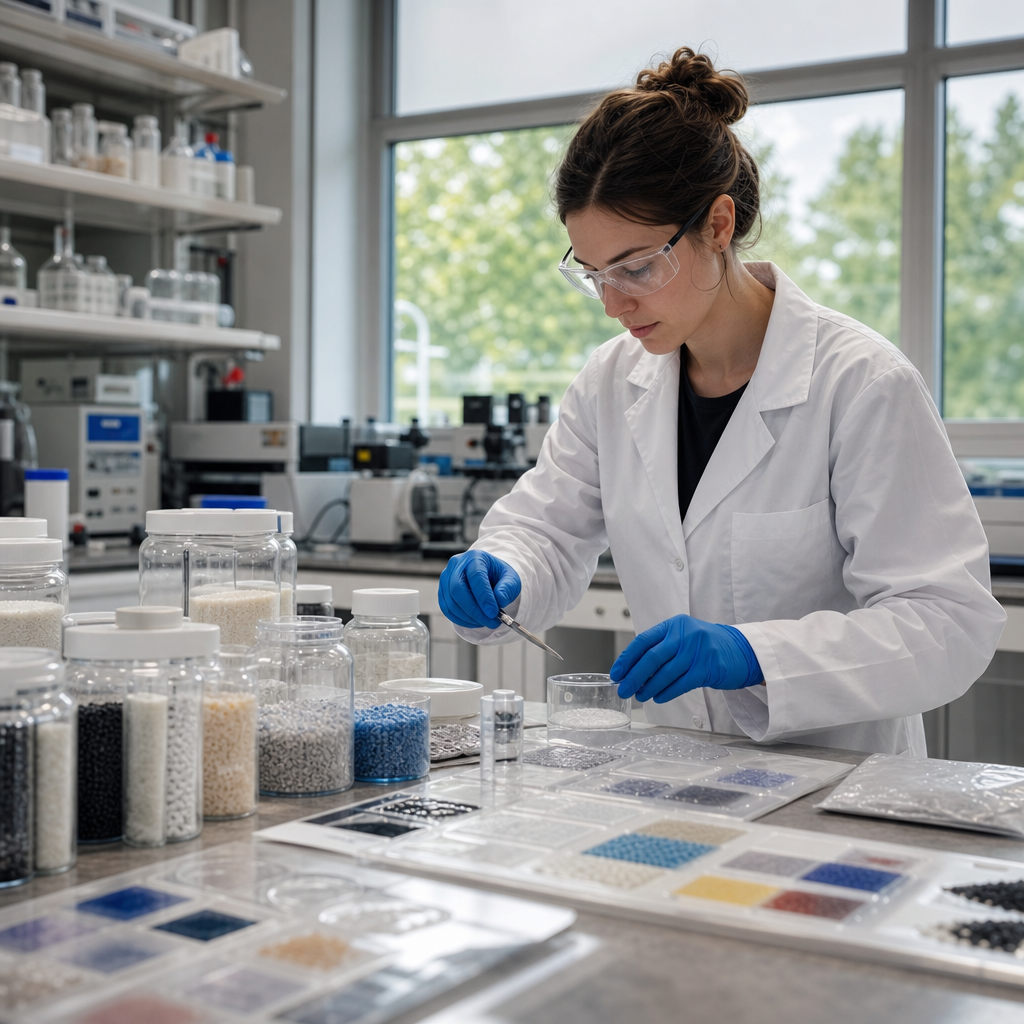
Industry partnerships shape modern polymer education by connecting classroom theory with the materials, equipment, compliance standards, and production realities graduates will face on the job. In polymer education, partnerships usually mean structured collaboration between universities, technical colleges, training providers, resin suppliers, compounders, equipment manufacturers, testing laboratories, and end-use brands. Courses and training programs improve when these partners help design curricula, donate instrumentation, host internships, share case studies, and identify skills gaps. I have seen this directly in program reviews where faculty taught sound fundamentals, yet employers still struggled to hire people who understood extrusion troubleshooting, rheology interpretation, design for recycling, or statistical process control. That disconnect matters because polymers sit at the center of packaging, automotive, medical devices, construction, electronics, and energy systems. If educational resources are meant to prepare learners for real work, they must reflect how polymer materials are selected, processed, tested, regulated, and improved in industry today.
Strong industry collaboration also turns a general courses and training programs page into a practical learning hub. Students and working professionals do not just want a list of classes; they want to know which programs build employable skills, which credentials are respected, how hands-on labs differ from online modules, and where partnerships create measurable value. For polymer education, that value usually appears in faster curriculum updates, better access to pilot-scale equipment, stronger safety culture, clearer pathways into internships and apprenticeships, and more relevant exposure to sustainability, quality systems, and product development. The most effective partnerships do not replace academic independence. They sharpen it by giving educators current information about materials markets, additive trends, process automation, life-cycle assessment, and regulatory expectations from organizations such as ASTM International, ISO, and UL. This article explains how industry partnerships strengthen polymer courses and training programs, what forms those collaborations take, how institutions can evaluate them, and why this model should guide educational resources across the field.
Why industry partnerships matter in polymer courses and training programs
Polymer science and polymer engineering evolve quickly because the field is driven by both fundamental materials research and commercial manufacturing pressure. A student can learn polymer chemistry, morphology, crystallinity, viscoelasticity, and degradation mechanisms in a classroom, yet still be underprepared for a plant environment where melt flow index, moisture management, screw design, residence time, and scrap reduction determine product quality and profit. Partnerships matter because they bridge that gap. When processors, resin producers, and tooling companies advise on curriculum, they help educators prioritize the competencies graduates actually use: material selection, process optimization, failure analysis, testing interpretation, documentation, and root-cause problem solving.
In practice, partnerships improve relevance at three levels. First, they update content. For example, a compounding company may help a college add modules on glass fiber dispersion, talc-filled polypropylene behavior, or compatibilizers for recycled blends. Second, they improve delivery. An equipment manufacturer might support training on injection molding machine controls, data logging, or mold temperature management, making lessons less abstract. Third, they improve outcomes. Internship pipelines and capstone sponsorships often increase placement rates because employers get to evaluate students in realistic settings before graduation. In many programs I have reviewed, employer feedback changed not only course topics but also how those topics were assessed, moving students from memorization toward lab reports, processing trials, and technical presentations.
How partnerships shape curriculum design and course content
The best polymer curricula are not generic. They are structured around competencies that map to real roles in materials development, manufacturing, testing, quality, and technical sales. Industry partners contribute by identifying which skills are foundational and which are emerging. In an associate program focused on manufacturing, that may mean more time on extrusion, injection molding, safety, and process troubleshooting. In a university program, it may mean deeper work on rheology, polymer blends, finite element analysis, design of experiments, and characterization methods such as DSC, TGA, FTIR, and DMA. The point is not to let industry dictate every topic. The point is to ensure that scientific depth and applied relevance reinforce each other.
Partnerships are especially useful when building courses and training programs around current market shifts. Sustainability is a clear example. Today, polymer education must address mechanical recycling, chemical recycling, biodegradation claims, PCR content, mono-material design, barrier tradeoffs, and life-cycle thinking. These topics are difficult to teach well without industry input because commercial constraints matter. A packaging converter can explain why a theoretically recyclable structure still fails sortation or sealing requirements. A medical manufacturer can show how sterilization and biocompatibility limit material substitution. A recycler can illustrate contamination challenges that textbooks often treat too simply. This kind of input produces educational resources that answer the questions learners and employers actually ask.
Advisory boards are often the formal mechanism. Effective boards include resin suppliers, processors, OEMs, testing labs, and alumni in technical roles. They review syllabi, recommend software and instrumentation, and flag outdated assumptions. For example, if local employers are automating quality systems, then courses should cover machine data, traceability, SPC charts, and corrective action workflows, not only manual inspection. If additive manufacturing is becoming relevant, students should understand feedstock behavior, thermal history, anisotropy, and qualification challenges. Curriculum designed with this level of industry engagement becomes more resilient because it can adapt as technologies and labor needs change.
Hands-on training, equipment access, and work-based learning
Polymer education is unusually dependent on hands-on experience because processing conditions strongly affect final properties. Students learn more from seeing a short shot, burn mark, weld line, die swell issue, or moisture-related splay than from reading definitions alone. Industry partnerships make this possible by providing equipment, consumables, software, and direct exposure to production environments. A training center with an injection press, single-screw extruder, twin-screw compounding line, tensile tester, and microscopy capability can teach far more effectively than one limited to lectures.
Equipment donations and shared labs are common models, but access must be paired with instructional design. I have seen excellent results when companies not only supplied machines but also helped faculty build standard operating procedures, maintenance schedules, and troubleshooting exercises. Students then learned how to set process windows, collect data, compare parts to specifications, and write corrective actions. That mirrors plant reality. Likewise, internships, co-ops, and apprenticeships are not side benefits; they are central training mechanisms. In a plastics plant, learners encounter line startup, changeovers, scrap analysis, quality audits, and team communication under production pressure. Those experiences teach professional judgment in ways classrooms cannot fully replicate.
| Partnership model | How it supports education | Typical learner benefit |
|---|---|---|
| Advisory board participation | Updates curriculum and identifies skills gaps | More relevant course content and assessments |
| Equipment donation or shared lab | Provides access to processing and testing tools | Hands-on experience with industry-standard systems |
| Internships and co-ops | Places students in real manufacturing or R&D settings | Work experience, networking, and stronger employability |
| Guest lectures and case studies | Brings current technical and business issues into class | Better understanding of commercial constraints |
| Sponsored projects | Frames learning around actual product or process problems | Portfolio-quality problem solving and teamwork practice |
For online and hybrid training, partnerships still matter. Companies can provide plant videos, digital twins, machine data sets, and remote troubleshooting scenarios. That is valuable for incumbent workers who need upskilling without leaving full-time jobs. Microcredentials in extrusion fundamentals, polymer testing, recycling operations, or compounding can be highly effective when the content is built with employer input and assessed through applied tasks rather than quizzes alone.
Research collaboration, faculty development, and innovation exposure
Another major benefit of industry partnerships in polymer education is that they keep instructors current. Faculty development is often overlooked in discussions about courses and training programs, yet it directly affects program quality. When instructors spend time in industrial labs, processing plants, or supplier technical centers, they return with better examples, stronger process intuition, and a more realistic understanding of constraints such as throughput, cost, validation, and customer specifications. That perspective improves teaching immediately.
Collaborative research also benefits students, especially in four-year and graduate programs. When companies sponsor projects on impact modification, flame retardancy, lightweighting, additive packages, or recycled-content performance, students learn how technical questions are framed in commercial settings. They must define acceptance criteria, document methods carefully, and communicate results to nonacademic audiences. Those are essential professional skills. Research partnerships can also expose learners to specialized tools they might not otherwise access, including capillary rheometers, cone calorimeters, micro-CT scanning, and advanced spectroscopy.
Innovation exposure matters because polymer careers increasingly cross disciplinary boundaries. Battery housings, electric vehicle components, medical disposables, high-barrier films, and composite structures all require understanding not only materials but also regulations, processing economics, and end-of-life considerations. Partnerships with converters, brand owners, and recyclers help students see those intersections early. They also reveal tradeoffs. A material with excellent stiffness may process poorly. A sustainable resin option may require drying, redesign, or slower cycle times. Training that includes these realities produces graduates who can make better decisions faster.
Building a strong training ecosystem for students and working professionals
A sub-pillar hub on courses and training programs should serve more than traditional degree seekers. The polymer workforce includes operators, technicians, quality specialists, lab analysts, process engineers, product developers, maintenance staff, and managers moving into technical roles. Industry partnerships help educational institutions create stacked pathways that meet these different needs. A student might begin with a certificate in plastics processing, move into an associate degree, then complete a bachelor’s program with employer tuition support. A working professional might take short courses in design of experiments, polymer failure analysis, or recycling system design to advance within an existing role.
The most effective ecosystems offer multiple formats: credit-bearing courses, noncredit workshops, vendor certifications, boot camps, evening labs, and custom employer cohorts. They also align terminology and outcomes so learners can see progression. For example, an introductory course may teach polymer families, basic processing methods, and safety. The next layer may add rheology, thermal analysis, mold design fundamentals, and quality tools such as Cp, Cpk, and control charts. Advanced training may focus on compounding, simulation, regulatory compliance, or sustainability metrics. When partners help map these pathways, training becomes easier to navigate and easier for employers to trust.
Professional associations and standards bodies play an important role in this ecosystem. Educational resources are stronger when they reference methods and vocabulary recognized across the field. Testing instruction should align with ASTM or ISO procedures where appropriate. Safety training should reflect machine guarding, lockout/tagout, ventilation, and material handling practices used in regulated environments. Quality modules should teach documentation discipline and deviation management, especially for medical, aerospace, or automotive supply chains. Partnerships make it more likely that these expectations are built into courses rather than treated as optional extras.
Challenges, safeguards, and how to evaluate partnership quality
Industry partnerships are valuable, but they are not automatically effective. The biggest risk is narrowness. If one company dominates a program, students may receive training that is too specific to a single machine platform, resin family, or business model. Good programs prevent this by diversifying partners and protecting academic oversight. Faculty should teach principles first, then use partner examples to show application. Another challenge is resource imbalance. Donated equipment can become a burden if institutions lack maintenance budgets, spare parts, calibration support, or trained staff. A machine that cannot run consistently does not strengthen education.
Programs should evaluate partnerships with clear metrics. Useful measures include internship conversion rates, graduate placement, employer satisfaction, certification pass rates, lab utilization, curriculum revision frequency, and student performance on applied assessments. Qualitative feedback matters too. Are students learning to troubleshoot, document, and communicate, or only to follow preset instructions? Do working professionals report immediate job impact after short courses? Are sustainability and recycling topics treated with technical rigor rather than marketing language? Strong partnerships improve these outcomes over time.
Institutions should also formalize expectations. Memoranda of understanding, advisory board charters, conflict-of-interest policies, and equipment support agreements reduce confusion and protect program quality. That level of structure builds trust with students, employers, and accrediting bodies. In my experience, the best partnerships are consistent rather than flashy. They involve regular curriculum review, recurring placements, shared problem solving, and mutual accountability. That is what turns collaboration into durable educational value.
Industry partnerships are essential to polymer education because they make courses and training programs more current, more practical, and more valuable in the labor market. They help educators teach the science of polymers alongside the realities of processing, testing, compliance, sustainability, and product performance. They improve curriculum design, expand access to equipment and internships, strengthen faculty development, and create learning pathways for both students and working professionals. Just as important, they help educational resources answer the questions learners actually have: which skills matter, which programs build them, and how training connects to real careers.
For an Educational Resources hub, this topic should anchor related articles on certificates, degrees, online learning, lab training, apprenticeships, recycling education, and professional development. Readers looking for polymer courses need more than program lists; they need a framework for judging quality. Partnerships provide that framework when they are broad, well-managed, and tied to measurable outcomes. If you are building, choosing, or improving a polymer training program, start by examining the strength of its industry connections and the evidence behind them. That is where relevant polymer education begins, and where better workforce outcomes follow.
Frequently Asked Questions
1. What does an industry partnership in polymer education actually involve?
In polymer education, an industry partnership usually involves a structured, ongoing collaboration between educators and companies that operate across the plastics, elastomers, composites, and broader materials value chain. That can include resin suppliers, compounders, machinery manufacturers, molders, extrusion companies, testing laboratories, recycling firms, regulatory specialists, and brand owners. Rather than serving as a one-time sponsor, these partners contribute practical insight into what students need to know to succeed in real manufacturing and product-development environments.
In practice, partnerships may support curriculum design, laboratory upgrades, guest lectures, plant tours, internships, apprenticeships, capstone projects, equipment donations, and access to industry-grade software or testing methods. They can also help schools align course content with current processing technologies, quality standards, sustainability targets, and compliance expectations. For example, a program teaching polymer processing may work with equipment manufacturers to expose students to modern injection molding, extrusion, or compounding systems, while testing labs may help students understand material characterization, failure analysis, and verification procedures.
The most effective partnerships are not purely transactional. They create a feedback loop: educators provide foundational science and structured learning, while industry partners highlight changing workforce needs, new materials, manufacturing constraints, and customer expectations. This helps ensure that polymer education reflects both core theory and the realities graduates will encounter on the job, from troubleshooting process variation to selecting materials under cost, performance, and regulatory constraints.
2. Why are industry partnerships so important for modern polymer education?
Industry partnerships are important because polymer science and manufacturing evolve quickly, and classrooms alone cannot always keep pace with the latest materials, equipment, regulations, and processing methods. Students need more than textbook knowledge of polymer chemistry or material behavior; they also need to understand how polymers perform in real production settings, how specifications are interpreted, how defects are diagnosed, and how decisions are made when cost, quality, speed, and compliance all matter at once. Industry collaboration helps bridge that gap.
These partnerships make learning more relevant by connecting theory to application. A student may learn about crystallinity, rheology, additives, degradation, or thermal transitions in class, but the educational value deepens when those concepts are tied directly to injection molding conditions, extrusion stability, product durability, recyclability, or regulatory approval requirements. Industry input also helps instructors emphasize the skills employers actually seek, such as process optimization, data interpretation, root-cause analysis, documentation, safety awareness, and familiarity with quality systems.
Another major benefit is workforce readiness. Graduates who have interacted with industry partners often enter the job market with a clearer understanding of manufacturing culture, production timelines, customer expectations, and cross-functional teamwork. They are more likely to recognize the connections among materials selection, tooling, testing, sustainability, and end-use performance. In a field as applied as polymer technology, that practical awareness is highly valuable. Strong partnerships ultimately benefit everyone: students gain employable skills, schools improve program quality, and employers gain access to better-prepared talent.
3. How do industry partners influence polymer curriculum and hands-on training?
Industry partners often have a direct and meaningful impact on what is taught and how students learn. One of the most valuable contributions they make is helping educators update curriculum so it reflects current industrial practice. In polymer education, this may mean advising on course topics such as material selection, compounding, extrusion, injection molding, blow molding, thermoforming, composites processing, polymer testing, recycling systems, regulatory compliance, and sustainable product development. Their input helps programs avoid becoming too theoretical or outdated.
Hands-on training is where partnerships often make the biggest difference. Many schools face budget limits when trying to maintain current equipment or specialized testing capabilities. Industry partners can help by donating machinery, providing sample materials, sponsoring lab spaces, sharing standard operating procedures, or enabling student access to advanced equipment that mirrors real workplace conditions. That exposure matters because students learn best when they can apply concepts such as melt flow, drying requirements, shrinkage, viscosity control, dispersion, or mechanical property testing in practical settings.
Partners also shape learning through case studies and project-based work. Instead of solving abstract classroom problems, students may be asked to improve a process, compare resin options for a specific product, investigate a product failure, or assess the impact of recycled content on performance and manufacturability. This type of training develops judgment, not just knowledge. It teaches students how to balance science with production realities, including throughput, scrap rates, quality variation, equipment limitations, customer specifications, and regulatory requirements. As a result, curriculum becomes more aligned with the skills needed in actual polymer careers.
4. What are the main benefits of industry partnerships for students pursuing polymer careers?
For students, the most immediate benefit is stronger career preparation. Industry partnerships give learners exposure to the tools, materials, terminology, and workflows they are likely to encounter after graduation. That can reduce the transition time between school and employment because students are already familiar with common industrial expectations, from documentation and process control to safety procedures and quality standards. In a technical field like polymer manufacturing, that practical familiarity can significantly improve confidence and employability.
Partnerships also expand access to experiential learning opportunities. Internships, cooperative education placements, apprenticeships, site visits, and industry-sponsored projects allow students to see how polymer science translates into product design, manufacturing efficiency, testing protocols, and customer requirements. These experiences often help students refine their interests. A student who begins with a general interest in materials may discover a preference for compounding, analytical testing, tooling, sustainability, recycling, product development, or manufacturing operations after direct industry exposure.
Another important advantage is networking. Students who interact with professionals, guest speakers, lab partners, and internship supervisors begin building relationships early in their careers. Those connections can lead to mentorship, job opportunities, references, and a better understanding of the range of roles available in the polymer sector. Just as importantly, partnerships help students see the broader industry ecosystem. They learn that polymer careers are not limited to one job title or one plant environment; opportunities exist in raw materials, additives, equipment, testing, compliance, application engineering, research and development, and end-use product manufacturing. That wider perspective makes career planning more informed and strategic.
5. How can schools build effective industry partnerships that genuinely improve polymer education?
Effective industry partnerships begin with shared goals and a clear understanding of mutual value. Schools need to identify what their students and programs truly need, whether that is curriculum guidance, updated lab equipment, internship pipelines, access to testing services, or subject-matter expertise in areas like sustainability, regulatory compliance, or advanced processing. Industry partners, in turn, are usually looking for a better-prepared workforce, stronger community engagement, and opportunities to help shape future talent. When both sides define expectations early, partnerships tend to be more durable and productive.
Consistency is essential. Strong collaborations are built through advisory boards, regular review meetings, ongoing communication, and measurable outcomes rather than occasional guest talks alone. For example, a polymer program may establish an industry advisory committee that reviews course content annually, identifies emerging skill gaps, and recommends updates based on changes in equipment, market demands, or legislation. Schools can also track outcomes such as internship placements, graduate employment, student certifications, lab usage, and employer satisfaction to evaluate whether the partnership is actually improving educational quality.
It is also important for schools to involve a range of partners rather than relying on a single company perspective. Polymer education benefits when input comes from multiple parts of the value chain, including material suppliers, processors, machinery companies, testing labs, recyclers, and end-use manufacturers. This helps students understand not only isolated technical tasks but also the full lifecycle of polymer materials and products. When partnerships are broad, active, and aligned with learning objectives, they do far more than support a program financially; they help create a modern polymer education that is relevant, practical, and responsive to real industry needs.