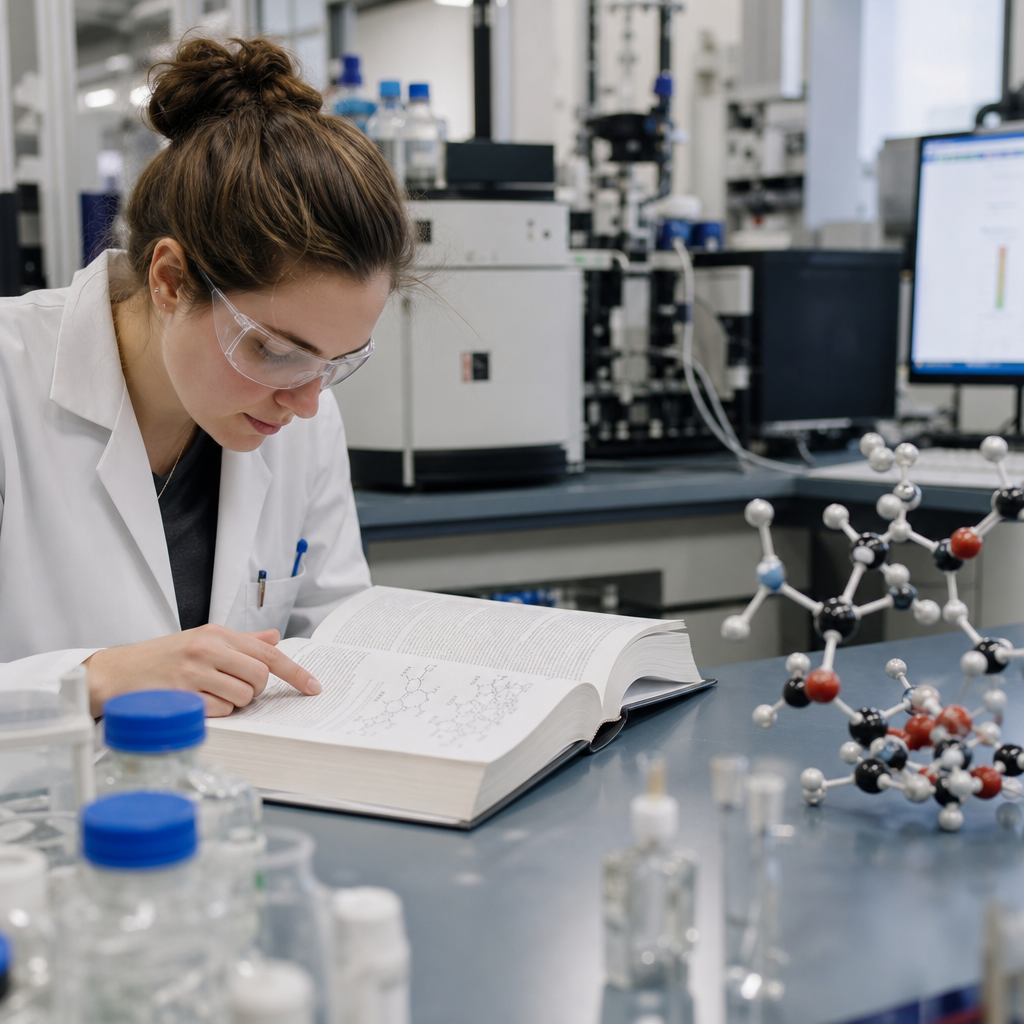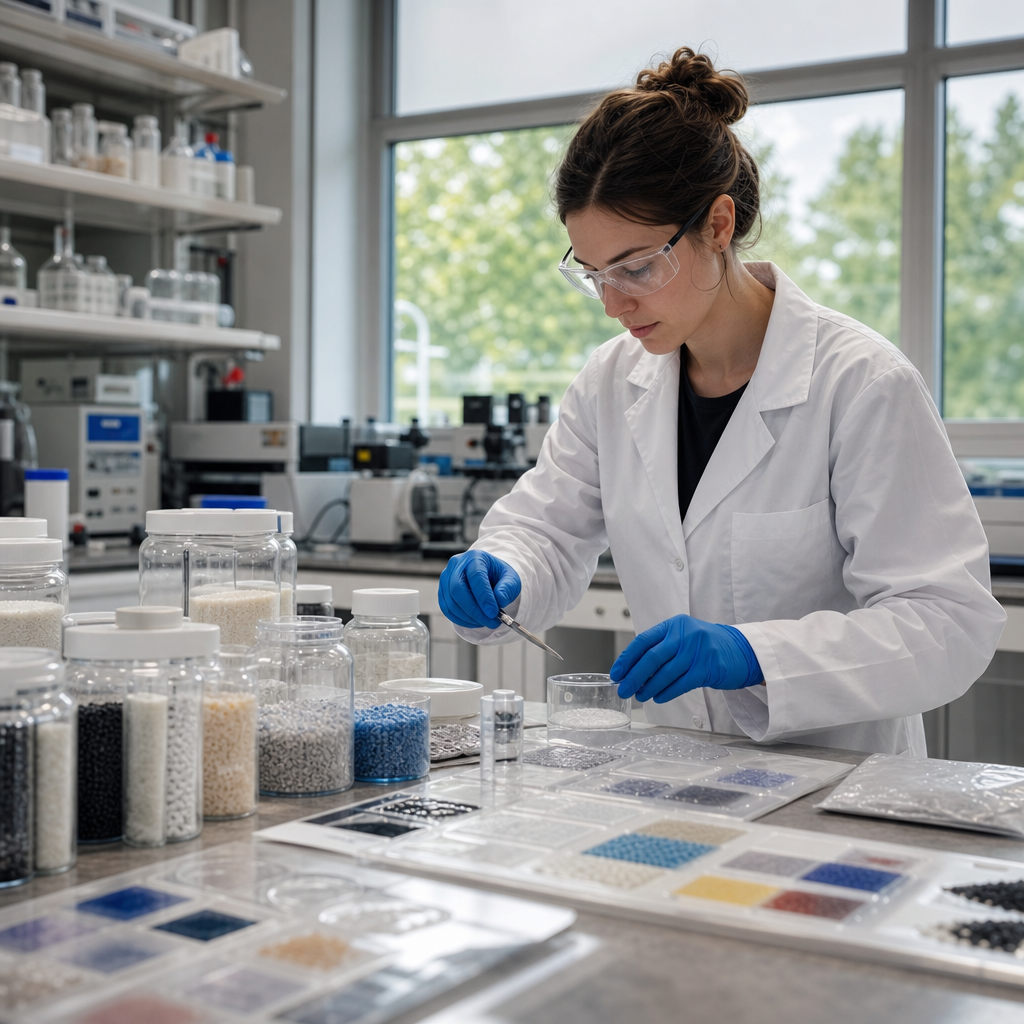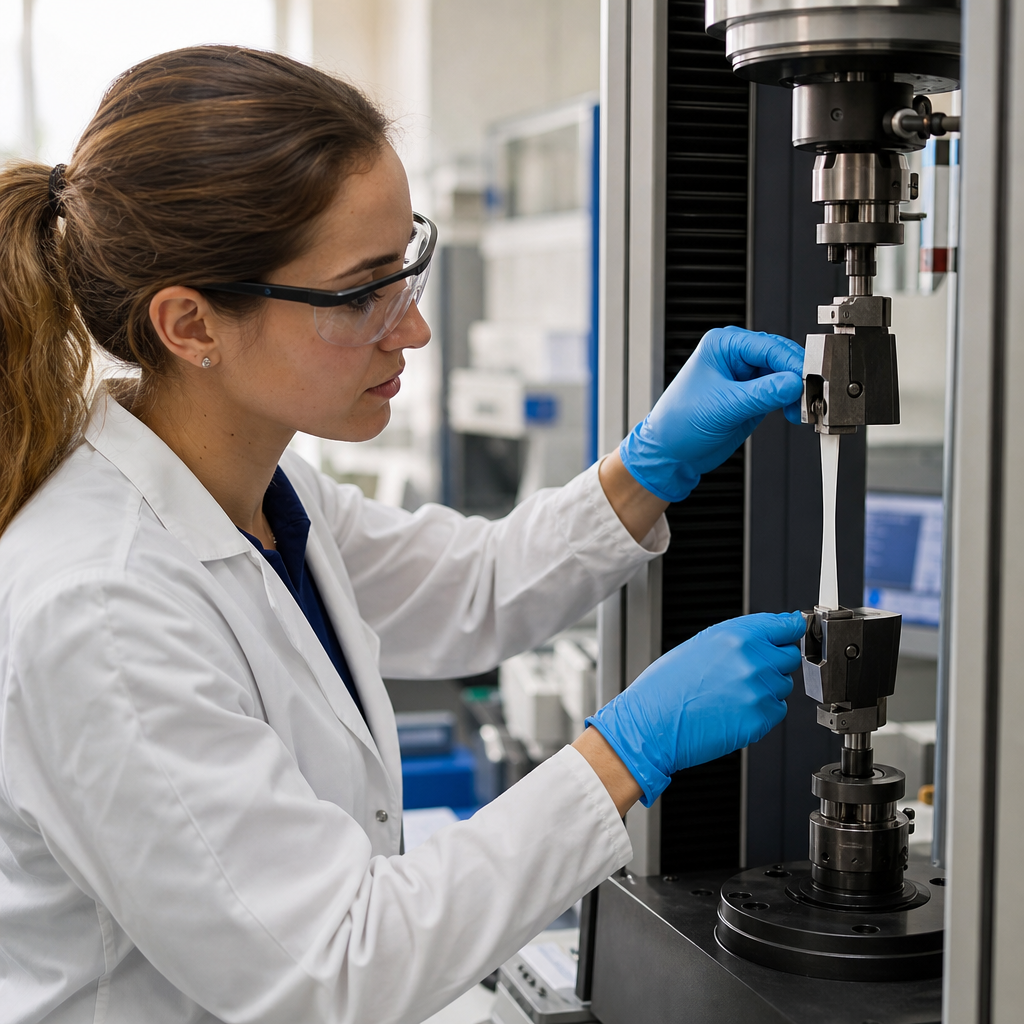
Developing expertise in polymer testing requires more than learning instrument names or memorizing ASTM methods; it requires a structured understanding of materials science, laboratory practice, standards, and the training paths that turn theory into reliable judgment. Polymer testing is the measurement and evaluation of plastics, elastomers, composites, films, foams, adhesives, and coatings to determine properties such as strength, thermal stability, viscosity, chemical resistance, and long-term durability. In practice, expertise means knowing not only how to run tensile, DSC, FTIR, rheology, impact, and flammability tests, but also how specimen preparation, conditioning, calibration, and data interpretation affect results. I have seen capable technicians produce misleading data simply because they overlooked moisture conditioning for nylon or used the wrong crosshead speed for a tensile method. That is why courses and training programs matter. They shorten the learning curve, reduce costly errors, support compliance with ISO 17025 and customer requirements, and help professionals move from button-pushing to defensible technical decision-making. For companies, stronger testing capability improves product development, failure analysis, supplier qualification, and quality control. For individuals, it opens paths into laboratory operations, R&D, quality engineering, regulatory work, and technical sales. This guide explains how to build that expertise through formal education, short courses, hands-on lab training, certification-oriented learning, and continuous professional development, with a focus on the courses and training programs that create real competence rather than superficial familiarity.
Start with the knowledge foundation every polymer testing professional needs
The first step is building a foundation in polymer science and measurement principles. If a learner does not understand polymer morphology, crystallinity, glass transition, molecular weight distribution, viscoelasticity, and degradation mechanisms, test results remain abstract numbers. A DSC curve only becomes useful when you can connect melting behavior to processing history or identify oxidation onset as an indicator of thermal stability. In my experience onboarding new lab staff, the strongest performers are not always those with the most years in a lab; they are the ones who understand why the polymer behaves as it does under heat, stress, strain, solvent exposure, or UV radiation.
For that reason, the best training path begins with coursework in materials science, polymer chemistry, statistics, and quality systems. University modules in plastics engineering or materials engineering provide the most complete base, but many professionals enter the field from chemistry, mechanical engineering, or manufacturing backgrounds and fill gaps through targeted short courses. Good introductory programs cover polymer families, additives, processing methods, property relationships, common test standards, uncertainty, and safe lab practice. Learners should also study basic metrology, because polymer testing is highly sensitive to specimen dimensions, conditioning time, machine alignment, and environmental control.
Statistics is especially important and often undertrained. Real expertise includes repeatability, reproducibility, outlier review, control charts, gauge capability, and method validation. When a lot fails Izod impact by a narrow margin, the expert asks whether the result reflects a material change, specimen notch quality, machine verification, or normal method variability. Training that includes practical statistics produces better analysts than training focused only on operating instruments.
Choose courses and training programs that match the skills employers actually need
Not all polymer testing courses deliver equal value. Some provide broad awareness for nontechnical teams, while others prepare analysts to run accredited methods independently. A useful way to select training is to map it against job outcomes. Entry-level technicians need specimen preparation, conditioning, SOP adherence, safety, traceability, and core mechanical and thermal tests. Mid-level analysts need troubleshooting, interpretation, method selection, and cross-technique correlation. Senior staff need validation, uncertainty estimation, root-cause analysis, audit readiness, and the ability to advise product teams.
The most effective programs combine theory, standards, instrument operation, and supervised practice. A lecture-only class on rheology rarely builds confidence unless learners also run frequency sweeps, compare capillary and rotational rheometer data, and relate viscosity behavior to processing. Likewise, a tensile testing course should address ASTM D638 and ISO 527 differences, specimen types, strain measurement, grip selection, and failure mode interpretation. When evaluating a provider, look for instructors with direct laboratory experience, access to current instruments, and examples drawn from real products such as medical tubing, automotive housings, barrier films, or pressure-sensitive adhesives.
| Training type | Best for | Main benefit | Common limitation |
|---|---|---|---|
| University degree modules | Early-career professionals | Strong scientific foundation | Less method-specific lab depth |
| Vendor instrument courses | Analysts using specific equipment | Fast operational competence | Can be narrow and brand-specific |
| Standards-based short courses | QC and compliance teams | Method accuracy and audit support | Limited broader materials context |
| In-house lab mentoring | Technicians and new hires | Direct relevance to actual workflows | Quality depends on internal experts |
| Professional society workshops | Mid-career specialists | Applied case studies and networking | May assume prior knowledge |
A strong hub for courses and training programs should guide readers across these options rather than present one path as universal. The right mix depends on industry, materials, risk level, and career stage.
Build practical competence in core polymer testing methods
Expertise develops when training is organized around major testing domains. Mechanical testing usually comes first: tensile, compression, flexural, peel, shear, tear, hardness, coefficient of friction, and impact. These methods support product qualification and incoming quality control across packaging, consumer goods, automotive parts, and construction products. A good course teaches more than sequence steps. It explains specimen anisotropy from molding or extrusion, notch sensitivity, strain-rate effects, and the consequences of testing a conditioned elastomer at the wrong temperature.
Thermal analysis is the next pillar. Differential scanning calorimetry, thermogravimetric analysis, dynamic mechanical analysis, and thermomechanical analysis reveal transitions, filler content, cure behavior, oxidation resistance, and dimensional response to heat. Training should include baseline correction, pan selection, purge gas choice, thermal history, and interpretation of overlapping events. I have repeatedly found that analysts improve fastest when they compare thermal data against mechanical performance and processing records rather than reading curves in isolation.
Spectroscopy and chemical analysis are equally important. FTIR, Raman, chromatography, and wet chemistry support raw material identification, contamination analysis, additive verification, and failure investigations. A technician who can match an FTIR spectrum may still misidentify a blend unless they understand library limitations and sample preparation artifacts. Courses that use real unknowns are more valuable than slide-based introductions.
Rheology and flow testing deserve dedicated study because they connect testing directly to processing. Melt flow index is widely used, but deeper expertise requires capillary rheometry, rotational rheometry, time-temperature superposition, and viscoelastic models. For processors, this knowledge helps explain die swell, sharkskin, sag resistance, and lot-to-lot variability. Environmental and durability testing rounds out the picture through weathering, chemical resistance, permeability, stress cracking, flammability, and aging studies. These areas are especially important in medical, aerospace, wire and cable, and outdoor applications where failure consequences are significant.
Learn standards, accreditation, and quality systems the right way
Polymer testing competence is inseparable from standards literacy. Professionals must know how to find, read, apply, and compare methods from ASTM, ISO, UL, IEC, and industry-specific customer standards. Training programs should teach the structure of a method, normative references, apparatus requirements, specimen rules, conditioning parameters, calculations, precision statements, and reporting obligations. This matters because small departures from the method can invalidate comparisons. Testing polypropylene to ASTM D638 with a modified gauge length or unreported conditioning change can create data that look precise but are not comparable.
For laboratories supporting regulated or high-risk sectors, training should also cover ISO 17025, document control, corrective action, traceability, equipment calibration, proficiency testing, and uncertainty estimation. In accredited labs, analysts must understand why balance calibration, temperature mapping, and reference material checks are not administrative burdens but evidence that results are technically valid. One of the clearest signs of mature expertise is the ability to explain method limitations during audits or customer reviews without becoming defensive.
Courses in root-cause analysis are also valuable. When results drift, experts examine operator technique, specimen machining, humidity exposure, software settings, verification records, and material history before blaming the resin. Structured approaches such as 5 Whys, fishbone diagrams, and failure mode review help laboratories solve recurring problems efficiently.
Use a blended learning path: classroom, instrument training, and mentored lab time
The fastest route to expertise is blended learning. Formal courses provide the conceptual framework, instrument vendor training teaches platform-specific operation, and mentored lab time converts both into judgment. I recommend a progression that starts with foundational coursework, moves into method-specific training, and then requires supervised execution against written competency checklists. A new analyst should not be signed off on DSC, tensile, or FTIR simply because they attended a class; they should demonstrate independent setup, verification, safe operation, data review, and report generation across multiple sample types.
Mentoring matters because polymer testing includes tacit knowledge rarely captured fully in manuals. Experienced analysts notice warped specimens, clamp slippage, noisy baselines, moisture uptake, or operator-induced preloading before those issues ruin a dataset. Good training programs deliberately expose learners to bad data and troubleshooting scenarios. For example, they may compare brittle tensile failures caused by low-temperature conditioning against failures caused by knit lines, or show how residual solvent distorts TGA mass loss behavior.
Digital learning has improved access, especially for distributed teams, but it works best when paired with labs, recorded instrument demonstrations, and applied assignments. A short online course can effectively teach DMA concepts, yet interpreting storage modulus and tan delta in a filled elastomer still benefits from coached discussion. Companies that rely only on self-paced modules usually develop uneven capability across shifts and sites.
Plan career-stage training from beginner to specialist
Beginners should prioritize safety, specimen handling, conditioning, dimensional measurement, SOP discipline, and a small group of high-frequency methods. For many labs, that means tensile, impact, hardness, melt flow, density, DSC, and FTIR. Once these are stable, the next layer should include statistics, troubleshooting, and basic failure analysis. At this stage, cross-training between QC and R&D is valuable because it teaches both routine control and exploratory investigation.
Mid-career professionals benefit most from specialization. Someone supporting packaging may need deeper expertise in seal strength, puncture, permeability, migration, and coefficient of friction. An automotive lab may focus on DMA, weathering, odor and fogging, scratch resistance, and flammability. Medical polymer testing often requires biocompatibility awareness, extractables and leachables interfaces, sterilization effects, and stricter change control. Training becomes more powerful when it mirrors these application contexts.
Senior specialists and lab leaders should study method development, validation plans, uncertainty budgets, LIMS workflows, CAPA systems, and customer communication. They are often responsible for translating test data into business decisions, which requires both technical depth and clarity. Expertise at this level means knowing when a faster screening method is acceptable and when only a full standardized method will support release, qualification, or litigation.
Evaluate training results and keep expertise current
The value of polymer testing training should be measured. Useful metrics include reduced retest rates, fewer out-of-specification investigations caused by procedural errors, shorter onboarding time, improved audit findings, and stronger correlation between internal and external lab data. Competency matrices, blind sample studies, and periodic direct observation are more reliable than course completion certificates alone. If a training program cannot show improved data quality, it needs revision.
Ongoing development is essential because materials, standards, and instruments change. Recycled content, bio-based polymers, multilayer structures, and advanced composites have introduced new testing challenges, from contamination signatures to anisotropic behavior and nontraditional failure modes. Standards are revised, software platforms change, and customers increasingly expect digital traceability. Professionals should refresh their knowledge through standards updates, supplier seminars, interlaboratory studies, technical conferences, and advanced workshops.
The best way to develop expertise in polymer testing is to treat learning as a deliberate system rather than a one-time event. Build the science foundation, choose courses and training programs aligned to real job tasks, practice under supervision, learn standards thoroughly, and measure whether training improves data quality. That approach creates analysts who can defend results, solve problems, and support innovation with confidence. If you are building this capability for yourself or your team, start by mapping required methods, current skill gaps, and the training format that closes them fastest.
Frequently Asked Questions
1. What foundational knowledge do I need to develop real expertise in polymer testing?
Real expertise in polymer testing starts with understanding the material itself before focusing on the test method. That means building a strong foundation in polymer chemistry, materials science, and structure-property relationships. You should know how molecular weight, crystallinity, crosslink density, additives, fillers, plasticizers, moisture, and processing history influence performance. A technician or engineer who understands why a material behaves a certain way will make far better decisions than someone who only knows how to run an instrument.
It is also important to understand the main polymer families and how they differ in testing behavior. Thermoplastics, thermosets, elastomers, composites, films, foams, adhesives, and coatings each respond differently under mechanical, thermal, rheological, and environmental conditions. For example, a tensile test on a rigid molded plastic requires a different mindset than evaluating creep in a film, dynamic response in an elastomer, or cure behavior in an adhesive. Developing expertise means learning to connect the material type, end-use environment, and likely failure modes to the most meaningful test approach.
Beyond theory, you need fluency in core laboratory concepts such as sample conditioning, specimen preparation, calibration, measurement uncertainty, repeatability, reproducibility, and data interpretation. In polymer testing, small changes in temperature, humidity, specimen thickness, molding history, or test speed can significantly affect results. Experts know that good testing is not just about obtaining a number; it is about understanding whether that number is valid, representative, and useful for design, quality control, regulatory review, or failure analysis.
A practical learning path usually includes coursework in chemistry or materials engineering, hands-on lab exposure, and direct study of standards such as ASTM, ISO, or other industry-specific methods. Over time, this base should expand into statistics, quality systems, and instrument-specific knowledge. In short, the strongest foundation combines scientific principles, laboratory discipline, and the ability to interpret results in context rather than in isolation.
2. Which laboratory skills and test methods are most important to learn first in polymer testing?
The most important skills to learn first are the ones that teach you how polymers respond under common service and manufacturing conditions. Mechanical testing is usually a good starting point because it introduces fundamental performance concepts such as tensile strength, elongation, modulus, flexural behavior, impact resistance, compression, hardness, tear, and fatigue. These tests help you understand how a polymer carries load, deforms, and fails. They also teach specimen handling, alignment, grip selection, rate control, and the effect of geometry on measured properties.
Thermal analysis is another critical area because temperature has a major influence on polymer behavior. Learning techniques such as differential scanning calorimetry, thermogravimetric analysis, dynamic mechanical analysis, and heat deflection or softening-related methods helps you evaluate melting behavior, glass transition, oxidation stability, decomposition, cure progression, and viscoelastic response. These methods are especially valuable because many polymers that appear similar at room temperature behave very differently across a realistic temperature range.
Rheology and viscosity testing are also highly important, particularly if you work with processing, formulation, or quality control. Flow behavior affects molding, extrusion, coating, adhesive application, and end-use consistency. A developing expert should understand melt flow behavior, rotational rheometry concepts, cure kinetics in reactive systems, and how shear, temperature, and formulation changes alter processing performance. This area connects testing directly to manufacturing outcomes, which is one reason it is so valuable.
Equally important are the less glamorous but essential laboratory skills that support reliable results. These include specimen cutting and molding, conditioning, instrument verification, calibration checks, maintaining traceability, following written procedures, documenting deviations, and recognizing bad data before it becomes a bad decision. Beginners often focus only on running the machine, but experienced polymer testers know that sample preparation and method control often matter as much as the instrument itself. If you learn the fundamentals of mechanics, thermal behavior, rheology, and disciplined lab practice early, you will build a strong platform for more advanced work in composites, durability, failure analysis, and specialized regulatory testing.
3. How important are ASTM, ISO, and other standards in becoming an expert in polymer testing?
Standards are central to becoming a true expert because they provide the framework for consistency, comparability, and credibility. In polymer testing, results are only meaningful if the method is understood and applied correctly. ASTM, ISO, and other recognized standards define how specimens are prepared, conditioned, measured, tested, and reported. They also establish details such as geometry tolerances, environmental requirements, test speeds, calculation methods, and acceptance criteria where applicable. Without standards, two laboratories could test the same material and generate results that appear contradictory simply because the methods differed.
However, expertise does not mean memorizing standard numbers. It means understanding what a standard is designed to measure, where its limitations are, and how closely it matches the real-world question being asked. For example, a standard tensile test can provide useful comparative data, but it may not predict long-term performance in a chemically aggressive environment or under cyclic loading. An expert knows how to use standards appropriately, when to supplement them with custom protocols, and how to explain the difference between specification compliance and actual service behavior.
Standards knowledge also supports communication with customers, auditors, suppliers, regulators, and internal stakeholders. When you can explain why a result was generated under a specific ASTM or ISO method, what the conditioning requirements were, and how the data should be interpreted, you become a more trusted technical resource. This is particularly important in industries such as medical devices, automotive, aerospace, packaging, electronics, and construction, where testing often informs qualification, validation, and risk management decisions.
To build expertise, you should regularly read full standards rather than relying only on summary sheets or software prompts. Pay attention to scope, referenced documents, apparatus requirements, specimen preparation rules, procedural notes, precision statements, and reporting requirements. If possible, compare related ASTM and ISO methods to understand where differences may influence results. Over time, this habit trains you to think critically, avoid procedural shortcuts, and produce data that stands up under scrutiny.
4. What is the best way to gain hands-on experience and progress from beginner to trusted polymer testing professional?
The most effective path is a structured blend of formal study, supervised laboratory practice, and gradual exposure to real testing decisions. In the beginning, it helps to work under experienced analysts, engineers, or lab managers who can explain not only how to perform a test, but also why certain controls matter and how to recognize questionable data. Watching an experienced professional troubleshoot grip slippage, sample warpage, inconsistent cure, thermal history effects, or poor repeatability can accelerate your learning far more than reading procedures alone.
As you progress, focus on mastering repeatable execution before moving into interpretation-heavy work. Learn how to prepare specimens consistently, verify equipment readiness, monitor environmental conditions, document observations clearly, and follow methods exactly. Once those habits are established, start comparing results across batches, materials, and test conditions. Ask what changed, what should have changed, and whether the observed differences are physically meaningful or just noise. This is the stage where technical judgment starts to develop.
Cross-training is especially valuable. Try to gain experience across multiple test categories such as mechanical, thermal, rheological, chemical resistance, aging, and failure analysis. Exposure to different material classes and failure modes will make you much better at selecting the right test for the problem. You should also seek opportunities to participate in method development, round-robin testing, correlation studies, root-cause investigations, and customer-facing technical discussions. These experiences teach you how laboratory data functions in the larger business and engineering environment.
Professional growth also comes from documentation and reflection. Keep records of unusual results, troubleshooting cases, instrument issues, and lessons learned from investigations. Review standards updates, attend technical training, join industry organizations when possible, and learn from interlaboratory comparisons. Trusted polymer testing professionals are not just good operators; they are careful observers, strong communicators, and disciplined problem-solvers. Expertise grows when you repeatedly connect material science, test execution, data quality, and practical decision-making.
5. How do experts interpret polymer test results accurately and avoid common mistakes?
Accurate interpretation begins with a simple but essential question: what decision is this test supposed to support? Polymer test data can be used for material selection, quality control, product development, regulatory documentation, process validation, benchmarking, or failure analysis. Each purpose requires a different level of rigor and a different interpretation mindset. Experts do not treat all data the same. They first define the context, then examine whether the method, specimen, and conditions actually align with that objective.
One common mistake is interpreting a single result without considering sample history or test conditions. Polymers are highly sensitive to processing, conditioning, temperature, humidity, strain rate, and aging. A change in tensile strength, impact resistance, or viscosity may reflect a real formulation difference, but it may also result from moisture uptake, orientation effects, incomplete conditioning, inconsistent cure, or operator variation. Experts review preparation records, environmental controls, instrument status, replicates, and statistical spread before drawing conclusions. They know that a number alone is rarely the full story.
Another frequent error is overgeneralizing from one test to overall performance. A