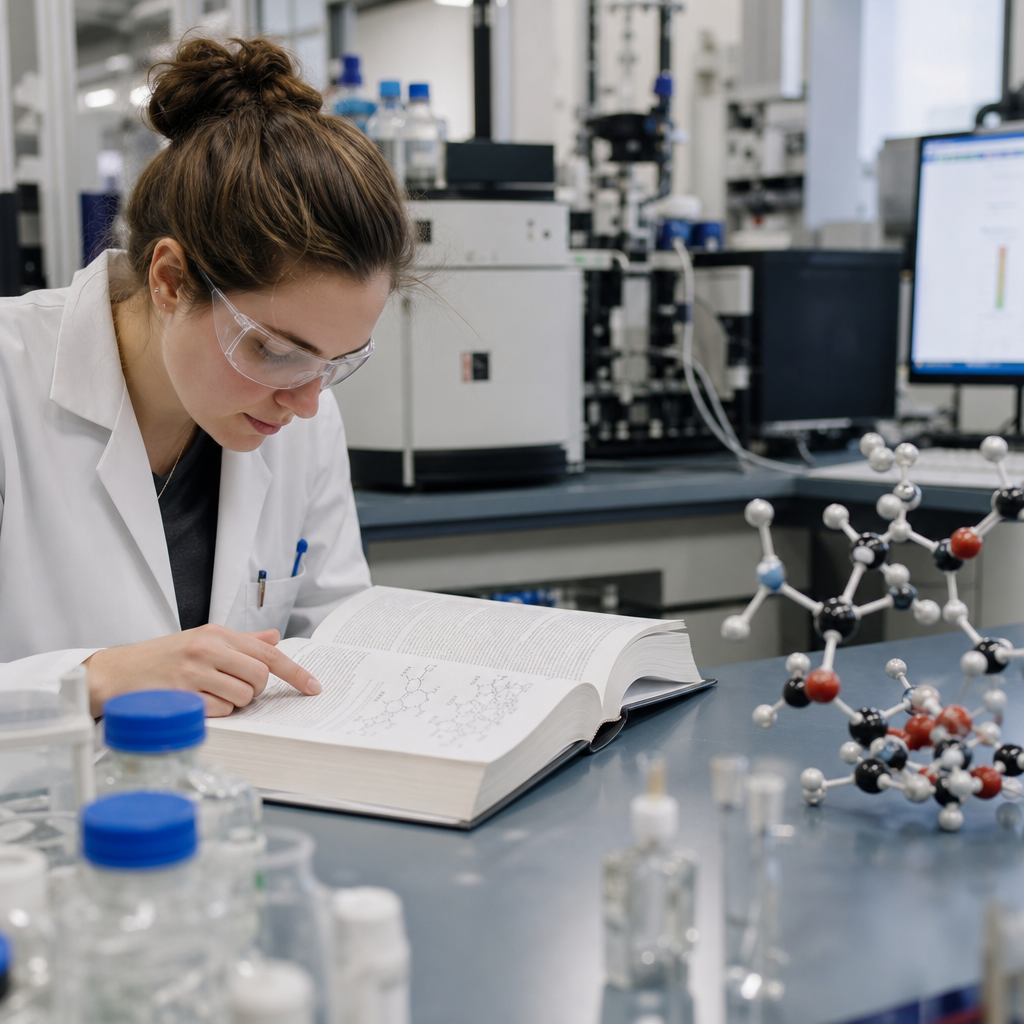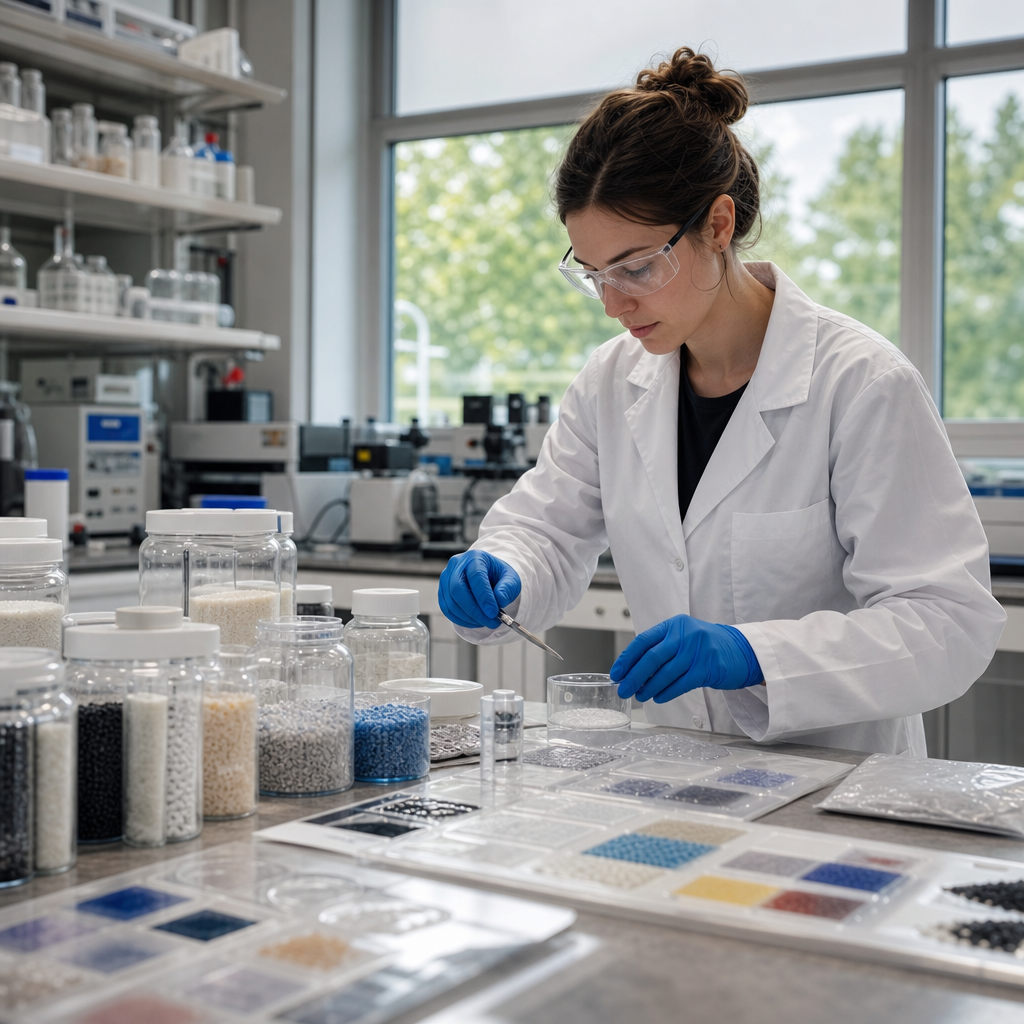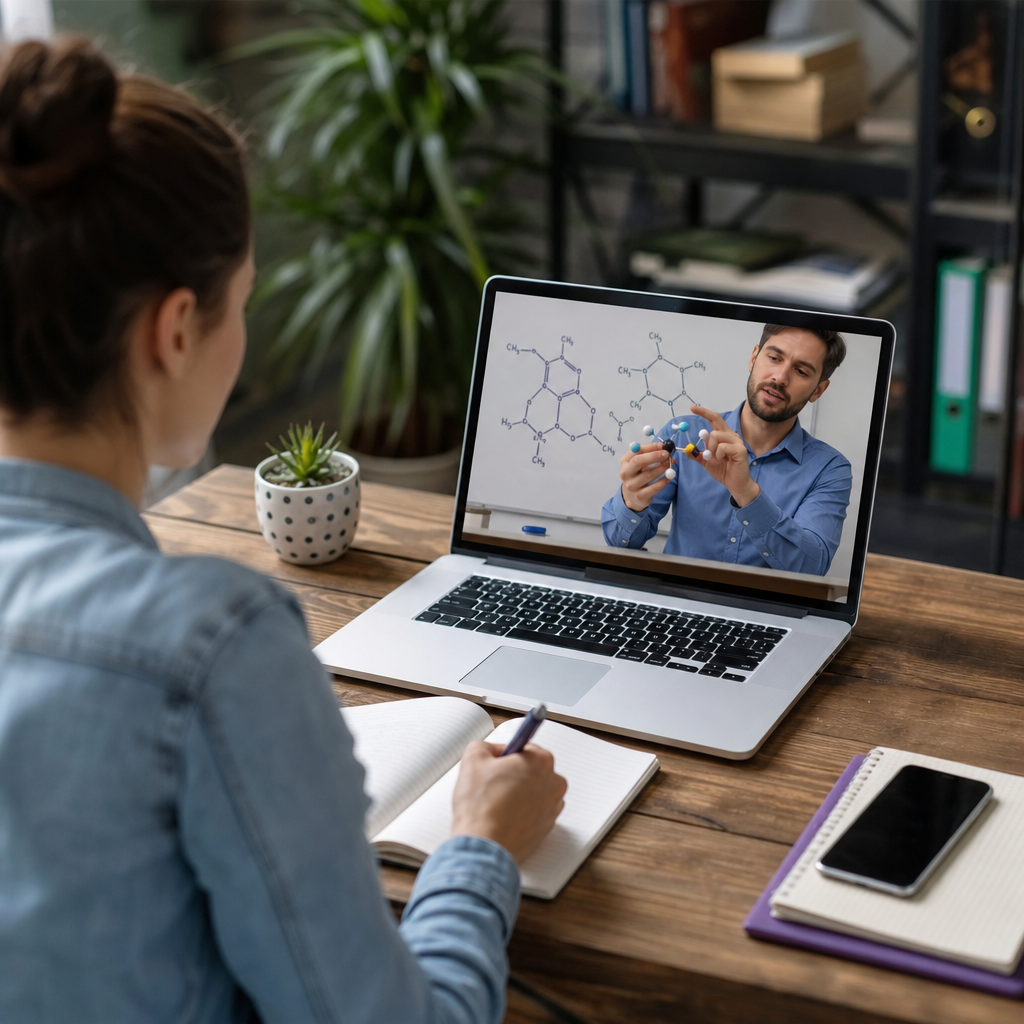
Interactive videos are reshaping polymer learning by turning passive explanations into guided practice, immediate feedback, and measurable skill development across chemistry, materials science, and industrial training. In polymer learning, the term covers the study of polymer structure, synthesis, properties, processing, testing, and applications, whether the audience is a secondary student encountering macromolecules for the first time, a university learner studying chain-growth kinetics, or a plant technician reviewing extrusion parameters. Interactive video adds clickable prompts, embedded quizzes, branching scenarios, transcripts, overlays, simulations, and linked resources to standard video instruction. That combination matters because polymers are conceptually dense and visually dependent: learners need to connect monomer structure to molecular weight, crystallinity, rheology, additive selection, and final product performance. In my work building training content for technical subjects, I have repeatedly seen that static lectures leave gaps exactly where polymer education becomes abstract. Learners may memorize definitions of thermoplastics and thermosets yet still struggle to predict why polyethylene softens during reheating while a cured epoxy does not. Well-designed interactive video closes that gap by forcing decisions, revealing consequences, and keeping attention on the mechanisms behind material behavior.
This hub page covers educational videos and podcasts for polymer learning comprehensively, with emphasis on why interactive video is especially effective, where audio fits, which formats work best, and how educators can evaluate results. It also serves as a gateway topic for related resources on polymer chemistry lessons, laboratory demonstrations, processing tutorials, sustainability education, and professional development. The central question is simple: does interactivity improve learning outcomes in polymer education? The answer is yes, when it is aligned with clear objectives, cognitive load limits, and authentic tasks. Research across science education consistently shows that active retrieval, immediate feedback, dual coding, and segmented instruction improve retention and transfer. Polymer education benefits even more because many core ideas depend on time-based change and multiscale visualization. A learner can watch a polymerization reaction progress, answer a checkpoint about initiators, compare molecular architectures, and then apply the concept to a molding defect or recycling decision. That sequence creates stronger mental models than video alone.
Why interactive videos work so well in polymer education
Interactive videos improve polymer learning because they combine three things that the subject requires: visualization, decision-making, and feedback. Polymer concepts often span invisible scales. Students must imagine covalent bonding at the molecular level, chain entanglement at the mesoscale, and performance outcomes such as toughness, barrier resistance, or heat distortion at the product level. A conventional lecture can describe these links, but interactive video can make learners pause, predict, and verify. For example, a module on crystallinity can show cooling-rate animations, ask the learner to choose which sample will be more transparent, and then explain why spherulite size affects optical properties. That immediate loop turns observation into reasoning.
Another advantage is segmentation. Polymers are not one topic; they are a network of related concepts including step-growth polymerization, copolymer composition, glass transition temperature, rheometry, compounding, and degradation. Interactive video lets educators break these into short units with embedded checks instead of delivering one uninterrupted hour. In practice, completion rates and quiz accuracy rise when videos stay focused on a single concept and require participation every few minutes. This is especially useful in flipped classrooms, technician onboarding, and continuing education, where learners may study on mobile devices or during limited time windows. Interactive checkpoints also expose misconceptions early, such as confusing viscosity with molecular weight in every processing context or assuming biodegradable means recyclable.
Core polymer topics that benefit most from interactive formats
Some polymer topics gain disproportionate value from interactivity because they involve sequence, causality, or troubleshooting. Polymerization mechanisms are a prime example. Learners commonly confuse initiation, propagation, chain transfer, and termination in free-radical systems. An interactive sequence can ask them to identify the next mechanistic step, flag a wrong answer, and explain how that choice changes molecular weight distribution. The same approach works for condensation reactions, living polymerization, and copolymer design. Instead of passively hearing terminology, students make repeated micro-decisions that mirror exam and laboratory tasks.
Processing education also improves dramatically. In extrusion, injection molding, blow molding, thermoforming, and fiber spinning, outcomes depend on parameter interactions rather than isolated facts. Interactive video can branch into realistic troubleshooting cases: sink marks in polypropylene parts, warpage in semicrystalline materials, bubbles from moisture in nylon, or black specks caused by degradation. Learners choose actions such as lowering melt temperature, increasing back pressure, drying resin, or checking residence time, then see process and quality consequences. This scenario-based design is highly effective for workforce training because it reflects the decisions operators and engineers actually make.
Characterization and testing are another strong fit. Differential scanning calorimetry, thermogravimetric analysis, gel permeation chromatography, tensile testing, FTIR spectroscopy, and melt flow index measurements can seem procedural until learners interpret data. Interactive videos can stop at a DSC curve and ask where glass transition appears, or present a stress-strain graph and ask which sample shows higher modulus. These questions turn instruments from black boxes into reasoning tools. For sustainability topics, interactivity helps learners compare life cycle tradeoffs, contamination risks in recycling streams, and design-for-disassembly choices without reducing complex environmental questions to slogans.
How podcasts complement educational videos in a polymer learning hub
Podcasts do not replace interactive videos, but they serve an important supporting role within educational videos and podcasts as a complete learning ecosystem. Audio works best for expert interviews, industry trends, career guidance, policy discussion, and reflective review. A polymer scientist discussing barrier packaging, a recycling plant manager explaining contamination challenges, or a biomedical engineer describing hydrogel applications can provide context that deepens formal instruction. Because podcasts are portable, they extend learning into commutes, lab preparation time, and professional development routines.
The limitation is obvious: polymer education is highly visual. You cannot rely on audio alone to teach stereochemistry, morphology, phase diagrams, or equipment setup. That is why the strongest hub strategy pairs formats intentionally. A podcast episode on bioplastics can introduce market drivers, standards such as ASTM D6400 or EN 13432, and misconceptions around compostability. An interactive video can then walk learners through polymer structures, end-of-life pathways, and product-label interpretation. Similarly, an interview about additive manufacturing with polymers can set the stage, while a branched video demonstrates layer adhesion, thermal management, and anisotropy in printed parts.
| Format | Best use in polymer learning | Example topic | Main limitation |
|---|---|---|---|
| Interactive video | Concept explanation, problem solving, lab and process decisions | Injection molding defects | Higher production effort |
| Standard video | Demonstrations, lectures, expert walkthroughs | DSC sample preparation | Passive viewing risk |
| Podcast | Interviews, trends, careers, policy, revision | Circular economy in plastics | Weak for visual mechanisms |
| Video plus transcript | Accessibility, multilingual review, note taking | Polymer degradation pathways | Needs careful editing |
Instructional design principles that make interactive polymer videos effective
Not every interactive video improves learning. The gains come from instructional design, not from clickable features alone. The first principle is objective alignment. Each interaction should map to a specific outcome such as identifying polymer classes, predicting processing behavior, interpreting thermal analysis, or selecting a test method. If an interaction does not support the target skill, it becomes noise. I have seen technically polished modules underperform because they asked trivial recall questions instead of probing the reasoning students needed in the lab or on the production floor.
The second principle is cognitive load management. Polymer content already taxes working memory with formulas, terminology, and multistep causal relationships. Effective modules use short segments, plain labels, narrated visuals, and one challenge at a time. They avoid cluttered slides packed with reaction schemes, data tables, and spoken explanation all at once. A better design introduces polyethylene and polystyrene separately, asks learners to compare branching and rigidity, and only then links those features to density and glass transition behavior. The third principle is feedback quality. “Correct” or “incorrect” is not enough. Feedback should explain why an answer works, what misconception is involved, and how the concept appears in practice.
Accessibility is equally important. High-value polymer education must include captions, transcripts, readable contrast, keyboard navigation, and alternatives for color-dependent graphics. This is not only good practice; it improves comprehension for multilingual learners and busy professionals reviewing dense material. Platforms such as H5P, Articulate Storyline, Adobe Captivate, Panopto, and EdPuzzle support many of these functions, while learning management systems like Canvas, Moodle, and Blackboard make it easier to track completion, scores, and repeat attempts. The best implementations also connect modules to downloadable glossaries, formula sheets, and related lessons so learners can move from one polymer topic to the next without friction.
Real-world applications in classrooms, laboratories, and industry training
In secondary and undergraduate classrooms, interactive polymer videos help bridge the gap between introductory chemistry and materials science. A teacher can assign a pre-class module on addition polymerization, then use class time for model building, spectroscopy interpretation, or recycling debates. This flipped approach often produces better questions because students arrive having already confronted confusion points. In university labs, interactive safety and procedure videos reduce setup errors. Before touching a rheometer or DSC, students can complete a module that asks them to identify calibration steps, sample mass issues, and common sources of instrument drift. That preparation protects equipment and improves data quality.
Industry training shows an equally strong case. New hires in plastics processing frequently need fast, accurate onboarding across resin handling, drying, temperature control, screw design basics, and defect recognition. Interactive video standardizes this training better than informal shadowing alone. A processor working with PET, for instance, must understand hydrolytic degradation risk if drying is inadequate. A short module can show moisture effects, ask the learner to diagnose brittle parts, and reinforce the relationship between resin preparation and intrinsic viscosity retention. Similar modules support medical device manufacturing, packaging conversion, automotive compounding, and adhesive formulation teams.
Professional societies and academic departments can also use this hub approach to support continuing education. Recorded conference talks become more useful when edited into topic-specific modules with chapter markers, glossary links, and knowledge checks. A podcast interview with a polymer rheologist can be paired with an interactive explainer on shear thinning and viscoelasticity. The result is a structured pathway instead of a loose media archive. That matters because adult learners rarely need more content; they need better organization, clearer progression, and formats that respect limited time while still demanding active thought.
How to measure learning impact and choose the right content mix
The impact of interactive videos on polymer learning should be measured with more than view counts. Strong evaluation uses completion rates, quiz performance, time on task, repeat attempts, discussion quality, lab accuracy, and later transfer into projects or process decisions. In formal education, compare pre-test and post-test results on concept inventories, then look at whether students can apply ideas to unfamiliar cases. In workplace training, track operational indicators such as reduced setup errors, faster qualification time, fewer recurring defects, or improved compliance with testing procedures. These measures reveal whether learning changed behavior, not just whether content was watched.
Choosing the right mix starts with the learning goal. Use interactive video when learners must interpret, predict, troubleshoot, or make decisions. Use standard video for clean demonstrations and expert explanation. Use podcasts for interviews, trends, and broader context. Then connect them through a clear hub structure under educational resources, with internal pathways to beginner, intermediate, and advanced polymer topics. Metadata matters too: descriptive titles, transcripts, chapter headings, and concise summaries help learners and discovery systems identify relevance quickly. A page built this way becomes more than a list of media assets. It becomes a durable reference point for anyone studying polymers, teaching them, or applying them in manufacturing and research.
The main takeaway is straightforward: interactive videos improve polymer learning because they make difficult material visible, participatory, and testable. They help students understand mechanisms, help technicians diagnose problems, and help organizations scale consistent training. Podcasts add valuable expert perspective, but visual, decision-based instruction remains the core format for this subject. If you are building an educational videos and podcasts hub, start with the polymer concepts that learners struggle to apply, design short interactive modules around authentic questions, and measure outcomes that reflect real understanding. Then expand the library methodically so each resource links to the next step in the learner’s journey.
Frequently Asked Questions
What are interactive videos in polymer learning, and how are they different from traditional teaching videos?
Interactive videos in polymer learning are video-based lessons that ask the learner to do something during the experience rather than simply watch from start to finish. Instead of passively listening to an explanation of polymer structure, chain-growth polymerization, crystallinity, viscoelastic behavior, processing methods, or testing procedures, learners may be prompted to answer questions, label molecular diagrams, predict outcomes, choose the next process step, or respond to troubleshooting scenarios in real time. These built-in interactions turn the video into a guided learning environment rather than a one-way presentation.
This difference matters because polymer science often involves layered concepts that are easier to understand when learners pause, apply, and receive feedback at the exact moment a misconception might occur. For example, a traditional video may explain the difference between thermoplastics and thermosets, but an interactive video can immediately ask the learner to classify specific materials, connect structure to behavior, and explain why a crosslinked network cannot be remelted. That shift from explanation to active decision-making helps strengthen comprehension and retention.
Interactive videos are also especially valuable in polymer education because the subject spans multiple settings and skill levels. A secondary student may need visual reinforcement to understand what macromolecules are, a university learner may need checkpoint questions on reaction mechanisms or molecular weight distribution, and an industrial trainee may need branching scenarios for extrusion, injection molding, or quality control decisions. In each case, the video adapts the experience from passive viewing into practical engagement, making learning more measurable, more responsive, and often more effective.
Why do interactive videos improve understanding and retention in polymer science?
Interactive videos improve understanding and retention because they align well with how people learn complex technical material. Polymer science includes abstract ideas such as molecular architecture, intermolecular forces, kinetic pathways, phase behavior, rheology, and degradation mechanisms. These topics can be difficult to grasp when they are presented only through static lectures or uninterrupted video explanations. Interactive elements break content into manageable steps and require learners to retrieve, apply, and test their knowledge as they go.
That process supports stronger learning in several ways. First, immediate practice reinforces key ideas before they fade. If a learner watches a segment on addition polymerization and then answers a question about initiators, propagation, and termination, the act of recalling and applying the information helps move it into longer-term memory. Second, immediate feedback helps correct misconceptions before they become embedded. In polymer learning, confusion between amorphous and crystalline regions, tensile strength and toughness, or viscosity and elasticity can create larger downstream problems. Interactive checkpoints catch those issues early.
Another reason interactive videos are effective is that they create context. Many polymer concepts become clearer when learners see how structure influences processing, how processing influences properties, and how properties influence application performance. A well-designed interactive lesson can show a learner how changing monomer selection, branching, filler content, temperature, or cooling rate affects the final product. Instead of memorizing isolated facts, the learner builds connected understanding. This is particularly important in polymer education because success often depends on linking chemistry, materials behavior, instrumentation, and manufacturing decisions into one coherent mental model.
How are interactive videos used across different polymer learning audiences, from students to industrial trainees?
Interactive videos are flexible enough to support nearly every level of polymer learning, which is one of their strongest advantages. For beginners, they can introduce foundational ideas such as monomers, polymers, repeat units, molecular chains, and common material families using visual cues, simple quizzes, and drag-and-select activities. A student encountering macromolecules for the first time may benefit from animations that show polymerization at the molecular level, followed by short prompts that confirm understanding before the lesson moves forward.
At the university level, interactive videos can handle more advanced content in a structured and highly practical way. In courses covering polymer synthesis, kinetics, characterization, thermodynamics, rheology, or materials selection, videos can pause for calculation-based questions, mechanism identification, interpretation of DSC or tensile test data, and prediction of how a processing variable will affect morphology or performance. This creates a more rigorous and engaging experience than a standard recorded lecture because students are not just receiving information; they are actively working through it.
In industrial and workforce training, interactive videos are particularly effective because they can mirror real operational decisions. A technician learning about extrusion may be asked to diagnose melt fracture, adjust temperature profiles, or identify contamination risks based on visual evidence and process data. A quality professional may review a scenario involving impact failure, dimensional instability, or poor adhesion and choose the most likely root cause. These applications make training more job-relevant and more consistent across teams. They also support compliance, standardization, and skill verification in a way that traditional viewing-based training often cannot. Across all audiences, the core value remains the same: the learner is engaged in doing, not just watching.
What kinds of polymer topics work best in an interactive video format?
Many polymer topics work extremely well in interactive video format, especially those that benefit from visualization, decision-making, and step-by-step reasoning. Foundational concepts such as polymer classification, chain architecture, copolymer types, molecular weight, thermal transitions, crystallinity, and mechanical behavior are strong candidates because learners often need repeated exposure and active comparison to fully understand them. Interactive prompts can ask learners to interpret diagrams, match terminology to behavior, or distinguish between similar concepts that are easy to confuse in a purely lecture-based format.
Laboratory and analytical topics are also ideal. Interactive videos can walk learners through spectroscopy, thermal analysis, tensile testing, rheometry, microscopy, or sample preparation procedures while asking them to identify instruments, interpret results, or choose the correct next step. This is especially useful when equipment access is limited or when mistakes in a live setting would be costly, time-consuming, or unsafe. The learner gains familiarity with workflow, terminology, and interpretation before entering a lab or production environment.
Processing and manufacturing topics may benefit the most because they naturally involve choices and consequences. Injection molding, extrusion, blow molding, thermoforming, compounding, curing, and recycling workflows can all be presented as branching scenarios. Learners can respond to defects such as warpage, sink marks, brittleness, poor surface finish, or inconsistent dimensions and then see the results of their choices. Application-focused topics also perform well, including material selection for packaging, medical devices, automotive parts, electronics, coatings, or sustainability initiatives. In short, if a polymer topic requires interpretation, troubleshooting, comparison, or procedure-based thinking, it is usually an excellent fit for interactive video learning.
How can educators and organizations measure the impact of interactive videos on polymer learning outcomes?
The impact of interactive videos on polymer learning can be measured through both educational performance data and practical skill indicators. One of the most direct methods is to compare learner outcomes before and after implementation. This might include quiz scores, exam performance, concept mastery rates, lab readiness, completion rates, and the ability to correctly interpret polymer data or solve application problems. Because interactive videos include embedded questions and decision points, they provide more granular evidence than standard video lectures. Educators and trainers can see not only whether learners finished the content, but where they struggled, what misconceptions appeared repeatedly, and which skills improved over time.
Engagement metrics also matter. Time-on-task, replay frequency, response accuracy, drop-off points, and progression through branching scenarios can reveal whether the content is clear, relevant, and appropriately challenging. In polymer learning, this is valuable because some topics, such as reaction kinetics, rheological behavior, or process-property relationships, may require targeted reinforcement. If learners consistently pause or miss questions at a specific step, the content can be revised to improve clarity and support better outcomes.
For organizations, the most meaningful measures often extend beyond academic understanding into operational performance. In industrial training, impact may be reflected in reduced process errors, faster onboarding, better equipment handling, improved testing consistency, stronger troubleshooting performance, fewer quality defects, and better adherence to standard procedures. In higher education, impact may show up in stronger lab confidence, more accurate data interpretation, improved project performance, and better transfer of theory into real-world materials decisions. The key point is that interactive videos make learning more visible. Because they combine instruction, practice, and assessment in one format, they allow educators and employers to track not just exposure to polymer content, but actual progress in understanding and applied competence.