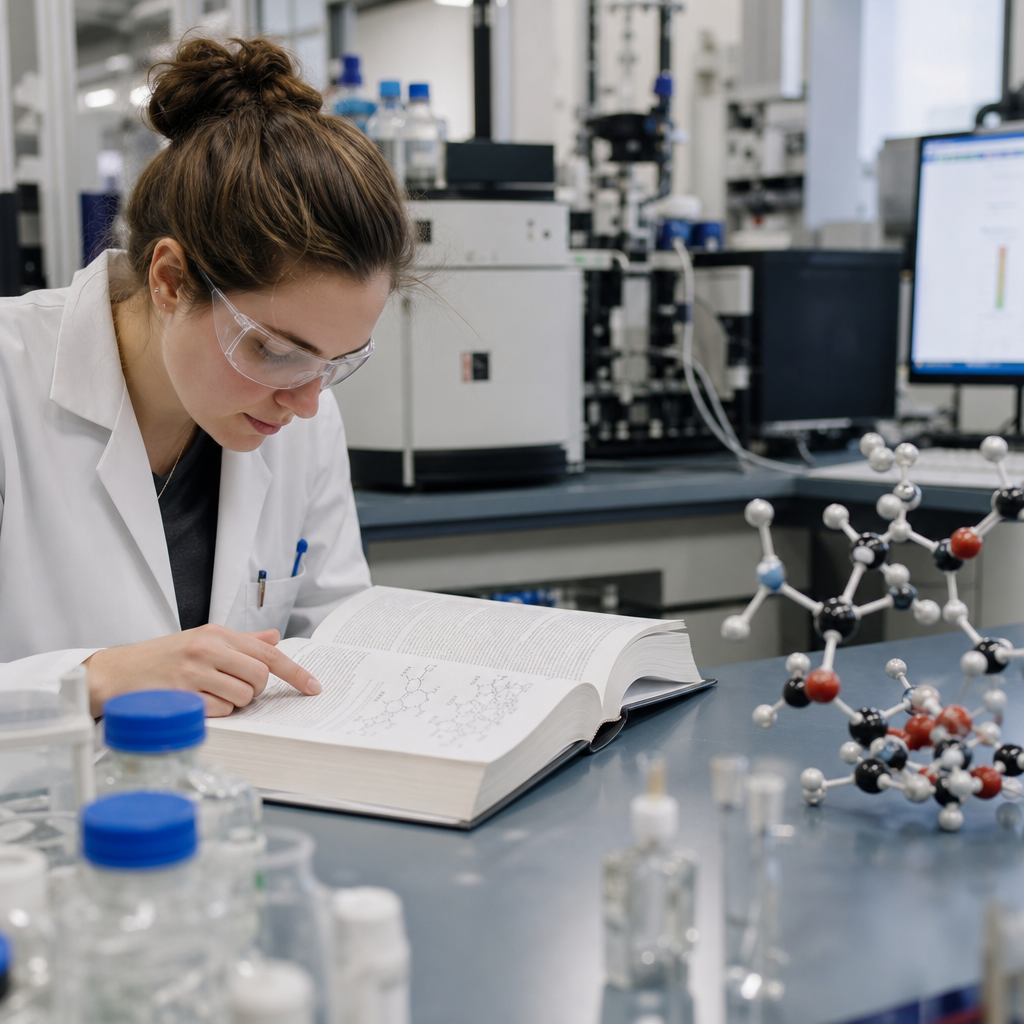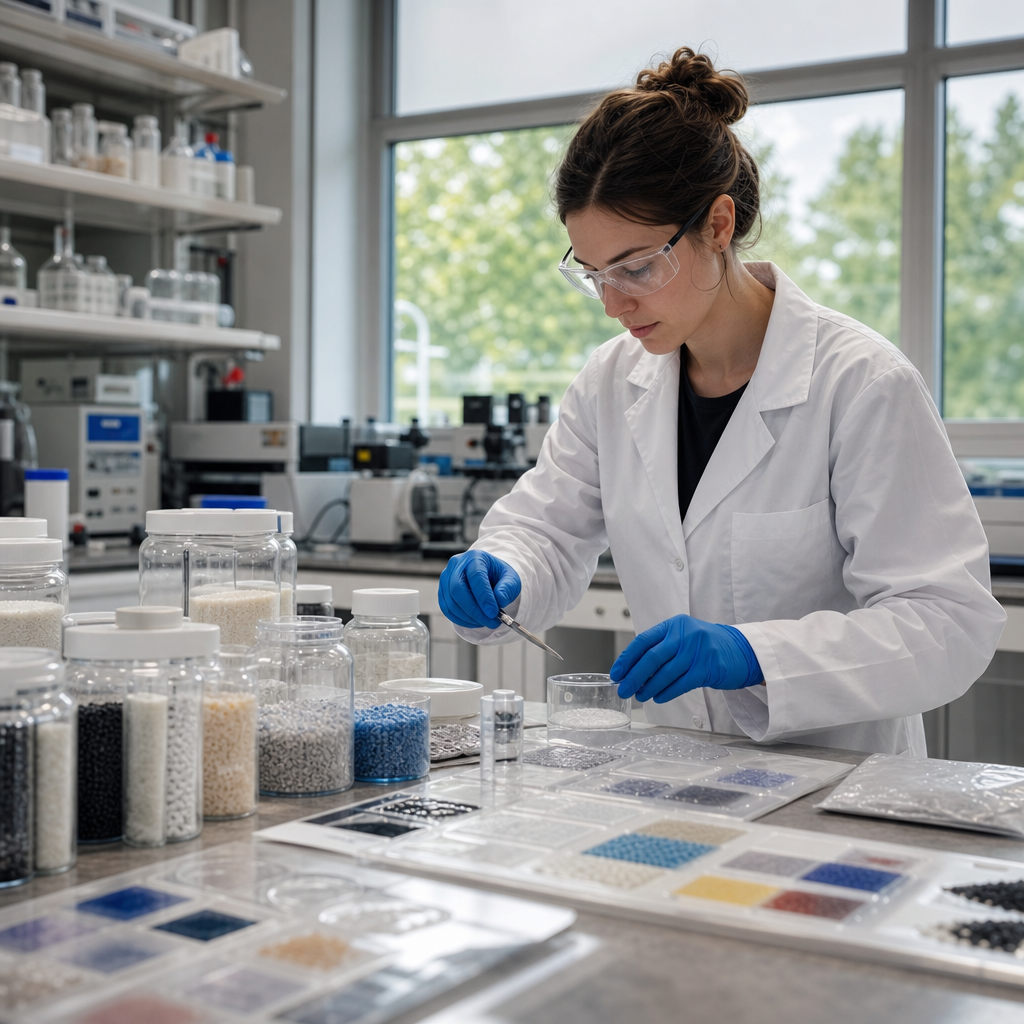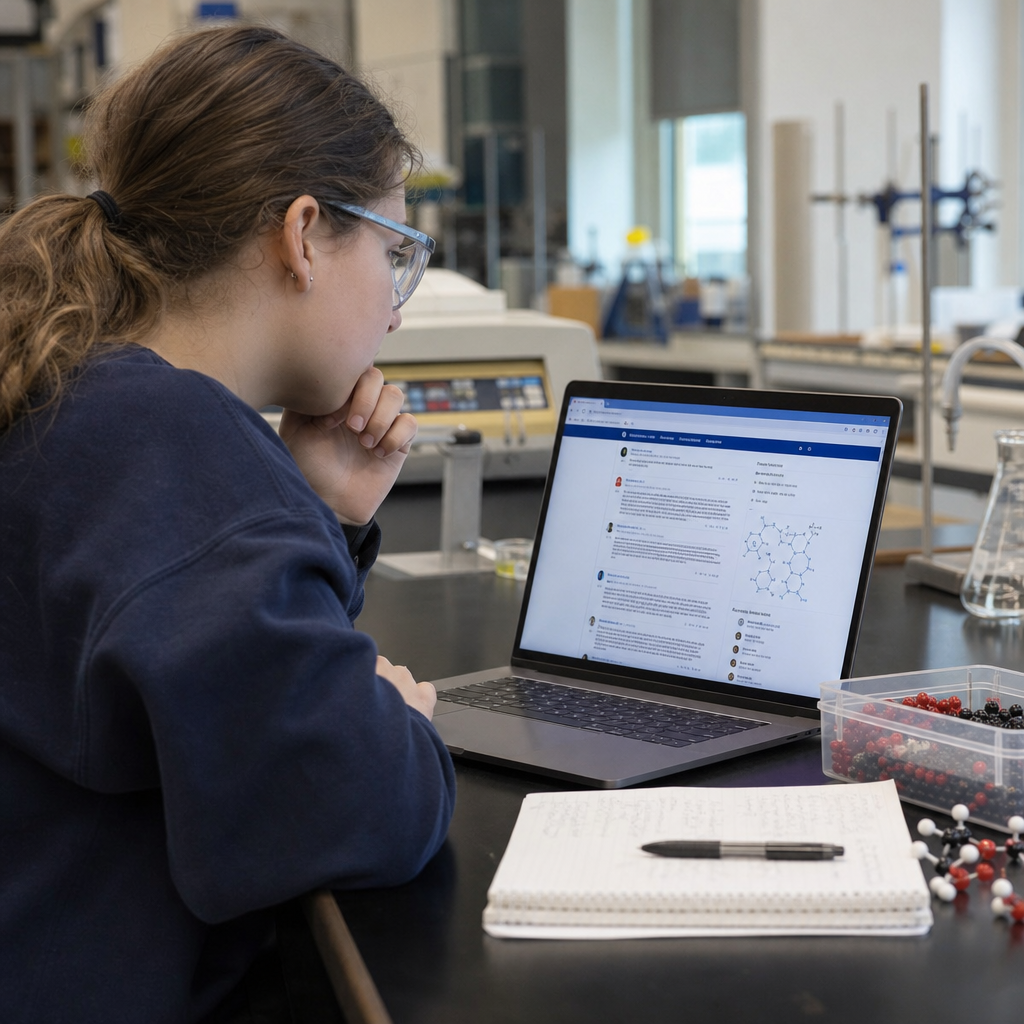
Online forums have become one of the most influential online resources in polymer education, reshaping how students, researchers, technicians, and industry professionals learn about plastics, elastomers, composites, and advanced materials. In polymer education, the term covers formal teaching and informal skill building across topics such as polymer chemistry, processing, rheology, characterization, recycling, and product design. Online forums include public discussion boards, question-and-answer communities, professional groups, specialized mailing lists, and niche platforms where members exchange practical knowledge. As a hub within educational resources, this article explains how these communities support learning, where they fit alongside textbooks and courses, and what limits users should understand before relying on forum advice.
I have seen forums solve problems that a lecture could not address in time. A student trying to understand why a polypropylene part warped after injection molding often learns more from a thread comparing gate location, cooling imbalance, and shrinkage behavior than from a short chapter summary. A lab engineer troubleshooting inconsistent differential scanning calorimetry peaks can receive targeted questions about sample mass, heating rate, purge gas, and prior thermal history within hours. That speed matters because polymer education is unusually applied. Knowing the definition of crystallinity is useful, but understanding why polyethylene terephthalate dries differently from nylon before processing determines whether a plant loses material, time, or customers.
Forums matter because polymer science sits at the intersection of chemistry, physics, manufacturing, and sustainability. Learners rarely need isolated facts. They need explanations tied to process conditions, material grades, test methods, and end-use performance. Well-run online communities can provide this context in plain language, often with examples from ASTM testing, extrusion lines, additive packages, failure analysis labs, or recycling systems. They also extend access. Not every learner can attend a conference hosted by the Society of Plastics Engineers, join a university lab, or shadow a senior compounding specialist. A searchable thread archive can narrow that gap by preserving explanations from experienced practitioners. Used carefully, online forums improve polymer education by making expertise more visible, more current, and more connected to real-world decisions.
How online forums support polymer learning
Online forums improve polymer education by turning passive reading into active problem solving. In a course, learners often encounter concepts in sequence: monomers, polymerization mechanisms, molecular weight, morphology, properties, and processing. Forums reverse that order. A user starts with a practical issue such as stress cracking in polycarbonate, poor adhesion in a multilayer film, or excessive die swell during extrusion. Experienced members then work backward to the underlying science. This method is powerful because it mirrors how polymer problems appear in the real world. Material behavior is rarely packaged by chapter.
The best forum discussions also train users to ask better technical questions. In polymer work, details determine the answer. A post that says “my plastic part is brittle” is too vague. A useful thread identifies the polymer family, grade, melt flow index, filler level, processing temperature, residence time, moisture content, wall thickness, and service environment. Over time, learners absorb that discipline. They begin to think like process engineers and materials scientists, separating symptoms from variables. That habit strengthens classroom performance, laboratory technique, and workplace communication.
Another benefit is exposure to vocabulary and standards that employers actually use. Forums frequently reference ASTM D638 for tensile properties, ASTM D256 for Izod impact, DSC for thermal transitions, TGA for decomposition behavior, FTIR for identification, SEM for fracture surfaces, and DMA for viscoelastic response. For a student, repeated exposure to these terms builds fluency faster than isolated memorization. For a technician moving into a higher-level role, seeing how others interpret test results adds practical meaning. A forum can explain not only what a glass transition temperature is, but why sample preparation, frequency, and humidity history can shift the apparent value in a real measurement.
Key types of online resources within polymer education
Online forums are only one part of the broader online resources landscape, but they often act as the connective tissue between resources. A learner may read a university module on step-growth polymerization, watch a supplier webinar on polyamide drying, and then visit a forum to compare those lessons against production experience. This hub role is important because polymer education is fragmented across academic, industrial, and regulatory sources. Forums help users translate among them.
Several types of communities support this translation. General science and engineering forums attract broad questions about polymer chemistry, spectroscopy, and data interpretation. Professional association communities, including groups linked to the Society of Plastics Engineers or materials-focused divisions, often provide more specialized discussion around molding, extrusion, composites, and design. Research-oriented platforms support graduate students who need help with kinetics models, molecular simulation assumptions, or instrument artifacts. Manufacturing communities concentrate on troubleshooting line issues such as sink marks, delamination, gel formation, and color dispersion. Linked professional networks can be useful for discovering experts, though their threads are often less searchable and less technically rigorous than dedicated forums.
| Resource type | Best use in polymer education | Typical strength | Main limitation |
|---|---|---|---|
| Public technical forums | Quick troubleshooting and concept clarification | Fast, diverse responses | Variable quality control |
| Professional association communities | Applied processing and industry practice | Experienced practitioners | Some content gated by membership |
| Research discussion platforms | Methods, data analysis, and literature context | Academic depth | Less focus on production constraints |
| Supplier knowledge centers | Material grades, datasheets, and application notes | Specific product insight | Commercial bias |
| Video channels and webinars | Visual explanation of equipment and testing | Strong demonstrations | Limited peer correction |
For hub-page purposes, the most useful approach is not to treat these resources as competitors. They work best in sequence. Start with a trusted reference for definitions, move to a forum for questions and edge cases, then confirm critical decisions with standards, supplier data, or peer-reviewed literature. That workflow reflects how experienced polymer teams operate.
Real-world educational value for students, researchers, and industry teams
Students use forums differently from researchers and plant personnel, but the educational gain is real in each case. Undergraduate students often need help connecting introductory theory to recognizable materials. A discussion comparing polyethylene, polypropylene, polystyrene, PET, and PVC in terms of chain structure, crystallinity, barrier performance, and processing windows makes textbook content concrete. Graduate students lean toward characterization and interpretation. They may ask why a DSC second heating scan differs from the first, how to explain a broad molecular weight distribution from gel permeation chromatography, or whether a shift in storage modulus reflects filler networking or simple drying differences. The replies can point them toward controls they had not considered.
In industrial settings, forums often function as distributed mentoring. A small injection molding company may not employ a polymer scientist, yet a production manager still needs to understand why a glass-filled nylon part loses impact strength after regrind levels increase. In forum discussions, experienced members commonly explain chain scission, moisture sensitivity, fiber length reduction, and the tradeoff between cost control and property retention. That explanation is educational even when the immediate goal is operational. The same pattern appears in extrusion coating, blow molding, rotational molding, compounding, and recycling. Practical threads reveal how material science interacts with machine settings, tooling, environmental exposure, and quality systems.
Forums also preserve tacit knowledge that rarely makes it into manuals. For example, many processors know that a resin can meet datasheet values yet still behave differently because of lot variation, colorant interactions, residence time, or screw design. A seasoned contributor may explain why two thermoplastic polyurethane grades with similar hardness still process differently due to viscosity profile and thermal sensitivity. Those distinctions are exactly what learners need if they want education that transfers into competent decisions.
What makes a polymer forum trustworthy and useful
Not all forums improve polymer education. The strongest communities have recognizable subject matter expertise, searchable archives, clear moderation rules, and a culture of evidence. When I evaluate a forum, I look for answers that specify polymer type, processing history, test conditions, and mechanism. “Raise the temperature” is weak advice. “Increase melt temperature carefully because incomplete fusion in this polypropylene copolymer can mimic poor impact performance, but verify residence time to avoid oxidation” is useful advice. Specificity is a strong trust signal.
Named references matter as well. Reliable contributors cite ASTM or ISO methods, supplier technical data sheets, recognized textbooks such as Callister for materials fundamentals or Odian for polymerization concepts, and instrument guidance from vendors like TA Instruments, Anton Paar, Malvern Panalytical, or Bruker when discussing testing limitations. Good forums also welcome correction. In polymer science, many questions have conditional answers. Whether a material is “chemical resistant” depends on concentration, temperature, stress state, exposure time, and morphology. A trustworthy thread acknowledges those variables instead of presenting a universal claim.
Moderation shapes educational quality more than most users realize. Communities with active moderators remove spam, merge duplicate topics, encourage complete problem statements, and flag unsafe recommendations. This is especially important when discussions involve fumes, thermal degradation, solvent handling, or recycling contamination. An educational forum should not only answer the technical question but also frame the risk. That combination of detail and restraint is what makes a resource dependable.
Limitations, risks, and how to use forums correctly
The main limitation of online forums is uneven reliability. Expertise is distributed, but so is overconfidence. A convincing reply can still be wrong if it ignores formulation details, equipment design, or sample history. Polymer systems are sensitive to variables that outsiders cannot see. A brittle acetal gear may fail because of moisture conditions, mold design, residual stress, contamination, or an incompatible lubricant. A forum can suggest possibilities, but it cannot replace controlled diagnosis. Educational users should treat forum advice as informed direction, not automatic proof.
Commercial bias is another risk. Supplier-hosted spaces may favor their own grades, while consultants or equipment sellers may interpret every issue through the lens of the service they provide. This does not make the information useless, but it requires cross-checking. Confidentiality matters too. Students and employees sometimes upload spectra, formulations, or defect photos without considering intellectual property. In regulated sectors such as medical devices, packaging, aerospace, and automotive, sharing too much can create legal and quality problems.
The best way to use forums is methodically. Write a precise question. Include resin family, grade if possible, process, temperatures, moisture control, additives, test method, and the exact failure mode. Compare responses against standards and trusted references. Run a small experiment before making production changes. Save high-value threads in a personal knowledge base organized by topics such as rheology, adhesion, thermal analysis, or recycling. Used this way, forums become part of a disciplined learning system rather than a source of random opinions.
Building an effective online learning path for polymer education
As the hub page for online resources in polymer education, this article points to a practical learning path. Begin with foundation materials: university notes, recognized textbooks, and introductory modules on polymer chemistry, morphology, and processing. Add supplier resources for datasheets, application notes, and processing guides. Use webinars and recorded conference talks for visual understanding of equipment and testing. Then use online forums to ask targeted questions, validate interpretation, and see how experts reason through exceptions. Finally, anchor important conclusions in standards, peer-reviewed papers, or in-house trials.
This blended approach delivers the main benefit of online forums without overstating their role. Forums make polymer education more immediate, more collaborative, and more connected to actual materials behavior. They expose learners to terminology, methods, and troubleshooting logic that formal coursework often introduces too slowly. They also help experienced professionals keep learning as formulations, regulations, recycling technologies, and application demands change. If you want to strengthen your polymer knowledge through online resources, start by joining one credible forum, reading archived discussions on your core topic, and testing what you learn against trusted technical sources.
Frequently Asked Questions
How have online forums changed the way people learn about polymers?
Online forums have significantly expanded access to polymer education by making technical knowledge more immediate, interactive, and practical. In the past, many learners relied primarily on textbooks, classroom instruction, conferences, internal company training, or academic journals. While those sources remain essential, forums add something different: real-time discussion with people who have direct experience in polymer chemistry, compounding, processing, testing, troubleshooting, and product development. That means a student studying polymer morphology, a technician trying to solve a molding defect, or an engineer comparing elastomer grades can all find insights that are grounded in real-world application.
Another major shift is speed. Instead of waiting for a formal course or searching through scattered references, users can ask highly specific questions and receive responses from researchers, processors, laboratory specialists, and suppliers who have dealt with similar issues. This helps learners connect theory to practice. For example, a discussion about why a polymer blend shows phase separation can quickly lead into topics such as compatibility, interfacial adhesion, rheology, and processing conditions. In that way, forums often turn isolated technical problems into broader educational opportunities.
Forums also support continuous learning across career stages. Beginners can observe how experts think through problems, while experienced professionals can compare methods, standards, and material choices with peers from other sectors. Because polymer education spans plastics, elastomers, composites, recycling, additive manufacturing, and advanced materials, forums create a cross-disciplinary environment that is difficult to replicate in more traditional learning settings. The overall impact is a more accessible, collaborative, and applied learning model for the polymer field.
What types of polymer topics are most effectively learned through online forums?
Online forums are especially effective for polymer topics that benefit from discussion, troubleshooting, and comparison of real-world experiences. Processing-related subjects are among the strongest examples. Injection molding, extrusion, blow molding, thermoforming, compounding, curing, and composite layup all involve variables that can be difficult to master from theory alone. In a forum setting, learners can explore how temperature profiles, screw design, residence time, shear history, moisture content, fillers, and additives affect final properties and process stability. These conversations often reveal practical details that are not always emphasized in academic materials.
Characterization and testing are also well suited to forum-based learning. Users frequently exchange knowledge about DSC, TGA, DMA, FTIR, GPC, rheometry, tensile testing, impact testing, and microscopy. A learner may understand the definition of glass transition temperature from a textbook, but forum discussions can clarify how sample preparation, thermal history, crystallinity, instrument settings, and data interpretation influence results. That kind of applied context is extremely valuable for students and professionals who need to make sound technical decisions.
Forums are equally useful for emerging and rapidly changing areas such as sustainable polymers, chemical recycling, bio-based materials, nanocomposites, and high-performance engineering resins. Because these fields evolve quickly, community discussions can surface recent developments faster than many formal educational channels. However, forums are most effective when used alongside foundational resources. Core subjects like polymer chemistry, thermodynamics, structure-property relationships, and kinetics still require strong formal study. Forums work best as a bridge between foundational knowledge and practical application.
Are online forums reliable sources of information for polymer education?
Online forums can be highly valuable, but their reliability depends on how the information is evaluated. The strongest forums include contributions from knowledgeable participants such as polymer scientists, university faculty, processors, materials engineers, testing specialists, and experienced technicians. These contributors often provide nuanced explanations, discuss trade-offs, and reference mechanisms that align with accepted polymer science. In many cases, forums can offer excellent practical insight that may not be easy to find in textbooks, especially when the issue involves manufacturing conditions, troubleshooting, or material selection in specific environments.
That said, forum content should not be accepted uncritically. Polymer systems are complex, and advice that works for one resin, filler package, processing line, or end-use application may not transfer directly to another. A recommendation about drying conditions, mold temperature, stabilizer choice, or compatibilizer loading may be accurate in one context and misleading in another. In addition, some replies may reflect incomplete data, commercial bias, or outdated assumptions. This is particularly important in areas such as regulatory compliance, medical materials, food-contact applications, flame retardancy, and recycling claims, where technical precision matters greatly.
The best approach is to use forums as part of a broader learning strategy. Look for answers that explain why something happens, not just what to do. Compare multiple responses, check whether claims are consistent with polymer fundamentals, and verify important information with standards, peer-reviewed literature, supplier technical data, or laboratory testing. When used this way, forums become a highly effective educational tool: not a replacement for authoritative sources, but a dynamic layer of interpretation, experience, and problem-solving that strengthens polymer learning.
What are the biggest educational benefits of online forums for students and professionals in the polymer field?
One of the biggest benefits is exposure to applied problem-solving. Polymer education is not only about memorizing material classes or understanding molecular structure; it is also about learning how polymers behave in processing, testing, service, and failure conditions. Forums allow learners to see how experienced people diagnose issues such as warpage, brittleness, poor dispersion, melt fracture, sink marks, delamination, environmental stress cracking, or inconsistent cure. Watching those discussions unfold helps users build the reasoning skills that are essential in both academic and industrial settings.
Another important benefit is access to diverse perspectives. The polymer industry includes many specialties, from resin synthesis and compounding to packaging, automotive, medical devices, electronics, and recycling. Online forums bring these perspectives together. A question about polymer selection, for example, might receive input from a chemist focused on molecular architecture, a processor concerned with cycle time and flow, a testing expert focused on durability, and a sustainability professional considering end-of-life options. This broad exchange helps learners understand that polymer decisions are rarely based on a single property or viewpoint.
Forums also help build professional confidence and communication skills. Asking questions, presenting data, and discussing technical trade-offs encourages users to think clearly and explain concepts in a practical way. For students, this can ease the transition from theory-heavy coursework to real industrial challenges. For professionals, forums support lifelong learning by keeping them engaged with new materials, technologies, and methods. In a field where innovation is constant, that ongoing educational value is one of the most important impacts online forums have had on polymer education.
How can learners use online forums effectively without replacing formal polymer education?
The most effective approach is to treat online forums as a complement to formal learning, not a substitute for it. Formal polymer education provides the scientific framework needed to understand discussions accurately. Topics such as polymerization mechanisms, crystallization, viscoelasticity, diffusion, degradation, phase behavior, and structure-property relationships are foundational. Without that base, it can be difficult to judge whether a forum answer is deeply informed or simply anecdotal. Learners should use courses, textbooks, technical papers, and laboratory instruction to build fundamentals, then use forums to extend those fundamentals into practical settings.
It is also helpful to engage with forums strategically. Instead of searching only for quick answers, learners should look for recurring themes, compare different viewpoints, and pay attention to how experts define the problem before proposing a solution. In polymer science and engineering, the quality of the question often determines the quality of the answer. Useful posts usually include details such as polymer type, additive package, processing history, test method, operating environment, and performance target. Learning to frame questions with that level of specificity is itself an important educational skill.
Finally, learners should use forums to develop a habit of verification. If a discussion suggests that a processing adjustment will improve crystallinity, or that a certain filler will increase stiffness without harming impact strength, that claim should be checked against known theory, supplier data, or experimental evidence. Forums are excellent for generating hypotheses, identifying practical considerations, and learning industry language. Formal education and validated technical resources are what turn those discussions into dependable knowledge. Used together, they create a much more complete and effective model for polymer education than either one alone.