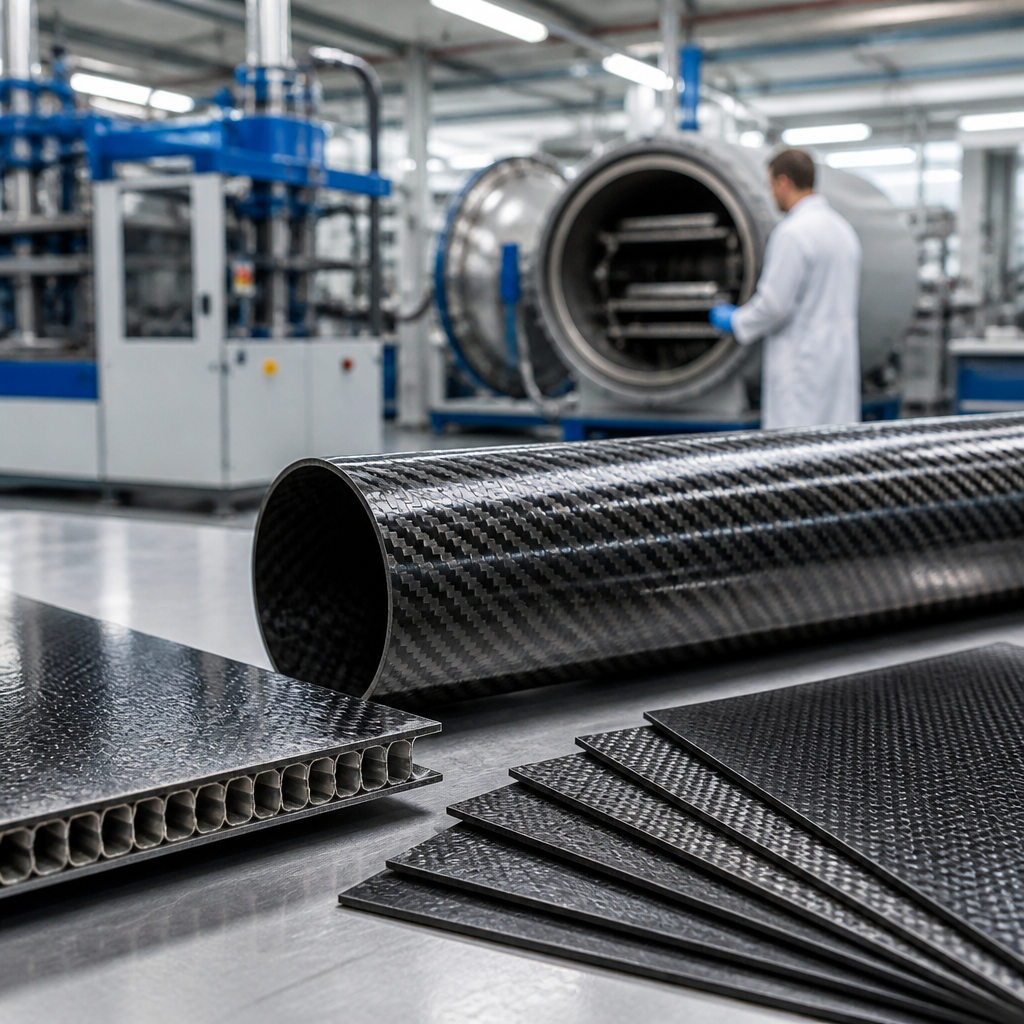
Innovations in polymer composites are reshaping how engineers design lighter, stronger, and more durable products for aerospace, automotive, energy, electronics, medical, and industrial markets. A polymer composite is a material system made by combining a polymer matrix, such as epoxy, polypropylene, PEEK, or silicone, with a reinforcing phase that may include carbon fiber, glass fiber, aramid, natural fiber, ceramic particles, nanomaterials, or hybrid fillers. The matrix binds the structure, transfers load, protects the reinforcement, and determines chemical resistance and processability, while the reinforcement contributes stiffness, strength, wear resistance, thermal stability, conductivity, or impact performance. In practice, high-performance applications demand a careful balance of weight, mechanical properties, heat tolerance, cost, manufacturability, regulatory compliance, and long-term reliability. That balance is why polymer composites matter: they often achieve property combinations that metals, ceramics, and neat polymers cannot deliver alone.
In my work with materials teams, the most important shift has been the move from simply replacing metal with composite to engineering the entire system around function, processing route, and lifecycle. Innovations in polymer solutions now extend beyond a stronger resin or a lighter laminate. They include tailored fiber architecture, thermoplastic composite tapes, nano-enhanced matrices, recyclable formulations, automated layup, out-of-autoclave curing, digital simulation, in-line quality control, and design-for-disassembly strategies. These advances are changing product economics as much as product performance. A battery enclosure, for example, is no longer judged only by tensile strength; it must also manage thermal runaway, meet flame and smoke standards, integrate complex geometry, and support faster production. As a hub topic, polymer composites sit at the center of modern materials innovation because they connect chemistry, processing, performance, and sustainability in one platform.
Core material innovations driving high-performance composites
The biggest gains in polymer composites start with the matrix and reinforcement selection. Thermoset systems such as epoxy, vinyl ester, bismaleimide, and cyanate ester remain essential where dimensional stability, strong adhesion, and high-temperature performance are critical. Aerospace primary structures still rely heavily on carbon fiber reinforced epoxy because the combination offers exceptional specific stiffness and fatigue resistance. Newer resin chemistries improve toughness without sacrificing glass transition temperature, allowing thinner laminates and better damage tolerance. Toughened epoxies with engineered thermoplastic phases are a common example, especially in aircraft interior and structural panels that need both impact resistance and process consistency.
Thermoplastic composites are advancing even faster in high-volume sectors. Polyamide, PPS, PEEK, PEKK, and PEI matrices enable welding, reshaping, rapid cycle times, and improved recyclability compared with conventional thermosets. Continuous fiber reinforced thermoplastic tapes are now used in brackets, clips, seat structures, pressure vessels, and medical imaging components because they combine high strength with faster processing. Carbon fiber reinforced PEEK, for instance, is valued in aircraft and orthopedic devices for its chemical resistance, sterilization compatibility, and retention of mechanical properties at elevated temperatures. These systems also support overmolding, which lets manufacturers combine a continuous-fiber skeleton with injection-molded features in one part.
Reinforcement innovation is equally important. Carbon fiber remains the benchmark for stiffness-to-weight ratio, but newer intermediate-modulus and high-strength grades give designers more precise options. Glass fiber continues to dominate cost-sensitive applications, especially in sheet molding compound, long-fiber thermoplastics, wind energy components, and electrical housings. Aramid fiber is selected where impact and abrasion resistance matter, such as ballistic panels and protective equipment. Hybrid reinforcement strategies are growing because a single fiber type rarely solves every requirement. A carbon-glass hybrid laminate can reduce cost, improve damage visibility, and tune vibration response while preserving much of carbon fiber’s stiffness advantage.
Processing technologies that expand design freedom and scale
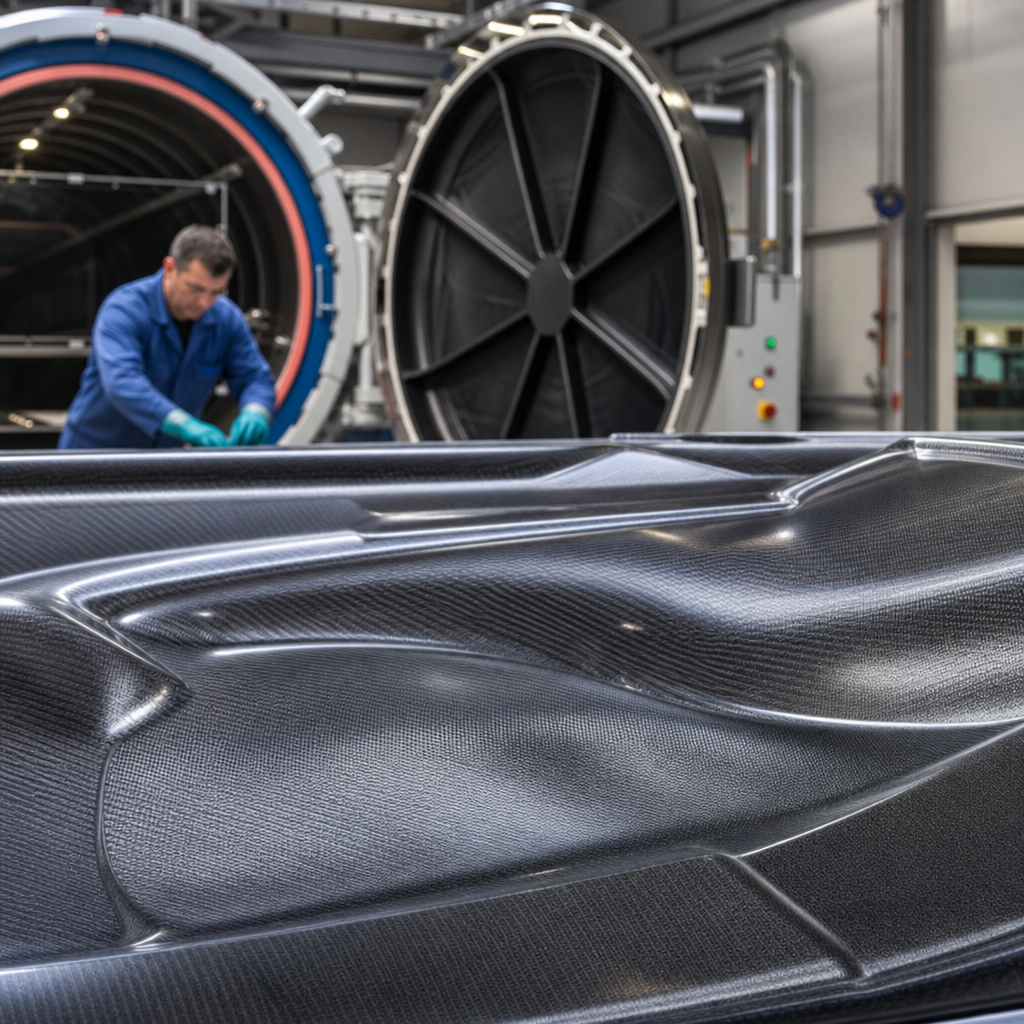
Processing innovations determine whether a promising composite succeeds in production. Traditional hand layup and autoclave curing still have a place in highly demanding aerospace components, but the market is moving toward faster, more repeatable methods. Resin transfer molding, high-pressure RTM, compression molding, automated fiber placement, filament winding, pultrusion, and additive manufacturing are each opening new application windows. High-pressure RTM has become particularly important in premium automotive structures because it can produce complex carbon fiber parts in cycle times compatible with series production. That shift matters because vehicle lightweighting is effective only when manufacturing throughput and scrap rates are commercially acceptable.
Automated fiber placement and automated tape laying have improved laminate quality while reducing labor variability. These systems place narrow tows or tapes along optimized paths, which means material can be steered around load paths rather than cut and stacked in crude approximations. The result is higher structural efficiency and less waste. In pressure vessel manufacturing, filament winding remains the standard for hydrogen tanks and CNG cylinders because it aligns fibers precisely with hoop and helical stresses. Type IV pressure vessels, for example, use a polymer liner wrapped with carbon fiber composite, combining low mass with high burst strength for mobility and gas transport applications.
Out-of-autoclave processing is another major advance. Prepregs and infusion systems designed for lower pressure cure have reduced capital intensity while enabling large structures such as UAV wings, radomes, marine panels, and tooling boards. Additive manufacturing is contributing in a different way by producing chopped-fiber thermoplastic parts, continuous-fiber inserts, molds, and custom fixtures quickly. Although printed composites do not yet replace aerospace-grade laminates in most structural roles, they are highly useful for rapid iteration, low-volume customization, and integrated part consolidation. The larger lesson is clear: process innovation is not secondary to materials science; it is what converts materials potential into reliable industrial output.
How leading polymer composite options compare by performance and use case
| Composite system | Key strengths | Typical limitations | Common high-performance applications |
|---|---|---|---|
| Carbon fiber reinforced epoxy | Very high specific stiffness, strong fatigue performance, mature aerospace qualification data | Higher cost, longer cure cycles, repair complexity | Aircraft structures, racing monocoques, satellite panels |
| Glass fiber reinforced polypropylene | Good impact resistance, low cost, fast processing, recyclable in many streams | Lower stiffness and heat resistance than carbon systems | Automotive front-end modules, underbody shields, appliance housings |
| Carbon fiber reinforced PEEK or PEKK | High temperature capability, chemical resistance, weldability, toughness | Expensive raw materials, demanding processing temperatures | Aerospace brackets, medical devices, oil and gas components |
| Aramid reinforced thermoset | Excellent impact and abrasion resistance, low density | Lower compressive strength, difficult machining | Ballistic panels, protective gear, marine reinforcement |
| Nano-filled engineering polymer composites | Improved barrier, conductivity, wear, or flame performance at low filler loading | Dispersion control, variable scaling economics, qualification challenges | Electronics, ESD-safe parts, battery components, specialty seals |
This comparison highlights a practical truth: the best polymer composite is application-specific. Engineers should begin with the service environment, load case, production volume, and compliance requirements rather than material popularity. For instance, a carbon fiber epoxy part may outperform a glass fiber thermoplastic structurally, yet still be the wrong choice if the program needs snap-fit integration, welding, and minute-long cycle times. Material innovation works when selection criteria are disciplined and measurable.
Nanoengineering, multifunctionality, and smart composite behavior
One of the most significant developments in polymer composites is the shift from purely structural materials to multifunctional systems. Nano-fillers such as carbon nanotubes, graphene nanoplatelets, nanoclays, alumina, silica, and boron nitride are being used to tune electrical, thermal, barrier, and tribological behavior at relatively low loading levels. In electronics enclosures, conductive nano-enhanced polymers can provide electrostatic discharge control without the weight and corrosion concerns of metal shields. In battery systems, thermally conductive but electrically insulating fillers help move heat away from cells, improving safety and cycle life. In fuel system and packaging applications, nanoclays can reduce permeability, which is vital where moisture or gas ingress affects product stability.
Smart composite concepts are also moving from research to use. Embedded sensors, piezoresistive networks, and self-sensing laminates can detect strain, impact, or delamination before catastrophic failure occurs. Structural health monitoring is especially attractive in wind blades, aircraft, and bridges, where inspection costs are high and damage can be hard to see. Self-healing polymer matrices, though still niche, are advancing through reversible chemistries and microencapsulated healing agents that restore limited functionality after cracking. These technologies are not universal solutions, but they show how polymer composite innovation increasingly focuses on added capability per kilogram, not just strength per kilogram.
Flame retardancy is another area where multifunctionality matters. Battery housings, rail interiors, aircraft cabins, and electrical components all face strict fire, smoke, and toxicity expectations. Halogen-free flame retardant systems based on phosphorus chemistries, mineral fillers, expandable graphite, and synergistic additives are replacing older approaches in many applications. The challenge is maintaining processability and toughness while meeting standards such as UL 94, FAR 25.853, or EN 45545. The companies that solve this well gain a substantial advantage because compliance can become a design enabler rather than a late-stage obstacle.
Application breakthroughs across aerospace, mobility, energy, medical, and industry
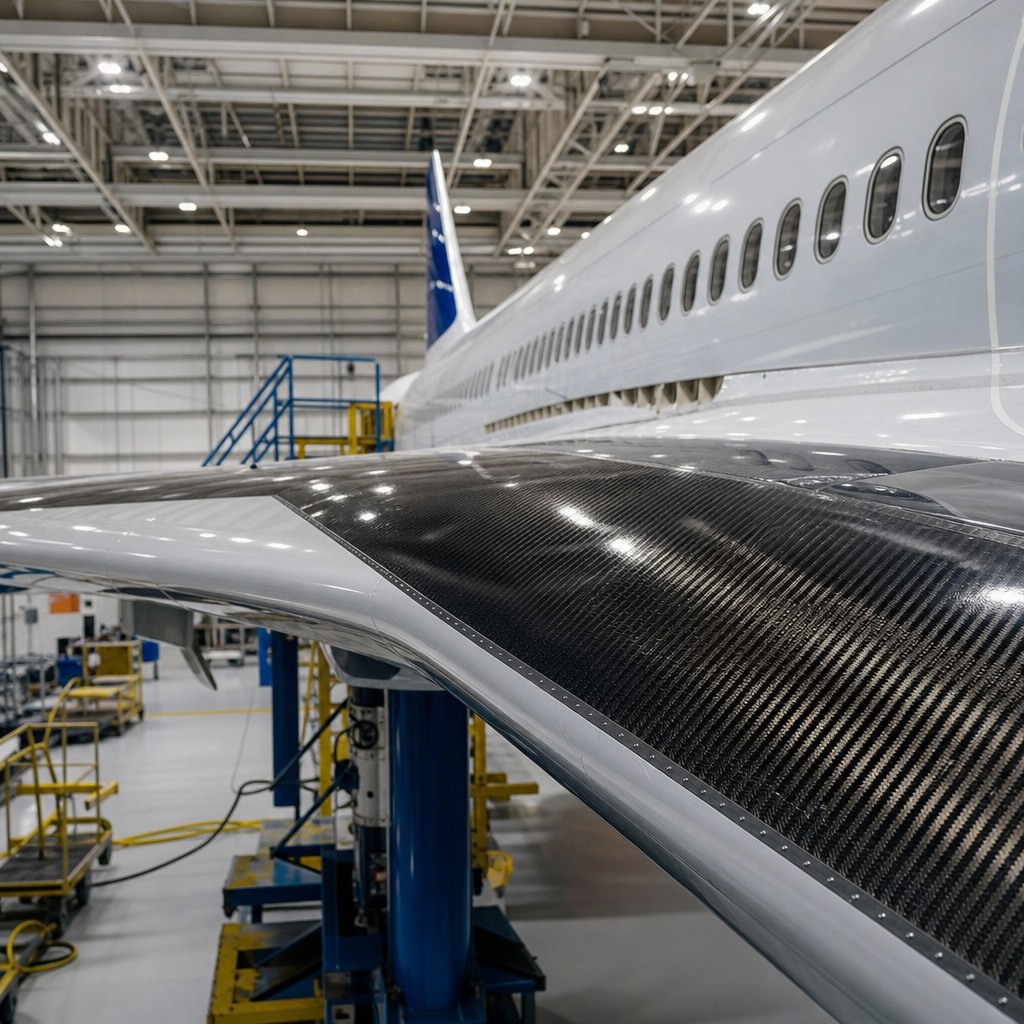
Aerospace remains the most visible showcase for high-performance polymer composites, but it is no longer the only benchmark. Commercial aircraft use carbon fiber composites in fuselage sections, wing structures, nacelles, floors, and interiors because weight reduction cuts fuel burn over decades of service. Satellite manufacturers choose composite panels for dimensional stability and low thermal expansion. In defense, radomes and UAV components benefit from dielectric tuning, corrosion resistance, and lower detectability. The sector’s current frontier is faster certification of thermoplastic and out-of-autoclave systems that can lower cost without compromising airworthiness.
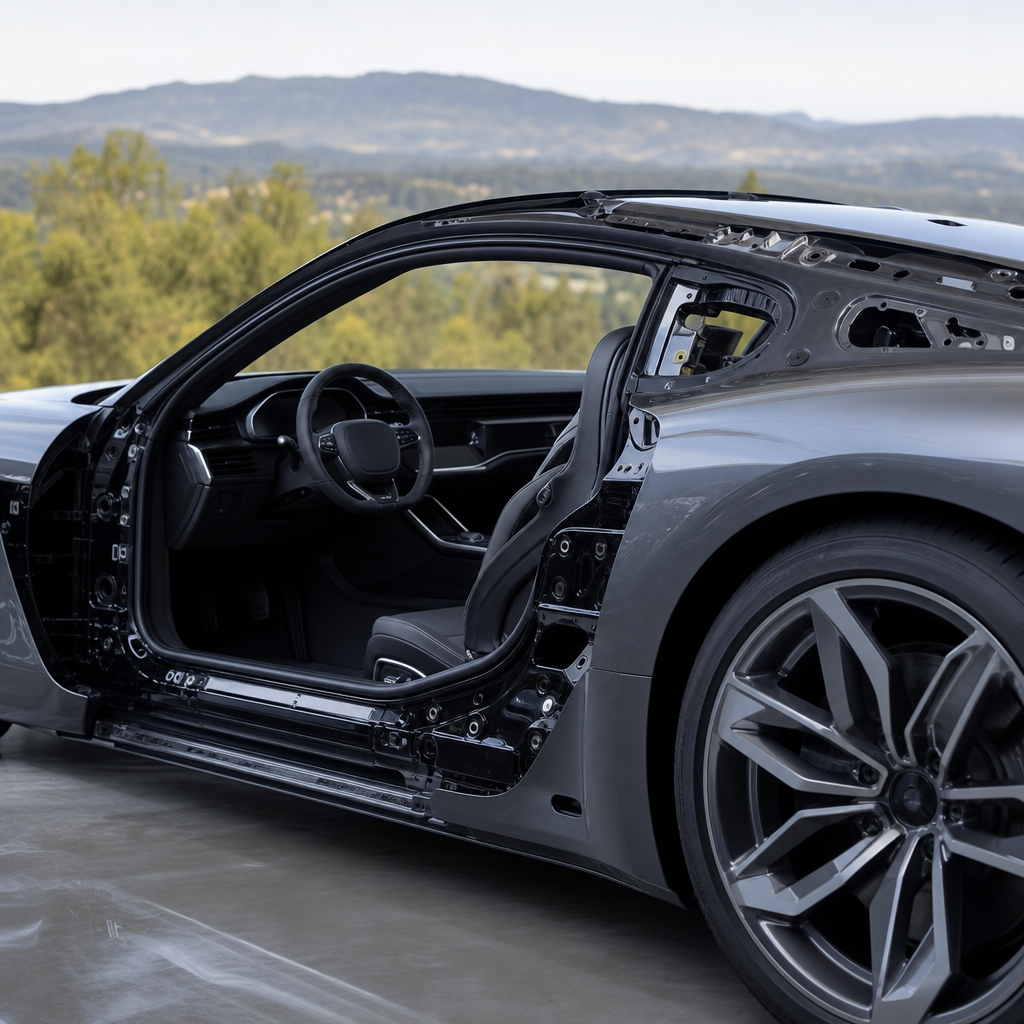
Automotive and broader mobility markets are pushing different innovations. Electric vehicles need lighter structures to offset battery mass, but they also need thermal management, crash performance, and scalable manufacturing. Glass fiber and carbon fiber composites are now used in battery covers, seat frames, leaf springs, underbody panels, and structural inserts. Composite leaf springs are a strong example: they reduce unsprung mass, improve corrosion resistance, and can consolidate multiple steel components into one molded part. Hydrogen mobility is another driver, with composite pressure vessels enabling practical storage pressures that metal tanks would struggle to deliver at acceptable weight.
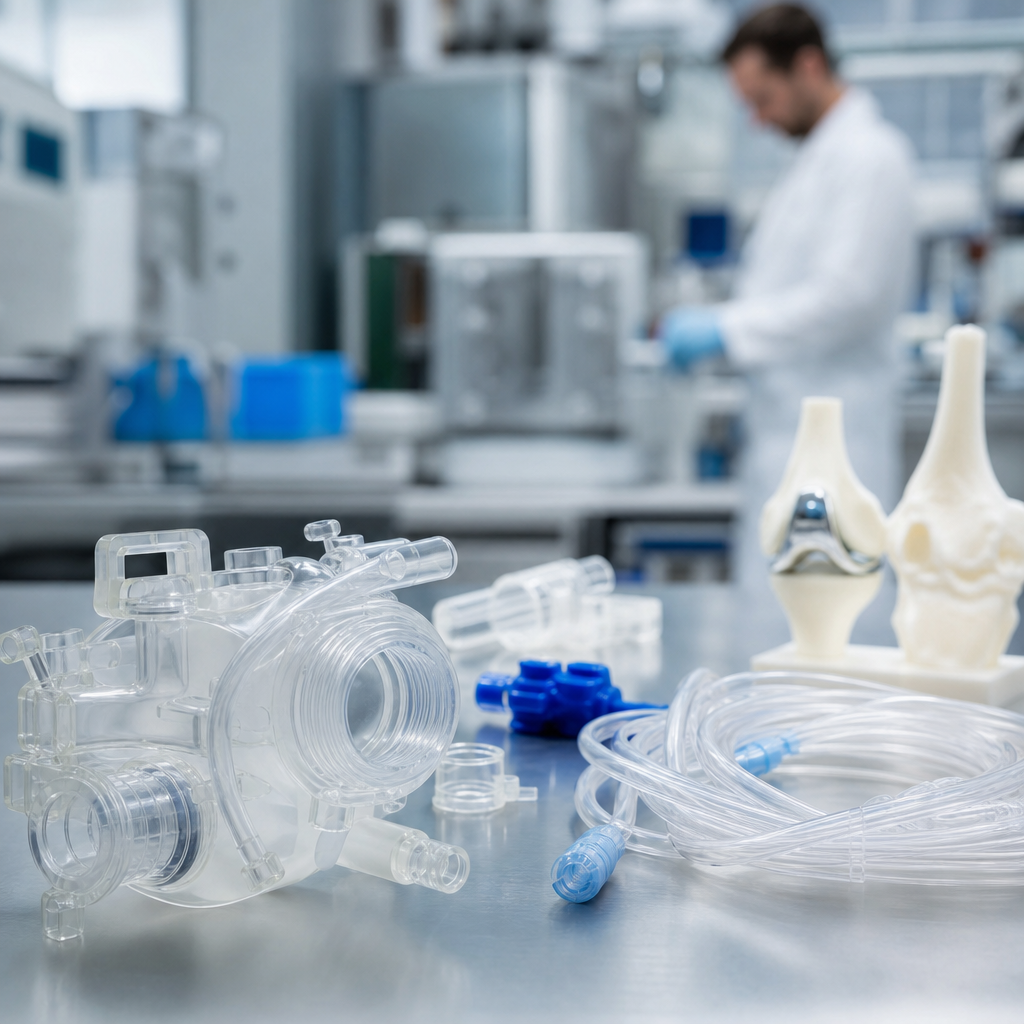
Wind energy depends heavily on polymer composites because blade length, stiffness, fatigue life, and transport constraints all intersect. Glass fiber epoxy remains dominant, while carbon reinforcement is selectively added in spar caps to control deflection in longer blades. In medical devices, carbon fiber reinforced PEEK has become valuable in imaging-compatible implants and surgical instruments because it is radiolucent and sterilizable. Industrial sectors use composite rollers, pump parts, corrosion-resistant grating, robotic arms, and wear components where metal would corrode, weigh too much, or require frequent replacement. Across these applications, the winning polymer solutions are those designed around the full use case, not isolated test data.
Sustainability, qualification, and the roadmap for future polymer solutions
Sustainability is now shaping composite development as strongly as mechanical performance. Recyclable thermoplastic matrices, bio-based resins, natural fiber hybrids, reclaimed carbon fiber, and lower-energy curing processes are moving from pilot programs into commercial use. Mechanical recycling of composite scrap remains challenging, especially for thermosets, but progress is real. Solvolysis, pyrolysis, and cement kiln co-processing are expanding end-of-life options, while design teams are reducing mixed-material complexity to improve disassembly. In practice, the most credible sustainability strategies start upstream by cutting scrap, minimizing overdesign, and selecting processes with better energy efficiency.
Qualification and quality assurance remain the gatekeepers. High-performance composite programs succeed when materials data, process windows, and inspection methods are controlled from the beginning. Differential scanning calorimetry, dynamic mechanical analysis, computed tomography, ultrasonic inspection, rheology, and statistical process control are standard tools for validating consistency. Engineers also rely on finite element analysis, micromechanics models, and digital twins to predict failure modes before tooling is cut. Standards from ASTM, ISO, SAE, and aerospace primes matter because buyers need comparable data, not marketing claims. Anyone developing innovations in polymer composites should treat testing, traceability, and documentation as part of the product, not paperwork after the fact.
The outlook for innovations in polymer composites is strong because the market increasingly rewards materials that are lightweight, multifunctional, manufacturable, and responsible across the lifecycle. The most important lesson is that innovation in polymer solutions is no longer a single breakthrough resin or fiber. It is the integration of chemistry, reinforcement architecture, processing technology, simulation, inspection, and recovery strategy into one coherent system. Organizations that build this capability can create aircraft parts that cure faster, battery enclosures that manage heat better, wind blades that last longer, and medical devices that perform with greater precision. If you are building an innovation roadmap under innovative products and solutions, use this hub as the starting point, then map each application to its matrix, reinforcement, process, and compliance needs before selecting the next material platform.
Frequently Asked Questions
1. What are polymer composites, and why are they so important in high-performance applications?
Polymer composites are engineered material systems that combine a polymer matrix with one or more reinforcing materials to achieve a balance of properties that a single material typically cannot deliver on its own. The matrix may be a thermoset such as epoxy, a thermoplastic such as polypropylene or PEEK, or an elastomer such as silicone. This matrix surrounds and supports the reinforcement, which may include carbon fiber, glass fiber, aramid fiber, ceramic particles, nanomaterials, natural fibers, or hybrid filler systems. Together, these components create a structure that can be tailored for specific mechanical, thermal, electrical, and chemical performance requirements.
They are especially important in high-performance applications because they offer a rare combination of low weight, high strength, corrosion resistance, fatigue durability, and design flexibility. In aerospace, that means lighter structures that improve fuel efficiency without sacrificing structural integrity. In automotive, it enables stronger body panels, battery enclosures, and under-the-hood components that contribute to vehicle efficiency and safety. In medical and electronics markets, polymer composites can provide biocompatibility, electrical insulation, dimensional stability, and miniaturization advantages.
What makes modern polymer composites so valuable is their tunability. Engineers can adjust fiber type, filler loading, matrix chemistry, fiber orientation, interfacial bonding, and manufacturing method to optimize performance for a specific use case. Rather than choosing from a limited menu of standard materials, designers can develop composite systems around actual application demands. That level of customization is a major reason polymer composites are driving innovation across demanding industries.
2. What recent innovations are improving the performance of polymer composites?
Recent innovations in polymer composites are focused on making these materials lighter, stronger, smarter, and easier to manufacture at scale. One major area of progress is advanced reinforcement technology. High-modulus carbon fibers, hybrid fiber architectures, and nano-reinforcements such as graphene, carbon nanotubes, and nanosilica are being used to improve stiffness, impact resistance, thermal management, and electrical functionality. These enhancements allow composites to do far more than simply replace metal; they can now serve structural, thermal, and functional roles in the same component.
Another major innovation involves matrix development. High-performance thermoplastics such as PEEK, PEKK, PPS, and advanced polyamides are gaining traction because they combine strong mechanical properties with chemical resistance, weldability, and recyclability advantages over traditional thermosets. At the same time, next-generation thermoset systems are being designed for faster curing, better toughness, and improved out-of-autoclave processing. These changes help manufacturers reduce cycle times while maintaining demanding quality standards.
Processing innovation is also transforming the field. Automated fiber placement, resin transfer molding, additive manufacturing, and digital simulation tools now give engineers greater control over part quality, fiber alignment, void reduction, and production efficiency. Embedded sensing is another exciting area, where conductive fillers or integrated sensor networks allow composite components to monitor strain, temperature, or damage in real time. This is particularly valuable in aerospace, wind energy, and industrial equipment where predictive maintenance and structural health monitoring can lower costs and improve safety.
Altogether, these innovations are pushing polymer composites beyond conventional structural uses and into multifunctional applications where performance, intelligence, and manufacturability all matter at once.
3. How do polymer composites compare with metals in demanding engineering environments?
Polymer composites compare very favorably with metals in many demanding environments, especially when weight reduction and corrosion resistance are high priorities. Metals such as steel and aluminum remain essential in engineering, but polymer composites can often deliver comparable or superior specific strength and stiffness, meaning performance per unit weight is significantly improved. This is why they are increasingly used in aircraft structures, high-end automotive systems, pressure vessels, sporting equipment, and industrial machinery components.
One of the biggest advantages of polymer composites is their ability to be engineered directionally. Metals are generally isotropic, meaning they behave similarly in all directions, while composites can be designed with fiber orientations that place strength exactly where it is needed. That allows engineers to maximize structural efficiency and eliminate unnecessary mass. In addition, composites resist rust and many forms of chemical degradation better than traditional metals, making them attractive for marine, chemical processing, and outdoor energy applications.
That said, composites are not automatically better in every situation. Their performance depends heavily on proper design, material selection, and manufacturing quality. Metals may still outperform composites in certain high-temperature, high-impact, or highly standardized applications where cost and ease of repair are critical. Composites can also present challenges related to joining, inspection, recyclability, and anisotropic behavior if these factors are not considered early in the design process.
The real advantage is that polymer composites open up a different design strategy. Instead of simply substituting one material for another, engineers can rethink geometry, reduce part count, integrate multiple functions, and improve lifecycle performance. In many high-performance environments, that broader design freedom is just as valuable as the raw material properties themselves.
4. Which industries are benefiting most from innovations in polymer composites?
Aerospace is one of the clearest beneficiaries because every reduction in structural weight can translate into fuel savings, longer range, increased payload capacity, and lower emissions. Advanced polymer composites are used in fuselage sections, interior components, radomes, brackets, and engine-adjacent systems where high strength-to-weight ratio and fatigue resistance are essential. As manufacturing methods become faster and more precise, their use in both commercial and defense aerospace continues to expand.
The automotive sector is also benefiting significantly, especially as electric vehicles place new demands on lightweighting, battery protection, crash performance, and thermal control. Polymer composites are being used in body structures, leaf springs, battery enclosures, seating systems, underbody shields, and interior assemblies. Their ability to reduce weight while supporting integration of complex shapes is particularly important as manufacturers try to extend driving range and improve production efficiency.
Energy is another major growth area. Wind turbine blades rely heavily on polymer composite technology because they must be large, lightweight, fatigue-resistant, and durable in harsh outdoor environments. In oil and gas, composites are used for pipes, tanks, and corrosion-resistant structures. In electronics, composites support thermal management, shielding, insulation, and miniaturized design. In medical applications, they are increasingly valuable for imaging-compatible devices, prosthetics, orthotics, surgical tools, and wearable technologies where biocompatibility, strength, and lightweight comfort matter.
Industrial and consumer sectors are benefiting as well. Machinery housings, robotics components, protective equipment, sporting goods, and infrastructure elements all use polymer composites to improve durability and reduce maintenance. The common thread across these industries is the demand for materials that can do more with less weight, less corrosion, and greater design flexibility.
5. What should engineers consider when selecting a polymer composite for a high-performance application?
Selecting the right polymer composite requires a full application-level evaluation, not just a comparison of datasheet values. Engineers need to start with the performance targets: load conditions, temperature range, chemical exposure, wear environment, electrical requirements, dimensional tolerances, regulatory constraints, and expected service life. A composite designed for an aircraft interior will be very different from one intended for an electric vehicle battery enclosure, a wind blade spar cap, or an implantable medical component. The matrix and reinforcement must be chosen together based on how they interact under real operating conditions.
Reinforcement type and architecture are central to the selection process. Carbon fiber may be preferred for high stiffness and low weight, glass fiber for cost-effective strength and electrical insulation, aramid for impact resistance, and ceramic or nano-fillers for thermal and surface performance. Engineers also need to consider fiber orientation, woven versus unidirectional structures, short versus continuous reinforcement, and whether a hybrid system could provide a better property balance. Just as important is the interface between the matrix and reinforcement, because strong interfacial bonding is critical for transferring loads and maintaining durability over time.
Manufacturing method is another key factor. Compression molding, injection molding, filament winding, pultrusion, resin transfer molding, layup, and additive manufacturing each impose different constraints on geometry, cycle time, fiber content, and cost. A theoretically ideal material may not be practical if it cannot be processed consistently at production scale. Engineers should also evaluate quality assurance requirements, repairability, joining methods, recyclability, and total lifecycle economics.
In practice, the best composite selection comes from balancing performance, manufacturability, cost, sustainability, and reliability. That often involves simulation, prototyping, and testing under realistic service conditions. When approached strategically, polymer composites can unlock performance levels that would be difficult or impossible to achieve with conventional materials alone.