Polymers are transforming aerospace materials by solving one of flight engineering’s oldest problems: how to reduce weight without sacrificing strength, heat resistance, durability, or safety. In aerospace, a polymer is a large molecular material built from repeating chemical units, and it may be used alone as a plastic, combined with reinforcing fibers as a composite matrix, engineered into coatings, adhesives, foams, seals, wire insulation, or printed parts, or formulated as a high-performance resin that survives extreme mechanical and thermal loads. Over the past two decades, I have seen aircraft and space programs move from treating polymers as secondary cabin materials to specifying them for primary structures, propulsion-adjacent components, radomes, battery enclosures, fuel system parts, and satellite subsystems. That shift matters because every kilogram removed from an aircraft lowers fuel burn, extends range, and reduces emissions, while every material improvement in spacecraft can increase payload capacity, mission duration, and reliability.
The importance of innovations in polymer solutions goes well beyond simple weight reduction. Modern aerospace programs must meet demanding certification rules, harsh environmental exposure, tight maintenance budgets, and increasingly aggressive sustainability targets. Metals such as aluminum, titanium, and nickel alloys still dominate many critical applications, but advanced polymers now complement and sometimes replace them in areas where corrosion resistance, design flexibility, dielectric behavior, vibration damping, and part consolidation create measurable advantages. Thermosets such as epoxy, bismaleimide, and polyimide resins support structural composites; thermoplastics such as PEEK, PEKK, PPS, and PEI enable weldable, tough, chemically resistant components; elastomers protect seals and flexible interfaces; and specialty fluoropolymers and polyimides insulate electrical systems. As a hub for innovations in polymer solutions, this article explains where these materials are used, why engineers choose them, what tradeoffs they bring, and how manufacturers are applying them across commercial aviation, defense, advanced air mobility, and space.
Why polymers matter in aerospace engineering
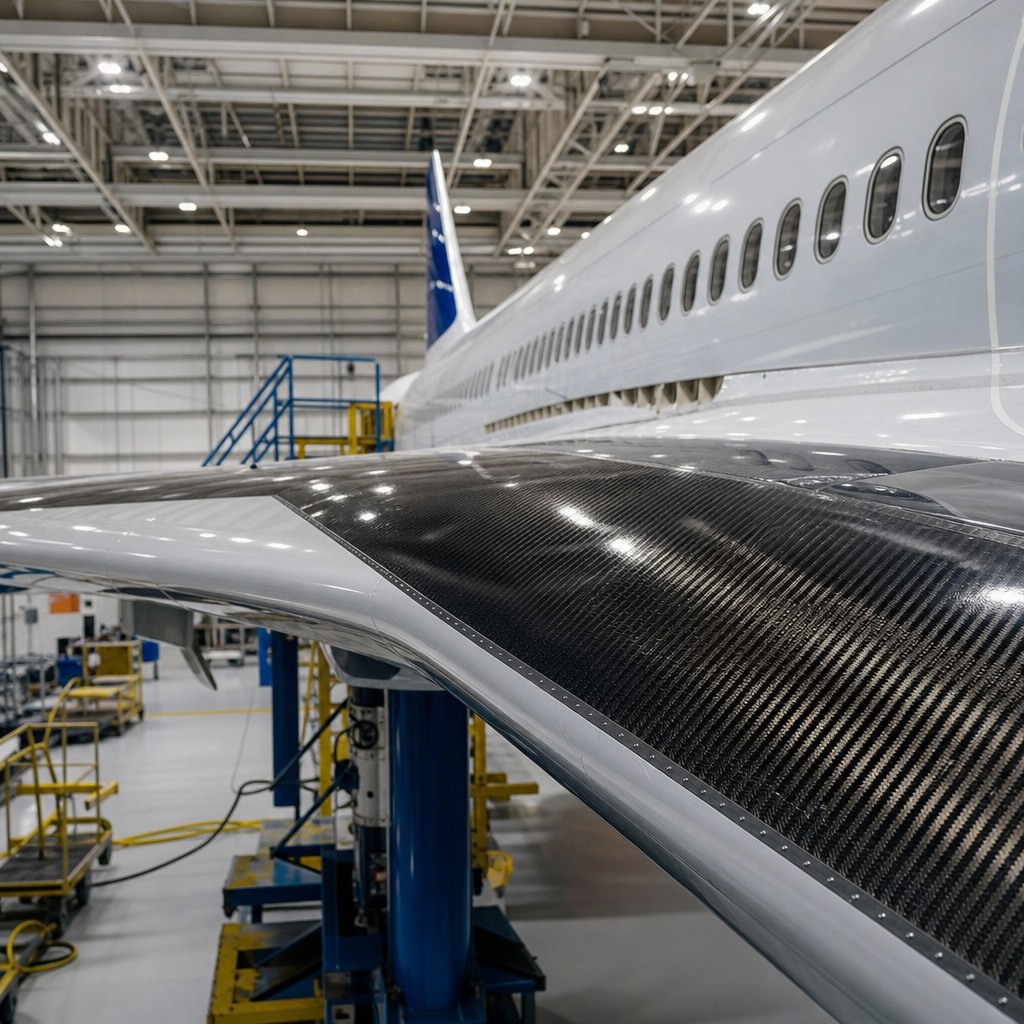
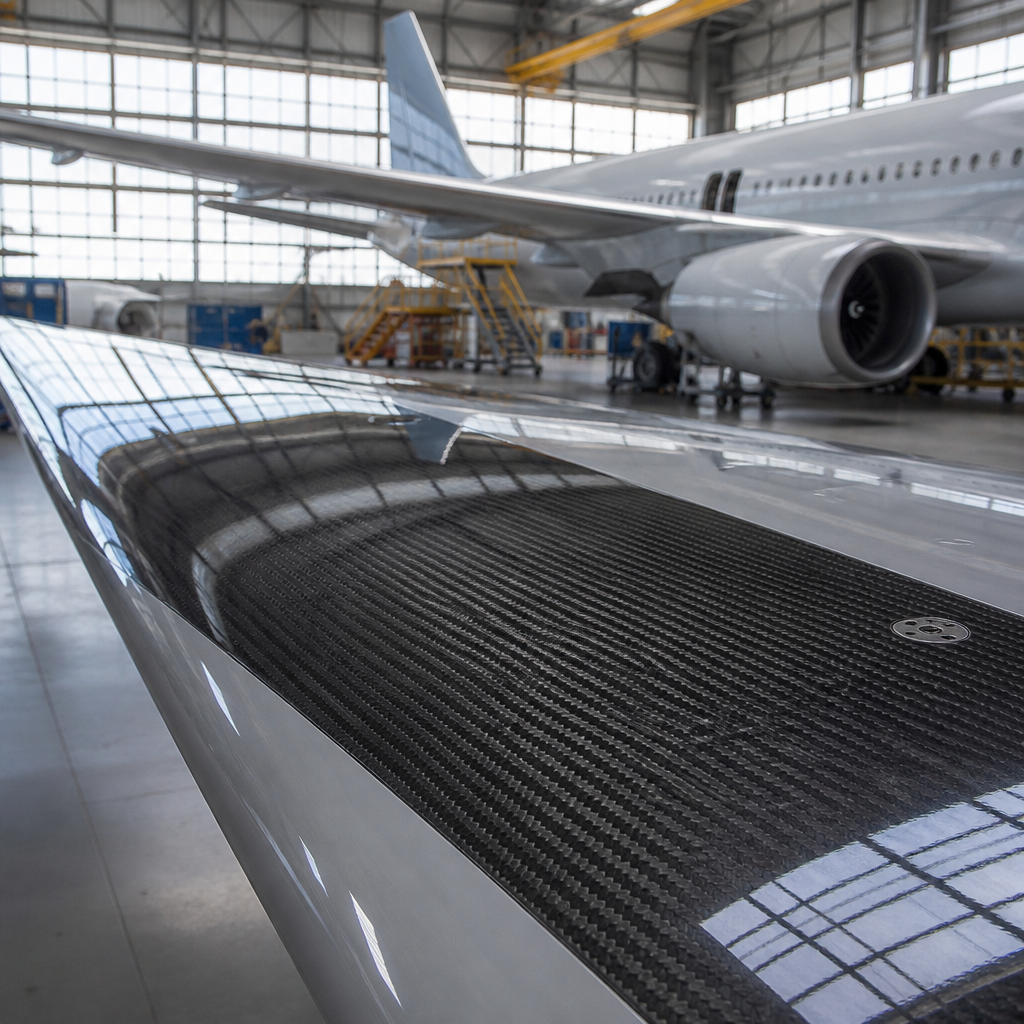
Polymers matter in aerospace because they improve specific properties, meaning performance per unit weight. A carbon fiber reinforced polymer panel can deliver stiffness and strength at a fraction of the density of steel and below that of aluminum, which is why composite airframes are now standard in many advanced aircraft. Boeing’s 787 and Airbus’s A350 both use composite-rich structures extensively, including fuselage sections and wings, to reduce structural mass and improve operating efficiency. The polymer matrix in these composites does more than hold fibers together; it transfers loads, protects against moisture and chemicals, and influences damage tolerance, temperature capability, and manufacturability. In practical terms, better polymer systems mean lighter brackets, fewer fasteners, lower corrosion risk, and more freedom to shape aerodynamically efficient parts.
Another reason polymers are revolutionizing aerospace materials is multifunctionality. Metals usually perform one dominant role: structure, conduction, shielding, or heat transfer. Polymer systems can be engineered to do several jobs at once. A single composite panel may provide structural support, radar transparency, flame resistance, acoustic damping, and embedded sensing capability. Adhesive films can replace mechanical fasteners while also sealing joints. Polymer foams can insulate cryogenic tanks and manage acoustic loads. Coatings based on fluoropolymers or silicones can resist ultraviolet radiation, erosion, hydraulic fluids, and thermal cycling. In system engineering, this kind of functional integration reduces assembly complexity and helps programs hit both weight and cost targets.
Core polymer families and what each one solves
Not all aerospace polymers are interchangeable, and choosing the right family is central to successful design. Thermoset polymers cure irreversibly, forming crosslinked networks that offer dimensional stability and high heat performance. Epoxy remains the workhorse matrix for structural aerospace composites because it balances mechanical strength, processability, adhesion, and cost. Toughened epoxies are common in autoclave-cured prepregs for wings, fuselages, control surfaces, and interior structures. Where operating temperatures rise, engineers turn to bismaleimide and polyimide systems, which retain properties better at elevated temperatures near engines or high-speed aerodynamic heating zones.
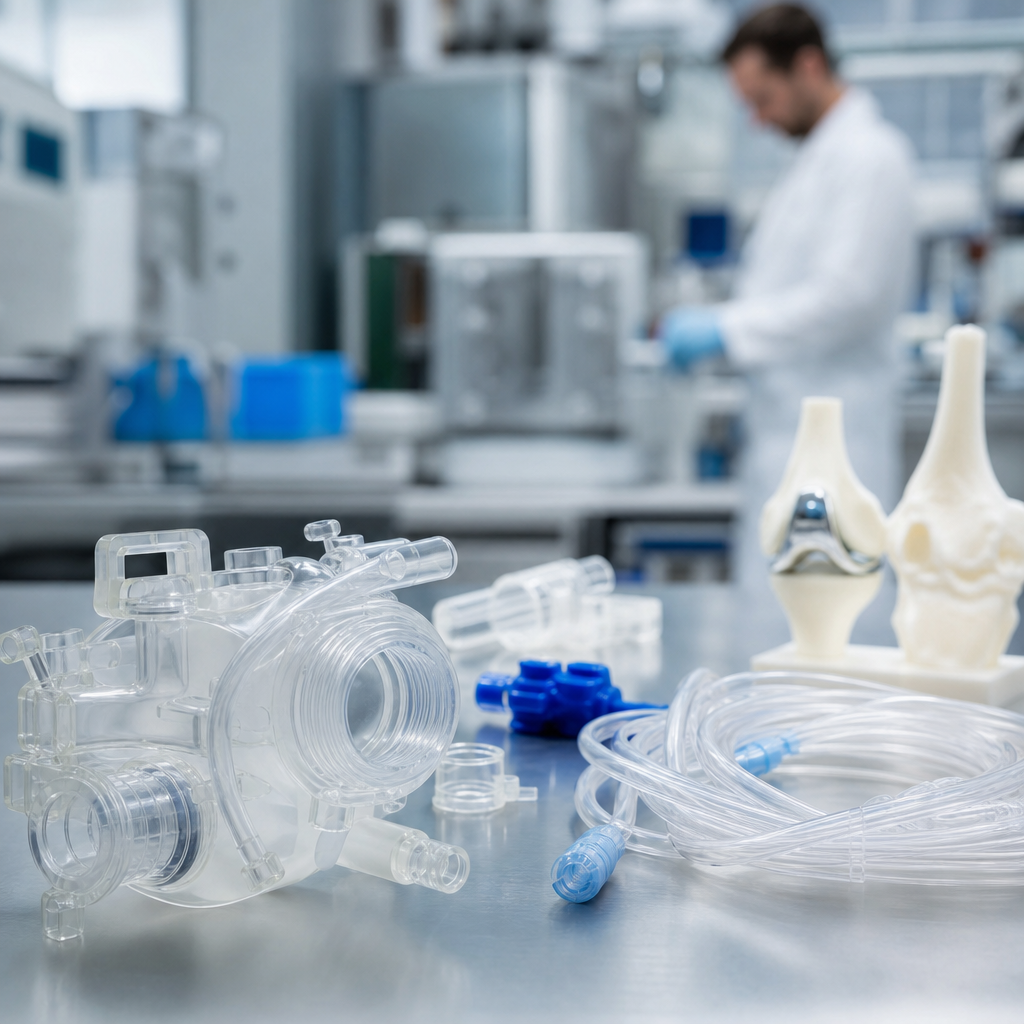
High-performance thermoplastics solve a different set of problems. PEEK and PEKK provide excellent chemical resistance, toughness, fatigue behavior, and weldability, making them attractive for clips, brackets, ducts, cable management hardware, and next-generation structural components made by thermoforming or additive manufacturing. PPS is valued for flame, smoke, and toxicity compliance in cabin and system components. PEI, often known by trade names such as Ultem, is widely used for lightweight interior and electrical applications. Fluoropolymers including PTFE, FEP, and PFA are essential in wire insulation and fluid handling because they maintain dielectric performance and resist aggressive chemicals across broad temperature ranges. Silicones and fluorosilicones support sealing in fuel and environmental systems where flexibility at low temperature is critical.
| Polymer family | Typical aerospace use | Key advantage | Main limitation |
|---|---|---|---|
| Epoxy thermosets | Primary composite structures | Strong structural balance and mature processing | Irreversible cure and limited recyclability |
| Bismaleimide/polyimide | High-temperature composite parts | Better elevated-temperature performance | Higher cost and more complex processing |
| PEEK/PEKK thermoplastics | Brackets, clips, ducts, printed parts | Tough, weldable, chemically resistant | High material and equipment cost |
| PPS/PEI | Cabin, electrical, and system components | Good flame performance and low weight | Lower structural capability than fiber composites |
| Fluoropolymers/silicones | Wire insulation, seals, hoses, coatings | Excellent environmental resistance | Specialized joining and handling requirements |
Structural composites are the biggest aerospace polymer breakthrough
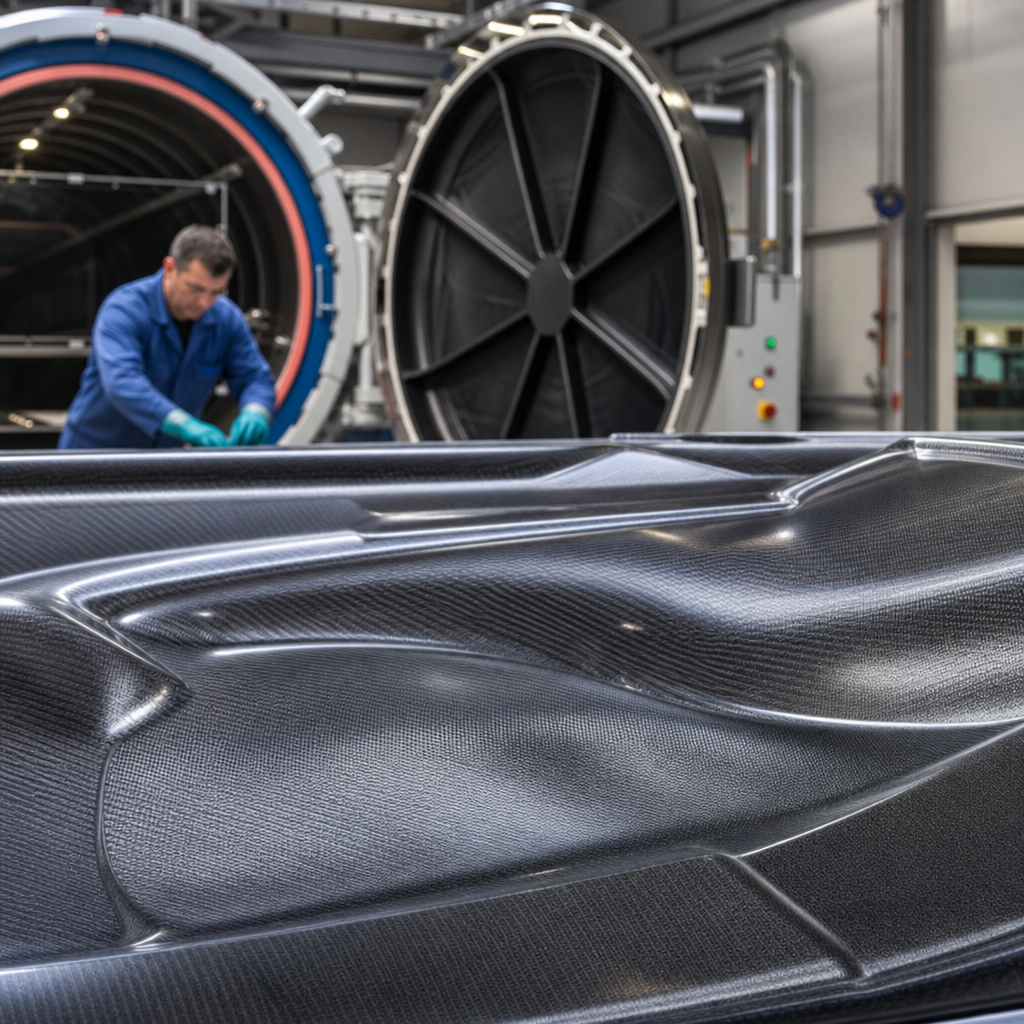
The most visible aerospace polymer innovation is the rise of fiber reinforced composites, where carbon, glass, or aramid fibers are embedded in a polymer matrix. For aircraft manufacturers, these materials changed structural design rules. Instead of machining heavy metal parts from billet and joining many subcomponents with rivets, engineers can tailor fiber orientation to match load paths and co-cure large integrated assemblies. That reduces part count and creates smoother surfaces, which can improve aerodynamics. In programs I have worked on, part consolidation through composite design often cut dozens of brackets and fasteners from a subassembly, improving not only weight but inspection accessibility and corrosion performance.
Carbon fiber reinforced polymers dominate primary aerospace structures because they combine high specific stiffness with low thermal expansion and excellent fatigue characteristics. Glass fiber composites remain common for radomes and fairings because they are transparent to radar and radio frequencies. Aramid fibers such as Kevlar are used where impact resistance and energy absorption matter, including ballistic and containment applications. The polymer matrix is the enabler. Toughened epoxy matrices improve compression after impact, a key metric because aerospace structures must tolerate tool drops, runway debris strikes, and maintenance damage. Out-of-autoclave resin systems have also expanded manufacturing options by reducing capital intensity for certain components, though autoclave prepreg still sets the benchmark for many certified primary structures.
Cabin interiors, safety, and passenger experience
Many people associate aerospace polymers with wings and fuselages, but cabin interiors are one of the richest areas of polymer innovation. Sidewall panels, overhead bins, seat shells, tray tables, lavatory modules, floor panels, decorative laminates, and insulation blankets all rely heavily on engineered polymer systems. The reason is straightforward: interiors must be light, durable, cleanable, aesthetically consistent, and compliant with strict flame, smoke, and toxicity requirements. Standards and test methods tied to regulations from authorities such as the FAA and EASA force material suppliers to prove that cabin polymers self-extinguish quickly, produce limited smoke, and do not release unacceptable levels of toxic gases under fire exposure.
Advanced thermoplastics and sandwich composites help airlines lower operating costs while improving passenger experience. A lighter overhead bin door opens more easily and reduces hinge wear. A tougher seat shell resists cracking during high-cycle use. Polymer decorative films can provide premium finishes without the mass penalty of metal veneers. In retrofit programs, thermoplastic interior components also shorten lead times because they can be thermoformed and machined faster than some legacy alternatives. The maintenance side matters just as much. Polymer interiors resist corrosion from spilled beverages, cleaning chemicals, and cabin humidity, and many are easier to repair cosmetically than painted metal parts.
Adhesives, coatings, seals, and electrical protection
Some of the most consequential polymer solutions in aerospace are easy to overlook because they sit between larger components. Structural adhesives distribute loads across bonded joints, reducing stress concentrations that would occur around rivets or bolts. Film adhesives based on epoxy or modified phenolic chemistries are routinely used in honeycomb sandwich panels, composite-to-metal bonds, and secondary structural assemblies. Correct surface preparation is critical: abrasion, solvent cleaning, peel ply control, and sometimes plasma or chemical treatments determine bond quality as much as the adhesive itself. When adhesive selection is poor, failure often occurs at the interface rather than within the polymer, which is why qualification testing must include environmental aging, fatigue, and disbond inspection methods.
Polymer coatings and sealants protect aircraft and spacecraft from fluids, weather, erosion, and electrical hazards. Polyurethane topcoats preserve appearance and resist ultraviolet degradation. Fuel tank sealants based on polysulfide chemistry prevent leaks while tolerating thermal cycling and fuel exposure. Ablative polymer systems protect reentry vehicles by sacrificially decomposing and carrying heat away. In electrical systems, polyimide and fluoropolymer insulation shield wires from abrasion, arcing, and chemical attack while maintaining performance over wide temperature bands. With more-electric aircraft architectures and growing battery integration, polymer materials around cables, connectors, busbars, and enclosure barriers have become even more important for dielectric reliability and fire containment.
Additive manufacturing and thermoplastic processing are accelerating change
One of the fastest-moving innovations in polymer solutions is additive manufacturing. Aerospace companies now print polymer tools, ducting, clips, brackets, cabin parts, and low-volume replacement components using processes such as fused filament fabrication, selective laser sintering, and material extrusion with high-performance thermoplastics. The major benefit is design freedom. Instead of accepting the geometry limits of subtractive machining, engineers can create lattices, internal channels, and consolidated forms that cut mass and assembly labor. Airbus, Boeing, and many tier suppliers have adopted printed polymer parts in both production and maintenance settings, especially where certification pathways are clear and the business case is strongest for low-volume complex parts.
Thermoplastic composite processing is also reshaping aerospace manufacturing. Unlike thermosets, thermoplastics can be reheated and formed, enabling welding, stamping, and rapid-cycle fabrication. Automated tape laying and organosheet forming allow manufacturers to produce repeatable parts with shorter takt times than traditional autoclave cure routes for selected applications. This matters for advanced air mobility aircraft and satellites, where production economics and supply chain agility are decisive. The tradeoff is that thermoplastic processing often demands tighter thermal control, expensive feedstocks, and specialized equipment. Still, for brackets, clips, access panels, and some semi-structural parts, the speed and toughness benefits are significant.
Limitations, certification, and what engineers must get right
Polymers are not a universal replacement for metals, and good aerospace engineering depends on understanding their limits. Temperature capability remains a decisive constraint. Many polymers lose stiffness or creep under sustained load as they approach their glass transition or melting range. Moisture uptake can alter dimensions and mechanical properties. Composite laminates can suffer barely visible impact damage that requires specialized non-destructive inspection, often using ultrasonic testing, thermography, or shearography. Lightning strike protection is another challenge because carbon fiber composites conduct differently than metals and usually need expanded copper foil or metallized layers to dissipate current safely.
Certification and quality assurance are equally critical. Aerospace materials must be qualified through rigorous allowables development, environmental conditioning, process control, and traceability. Standards from organizations such as ASTM, SAE, and NADCAP-linked process disciplines shape how materials are tested and manufactured. A polymer with excellent lab data can still fail commercially if shelf life, out time, cure control, contamination management, or repair procedures are not tightly governed. That is why the best innovations in polymer solutions are not only new chemistries. They also include better prepreg handling, smarter health monitoring, automated inspection, digital material pedigree, and repair systems that restore structural performance predictably in service.
The future of polymer solutions in aerospace
The next wave of aerospace polymer innovation is focused on sustainability, higher temperature performance, embedded functionality, and faster certification-ready production. Recyclable thermoplastic composites are gaining attention because they can reduce waste and support reprocessing better than traditional thermosets. Bio-based feedstocks are being explored, although aerospace adoption will remain cautious until consistency and long-term durability are proven. Nanomodified resins that incorporate graphene, carbon nanotubes, or advanced tougheners may improve conductivity, fracture resistance, or sensing capability, but they must justify added cost and demonstrate stable dispersion in production conditions.
Polymers are also enabling new aircraft architectures. Hydrogen and electric propulsion systems need lightweight insulation, battery containment materials, cryogenic-compatible seals, dielectric barriers, and corrosion-resistant fluid system components. Urban air mobility vehicles rely on rapid manufacturing and aggressive weight control, both areas where thermoplastics and composites excel. In space, polymer matrix composites support satellite structures, deployable booms, antenna reflectors, and thermal control systems where low mass and dimensional stability directly affect mission economics. The direction is clear: aerospace polymers are moving from supporting roles into system-defining roles. Companies that understand material behavior, processing windows, and certification demands will gain the most value from this shift. If you are building an innovation roadmap under innovative products and solutions, start by mapping every weight, durability, insulation, and assembly challenge in your platform to the right polymer family and process route.
Frequently Asked Questions
1. Why are polymers so important in modern aerospace materials?
Polymers have become essential in aerospace because they address a core engineering challenge: reducing weight while maintaining the performance standards required for flight. Every kilogram removed from an aircraft or spacecraft can improve fuel efficiency, increase payload capacity, extend range, and lower operating costs. Traditional materials such as aluminum, steel, and titanium still play major roles, but polymers offer designers an additional class of materials that can be tailored for specific functions without adding unnecessary mass.
What makes polymers especially valuable is their versatility. In aerospace, they are not limited to one form or application. They can be used as lightweight plastics, as the matrix in fiber-reinforced composites, as high-temperature resins, as protective coatings, as structural adhesives, as insulation for wiring, as seals and gaskets, and even as feedstocks for additive manufacturing. This broad functionality allows engineers to replace multiple heavier or less adaptable materials with polymer-based solutions designed for exact environmental and mechanical requirements.
Polymers also help improve corrosion resistance, chemical resistance, fatigue performance, and manufacturability. Unlike some metals, many polymer systems do not corrode in the traditional sense, which is important for aircraft exposed to moisture, de-icing fluids, hydraulic fluids, fuel, ultraviolet radiation, and temperature cycling. In many cases, polymer-based components can also reduce part counts by integrating several functions into one molded or bonded structure, simplifying assembly and maintenance. That combination of low weight, design flexibility, and high functional performance is why polymers are revolutionizing aerospace materials rather than simply supplementing them.
2. How do polymer composites improve aircraft and spacecraft performance?
Polymer composites improve aerospace performance by combining a polymer matrix with reinforcing materials such as carbon fiber, glass fiber, or aramid fiber. The matrix binds and protects the fibers, while the fibers provide much of the strength and stiffness. This creates a material system with an exceptional strength-to-weight and stiffness-to-weight ratio, which is one of the most important advantages in aerospace design. Instead of relying solely on heavy metal structures, engineers can use composites to build components that are lighter yet still strong enough to handle aerodynamic loads, pressurization, vibration, and repeated stress cycles.
In aircraft, this weight reduction translates directly into operational benefits. Lighter airframes require less fuel, can carry more passengers or cargo, and may produce lower emissions over their service life. Composites are now widely used in fuselage sections, wings, tail structures, radomes, interior panels, floor beams, fairings, and engine-related components. In spacecraft and satellites, polymer composites are also highly valuable because every gram matters during launch. Lightweight structural panels, antenna supports, instrument housings, and thermal-control components all benefit from composite construction.
Another major advantage is that composites can be engineered directionally. Unlike isotropic metals, which have similar properties in all directions, composite laminates can be designed so that the fibers align with expected loads. This allows material performance to be placed exactly where it is needed. Engineers can optimize stiffness, impact tolerance, fatigue resistance, and dimensional stability with a precision that is difficult to achieve using conventional materials alone. The result is not just lighter structures, but smarter structures that support higher efficiency and better overall system performance.
3. Can polymers really withstand the extreme heat, stress, and safety demands of aerospace environments?
Yes, but the answer depends on choosing the right polymer for the right aerospace application. Not all polymers are suitable for flight-critical environments, but high-performance aerospace polymers are specifically engineered to tolerate demanding combinations of heat, pressure, vibration, chemical exposure, mechanical stress, and long service life. Materials such as PEEK, PEI, PPS, polyimides, fluoropolymers, and advanced thermoset resins are used because they can maintain structural integrity and functional performance under conditions that would quickly degrade standard commercial plastics.
Thermal performance is one of the most important selection criteria. Aerospace components may experience subzero temperatures at altitude, elevated temperatures near engines, and rapid thermal cycling during operation. Certain polymer systems are designed to resist softening, embrittlement, or thermal decomposition across these ranges. Flame, smoke, and toxicity performance is also critical, especially for interior cabin materials. Aerospace-grade polymers must often meet strict regulations limiting flammability and the release of hazardous smoke or gases in fire scenarios.
Mechanical reliability matters just as much as temperature resistance. Aerospace polymers are tested for tensile strength, compression, impact behavior, creep, fatigue, wear, and environmental aging. Adhesives and sealants must continue performing despite repeated pressure changes and chemical exposure. Wire insulation must remain stable and nonconductive in harsh electrical and thermal conditions. Structural composite matrices must hold reinforcing fibers in place through thousands of operational cycles. In short, polymers absolutely can meet aerospace demands, but only when they are carefully formulated, tested, qualified, and matched to the exact mission profile of the component.
4. What aerospace parts and systems commonly use polymers today?
Polymers are used across virtually every major aerospace system, from primary structures to small but mission-critical support components. In structural applications, polymer matrix composites are found in fuselage sections, wing skins, tail assemblies, access panels, nacelles, fairings, and interior support structures. In many commercial aircraft, composite content has risen dramatically because these materials help reduce airframe weight while improving resistance to fatigue and corrosion.
Beyond large structures, polymers are equally important in non-structural and semi-structural roles. Aerospace adhesives bond dissimilar materials and distribute stress more evenly than mechanical fasteners in some assemblies. Coatings protect against ultraviolet radiation, erosion, moisture, and chemical attack. Seals, gaskets, and O-rings made from specialized elastomers help maintain pressure integrity and fluid containment in fuel systems, hydraulic systems, doors, windows, and environmental control systems. Foams and polymer panels are used in aircraft interiors for insulation, acoustic control, seating, and lightweight cabinetry.
Electrical and electronic systems also depend heavily on polymers. Wire and cable insulation must withstand heat, vibration, and electrical stress while remaining lightweight and durable. Printed circuit board materials, encapsulants, connector housings, and protective films often rely on advanced polymer chemistry. In space systems, polymers may be used in thermal blankets, lightweight instrument enclosures, antenna components, adhesive films, and deployable structures. Additive manufacturing has expanded this role even further by enabling polymer-based printed parts for ducts, brackets, housings, tooling, and custom low-volume components. Taken together, these examples show that polymers are not a niche material category in aerospace; they are deeply embedded in both visible structures and hidden systems that keep aircraft and spacecraft functioning safely.
5. What are the biggest challenges and future opportunities for polymers in aerospace?
The biggest challenges include certification complexity, long-term durability validation, repairability, recyclability, and cost-effective manufacturing at scale. Aerospace is one of the most demanding industries in the world when it comes to qualification and safety. Any new polymer, resin system, composite architecture, or manufacturing process must be proven through extensive testing before it can be trusted in service. Engineers need confidence not only in initial material properties, but also in how those properties will change after years of exposure to moisture, temperature extremes, ultraviolet radiation, mechanical fatigue, and aviation chemicals.
Manufacturing is another major consideration. Some high-performance polymer composites require precise layup procedures, tight process control, specialized tooling, and controlled curing conditions. Defect prevention and inspection can be more complex than with traditional metal parts. Repair methods can also differ significantly, requiring specialized procedures for bonded structures and composite laminates. Sustainability is an additional concern, especially as aerospace manufacturers look for ways to reduce lifecycle environmental impact. Recycling thermoset composites remains difficult, although progress is being made through new resin chemistries, thermoplastic composites, and material recovery methods.
At the same time, the future opportunities are substantial. Thermoplastic composites offer faster processing, weldability, and improved recyclability. High-temperature polymers are expanding possibilities near propulsion systems and in next-generation air mobility platforms. Additive manufacturing is allowing customized, lightweight polymer parts with shorter development cycles and less material waste. Smarter multifunctional polymers may eventually combine structural performance with sensing, thermal management, electromagnetic shielding, or self-healing behavior. As aerospace platforms evolve toward greater efficiency, electrification, autonomy, and advanced space missions, polymers are likely to become even more central to design strategy. Their greatest advantage is not just that they are lighter than metals, but that they can be engineered to do more with less.