Advances in biodegradable polymer solutions are reshaping how manufacturers design packaging, medical devices, agricultural films, textiles, and consumer goods at a time when plastic waste, carbon pressure, and regulatory scrutiny are converging. In practice, biodegradable polymer solutions are not a single material class but a broad family of engineered resins, blends, additives, coatings, and processing methods intended to deliver useful performance for a defined period, then break down under specific biological conditions. That distinction matters. “Biodegradable” does not automatically mean home compostable, marine degradable, recyclable, or harmless if littered. It means microorganisms can convert the material into water, carbon dioxide or methane, biomass, and mineral salts under the right conditions and within a recognized test framework. I have worked with packaging teams evaluating these materials against shelf life, seal integrity, heat resistance, and waste-handling realities, and the best results come from matching polymer chemistry to the actual end-of-life system. As a hub within innovative products and solutions, this guide explains the major polymer families, current technical advances, performance tradeoffs, processing considerations, and the industries where innovation is moving fastest.
The commercial importance of this field is growing because conventional plastics remain highly effective but create persistent waste when collection and recycling fail. Governments are responding with single-use plastic restrictions, extended producer responsibility rules, compostability labeling standards, and procurement policies favoring lower-impact materials. Brands are also setting packaging targets tied to carbon reduction, renewable content, and improved circularity. Biodegradable polymer solutions sit at the intersection of these pressures, but success depends on technical precision rather than broad claims. A shopping bag needs toughness and tear resistance, a coffee pod needs oxygen and moisture control, a surgical suture needs predictable hydrolysis inside the body, and a mulch film needs to survive a growing season before disintegrating in soil. Because this hub covers innovations in polymer solutions comprehensively, it focuses on the technologies, standards, and application logic that help decision-makers choose materials intelligently and identify where deeper topic pages should branch from here.
Core polymer families and why recent material science matters
The current market is led by several foundational biodegradable polymer families, each with distinct chemistry and processing behavior. Polylactic acid, or PLA, is produced from fermented sugars and is valued for clarity, stiffness, printability, and commercial availability. It performs well in thermoformed trays, cups, and rigid packaging, but standard PLA can be brittle and has limited heat resistance unless modified through crystallization, nucleating agents, stereocomplex formation, or blending. Polyhydroxyalkanoates, or PHAs, are produced by microorganisms and attract attention because certain grades biodegrade in marine, soil, freshwater, and compost environments more readily than PLA. Their challenge has been cost, variability, and processing sensitivity, though fermentation advances and capacity expansion are improving economics. Starch-based polymers remain important for films and bags because starch is abundant and inexpensive, but formulations usually require plasticizers and blending with other biodegradable polyesters to improve processability and moisture performance.
Other important materials include polybutylene adipate terephthalate, or PBAT, which is flexible and often blended with PLA or starch to improve toughness, and polybutylene succinate, or PBS, which offers useful thermal performance and balanced mechanical properties. In medical applications, polymers such as polyglycolic acid, polycaprolactone, and copolymers like PLGA are critical because degradation rate can be engineered through molecular weight, crystallinity, and comonomer ratio. What has changed in recent years is not just the list of materials, but the precision with which formulators can tune them. Reactive extrusion, chain extenders, impact modifiers, nanocellulose reinforcement, mineral nucleation, and enzymatically triggered additives now allow manufacturers to dial in flexibility, barrier properties, compostability timelines, and processing windows more reliably than earlier generations of biodegradable plastics. That shift from niche novelty to engineered performance is the central advance driving broader adoption.
Processing innovations that make biodegradable polymers commercially viable
One of the biggest barriers historically was that biodegradable polymers often ran poorly on conventional equipment or produced inconsistent quality. That is changing because processors now have better drying systems, screw designs, temperature profiles, and in-line monitoring tailored to moisture-sensitive resins. PLA, for example, can undergo hydrolytic degradation during melt processing if drying is inadequate, reducing molecular weight and weakening parts. Modern dehumidifying dryers, closed conveying, and viscosity monitoring help avoid that loss. Film producers using PBAT and starch blends are improving bubble stability and thickness control through optimized die design and more precise melt strength modifiers. Injection molders are using chain extenders and tailored masterbatches to recover toughness while maintaining cycle time. These improvements sound incremental, but on a production line, a small reduction in scrap or a wider operating window can determine whether a biodegradable solution is scalable or not.
Compounding has become especially important. Instead of selling neat polymer and expecting converters to solve performance gaps, suppliers increasingly offer application-ready formulations. For a compostable cutlery grade, that may mean reinforced PLA with heat-deflection improvements and impact modification. For a flexible mailer film, it may involve a PBAT-rich blend with anti-block and slip additives that do not compromise compostability certification. In my experience, successful commercialization usually begins with processing discipline rather than marketing claims. Teams that run designed experiments on drying, residence time, and seal temperatures move faster than teams focused only on resin cost per kilogram. Another advance is multilayer simplification. Because some compostability standards limit incompatible structures, developers are designing monomaterial or near-monomaterial biodegradable systems that still achieve needed barrier and seal performance through coatings, orientation, or crystallization control instead of conventional mixed laminates.
Performance breakthroughs in packaging, food service, and retail applications
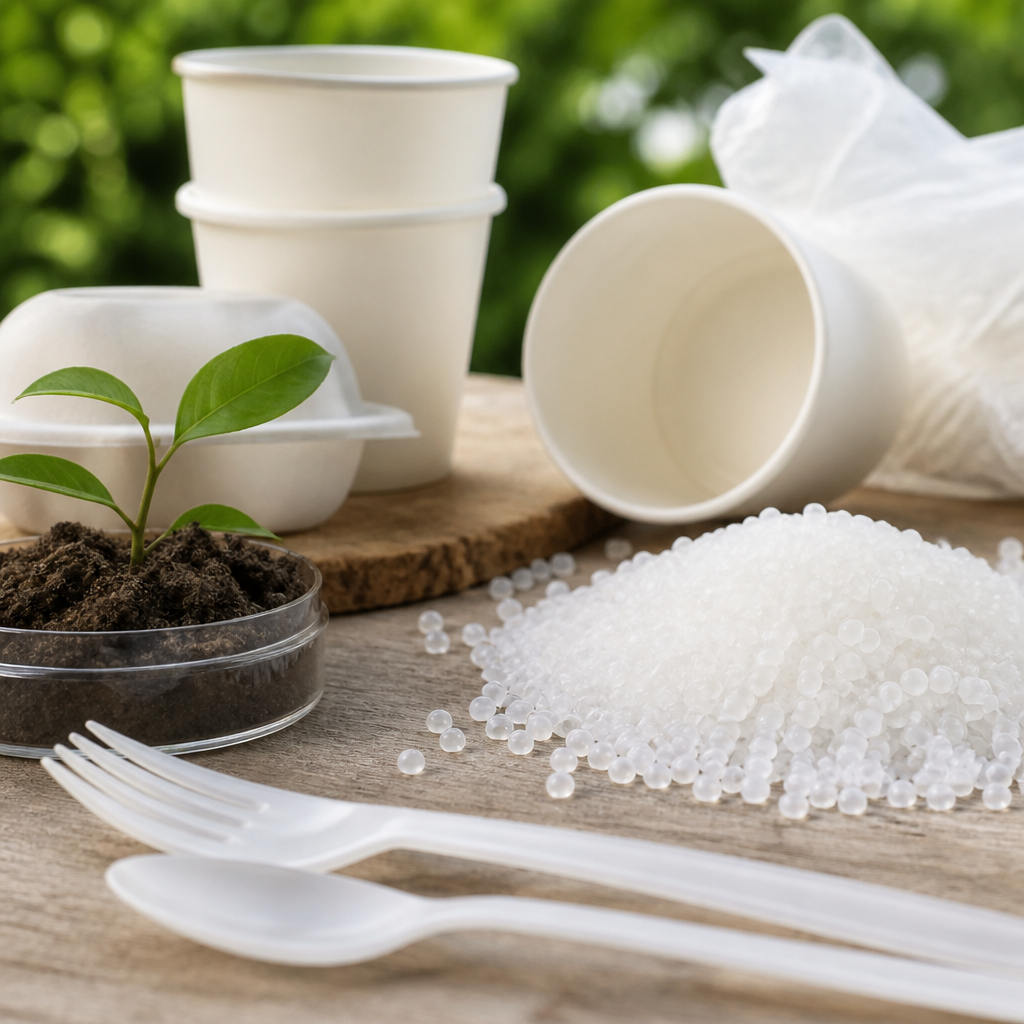
Packaging remains the largest and most visible use case for biodegradable polymer solutions, and the most significant progress has been in balancing product protection with certified end-of-life performance. Rigid packaging made from improved PLA can now withstand hotter filling and handling conditions through crystallization and heat-set processes, while transparent grades still serve cold beverage cups and produce containers. Flexible packaging is improving through PLA and PBAT blends, coated cellulose structures, and starch-polyester systems that deliver puncture resistance and sealability. Coffee capsules, produce labels, tea sachets, and organic waste liners are practical examples where compostable designs align the package with food-contaminated disposal streams that are difficult to recycle conventionally.
Barrier performance is a critical frontier. Oxygen transmission rate and water vapor transmission rate determine whether a biodegradable package can protect snacks, coffee, or fresh produce. Developers are addressing this with mineral coatings, bio-based barrier layers, and process controls such as biaxial orientation. Not every product is a fit. Highly moisture-sensitive foods with long shelf-life requirements often still challenge biodegradable structures, especially when cost targets are tight. Yet in short-life applications, event catering, quick-service food, and fresh produce, the value proposition can be compelling because the package is likely to be contaminated after use. Retailers are also using biodegradable polymer solutions in e-commerce mailers, garment bags, produce bags, and tamper-evident films where lightweighting and disposal messaging matter, although credibility depends on clear disposal instructions tied to available composting infrastructure.
Medical, agricultural, and industrial uses expanding beyond packaging
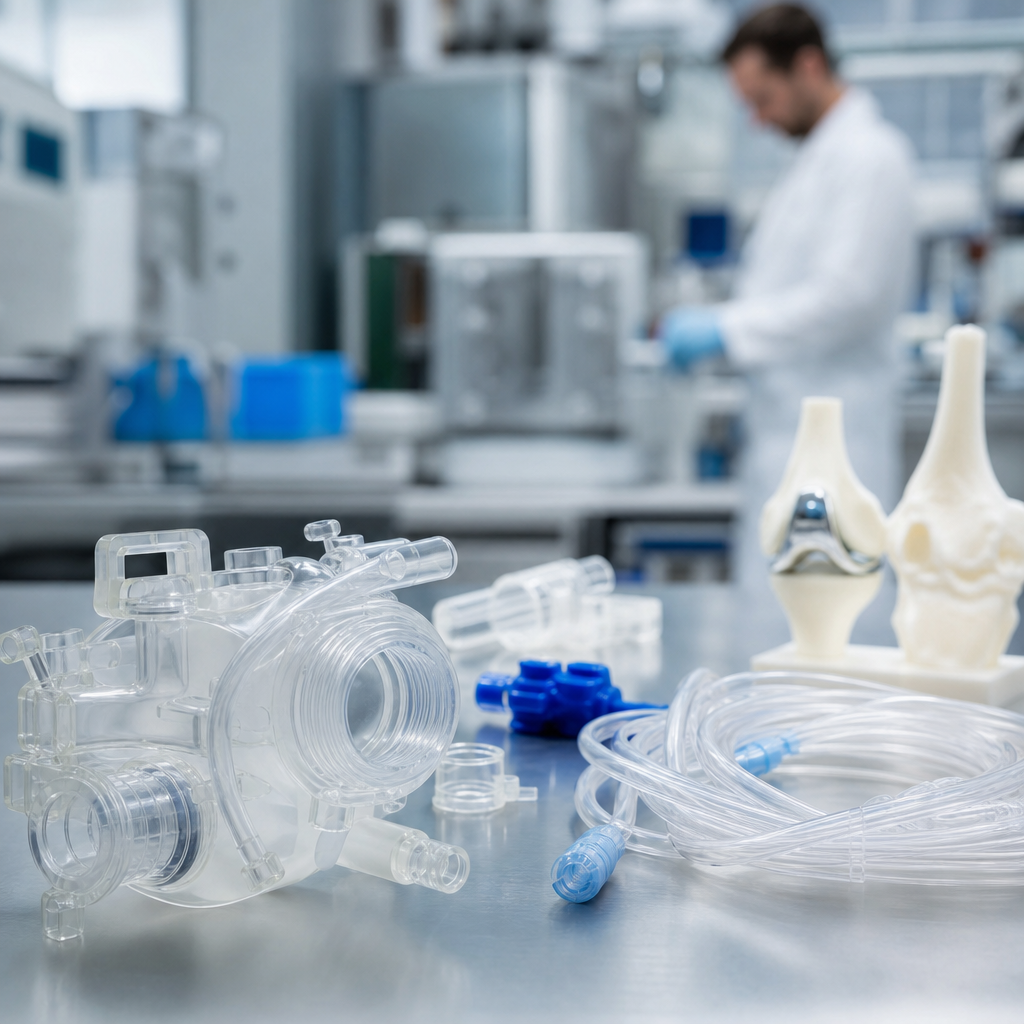
Biodegradable polymer innovation extends well beyond consumer packaging. In medicine, absorbable sutures, orthopedic fixation devices, tissue scaffolds, drug-delivery systems, and wound-care products rely on polymers that safely degrade in the body over controlled timeframes. Materials such as PGA, PLA, PLGA, and PCL are selected based on hydrolysis rate, modulus, and biocompatibility. A resorbable screw used in sports medicine cannot lose strength too early, while a drug-eluting implant may need a carefully staged release profile. These are mature but still advancing fields, especially as additive manufacturing and electrospinning enable patient-specific geometries and porous scaffolds for regenerative medicine.
Agriculture is another major growth area. Conventional polyethylene mulch films improve weed control and soil temperature but are labor-intensive to collect and often leave fragments behind. Biodegradable mulch films, typically based on starch blends, PBAT, or PBS systems, can be tilled into soil after use if they meet regional standards and perform under local conditions. Controlled-release fertilizer coatings, plant clips, twines, and seedling pots are also evolving. Industrial applications include 3D printing filaments, compostable adhesive systems, controlled-lifetime geotextiles, and temporary protective components used in logistics or construction. The practical lesson across these sectors is that degradation must be designed around the service environment. Soil biology, moisture, temperature, pH, UV exposure, and part thickness all influence outcome. The smartest innovations specify the target environment first and engineer polymer behavior backward from that reality.
Standards, certification, and the difference between claims and proof
Confusion around terminology remains one of the biggest obstacles to adoption, so standards and certification are central to responsible product development. For industrial compostability, ASTM D6400 in the United States and EN 13432 in Europe are widely used references for packaging, covering disintegration, biodegradation, and ecotoxicity requirements. ASTM D6868 applies to compostable coatings and additives on substrates. Home compostability has separate certification programs with stricter low-temperature expectations. Biobased content is different again, often measured under ASTM D6866 using radiocarbon analysis. A product can be biobased without being biodegradable, and biodegradable without being mostly biobased.
| Term | What it means | What it does not guarantee |
|---|---|---|
| Biodegradable | Microorganisms can convert the material under defined conditions | Breakdown in any environment or at any speed |
| Compostable | Meets a composting standard such as ASTM D6400 or EN 13432 | Suitability for home compost or recycling streams |
| Biobased | Contains carbon from renewable biological feedstocks | Biodegradability or lower total impact in every case |
| Oxo-degradable | Conventional plastic with additives that promote fragmentation | True biodegradation to accepted compostability standards |
In procurement reviews, I have repeatedly seen projects stall because teams used these terms interchangeably. That creates legal and reputational risk. Certification marks from organizations such as TÜV Austria, BPI, and Din Certco help buyers verify claims, but they should still review the exact scope of certification, article thickness, pigment package, and intended disposal route. Standards are not perfect proxies for real-world outcomes, especially where composting infrastructure is limited, but they remain the best common language available.
Economics, sustainability metrics, and the next wave of innovation
Cost remains the hardest commercial question. Biodegradable polymers often carry a resin premium versus commodity polyethylene or polypropylene, and that premium can widen further once drying, certification, reformulation, and converter trials are included. However, total economics should include waste management fit, brand objectives, regulatory compliance, and the possibility of replacing complex multimaterial structures with simpler systems. Life cycle assessment is essential here. A lighter conventional package with high recyclability may outperform a heavier compostable one in some scenarios, while a compostable food-service item contaminated with organics may outperform a recyclable alternative that is rarely recovered in practice. There is no universal winner; context determines value.
The next wave of innovation is focused on feedstock diversity, advanced fermentation, functional additives, and better end-of-life compatibility. Researchers are producing monomers from agricultural residues, captured carbon, and non-food biomass. PHA producers are scaling strains and recovery methods to cut cost and improve consistency. Enzyme-enabled depolymerization, chemical recycling of selected biopolymers, and hybrid systems combining biodegradability with higher recycled or renewable content are also under development. For companies building an innovations in polymer solutions roadmap, the most effective next step is straightforward: map each application by performance need, regulatory exposure, and disposal reality, then test certified biodegradable options where contamination, collection barriers, or controlled service life make them genuinely advantageous. The strongest programs treat biodegradable polymer solutions as precision tools, not blanket replacements, and that discipline is exactly what turns promising materials into durable commercial wins.
Frequently Asked Questions
What are biodegradable polymer solutions, and how are they different from conventional plastics?
Biodegradable polymer solutions are engineered material systems designed to perform like plastics for a defined use period and then break down through biological activity under the right end-of-life conditions. They can include bio-based or fossil-based biodegradable resins, polymer blends, compatibilizers, additives, coatings, and manufacturing processes that improve how a product is formed, used, and disposed of. This makes the category much broader than a single “green plastic.” In real-world applications, manufacturers select specific biodegradable polymer solutions to balance strength, flexibility, barrier performance, heat resistance, processability, shelf life, and degradation behavior.
The main difference from conventional plastics is not just the source material, but how the material is designed to behave after use. Traditional plastics such as polyethylene, polypropylene, and PET are typically valued for durability and resistance to breakdown, which is useful in service but problematic in waste streams. By contrast, biodegradable polymer solutions are formulated to be metabolized by microorganisms into simpler natural substances such as carbon dioxide, water, methane in anaerobic settings, and biomass, depending on the environment. However, this does not mean they disappear instantly or degrade effectively in every setting. Performance depends on factors such as temperature, moisture, oxygen, microbial activity, product thickness, and whether the material enters industrial composting, home composting, soil, marine, or landfill conditions.
Another important distinction is that “biodegradable” is not the same as “compostable,” “bio-based,” or “recyclable.” A material can be bio-based without being biodegradable, and a biodegradable material may require industrial composting to break down within a practical timeframe. That is why advances in this field increasingly focus on matching polymer chemistry to realistic waste infrastructure, clearer labeling, and application-specific design so that the environmental benefit is more than a marketing claim.
What recent advances are making biodegradable polymer solutions more practical for packaging, medical, and industrial applications?
Recent advances are improving both performance and scalability, which is why biodegradable polymer solutions are gaining traction across multiple industries. One major area of progress is polymer blending. By combining materials such as PLA, PHA, PBS, PBAT, starch-based polymers, and cellulose-derived components, manufacturers can fine-tune flexibility, toughness, clarity, sealability, and degradation profiles. This is especially useful in packaging, where a single polymer often cannot meet all mechanical and barrier requirements on its own.
Another important development is the use of functional additives and fillers. New nucleating agents, plasticizers, impact modifiers, chain extenders, and mineral or fiber reinforcements are helping biodegradable materials run more reliably on existing processing equipment. That matters because adoption is much easier when converters can use familiar extrusion, thermoforming, injection molding, and blown film lines without major capital replacement. In packaging and consumer goods, these formulation improvements are closing the gap between biodegradable materials and incumbent plastics in terms of stiffness, puncture resistance, printability, and heat tolerance.
Barrier coatings and multilayer design are also advancing rapidly. Historically, biodegradable materials have struggled with moisture or oxygen barrier performance in demanding applications such as food packaging. New coating technologies, bio-based surface treatments, and smarter layer architectures are helping extend shelf life while preserving compostability or biodegradability targets. In medical applications, the innovation focus is slightly different: researchers are developing more precisely controlled degradation rates, improved biocompatibility, and higher-purity polymers for sutures, drug delivery systems, tissue scaffolds, and temporary implants. Here, biodegradation is not just an environmental feature; it can be a clinical advantage because the material can safely resorb after serving its purpose.
On the industrial side, advances in reactive extrusion, catalyst design, fermentation routes, and feedstock optimization are improving material consistency and lowering production costs. Researchers are also using life-cycle assessment and digital material modeling earlier in development to ensure that a promising polymer solution delivers meaningful environmental benefits at scale. Taken together, these developments are shifting biodegradable polymers from niche alternatives toward more application-ready engineered solutions.
Are biodegradable polymer solutions truly sustainable, and what conditions are needed for them to break down properly?
Biodegradable polymer solutions can support sustainability goals, but only when the full system is considered. Their value depends on raw material sourcing, manufacturing energy, product design, use phase, collection systems, and end-of-life treatment. A biodegradable product is not automatically sustainable if it is produced inefficiently, contaminates recycling streams, or enters an environment where it will not meaningfully degrade. That is why the most credible sustainability assessments look beyond the label and evaluate the entire life cycle.
Proper breakdown depends heavily on environmental conditions. Many commercially available biodegradable polymers are engineered for industrial composting, where elevated temperatures, managed humidity, oxygen, and active microbial populations accelerate degradation. In these facilities, certified compostable materials can break down within defined timeframes and leave behind no harmful residues above accepted limits. In contrast, the same product may degrade very slowly in a backyard compost pile, ordinary soil, the ocean, or a landfill, where conditions are colder, drier, less oxygen-rich, or biologically less active. This is one of the most misunderstood aspects of the category.
It is also important to understand the role of standards and certification. Sustainability claims should be supported by recognized testing frameworks that measure biodegradation, disintegration, ecotoxicity, and compost quality impacts. Depending on the target market and disposal route, manufacturers may need to align with industrial compostability, home compostability, soil biodegradation, or application-specific standards. These certifications do not solve infrastructure gaps, but they do provide a more reliable basis for comparing materials and making procurement decisions.
In practice, the most sustainable biodegradable polymer solutions are those designed for uses where conventional recycling is difficult, contamination is likely, or organic waste collection already exists. Examples may include food-soiled serviceware, agricultural mulch films, certain medical products, and specialty packaging formats. In those contexts, biodegradability can reduce persistent waste and improve end-of-life outcomes, provided collection and treatment systems are in place and users understand how the product should be disposed of.
What challenges still limit wider adoption of biodegradable polymer solutions?
Despite strong momentum, several barriers still affect adoption. Cost remains one of the biggest. Many biodegradable polymers are more expensive than commodity plastics because of smaller production volumes, more complex feedstocks, tighter purity requirements, or limited economies of scale. For high-volume applications with narrow margins, even modest material cost differences can slow conversion unless brands, regulators, or consumers are willing to support the premium.
Performance tradeoffs are another challenge. While material science has advanced significantly, not every biodegradable polymer solution can match conventional plastics across all use conditions. Heat resistance, impact strength, long-term durability, moisture sensitivity, and gas barrier performance can still be limiting factors depending on the application. This is particularly important in packaging, where product protection, machinability, and shelf life are non-negotiable. A biodegradable material that fails during distribution or shortens food life may undermine its environmental advantage.
Infrastructure is equally critical. A product designed for industrial composting has limited real-world benefit if suitable collection and composting systems are unavailable or inaccessible. In some regions, composters may also reject certain certified materials because of contamination concerns, sorting limitations, or local policy differences. This creates confusion for consumers and risk for brands. Clear labeling, harmonized standards, and better municipal coordination are still needed to translate lab success into dependable end-of-life outcomes.
There is also the issue of communication and regulatory scrutiny. Terms like “biodegradable” and “eco-friendly” are closely watched by regulators because they can be misleading when unsupported by evidence. Manufacturers must be precise about where, how, and how fast a material degrades. Finally, scale-up itself can be difficult. Moving from a successful pilot formulation to stable, high-volume commercial production requires tight process control, quality consistency, feedstock reliability, and customer confidence. These are solvable issues, but they explain why adoption is progressing unevenly across sectors.
How should companies evaluate and choose the right biodegradable polymer solution for a specific product?
Companies should start by treating biodegradable polymer selection as a performance-and-system design decision, not just a sustainability branding exercise. The right solution depends first on the application: what the product needs to do, how long it must last, what stresses it will encounter, and what end-of-life pathway is realistically available. A food package, a surgical implant, an agricultural film, and a textile fiber all have very different requirements for strength, flexibility, thermal stability, chemical resistance, barrier properties, regulatory compliance, and degradation timing.
From there, the evaluation should focus on a few core dimensions. The first is technical fit. Teams need to assess whether a candidate polymer or blend can be processed on existing equipment, maintain product quality, and meet customer expectations throughout storage, transport, and use. The second is end-of-life compatibility. If the product is likely to enter industrial composting, then certified compostability and local infrastructure matter. If it is intended for soil biodegradation in agriculture or controlled bioresorption in medicine, then the testing criteria and design priorities will be different. In every case, degradation claims should align with the actual disposal or use environment.
The third dimension is economics and supply resilience. Procurement teams should look beyond resin price and consider total system cost, including tooling changes, line efficiency, scrap rates