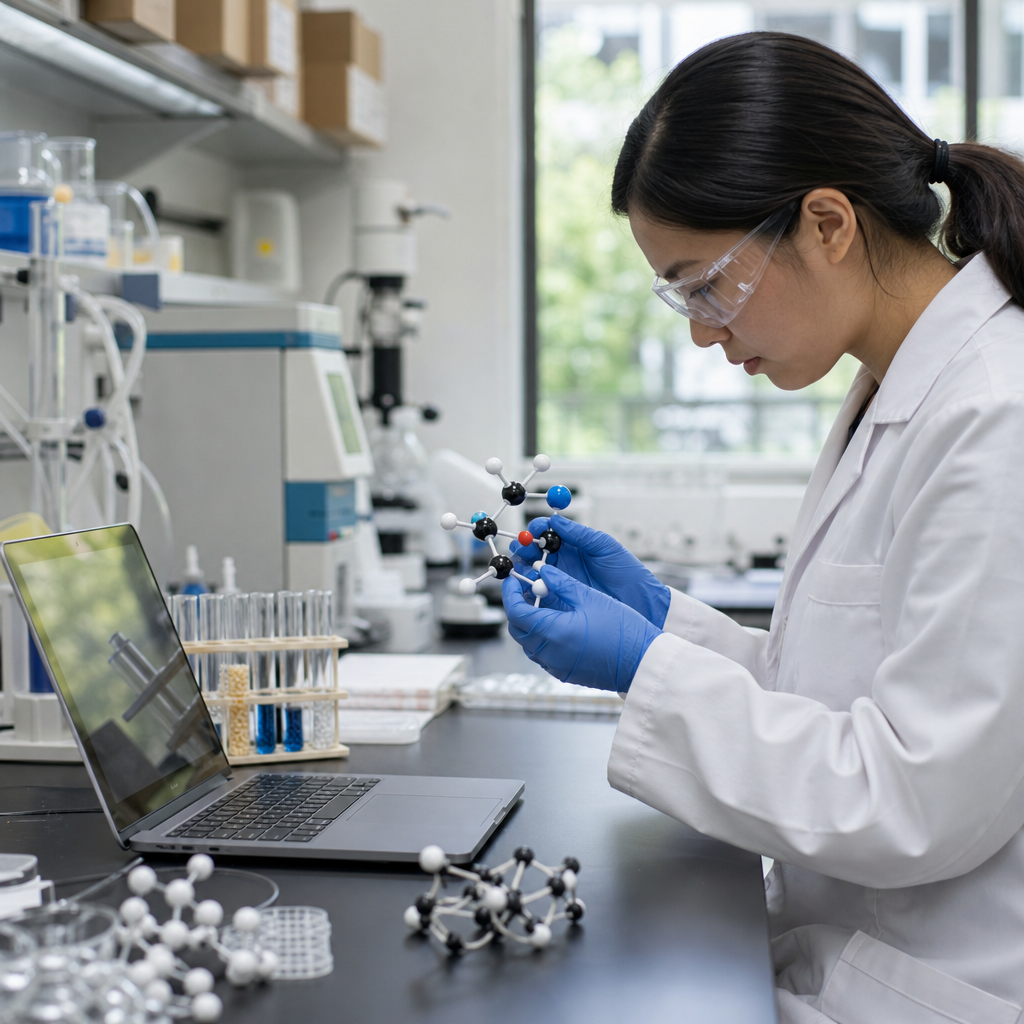
Free polymer science resources can shorten the path from curiosity to competence, but only if you know where to look and how to judge quality. Polymer science covers the chemistry, physics, processing, characterization, and applications of macromolecules such as polyethylene, nylon, epoxy resins, silicones, hydrogels, and biopolymers. Online resources include open textbooks, lecture notes, video courses, databases, standards summaries, software tutorials, preprints, open-access journals, and professional society materials. As someone who has built training plans for students, new laboratory hires, and cross-functional engineers, I have seen the same problem repeatedly: the internet contains excellent polymer learning material, yet it is scattered across university sites, publisher platforms, government databases, and society portals, with little context for beginners. A good hub page solves that problem by mapping the terrain, showing which resources answer which questions, and helping readers move from foundational concepts to practical skills.
This matters because polymer science is unusually interdisciplinary. A student reading about step-growth polymerization quickly runs into reaction kinetics, molecular weight averages, rheology, thermal analysis, and structure-property relationships. An engineer troubleshooting brittle molded parts may need free references on crystallinity, glass transition temperature, DSC interpretation, and processing history in the same afternoon. Cost is another barrier. Core textbooks and journal subscriptions can be expensive, while many learners are outside universities or work in small companies without broad library access. Free online resources make self-study, workforce upskilling, and technical decision-making more accessible. They also support better communication across chemistry, materials science, and manufacturing teams. The goal of this guide is simple: help you find trustworthy free polymer science resources online, organize them by use case, and show you how to evaluate, combine, and revisit them as your needs change.
Start with the right resource types for your goal
The fastest way to find useful polymer science material is to begin with a clear question. Are you trying to learn the basics of polymer chemistry, understand a test method, compare material families, or solve a processing issue? Different resource types serve different purposes. Open course materials from MIT OpenCourseWare, university department pages, and recorded lectures are best for structured learning. Open textbooks and faculty notes help with definitions, derivations, and worked examples. Government and standards-related sources are stronger for terminology, safety, and regulated applications. Open-access journals and preprint servers are essential when you need current research on topics such as recyclable thermosets, conductive polymers, polymer membranes, or bio-based feedstocks.
For beginners, I usually recommend starting with resources that explain the language of the field: monomer, repeat unit, degree of polymerization, dispersity, tacticity, amorphous versus semicrystalline morphology, glass transition, entanglement, viscoelasticity, and crosslink density. Once those terms are comfortable, move to mechanism-based topics such as free-radical polymerization, anionic polymerization, condensation reactions, copolymer architecture, and curing chemistry. Then add characterization resources covering GPC or SEC, DSC, TGA, DMA, FTIR, NMR, rheometry, tensile testing, impact testing, and microscopy. The sequence matters. Learners who jump directly into papers on advanced applications often struggle because they can read the words but cannot interpret why molecular structure drives processing behavior and final properties.
A practical hub should therefore organize online polymer science resources by task, not just by source. If your question is “What is polymer science?” you need broad explanatory content. If your question is “How do I interpret a DSC thermogram?” you need instrument-focused tutorials and examples. If your question is “Which polymer family fits a medical tubing application?” you need material selection guides, regulatory references, and case studies. Good resource finding starts by matching source type to learning objective.
Best free online sources for polymer science fundamentals
For foundational learning, university-hosted materials remain the most reliable starting point. MIT OpenCourseWare, Open Yale-style lecture archives, and materials science departments at public universities often provide syllabi, reading lists, slides, problem sets, and occasionally full video lectures on polymer chemistry and materials science. These are valuable because they impose sequence. Instead of random searching for “polymer properties,” you can follow a course arc from bonding and chain architecture to thermal transitions, mechanics, processing, and applications. In my experience, students who use structured course pages retain concepts better than those who rely only on short explainer videos.
Open textbooks and faculty notes are especially useful for calculations and core definitions. Look for modules on number-average molecular weight, weight-average molecular weight, dispersity, Flory concepts, copolymer composition, crystallinity, and rubber elasticity. Many university instructors share PDF notes that are more concise than commercial textbooks but still technically sound. When evaluating these materials, check whether they define assumptions clearly, distinguish idealized models from real industrial behavior, and include figures showing chain conformations, lamellae, spherulites, or stress-strain responses. Clear visuals often reveal whether a resource was created by someone who teaches the subject regularly.
Professional societies can also help. The American Chemical Society, the Materials Research Society, and similar organizations frequently publish educational articles, webinar archives, and outreach materials that explain polymers in accessible but accurate terms. These are useful bridge resources between introductory coursework and specialized literature. For quick refreshers, reputable chemistry education sites, institutional repositories, and public library databases can fill gaps, but they should not replace more complete instructional sources. A solid fundamentals library should include one structured course, one concise note set, one glossary source, and one application-oriented source.
Where to find free research papers, data, and technical references
When you need depth beyond classroom material, shift to open research and technical databases. Google Scholar is still the broadest discovery tool, but use filters carefully and prioritize openly accessible PDFs from universities, repositories, or publisher open-access sections. Directory of Open Access Journals can help identify journals with fully open content. PubMed is valuable for biomaterials, drug delivery polymers, tissue engineering scaffolds, and hydrogels. arXiv, ChemRxiv, and institutional repositories can surface preprints or accepted manuscripts in areas such as polymer informatics, sustainable plastics, and advanced characterization.
For technical property data, government and standards-adjacent resources are often underused. NIST provides chemistry and materials references that can support spectroscopy, thermophysical understanding, and data validation. MatWeb is not a substitute for supplier datasheets or laboratory testing, but it can be a quick free starting point for comparing broad property ranges across polymer families. Patent databases such as Google Patents and Espacenet are also surprisingly valuable. If you want examples of formulations, curing schedules, compatibilizers, barrier layers, or processing windows, patents often provide more practical detail than review papers, especially in packaging, coatings, adhesives, and elastomers.
| Need | Best Free Source Types | What You Can Learn Quickly |
|---|---|---|
| Fundamentals | University courses, open textbooks, lecture notes | Core definitions, equations, mechanisms, structure-property basics |
| Current research | Google Scholar, DOAJ, ChemRxiv, repositories | New materials, recent methods, state of the art debates |
| Property screening | MatWeb, supplier datasheets, public databases | Typical ranges for modulus, density, Tg, melting point, strength |
| Practical formulations | Patents, technical bulletins, application notes | Additives, process conditions, comparative examples |
| Biopolymer and medical topics | PubMed, NIH repositories, review articles | Biocompatibility, degradation, delivery systems, scaffold design |
Use review articles strategically. A strong review on polymer nanocomposites, membrane separations, flame retardancy, or self-healing networks can save hours by summarizing mechanisms, major papers, and unresolved issues. However, reviews can age quickly in fast-moving areas. Check publication dates and then follow their most-cited references forward. If several recent papers cite the same mechanism or test protocol, that is a good signal the concept remains current.
How to evaluate quality and avoid misleading resources
Not every free polymer science resource deserves your time. The best screening method is to check authorship, institutional affiliation, publication date, citations, and technical precision. If a page discusses Tg and melting point as interchangeable, or treats molecular weight as a single number without distinguishing averages, move on. If a video on recycling claims all thermosets are unrecyclable without acknowledging dynamic covalent networks or mechanical reuse pathways, it is oversimplifying. Good resources state scope and limits. They explain, for example, that supplier data often come from specific test conditions and may not predict molded-part performance under different cooling rates, orientations, or environmental exposure.
I also look for alignment with recognized methods and terminology. Characterization discussions should reference techniques by their standard names and, where relevant, recognized test frameworks such as ASTM or ISO methods. A DSC tutorial should explain heating rate effects and thermal history. A rheology resource should distinguish shear thinning, storage modulus, loss modulus, and time-temperature superposition. A polymerization lesson should separate kinetics from thermodynamics and note how impurities or oxygen inhibition affect real systems. Precision does not have to mean complexity; it means using the right terms for the right phenomena.
Cross-verification is essential. If you find a useful statement in a blog post, confirm it in lecture notes, a handbook excerpt, a standards summary, or a review article. In applied polymer work, even accurate generalizations can fail in a specific case. Nylon is often described as tough, yet moisture content, crystallinity, and notch sensitivity can change performance dramatically. PLA is called compostable, but end-of-life outcomes depend on industrial composting conditions rather than casual backyard disposal. Free resources are valuable when they help you understand these conditions, not when they flatten them into marketing claims.
Building a practical learning path from beginner to advanced
The most effective way to use free polymer science resources is to build a staged learning path. Start with a two-week fundamentals sprint: one open course, one glossary, and one short set of problem-solving notes. Focus on polymer structure, molecular weight, thermal transitions, crystallinity, and viscoelasticity. In week three and four, add polymerization mechanisms, processing methods such as extrusion, injection molding, blow molding, and curing, plus one characterization technique each for thermal, mechanical, and spectroscopic analysis. By the end of the first month, you should be able to read a supplier datasheet and understand most of its terms.
Next, create topic clusters based on your goals. For plastics engineering, cluster resources around morphology, rheology, mold design, shrinkage, warpage, and failure analysis. For coatings and adhesives, focus on surface energy, cure chemistry, adhesion mechanisms, filler effects, and weathering. For biomaterials, emphasize degradation, sterilization, diffusion, protein interactions, and regulatory context. For sustainability, study mechanical recycling, chemical recycling, life cycle assessment, bio-based monomers, and design for disassembly. Each cluster should combine one instructional source, one data source, one review paper, and one application example such as a patent or technical bulletin.
Finally, keep a searchable note system. I recommend logging each resource by topic, level, reliability, and best use. Include direct answers to recurring questions like “What raises Tg?” “Why does orientation increase strength?” “How does branching affect crystallization?” or “When is DMA more revealing than tensile testing?” Over time, your personal library becomes more useful than any single website because it reflects how polymer science problems actually appear in labs, classrooms, and manufacturing lines.
Using this hub page to explore the wider online resources landscape
As the hub for online polymer science resources within a broader educational resources section, this page should guide readers toward more specialized subtopics while remaining useful on its own. The core categories to branch into are open courses and lecture libraries, free polymer databases, open-access journals, polymer software and simulation tutorials, standards and testing references, and industry technical bulletins. Each category solves a different discovery problem. Someone comparing thermoplastics needs data and datasheets. Someone learning chain-growth kinetics needs course content. Someone validating FTIR peak assignments needs spectral references and application notes. Someone entering polymer modeling needs tutorials for tools such as LAMMPS, GROMACS, or basic molecular visualization platforms.
Internal pathways also matter because polymer science questions rarely stay in one lane. A reader who starts with “free polymer chemistry lectures” may next need “open DSC tutorials,” then “property databases for polypropylene and PET,” then “review papers on recycling multilayer packaging.” A well-built hub anticipates that progression. It uses clear anchor topics, descriptive labels, and concise summaries so readers can choose the next best resource without returning to a general search engine. That saves time and improves learning continuity.
The biggest benefit of free online polymer science resources is not merely cost savings. It is the ability to connect theory, data, and application at the moment you need them. Use this guide as your starting map, then build a focused shortlist of trusted sources for fundamentals, research, and practice. Revisit the list as your projects evolve, replace weak sources with stronger ones, and follow specialized resource pages for deeper coverage of courses, databases, journals, and tools. If you are building your polymer knowledge now, start with one structured course and one open database today.
Frequently Asked Questions
What kinds of free polymer science resources are available online?
There is a surprisingly wide range of free polymer science resources online, and the best way to think about them is by grouping them according to how you learn. If you want structured learning, look for open textbooks, university lecture notes, recorded seminars, and full video courses that cover core topics such as polymer chemistry, polymer physics, thermodynamics, rheology, processing, and materials characterization. These are especially useful if you are building foundations and want concepts presented in sequence rather than piecing together information from random sources.
If your goal is to stay current or dig into a specific topic, open-access journals, preprint servers, institutional repositories, and thesis databases can be excellent. They often contain advanced discussions on subjects such as controlled polymerization, biodegradable polymers, nanocomposites, hydrogels, elastomers, membranes, and biomedical applications. For practical work, software tutorials, spectroscopy guides, microscopy resources, and databases that summarize properties, nomenclature, or testing methods can help bridge theory and experimentation.
You can also find useful resources in standards summaries, manufacturer technical notes, research group websites, conference presentations, and professional society educational pages. These may not always replace textbooks, but they often explain real-world materials such as polyethylene, polypropylene, nylon, epoxy systems, silicones, and acrylics in applied terms. The most effective approach is usually to combine several resource types: a textbook for principles, videos for intuition, research papers for depth, and practical guides for methods and applications.
How can I tell whether a free polymer science resource is reliable and worth my time?
Quality matters a great deal in polymer science because the field is broad, technical, and full of terms that are easy to misuse. A reliable resource usually shows clear authorship, institutional affiliation, publication date, references, and a level of detail that matches the complexity of the subject. Materials produced by universities, recognized researchers, scholarly publishers, professional societies, or established laboratories generally deserve more confidence than anonymous summaries with no citations.
It also helps to examine whether the resource uses correct terminology and acknowledges the difference between related ideas. For example, a trustworthy source should distinguish between molecular weight averages, explain the difference between thermoplastics and thermosets, and avoid oversimplifying characterization methods such as DSC, TGA, FTIR, NMR, XRD, SEC, and rheometry. Inaccurate or shallow resources often rely on vague language, skip assumptions, or present applications without discussing limitations.
A practical way to evaluate quality is to cross-check the same topic in at least two or three independent sources. If an open textbook, a university lecture set, and a peer-reviewed paper all present the same core explanation, that is a strong sign you are on solid ground. You should also check whether examples and data are current enough for your purpose. In fast-moving areas like sustainable polymers, recycling, bio-based feedstocks, and advanced functional materials, older sources may still be useful for fundamentals but less reliable for current practice. Good resources save time not just by being free, but by being accurate, transparent, and connected to the broader scientific literature.
Where should beginners start if they want to learn polymer science for free?
Beginners usually do best when they start with a roadmap rather than jumping straight into research articles. Polymer science sits at the intersection of organic chemistry, physical chemistry, materials science, and engineering, so it helps to begin with an introductory resource that explains the basic vocabulary: monomers, polymers, copolymers, degree of polymerization, tacticity, crystallinity, glass transition, viscoelasticity, and crosslinking. Open textbooks and introductory lecture notes are ideal here because they establish the conceptual framework needed to understand later topics.
Once the basics are in place, it is smart to move into a few core branches of the field. Start with polymer chemistry to understand how polymers are made, then polymer physics to learn how chain structure influences behavior, and then processing and characterization to see how materials are formed and tested. For example, learning how polyethylene differs from nylon or epoxy is much easier when you connect chemical structure to thermal behavior, mechanical performance, and manufacturing method. Video lectures can be especially helpful at this stage because they make abstract ideas like entanglement, amorphous versus semicrystalline morphology, and time-temperature behavior more intuitive.
From there, add application-focused resources that match your interests. If you care about biomaterials, look for free content on hydrogels, drug delivery, and tissue engineering. If you are more interested in plastics engineering, focus on extrusion, injection molding, composites, and failure analysis. The key is to build in layers: foundations first, then mechanisms, then methods, then applications. That sequence reduces confusion and makes free resources far more useful than trying to learn everything from isolated articles or product pages.
Are free polymer science resources enough for serious study or research?
In many cases, yes, especially for building a strong foundation and even for supporting advanced work. Free resources today can include high-quality lecture notes, open educational materials, preprints, dissertations, software documentation, open-access papers, and detailed tutorials on analytical techniques. With discipline and good source selection, a learner can cover a remarkable amount of polymer science without paying for formal materials. This is particularly true for core concepts such as polymerization mechanisms, chain architecture, thermal transitions, mechanical behavior, degradation, and common characterization tools.
That said, “enough” depends on your goal. If you want general competence, prepare for graduate study, support a project, or understand literature in a specific subfield, free resources can go very far. If you need exhaustive access to specialized journals, full standards documents, proprietary databases, or advanced industry handbooks, you may eventually run into paywalls. Some standards and industrial specifications are especially difficult to access freely, so free standards summaries and educational overviews may need to substitute for the original documents until formal access is available.
The best strategy is to treat free resources as the backbone of your learning while recognizing where gaps may appear. Use open textbooks for structure, open-access journals for evidence, preprints for emerging topics, and software tutorials for practical skills. If you later gain access to library subscriptions or paid references, they will be easier to use because your foundation is already strong. In other words, free resources are often more than enough to become capable and informed, but serious research still benefits from careful verification, broader literature access, and occasional use of specialized materials.
What is the best way to organize free polymer science resources so they are actually useful over time?
The most effective system is one that separates resources by purpose rather than simply saving links in a long list. Create categories such as fundamentals, synthesis, structure-property relationships, processing, characterization, applications, and current research. Within each category, keep a short set of trusted anchor resources: one or two introductory references, one deeper technical source, and a few practical guides or examples. This makes it much easier to revisit topics like rheology, spectroscopy, crystallization, or polymer degradation without starting over every time.
It also helps to track resources by format. For example, keep textbooks and lecture notes for conceptual study, videos for quick review, papers for evidence, and software tutorials for hands-on work. If you are studying materials such as silicones, epoxies, hydrogels, engineering thermoplastics, or biopolymers, create mini-folders or notes for each material family and record key ideas such as synthesis route, processing constraints, typical properties, common tests, and major applications. That turns scattered free content into a usable personal reference system.
Finally, add brief annotations to everything you save. Note what the resource covers, its difficulty level, whether it is introductory or advanced, and any limitations you noticed. A short comment like “excellent overview of DSC and Tg,” “good beginner explanation of step-growth polymerization,” or “useful for extrusion basics but light on rheology” can save a lot of time later. Free resources become truly powerful when they are curated, cross-referenced, and revisited. The goal is not to collect the most links, but to build a dependable learning library that helps you move from curiosity to real competence in polymer science.