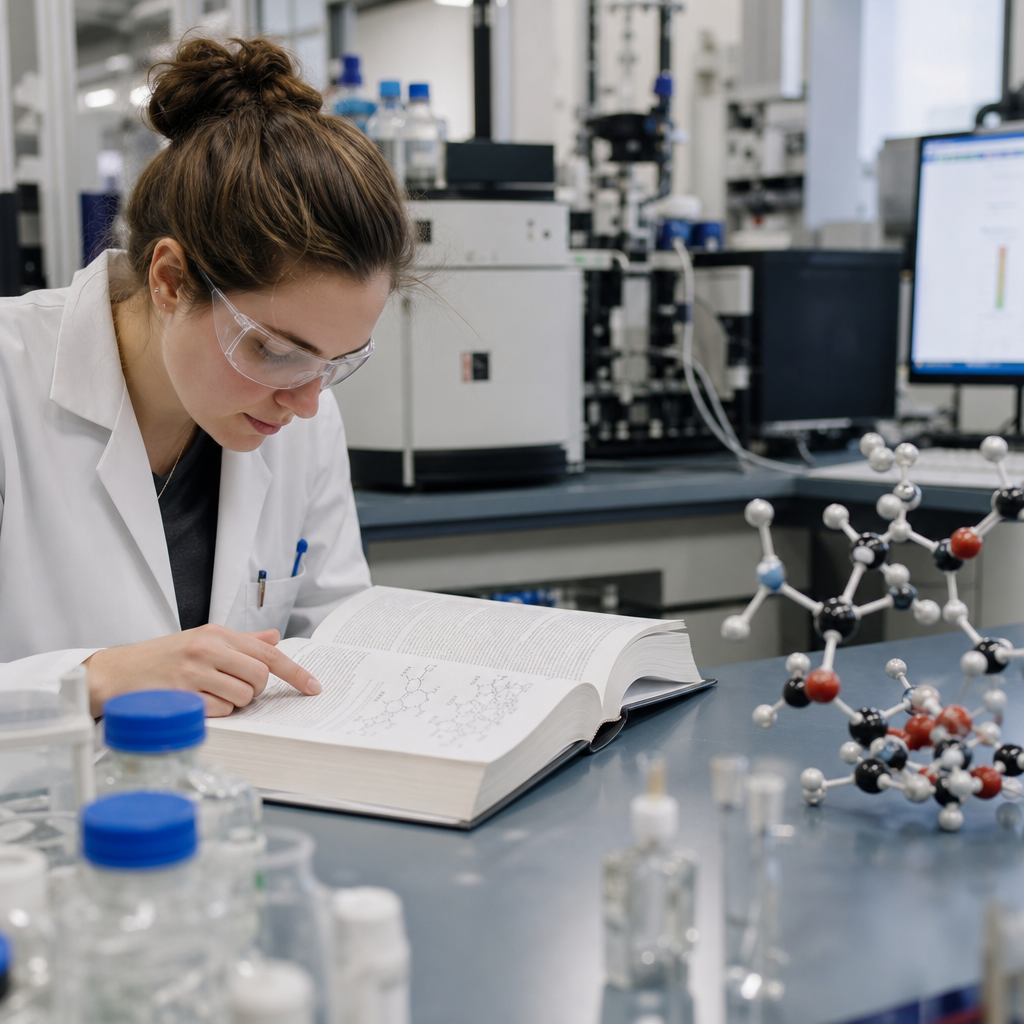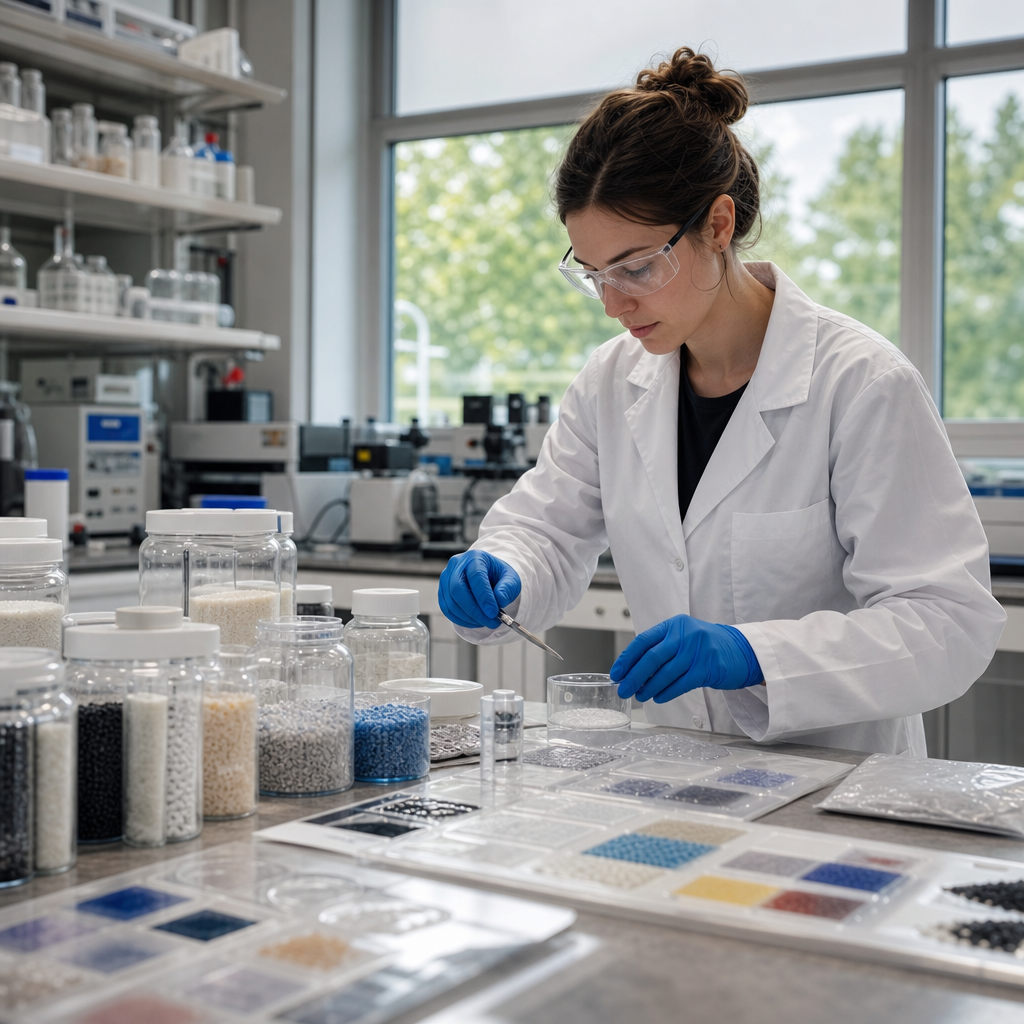
Polymer engineering is the discipline focused on designing, processing, testing, and improving plastic, elastomer, resin, fiber, and composite materials used in products ranging from medical tubing to aerospace components. Finding online courses in polymer engineering sounds simple, but in practice it requires sorting through university programs, short industry trainings, recorded webinars, simulation software lessons, and materials science classes that only partially cover polymers. For students, technicians, product designers, and manufacturing engineers, the right course can close skill gaps quickly, support degree progress, and strengthen job prospects in plastics processing, formulation, quality, and sustainability.
In my work reviewing technical training for engineering teams, I have seen the same problem repeatedly: people search for “polymer engineering online course,” enroll in a broad materials class, and then realize it barely covers rheology, extrusion, injection molding, polymer characterization, or failure analysis. A better approach starts with definitions. Online courses in polymer engineering include university credit courses, certificate modules, massive open online courses, vendor-led software training, association webinars, and self-paced laboratory theory classes. Some emphasize polymer chemistry, while others focus on processing, product design, testing, recycling, or computational modeling.
This topic matters because polymers sit at the center of modern manufacturing. According to widely cited industry data from PlasticsEurope and other market groups, global plastics production exceeds 400 million metric tons annually, and employers need people who understand how molecular structure affects processing behavior and performance. Online learning has also expanded access. A learner in a region without a dedicated plastics program can now study thermal analysis, finite element modeling of polymers, additive manufacturing with thermoplastics, or life-cycle assessment through remote platforms. The challenge is not access alone; it is choosing credible, relevant, and appropriately rigorous online resources.
As the hub page for online resources in polymer engineering, this guide explains how to identify course types, evaluate providers, compare learning formats, and build a path that matches your goals. It also points naturally to deeper topics you may want next, such as polymer science fundamentals, plastics processing courses, materials testing resources, simulation training, and sustainability education. If you want one answer up front, it is this: the best online polymer engineering course is the one aligned with your target role, current knowledge, and required hands-on depth, offered by a credible source with a clear syllabus and measurable outcomes.
Start with your learning goal and the branch of polymer engineering you need
The fastest way to find the right course is to define what problem you are trying to solve. Polymer engineering is broad, and online resources are usually specialized. If your goal is to understand why a polypropylene part warped after molding, you need processing and shrinkage content, not a survey of organic chemistry. If you are moving into materials selection for medical devices, you may need biocompatibility basics, sterilization effects, and regulatory standards rather than screw design theory.
In practice, most learners fall into one of five tracks. First are degree-seeking students who need accredited coursework in polymer science, materials engineering, transport phenomena, characterization, or design. Second are working engineers who need job-ready modules in injection molding, extrusion, thermoforming, resin selection, or composites. Third are quality and laboratory professionals looking for training in DSC, TGA, FTIR, DMA, tensile testing, or fracture analysis. Fourth are product developers who need application-focused learning on creep, fatigue, environmental stress cracking, and design for manufacturability. Fifth are managers and buyers who need enough technical literacy to evaluate suppliers, specifications, recycled content claims, and processing risks.
Once you know your track, translate it into course keywords. Strong searches include terms like “polymer engineering online certificate,” “plastics processing course online,” “polymer rheology webinar,” “materials characterization polymers remote learning,” and “composites manufacturing e-learning.” Search engines respond better to specific process or test names than to the broad phrase “polymer engineering” alone. This also helps you uncover adjacent resources under educational resources, including online textbooks, standards-based webinars, simulation tutorials, and virtual lab demonstrations that support formal coursework.
Know the main sources of online polymer engineering courses
Most high-quality online polymer engineering courses come from four source types: universities, professional associations, industry training firms, and software or equipment vendors. Universities usually offer the deepest theory and the strongest academic signaling. Look for departments in materials science and engineering, chemical engineering, plastics engineering, or polymer science. Programs may cover polymer chemistry, viscoelasticity, processing, composites, and characterization. Some schools provide full online master’s options, while others release individual modules through continuing education platforms.
Professional associations often provide the most targeted practical training. Organizations connected to plastics, composites, additive manufacturing, and materials testing commonly host webinars, certificate series, and conference recordings. These are useful when you need a concise answer to a specific question such as gate design, recycled resin effects, barrier properties, or regulatory trends. Because the instructors are often active practitioners, the examples tend to be current and rooted in manufacturing reality.
Industry training firms fill the gap between academic theory and factory-floor application. I have found these especially valuable for process troubleshooting. A strong provider will teach topics such as melt temperature control, residence time, screw recovery, venting, moisture management in hygroscopic resins, and root-cause methods for sink, flash, brittleness, and weld line weakness. Good courses include case studies, not just definitions.
Vendor training can be excellent when your work depends on a tool. Software companies offering mold flow simulation, finite element analysis, spectroscopy systems, thermal analysis instruments, or laboratory information software frequently publish structured online lessons. These courses are narrow by design, but they can be decisive for employability because they teach workflows used in industry. The limitation is that they sometimes assume prior fundamentals, so they work best when paired with broader materials education.
Evaluate course quality before you enroll
Course quality in polymer engineering can be judged with a few concrete checks. Start with the syllabus. It should name the material families, processes, tests, and equations or standards covered. A course description that says only “learn about plastics” is too vague. A stronger outline lists topics such as polymerization basics, crystallinity, glass transition temperature, non-Newtonian flow, pressure-volume-temperature behavior, mechanical property testing, and common defects.
Next, review the instructor profile. Credible instructors usually have a combination of advanced academic training and applied industry work. For example, a course on injection molding should ideally be taught by someone who has set up molds, optimized cycle time, analyzed short shots and burns, and linked process settings to morphology and part performance. First-hand manufacturing experience matters because polymer behavior is highly sensitive to real process windows, not just textbook averages.
Also check whether the course references recognized methods and standards. In polymers, that often means ASTM and ISO test methods, DSC and TGA interpretation conventions, resin datasheet terminology, and established processing concepts such as shear thinning, orientation, annealing, and hydrolysis risk in polyesters. When providers anchor their teaching in recognized practice, the content is easier to trust and easier to apply on the job.
| What to compare | Strong signal | Warning sign |
|---|---|---|
| Syllabus | Named topics, standards, and learning outcomes | Generic promises with no technical detail |
| Instructor | Polymer-specific academic and industry experience | No clear background in plastics or materials |
| Format | Assignments, case studies, or labs | Only passive video watching |
| Tools | Use of recognized software or test methods | No link to real workflows |
| Outcome | Certificate, credit, or documented competencies | Unclear value after completion |
Finally, examine the level of assessment. Quizzes alone are useful for recall, but polymer engineering is applied. The best online resources ask you to interpret a stress-strain curve, compare semicrystalline and amorphous behavior, choose between ABS and polycarbonate for impact resistance, or diagnose a molding defect from processing data. Those tasks reveal whether the course teaches transfer, not just terminology.
Match the format to the skills you actually need
Different online formats solve different learning problems. Self-paced courses are ideal when you need scheduling flexibility or want to review difficult topics like viscoelasticity several times. Live online classes are better when the material is mathematically dense or when discussion matters, such as in polymer rheology, diffusion, or composite laminate analysis. Short webinars are best for narrow updates, including PFAS concerns, recycled content regulation, or new developments in chemical recycling.
Hands-on depth is the key tradeoff. Some polymer engineering skills can be learned effectively online. Materials selection, failure analysis frameworks, spectroscopy interpretation, mold filling theory, and design calculations translate well to remote instruction. Other skills are harder to master without equipment access. Running a capillary rheometer, setting barrel zones on a production press, polishing a fracture surface for microscopy, or physically adjusting an extruder die gap still benefit from in-person practice. A high-quality online course will state these limits clearly instead of pretending virtual content can replace every lab or plant experience.
Micro-credentials and certificate series are useful when you need proof of targeted competency. For example, a packaging engineer may benefit more from a short sequence in barrier polymers, film extrusion, seal performance, and permeability testing than from a broad graduate course. On the other hand, if you plan to move into research, development, or advanced process engineering, a full academic course sequence in polymer structure, thermodynamics, kinetics, and characterization is usually the stronger investment.
Choose course topics that map to common polymer engineering careers
If you are unsure what to study first, map courses to job roles. For plastics process engineers, priority topics include injection molding, extrusion, blow molding, thermoforming, tooling basics, process monitoring, and defect analysis. For materials engineers, look for polymer structure-property relationships, additives, compounding, rheology, thermal transitions, and durability. For quality professionals, focus on statistical process control, ASTM and ISO testing, spectroscopy, thermal analysis, microscopy, and root-cause investigation.
Product design engineers benefit from online courses in design for injection molding, tolerance stack-up, environmental exposure, creep, impact behavior, joining methods, and finite element simulation for plastics. Composites roles require a different path: fibers and matrices, layup methods, resin transfer molding, autoclave processing, laminate theory, damage modes, and non-destructive evaluation. Sustainability-focused roles increasingly need learning in recyclability by design, mechanical versus chemical recycling, life-cycle assessment, bio-based polymers, and legislation affecting packaging and automotive materials.
One practical method I recommend is building a three-course stack. Start with one fundamentals course, add one process or application course, then complete one testing or analysis course. For example, a newcomer might study polymer science basics, then injection molding, then FTIR and DSC interpretation. That combination creates useful range. It lets you talk about molecular structure, understand manufacturing constraints, and validate results with test data instead of relying on assumptions.
Use online resources beyond courses to build a complete learning hub
The best online education in polymer engineering rarely comes from one course alone. Strong learners assemble a hub of online resources that support each other. Recorded conference sessions can expose you to emerging topics before textbooks catch up. Standards summaries help you understand why a tensile result from ASTM D638 is not interchangeable with every other method. Technical datasheets teach you how suppliers present melt flow rate, tensile modulus, heat deflection temperature, and flame ratings. Simulation tutorials reveal how assumptions affect predicted weld lines, sink, and cooling performance.
Scholarly databases and library access matter as well. If your institution provides journals through platforms such as ScienceDirect, SpringerLink, or Wiley, use them to deepen course concepts with peer-reviewed studies. Search for review articles on polymer degradation, barrier materials, nanocomposites, blend compatibilization, or recycling technologies. For practical work, manufacturer literature from companies such as SABIC, BASF, Covestro, DuPont, Celanese, and LyondellBasell can be unexpectedly valuable because it ties polymer properties to processing guidance and end-use performance.
This hub under educational resources should also connect you to related subtopics. After identifying courses, many readers need help comparing textbooks, open lecture notes, laboratory guides, software tutorials, certification paths, and student communities. That broader ecosystem matters because polymer engineering is cumulative. A course teaches concepts, but competence grows when you read data sheets critically, compare standards, watch process demonstrations, and discuss troubleshooting cases with peers or instructors.
A practical search and selection workflow that saves time
Use a simple workflow to avoid enrolling in the wrong class. First, write your target in one sentence: “I need to learn enough polymer characterization to support failure analysis in consumer products,” or “I need online training in extrusion for a new process engineering role.” Second, list the exact topics you must cover. Third, choose the level: introductory, intermediate, or advanced. Fourth, set constraints for budget, time, credit, and whether a certificate matters. Fifth, compare three to five options using syllabus depth, instructor credibility, assessments, and relevance to your tools or materials.
Before paying, look for proof that the content matches real work. Can you see sample lectures, assignments, software screenshots, or case studies? Does the provider identify specific polymers such as polyethylene, nylon, PEEK, epoxy, TPU, or PET, or does it stay generic? Are there examples involving warpage, moisture sensitivity, oxidation, UV degradation, residual stress, or filler effects? Specificity is not a luxury in this field; it is the clearest signal that the course was designed by people who understand polymer engineering as practiced, not just as described.
If possible, sequence courses over time instead of trying to learn everything at once. Polymer engineering rewards layering. Fundamentals first, process second, analysis third is a sequence that works for most learners. Keep notes in a format you can reuse, including equations, test methods, common defects, and resin-specific cautions. That personal reference library becomes one of the most valuable online resources you build.
Finding online courses in polymer engineering becomes much easier when you stop searching broadly and start selecting strategically. Define your goal, identify the branch of polymer engineering involved, and choose from credible sources such as universities, associations, specialized training firms, and software vendors. Evaluate every option through the syllabus, instructor background, standards used, and the kind of assessment included. A course should teach specific polymer concepts and give you a clear outcome you can apply in school, research, or manufacturing.
The main benefit of a strong online learning path is efficiency. Instead of spending months on loosely related materials content, you can build targeted knowledge in processing, characterization, design, composites, or sustainability with resources matched to your role. Used well, online resources expand access to expert instruction and current industry practice, even when you are far from a dedicated plastics program or training center.
Use this hub as your starting point within educational resources, then move into the related guides that fit your next step: fundamentals, processing, testing, software, and sustainability. Pick one learning goal today, compare a few well-structured courses, and enroll in the option that best matches the polymer engineering work you want to do.
Frequently Asked Questions
1. What should I look for first when searching for online courses in polymer engineering?
Start by defining your goal before comparing platforms or course catalogs. Polymer engineering is a broad field that includes polymer chemistry, materials selection, processing methods, product design, testing, failure analysis, and manufacturing techniques for plastics, elastomers, resins, fibers, and composites. If you want a foundational understanding, look for courses that cover polymer structure-property relationships, thermoplastics versus thermosets, viscoelastic behavior, common processing methods such as extrusion and injection molding, and basic mechanical and thermal testing. If your goal is career-specific, focus on applied training in areas like medical polymers, aerospace composites, rubber processing, additive manufacturing, or polymer recycling.
It also helps to separate true polymer engineering courses from general materials science content. Many online classes include one or two polymer modules but are not primarily designed to teach polymer engineering in depth. Read the syllabus carefully and check whether the course addresses polymer-specific topics such as crystallinity, molecular weight effects, melt flow behavior, curing, compounding, reinforcement, degradation, and quality control. Strong courses usually explain how material properties influence manufacturability and end-use performance, which is central to engineering practice.
Finally, evaluate the course format and credibility. University-backed programs, professional society trainings, and courses from recognized industry organizations often provide more reliable technical depth than generic learning marketplaces. Review the instructor’s background, the level of the course, whether there are practical examples or case studies, and whether the material is current. Polymer engineering evolves with new sustainability requirements, bio-based materials, processing technologies, and simulation tools, so recent content matters.
2. Are university online courses better than short industry trainings for learning polymer engineering?
Neither option is automatically better; the right choice depends on what you need to learn and how you plan to use it. University online courses are usually stronger for fundamentals. They often provide structured instruction in polymer science, mechanics, thermodynamics, processing principles, and testing methods. If you are a student, an early-career engineer, or someone transitioning from another discipline, university courses can give you the conceptual framework needed to understand why polymers behave differently from metals or ceramics and how processing affects final performance.
Short industry trainings, on the other hand, are often more practical and targeted. They may focus on a narrow topic such as injection molding defects, composite layup techniques, polymer failure analysis, resin selection, extrusion troubleshooting, or regulatory considerations for medical materials. These courses are especially useful for working professionals who already understand the basics and need fast, applicable knowledge for a current job responsibility. They can also be valuable if you want exposure to real manufacturing issues, common design mistakes, or application-driven material selection.
In many cases, the best learning path combines both. A learner might begin with a university-level course in polymer materials or processing, then add specialized webinars, software lessons, or professional workshops related to a chosen industry. This layered approach works well because polymer engineering is both theoretical and highly applied. You need the science to make sound decisions, but you also need examples from production, testing, and product development to understand how those decisions play out in real products.
3. How can I tell if an online polymer engineering course is high quality and worth the time?
A high-quality course should have a clear scope, a detailed syllabus, and learning outcomes that match actual polymer engineering tasks. Look for signs that the course goes beyond broad descriptions and teaches specific concepts such as polymer morphology, rheology, thermal transitions, processing-structure-property relationships, additives and fillers, composites, degradation, and testing standards. Good courses explain not just what a material is, but how and why it behaves under manufacturing and service conditions.
Instructor credentials matter as well. Ideally, the course should be taught by a professor in polymers or materials engineering, an experienced process engineer, a composite specialist, or a technical expert from a credible institution or industry organization. Review whether the instructor has hands-on experience with polymer processing, product design, materials characterization, or manufacturing problem-solving. In polymer engineering, practical relevance is just as important as academic knowledge.
You should also examine the learning experience itself. Strong courses often include diagrams, process videos, case studies, data interpretation, quizzes, assignments, or worked examples. The best ones connect theory to common engineering decisions, such as selecting between a thermoplastic and a thermoset, choosing a reinforcement strategy, diagnosing warpage or shrinkage, interpreting DSC or tensile test data, or evaluating material suitability for heat, chemicals, fatigue, or sterilization. Reviews can help, but the syllabus and technical depth are usually more reliable indicators than star ratings alone.
One more important factor is relevance to your level. A course can be excellent and still be a poor fit if it is too advanced or too introductory. If you are new to the field, start with fundamentals before jumping into simulation software, finite element material models, or advanced composite analysis. If you already work with polymers, you may get more value from specialized modules than from broad survey courses. The best course is the one that fills a real gap in your knowledge and can be applied soon after learning.
4. What topics are most important for beginners who want to study polymer engineering online?
Beginners should focus first on the building blocks that make the rest of the field easier to understand. A strong starting point includes polymer classification, molecular structure, thermal and mechanical behavior, and basic processing methods. You should understand the difference between thermoplastics, thermosets, and elastomers; how chain structure affects properties; and why polymers show behaviors like viscoelasticity, creep, and temperature sensitivity. These fundamentals explain many of the design and manufacturing tradeoffs encountered in real applications.
Processing is another essential area. Since polymer engineering is deeply tied to manufacturing, beginners should learn the basics of injection molding, extrusion, blow molding, compression molding, thermoforming, and composite fabrication. Even a high-level understanding of these methods helps you see how materials are selected and why part geometry, cooling, pressure, orientation, shrinkage, and curing influence quality and performance. Courses that connect processing conditions to defects are especially helpful because they show the engineering side of polymer production.
Testing and materials selection are also critical. Look for beginner-friendly instruction in tensile testing, impact testing, thermal analysis, chemical resistance, environmental stress cracking, and durability. You do not need to master every laboratory method immediately, but you should understand how engineers evaluate whether a polymer can survive heat, load, chemicals, UV exposure, moisture, repeated use, or sterilization. This is what turns basic materials knowledge into useful engineering judgment.
Finally, if possible, include at least some exposure to sustainability and modern industry trends. Today’s polymer engineers often need to think about recyclability, bio-based materials, lightweighting, life-cycle considerations, and replacing legacy materials while maintaining performance. A beginner who learns both classic polymer principles and current industry priorities will be much better prepared to evaluate future courses and identify meaningful specialization areas.
5. How do I build a practical learning path from online polymer engineering courses if I want career-ready skills?
The most effective learning path is staged rather than random. Begin with one or two foundational courses in polymer science or materials engineering to learn core terminology, molecular behavior, and basic processing concepts. After that, move into an applied course focused on polymer processing or product design, where you can see how material properties influence manufacturability, cost, performance, and defect risk. This sequence matters because practical engineering decisions make much more sense once you understand the science behind them.
Next, add specialization based on the role or industry you are targeting. If you want to work in plastics manufacturing, choose courses on injection molding, extrusion, mold design, troubleshooting, and quality control. If you are interested in composites, look for classes on fiber-reinforced materials, laminate design, curing, and structural performance. If your goal is medical or regulated products, prioritize biocompatibility, sterilization effects, and material traceability. If you want a simulation-oriented path, combine polymer fundamentals with rheology, CAD/CAE, and process simulation lessons tied to actual manufacturing scenarios.
To make online study career-ready, do more than just watch lectures. Keep notes on materials, processing methods, common defects, and testing approaches. Compare datasheets, analyze case studies, and if available, complete assignments that involve selecting materials or interpreting performance data. You can also build a small portfolio by summarizing what you learned from each course, documenting technical problems you can now solve, or creating brief project write-ups on topics such as choosing a polymer for a medical tube, reducing warpage in a molded part, or comparing composite reinforcement options.
Finally, use online courses as part of a broader learning ecosystem. Supplement them with recorded webinars from professional societies, application notes from material suppliers, software tutorials, standards awareness, and technical articles on failure analysis and manufacturing best practices. Polymer engineering is highly interdisciplinary, and career-ready learners are usually the ones who connect theory, processing, testing, and application context rather than studying each topic in isolation. A thoughtful combination of structured coursework and applied industry resources will give you far more value than collecting unrelated certificates.