The future of online resources in polymer science is being shaped by a simple reality: researchers, students, product developers, and teachers now expect reliable polymer data, training, and collaboration tools to be available instantly, from any device, and in formats they can apply directly to lab work and industrial decisions. In polymer science, online resources include digital textbooks, open courseware, spectral libraries, materials databases, simulation platforms, standards repositories, webinars, electronic laboratory notebooks, and community forums. The term also covers application notes from instrument manufacturers, regulatory guidance from public agencies, and searchable archives of peer reviewed journals. This matters because polymer work depends on connecting chemistry, processing, structure, properties, performance, and sustainability, and no single textbook or local library can keep pace with how quickly these areas evolve.
I have seen this shift firsthand in research teams that once depended on printed handbooks and disconnected spreadsheets. Today, a polymer engineer troubleshooting warpage in injection molded polypropylene can move from a rheology database to a DSC interpretation guide, then to ASTM or ISO testing language, then to a processing webinar, all in one afternoon. A graduate student studying block copolymer self assembly can compare SAXS tutorials, journal articles, molecular dynamics tools, and code repositories without leaving a browser. Good online resources reduce duplicated effort, shorten learning curves, and help people avoid expensive experimental mistakes. Poor ones do the opposite by spreading outdated values, mislabeling test methods, or presenting promotional claims as scientific fact.
The future of this ecosystem will not be defined only by more content. It will be defined by better curation, stronger interoperability, richer data standards, and clearer pathways from foundational learning to applied problem solving. The best online polymer science resources already answer practical questions directly: What is the glass transition temperature of a material class? How should tensile modulus be compared across standards? Which spectroscopy method distinguishes oxidation from residual monomer? What processing parameter changes molecular orientation? As this hub article explains, the next generation of educational resources will combine searchable knowledge, validated data, simulation, community expertise, and sustainability context into integrated digital environments that serve both newcomers and specialists.
Digital knowledge platforms are replacing static reference collections
The first major change is the move from static repositories to living knowledge platforms. Traditional polymer handbooks remain valuable, but they freeze information at publication. By contrast, modern online resources can update phase diagrams, add revised nomenclature, include machine readable property datasets, and link directly to source literature. For polymer science, that matters because terminology and test conditions are everything. A reported tensile strength without specimen geometry, conditioning, strain rate, and standard method has limited value. The strongest digital resources preserve this metadata and make it searchable.
Examples already point the way. PubChem supports chemical identity and structure access for monomers, additives, and related compounds. The NIST Chemistry WebBook offers thermophysical and spectral data for many relevant substances. Crossref and ORCID improve traceability by linking publications to persistent identifiers. Major publishers now provide article metrics, related paper graphs, and citation mapping that help users move quickly through polymer topics such as crystallization kinetics, living polymerization, or vitrimer networks. In education, MIT OpenCourseWare, Coursera, edX, and university-hosted lecture libraries have normalized on-demand access to advanced materials content.
What will improve next is contextual layering. Instead of giving a learner an isolated PDF on viscoelasticity, a future platform should connect definitions, equations, datasets, worked examples, and instrument specific interpretation. A page explaining time-temperature superposition should immediately link to Williams-Landel-Ferry behavior, dynamic mechanical analysis workflows, common failure modes in master curve construction, and case studies from elastomers, amorphous thermoplastics, and semicrystalline polymers. That is what a true hub should do: reduce the distance between concept and application.
Data quality, standards, and interoperability will determine trust
Not all online polymer science resources deserve equal confidence. The most important future question is not whether information is available, but whether it is validated, comparable, and reusable. Polymer data is notoriously sensitive to preparation history. Molecular weight averages depend on method and calibration. Thermal transitions change with heating rate and moisture content. Mechanical properties vary with orientation, filler loading, and aging. If online resources omit those conditions, users may draw false conclusions or design around unrealistic values.
Trustworthy platforms will increasingly align with established standards and structured metadata practices. ASTM and ISO methods remain central for test reporting. The IUPAC Gold Book and polymer nomenclature recommendations provide language consistency. FAIR principles, meaning data should be findable, accessible, interoperable, and reusable, are especially relevant in materials informatics. In practical terms, a polymer database should record whether melt flow rate was measured under ASTM D1238 condition L or another setup, whether DSC values come from first or second heating, and whether a modulus figure reflects neat resin or a glass fiber reinforced grade.
Interoperability also matters because polymer work spans many tools. A scientist may need to move from a supplier technical data sheet to a simulation package, then to a lab notebook, then to a quality report. Future online resources will gain value when they export in consistent formats, expose application programming interfaces, and support identifiers for materials, formulations, and tests. Without that plumbing, even a large database becomes a digital dead end.
| Resource type | Primary value | Main limitation today | Future improvement |
|---|---|---|---|
| Materials databases | Property lookup and material screening | Inconsistent test metadata | Standardized reporting and API access |
| Online courses | Structured learning | Weak links to real lab practice | Embedded datasets and virtual experiments |
| Journal platforms | Latest research findings | Paywalls and fragmented navigation | Better summarization and linked methods |
| Community forums | Tacit troubleshooting knowledge | Variable reliability | Expert moderation and source citation |
Simulation, visualization, and virtual labs will become core educational resources
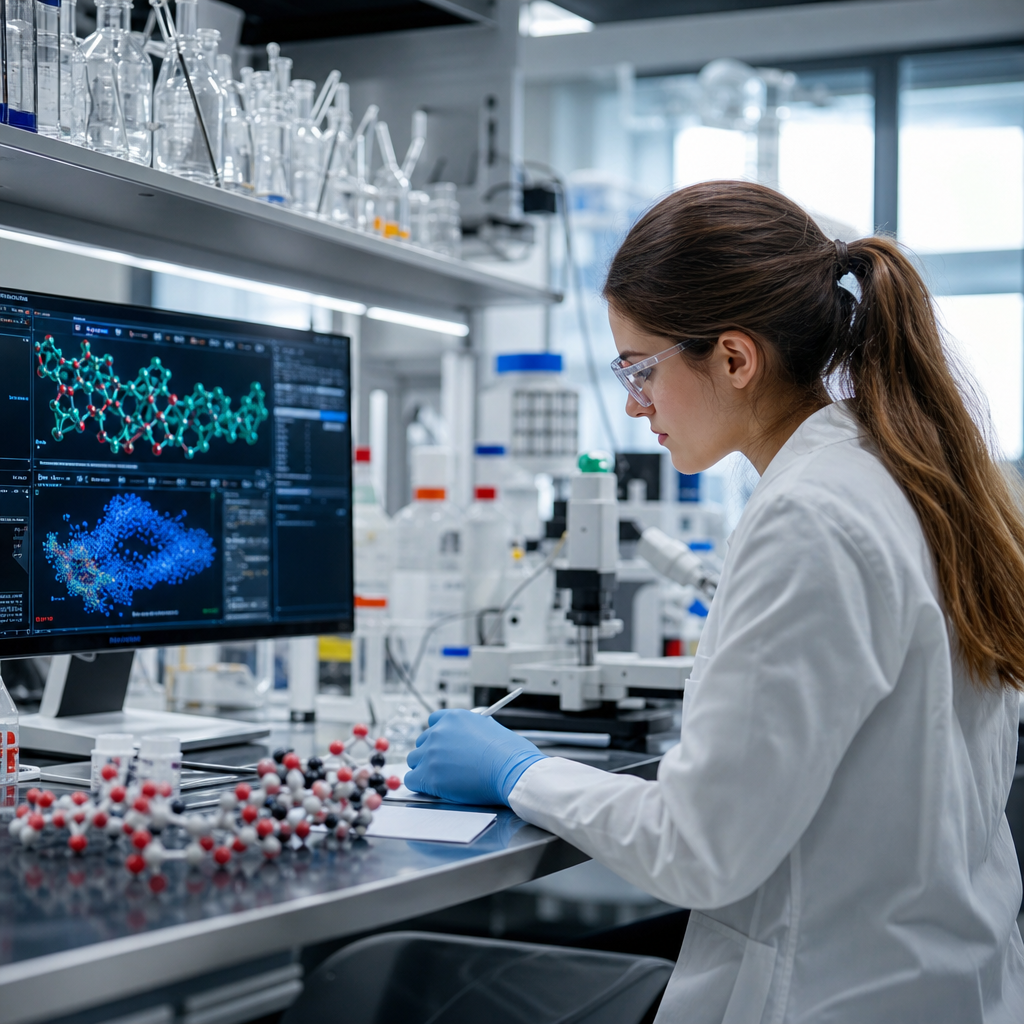
Polymer science is difficult to learn from text alone because many critical behaviors are dynamic, multiscale, and counterintuitive. Students struggle with chain entanglement, relaxation spectra, spherulite growth, diffusion through amorphous regions, and non-Newtonian flow when these ideas are presented only as equations. Online resources are increasingly solving that problem through simulation and visualization. Molecular modeling environments, finite element tools for processing, and browser-based interactive graphs make invisible structure-property relationships easier to grasp.
In my experience, even simple digital tools can transform understanding. When students can vary tacticity and immediately see effects on crystallinity tendencies, or adjust frequency in a viscoelastic model and watch storage and loss modulus diverge, the theory stops feeling abstract. Commercial platforms such as MATLAB, COMSOL Multiphysics, and Materials Studio already support advanced learning and research workflows. Open source tools, Python notebooks, and Jupyter-based teaching modules are also becoming more common for polymer kinetics, diffusion modeling, and data fitting.
Virtual laboratories will be especially important where access to instrumentation is limited. Not every institution can provide routine hands-on training with NMR, GPC, rheometers, TGA, DMA, and pilot-scale extrusion lines. A well-designed online resource can simulate instrument setup, sample preparation choices, baseline correction, calibration strategy, and data interpretation. It cannot fully replace bench experience, but it can make the first real session safer, faster, and more productive. For hub content under educational resources, this is a key direction: digital learning should prepare people to ask better questions when they enter the physical lab.
Community driven expertise will matter more, but moderation will matter even more
Some of the most useful polymer knowledge online does not come from formal textbooks. It comes from experienced practitioners explaining why a nylon part embrittled after drying errors, why a DSC endotherm was misread as melting instead of enthalpic relaxation, or why a GPC trace shifted after changing solvent and column conditions. Forums, webinars, technical blogs, conference recordings, and question-and-answer communities capture this tacit knowledge. They help bridge the gap between ideal theory and messy industrial reality.
However, community knowledge only becomes a durable educational resource when it is curated. Polymer science contains many context dependent answers. For example, asking whether PLA is biodegradable is incomplete without discussing industrial composting conditions, article thickness, crystallinity, additives, and relevant certification schemes such as EN 13432 or ASTM D6400. Asking whether polycarbonate is chemically resistant means little without specifying stress state, temperature, and solvent exposure time. The future belongs to platforms that preserve nuanced answers, show source references, and surface expert consensus while still documenting exceptions.
Webinars from organizations such as ACS, SPE, and university centers already demonstrate the value of expert-led digital teaching. So do instrument manufacturer libraries from companies like TA Instruments, Malvern Panalytical, Waters, Bruker, and Anton Paar, which often provide practical method guidance. The caution is obvious: vendor resources can be excellent on technique, yet narrower on comparative limitations. A strong hub page should direct readers to both independent and manufacturer-backed materials and encourage cross-checking.
Artificial intelligence will improve discovery, but human judgment remains essential
Artificial intelligence is becoming part of the online resource layer in polymer science through semantic search, automated summarization, recommendation systems, and generative question answering. Used well, these tools can help a researcher scan hundreds of papers on flame-retardant formulations, extract recurring processing variables, or identify likely degradation pathways for a polyurethane under UV exposure. They can also help students translate dense papers into clearer language before they return to the original methods and data.
Still, polymer science is a poor fit for blind automation. Models often flatten distinctions that experts treat as decisive. They may confuse number average molecular weight with weight average molecular weight, merge incompatible test conditions, or generalize from one grade to an entire polymer family. I have seen search systems return packaging-grade PET data to answer questions about fiber spinning behavior, which is not harmless if a user is making process decisions. The future of online resources therefore depends on transparent sourcing, citation trails, and interfaces that make uncertainty visible.
The best AI-enhanced platforms will not pretend to replace journals, standards, or expert review. They will act as guides across them. For example, a useful system could answer, in plain language, why oxygen permeability differs between LDPE and EVOH, then point the reader to barrier mechanism primers, humidity dependence data, and application notes for multilayer film design. In other words, intelligence should improve navigation and synthesis, not erase the evidence behind conclusions.
Sustainability, regulation, and circularity content will move to the center
The fastest-growing area for polymer online resources is sustainability, and it is also the area most vulnerable to confusion. Researchers and industry teams need credible guidance on recyclability, life cycle assessment, bio-based feedstocks, mass balance accounting, microplastics, chemical recycling, and end-of-life infrastructure. General claims are not enough. A future-ready educational hub must separate biodegradability from compostability, recycled content from recyclability, and laboratory depolymerization results from commercially deployed systems.
Strong online resources will increasingly connect technical polymer science to policy and market realities. The Ellen MacArthur Foundation has influenced packaging circularity language. ISO 14040 and 14044 shape life cycle assessment practice. Regional regulations from the European Chemicals Agency, the US Environmental Protection Agency, and food-contact frameworks from the FDA or EFSA affect formulation choices. For students, this context is no longer optional. A polymer scientist working on multilayer packaging, medical devices, automotive lightweighting, or textile fibers must understand how material selection intersects with regulation, waste systems, and carbon accounting.
This shift also changes what educational quality looks like. The best online resources will provide decision frameworks, not slogans. If someone asks whether a bio-based polymer is more sustainable, the answer should address feedstock origin, land use implications, process energy, product lifetime, recovery pathways, and contamination risk in existing recycling streams. That level of specificity is what users need, and it is what future hub content should organize clearly.
Online resources in polymer science are moving from scattered information sources to connected learning and decision systems. The biggest gains will come from better metadata, stronger links between theory and practice, wider use of simulation, careful expert moderation, transparent AI assistance, and sustainability content grounded in standards and real infrastructure. For students, that means faster progression from definitions to competence. For researchers, it means less time hunting for methods and more time testing ideas. For industry teams, it means fewer avoidable errors in material selection, processing, compliance, and failure analysis.
As the hub for online resources within educational resources, this topic should be approached as a map rather than a list. Readers need pathways to databases, courses, journals, tools, standards, webinars, and community expertise, with clear guidance on what each resource does well and where caution is required. The future is not just more digital content. It is more usable, more connected, and more trustworthy polymer knowledge that supports better science and better products.
If you are building your own learning path, start by auditing the sources you rely on most. Add at least one validated data source, one standards-oriented reference, one advanced course provider, and one expert community to your workflow. That simple step will make every search more productive and every polymer decision better informed.
Frequently Asked Questions
1. How are online resources changing the way polymer science is studied, researched, and applied in industry?
Online resources are transforming polymer science by making critical knowledge, data, and analytical tools available immediately to a much wider audience. In the past, many polymer researchers and students depended heavily on printed handbooks, institutional libraries, in-person training, and local laboratory expertise. Today, digital textbooks, open courseware, spectral libraries, materials databases, simulation platforms, and standards repositories allow users to move much faster from question to answer. A student can review polymerization mechanisms from an online module, a researcher can compare thermal or rheological data across published datasets, and a product developer can evaluate processing guidelines or material compatibility without waiting for physical references or limited-access consultations.
This shift is especially important because polymer science is inherently interdisciplinary. It spans chemistry, physics, materials engineering, manufacturing, sustainability, and product performance. Online resources help connect these disciplines by presenting information in searchable, shareable, and often interactive formats. Instead of working in isolation, users can move between molecular structure data, spectroscopy references, simulation outputs, and regulatory standards within a single workflow. That kind of integration supports better decisions in formulation development, failure analysis, material selection, and process optimization.
Industry is seeing major benefits as well. Teams involved in packaging, automotive materials, medical devices, electronics, adhesives, coatings, and composites increasingly rely on digital resources to shorten development cycles and improve technical accuracy. Engineers can access standards, compare polymer properties, review processing windows, and collaborate across sites in real time. The future points toward platforms that do more than store information. They will actively guide decision-making by linking experimental data, predictive models, manufacturing constraints, and application requirements into one accessible digital ecosystem.
2. What types of online resources are likely to become most valuable in the future of polymer science?
The most valuable online resources will be those that combine trustworthy content with practical usability. High-quality materials databases will remain central because polymer science depends heavily on accurate property data, including tensile behavior, thermal stability, glass transition, crystallinity, permeability, dielectric response, rheology, weathering, and chemical resistance. The future value of these databases will increase as they become more standardized, more interoperable, and more transparent about data sources, testing conditions, and uncertainty. That context matters because polymer properties can vary significantly with molecular weight, additives, processing history, and environmental conditions.
Simulation and modeling platforms will also become increasingly important. As computational methods improve, online tools will help users predict structure-property relationships, phase behavior, degradation patterns, processing performance, and end-use behavior before committing to extensive lab work. This does not mean simulation will replace experimentation, but it will make experimental design smarter and more efficient. Researchers and industrial teams will be able to screen candidate polymers, estimate formulation outcomes, and identify promising development paths much earlier in the process.
Training resources will be another major growth area. Interactive courseware, recorded lectures, virtual lab demonstrations, and modular certification programs can help students and working professionals build skills in polymer characterization, processing, sustainability, recycling, and regulatory compliance. In addition, spectral libraries and standards repositories will become even more valuable as laboratories seek faster identification and verification tools. Resources that connect reference spectra, test methods, interpretation guidance, and application examples will be especially useful. Ultimately, the most influential platforms will not just provide information; they will help users apply that information directly to research, teaching, quality control, and product development.
3. Why is data quality and reliability such a critical issue for digital polymer science resources?
Data quality is critical because polymer science is highly sensitive to how measurements are generated, reported, and interpreted. Unlike simple reference values that may be broadly transferable across contexts, polymer data often depends on detailed experimental conditions. A reported modulus, melt flow rate, glass transition temperature, molecular weight distribution, or degradation rate may change significantly based on sample preparation, additives, humidity, instrument calibration, testing geometry, strain rate, thermal history, or processing conditions. If a digital resource presents values without sufficient metadata, users can make incorrect comparisons or poor technical decisions.
That is why the future of online polymer resources depends not only on access, but on trust. Reliable platforms should clearly identify data sources, test standards, measurement methods, and limitations. They should distinguish between experimentally measured results, simulated estimates, literature summaries, and supplier-reported values. Ideally, they should also allow users to trace data back to original publications, standards documents, or validated laboratory protocols. In educational settings, this helps students learn how to assess evidence properly. In research and industry, it reduces the risk of costly mistakes in material selection, processing, performance prediction, and compliance assessment.
There is also an important reproducibility dimension. Polymer science increasingly benefits from shared datasets, but those datasets only become truly useful when they are curated consistently and documented thoroughly. As machine learning and automated screening become more common, poor-quality data can have amplified consequences because flawed inputs lead to unreliable predictions. For that reason, the best future-facing online resources will emphasize validation, version control, metadata completeness, standard terminology, and expert review. In a field where small differences can have large technical consequences, reliability is not optional; it is foundational.
4. How will online resources improve collaboration and learning for polymer scientists, students, and product developers?
Online resources improve collaboration by removing barriers created by geography, institutional access, and disciplinary silos. Polymer science often involves teams with different forms of expertise, such as synthetic chemists, analytical scientists, process engineers, product designers, quality specialists, and sustainability professionals. Digital platforms make it easier for these groups to work from a shared base of information. A team can review the same materials database, compare analytical results through cloud-based tools, discuss processing implications in real time, and align product requirements with test standards and regulatory needs. This is especially valuable in global organizations where research, manufacturing, and customer application support may be spread across multiple locations.
For students and educators, online resources create more flexible and inclusive learning pathways. Learners can revisit core concepts such as chain architecture, viscoelasticity, crystallization, copolymer design, and degradation mechanisms through videos, digital notes, practice problems, and interactive simulations. Virtual access to spectra, microscopy images, rheology curves, and thermal analysis data helps connect theory to real polymer behavior. Teachers can also build more current courses by incorporating industry-relevant examples, live databases, and recent case studies rather than relying only on static textbook materials.
Product developers benefit because modern online tools support faster iteration and better communication between technical and commercial teams. When everyone can access consistent information about material properties, processing behavior, sustainability tradeoffs, and specification requirements, decision-making becomes more efficient. The future will likely bring even stronger collaborative features, including integrated annotation, shared experiment tracking, AI-assisted literature summaries, and workflow tools that connect research data with design and manufacturing systems. In that environment, online resources will serve not just as references, but as active collaboration infrastructure for the entire polymer innovation process.
5. What should researchers and organizations look for when choosing online polymer science resources for long-term use?
Researchers and organizations should begin by evaluating credibility. The strongest resources are transparent about authorship, data provenance, update frequency, and review processes. In polymer science, it is important to know whether information comes from peer-reviewed literature, validated experimental datasets, standards organizations, instrument manufacturers, educational institutions, or commercial suppliers. Each source can be useful, but users need clarity about context and intended use. A resource designed for academic learning may not be sufficient for industrial qualification decisions, while a commercial product database may not provide the mechanistic depth needed for research planning.
Usability is just as important as credibility. The best online resources are searchable, well organized, and designed around real polymer workflows. Users should be able to filter by polymer family, structure, processing method, test condition, application, and performance requirement. Access across devices matters as well, since many users now move between office desktops, classroom settings, pilot plants, and laboratory benches. Resources that support exports, citations, data comparisons, and integration with modeling or laboratory systems will be especially valuable for long-term adoption.
Organizations should also consider scalability and adaptability. Polymer science is evolving quickly in areas such as bio-based materials, recycling technologies, circular design, advanced characterization, and data-driven materials development. A future-ready resource should be capable of expanding with those needs. That includes supporting new standards, incorporating emerging property categories, improving interoperability, and enabling collaboration across teams. Security and access control may also matter for proprietary research environments. In practical terms, the right platform is one that delivers dependable information today while remaining flexible enough to support the next generation of polymer education, discovery, and industrial problem-solving.