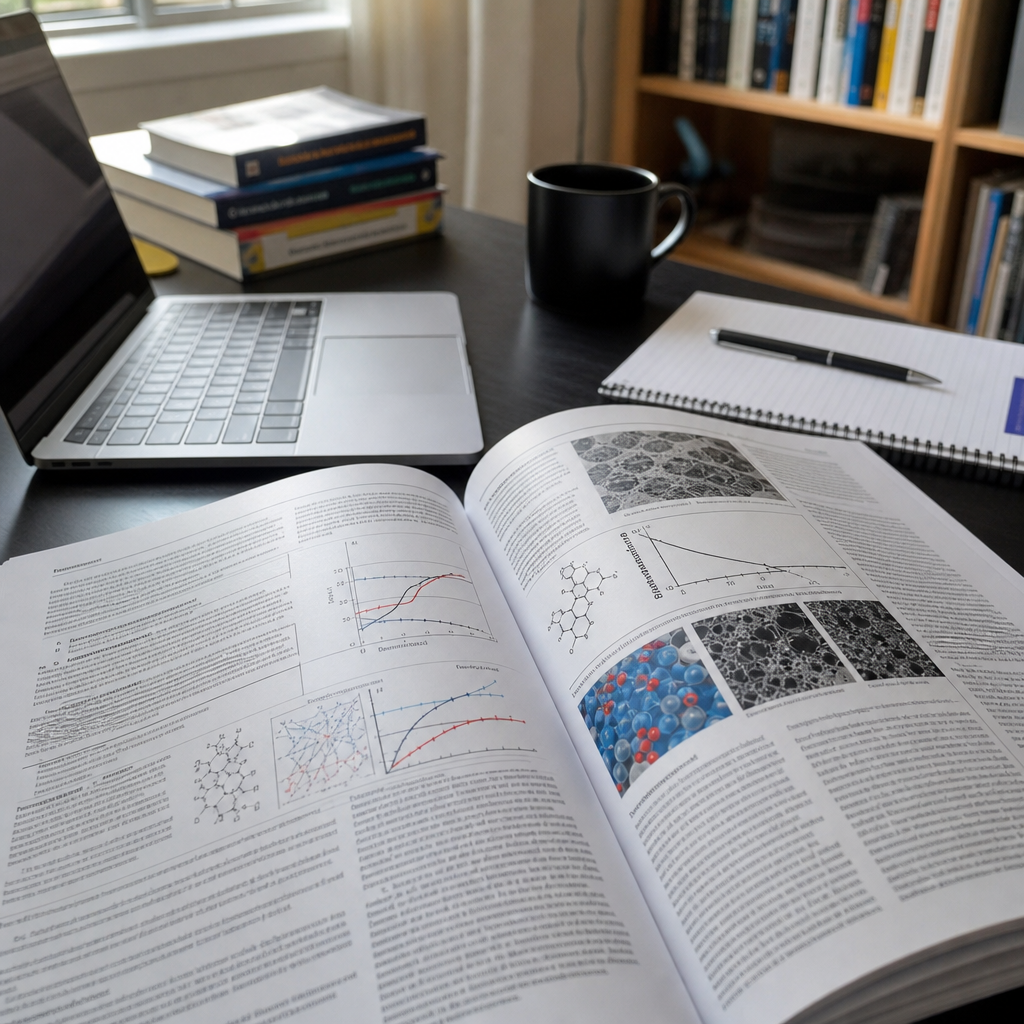
Computational chemistry software for polymers helps scientists predict structure, properties, and processing behavior before they commit time and money to synthesis. In practical terms, these tools let you build polymer chains, assign force fields or quantum methods, run simulations, and extract results such as density, glass transition trends, diffusion coefficients, modulus estimates, solubility parameters, and reaction energetics. For students, this software shortens the path from theory to intuition. For researchers and product teams, it reduces experimental screening and highlights failure modes early. I have used these platforms to compare candidate materials for coatings, membranes, adhesives, and biomedical devices, and the biggest lesson is simple: the software is only as useful as the question you ask and the workflow you choose.
Polymers make computational work more demanding than small molecules because they are large, disordered, polydisperse, and often sensitive to temperature, morphology, and processing history. A single chain can contain thousands of repeat units, but many important properties emerge only in ensembles of chains with realistic packing. That is why polymer modeling spans multiple length and time scales. Quantum chemistry is useful for monomer reactivity, charge distribution, and short oligomers. Molecular mechanics and molecular dynamics are used for chain conformations, cohesive energy density, and transport in amorphous or semicrystalline phases. Mesoscale methods help when domain formation, phase separation, or long-time relaxation matters. Choosing software for polymers means matching the property of interest to the right computational scale, then using tools that support polymer builders, periodic cells, trajectory analysis, and reproducible workflows.
This article is a hub for software and tools used in polymer computation. It explains what the major categories do, how to choose among them, where beginners usually go wrong, and how to connect one package to another. If you are asking which software is best for polymer molecular dynamics, how to model a polymer blend, how to estimate mechanical properties, or how to set up a reliable educational workflow, the answer depends on method, system size, and data quality. The sections below provide a practical map so you can select software with confidence and build a workflow that is scientifically defensible.
Core software categories used in polymer modeling
The main categories of computational chemistry software for polymers are quantum chemistry packages, molecular simulation engines, polymer structure builders, visualization tools, and data analysis environments. Each category solves a different part of the problem. Gaussian, ORCA, Q-Chem, and NWChem are commonly used for quantum calculations on monomers, dimers, and short oligomers. They are valuable when you need optimized geometries, electrostatic potentials, frontier orbitals, reaction pathways, or torsional scans that later inform force-field parameterization.
For larger systems, researchers usually move to molecular simulation codes such as GROMACS, LAMMPS, AMBER, Materials Studio modules, Desmond, or OpenMM. These engines handle molecular dynamics and energy minimization on periodic cells containing many chains. In polymer work, I routinely rely on them for equilibration, density prediction, radial distribution functions, mean square displacement, stress strain response, and blend compatibility. Their strength is scale and flexibility, but they require careful setup. A fast simulation with a bad force field is still a bad simulation.
Polymer-specific builders and preprocessors are equally important. PACKMOL helps pack chains into boxes. Moltemplate and mBuild assist in assembling topologies for LAMMPS and related engines. Materials Studio includes user-friendly polymer building workflows. RDKit can support repeat-unit handling and cheminformatics tasks, especially in educational pipelines that connect structure generation with property prediction. Visualization and trajectory tools such as VMD, OVITO, PyMOL, and UCSF ChimeraX help you inspect chain entanglement, cell packing, and unexpected artifacts that raw numbers can hide.
| Software type | What it is best for | Common examples | Main limitation |
|---|---|---|---|
| Quantum chemistry | Monomer reactivity, charges, torsions, electronic structure | Gaussian, ORCA, Q-Chem, NWChem | System size and time scale are limited |
| Molecular dynamics | Chain conformations, density, diffusion, mechanics, blends | GROMACS, LAMMPS, AMBER, OpenMM | Accuracy depends heavily on force fields and sampling |
| Polymer builders | Generating chains, packing cells, assigning topology | PACKMOL, Moltemplate, Materials Studio, mBuild | Default structures are rarely equilibrated enough for production |
| Visualization | Inspecting structures, trajectories, defects, morphology | VMD, OVITO, PyMOL, ChimeraX | Visual plausibility can mislead without quantitative checks |
| Analysis environments | Post-processing trajectories and reporting properties | MDAnalysis, MDTraj, Python, R | Requires scripting and validation of custom metrics |
How to choose the right software for a polymer question
The best computational chemistry software for polymers is the software that answers a specific materials question at the right scale. Start by defining the target property. If you need polymerization energetics, catalyst interaction, or charge transport in a conjugated segment, a quantum package is the logical starting point. If you need bulk density, blend miscibility, free volume, diffusion, or temperature-dependent morphology, molecular dynamics is usually more appropriate. If your question concerns microphase separation in block copolymers over tens of nanometers, coarse-grained or mesoscale tools become necessary.
Next, determine whether an all-atom or coarse-grained representation is justified. All-atom models preserve chemical detail and are important for hydrogen bonding, side-chain packing, and local dynamics. Coarse-grained models collapse groups of atoms into beads, enabling longer simulations and larger systems. MARTINI is a widely recognized framework for coarse-grained simulations, and dissipative particle dynamics or field-based methods can extend scale further. The tradeoff is loss of chemical specificity, so you should not use a simplified model to answer a question that depends on atomistic interactions.
Usability also matters, especially in educational settings. Materials Studio is accessible for beginners because it integrates building, running, and analysis in one environment, though licensing can be expensive. GROMACS and LAMMPS are powerful and well documented, but they assume comfort with command-line workflows. ORCA is attractive for teaching because it is capable, widely used, and has strong documentation for electronic structure calculations. For students, I recommend choosing one quantum tool, one molecular dynamics engine, one builder, and one analysis environment, then learning them deeply rather than touching ten platforms superficially.
Recommended workflows for common polymer use cases
A reliable polymer modeling workflow usually begins with the repeat unit, not the bulk cell. Build the monomer or short oligomer first and verify protonation state, stereochemistry, and geometry. If the simulation will use a custom force field, perform quantum calculations to obtain optimized conformers, torsional profiles, and electrostatic information. Then generate chains of realistic length distribution, pack them into a periodic box, minimize bad contacts, and equilibrate in stages. For glassy polymers, this often means high-temperature relaxation followed by controlled cooling under pressure. For solvated systems, equilibrate solvent density before collecting any transport metric.
Consider a blend compatibility study. I would build both polymers separately, validate repeat-unit parameters, create a mixed cell at the desired composition, and run NPT equilibration long enough to remove packing bias. After that, I would inspect density convergence, potential energy drift, and contact statistics between the two species. If the goal is a screening-level estimate, Hildebrand or Hansen solubility parameters from cohesive energy density can be useful. If the goal is publication-quality evidence of miscibility, you need multiple replicas, temperature dependence, and clear uncertainty estimates.
For mechanical property estimation, the workflow changes. After obtaining a well-equilibrated amorphous or semicrystalline cell, apply small deformations and calculate the stress response. The strain rate in molecular dynamics is much higher than in experiments, so absolute agreement is difficult. Still, comparative ranking across related polymers can be informative. For thermal properties, monitor volume or enthalpy versus temperature to estimate transition behavior, but remember that simulation cooling rates shift apparent transition points. The software can reveal trends and mechanisms well, yet direct experimental equivalence must be argued carefully.
Force fields, parameterization, and validation
Force-field choice is the single most important technical decision in polymer molecular simulation. Common options include OPLS-AA, GAFF, COMPASS, PCFF, CHARMM General Force Field, AMBER-derived variants, and specialized polymer parameters reported in the literature. COMPASS and PCFF are often encountered in polymer materials work because they were designed with condensed-phase properties in mind. OPLS-AA and GAFF are flexible for organic polymers, especially when integrated with open workflows. No force field is universally best. The right choice depends on chemistry, target property, and validation data.
Parameterization becomes essential when your polymer contains uncommon functional groups, unusual torsions, metal coordination, or conjugated backbones not covered well by default libraries. In practice, this means fitting bonded terms to quantum torsional scans, assigning partial charges using a consistent scheme, and checking whether the resulting model reproduces density, heat of vaporization where relevant, or conformational preferences. For educational projects, resist the temptation to invent parameters casually. It is better to use a published, tested parameter set with known scope than a custom set that cannot be defended.
Validation should be property-specific. If you are studying gas diffusion through a membrane, check density, fractional free volume trends, and diffusivity against known benchmarks. If you are studying a hydrogel, validate swelling behavior, hydrogen-bonding patterns, and water content sensitivity. I treat validation as an iterative loop: compare with experiment, diagnose discrepancy, refine either the model or the scientific question, and rerun. Software proficiency matters, but credibility comes from validation discipline.
Data quality, sampling, and common mistakes
Most bad polymer simulations fail because of insufficient equilibration or unrealistic initial structures. A packed cell of long chains may look reasonable while still retaining severe local strain and nonphysical density. Beginners often minimize, run a short trajectory, and start analyzing properties immediately. That approach usually produces artifacts. Polymers relax slowly, entangle, and sample conformations over long timescales. You need staged equilibration, convergence checks, and often several independent replicas to make a trustworthy claim.
Another common mistake is asking an atomistic simulation for a property outside its accessible time or length scale. For example, trying to predict long-term creep, full crystallization kinetics, or industrial processing rheology directly from a short all-atom trajectory is not realistic. In those cases, use the simulation to extract local mechanisms or parameters that feed a larger-scale model. Similarly, quantum calculations on tiny oligomers cannot prove bulk morphology, though they can clarify interactions that influence it.
Analysis errors are just as serious. Diffusion coefficients from trajectories that have not reached the diffusive regime are misleading. Glass transition estimates from a single cooling run are fragile. Mechanical moduli extracted from noisy stress data without uncertainty analysis are not decision-grade. Good software makes analysis easier, but it does not replace statistical judgment. Always report system size, simulation length, thermostat and barostat settings, force field version, and replicate strategy.
Building an educational software stack and learning path
For an educational resources hub, the most useful approach is a staged software stack. Start with a molecular editor and visualization tool to teach repeat units, tacticity, and chain architecture. Add a quantum package for monomer optimization and simple oligomer studies. Then introduce a molecular dynamics engine with one polymer builder and one Python analysis library. This progression mirrors how real polymer modeling is practiced and helps learners connect chemistry concepts to materials behavior.
A practical stack for many students is Avogadro or IQmol for structure preparation, ORCA for electronic structure, PACKMOL plus GROMACS or LAMMPS for simulation, and MDAnalysis in Python for post-processing. If a program requires a graphical environment and institutional licenses are available, Materials Studio can lower the initial barrier. The key is not brand loyalty. The key is reproducibility, file interoperability, and a curriculum that teaches why each tool is used.
As a hub page, this topic should branch into deeper tutorials on polymer builders, force-field assignment, trajectory analysis, blend modeling, coarse-graining, and property prediction workflows. Readers who master those subtopics will use computational chemistry software for polymers more effectively than readers who only memorize package names. Start with one focused project, document every setting, compare with experimental data, and build from there. That is how software turns from a black box into a reliable scientific instrument.
Computational chemistry software for polymers is most powerful when it is treated as a connected toolkit rather than a single program. Quantum packages explain local chemistry. Molecular dynamics engines reveal bulk behavior. Builders, visualization tools, and analysis libraries make the workflow practical and auditable. When you align the software with the property, scale, and validation target, these tools can reduce experimental guesswork, sharpen hypotheses, and improve materials decisions.
The central lesson is straightforward. Define the polymer question first, choose the computational level that can genuinely answer it, and validate every major result against physical evidence or established benchmarks. Beginners should prioritize a small, reproducible software stack and learn core tasks well: structure building, parameter selection, equilibration, convergence checks, and analysis. More advanced users should expand into coarse-graining, automation, and multiscale pipelines without losing rigor in force-field choice and uncertainty reporting.
Use this hub as your starting point for the broader software and tools landscape in polymer modeling. From here, move into focused guides on specific packages, parameterization strategies, and application workflows for blends, membranes, elastomers, and electronic polymers. If you are building a course, lab module, or research workflow, choose one realistic polymer system and run the full process from monomer to validated property prediction. That hands-on path will teach more than any feature list ever can.
Frequently Asked Questions
1. What can computational chemistry software actually help me do with polymers?
Computational chemistry software gives you a practical way to explore polymer behavior before you spend lab time and budget on synthesis, compounding, or full-scale testing. At the most basic level, you can build repeat units, generate polymer chains of different lengths, create amorphous or semi-ordered cells, and visualize how chain architecture influences packing and conformation. From there, the software can be used to assign force fields for molecular mechanics and molecular dynamics simulations, or quantum chemistry methods when you need more detailed electronic or reaction-level information.
For polymer research and development, that means you can estimate properties such as density, cohesive energy density, solubility parameters, diffusion behavior, free volume trends, thermal transitions, and even rough indicators of mechanical response like modulus trends. If you are studying processing or transport, simulations can help you understand how polymer chains move, how additives diffuse, or how morphology affects performance. If your focus is chemistry rather than physics, quantum-based tools can be used to investigate monomer reactivity, crosslinking pathways, degradation mechanisms, catalyst interactions, and reaction energetics.
The real value is that these tools let you compare candidates early. Instead of synthesizing every possible polymer or blend formulation, you can screen options in silico, identify promising structures, and narrow your experimental plan. For students, this also shortens the path from theory to insight because the link between molecular structure and macroscopic properties becomes much easier to see when you can model it directly.
2. Which type of computational method should I use for polymer studies: molecular mechanics, molecular dynamics, or quantum chemistry?
The right method depends on the question you are trying to answer, because different computational approaches work at different levels of detail and cost. Molecular mechanics is usually the starting point when you need to construct polymer structures, minimize their geometry, and evaluate conformational preferences at relatively low computational expense. It is useful for preparing realistic starting models and quickly checking whether a chain geometry or packing arrangement is physically reasonable.
Molecular dynamics is the workhorse for many polymer property predictions. In molecular dynamics, atoms move over time according to an assigned force field, which makes it possible to study chain motion, local packing, diffusion, density evolution, temperature effects, and relaxation behavior. If your goal is to estimate trends in glass transition behavior, segmental mobility, transport coefficients, blend compatibility, or morphology development, molecular dynamics is often the most practical choice. It is especially valuable when you care about time-dependent and temperature-dependent behavior rather than just a single optimized structure.
Quantum chemistry is best when the details of electronic structure matter. For example, if you want to understand bond breaking, reaction pathways, charge distribution, frontier orbital behavior, or polymerization energetics, quantum methods are far more appropriate than classical force-field approaches. They are also useful for parameter development, such as calculating torsional preferences or partial charges for unusual monomers and functional groups. The tradeoff is computational cost, which means quantum chemistry is usually applied to monomers, oligomers, fragments, or reactive sites rather than very large polymer systems.
In practice, many strong polymer workflows are multiscale. You might use quantum chemistry to study monomer reactivity or derive parameters, molecular mechanics to build structures, and molecular dynamics to simulate bulk behavior. Choosing the method is less about finding one perfect tool and more about matching the physics of the problem to the level of theory that can answer it efficiently.
3. How do I set up a reliable polymer simulation from chain building to property prediction?
A reliable polymer simulation starts with a clear objective. Before building anything, decide what property or behavior you want to predict, because that determines the model size, chemistry, simulation conditions, and analysis strategy. A density estimate, a diffusion study, a glass transition trend, and a reaction-energy calculation all require different setups. Once the target is defined, build a chemically correct repeat unit, verify stereochemistry and end groups, and generate chains with a realistic degree of polymerization for the scale your method can handle.
The next critical step is selecting an appropriate force field or quantum method. For classical simulations, the force field must be suitable for the polymer chemistry you are studying. This is where many beginners make mistakes: they assume any generic force field will work. In reality, parameter quality strongly affects predicted packing, mobility, energetics, and intermolecular interactions. If your polymer contains unusual functional groups, ionic segments, strong hydrogen bonding, or reactive motifs, check carefully whether validated parameters exist or whether custom parameterization is needed.
After structure generation and parameter assignment, prepare the simulation cell. For bulk polymer studies, this often means packing multiple chains into an amorphous box, removing bad contacts through energy minimization, and equilibrating under sensible temperature and pressure conditions. Equilibration is not a formality. Polymers relax slowly, and poor equilibration can lead to misleading density, excess internal stress, unrealistic chain conformations, and incorrect transport properties. In many cases, a staged protocol works best, beginning with minimization, followed by temperature ramping, pressure equilibration, and then longer production runs at the conditions of interest.
Property extraction should also be planned carefully. Density can often be obtained directly from equilibrated trajectories, but properties like diffusion coefficients, modulus estimates, or thermal transition trends require more thoughtful analysis and enough sampling time. For example, diffusion calculations need trajectories long enough to observe meaningful displacement, while glass transition estimates usually rely on simulated density or volume changes across a temperature range rather than a single run. The most dependable results come from comparing trends across a series of polymers or formulations rather than overinterpreting one absolute number in isolation.
Finally, validate wherever possible. Compare predicted values against literature data, experimental measurements, or known qualitative behavior. Even a good simulation is still a model, and polymer systems are complex. The strongest workflow is one where simulation guides experiments and experiments refine the simulation assumptions in return.
4. What polymer properties can these tools predict well, and where should I be cautious?
Computational chemistry software can be very effective for predicting relative trends in many polymer properties, especially when you are comparing similar chemistries, architectures, or formulations under consistent modeling conditions. Commonly studied outputs include density, chain conformation, radial distribution behavior, cohesive energy density, solubility parameters, free volume indicators, diffusion coefficients, and temperature-dependent structural changes. For mechanical and thermal behavior, simulations can provide useful directional insight into modulus trends, relaxation behavior, and glass transition tendencies, particularly when the goal is screening rather than replacing every experiment.
These tools are also valuable for understanding why a polymer behaves the way it does. A simulation can show whether low diffusivity comes from tight packing, whether a blend is poorly compatible because of unfavorable intermolecular interactions, or whether a functional group raises stiffness by restricting backbone rotation. This mechanistic insight is often as useful as the property estimate itself, because it helps guide molecular design. If you are evaluating candidate monomers, side-chain modifications, copolymer compositions, or additive compatibility, computational studies can reveal structure-property relationships that are difficult to isolate experimentally.
That said, caution is important when dealing with absolute values, long-timescale phenomena, or strongly history-dependent properties. Polymer behavior depends on molecular weight distribution, tacticity, crystallinity, processing conditions, residual solvents, orientation, defects, and aging history. Many simulations simplify some of these factors. As a result, a model may predict the right trend while missing the exact experimental number. Glass transition temperature, mechanical performance, and permeability, for example, can be sensitive to simulation timescale, cooling rate, system size, and parameter choice. Reaction barriers and degradation pathways can also vary depending on the level of quantum theory used.
The best mindset is to treat computational chemistry software as a decision-support and insight-generating tool rather than a guaranteed substitute for experimental characterization. It excels at narrowing options, testing hypotheses, explaining trends, and reducing unnecessary synthesis. When paired with targeted experiments, it becomes much more powerful and trustworthy.
5. How can students and beginners get started using computational chemistry software for polymers without getting overwhelmed?
The easiest way to get started is to focus on one simple, well-defined problem instead of trying to simulate every aspect of polymer behavior at once. Choose a familiar polymer system, such as polyethylene, polystyrene, or PMMA, and set a modest goal like building a short chain, minimizing its geometry, creating an amorphous cell, and calculating density after equilibration. That kind of first project teaches the core workflow: structure building, parameter assignment, simulation setup, equilibration, and property analysis. It also helps you learn the software interface without being distracted by highly complex chemistry.
Beginners should also take time to understand the physical meaning of the settings they use. It is tempting to rely on default parameters, but polymer simulations are sensitive to choices such as force field, cutoff settings, ensemble selection, time step, temperature schedule, and run length. You do not need to master everything immediately, but you should know what each major setting controls. A shorter, well-understood simulation is far more educational than a large black-box calculation that produces numbers you cannot interpret.
Another smart strategy is to reproduce a published or tutorial example before starting your own original project. If you can rebuild a known system and obtain roughly similar structural or thermodynamic results,